
信息技术

Search documents
低空经济投资机会解析(第一部分:概述
Sou Hu Cai Jing· 2025-11-13 02:40
Core Insights - The low-altitude economy is entering a rapid development phase driven by policy, technology, and market demand, presenting comprehensive investment opportunities across the entire industry chain in the A-share market [3] Group 1: Definition and Core Drivers - Low-altitude economy refers to the economic activities utilizing airspace below 1,000 meters, employing drones and light aircraft to serve various industries, forming a comprehensive ecosystem that integrates advanced manufacturing, information technology, and modern services [3] - Strong policy support is evident as low-altitude airspace management reforms act as a "master switch" for industry development, creating a favorable growth environment [3] - Technological advancements have transitioned drone technology from manual operation to highly intelligent, autonomous flight, with the integration of 5G, AI, and IoT addressing core bottlenecks for large-scale commercial applications [3] - There is a significant market demand explosion in sectors such as agricultural protection, logistics, emergency rescue, and power inspection, showcasing the cost-reducing and efficiency-enhancing advantages of low-altitude solutions [3] Group 2: Industry Chain Analysis and A-share Investment Opportunities - Upstream opportunities include materials and components such as traditional and new aviation materials, flight control systems, navigation modules, communication modules, batteries, and sensors [3] - Midstream focuses on research and manufacturing of complete aircraft designs, including drones and eVTOLs, with key players being manufacturers of industrial and consumer-grade drones, system integrators, and maintenance service providers [3] - Downstream involves operations and services that provide various application services and data solutions based on aircraft, which are crucial for value realization [3] Group 3: Downstream Application Scenarios - High-value scenarios validated include drone logistics, industrial inspections, precision agriculture, and public safety and emergency services, indicating a vast market potential [3] Group 4: Investment Opportunities and Core Focus Areas - Hardware development should prioritize "core" technologies and complete aircraft manufacturing, focusing on companies with strong R&D investment, patent portfolios, product performance, and cost control capabilities [3] - Operational excellence is key, with a focus on companies that can deeply integrate into specific industries and provide comprehensive solutions, emphasizing business model maturity, order acquisition capabilities, and data processing abilities [3] - Infrastructure and support service opportunities are critical, with companies providing low-altitude flight management platforms, communication network support, and takeoff/landing site construction showing stronger stability and certainty [3] Group 5: Investment Strategy - Short-term focus should be on the implementation of low-altitude airspace reform pilot policies and major orders from listed companies in logistics and inspection sectors [3] - Mid-term attention should be on technological breakthroughs and the expansion of downstream application scenarios, favoring companies with precise positioning in core segments and first-mover advantages [3] - Long-term investments should target companies capable of building or integrating into a healthy industry ecosystem, with strong integration and management capabilities [3]


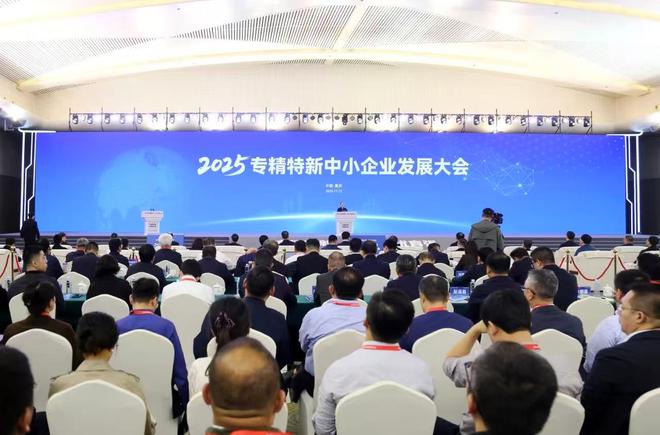
专精特新中小企业超14万家,工信部探索建设专精特新赋能中心
Di Yi Cai Jing Zi Xun· 2025-11-13 00:54
Core Insights - The development of small and medium-sized enterprises (SMEs) is crucial for innovation, employment, and economic stability in China, with over 600,000 technology and innovation-oriented SMEs cultivated to date [1][2] - The "specialized, refined, distinctive, and innovative" (专精特新) approach is being promoted to enhance the vitality and growth of SMEs, contributing significantly to the industrial sector [1][2] Group 1: Current Status of SMEs - As of 2024, the number of registered SMEs in China is expected to exceed 60 million, accounting for 99.9% of all enterprises, 84.3% of employment, and 78% of total assets [1] - SMEs have shown superior growth rates compared to large enterprises, with average annual growth rates of 6.4% in value-added, 7.4% in revenue, and 5.4% in profit [2] Group 2: Government Initiatives and Support - The establishment of the second phase of the National SME Development Fund has been approved, aimed at attracting more social capital to support the growth of early-stage SMEs [1] - The government is focusing on building national innovation platforms and specialized empowerment centers to enhance the innovation capabilities of SMEs [2] Group 3: AI and Digital Transformation - The Ministry of Industry and Information Technology has identified 238 typical application scenarios for AI to empower SMEs, focusing on optimizing business processes and innovating products and services [4] - The selected AI applications include 61 for smart hardware and 118 for smart software, highlighting the potential of AI in enhancing decision-making and automating complex tasks [4] Group 4: Financial Support and Capital Markets - The establishment of "specialized, refined, distinctive, and innovative" boards has been announced, with 30 provinces and cities participating, facilitating financing for over 15,000 enterprises and raising more than 50 billion yuan [5] - The ongoing development of these boards is expected to enhance the multi-tiered capital market and improve the financing support system for SMEs [5]
价值创造优先 上市公司“并购潮”呈现新趋势
Shang Hai Zheng Quan Bao· 2025-11-12 17:52
上市公司"并购潮"正在呈现新变化。自"并购六条"实施一年多来,A股首次披露的重大资产重组交易数 量、金额均同比增长超100%。从并购案例来看,价值创造优先、产业深度整合、私募深度参与成为新 趋势。 "并购重组市场正成为资本循环的重要枢纽,为多元主体创造了新机遇。"德恒上海办公室合伙人杨敏接 受上证报记者采访时表示,未上市企业能够借助并购重组,通过反向合并或资产注入A股上市公司以实 现资本市场间接登陆,获取融资能力与产业资源,追求可持续发展;上市企业能够依托并购重组横向整 合与纵向优化突破增长瓶颈,剥离低效资产,进而提高资本配置效率;投资者能够通过多元化、并购退 出机制收回投资本金和收益,加速投资资本高效流动。 从规模扩张转向价值创造是本轮"并购潮"的显著特征。其中,既有以产业协同为目标的并购重组,比如 中国船舶拟换股吸收合并中国重工;也有科技创新驱动的"硬科技"并购重组,比如华虹公司拟收购华力 微股权;还有助力"走出去"的境外并购重组,比如立讯精密收购Leoni AG(莱尼公司)及其下属全资子 公司股权。 "并购重组作为优化资源配置的重要手段,是推动提高上市公司质量和投资价值的重要引擎。"日前,上 海证券交易 ...
全球资配 | 周期洞察与战略布局
Sou Hu Cai Jing· 2025-11-12 17:49
Group 1 - The core viewpoint emphasizes the need for a new paradigm in asset allocation for residents due to the changing global macro environment, where traditional safe assets are losing their foundational stability [1] - The report suggests that the long-term perspective should embrace equity assets and industrial trends, utilizing a multi-cycle nested system for effective asset allocation [1] - It highlights that the recovery of corporate profits and the leadership of the AI industry by China and the US present significant investment opportunities, particularly in the technology sector [1] Group 2 - In the global asset allocation context, it recommends focusing on countries with favorable fundamentals and timing investments after technical corrections, particularly in the US, Japan, Eurozone, India, and Vietnam [1] - The report notes that the bond market's core logic has shifted from seeking yield to pursuing diversification, with expectations of monetary policy easing benefiting the bond market [2] - It indicates that gold remains in a long-term structural bull market despite recent healthy corrections, while oil supply surplus is a concern due to geopolitical factors [2]

全景式扫描AI对美国经济的影响(国金宏观钟天)
雪涛宏观笔记· 2025-11-12 15:57
Group 1: AI and Economic Impact - AI-related investments are projected to contribute 1.57 percentage points to the US GDP growth in the first half of 2025, surpassing the contribution from private consumption [6] - The nominal value added from data processing services in the US GDP has increased significantly, reaching 1.75%, while manufacturing's share has dropped below 10% for the first time since 1995 [10] - The real value added per capita in AI-related industries has grown at an annualized rate of 12.66%, significantly higher than the 1.56% growth in manufacturing [13] Group 2: AI and Employment - The penetration of AI technology in the workforce is still low, with only 6 out of 20 major industries exceeding a 10% usage rate [31] - The impact of AI on employment is overstated, as the current job weakness is more related to the previous interest rate hikes rather than AI [31][34] - AI's primary utility remains in information search and marketing, with limited adoption in enhancing productivity through new workflows [39] Group 3: AI and Financial Sector - The capital expenditures of tech companies are increasing, raising concerns about the sustainability of AI spending, particularly among major players like Microsoft and Amazon [50][51] - The total issuance of bonds by hyperscaler companies reached $103.8 billion in 2025, indicating a significant reliance on external financing [56] - The rapid growth of private credit, particularly in the tech sector, raises concerns about transparency and potential vulnerabilities in the financial system [72]

华为与崖州湾国家实验室共同发布“繁
Bei Jing Shang Bao· 2025-11-12 13:07
Core Insights - Huawei announced the launch of the "Future Agriculture Intelligent Hub" in collaboration with the Yazhou Bay Science and Technology City Management Committee at the 2025 International Symposium on Plant Phenotyping [1] - The initiative aims to create a unified data platform for agricultural breeding, standardizing the collection of multimodal seed industry data to enhance AI-driven breeding efficiency [1] - This development is expected to accelerate the industrialization of AI in China's agricultural research sector [1]
调研速递|中科院成都信息接待浙商证券等6家机构 信创业务订单3.3亿 机器人样机试用中
Xin Lang Zheng Quan· 2025-11-12 12:54
Core Viewpoint - The company is focusing on its core technologies, business progress, and strategic planning, emphasizing its competitive edge in high-speed machine vision technology and significant order growth in its信创 (Xinchuang) business segment [1][3]. Group 1: Core Technology - The company's high-speed machine vision technology distinguishes itself from traditional machine vision by achieving high detection speeds while maintaining precision, particularly in large-scale continuous manufacturing scenarios [2]. - The technology enables real-time defect detection, large-scale data collection and analysis, and precise removal of defective products [2]. Group 2: Business Performance - The company reported that its performance in the last year and the first three quarters of this year has not met expectations due to varying project implementation cycles and increased R&D investments, which have pressured profit margins [3]. - However, the company has achieved a record high in new orders for 2025, with信创 business contributing approximately 330 million yuan in orders, covering integration, operation, and adaptation services [3]. Group 3: Robotics Development - The company has made significant progress in its robotics business, with the intelligent loading robot entering the trial phase and the automatic paving robot expected to complete prototype development by the end of 2025 [4]. - These robots are designed for various construction and infrastructure applications, although the company currently focuses on industry-specific applications rather than humanoid robots [4]. Group 4: Strategic Focus - The company identifies its core business areas as artificial intelligence, machine vision, and信创, with a dual focus on "real economy + capital" to integrate upstream and downstream enterprises in the AI industry chain [5]. - The strategic direction aligns with national planning, emphasizing high-speed machine vision technology while exploring new fields and accelerating product commercialization [6]. Group 5: International Expansion - The company has begun to receive overseas orders for certain products, such as those related to the printing industry and tobacco physical inspection, although a systematic international expansion plan has not yet been established [6].


新华解码 | 加快建设制造业中试平台 实施路径明确
Xin Hua She· 2025-11-12 12:28
Core Viewpoint - The article emphasizes the importance of establishing a systematic and high-level construction of manufacturing pilot platforms in China to facilitate the transition of innovative products from the laboratory to the market, addressing the challenges faced in this critical phase of development [1][2]. Group 1: Implementation Pathways - The Ministry of Industry and Information Technology has released a notice focusing on the construction of manufacturing pilot platforms, proposing targeted, systematic, and actionable implementation pathways [1][2]. - The notice aims to enhance the efficiency of converting major technological achievements into practical applications and outlines the development logic of what to build, who will build it, and how to build it [2][3]. Group 2: Current Status and Challenges - Currently, over 2,400 pilot platforms have been established across the country, with 241 selected as key cultivation platforms, which have undertaken 25,000 pilot service projects [2]. - Despite progress, some pilot platforms face issues such as unclear functional positioning, low service levels, and weak effectiveness, which hinder the transition from following to leading in manufacturing innovation [2][3]. Group 3: Construction Guidelines - The construction guidelines define the functional positioning of pilot platforms, emphasizing their role in providing services for samples transitioning from the trial production stage to the manufacturing process [3]. - The guidelines propose the establishment of pilot platforms in six key areas and 37 industry directions, addressing urgent needs for industrial development [3]. Group 4: Investment and Support Mechanisms - The guidelines suggest a multi-faceted support mechanism for pilot platform development, focusing on investment, operation, and support to address challenges such as high construction costs and funding shortages [4]. - Financial support from the government is emphasized to attract financial and social capital to empower the development of pilot platforms [4]. Group 5: Avoiding Redundancy and Competition - The notice addresses issues of redundant construction and homogeneous competition among pilot platforms, advocating for a resource-based approach to ensure complementary functions, resource sharing, and mutual promotion of services [5].
新华解码丨加快建设制造业中试平台,实施路径明确
Xin Hua She· 2025-11-12 12:06
Core Viewpoint - The article emphasizes the importance of accelerating the construction of manufacturing pilot platforms in China, highlighting a systematic and actionable implementation path proposed by the Ministry of Industry and Information Technology [1][2]. Summary by Sections Manufacturing Pilot Platforms - The notification focuses on the construction of manufacturing pilot platforms, which serve as transitional testing for samples in the production process, addressing the challenges of moving innovations from the lab to the market [1][2]. - Currently, over 2,400 pilot platforms have been established nationwide, with 241 selected as key cultivation platforms by the Ministry, supporting 25,000 pilot service projects [2]. Challenges and Solutions - Some existing pilot platforms face issues such as unclear functional positioning, low service levels, and weak effectiveness, which hinder the transition of China's manufacturing innovation from following to leading [2][3]. - The notification aims to enhance the service capabilities of pilot platforms and accelerate the efficient transformation of major technological achievements [2][3]. Construction Guidelines - The construction guidelines define the functions of pilot platforms, focusing on six key areas and 37 industry directions, ensuring precise management and resource allocation [3]. - Various entities, including government, universities, and enterprises, are encouraged to invest in the construction of pilot platforms, promoting a tailored approach to development [3]. Support Mechanisms - The guidelines propose a comprehensive support mechanism covering investment, operation, and support to address funding shortages and promote stable investment channels [5]. - The notification also addresses issues of redundant construction and homogeneous competition among pilot platforms, advocating for a resource-sharing approach to enhance functionality and collaboration [5].
城市超级智能体落地河南 联想集团与郑州航空港区签署战略合作协议
Zheng Quan Shi Bao Wang· 2025-11-12 11:53
Core Insights - Lenovo Group has signed a strategic cooperation agreement with Zhengzhou Airport Economy Comprehensive Experimental Zone to establish the Lenovo Intelligent Body Factory Central China Headquarters project, aiming to create the largest intelligent innovation incubation base in China [1][2] Group 1: Strategic Cooperation - The partnership will leverage Lenovo's "1+N Intelligent Body" technology architecture to deploy intelligent applications across five key areas: cross-border trade, smart manufacturing, smart energy, smart tourism, and health [1][2] - The goal is to attract over 100 upstream and downstream enterprises related to large models and register 100 large models, referred to as the "one hundred" target [1] Group 2: Regional Development - Zhengzhou Airport Economy Comprehensive Experimental Zone plays a crucial role in China's domestic circulation, connecting various regions and actively promoting the development of the digital economy and artificial intelligence industry [1][2] - Lenovo has been focusing on artificial intelligence since 2017, proposing the "Lenovo Smart China" vision and building a comprehensive AI strategy based on a new IT architecture [1][2] Group 3: Intelligent Body Technology - The Lenovo City Super Intelligent Body integrates advanced AI technologies such as deep learning, natural language processing, knowledge graphs, and edge computing, forming a city-level intelligent system with autonomous perception, intelligent decision-making, and collaborative execution capabilities [3] - The "1" in the architecture represents a unified super intelligent body hub, while "N" signifies multiple specialized intelligent bodies trained on domain-specific large models, capable of complex scene reasoning and multi-task parallel processing [3]
