银行业

Search documents
风向变了!美债遭集体抛售,接盘者出现,中方不会再为美国兜底
Sou Hu Cai Jing· 2026-02-18 15:50
Group 1 - The article highlights a significant shift in global financial dynamics, with many countries collectively selling U.S. Treasury bonds, indicating a precarious situation for the U.S. financial system [1] - China's holdings of U.S. debt have decreased to $682 billion, the lowest level since 2009, reflecting a strategic decision to reduce exposure to U.S. assets [5][32] - The article discusses the contrasting actions of Western allies increasing their U.S. debt holdings while Southern countries are withdrawing, indicating a divergence in financial strategies [6] Group 2 - The U.S. debt is projected to exceed $38 trillion by the end of 2025, with interest payments alone surpassing $1.2 trillion, which is more than the defense budget [18][20] - The article notes that the yield on 10-year U.S. Treasury bonds has experienced significant volatility, reflecting investor uncertainty about U.S. debt pricing [22][24] - The narrative emphasizes that the era of unquestioned demand for U.S. debt and the dollar's supremacy is over, as countries reassess their asset allocations in light of recent geopolitical events [43]


新西兰联储维持2.25%利率不变
Xin Lang Cai Jing· 2026-02-18 15:44
新西兰储备银行在新任行长上任后的首次决策中将官方现金利率维持在2.25%。当地评论指出,这是在 关注通胀风险的同时为经济复苏提供支持。 责任编辑:张俊 SF065 新西兰储备银行在新任行长上任后的首次决策中将官方现金利率维持在2.25%。当地评论指出,这是在 关注通胀风险的同时为经济复苏提供支持。 责任编辑:张俊 SF065 ...
汇丰集团张凯:于全球变局中锚定价值,在开放升级中奔赴新程
Zhong Guo Ji Jin Bao· 2026-02-18 13:56
(原标题:汇丰集团张凯:于全球变局中锚定价值,在开放升级中奔赴新程) 时序流转,新春已至,万象启新。 回望过去的一年,世界经济在复苏与挑战的交织中破浪前行——全球经济增长分化,地缘政治冲突加 剧,政策不确定性上升。与此同时,人工智能引领的科技浪潮加速推动着时代的更替,并为全球金融市 场和投资者在动荡中创造了崭新的动力和机遇。 展望新的一年,尽管宏观层面的不确定性仍在延续,但我们也看到了充满希望的一面:科技进步、主要 国家财政扩张等积极因素继续为全球经济增长提供支撑;人工智能和云计算或将以指数级的速度普及, 并带动对这一领域的强劲投资;新兴市场也展现出令人瞩目的投资机遇。这些因素共同作用,为全球财 富管理市场绘就了一幅令人期待的图景。 在这一图景中,亚洲无疑是一抹亮色。依托其丰富广阔的消费市场、不断攀升的产业链价值、以及活力 充沛的科技创新生态等多重动力,亚洲市场向全球投资者展现出了强大的韧性和吸引力,在全球增长与 资产配置中扮演着愈发关键的角色,此外,亚洲区内自身的财富管理需求也呈现出蓬勃发展的态势。中 国香港和新加坡等市场在离岸财富管理方面的领先优势、叠加中国内地和印度等市场的庞大跨境财富管 理需求,正推动 ...
光当世界钱袋子不够,要想人民币取代美元,中国得学会当世界债主
Sou Hu Cai Jing· 2026-02-18 13:40
Group 1 - The core argument is that for the renminbi (RMB) to replace the US dollar as a global reserve currency, China must learn to act as a global creditor rather than solely focusing on increasing its foreign exchange reserves [1][3] - Despite being the world's second-largest economy, the RMB only accounts for 1.9% of global official foreign exchange reserves, ranking seventh, which is significantly lower than the US dollar's 57% share [3][6] - The traditional view that a currency must be issued by a country with a trade deficit to achieve international status is challenged, suggesting that countries can also export currency through foreign investments and loans [3][6] Group 2 - The global debt landscape is predominantly denominated in US dollars, with approximately $23 trillion in cross-border debt, half of which is dollar-denominated, reinforcing the dollar's dominance [6][7] - The mismatch between asset and liability currencies in many countries has led to financial crises, prompting a reevaluation of reliance on dollar-denominated debt, especially among emerging markets [9][10] - Recent trends indicate a shift in China's lending practices, with a decrease in dollar loans and an increase in RMB loans, exemplified by cases in Kenya and Zambia where local debts are being converted to RMB [10][12] Group 3 - The RMB's integration into the economies of borrowing countries can significantly reduce exchange rate risks, transforming it from an optional currency to a necessity for economic operations [12][15] - The RMB's current use in cross-border transactions is limited, primarily in bilateral bank loans, while its presence in the global bond market remains minimal, which is crucial for liquidity and price benchmarks [12][13] - Transparency in financial reporting and alignment with international accounting standards are essential for RMB assets to gain global acceptance as a hard currency [13][15] Group 4 - The role of the People's Bank of China (PBOC) is critical; it must evolve from focusing solely on domestic inflation to acting as a stabilizing force in global financial crises, similar to the Federal Reserve's role [15] - The ultimate goal for RMB internationalization is for it to be widely used for financing, pricing risks, and measuring wealth globally, rather than merely increasing foreign holdings of RMB [15]

白银飙升!金饰克价跌破1500元!老铺黄金宣布:即将调价
Sou Hu Cai Jing· 2026-02-18 13:31
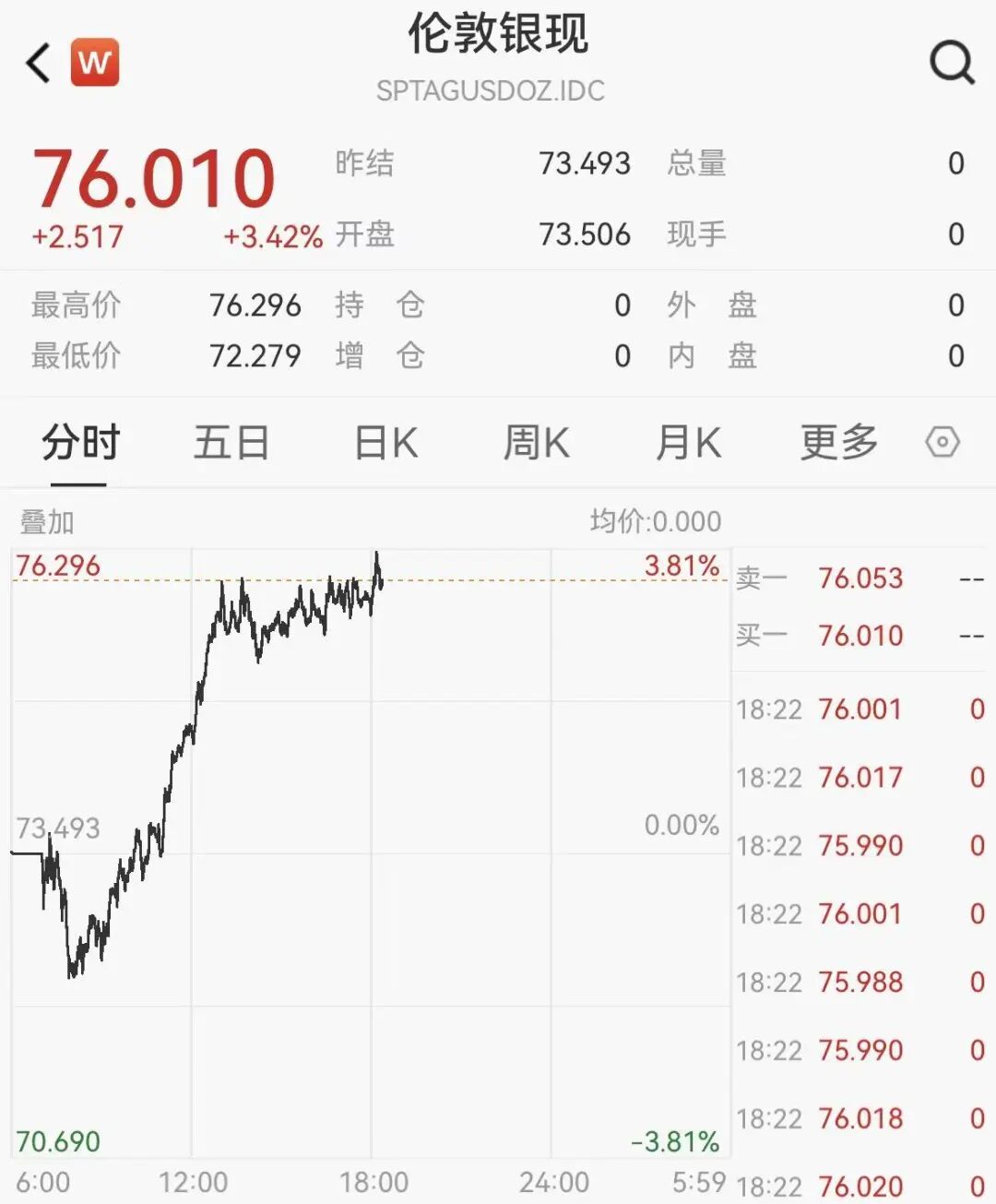
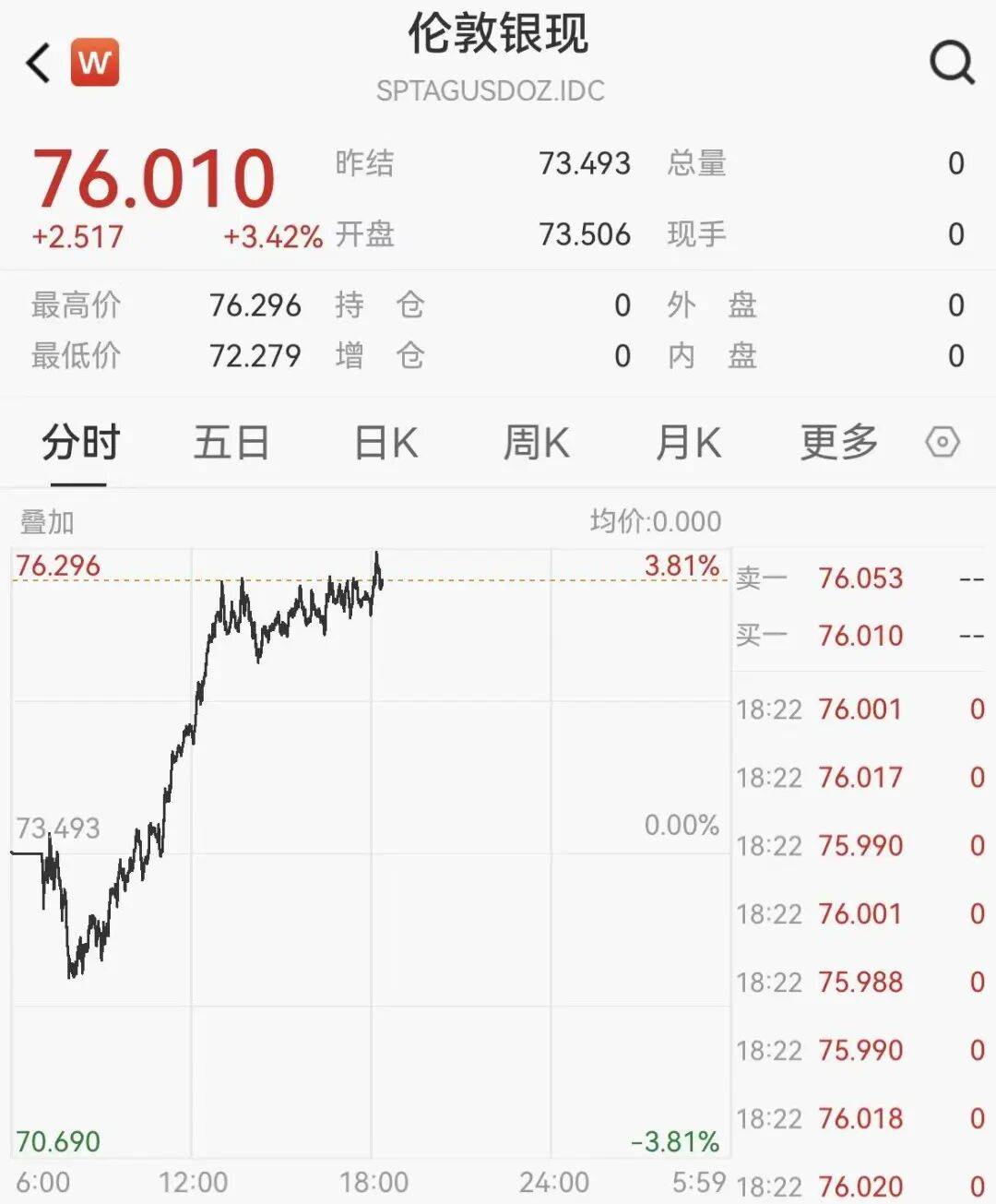
Group 1 - International gold prices experienced a short-term surge, with spot gold rising over 1.3% to reach $4,940 per ounce, and closing at $4,920 per ounce as of 18:00 [1] - Spot silver also saw significant gains, with a daily increase of over 3.8%, reaching a peak of $76 per ounce [1] - Multiple gold jewelry brands reported a decrease in domestic gold jewelry prices, with major brands like Chow Tai Fook and Lao Miao Gold quoting prices below 1,500 yuan per gram [2] Group 2 - A global fund manager survey by Bank of America indicated that buying gold has become the most crowded trade for the second consecutive month, with 50% of fund managers favoring long positions in gold, a slight decrease from 51% in January [5] - Recent comments from Federal Reserve officials have garnered market attention, with indications that there is still room for approximately 75 basis points of rate cuts before reaching neutral rates [5]
“38.4万亿债务压顶!美财长跪求别撤资,中国甩出2308吨黄金硬刚”
Sou Hu Cai Jing· 2026-02-18 12:53
背景:老债主的沉默撤退 华尔街的交易员们最近发现一件怪事——中国买家不见了。 2026年2月,一份内部文件像炸弹一样在金融圈炸开:中国监管部门建议金融机构缩减美债持仓。这不是突发奇想。翻看 美国财政部数据,截至2025年11月,中国持有美债规模已经砸下6826亿美元。什么概念?相当于直接抹掉了一个瑞士的 GDP。 第四刀为未来布局。卖债的钱去哪了?2308吨黄金躺在中国金库里。这玩意儿谁也冻结不了,战乱时期都能换命。剩下 的钱借给发展中国家,条件很简单:做生意用人民币结算。这招叫"农村包围城市",慢慢把美元挤出交易圈。 连锁反应:美元霸权的多米诺骨牌 全球前八大美债持有国里,4个在减持。印度、沙特这些"美元铁杆"也开始跟着抛。其他国家虽没动手,但都在观望—— 就像看戏的观众,发现主角快塌台了,随时准备撤椅子。 美国现在陷入死循环:想卖债得提高收益率,收益率越高利息越重。现在每分钟要还200万美元利息,相当于每秒烧掉一 辆宝马。没人接盘?自己先被利息压垮。 更绝的是操作手法——不敲锣,不打鼓,像个老练的债主悄悄搬金库。有些高持仓银行被窗口指导"减持",交易员私下 吐槽:"以前中国买债像扫货,现在卖债像倒垃圾,连 ...
中国香港建黄金金库清算中心,德国急了:1236吨黄金押在美国,睡不好觉了!
Sou Hu Cai Jing· 2026-02-18 12:27
这两年全球金融圈就一个大趋势:抛美债、狂买黄金,去美元化的浪潮越涌越烈。而最近德媒《柏林日报》的焦虑直接写在脸上:中国都在香港建世界级黄 金金库和清算中心了,德国还敢把一千多吨黄金放在美国吗?这话里,全是对自家资产安全的恐慌,更是对西方主导金融秩序的动摇。 德国前央行高管直言 "心在滴血",绿党也警告黄金不能成地缘博弈筹码,这话一点不夸张。特朗普向来不按常理出牌,美欧现在在贸易关税、北约军费上 矛盾重重,万一谈崩了,谁能保证美国不会拿这一千多吨黄金要挟德国?这种风险,只要特朗普在任一天,就永远存在。 其实德国的焦虑,只是全球去美元化的一个缩影。现在全球央行都在搞 "换仓大作战",2025 年全球央行净购金 863 吨,波兰一口气买了 102 吨成最大买 家,哈萨克斯坦、阿塞拜疆紧随其后,中国央行也连续 15 个月增持黄金,截至 2026 年 1 月储备量达 2307.57 吨今日头条。就连美元储备占比都跌到了 56.92%,创 1995 年新低,黄金储备价值更是时隔 30 年首次超过美债。 以前黄金是抗通胀工具,现在直接成应对西方制裁的 "硬武器"。尤其是新兴市场和全球南方国家,都在抱团构建脱离美元体系的价值 ...

全线拉升,黄金、白银、原油、海外主要股指集体大涨!发生了什么?
Sou Hu Cai Jing· 2026-02-18 12:27
Group 1 - European stock markets opened higher, with the UK FTSE index rising over 1% to set a new historical high, while the French CAC index increased by 0.53% and the German DAX index rose by 0.91% [1] - The Turkish banking index expanded its gains, increasing by over 3%, and the Istanbul Stock Exchange 100 index rose by 2% [2] - International oil prices surged, with Brent crude futures rising nearly 2% and WTI crude futures also increasing by nearly 2% due to Slovakia's government declaring a state of emergency for oil and planning to utilize national oil reserves [2] Group 2 - International metals strengthened, with spot gold rising by 0.8% and spot silver increasing by over 3%, while LME copper's gains expanded to 1% [3] - The US stock market saw a collective rise in major indices, with increased market expectations for future Federal Reserve interest rate cuts, as Fed's Daly indicated there is about 75 basis points of room before reaching neutral interest rates [3] Group 3 - Iran's President emphasized the commitment to rapidly implement a comprehensive strategic cooperation plan with Russia, aiming for significant advancements in bilateral relations [4] - Indirect negotiations between Iran and the US are ongoing, with a "new window of opportunity" opening despite existing differences in positions [4] - A trilateral meeting between Russia, the US, and Ukraine concluded, with discussions described as difficult but pragmatic, and plans for further talks on the Ukraine issue in the near future [4]
13F报告揭秘:巴菲特收官持仓曝光,段永平试水“AI交易”!
Ge Long Hui· 2026-02-18 11:28
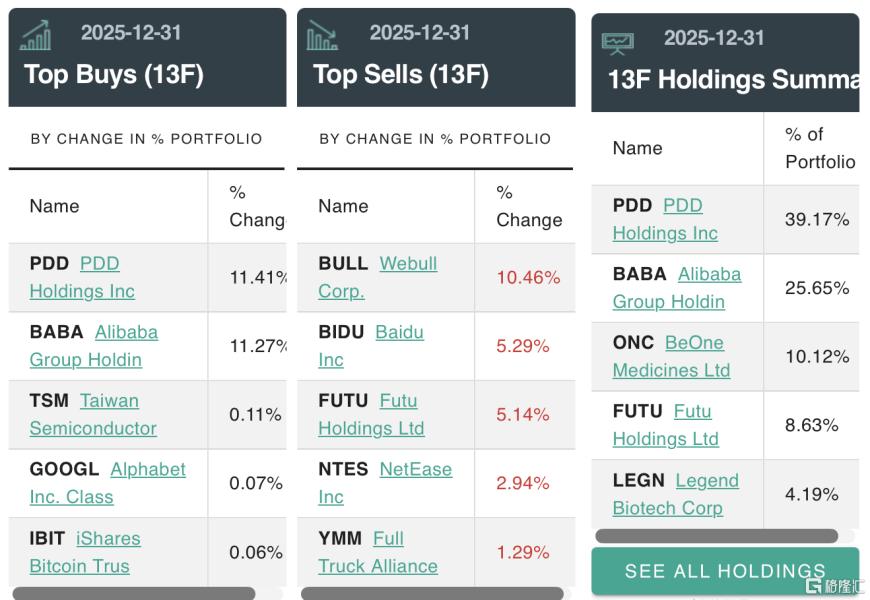
Group 1: Berkshire Hathaway's Holdings - Warren Buffett's Berkshire Hathaway continued to reduce its holdings in major stocks like Apple and Bank of America in the last quarter of his tenure as CEO, while initiating a position in the New York Times [2][3][9] - In Q4, Berkshire sold over 10.29 million shares of Apple, reducing its stake by 4.32%, resulting in a market value decrease of approximately $2.8 billion, with Apple's portfolio share dropping from 22.69% to 22.60% [3][4][5] - Bank of America also saw a significant reduction, with Berkshire selling nearly 50.8 million shares, a decrease of 8.94%, leading to a portfolio share drop to 10.38% [6][7][8] Group 2: H&H's Investment Strategy - H&H, managed by investor Duan Yongping, reported a total market value of $17.489 billion in Q4, with a notable increase in its Nvidia position by over 11 times, making it the third-largest holding [10][11] - The firm also initiated positions in three emerging tech companies while significantly reducing its stake in Apple by 87.63% [12][13] Group 3: Hillhouse Capital's Moves - Hillhouse Capital increased its stakes in Alibaba and Pinduoduo, with Pinduoduo's holdings rising from 8.59 million shares to 10.72 million shares, and Alibaba's from 3.29 million shares to 5.43 million shares [14][15] - The firm also reduced its positions in several companies, including a significant cut in Futu Holdings and Webull, indicating a strategic shift in its investment focus [14][15] Group 4: Bridgewater's Portfolio Adjustments - Bridgewater Associates disclosed a total portfolio value of approximately $27.4 billion in Q4, up from $25.5 billion in the previous quarter, with significant increases in holdings of Nvidia, Amazon, and Micron [17] - The top ten holdings accounted for 36.35% of the total portfolio, reflecting a strategic focus on AI-related stocks and gold producers [17]


白银飙升近4%,金饰克价跌破1500元,老铺黄金又要涨价
2 1 Shi Ji Jing Ji Bao Dao· 2026-02-18 10:53
Group 1 - International gold prices experienced a short-term surge, with spot gold rising over 1.3% to reach $4,940 per ounce, and settling at $4,920 per ounce [1] - Spot silver also saw significant gains, increasing over 3.8% to surpass $76 per ounce [1] - Multiple gold jewelry brands in China reported a decrease in domestic gold jewelry prices, with major brands like Chow Tai Fook and Lao Miao Gold quoting prices below 1,500 yuan per gram [2] Group 2 - A global fund manager survey by Bank of America indicated that buying gold has become the most crowded trade for the second consecutive month, with 50% of fund managers indicating a bullish stance on gold, slightly down from 51% in January [6] - Recent comments from Federal Reserve officials have garnered market attention, with indications that there is approximately 75 basis points of rate cut space before reaching neutral rates, and potential for multiple rate cuts if inflation continues to decline [6] - Lao Pu Gold announced a price adjustment for its products effective February 28, 2026, following three price increases in 2025 [3]