智能驾驶

Search documents
从技术路线到人员更迭,为什么智能驾驶又开始了“新造词”? | 电厂
Xin Lang Cai Jing· 2025-11-19 10:20
Core Insights - The automotive and smart driving industry is experiencing rapid technological iterations, leading to new terminologies and concepts that challenge user understanding and acceptance [1] - The transition from rule-based systems to end-to-end and world model architectures is reshaping the industry, with significant implications for company strategies and personnel [2][6] Group 1: Technological Evolution - The shift from rule-based to end-to-end systems has highlighted the limitations of modular approaches, particularly in terms of latency and information loss [2] - Tesla's introduction of the end-to-end FSD V12 has sparked interest among other companies like Huawei, Xpeng, and NIO, who are also developing similar solutions [2][5] - The industry is moving towards VLA (vision-language-action) models, which aim to better understand the physical world and improve driving actions [8][12] Group 2: Challenges in Implementation - Current systems, whether rule-based or end-to-end, rely heavily on passive learning from vast amounts of driving data, which limits their ability to adapt to new scenarios [5][6] - The VLA model faces challenges such as multi-modal feature alignment and the inherent limitations of language models in processing complex real-world situations [11][15] - Companies like Ideal Auto and Xpeng are exploring innovative VLA approaches to enhance their systems' capabilities and efficiency [8][12] Group 3: Organizational Adjustments - The transition to new technological routes has led to significant organizational restructuring within companies like Xpeng, Ideal Auto, and NIO, reflecting a shift in focus towards foundational models [13][14] - Xpeng's leadership changes indicate a strategic pivot from traditional VLA to innovative VLA, emphasizing the need for a robust foundational model [14] - NIO and Ideal Auto have also undergone multiple organizational adjustments to align their resources with the evolving technological landscape [15][17] Group 4: Competitive Landscape - The trend of self-research in autonomous driving technology is shifting towards partnerships with specialized suppliers, as seen with companies like Chery and Great Wall [18][19] - Suppliers are gaining an edge in flexibility and rapid iteration capabilities compared to traditional automakers, which face constraints in their development processes [21] - The competition is intensifying, with suppliers expected to play a more dominant role in the market as they advance their solutions [18][22]



五菱汽车:成立专注低速智能驾驶的附属公司
Xin Lang Cai Jing· 2025-11-19 08:53
五菱汽车在港交所发布公告称,集团已成立一家间接非全资拥有之附属公司—广西元控智驱科技有限公 司,以独立业务主体主营低速智能驾驶系统及解决方案业务。 来源:滚动播报 ...
热门科技类ETF四季度表现承压,调整何时结束?
Guo Ji Jin Rong Bao· 2025-11-19 07:47
Core Viewpoint - The technology sector is experiencing a significant adjustment, with a shift towards value stocks, leading to a debate on whether the market style has switched [1][4]. Market Performance - As of November 18, multiple robotics-themed ETFs have dropped over 14% in the fourth quarter, while previously strong sectors like AI are also seeing declines [2][4]. - The three major indices of the Sci-Tech Innovation Board have experienced varying degrees of decline, with the Sci-Tech 50 Index down 9.19%, the Sci-Tech 100 Index down 8.16%, and the Sci-Tech 200 Index down 6.5% [2][3]. - Despite the recent downturn, the Sci-Tech 50 Index has risen over 37% year-to-date, with the Sci-Tech 100 and 200 indices showing gains exceeding 45% [2]. Factors Influencing Adjustments - The recent adjustments in the technology sector are attributed to three main factors: significant gains in tech stocks since Q2 leading to profit-taking, capital flowing into defensive sectors, and the impact of declining US tech stocks [3][4]. - The current market environment has seen a shift towards traditional value stocks, with sectors like coal, energy, and rare metals leading the market, with the largest ETF in this category rising over 11% [4]. Investment Strategies - Investment professionals suggest a cautious approach to technology ETFs, recommending a gradual accumulation strategy during this adjustment phase [1][6]. - The technology sector is still viewed as a long-term investment focus, supported by policy and industry fundamentals, despite short-term volatility [6]. Future Outlook - Analysts believe that the technology sector may stabilize around Q2 of the following year, contingent on significant policy stimuli or breakthroughs in technology [6]. - The current valuation of the Sci-Tech 50 Index is around 152 times PE (TTM), while the Sci-Tech 100 and 200 indices are above 200 times, indicating a potential caution among investors due to high valuations [4][5].
通达电气:无人物流车项目目前处于技术研究阶段
Zheng Quan Shi Bao Wang· 2025-11-19 07:47
Core Viewpoint - Tongda Electric (603390) is currently in the technical research phase for its unmanned logistics vehicle project in collaboration with relevant autonomous driving solution providers, and has not yet developed products or generated revenue [1] Company Summary - The unmanned logistics vehicle project is still in the technical research stage and has not yet resulted in any products or income [1]

通达电气:公司联合相关智驾方案提供商开展无人物流车项目
Ge Long Hui· 2025-11-19 07:44
Core Viewpoint - The company is currently in the technical research phase of a project involving unmanned logistics vehicles in collaboration with relevant autonomous driving solution providers, and has not yet developed products or generated revenue [1] Group 1 - The unmanned logistics vehicle project is a joint effort with autonomous driving solution providers [1] - The project is still in the technical research stage and has not yet resulted in any products or revenue [1] - Investors are advised to be cautious regarding investment risks associated with this project [1]
通达电气(603390.SH):公司联合相关智驾方案提供商开展无人物流车项目
Ge Long Hui· 2025-11-19 07:38
Core Viewpoint - The company is currently in the technical research phase of a project involving unmanned logistics vehicles in collaboration with relevant autonomous driving solution providers, and has not yet developed products or generated revenue [1] Group 1 - The unmanned logistics vehicle project is a joint effort with autonomous driving solution providers [1] - The project is still in the technical research stage and has not yet resulted in any products or revenue [1] - Investors are advised to be cautious regarding investment risks associated with this project [1]
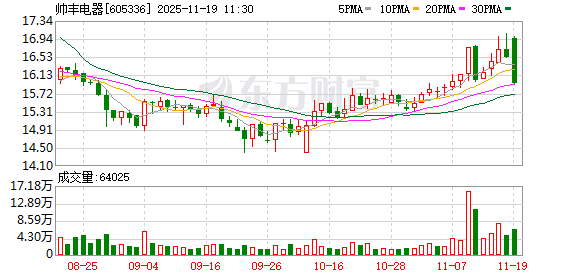
帅丰电器跨界投资超聚变 头部集成灶公司竞速构建智能生态
Nan Fang Du Shi Bao· 2025-11-19 04:58
Core Viewpoint - The leading companies in the integrated stove industry are diversifying their operations to create future growth opportunities amid declining business performance in the sector [2][6]. Group 1: Company Investments - Shuaifeng Electric announced an investment of 53 million yuan in the Xiamen Chip Force Lan No. 2 Venture Capital Fund, aiming to diversify its investment channels and seize opportunities in emerging industries [2][5]. - The fund will directly invest in Super Fusion Digital Technology Co., which focuses on computing infrastructure and services, with projected sales revenue exceeding 40 billion yuan in 2024 and 50 billion yuan in 2025 [4][6]. - Other companies in the integrated stove sector, such as Zhejiang Meida and Yitian Intelligent Kitchen Appliances, are also exploring investments in technology sectors like autonomous driving and computing services to find new growth points [6][7]. Group 2: Industry Trends - The integrated stove industry is facing significant challenges, with retail sales in the first half of 2025 dropping by 27.6% year-on-year to 6.57 billion yuan, and retail volume decreasing by 31.5% to 781,000 units [6]. - Companies are shifting their focus from traditional stove manufacturing to building smart ecosystems, indicating a competitive landscape that is evolving towards integrated smart solutions [8]. - The trend of cross-industry investments is becoming more pronounced, with companies like Marsman and Zhejiang Meida actively seeking partnerships with technology firms to enhance their business models and adapt to market changes [7][8].

这件事,首次在国家层面作出部署
Xin Lang Cai Jing· 2025-11-18 16:27
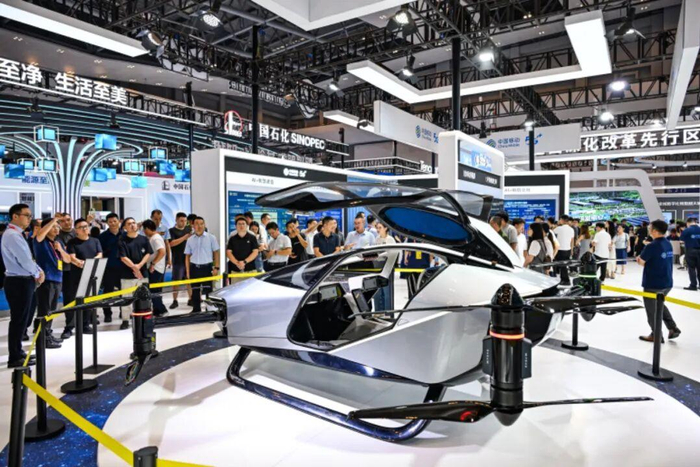
Core Viewpoint - The recent release of the "Implementation Opinions on Accelerating Scene Cultivation and Open Promotion for Large-Scale Application of New Scenes" marks the first systematic deployment at the national level in China regarding "scene cultivation and openness" [1] Group 1: Definition and Importance of Scenes - "Scenes" are defined as the application and verification of new technologies, products, and business models in specific contexts, serving as a systematic "social pilot" [2] - Scene cultivation and openness target the critical link in the transformation of scientific and technological achievements, providing a platform for emerging entities to accelerate industrialization and avoid stagnation [2] Group 2: Strategic Focus Areas - The "Implementation Opinions" emphasize the creation of application scenarios in new fields such as digital economy and artificial intelligence, as well as in manufacturing and transportation for industrial transformation [2] - Specific sectors highlighted include mining, emergency response, and social governance, aiming to enrich application scenarios in people's livelihoods [2] Group 3: Robotics and Unmanned Systems - The Ministry of Industry and Information Technology plans to implement the "Robot+" application initiative, promoting industrial and humanoid robots in complex production environments [4] - A humanoid robot training center in Beijing is operational, focusing on various real-world application scenarios, enhancing robots' capabilities through extensive training [5] Group 4: Collaborative Ecosystem - The establishment of scenes requires multi-party participation and collaboration, with government agencies, state-owned enterprises, and private sectors encouraged to engage in scene cultivation [6] - The initiative aims to leverage China's vast market and complete industrial system to gain strategic advantages in global technological competition [6]
从概念新词到产业热词 新场景引领产业新变革
Zheng Quan Ri Bao· 2025-11-18 16:26
Core Viewpoint - The article discusses the importance of "new scenarios" in driving technological innovation and industrial transformation, as highlighted by the recent government policy aimed at fostering the development and application of these scenarios [2][4][11]. Group 1: Definition and Importance of New Scenarios - New scenarios are defined as specific contexts for validating and applying new technologies, products, and business models, serving as a bridge between technology and industry [3][4]. - The cultivation and opening of new scenarios are seen as strategic choices to enhance China's market advantages and overcome technological bottlenecks [4][5]. Group 2: Challenges in Implementing New Scenarios - There is a call for the establishment of new scenarios as incubators for new models and industries, with examples showing that without foundational scenarios like mobile payments, new business models would not emerge [5][6]. - Many innovative technologies in fields such as artificial intelligence and robotics remain in pilot stages due to a lack of effective application scenarios [6][7]. Group 3: Case Studies and Government Initiatives - Hefei has developed a "super experimental field" for low-altitude economy, expanding to 22 application scenarios and establishing over 180 low-altitude takeoff and landing facilities [8]. - Guangdong has created 14 innovative application scenario testing zones, facilitating a more efficient transition from technology to commercial contracts [8][10]. Group 4: Mid-Testing Platforms and Industry Support - The establishment of mid-testing platforms is crucial for the industrialization of new technologies, addressing issues like process optimization and cost control [9][10]. - Central and private enterprises are actively participating in building mid-testing platforms, enhancing the supply of innovative solutions [10]. Group 5: Future Implications - The integration of new scenarios is reshaping the technology, industry, and capital ecosystems, indicating a significant economic and social transformation [11].
【周观点】地平线J6P方案上车,继续看好汽车板块
东吴汽车黄细里团队· 2025-11-18 14:05
Investment Highlights - This week, the performance of the automotive sector was mixed, with the SW commercial cargo vehicle segment showing the best performance at +1.1%, while the overall automotive sector declined by -2.1% [4][12] - The top five stocks covered this week included XPeng Motors, King Long Automobile, Songyuan Safety, Ruima Precision, and Foton Motor, all of which saw notable gains [4][12] Industry Core Changes - The new model ET5 from Xingtu Automobile has officially started pre-sales, featuring the world's first Horizon HSD urban auxiliary driving system and the Journey® 6P computing solution [6][12] - WeRide has received official approval from the UAE federal government to launch commercial operations of a fully autonomous Robotaxi in Abu Dhabi [6][12] - China National Heavy Duty Truck Group (CNHTC) reported wholesale sales of 28,000 units in October, a year-on-year increase of 70.5% and a month-on-month increase of 0.5%. Exports reached 15,100 units, up 77.7% year-on-year and 0.7% month-on-month, setting a new monthly sales record [6][12] Current Automotive Sector Configuration - The automotive industry is perceived to be at a crossroads, with the electric vehicle (EV) boom nearing its end and the smart vehicle sector entering a phase of innovation. Three main investment opportunities are identified: AI smart vehicles, AI robots, and traditional vehicle segments [8][13] - Key investment lines include: - **AI Smart Vehicle Line**: Focus on Robotaxi and Robovan, with downstream application targets including Tesla, XPeng Motors, and technology providers like Horizon Robotics and Baidu [8][13] - **AI Robot Line**: Emphasis on selected components from companies such as Top Group, Junsheng Electronics, and others [8][13] - **Traditional Vehicle Line**: Focus on buses (Yutong Bus), heavy trucks (CNHTC and Weichai Power), and two-wheelers (Chunfeng Power and Longxin General) [9][13] Market Performance Overview - The automotive sector ranked 26th in A-shares and 15th in Hong Kong this week, indicating a relatively lower performance compared to other sectors [17][24] - The overall valuation of the automotive sector has seen a decline, with the PE (TTM) for various segments such as commercial vehicles and passenger vehicles showing different trends [40][48]