光模块

Search documents
立讯精密:目前,公司的800G和1.6T光模块产品主要面向中小型数据中心客户进行交付
Zheng Quan Ri Bao Wang· 2025-11-17 11:41
Core Viewpoint - Lixun Precision (002475) is currently facing challenges in business development rather than technical aspects in its optical module business, and is actively working to enter the supply chains of leading customers [1] Group 1: Business Development - The company is focusing on expanding its presence among top-tier customers [1] - Current optical module products, including 800G and 1.6T, are primarily being delivered to small and medium-sized data center clients [1]

科瑞技术:公司半导体及光模块业务发展顺利
Zheng Quan Ri Bao· 2025-11-17 11:09
Core Viewpoint - The company, Keri Technology, reported that its semiconductor and optical module business is developing smoothly, with stable and smooth cooperation with international clients in the mobile terminal business [2] Group 1 - The semiconductor and optical module business is progressing well [2] - Cooperation with international clients in the mobile terminal business is stable and smooth [2]



科技行业周报:光模块、存储、液冷等行业近况更新-20251117
First Shanghai Securities· 2025-11-17 09:46
Investment Rating - The report does not explicitly state an investment rating for the industry but suggests a focus on companies with strong delivery capabilities and market positioning in the light module and storage sectors [3]. Core Insights - The light module industry is transitioning from order expectations to actual deliveries, with significant implications for stock prices and future growth [3]. - The storage cycle is expected to last longer than previous cycles, potentially extending to 2-3 years due to heightened demand and supply constraints [5]. - The AI sector is driving new demand for storage solutions, as data needs to be activated and stored for model training and other applications [8]. Summary by Sections Light Modules - Demand for 800G light modules is projected at 55 million units, while 1.6T demand is estimated at 30 million units, with Nvidia and Google being major contributors [3]. - Supply chain dynamics indicate a normal decline in prices, with profit margins expected to remain strong despite supply shortages [3]. - Key players in the light chip market, such as Lumentum, are raising prices by 10-20%, benefiting upstream suppliers [3]. - Domestic companies like Source Technology and Yunling Optoelectronics are positioned to enter the global supply chain due to upstream shortages [3]. Storage - The storage cycle is anticipated to be longer than usual, with a potential duration of 2-3 years due to increased demand and supply shortages [5]. - Domestic companies like Changxin Storage and Yangtze Memory Technologies are expected to ramp up production, alleviating supply constraints [5]. - The report highlights the impact of rising prices on mid-to-low-end consumer electronics, which may face profitability challenges [5]. AI-Driven New Fields - The AI era necessitates the activation of cold data into hot data for model training, creating new storage demands [8]. - Supply-side constraints are evident as overseas manufacturers are not expanding production, leading to a mismatch in supply and demand [8]. - Recommended companies in the storage module sector include Jiangbolong, Demingli, and Bawei Storage, each with unique strengths [8]. Liquid Cooling - The liquid cooling market is expected to see growth, particularly in overseas markets, with domestic companies yet to capitalize on this trend [10]. - Companies like Vertiv and Honeywell are leading in the overseas liquid cooling space [10]. Domestic Computing Power - The progress of domestic computing power construction is slow due to unclear policies on imported computing cards and compatibility issues [13]. - Companies like H Company, Cambrian, and Alibaba's T-head are highlighted as key players in the domestic computing power landscape [13]. Energy Storage and Photovoltaics - The energy storage sector is experiencing high demand, with certain suppliers already booked through mid-2026 [13]. - The photovoltaic industry is facing general market uncertainty, with speculation around its connection to U.S. energy shortages [13].
“易中天”三季报透视:业绩分化已现,存货高企引发减值压力
Nan Fang Du Shi Bao· 2025-11-17 09:17
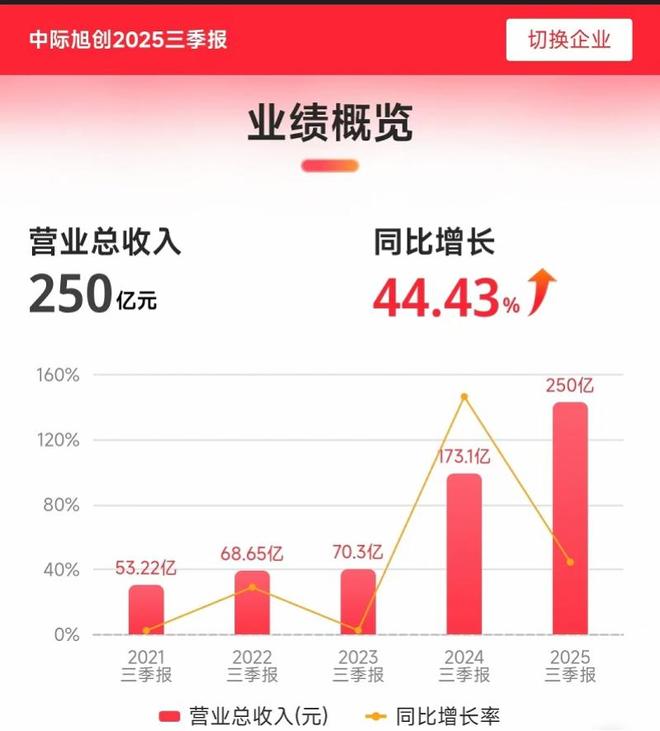
Core Viewpoint - The three leading companies in the optical module sector, namely NewEase (300502.SZ), Zhongji Xuchuang (300308.SZ), and Tianfu Communication (300394.SZ), reported significant revenue and net profit growth for the first three quarters of 2025, driven by the surge in AI computing demand. However, concerns regarding performance differentiation, high inventory levels, and valuation pressures have emerged following their quarterly reports [1][2][4]. Group 1: Financial Performance - Zhongji Xuchuang led the revenue with 25.005 billion yuan, a year-on-year increase of 44.43%, maintaining its industry leadership [2] - NewEase exhibited explosive growth with a revenue of 16.505 billion yuan, marking a staggering year-on-year increase of 221.70%, the highest among the three [2] - Tianfu Communication reported a revenue of 3.918 billion yuan, reflecting a year-on-year growth of 63.63%, which is moderate compared to its peers [2] - In terms of net profit, Zhongji Xuchuang achieved 7.132 billion yuan, a year-on-year increase of 90.05%, while NewEase's net profit surged to 6.327 billion yuan, up 284.37% [4] - Tianfu Communication's net profit reached 1.465 billion yuan, growing by 50.07% [4] - In Q3, Zhongji Xuchuang was the only company to report both revenue and net profit growth, with Q3 revenue of 10.216 billion yuan, a year-on-year increase of 56.83% and a quarter-on-quarter increase of 25.89% [4] Group 2: Profitability and R&D Investment - NewEase maintained a high gross margin of 47.25% for the first three quarters, with a net profit margin reaching a record high of 39.3% in Q3 [5] - Tianfu Communication had the highest gross margin at 51.87%, although it decreased from 57.22% in 2024, indicating pressure on profitability [5] - Zhongji Xuchuang's gross margin was 40.74%, showing a gradual improvement [5] - R&D investments for Zhongji Xuchuang reached 949.5 million yuan, a year-on-year increase of 27.41%, focusing on CPO technology and silicon photonics [7] - NewEase's R&D expenses were 501 million yuan, up 149.57%, significantly outpacing revenue growth [7] - Tianfu Communication had the highest R&D expense ratio at 5.11%, with 200 million yuan invested, a 15.82% increase [7] Group 3: Inventory and Asset Impairment - All three companies faced significant inventory increases, raising concerns about potential asset impairment losses [8] - As of Q3 2025, Zhongji Xuchuang's inventory reached 11.216 billion yuan, a year-on-year increase of 52.64%, while NewEase's inventory was 6.603 billion yuan, up 59.79% [8] - Tianfu Communication's inventory decreased slightly to 337 million yuan, but it remained at a historically high level [8] - NewEase reported asset impairment losses of 203 million yuan, a staggering year-on-year increase of 883.08% [11] - Zhongji Xuchuang's asset impairment losses were 66.3623 million yuan, while Tianfu Communication's losses were 33.1005 million yuan, reflecting a year-on-year increase of 238.76% [11] Group 4: Market Reaction and Future Outlook - Following the quarterly reports, the stock prices of the three companies fell sharply, with a combined market value loss exceeding 140 billion yuan [1][13] - The market correction was attributed to performance not meeting expectations and a return to valuation levels after previous highs [13] - Despite the short-term market reaction, many institutions remain optimistic about the long-term prospects of the optical module industry, citing sustained demand and supply shortages [14]


我国6G技术试验取得重大突破,创业板ETF博时(159908)配置机会备受关注
Xin Lang Cai Jing· 2025-11-17 06:41
Group 1 - The ChiNext Index has decreased by 0.86% as of November 17, 2025, with mixed performance among constituent stocks, where Tianhua New Energy led with a rise of 19.57% and Maiwei Co. fell by 7.78% [1] - The ChiNext ETF by Bosera has seen a recent price of 2.86 yuan, down 0.80%, while it has accumulated a 2.48% increase over the past month [1] - The retail price of the 1.6T optical module has surged from approximately $1200 at launch to over $2000, driven by increasing demand from leading overseas clients due to the ongoing rise in AI computing power [1] Group 2 - China has conducted 6G technology trials for four consecutive years, completing the first phase and establishing over 300 key technology reserves, with the global 6G market expected to reach $14.94 billion by 2030 [2] - 2025 is identified as a critical year for the initiation of 6G standard research, with a growing consensus in the industry regarding the future direction of 6G standards [2] - The communication industry is anticipated to experience a period of technological iteration and policy benefits in 2025, with new growth drivers emerging from AI, quantum communication, and low-altitude economy sectors [2] Group 3 - The latest scale of the ChiNext ETF by Bosera is 1.216 billion yuan, closely tracking the ChiNext Index, which consists of 100 stocks with high market capitalization and liquidity [3] - As of October 31, 2025, the top ten weighted stocks in the ChiNext Index account for 58.2% of the index, including companies like CATL and Mindray Medical [3]

科技调整结束了吗?年末关键布局方向!
Xin Lang Ji Jin· 2025-11-17 05:39
Group 1 - The technology sector is currently under pressure, with potential index-level investment opportunities expected to emerge gradually by the end of November [1] - The recent technology sector rally began around September 10, with low-positioned sectors including fintech, edge AI, robotics, and low-altitude economy, while high-positioned sectors include optical modules, storage, and new energy [3] - High-positioned sectors are experiencing increased volatility as funds concentrate on a few leading stocks, indicating a need for caution regarding short-term adjustment risks [3] Group 2 - Potential opportunities in low-positioned sectors include robotics and Robotaxi, with companies like XPeng expected to transition to a robotics valuation model by 2026-2027 [4] - The fintech sector is anticipated to see new developments in Q1 of next year, despite short-term policy impacts [5] - Edge AI is expected to gain momentum starting in 2026 with OpenAI's developments, although it may still require time to stabilize [6] Group 3 - The low-altitude economy sector is currently under adjustment, with no clear catalysts observed, necessitating ongoing attention to policy and technological advancements [7] - The Hong Kong stock market is facing liquidity pressure due to a high number of IPOs, with expectations leaning towards a phase of catch-up [8] - The AI computing sector remains robust, with cloud vendors likely to meet financing needs in the first year, while optical modules are still considered quality assets [11]
算力再迎利好?巴菲特建仓谷歌,英伟达财报发布在即!华胜天成涨停,云计算ETF汇添富(159273)涨超1%!
Sou Hu Cai Jing· 2025-11-17 03:39
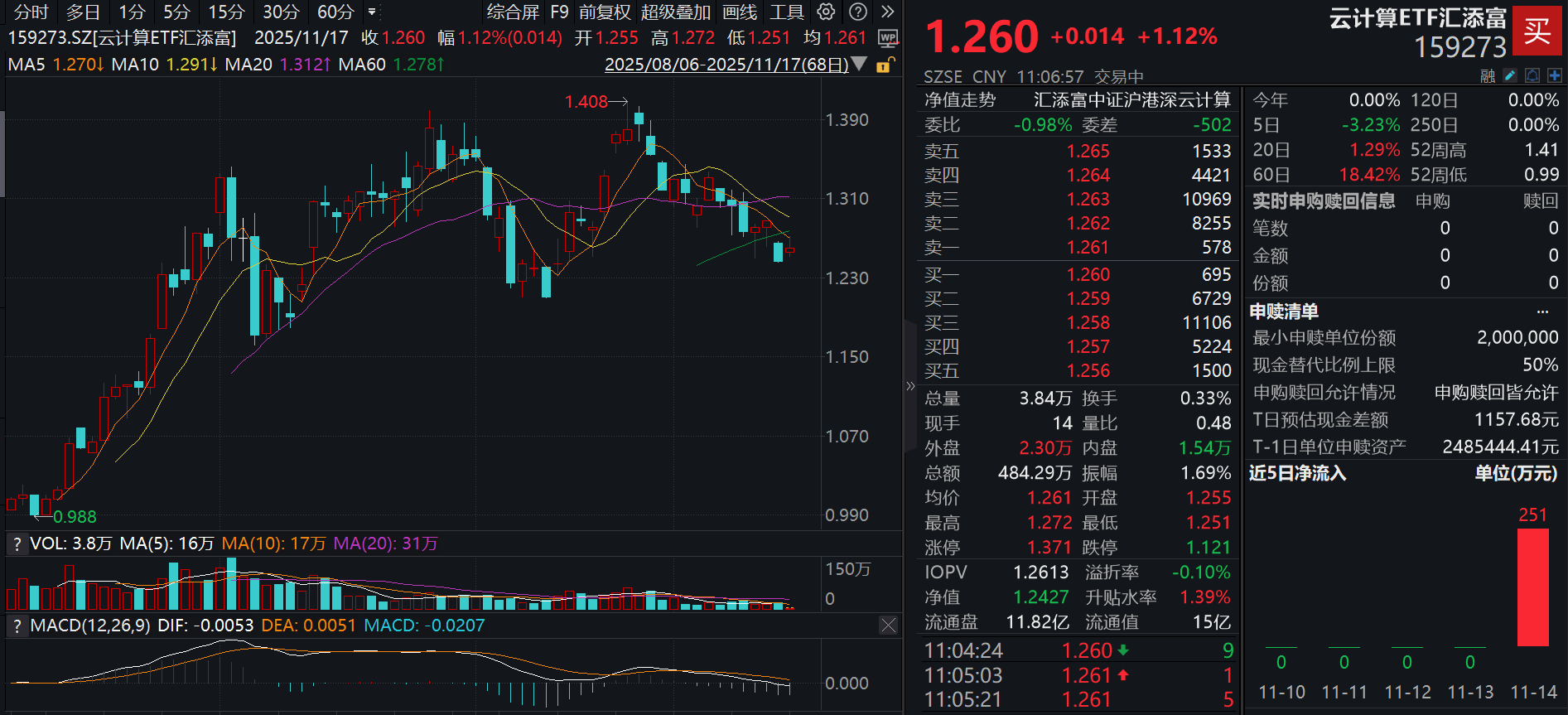
Group 1: Market Performance - The cloud computing ETF Huatai (159273) initially rose over 2% and is currently up 1.12%, with a latest scale of nearly 1.5 billion yuan, leading its peers [1][3] - As of November 14, major stocks in the cloud computing ETF showed positive performance, with Dongfang Guoxin up over 11%, Huasheng Tiancai hitting the limit, and Tuo Wei Information up over 5% [3] Group 2: AI Technology Breakthrough - Major domestic tech companies are set to release breakthrough AI technologies on November 21, which could increase the utilization rate of GPU and NPU resources from the industry average of 30%-40% to 70%, significantly enhancing hardware potential [3] Group 3: Nvidia Financial Outlook - Nvidia's Q3 FY2025 earnings report is expected to show revenue of $55.1 billion, a 57% year-over-year increase, with data center revenue projected at $49.1 billion [5] - Demand remains high, particularly from major North American cloud service providers, with expectations for increased capital expenditures [5] Group 4: Berkshire Hathaway's Investment Strategy - Warren Buffett's Berkshire Hathaway has increased its stake in Alphabet, making it the tenth largest holding, while continuing to sell Apple shares, reflecting a focus on companies with clear growth potential [6] Group 5: Cloud Computing Revenue Growth - Google Cloud's revenue continues to exceed expectations, with a backlog of orders increasing by 46% to $155 billion [7] - Microsoft Azure's revenue growth accelerated, with commercial orders up 112% year-over-year [7] - Amazon AWS also saw significant revenue growth, with a 150% increase in revenue from self-developed chips [7] Group 6: Capital Expenditure Trends - Google has raised its 2025 capital expenditure guidance to $91-93 billion, while Microsoft and Amazon also reported increased capital expenditures, indicating a strong commitment to AI and cloud infrastructure [8][9] - The overall capital expenditure by tech giants is disciplined, with a focus on maintaining profitability while investing in growth [9] Group 7: LightCounting Market Predictions - The global optical module market is expected to grow at a compound annual growth rate of 22% over the next five years, driven by AI applications and cloud service provider upgrades [10][12]





量增价优——光的景气度上行
2025-11-16 15:36
Summary of Conference Call Records Industry Overview - The conference call primarily discusses the **optical module supply chain** and its challenges, particularly focusing on the **AI-related market** and its implications for the **semiconductor industry** [1][2][3]. Key Points and Arguments Optical Module Supply Chain - The supply chain for optical modules is currently facing significant **supply shortages**, particularly in the transition from **800G to 1.6T** products. The upstream supply of **100G and 200G EML optical chips** remains scarce, leading to a highly tense supply situation [1][3]. - The introduction of **silicon photonics** technology is creating new bottlenecks, shifting the focus from traditional optical chips to silicon-based designs, which is expected to enhance the **return on equity (ROE)** for companies like **Xuchuang** [1][6]. Pricing Dynamics - Prices for optical modules are stable among major clients due to long-term contracts, while retail prices are significantly higher, with some products priced at **twice the quoted price** from leading companies [1][4]. ROE Trends - Concerns about peak profit margins in manufacturing are addressed, emphasizing that the current AI investment cycle is global and substantial. The **ROE** is expected to rise due to supply-demand tightness and advancements in silicon photonics technology [1][5]. Demand for Computing Power - The demand for computing power remains robust, with prices for **H100 and A100** GPUs increasing. Even older models are maintaining high rental rates, indicating a strong market demand that differs from the **dot-com bubble** era [1][7]. Market Sentiment on GPU Depreciation - Market concerns regarding GPU depreciation and pricing trends are considered somewhat exaggerated. Many data centers continue to utilize older GPU models effectively, demonstrating sustained demand driven by increased usage and model capabilities [1][8]. Investment Insights - **Warren Buffett's investment** in Alphabet, amounting to approximately **$4.2 billion**, signifies a shift in investment philosophy under the new CEO of Berkshire Hathaway. This investment reflects confidence in AI and its related sectors, potentially influencing other companies like **Meta** to enhance their AI capabilities [1][9][11]. Future Outlook for the Computing Sector - The computing sector is recommended for continued focus, with high levels of valuation and certainty. Positive signals from the supply chain suggest a favorable trend, especially as the end of the year approaches [1][12]. Company-Specific Developments - **Smiq's** third-quarter report shows improved operational metrics, including higher gross margins and increased profits attributable to minority shareholders, indicating a solid foundation for domestic computing chip expansion [1][13]. - **Tencent's** capital expenditures remain stable, with potential for growth in cloud services if supply constraints are alleviated. Other major domestic tech companies are also expected to benefit from local computing expansion [1][14]. Huawei's New System - Huawei's upcoming system aims to significantly enhance the utilization rates of **GPUs and NPUs** from **30% to 70%**, although challenges remain in optimizing performance across different scenarios [1][15]. Domestic Computing Market Outlook - The domestic computing market is poised for growth, driven by AI developments and significant investments. The computing sector is expected to be the area with the highest certainty and growth potential in the coming year [1][16].

新股前瞻|海光芯正:营收高复合增长,“AI热”背后仍不乏成长困扰
Zhi Tong Cai Jing· 2025-11-16 02:52
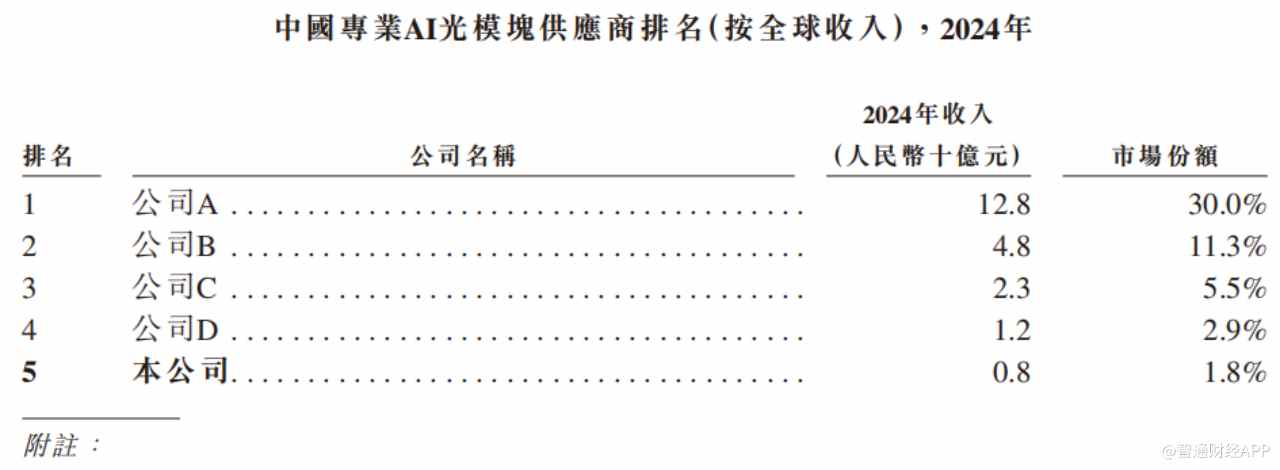
Core Viewpoint - The rapid growth of the AI industry has significantly increased demands on communication networks, leading to a booming optical module market, with Beijing Haiguang Xinzhen Technology Co., Ltd. (Haiguang Xinzhen) seeking to capitalize on this trend through its upcoming IPO [1][7]. Company Overview - Haiguang Xinzhen, established in November 2011, specializes in optical interconnect products, including optical modules and active optical cables (AOC), with a focus on AI data centers [2]. - The company ranks as the tenth largest professional optical module provider globally, with a market share of 0.7% and is the fastest-growing among the top ten manufacturers from 2022 to 2024 [2][3]. Financial Performance - Revenue has shown rapid growth, with figures of 103 million, 175 million, 862 million, and 698 million RMB for the years 2022, 2023, 2024, and the first half of 2025, respectively, reflecting a compound annual growth rate (CAGR) of 189.6% from 2022 to 2024 [5]. - Despite revenue growth, the company has not yet achieved profitability, with net losses of 60.21 million, 109 million, 18.22 million, and 34.85 million RMB for the same periods [5][6]. Competitive Advantages - The company possesses significant technological barriers, leveraging silicon photonics technology to create an end-to-end capability from chip design to module manufacturing [3]. - Haiguang Xinzhen has established strong customer relationships through a Joint Design Manufacturing (JDM) model, particularly with leading Chinese internet and cloud service providers [3]. - Cost control is a key strength, with silicon photonic chips designed to share production capacity with traditional CMOS, reducing costs by 30-40% compared to overseas competitors [3]. Future Outlook - The company is focusing on three main technology directions: next-generation high-speed optical interconnect products (1.6T, 3.2T), advanced packaging technologies (NPO and CPO), and PCIe AEC and AOC products [4]. - The global optical interconnect market is projected to grow from 4.2 billion RMB in 2020 to 46.2 billion RMB in 2024, with a CAGR of 82.3%, indicating a robust growth environment for Haiguang Xinzhen [7][8]. - The AI optical module market is expected to grow significantly, with projections of 42.3% CAGR from 2024 to 2029 in China, driven by domestic AI data center developments [7][8]. Industry Trends - The optical module technology is evolving towards higher speeds, greater integration, and lower power consumption, aligning with Haiguang Xinzhen's technological advancements [8]. - The company is making progress in developing 1.6T silicon photonic modules and is advancing research on 3.2T and 6.4T optical chips to meet market demands [8].
海光芯正:营收高复合增长,“AI热”背后仍不乏成长困扰
Zhi Tong Cai Jing· 2025-11-16 02:48
Core Viewpoint - The rapid growth of the AI industry has created unprecedented demands for bandwidth, density, and energy efficiency in communication networks, driving significant growth in the optical module industry, with companies like Beijing Haiguang Xinzhen Technology Co., Ltd. (Haiguang Xinzhen) seeking to capitalize on these opportunities through an IPO [1][12]. Company Overview - Haiguang Xinzhen, established in November 2011, specializes in optical interconnect products, including optical modules and active optical cables (AOC), with a focus on supporting high-speed, high-density, and energy-efficient data transmission in AI data centers [2][6]. - The company ranks as the tenth largest professional optical module provider globally, with a market share of 0.7% and is the fastest-growing among the top ten manufacturers from 2022 to 2024 [2][12]. Financial Performance - Haiguang Xinzhen's revenue has shown rapid growth, with figures of RMB 102.795 million in 2022, RMB 175.338 million in 2023, and projected revenues of RMB 861.832 million in 2024, reflecting a compound annual growth rate (CAGR) of 189.6% from 2022 to 2024 [7][9]. - Despite revenue growth, the company has not yet achieved profitability, reporting net losses of RMB 60.209 million in 2022, RMB 108.564 million in 2023, and RMB 17.895 million in the first half of 2024 [8][9]. Revenue Structure - The core revenue source for Haiguang Xinzhen is optical modules, which accounted for 68% of total revenue in 2022, with projections of 70.6% in 2023 and 68.5% in 2024 [4][5]. - AOC products have shown variability in revenue contribution, ranging from 12.5% to 26.3%, while other products contribute a smaller share [4][5]. Market Trends - The global optical interconnect market is expected to grow from RMB 4.2 billion in 2020 to RMB 46.2 billion by 2024, with a CAGR of 82.3%, and the AI optical module segment is projected to reach RMB 42.8 billion by 2024 [12][15]. - In China, the AI optical module market is anticipated to grow from RMB 600 million in 2020 to RMB 6.9 billion by 2024, with a CAGR of 86.8% [15]. Technological Development - Haiguang Xinzhen is focusing on advanced technologies such as 1.6T and 3.2T optical interconnect products to meet the increasing data throughput demands of AI data centers [6][18]. - The company has made progress in developing silicon photonic technology, which is expected to enhance its competitive edge in the market [19]. Investment Outlook - The upcoming IPO aims to raise funds for capacity expansion (51%), new product and technology development (37%), and business promotion (2%), positioning the company to strengthen its competitive advantage in the silicon photonic optical module sector [1][19]. - The company’s investment value is driven by its technological barriers and the growth potential of the industry, despite challenges related to profitability and market competition [19].