
低空经济

Search documents
低空物流、AI医疗与无人驾驶驱动科技与消费深度融合
Yang Zi Wan Bao Wang· 2025-11-13 05:36
Group 1: Low Altitude Economy and Smart Transportation - The low altitude economy is expected to reach a scale of 1.5 trillion yuan by 2025, with applications expanding from logistics to urban commuting and emergency rescue [1][2] - The number of registered low altitude economy-related enterprises in China has exceeded 95,000, with approximately 22,000 new registrations in 2025 alone [2] - The long-term outlook for the low altitude economy is promising, with Morgan Stanley predicting a global flying car market size of $300 billion by 2030, positioning China as a potential leader in urban low altitude transportation [4] Group 2: Medical Devices and Healthcare Products - The medical device and healthcare product sectors are experiencing a dual drive of precision and intelligence, with a market size expected to exceed 1.5 trillion yuan by 2025 [1][5] - There are over 6.195 million registered medical device-related enterprises in China, with approximately 1.138 million new registrations in 2025 [5] - The integration of artificial intelligence and big data is transforming diagnostic and treatment models in the medical device industry, enhancing the precision and safety of procedures [5][7] Group 3: Electronics and Home Appliances - The electronics and home appliance industry is facing saturation and homogenization, prompting companies to seek growth through cross-industry expansion into smart driving and robotics [8][9] - There are over 21.987 million registered home appliance-related enterprises in China, with a trend of increasing registrations expected to peak in 2024 [11] - The integration of smart home technology with autonomous driving is creating new solutions, positioning home appliances as entry points into smart ecosystems [11] Group 4: Overall Industry Trends - The exhibitions from the Canton Fair to the Import Expo highlight the upgrade and iteration of Chinese industries, revealing deep trends in global technology integration [12] - Future advancements in low altitude routes, AI in healthcare, and the fusion of smart homes with vehicle networks are expected to embed technology innovation into daily life, driving economic growth and social progress [12]

四大场景探索见效 广州全力打造城市级“全域场景”
Xin Hua Cai Jing· 2025-11-13 05:22
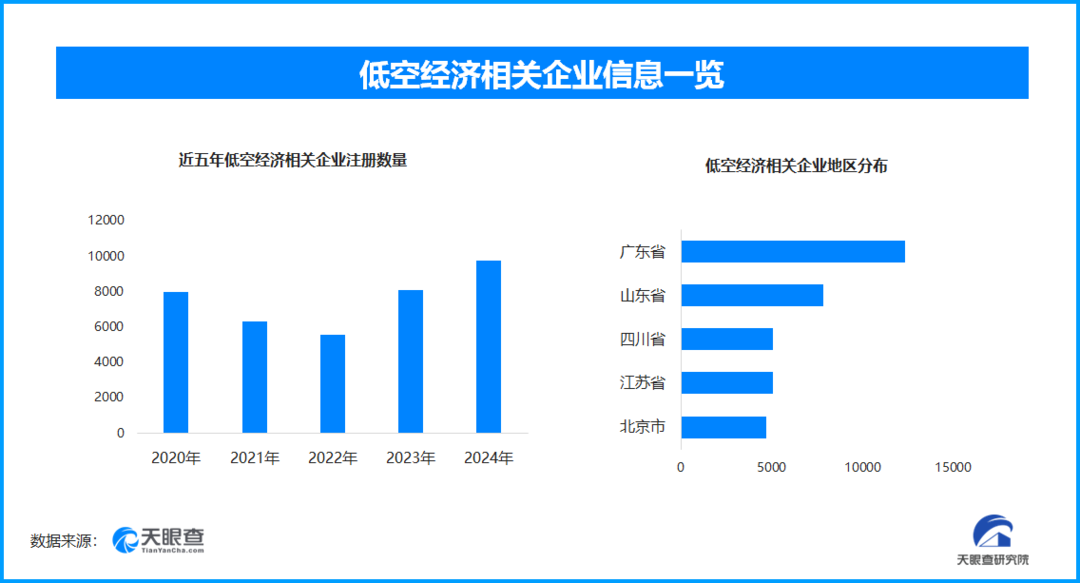
Core Insights - The implementation opinions emphasize the need for local regions to explore and cultivate early-stage scenarios, aiming to create a robust ecosystem for new industries and business models in Guangzhou [1][4] - Guangzhou has identified four key areas for initial focus: clean energy, modern seed industry, all-space unmanned systems, and deep-sea development, integrating scenario cultivation into urban industrial development [1][3] Group 1: Clean Energy - Guangzhou aims to build a cross-regional collaborative demonstration scenario for the hydrogen energy industry, with a local hydrogen production capacity exceeding 7,000 tons by October 2025 and 17 hydrogen refueling stations established [1] - The city is actively participating in mixed-ownership reform with Guangdong Baohydrogen Technology Co., leveraging by-product hydrogen from the steel industry to create a broader hydrogen energy scenario [1] Group 2: Agricultural Technology - Guangzhou has made breakthroughs in key variety breeding and industrialization, establishing a digital breeding technology system for pigs that serves 75% of national core breeding farms, and has undertaken 91 projects with financial support of nearly 120 million yuan [2] - The city has registered over 700 new national agricultural plant varieties, showcasing its strength in agricultural innovation [2] Group 3: Unmanned Systems - Guangzhou is exploring cross-space collaborative operation standards and regulatory models, with over 4,000 enterprises in the low-altitude economy sector, covering the entire industrial chain from core component development to application [2] - The city has established a comprehensive unmanned system management platform, integrating various unmanned devices for operational efficiency [2] Group 4: Deep-Sea Technology - Guangzhou has released a "10+10" supply-demand application scenario list in the deep-sea sector, attracting high-tech companies and achieving breakthroughs in commercial orders for deep-sea robots [3] - The city is advancing towards becoming a "vertical model capital" with 56 registered AI models across nine fields, including smart cities and intelligent manufacturing [3] Group 5: Future Initiatives - Future measures include enhancing scenario construction as a major reform tool, creating a layered and categorized mechanism for scenario openness, and promoting the market-oriented allocation of key elements [4] - The city aims to establish a supportive environment for scenario innovation and deepen the reform of the business environment to position Guangzhou as a national hub for scenario innovation [4]
“资本助力·智融低空” 2025低空经济投资与发展大会将于11月深圳举办
2 1 Shi Ji Jing Ji Bao Dao· 2025-11-13 04:19
Group 1 - The "2025 Low Altitude Economy Investment and Development Conference" will be held on November 21, focusing on the Guangdong-Hong Kong-Macao Greater Bay Area and its advantages in innovation resources, industrial chains, and active financial capital [1] - The low altitude economy in China reached a scale of 505.95 billion yuan in 2023, with a growth rate of 33.8%, and is projected to reach 1.5 trillion yuan by 2025 and 3.5 trillion yuan by 2035 [2] - Guangdong is a leading region in low altitude economy development, with over 2,000 low altitude aircraft manufacturing companies and more than 15,000 related enterprises, accounting for over 30% of the national low altitude economy industry chain [2] Group 2 - The conference will feature a roundtable discussion on the challenges and pathways for the integration of low altitude industries and financial capital, focusing on three core issues: the "light asset, high risk" nature of low altitude industries, local government strategies to leverage social capital, and commercialization points for drone logistics and urban air traffic [3] - The event will also include a specialized roadshow for high-growth innovative companies in the low altitude economy, aiming to connect projects with capital efficiently, with participation from around 20 well-known investment institutions [4] - The low altitude economy is recognized as a strategic emerging industry that requires comprehensive financial support and deep collaboration among various market entities to accelerate its commercialization and scaling [4]
四川巴中:全国革命老区振兴发展示范市建设迈出新步伐
Zhong Guo Fa Zhan Wang· 2025-11-13 04:17
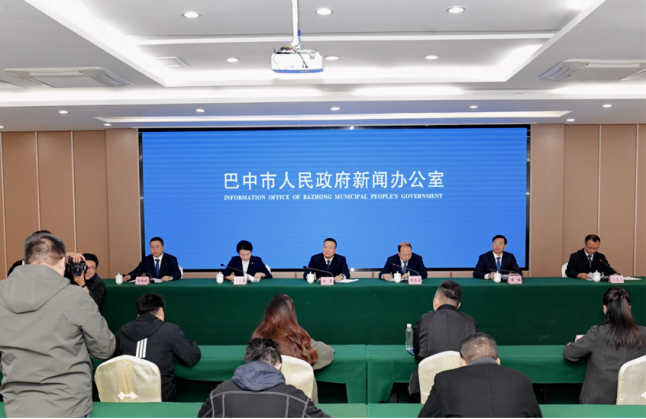
Core Insights - The article highlights the significant achievements of Bazhong City during the "14th Five-Year Plan" period, emphasizing the city's commitment to high-quality development and the implementation of the "One City, Four Districts, Three Areas" development strategy [1][3]. Economic Development - Bazhong's GDP growth rate improved from 15th among 20 revolutionary old districts in 2020 to 2nd in 2024, with the city achieving its best position in nearly a decade [4]. - The local public budget revenue has seen a continuous growth rate for 17 months, while the industrial added value has maintained double-digit growth for 18 months, placing Bazhong in the top tier of provincial rankings [4]. Industrial Development - The city has established a modern industrial system categorized as "5+2+3," focusing on ecological industry and advanced manufacturing [6]. - Key industries include advanced materials, low-altitude economy, and clean energy projects, with significant investments in wind, solar, and hydropower [6]. Urban-Rural Integration - Bazhong has promoted urban-rural integration, enhancing the quality of life in both urban and rural areas, and has seen a 4.34 percentage point increase in urbanization rate since 2020 [8]. - The city has successfully integrated into the "two-hour economic circle" of Chengdu and Chongqing, improving transportation links significantly [8]. Reform and Innovation - The city has implemented measures to create a business-friendly environment, including the introduction of local regulations to optimize services for enterprises [9][10]. - Bazhong has initiated a systematic assessment of various resources to enhance their value and promote economic development [10]. Environmental Sustainability - Bazhong has made strides in ecological development, becoming the first prefecture-level city in Sichuan to establish a national ecological civilization demonstration zone [12]. - The city has developed a GEP accounting system, achieving an ecological system production value of 2,586.36 billion yuan in 2023 [12]. Social Welfare - The city has focused on improving the quality of life for its residents, allocating over 70% of new financial resources to social welfare projects [13]. - Initiatives in education and healthcare have been prioritized, including the establishment of a cloud-based education platform and improved access to medical services [13][14].
如何应对“电风扇”行情,机构建议这样布局丨每日研选
Shang Hai Zheng Quan Bao· 2025-11-13 01:37
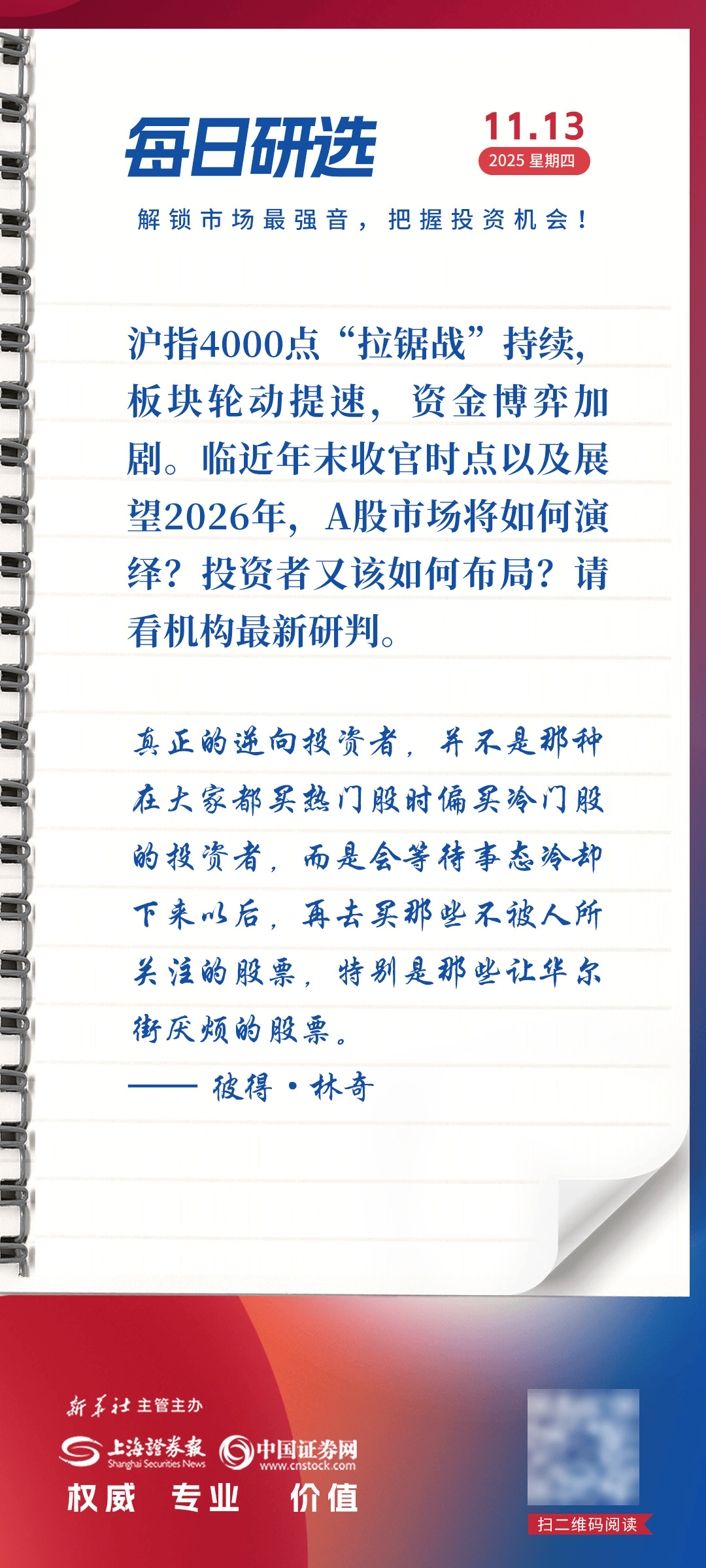
Core Viewpoint - The A-share market is currently experiencing a "tug-of-war" around the 4000-point level, with accelerated sector rotation and intensified capital competition as the year-end approaches and outlook for 2026 is considered [1] Market Overview - The Shanghai Composite Index is in a phase of consolidation, with a lack of strong catalysts leading to a relatively stable market momentum, characterized by oscillation and accumulation [1] - The internal market dynamics show a significant increase in the speed of style and sector rotation, with profit opportunities concentrating in specific sub-sectors [1] - A "wait-and-see" strategy is recommended to avoid risks associated with chasing trends [1] Mid-term Market Outlook - The core support logic for the market is becoming clearer, with similarities drawn to the market conditions of 2020-2021, driven by policy guidance, industrial upgrades, and capital resonance [1] - The market is currently in the early stages of a new policy-driven and industry trend-driven cycle [1] - The fourth quarter is expected to be more stable, with November entering an earnings vacuum period, while the "14th Five-Year Plan" provides new hotspots for the market [1] Strategic Outlook for 2026 - The performance of RMB-denominated equity assets is strategically favored for three reasons: 1. The rise of new economic drivers in China, such as advanced manufacturing and technological innovation, is expected to drive a re-evaluation of China's growth model by overseas capital [1] 2. A marginal easing of Sino-US relations is anticipated to enhance risk appetite [1] 3. Increasing certainty of global liquidity easing is expected to support the RMB and equity markets [1] - Incremental capital sources for the market in 2026 are likely to come from foreign investment and public funds, with a gradual appreciation of the RMB against the USD expected [1] Asset Allocation Strategy - A balanced asset allocation strategy is recommended for the fourth quarter, with an emphasis on defensive and recovery opportunities [2] - High-dividend sectors are highlighted as valuable alternatives to deposits and real estate in a low-interest-rate environment [2] - The mid-term focus remains on technology growth and advanced manufacturing, with an emphasis on domestic production processes and new productive forces [2] - Key sectors for investment include new energy, new materials, aerospace, and strategic emerging industries as outlined in the "14th Five-Year Plan" [2]
帮主郑重早间观察:黄金破千三、机器人量产落地,中长线锚定3类硬逻辑机会
Sou Hu Cai Jing· 2025-11-13 00:39
各位老铁早上好,帮主郑重的早间观察又如约而至!今早的财经消息可太有看头了,黄金价格飙破1300元/克,特斯拉人形机器人要扩产到千万台,还有光 伏、储能赛道的真利好和小风波,做了20年财经记者、死磕中长线的我,今天就帮大伙儿扒扒里面的门道,不搞虚头巴脑的,只聊能落地的机会和避坑指 南。 先说说宏观大环境,昨晚美股道指接着创历史新高,银行和黄金板块领涨,这背后是市场在押注美国政府停摆即将结束,还有美联储的利率政策动向。虽然 亚特兰大联储行长要退休,且表态支持维持利率到通胀达标,但劳动力市场降温、部分经济数据可能缺失,都让降息预期没降温,这对全球资产定价影响不 小。国内这边更给力,境外投资者持有A股市值超3.5万亿元,全球前40大投资机构还在增持中国股票,说明外资对咱们市场的信心越来越足,加上中美经贸 领域在推进合作,这些都是中长期的利好支撑,市场的大环境在慢慢变好。 人形机器人赛道也传来重磅消息,特斯拉要扩建得州超级工厂,专门用来量产Optimus,目标年产能1000万台,2027年就启动量产。做了20年财经记者,我 知道这种巨头明确量产规划的信号有多重要,这意味着行业要从研发阶段迈入规模化落地阶段了。不只是特斯 ...

11月13日每日研选|如何应对“电风扇”行情,机构建议这样布局
Sou Hu Cai Jing· 2025-11-13 00:34
Core Viewpoint - The A-share market is experiencing a tug-of-war around the 4000-point level, with accelerated sector rotation and intensified capital competition as the year-end approaches and looking ahead to 2026 [3] Market Overview - The Shanghai Composite Index is currently in a phase of consolidation, with a lack of strong catalysts leading to relatively stable market momentum. The market is expected to exhibit a pattern of oscillation and accumulation [3] - Internal market dynamics show a significant increase in the speed of style and sector rotation, with profit opportunities concentrating in specific sub-sectors [3] Short-term Strategy - A "watch and wait" strategy is recommended to avoid the risks of chasing highs and cutting losses, as investors adopt a more cautious approach near year-end [3] Mid-term Outlook - The core support logic for the market is becoming clearer, with similarities to the 2020-2021 market conditions. The current market is in the early stages of a new policy-driven and industry trend-driven cycle [3] - The "14th Five-Year Plan" is expected to provide new hotspots for the market, leading to a stable A-share market towards the end of the year [3] Long-term Perspective (2026) - The outlook for RMB-denominated equity assets is strategically optimistic due to three main reasons: 1. The rise of new economic drivers in China, such as advanced manufacturing and technological innovation, is expected to drive a re-evaluation of China's growth model by overseas funds [3] 2. A marginal easing of Sino-U.S. relations is likely to enhance risk appetite [3] 3. Increasing certainty of global liquidity easing will support the RMB and equity markets [3] - Incremental capital sources for the market in 2026 are likely to come from foreign investment and public funds, with a gradual appreciation of the RMB against the USD anticipated [3] Asset Allocation Strategy - A balanced asset allocation strategy is recommended for the fourth quarter, with an emphasis on defensive and recovery opportunities in the short term [4] - High-dividend sectors are highlighted as important alternatives to deposits and real estate, while sectors such as finance, energy resources, public utilities, consumption, operators, and transportation are noted for their specific focus areas [4] - In the mid-term, the focus remains on technology growth and advanced manufacturing, with an emphasis on domestic production processes and new productive forces [4]
深圳广州拿下冠亚军:广东“老板经济”新质涌动
2 1 Shi Ji Jing Ji Bao Dao· 2025-11-12 12:41
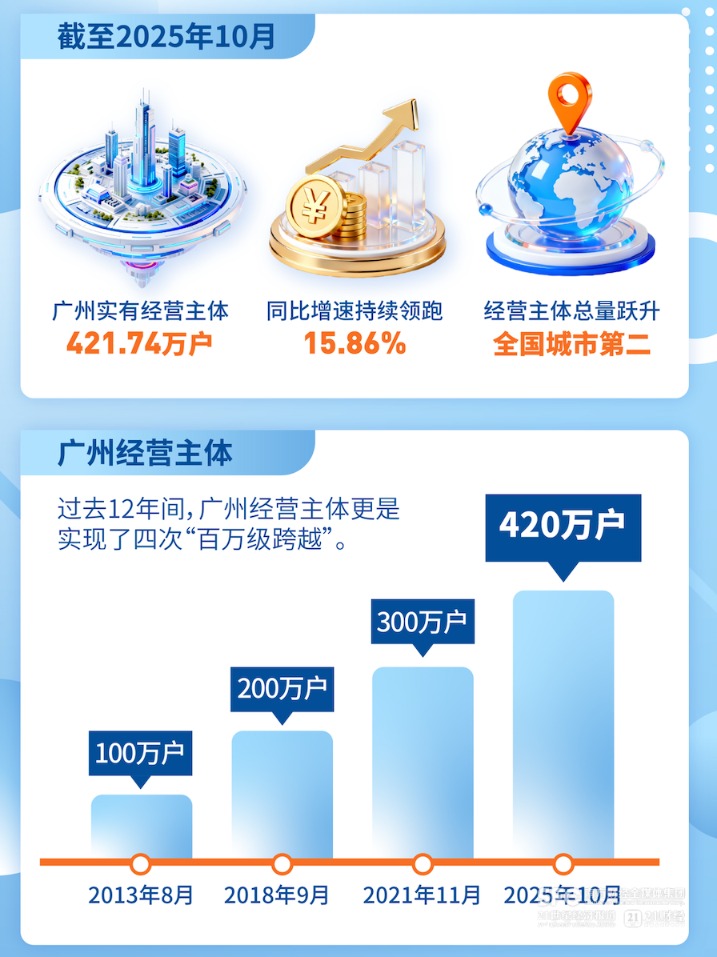
Group 1 - The core observation is that the phenomenon of "boss economy" in Guangdong, particularly in Guangzhou and Shenzhen, reflects the high-quality development of the region's economy, with a significant number of business entities emerging in various sectors [1][2][3] - As of October 2023, Guangzhou has over 4.217 million registered business entities, a year-on-year increase of 15.86%, ranking second nationally, while Shenzhen has surpassed 4.57 million, ranking first [1][3] - The concentration of business entities in Guangdong is notable, with nearly 9 million combined in Guangzhou and Shenzhen, contributing to the construction of the Guangdong-Hong Kong-Macao Greater Bay Area [3][7] Group 2 - The private sector plays a crucial role in Guangzhou's economy, with 95% of business entities being private enterprises, contributing significantly to job creation and economic growth [4][6] - Guangdong's business environment is characterized by a robust industrial foundation, favorable location, and supportive policies, making it an attractive destination for businesses [6][11] - The rapid growth of new business entities in Guangdong, particularly in emerging industries, indicates a shift towards high-tech and innovative sectors, with significant increases in registrations in fields like artificial intelligence and quantum technology [10][12] Group 3 - The average annual increase of business entities in Guangdong from 2017 to 2024 is 1.256 million, demonstrating a strong trend in entrepreneurial activity [8] - The economic contributions of emerging industries are substantial, with Guangzhou's strategic new industries contributing 35.2% to GDP growth in the first three quarters of 2023 [12] - Shenzhen's high-tech product output has seen significant growth, with increases in the production of civilian drones, industrial robots, and 3D printing equipment [12]
打造“智慧低空”城市新名片 中科星图中标汉中市2.95亿元低空项目
Zheng Quan Ri Bao Zhi Sheng· 2025-11-12 11:38
Core Insights - Zhongke Xingtou Co., Ltd. won a bid for a low-altitude economic digital infrastructure project in Hanzhong City for 295 million yuan, focusing on the entire low-altitude economic industry chain [1] - The project aims to establish a comprehensive low-altitude service platform and digital twin center, covering various applications such as emergency rescue and low-altitude logistics [1][2] - Hanzhong City is positioning itself as a model for low-altitude economic development, integrating infrastructure, application scenarios, and policy support [2][3] Group 1 - The project will be headquartered at the Tianhan Grand Theatre and will cover nine counties and two districts, with a planned construction period of three years [1] - The initiative will create a "smart low-altitude" city brand, attracting leading companies in the low-altitude economy to establish an efficient management service system [2] - Zhongke Xingtou plans to leverage the Belt and Road Initiative to develop new models for low-altitude economic applications, focusing on a full-chain system from planning to operation [2][3] Group 2 - In terms of infrastructure, Zhongke Xingtou will assist in planning airport networks and implementing tiered airspace management [3] - The company will develop public service platforms for low-altitude flight and inspection, aiming for an integrated regulatory system [3] - Future efforts will focus on integrating low-altitude management into a systematic operation, contributing to the national low-altitude economic development [3]

广州可行性研究报告——低空经济投资项目
Sou Hu Cai Jing· 2025-11-12 08:11
Core Viewpoint - The low-altitude economy is being reshaped in China by the combined forces of policy, technology, and demand, transitioning from a new growth engine to a core component of the national comprehensive three-dimensional transportation network by 2025 [3][4]. Policy Environment - The low-altitude economy is included in the national "14th Five-Year Plan" and is a key focus of the Ministry of Industry and Information Technology's "20+8" industrial development plan, promoting key technologies like aviation-grade solid-state batteries and intelligent flight control systems [4]. - Over 30 cities, including Shenzhen, Hefei, and Guangzhou, have introduced special policies, with Shenzhen planning to establish 1,200 low-altitude takeoff and landing points by 2026 [4]. - The Civil Aviation Administration of China is piloting "dynamic electronic fence" technology to enhance airspace efficiency by 40% in Chengdu, while Shenzhen is implementing "sandbox regulation" for innovative companies [4]. Technology Environment - Breakthroughs in power systems include aviation-grade solid-state batteries with energy densities exceeding 400Wh/kg, extending eVTOL range from 50 km to 300 km [5]. - The integration of 5G-A networks and Beidou high-precision positioning enhances low-altitude aircraft's autonomous capabilities, with Shanghai achieving high-density scheduling of 300 aircraft per square kilometer [5]. - The cost of carbon fiber composite materials has decreased by 40%, significantly improving the economic efficiency of aircraft [5]. Market Environment - The consumer market for drones is growing, with Meituan's drone delivery service achieving over 3,000 daily deliveries in Shenzhen, reducing costs by 40% compared to traditional methods [6]. - Agricultural drones are utilizing multi-spectral imaging technology to reduce pesticide usage by 30%, while the area serviced by agricultural drones reached 1 billion mu, accounting for over 50% of the national arable land [6][7]. Regional Competition - The Guangdong-Hong Kong-Macao Greater Bay Area is leading in low-altitude economy development, supported by major companies like DJI and EHang [8]. - The central and western regions are catching up, with Sichuan housing over 200 low-altitude equipment manufacturers and establishing the first low-altitude economic industrial park [8]. Subject Competition - Traditional aviation manufacturers are accelerating eVTOL manufacturing through special funds, while tech companies like DJI hold a 70% market share in consumer drones [9]. - Startups like EHang are focusing on urban air mobility, achieving the world's first manned eVTOL certification [9]. Service Competition - Leading companies are building competitive barriers through a combination of technology, scenarios, and capital, with Meituan leveraging drone delivery data for value-added services [10]. Technical Trends - The eVTOL's range has surpassed 300 km, with hydrogen energy technology enabling long-duration operations in extreme conditions [11]. - The low-altitude intelligent network allows real-time monitoring and precise scheduling of aircraft [11]. Market Trends - Application scenarios are expanding from logistics and tourism to urban transportation and emergency management, with Shenzhen planning to establish 600 takeoff and landing points by 2026 [12]. - The low-altitude economy's output in Shenzhen reached 80 billion yuan in 2023, accounting for over 15% of the national total [12]. Ecological Trends - The integration of eVTOL, drones, and new energy vehicles is creating a collaborative industrial chain, enhancing energy efficiency [13]. - Chinese companies hold over 70% of the global drone market, with efforts underway to internationalize eVTOL certification standards [13]. Investment Recommendations - Investors are advised to focus on high-energy-density batteries and domestic flight control systems, as well as smart cluster control technologies [14]. - Short-term investments should target logistics and emergency rescue scenarios, while long-term strategies may include low-altitude tourism and precision agriculture [15].

