
投资银行与经纪业

Search documents
外资跑步进场:对冲基金正以6月底来最快速度买入中国股票
财联社· 2025-08-19 06:13
Core Viewpoint - The article highlights a significant increase in foreign investment in the Chinese stock market, driven primarily by hedge funds, indicating a positive outlook for the market despite conservative positioning by overseas investors [2][3]. Group 1: Foreign Investment Trends - Foreign capital is aggressively buying Chinese stocks, with hedge funds purchasing at the fastest rate since June, driven by a 9:1 ratio of long positions to short covering [2]. - Hedge funds have an overweight position in the Chinese market relative to the MSCI World Index by 4.9%, with Chinese stocks comprising 5.8% of total positions and 7.3% of net positions [2]. - The net buying activity is split between single stocks and macro strategy products, accounting for 58% and 42% of total net buying, respectively [2]. Group 2: Market Performance and Factors - The MSCI China Index and the CSI 300 Index have reached near four-year highs and year-to-date peaks, respectively, following a prolonged consolidation period [3]. - Factors contributing to this upward trend include easing tariff uncertainties, better-than-expected second-quarter economic data, ongoing "anti-involution" policies, a recovering Hong Kong IPO market, and strong capital inflows [3]. - Despite increased interest from overseas investors, their allocation remains conservative, suggesting a potential for further market gains [3]. Group 3: Valuation Comparisons - Morgan Stanley notes that foreign holdings in China are still underweight, which could further support market growth [4]. - Allianz anticipates a dual-driven growth in the Chinese market from dividend assets and technology [4]. - The iShares China Large-Cap ETF (FXI) currently has a price-to-earnings ratio of 11.41, close to its five-year average of 10.76, which is significantly lower than the MSCI Index's 22.05 and the emerging markets index's 14.83, making it an attractive option for international investors [4].



美股重要指数及成分股表现分析
Xin Lang Cai Jing· 2025-08-19 04:03
Group 1 - The S&P 500 Index has an average annual return of 10.26% since its inception in 1957, covering approximately 83% of the total market capitalization in the U.S. and over 50% of the global stock market [1] - The Nasdaq-100 Index has grown approximately 194 times since its launch in 1985, with an annualized return of 13.7%, and has shown a 30-year annualized return of 13.44% and an 18.56% return over the past 10 years [2] - The Dow Jones Industrial Average serves as a key indicator of the overall health of the economy and the market, comprising 30 large industrial companies from various sectors [2] Group 2 - The performance of the U.S. stock market in 2025 shows strong upward momentum, particularly among the top 30 stocks that have gained the most, which include companies with high market capitalization and dividend yields [3] - Investors are advised to focus on a diversified asset allocation strategy to maximize returns, with professional wealth management services available to assist in navigating market changes [3] - Rational investment and scientific decision-making are emphasized as crucial for future success in a complex and changing market environment [3]
XP(XP) - 2025 Q2 - Earnings Call Transcript
2025-08-18 22:00
Financial Data and Key Metrics Changes - Client assets, AUM, and AUA reached BRL 1,900 billion, reflecting a 17% year-over-year growth [2] - Gross revenues for the quarter were BRL 4.7 billion, marking a 4% year-over-year increase [3] - EBT decreased by 5% year-over-year to BRL 1.3 billion, primarily due to last year's positive overhead impacts [3] - Net income reached a record high of BRL 1.321 billion, representing an 18% year-over-year growth [3] - ROE was 24.4%, with a 223 basis points expansion compared to the same quarter last year [4] - Diluted EPS grew by 22% year-over-year, driven by the share buyback program [5] Business Line Data and Key Metrics Changes - Retail revenue grew by 9% year-over-year, driven by fixed income and new retail verticals [23] - Fixed income revenue increased by 20% year-over-year, reaching BRL 1 billion [24] - Life insurance written premiums grew by 45% year-over-year, indicating strong growth potential in this segment [15] - Credit card transactions marked BRL 12.4 billion in TPV, an 8% year-over-year increase [15] Market Data and Key Metrics Changes - The corporate and institutional segment saw a net outflow of BRL 6 billion in new money, attributed to higher interest expenses and liquidity constraints [6][7] - The company maintained a 17% market share in the local industry for its broker-dealer operations [18] Company Strategy and Development Direction - The company aims to become the leader in investments in Brazil, focusing on a diversified ecosystem that integrates retail, institutional, and corporate divisions [11][12] - New product offerings and channel diversification are key strategies to enhance client engagement and drive profitability [10][11] - The company is investing in technology and marketing to improve client experience and expand its service offerings [88] Management's Comments on Operating Environment and Future Outlook - The current operating environment is more challenging than anticipated, particularly for investment banking origination activities [7] - Management remains optimistic about a solid GCM pipeline for the second half of the year and expects to achieve retail net new money averaging BRL 1 billion per quarter [8] - The company anticipates that the dynamics of the corporate lending market may continue to impact net new money in the upcoming quarters [72] Other Important Information - The company has a share buyback program of BRL 1 billion to be executed until next year, aligning with its capital distribution plan [5][31] - The BIS ratio stands at a comfortable level of 20.1%, indicating strong capital management [32] Q&A Session Summary Question: Capital generation and dividends - Management indicated that net income is expected to grow faster than RWA, allowing for potential acceleration in dividends and buybacks [36][39] Question: Corporate lending strategy - Management acknowledged the importance of corporate lending but emphasized that growth in this area is aligned with their risk appetite [44][47] Question: Initiatives to increase net new money - Management highlighted channel diversification, new product offerings, and increased productivity of IFAs as key initiatives to drive net new money [55][57] Question: Inflows in the third quarter - Management expressed confidence in achieving BRL 20 billion in inflows, although specific inflow patterns for the quarter were not disclosed [62][67] Question: Corporate portfolio dynamics - Management explained that the corporate credit portfolio is primarily originated for securitization and sale, with current market dynamics affecting net new money [70][72] Question: Non-people related expenses - Management attributed the increase in non-people related expenses to marketing and technology investments, which are expected to continue [88][90] Question: Fee-based model impact - Management noted that while the fee-based model currently represents only 5% of AUC, it is expected to grow, potentially impacting the take rate but increasing the share of wallet [97][99]

IPO保荐人与承销商:到底谁在主导企业IPO上市?
Sou Hu Cai Jing· 2025-08-11 10:24
Group 1 - The article discusses the roles and responsibilities of IPO sponsors and underwriters in the Hong Kong IPO process, clarifying their collaboration and distinctions [1][3]. - IPO sponsors are described as the "chief engineers" of the listing process, responsible for due diligence, drafting the prospectus, regulatory communication, and ongoing compliance supervision for at least two years post-listing [3][8]. - Major IPO sponsors in Hong Kong include international investment banks like Goldman Sachs and Morgan Stanley, as well as Chinese securities firms like CICC and CITIC [3]. Group 2 - Underwriters are characterized as the "sales force" for the stocks, focusing on pricing, distribution, and ensuring successful fundraising during the IPO [4][5]. - Key functions of underwriters include determining the issue price through book building, stabilizing the stock price post-listing using the green shoe option, and covering a wide range of investors [6][7]. - The article notes that large IPOs often involve multiple underwriters, categorized into global coordinators, book managers, and joint lead managers [7]. Group 3 - The article outlines the different phases of the IPO process, indicating that sponsors lead during the preparation phase, while underwriters take a more prominent role during the pricing phase [8][9]. - After the listing, sponsors continue to oversee compliance, while underwriters may provide additional financing services [10]. - The collaboration between sponsors and underwriters is essential for the success of an IPO, with each playing a distinct yet complementary role [10].

美债收益率曲线惊现零利率时代“魅影”,特朗普降息豪言被当真?
Jin Shi Shu Ju· 2025-08-07 03:43
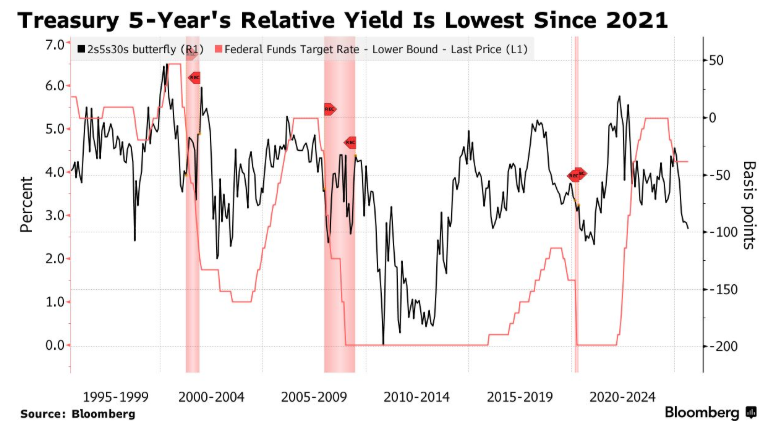
Group 1 - The core observation is that the five-year U.S. Treasury bonds are currently at a historically high valuation compared to other maturities, a rare occurrence outside of the Federal Reserve setting the overnight loan rate target to 0% [1][4] - As of Wednesday, the five-year U.S. Treasury yield remains around 3.78%, which is high since early 2022, indicating a significant valuation anomaly in the bond market [1] - The valuation assessment, using a common relative value calculation method, shows that the five-year Treasury yield is overvalued, with a "butterfly spread" calculation resulting in a near -100 basis points, the lowest since early 2021 [1] Group 2 - The valuation of the five-year Treasury bonds is primarily influenced by market expectations regarding the timing and magnitude of Federal Reserve rate cuts, with the market pricing in more short-term cuts and a larger cumulative reduction since the beginning of the year [4] - The five-year Treasury has been the best-performing segment of the U.S. Treasury market this year, while persistent inflation and the trend of the U.S. budget deficit exert upward pressure on long-term Treasury yields [4] - There are indications that investors are betting on significant rate cuts by the Federal Reserve during a potential second term for Trump, reflecting a broader expectation of a more accommodative policy path after leadership changes in the Fed next year [4]
昨夜,万物暴跌,信仰坍塌
Sou Hu Cai Jing· 2025-08-01 23:48
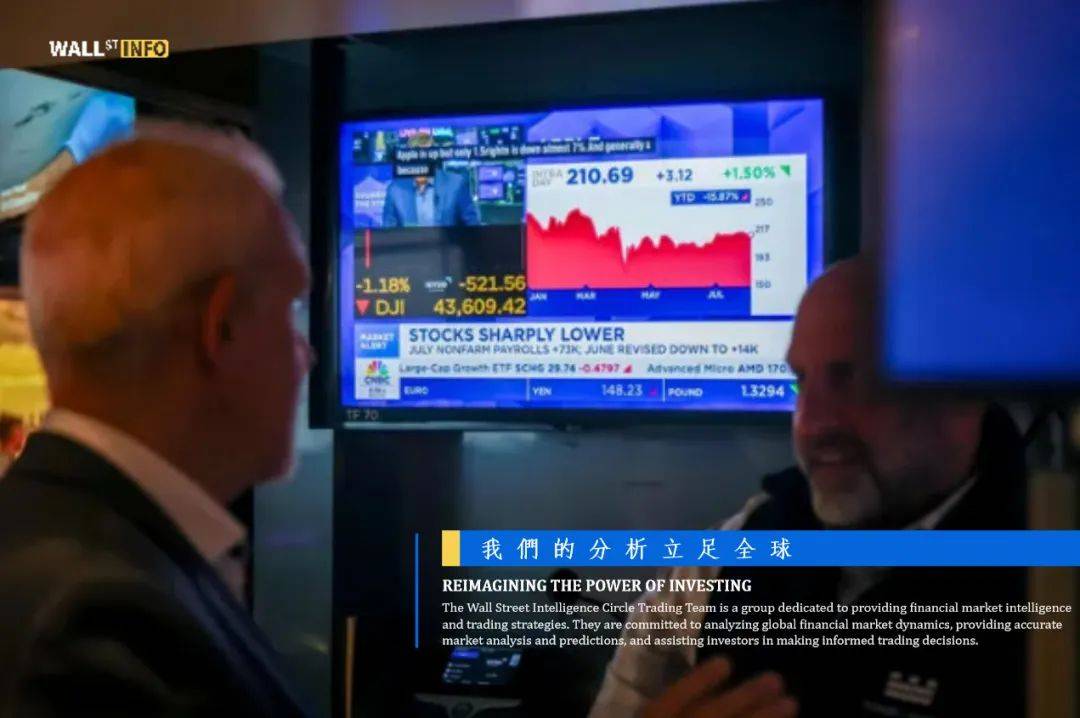
Market Overview - The Dow Jones index fell by 1.23%, the Nasdaq dropped by 2.24%, and the S&P 500 index decreased by 1.6%, marking the largest single-day decline in two months [2] - Oil prices plummeted by 3% and the US dollar fell by 1.3%, equivalent to a stock market decline of 3%-4%, erasing gains from the previous three days [3] - Gold prices increased, demonstrating its role as a safe-haven asset [4] Economic Data Impact - The market's downturn is attributed to disappointing non-farm payroll data, but the underlying concern stems from significant downward revisions of May and June data, totaling a 258,000 reduction [5] - The market narrative has shifted to a "bad news is bad news" perspective, undermining previous beliefs in a "soft landing" scenario for the economy [5] - There is growing sentiment for a potential interest rate cut by the Federal Reserve, with calls for a 50 basis point reduction rather than the previously expected 25 basis points [5] Strategic Insights - A report titled "Global Market Strategy: August Outlook, Summer Frenzy" has been released, questioning whether the market has peaked and analyzing the potential movements of oil and gold [6] - The report highlights the significance of the non-farm data as a potential turning point and discusses the implications of a possible emergency rate cut by the Federal Reserve [7] - Insights into the recent US-China talks and their potential outcomes are provided, along with an analysis of China's stock market strategy and predictions for various asset classes in August [8]
彭博社:散户贪婪之际,聪明钱开始削减美股多头仓位
美股IPO· 2025-08-01 08:50
Core Viewpoint - The current market sentiment has shifted from "fear" to "greed," with retail investors showing heightened speculative enthusiasm, while "smart money" such as hedge funds is retreating from equities [1][2][3]. Group 1: Market Sentiment and Hedge Fund Behavior - Hedge funds, represented by macro and quantitative funds, have shown a clear disinterest in stocks, with their overall return rates lagging approximately five percentage points behind the S&P 500 index [4]. - Historical data indicates that when "smart money" is shorting stocks while retail investors are going long, the stock market tends to perform poorly in the following one to three months [6]. - The average returns for the S&P 500 index in such scenarios are projected to be -0.1%, 0.2%, and 1.6% over the next one, two, and three months, respectively, all significantly below historical averages of 0.7%, 1.4%, and 2.3% [8]. Group 2: Indicators of Greed and Market Vulnerability - The rise of speculative stocks, as evidenced by the record surge in Goldman Sachs' "most shorted stocks basket," indicates a growing greed among retail investors [9]. - The options market has shifted from a "fear" dominated phase to a "greed" dominated phase, with implied volatility of out-of-the-money call options outperforming that of put options, and the VIX index declining [9][10]. - A decrease in implied volatility across various asset classes suggests that the market is not adequately responding to significant events, such as trade wars, indicating a potential complacency [11]. Group 3: Low Correlation and Potential Risks - The article discusses the concept of implied correlation among stocks, where low correlation indicates that stocks are moving independently rather than in unison [14]. - Low correlation can artificially suppress the VIX index during stable market conditions, but in a downturn, stocks may start to move in sync, leading to a rapid increase in correlation and a spike in the VIX, creating a vicious cycle of selling [14]. Group 4: Contrarian Perspective - Interestingly, recent data from Nomura Securities suggests that CTA funds have recently abandoned short positions, reaching their highest long positions in three years [15]. - The potential risk associated with this behavior is highlighted, as these funds may be chasing a stubborn rebound, which could lead to significant losses if their timing is incorrect [15].
每日机构分析:7月31日
Xin Hua Cai Jing· 2025-07-31 09:00
Group 1 - The Bank of Japan has raised its inflation forecast, indicating a higher likelihood of interest rate hikes, which has led to a slight appreciation of the yen [1] - Goldman Sachs estimates that increased tariffs will raise the average effective tariff rate in the U.S. by approximately 14 percentage points by 2025, with a further increase of 3 percentage points to around 20% in the following year, putting pressure on U.S. economic growth [2] - The U.S. GDP growth for the fourth quarter is projected to be only about 1%, with a recession risk estimated at 30% due to the impact of tariffs [2] Group 2 - The French Foreign Trade Bank anticipates a steepening trend in the U.S. Treasury yield curve in the medium term, driven by expectations that the Federal Reserve will begin cutting rates in October [2] - The Federal Reserve's decision to maintain interest rates in July has raised the threshold for a rate cut in September, with some committee members still supporting a 25 basis point cut, indicating internal divisions within the FOMC [3] - Julius Baer economists predict that U.S. economic growth will slow due to weak private consumption and cautious investment in real estate and equipment [3] Group 3 - Barclays suggests that growth in artificial intelligence investments and increased household wealth may continue to support the U.S. economy, particularly consumer spending among affluent groups [4] - Renaissance Macro Research analysts warn that low unemployment rates may create a false sense of security in the labor market, masking a gradual deterioration [4]
每日机构分析:7月30日
Xin Hua Cai Jing· 2025-07-30 13:39
高盛:美国公共债务或成主要中长期金融风险 荷兰国际:美欧经济增长数据分化或触发欧元跌破1.15 巴克莱:日本扩张性财政或促使美元兑日元破150 套利交易将重启 【机构分析】 (文章来源:新华财经) 荷兰国际集团分析师指出,如果与美国经济数据显现出有利于美元的增长分化,欧元可能面临新一轮下 跌压力。市场焦点集中于美欧增长数据对比,任何有利于美国的显著分化都可能触发欧元下行,短期内 需警惕跌破1.15的风险。法国第二季度经济增长率为0.3%,虽强于预期,但增幅温和,显示出复苏动能 有限。德国作为欧元区最大经济体,其增长数据将对欧元区整体表现产生重大影响,市场正密切关注。 若美国经济数据明显优于欧元区,欧元兑美元可能跌破1.15关键支撑位。预计欧元将在第三季度走弱, 随后在第四季度回升至1.18美元。 ING分析师指出,如果加拿大央行维持利率不变,但暗示未来可能降息,加元或将承压下跌。市场目前 仅消化了加拿大央行年底前15个基点的降息预期。鉴于这种保守的市场定价以及美加贸易谈判带来的经 济风险,加拿大央行可能会促使市场押注更多降息。 此举将直接对加元构成下行压力。ING持续预 计,本季度美元兑加元将触及1.39的水 ...
野村控股:第一季度净利润1045.65亿日元,同比增长51.7%
news flash· 2025-07-29 07:20
野村控股发布财报,第一季度总营收1.16万亿日元,同比下降5%;净利润1045.65亿日元,同比增长 51.7%。 ...