
加元

Search documents
大摩闭门会-因果与外汇-央行-供给冲击与汇率-我们学到了什么
2026-03-22 14:35
Summary of Key Points from Conference Call Industry Overview - The conference call primarily discusses the impact of energy price shocks on central banks and their monetary policies, particularly focusing on the European Central Bank (ECB) and the Federal Reserve (Fed) [1][2][3][4][5][6]. Core Insights and Arguments - **ECB's Response to Energy Shocks**: The ECB exhibits asymmetric responses to energy shocks, with inflation risks outweighing growth risks. It is expected to raise interest rates in June and September 2026 due to persistent inflation pressures [1][3]. - **Fed's Rate Cut Timeline**: The Fed's path for rate cuts is influenced by tariff-driven inflation, with expectations that inflation will peak and decline by Q2 2026, potentially delaying rate cuts until September 2026 [1][4]. - **Correlation Between Energy Shocks and Inflation**: In the U.S., there is a low correlation between energy shocks and core inflation, unlike in the Eurozone where the transmission is significant. This difference may create trading opportunities in U.S. front-end rates [1][4]. - **Dollar Strength and Trade Conditions**: The dollar remains strong due to improved trade conditions, benefiting from being a net energy exporter. Rising energy prices favor currencies of energy-exporting countries, while concerns about global growth may shift focus from trade conditions to growth risks [5]. - **Swiss National Bank's (SNB) Stance**: The SNB has increased its tolerance for Swiss franc appreciation, indicating a willingness to intervene only in cases of rapid and excessive appreciation. This could lead to unexpected declines in the euro against the franc [6]. Additional Important Content - **Market Reactions to Central Bank Policies**: The market is currently pricing in significant rate hikes from various central banks, with a notable delay in expected rate cuts. This reflects short-term reactions to recent volatility rather than long-term trends [2][3]. - **Oil Price Threshold for Demand Destruction**: An oil price above $125 per barrel is identified as a threshold for demand destruction, which would shift market focus from inflation risks to growth risks, impacting central bank policy discussions [6]. - **Monitoring Economic Indicators**: The ECB will closely monitor various data points, including inflation expectations, economic activity, and commodity market dynamics, to assess the persistence of energy price shocks and their broader economic implications [3][4]. This summary encapsulates the critical insights and discussions from the conference call, highlighting the interplay between energy prices, inflation, and central bank policies across different regions.
美银:历史数据显示石油价格冲击往往利好这些货币
美股IPO· 2026-03-08 00:48
Group 1 - The core viewpoint of the article highlights that historical oil supply shocks tend to favor certain currencies, particularly the US dollar and Canadian dollar, while currencies like the New Zealand dollar and Australian dollar face pressure [1][3] Group 2 - The analysis indicates that the foreign exchange market has reacted moderately to recent US-Israel military actions in Iran, with price movements largely aligning with expectations, including a general strengthening of the US dollar [3] - Historical analysis of geopolitical events disrupting global oil supply reveals a consistent pattern where currencies of oil-producing countries perform well, while those of energy-importing countries tend to weaken [3] - The Canadian dollar (CAD) and US dollar (USD) typically show strong performance during oil shocks, whereas the New Zealand dollar (NZD), Australian dollar (AUD), Swedish krona, and occasionally the Japanese yen (JPY) perform poorly [3] - The occasional weakness of the yen during oil shocks may reflect Japan's heavy reliance on energy imports, which can offset its traditional safe-haven status during market stress [3] Group 3 - Despite increased currency volatility due to Middle Eastern tensions, many hedging strategies remain attractively priced compared to past oil supply disruptions [3] - The article emphasizes that the volatility of CADJPY and NZDUSD may present valuable trading opportunities, with potential benefits from CADJPY positions in a rising oil price environment and shorting NZDUSD if conflicts persist [3] - The analysis notes that while volatility in the foreign exchange market has increased, many hedging trades are still below levels typically observed during previous oil shock events, suggesting that the market may be underestimating tail risks associated with geopolitical escalations [3]


加央行维稳立场经济疲软博弈凸显
Jin Tou Wang· 2026-02-25 02:34
Core Viewpoint - The Canadian dollar (CAD) is experiencing a weak overall trend with short-term support from the Bank of Canada's steady interest rates, but medium-term prospects are constrained by economic weakness and external trade uncertainties. Group 1: Short-term Factors - The Bank of Canada maintained the benchmark interest rate at 2.25% on January 28, the lowest since July 2022, indicating no rate cuts are expected before March unless significant changes occur [1] - Strengthening economic cooperation between Canada and China, along with a signed cooperation roadmap, is anticipated to boost exports and indirectly support the CAD [1] Group 2: Medium-term Economic Outlook - The Bank of Canada forecasts a GDP growth rate of only 1.1% for 2026, attributed to declining exports, insufficient business investment, and weak labor markets, which also negatively impact consumer spending [1] - Previous significant interest rate cuts in 2025 have lingering effects, continuing to suppress the CAD [1] Group 3: External Environment - Uncertainties in U.S. trade policies, including past tariffs imposed by the Trump administration on Canadian goods, continue to affect the CAD [1] - A slight increase in the U.S. dollar index on February 24 further pressures the CAD exchange rate [1] - As a resource-linked currency, the CAD's performance is also correlated with the prices of commodities like oil [1] Group 4: Technical Analysis - The CAD/USD price center has slightly shifted downward, with a narrowing trading range and no clear trend formation, indicating a digestion of interest rate cuts and a need for indicator recovery [2] - The exchange rate has been fluctuating within the 0.7280-0.7350 range, with key resistance at 0.7350-0.7360 and support at 0.7280 [2] - Predictions for 2026 suggest cautious expectations, with most analysts believing that the Bank of Canada's steady rates will limit downward movement, while economic weakness and export pressures will restrict upward potential [2] Group 5: Investor Focus - Investors are advised to monitor Canadian inflation, unemployment rates, and U.S. trade developments in the short term, while tracking economic recovery, central bank policies, and commodity trends in the medium term [2] - Current exchange rate fluctuations suggest a cautious approach to trading, with recommendations to control positions and hedge effectively [2]
瑞郎本周涨约1.1%,瑞典克朗涨1.3%,挪威克朗涨约2%
Jin Rong Jie· 2026-02-13 21:35
Core Viewpoint - The article discusses the fluctuations in various currency pairs, highlighting the performance of the Euro, British Pound, and commodity currencies against the US Dollar during the week. Group 1: Currency Performance - The Euro appreciated by 0.04% against the US Dollar, closing at 1.1875, with a weekly gain of 0.51% [1] - The British Pound increased by 0.33% against the US Dollar over the week [1] - The US Dollar depreciated by 1.07% against the Swiss Franc [1] Group 2: Commodity Currencies - The Australian Dollar rose by 0.89% against the US Dollar [1] - The New Zealand Dollar increased by 0.44% against the US Dollar [1] - The US Dollar fell by 0.41% against the Canadian Dollar [1] Group 3: Scandinavian and Eastern European Currencies - The Swedish Krona appreciated by 1.31% against the US Dollar [1] - The Norwegian Krone increased by 1.98% against the US Dollar [1] - The Danish Krone rose by 0.50% against the US Dollar [1] - The Polish Zloty gained 0.73% against the US Dollar [1] - The Hungarian Forint increased by 0.14% against the US Dollar [1]
国际储备货币的主要格局、演进趋势与驱动因素
Sou Hu Cai Jing· 2026-02-13 19:10
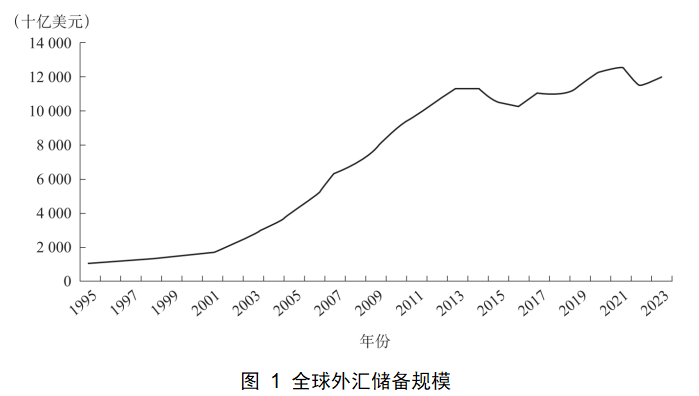
Core Viewpoint - Since the 1990s, global foreign exchange reserves have steadily increased, driven by geopolitical economic risks and the development of global financial markets, leading to a diversification trend in reserve currency selection by central banks. While the dominance of the US dollar remains strong, its share is continuously declining, and emerging reserve currencies like the renminbi are gradually gaining prominence. Geopolitical competition, the need for financial risk diversification, and changes in global trade structures are collectively pushing the international monetary system towards a more diversified and balanced direction [1]. Group 1: Evolution of International Reserve Currency Landscape - Under the Bretton Woods system, the US dollar was the sole reserve currency, linked to gold, but structural contradictions emerged in the 1960s, leading to the need for a diversified reserve system [2]. - The collapse of the Bretton Woods system in 1971 marked the beginning of a multi-currency international reserve system, with the introduction of the Jamaican system in 1976 [2]. - The emergence of the euro in 1999 restructured the international reserve currency landscape, with its share peaking at 27% before the Eurozone crisis and Brexit affected its international standing [2][3]. Group 2: Growth of Global Foreign Exchange Reserves - Global foreign exchange reserves have grown from approximately $1.4 trillion in 1995 to over $12 trillion in 2023, an increase of about eight times over 28 years [4]. - The period from 1995 to 2008 saw rapid growth in foreign exchange reserves, driven by the Asian financial crisis, the rise of exports, and the dollar-centric international financial system [7][8]. - After the global financial crisis in 2008, foreign exchange reserves continued to grow until around 2012, with a shift in the main drivers of growth [10]. - From 2016 to 2021, foreign exchange reserves steadily increased due to the recovery of the global economy and commodity prices, despite setbacks from the COVID-19 pandemic [11]. - In 2022, global foreign exchange reserves decreased by about $1 trillion due to aggressive interest rate hikes by the Federal Reserve and other economic factors, but showed signs of recovery in 2023 [13]. Group 3: Trends in Reserve Currency Diversification - Central banks are increasingly diversifying their reserve currency choices, with traditional currencies like the US dollar and euro declining in share, while emerging currencies like the renminbi are on the rise [14][16]. - The share of the US dollar peaked at over 70% around 2000 and has since declined to below 60%, while the euro's share has decreased from about 30% to around 20% [16]. - Emerging reserve currencies such as the Australian dollar, Canadian dollar, and renminbi have seen their shares gradually increase, with the renminbi rising from 0% to 2-3% since joining the SDR basket [17]. Group 4: Drivers of Reserve Currency Diversification - Geopolitical and economic risks, particularly highlighted by the financial sanctions against Russia, have prompted countries to reassess their reliance on the US dollar and seek alternative currencies and assets [19]. - Financial risks motivate central banks to diversify their holdings to mitigate currency risk and enhance resilience against economic shocks, particularly from the US [22]. - The maturation of global financial markets has facilitated the holding and trading of various currencies, making it easier for central banks to manage their reserves [23]. - Structural changes in international trade and finance, such as China's rise in global trade, have created incentives for trading partners to hold renminbi assets [25].
邦达亚洲:澳洲联储官员发表鹰派言论 澳元突破0.7100关口
Xin Lang Cai Jing· 2026-02-12 12:51
Group 1: Australian Economic Outlook - The Reserve Bank of Australia's Deputy Governor, Andrew Hagger, warned that inflation remains "too high," posing a significant challenge for the interest rate-setting committee, which cannot allow this situation to persist for too long [1][6] - Hagger indicated that part of the price increase reflects rising demand in the economy against supply constraints, suggesting that the risk of sustained high inflation may continue [1][6] - The RBA's measures to achieve an economic soft landing post-pandemic have resulted in the Australian economy being closer to a balanced state compared to some international peers, with any economic activity surge potentially driving up prices [1][6] Group 2: Currency Movements - The Australian dollar (AUD) experienced a significant rise, breaking the 0.7100 mark, supported by Hagger's hawkish comments that heightened expectations for RBA rate hikes [4][10] - The AUD is projected to continue its upward trend, making it one of the best-performing currencies this year [1][6] - The rise in commodity prices, including oil and copper, has also provided support for the AUD [4][10] Group 3: Federal Reserve Expectations - The Federal Reserve is expected to maintain the benchmark interest rate until May, with a potential rate cut following the appointment of a new chair in June [2][7] - Over 70% of surveyed economists expressed concerns about the significant loss of independence of the Federal Reserve [2][7] - The nomination of Kevin Warsh as the new Fed chair has led to mixed opinions among economists regarding his policy stance, with early indications leaning towards tightening but recent comments suggesting a possible inclination towards rate cuts [2][8] Group 4: Gold Market Insights - Gold prices have been on the rise, recovering above the 5100 mark, driven by persistent risk aversion in the market and central banks increasing their gold reserves [3][9] - However, strong U.S. non-farm payroll data has tempered expectations for Fed rate cuts, limiting the rebound potential for gold [3][9] Group 5: USD/CAD Currency Dynamics - The USD/CAD pair saw a slight increase, trading around 1.3580, supported by technical buying near the 1.3500 level and a strong dollar index following robust non-farm payroll data [5][11] - Concerns over oil supply have limited the rebound potential for the USD/CAD pair [5][11]
三菱日联:特朗普以“退群”威胁作为筹码并不令人意外
Xin Lang Cai Jing· 2026-02-12 12:20
Core Viewpoint - The report by Mitsubishi UFJ Bank strategist Lee Hardman indicates that the Canadian dollar and Mexican peso may weaken if U.S. President Trump threatens to withdraw from the USMCA agreement [1] Group 1 - Hardman notes that it is not surprising to see Trump use the threat of withdrawal as leverage to negotiate more favorable terms based on his past negotiation strategies [1] - Despite the risks posed to the Canadian dollar and Mexican peso in the coming months, market skepticism regarding the actual implementation of such threats is expected to limit the extent of currency depreciation [1]

超越欧元,黄金何以跃升全球第二大储备资产?
Sou Hu Cai Jing· 2026-02-12 03:16
Group 1 - The international gold market experienced significant volatility entering 2026, with spot gold prices reaching a historic high of $5,598.75 per ounce, although prices later corrected but remained elevated [1] - Gold has surpassed the euro to become the world's second-largest official reserve asset, driven by increasing geopolitical risks, rising sovereign debt pressures, and weakening trust in traditional safe-haven assets [1] - Central banks have significantly increased gold reserves in response to rising sovereign credit risks, with net purchases exceeding 1,000 tons annually from 2022 to 2024, and reaching 863 tons in 2025 [1] Group 2 - The sovereign credit crisis undermines the foundation of the dollar's reserve status, as the U.S. fiscal deficit continues to grow and national debt reaches new highs, raising concerns about long-term repayment capabilities [2] - The combination of rising domestic debt interest levels and the U.S. government's "America First" policies has led to increased borrowing costs, heightening international investor concerns about U.S. creditworthiness [2] - A notable market phenomenon occurred in April 2025, where U.S. stocks, bonds, and the dollar index all declined simultaneously, indicating a shift in the definition of "safe assets" [2] Group 3 - The Federal Reserve plays a crucial role as the global "lender of last resort," providing liquidity through mechanisms like currency swaps, which is contingent on its independence [3] - The diversification of the international reserve system is accelerating, with non-dollar sovereign currencies gaining traction, and the eurozone's increased defense spending creating new opportunities for the euro [3] - Emerging currencies like the renminbi are expanding their roles in cross-border trade settlements and regional financial cooperation, while the rapid development of global digital currencies is reshaping the payment system and reserve currency landscape [3]
金价上涨与国际货币体系变革(经济透视)
Ren Min Ri Bao· 2026-02-11 22:36
Core Insights - The international gold market has experienced significant volatility, with spot gold prices reaching a historical high of $5,598.75 per ounce in 2026, driven by geopolitical risks, rising sovereign debt pressures, and diminishing trust in traditional safe-haven assets [1] - Gold has surpassed the euro to become the world's second-largest official reserve asset, reflecting a shift in the international monetary system [1] Geopolitical Risks - Geopolitical tensions have undermined the credibility of sovereign currencies, leading to increased demand for gold as a safe-haven asset [1] - Following the outbreak of the Russia-Ukraine conflict, central banks globally have significantly increased their gold reserves, with net purchases exceeding 1,000 tons annually from 2022 to 2024, and reaching 863 tons in 2025 [1] Sovereign Credit Crisis - The sovereign credit crisis poses a direct threat to the dollar's reserve status, as the U.S. faces growing concerns over its long-term debt repayment capabilities due to rising fiscal deficits and national debt [2] - In 2025, U.S. debt interest payments surpassed defense spending for the first time, raising alarms in international markets about the safety of dollar assets [2] - The combination of trade wars and "America First" policies has led to increased domestic debt interest levels, heightening international investor concerns about U.S. creditworthiness [2] Federal Reserve's Role - The Federal Reserve plays a crucial role as the global "lender of last resort," providing liquidity through mechanisms like currency swaps, which is vital for maintaining the stability of the dollar system [3] - Changes in the structure and functions of the Federal Reserve could have profound implications for the stability of the dollar system [3] Diversification of International Reserve System - The process of diversifying the international reserve system is accelerating, with non-dollar sovereign currencies gaining prominence [3] - The eurozone's recent expansion of collective defense spending presents new opportunities for the euro financing market, while resource-linked currencies like the Australian and Canadian dollars are becoming more attractive amid energy transitions [3] - The Chinese yuan is increasingly playing a role in cross-border trade settlements and regional financial cooperation, enhancing its reserve function [3] - The rapid development of global digital currencies is reshaping payment systems and influencing the landscape of reserve currencies [3] Conclusion - The turbulence in the gold market signals a significant transformation in the international monetary system, driven by changing global economic dynamics and geopolitical risks [3]
邦达亚洲:美联储降息预期降温 黄金回落收跌
Xin Lang Cai Jing· 2026-02-11 09:24
Group 1: Retail Sales Data - In December, U.S. retail sales remained unchanged month-on-month at 0%, significantly below the expected 0.4% and lower than November's 0.6% increase [1][6] - Core retail sales, excluding automobiles and gas stations, decreased by 0.1% month-on-month [1][6] - Out of 13 retail categories, 8 experienced a decline in sales, with notable drops in clothing and furniture stores, as well as automobile dealers [1][6] Group 2: Consumer Spending Concerns - The report heightened concerns about consumer spending momentum, which is a key driver of U.S. economic growth [1][6] - Despite stock market gains potentially supporting high-income household spending, low-income groups reliant on wage growth showed weak consumption performance [1][6] Group 3: Silver Market Insights - Silver prices have stabilized around $80 per ounce, although still below last month's historical highs [2][7] - The World Silver Association reported a structural supply shortage expected to last until 2026, with a projected gap of 67 million ounces [2][7] - Key factors supporting silver prices include tight physical supply in London, geopolitical tensions, U.S. policy uncertainties, and concerns over the independence of the Federal Reserve [2][7] Group 4: Gold Market Overview - Gold prices experienced slight declines, trading around 5060, influenced by profit-taking and hawkish comments from Federal Reserve officials [3][8] - Market risk aversion continues to limit the downside potential for gold prices [3][8] Group 5: Currency Exchange Rates - The USD/JPY pair fell to a seven-day low at approximately 153.10, affected by concerns over potential intervention by the Bank of Japan and weak U.S. economic data [4][9] - The USD/CAD pair also saw a slight decline, trading around 1.3520, influenced by weak retail sales data and high oil prices due to supply concerns [5][10]