数字贸易

Search documents
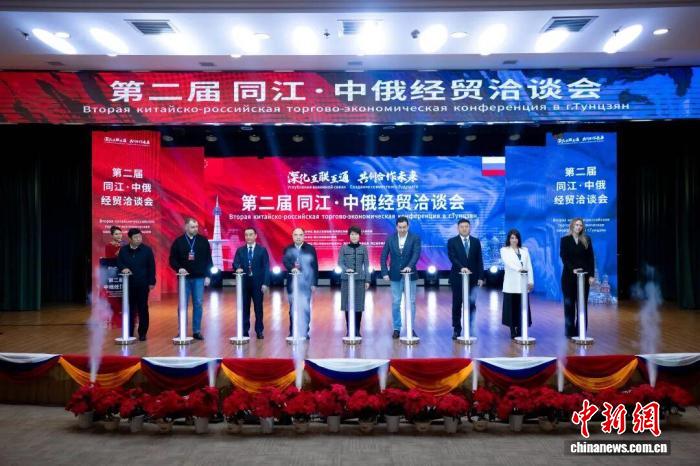
第二届同江·中俄经贸洽谈会举行 9个项目签约103亿元
Zhong Guo Xin Wen Wang· 2025-12-17 08:56
Group 1 - The second China-Russia Economic and Trade Fair was held, resulting in the signing of 9 key projects with a total value of 10.3 billion yuan, covering various sectors such as equipment manufacturing and food processing [1][2] - The theme of the fair was "Deepening Connectivity and Creating a Cooperative Future," focusing on modern agriculture, cross-border logistics, and digital trade to enhance practical cooperation between Chinese and Russian enterprises [2][3] - The Mayor of Tongjiang emphasized the city's commitment to creating a favorable business environment and infrastructure to facilitate trade and investment between the two countries [2][3] Group 2 - Tongjiang serves as an important port in Heilongjiang Province, acting as a medium-sized port for water trade between China and Russia, and a transshipment hub for import and export goods [3] - The fair aims to promote the integration of industrial and supply chains, transforming the advantages of both countries into strong momentum for mutual development [2][3]

高水平对外开放动能澎湃
Jing Ji Ri Bao· 2025-12-16 22:24
Group 1: High-Level Opening Up - High-level opening up is a strategic choice to respond to external uncertainties and enhance national security capabilities [1] - The focus is on improving customs facilitation, stabilizing foreign investment and trade, and encouraging enterprises to expand internationally [1] - The proactive approach to opening up aims to enhance domestic circulation and improve the quality of international circulation, thereby gaining an advantage in economic development and international competition [1] Group 2: Customs Efficiency - Shanghai's Waigaoqiao Port is the largest port for automobile imports and exports in China, with a throughput of 3.63 million vehicles in 2024, ranking first globally [2] - The customs process has been optimized through a seamless logistics coordination mechanism, ensuring efficient and safe automobile exports [2] - The port operates 15 international automobile roll-on/roll-off shipping routes, connecting to 289 ports in 131 countries and regions [2] Group 3: Investment Quality - Lujiazui Financial City in Shanghai attracts significant foreign investment, housing 70% of the country's foreign asset management institutions and 40% of foreign banks and securities firms [4] - Since the 14th Five-Year Plan, Shanghai has utilized over $98 billion in foreign investment, with an annual average of over 5,700 new foreign enterprises established [4] - The proportion of foreign investment in Shanghai increased from 14% in 2020 to 15.2% in 2024 [4] Group 4: International Expansion - Shanghai's total import and export value reached 11.07 trillion yuan in 2024, a 26.5% increase from 2020, with a compound annual growth rate exceeding 4% [7] - Cross-border e-commerce has seen an annual growth rate of over 35% since the 14th Five-Year Plan, with 636 enterprises participating in offshore trade by 2024 [7] - Wujiang Minsk Trading Co. reported a 190% year-on-year increase in exports in the first seven months of the year, driven by local government initiatives [7] Group 5: Digital Trade Growth - Hainan's digital trade volume reached 28.79 billion yuan in 2024, a 44.5% year-on-year increase, with computer service exports growing by 1.3 times [10] - The establishment of the Hainan University of Applied Sciences reflects the recognition of China's educational innovation policies and the integration of international talent cultivation [6] - The Shanghai Hongqiao Overseas Development Service Center has organized 122 outbound activities this year, attracting around 3,500 enterprises [10]

商务部等6部门:支持有条件的地方建立国际认可的数据安全和隐私保护机制
Zheng Quan Shi Bao Wang· 2025-12-15 10:31
Core Viewpoint - The Ministry of Commerce and five other departments have issued an action plan to promote high-quality development of service outsourcing, focusing on building a digital trade industry cluster [1] Group 1: Digital Trade Development - The plan emphasizes the establishment of internationally recognized data security and privacy protection mechanisms in certain regions [1] - It aims to promote the deep integration of the digital economy with the real economy [1] - The initiative includes the construction of digital trade industry aggregation areas [1] Group 2: Business Environment and Industry Growth - There is a focus on optimizing the digital business environment and strengthening industrial capabilities [1] - The plan encourages the active development of international data service businesses [1] - It explores the establishment of an overseas data storage, processing, and trading service industry chain [1] Group 3: New Business Models - The action plan aims to accelerate the development of new business formats and models in digital trade [1] - It seeks to cultivate new growth points for foreign trade [1]
博时基金陈显顺:中央经济工作会议释放积极信号,为“十五五”开局定向领航
Xin Lang Cai Jing· 2025-12-15 06:53
Core Viewpoint - The Central Economic Work Conference held on December 10-11 in Beijing outlines the economic work for 2026, emphasizing high-quality development to address uncertainties in the current economic landscape [1][8]. Group 1: Macroeconomic Policy - The conference signals a continuation of a more proactive fiscal policy and moderately loose monetary policy, enhancing the synergy of macroeconomic policies [1][2][3]. - Emphasis on "optimizing expenditure structure" and scientific management within fiscal policy aims to stabilize total demand while directing funds towards key areas such as technology innovation and public welfare [3][10]. - Monetary policy is set to remain "moderately loose," with flexibility in using various tools like reserve requirement ratio cuts and interest rate reductions to ensure adequate liquidity [3][10]. Group 2: Domestic Demand and Economic Structure - The conference prioritizes "expanding domestic demand" as a key task, reflecting a strategic decision to strengthen the internal economic drive amid rising external uncertainties [3][4][11]. - Key strategies for expanding domestic demand include stabilizing income, enhancing consumer confidence, optimizing supply, and promoting investment to create a virtuous cycle [4][11]. Group 3: Innovation and New Growth Drivers - Future growth drivers will focus on the integration of cutting-edge technology with industries, particularly in areas like artificial intelligence, new energy, and high-end manufacturing [5][11]. - The capital market is identified as a crucial element in nurturing new growth drivers, with a call for reforms to better support national innovation strategies [5][11]. Group 4: Reform and High-Quality Development - The conference highlights the need for reforms to eliminate "involutionary" competition and establish a unified national market, which is essential for enhancing economic vitality [6][12]. - Recommendations include setting high standards for market access and fair competition rules to guide enterprises in phasing out outdated capacities [12]. Group 5: International Cooperation and Investment Opportunities - China's opening up is shifting towards institutional openness, with future cooperation expected to focus on service trade, digital trade, and green low-carbon sectors [6][13]. - Investment opportunities are anticipated in domestic leading service enterprises, technology companies in digital trade, and firms in the renewable energy sector that can engage in international standard-setting [13].
破解出海“信任难题”!星火优品码让中国品牌跨境流通更顺畅
Zheng Quan Shi Bao Wang· 2025-12-15 03:26
数字贸易重构全球经贸格局的进程中,质量与品牌的战略价值持续凸显。政策层面,国家长期关注质量 品牌与数字贸易的融合发展:2016年国务院设立"中国品牌日"以强化全社会品牌意识;2024年中办、国 办发布的《关于数字贸易改革创新发展的意见》提出"提升品牌和标准影响力,推动数字证书国际互 认",工信部同期发布《关于分级打造中国消费名品方阵》《中小企业出海服务专项行动通知》,明 确"培育国际一流消费品企业"目标;2022年《数字化助力消费品工业"三品"行动方案》则要求,到2025 年消费品工业数字技术融合能力显著增强,形成一批新品、名品、精品。地方层面也已有实践探索,黑 龙江"龙江品质"、浙江"浙江制造"等区域公共品牌的培育,形成了上下协同的政策支撑体系。 产业端,优等质量与权威品牌认证是企业参与国际竞争的重要依托,尤其是中小企业出海过程中,对可 信的质量认证与溯源体系存在较强需求;消费端,数字化交易的虚拟化特征,使消费者对产品全生命周 期信息的可验证性提出了更高需求。 当前数字贸易领域,质量品牌可信传递仍面临诸多现实挑战,成为行业发展的突出瓶颈。一方面,国际 经验借鉴不足与本土体系尚未完善的问题并存:德国凭借"质量 ...
重磅刷屏!最新解读,信息量很大
Zhong Guo Ji Jin Bao· 2025-12-15 01:00
Core Insights - The Central Economic Work Conference emphasizes a more proactive fiscal policy and moderately loose monetary policy for 2026, aiming to stabilize the economy and promote high-quality development [3][8][11] Group 1: Economic Signals - The conference released three positive signals: strong policy continuity, focus on high-quality development, and targeted efforts in key areas such as domestic demand and risk prevention [3][4] - Emphasis on "internal demand as the main driver" and the establishment of a strong domestic market as a top priority for 2026 [11][12] Group 2: Policy Framework - The fiscal policy is expected to maintain a deficit ratio around 4% and expand special bond quotas to approximately 5 trillion yuan, while monetary policy will focus on maintaining ample liquidity and using structural tools to support innovation and consumption [8][9] - The conference highlights the need for policy synergy, integrating existing and new policies to enhance effectiveness and support economic stability [3][10] Group 3: Focus on Quality and Efficiency - The principle of "seeking progress while maintaining stability" is reiterated, with a new emphasis on "quality improvement and efficiency enhancement" to balance short-term economic support with long-term transformation needs [6][7] - The shift from quantity expansion to quality optimization in policy focus is noted, aiming for more efficient, sustainable, and secure development [7][8] Group 4: Investment Opportunities - Key investment opportunities identified include digital trade, green energy, and high-end manufacturing, which are expected to benefit from ongoing reforms and international cooperation [19][20] - The focus on county-level economic development and green transformation is anticipated to open up capital market opportunities in infrastructure, renewable energy, and healthcare services [21][22]
智库书单 | 2026年经济工作八项重点任务怎么干?
Sou Hu Cai Jing· 2025-12-13 10:55
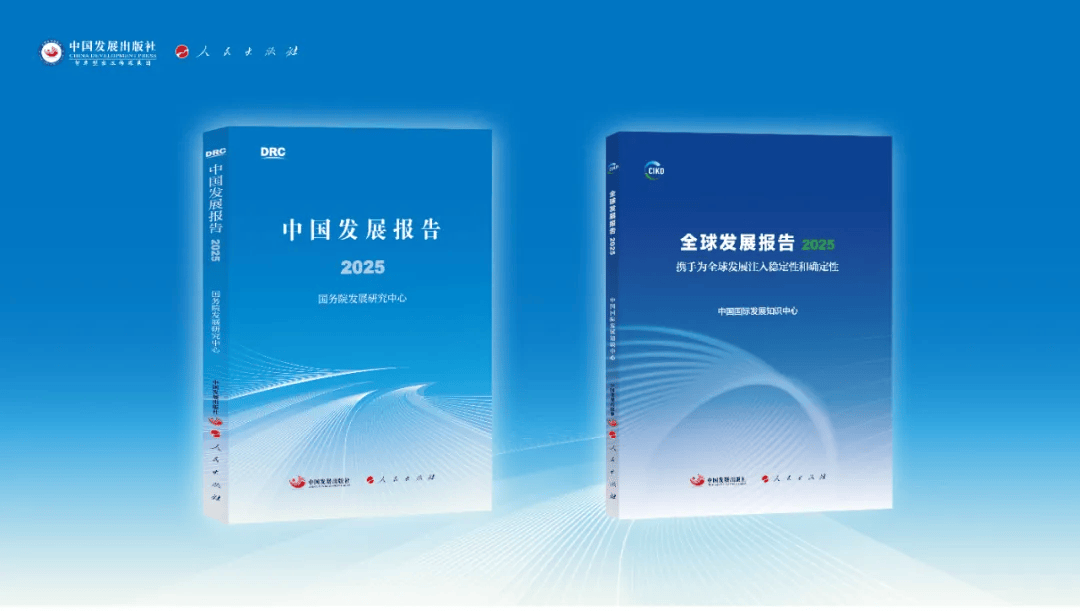
Group 1 - The Central Economic Work Conference held from December 10 to 11 in Beijing summarized the economic work for 2025, analyzed the current economic situation, and deployed tasks for 2026, emphasizing the need to maintain stability while seeking progress and improving quality and efficiency [1] - In 2026, eight key tasks will focus on enhancing macroeconomic governance effectiveness through integrated effects of existing and new policies, and increasing counter-cyclical and cross-cyclical adjustments [1] Group 2 - The "China Development Report 2025" records the ideological, institutional, and practical achievements formed during the advancement of Chinese-style modernization in 2024, including four significant research outcomes from the State Council Development Research Center [3] - The "Global Development Report 2025" analyzes major instability and uncertainty factors facing the world and their profound impacts on global development, focusing on issues such as global trade, climate change, health, food security, poverty reduction, and cooperation among developing countries [3] Group 3 - The report on "Silver Economy" from Shanghai highlights the city's exploration in capturing new demands and creating new scenarios to empower high-quality growth in new economic formats, drawing insights from international best practices [10] - The "Turning to Consumption Driven" report enriches theoretical understanding of expanding domestic demand and proposes innovative paths and mechanisms for constructing a complete domestic demand system [12] Group 4 - The "International Consumption Center Cities" report analyzes the conditions and foundations for major cities in China to transition into international consumption centers, providing overall strategies and policy recommendations [14] - The "Digital Trade Development and Cooperation Report (2022-2023)" clarifies the concept of digital trade and analyzes the current state and trends of global digital trade development, showcasing China's achievements and efforts in promoting international digital trade cooperation [41] Group 5 - The "New Quality Productivity Practice and Exploration" compiles research on the theoretical origins, practical paths, and innovative models of new quality productivity, clarifying its essential differences from traditional productivity [22] - The "Artificial Intelligence Major Application Scenarios Series" covers over ten typical scenarios, integrating theory and practice to explore the governance of artificial intelligence in various sectors [21]
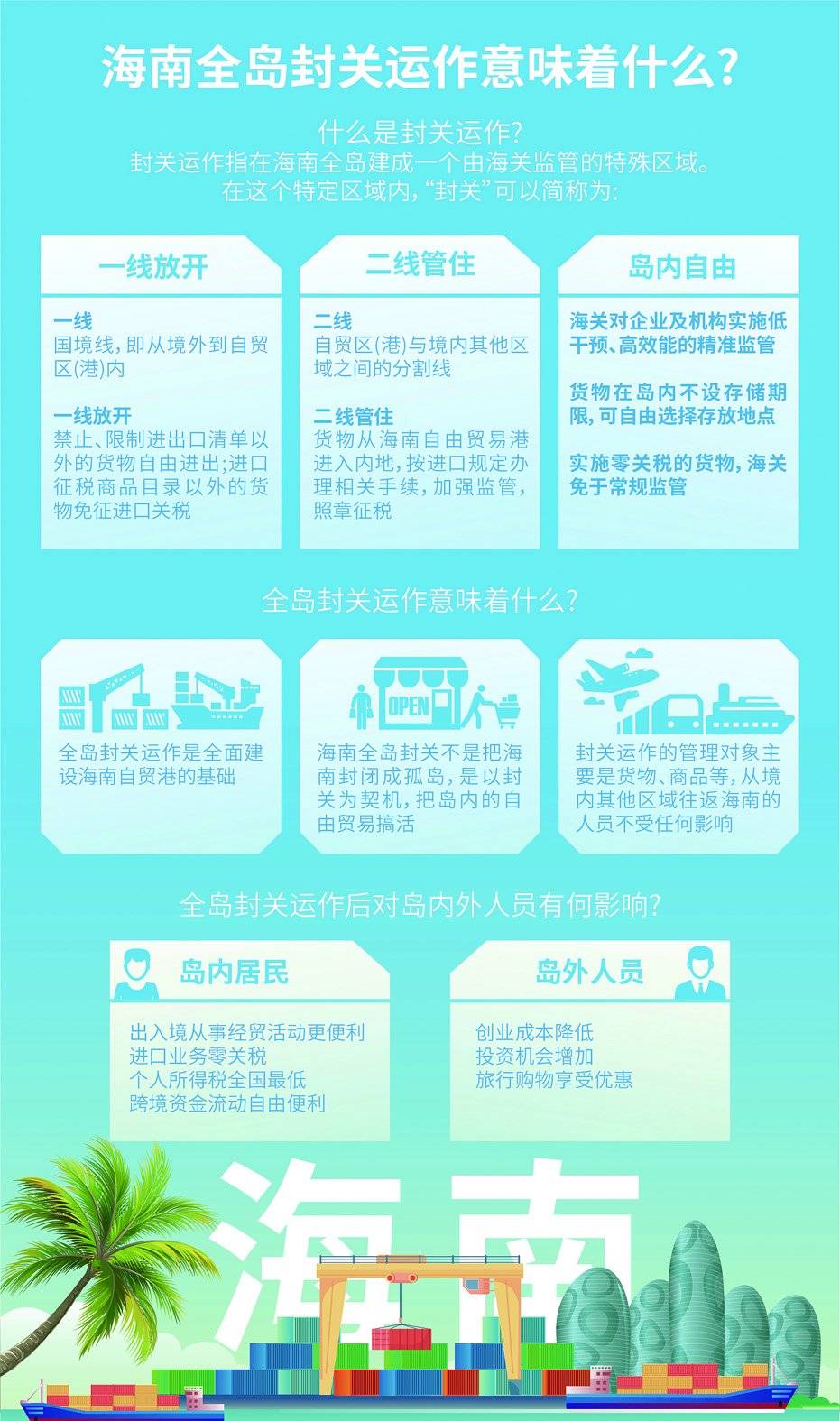
海南封关运作倒计时 中国开放新棋局落子有声
Sou Hu Cai Jing· 2025-12-12 19:29
Core Viewpoint - The establishment of the Hainan Free Trade Port marks a significant transformation for Hainan, enhancing its role in China's high-level opening-up strategy and creating a new global link for trade and investment [7][8]. Group 1: Policy Implementation - The Hainan Free Trade Port will officially start its full island closure operation on December 18, which is a crucial step in establishing a policy system for the free trade port [7]. - The policy framework includes "one line" for open access to international markets, "two lines" for controlled access to the mainland, and "island freedom" for internal circulation [9]. - The initial establishment of the policy system aims for a focus on trade and investment facilitation, with a target to mature by 2035 [8]. Group 2: Economic Impact - The zero-tariff policy is a key feature of the Hainan Free Trade Port, expanding the range of zero-tariff goods from 1,900 to approximately 6,600 items, covering about 74% of all goods [10]. - The processing time for importing seafood has been significantly reduced from three days to two hours, enhancing profit margins for businesses [7]. - The new personal income tax policy in Hainan offers lower rates compared to the mainland, making it an attractive destination for talent [11][12]. Group 3: Business Opportunities - Companies like Zhengda (Hainan) Xinglong Coffee are already benefiting from the zero-tariff policy, with a projected 20% profit increase from exporting coffee to Australia [8]. - The free trade port is expected to serve as a "converter" between the Chinese mainland and global markets, testing high-standard international trade rules [12]. - The enhanced duty-free shopping experience in Hainan is attracting consumers, with significant discounts on luxury goods compared to mainland prices [7].
【新华解读】稳中提质 培育新能——从中央经济工作会议看外贸新动向
Xin Hua Cai Jing· 2025-12-12 12:34
Group 1 - The central economic work conference emphasized the importance of "institutional opening" and the development of service, digital, and green trade as new growth points for foreign trade and investment [1][2][4] - The meeting outlined a strategic focus on expanding service sector openness, optimizing the layout of free trade zones, and promoting the integration of trade and investment [2][3] - The emphasis on service, digital, and green trade reflects a clear strategic layout aimed at optimizing trade structure and promoting sustainable development [4][5] Group 2 - The conference highlighted the need to encourage service exports and actively develop digital and green trade, indicating a continuity in policy direction [4][5] - Data from customs showed that in the first eleven months, exports and imports reached 24.46 trillion yuan and 16.75 trillion yuan, respectively, with a year-on-year growth of 6.2% and 0.2% [4] - The focus on green trade, particularly in electric vehicles and renewable energy products, demonstrates China's competitive advantage in green technology and design [4][5] Group 3 - Experts believe that service exports, digital trade, and green trade are key areas for optimizing China's foreign trade structure and driving economic transformation [5] - Future efforts should include enhancing traditional advantages in machinery and electronics while focusing on green economy-related industries [5] - The rise of digital trade is expected to empower manufacturing and become a new highlight in foreign trade [5]
稳中求进总基调不变,中央经济工作会议重提“跨周期”
Xin Lang Cai Jing· 2025-12-12 01:37
Core Viewpoint - The Central Economic Work Conference emphasizes the need for China to maintain a stable yet progressive economic approach, focusing on high-quality development and effective policy implementation as it transitions into the 15th Five-Year Plan [2][5][16]. Economic Context - The past five years have seen China effectively navigate various challenges, achieving significant accomplishments as it approaches the end of the 14th Five-Year Plan, setting a solid foundation for the 15th Five-Year Plan [4][15]. - Despite achievements, challenges remain, including external economic uncertainties and internal structural issues that need to be addressed for sustainable growth [4][15]. Policy Directions - The conference highlighted the importance of enhancing macroeconomic policy consistency and effectiveness, advocating for a combination of supportive policies and reform innovations [6][17]. - A more proactive fiscal policy is proposed, with a focus on maintaining necessary fiscal deficits and optimizing expenditure structures, while addressing local fiscal difficulties [6][17]. Key Tasks for 2026 - Eight key tasks were identified for the upcoming year, including: 1. Strengthening domestic demand and building a robust domestic market 2. Accelerating innovation to foster new growth drivers 3. Promoting reforms to enhance high-quality development 4. Expanding international cooperation 5. Coordinating urban-rural integration and regional development 6. Leading green transformation in line with carbon neutrality goals 7. Prioritizing public welfare and improving services for citizens 8. Safeguarding against risks in key sectors [7][18]. Focus on Consumption - Consumption is prioritized as a key component of domestic demand, with policies aimed at enhancing consumer capacity, expanding the supply of quality goods and services, and removing unreasonable restrictions in the consumption sector [8][19]. Innovation and Technology - Innovation is positioned as a core driver for high-quality development, with a focus on nurturing new industries and enhancing competitiveness through technological advancements [10][21]. - The conference calls for targeted development in key sectors such as artificial intelligence, digital trade, and green technologies to create a favorable policy environment for industry growth [9][20].