新能源车

Search documents
开源证券:1月新能源车销量承压 继续看好高端化、出海方向
智通财经网· 2026-02-02 01:45
Group 1 - The domestic passenger car market is expected to remain flat year-on-year in January 2026, but show a significant month-on-month decline, with new energy vehicle (NEV) sales under pressure, leading to a penetration rate of approximately 44.4% [1] - January is the last complete sales month before the Spring Festival, with retail sales expected to reach 1.8 million units, averaging 58,000 units per day, which is flat year-on-year but shows a notable month-on-month decline [1] - The sales performance varies significantly among brands, with some achieving high growth due to popular models, while others face challenges, particularly in the pure NEV segment [2] Group 2 - Brands with popular models, such as AITO and Xiaomi, have seen significant year-on-year sales growth, with AITO's sales reaching 58,000 units (+65.6%) and Xiaomi's at 39,000 units (+70%) [2] - Traditional fuel vehicles provide short-term support for some brands, with GAC Group, Great Wall Motors, and SAIC GM showing year-on-year sales growth of 18.5%, 11.6%, and 8.2% respectively [2] - The industry outlook for 2026 is optimistic regarding high-end development and overseas market expansion, with key players setting ambitious overseas sales targets [3]
有多少年轻人,被新能源甩晕在通勤路上?
36氪· 2026-02-01 13:35
以下文章来源于三联电子厂Pro ,作者森赛 三联电子厂Pro . 有限解释车间 新能源车怎么越来越像海盗船? 有人形容那感觉:脑袋在做点头机,身体像摆在烧烤架上被翻面。车窗外城市一片文明,车窗内灵魂已经开始躺平。以前晕车是山路十八弯,现在晕车是 在CBD等红灯。 文 | 森赛 来源| 三联电子厂Pro(ID:cyberlife2024) 封面来源 | Unsplash 在城市里打车,有时候不是在赶路,是在闯一个副本。 越来越多人发现,坐新能源车的快车,容易晕。尤其是那种"加一下、刹一下、再加一下"的通勤路段,红绿灯像是专门为折磨人设计的节奏点。你坐在后 排,本来想趁这十几分钟刷会手机,结果五分钟后鼻子发酸、胃里翻浪,手机界面开始像梦里一样漂移。 图源:@Amy 社交平台上出现了"新能源晕车互助区",里面的人互相分享经验。有人说自己以前在大巴上都能吃泡面,现在坐电车打个快车就想下车换人生。也有人试 图冷静分析,说自己不是矫情,是三半规管不太争气,还有人直接把司机当成对手,在心里暗暗祈求大哥,稳点,别带节奏。 图源:@缈缈 于是这个问题被认真地提了出来:不是路变难走了,而是车和人的节奏不在一条线上。为什么新能源车 ...


电力设备行业周报:独立储能发布顶层文件定调行业盈利,宁德时代新生产基地落户云南
国盛证券有限责任公司· 2026-02-01 10:24
Investment Rating - Maintain "Buy" rating for the renewable energy sector [6] Core Insights - The report highlights the profitability of the independent energy storage sector, with a significant policy shift towards market-oriented profitability [4] - The European offshore wind sector is at a growth inflection point, with a target of 300GW installed capacity by 2050, supported by cross-border cooperation among ten countries [20] - The hydrogen sector is seeing substantial investment, with a new green hydrogen project in Inner Mongolia involving 460 electrolyzers and a total investment of 10.9 billion yuan [3] Summary by Sections 1. New Energy Generation 1.1 Photovoltaics - Silicon wafer prices are declining while battery module prices are rising, with the average price of battery cells reaching 0.45 yuan/watt [18] - The report identifies three key areas for investment: supply-side reform opportunities, long-term growth from new technologies, and industrialization opportunities from perovskite technology [19] 1.2 Wind Power & Grid - The report emphasizes the growth potential of the European offshore wind sector, projecting an annual installation of over 10GW from 2026 to 2050, with a CAGR of 8.7% [20] - Key companies to watch include Goldwind Technology, Mingyang Smart Energy, and Sany Heavy Energy [21] 1.3 Hydrogen & Energy Storage - A new green hydrogen project in Inner Mongolia will produce 69.6 million tons of ammonia and 17.67 million tons of methanol annually, supported by 460 electrolyzers [3][22] - The introduction of a capacity pricing mechanism for new energy storage marks a shift towards market-based profitability, enhancing project revenue certainty [4][24] 2. New Energy Vehicles - CATL's new production base in Yunnan is set to begin construction in Q1 2026, indicating a positive outlook for lithium battery demand [28] - Recent expansions include a 120GWh capacity factory in Henan and a 25GWh battery project in Chongqing [30]

2024年中美经济总量差异解析,明年数据预测,实际差距是多少
Sou Hu Cai Jing· 2026-02-01 09:44
Economic Comparison - The economic strength comparison between China and the United States is not a simple race but a complex international chess game [1] - In 2024, China's GDP is projected to reach approximately $18.93 trillion, ranking second globally, while the U.S. GDP is expected to be around $29.18 trillion, with a growth rate of 6.9% [3] - The gap in GDP between the two countries is significant, with the U.S. expected to reach $30.6 trillion by 2025, while China may reach $19.63 trillion, resulting in an $11 trillion difference [3] Industry Structure - The U.S. service sector accounts for over 80% of its economy, with finance, technology, and high-end services contributing nearly half of the global output [5] - China's service sector has increased to 54.6% of its GDP in 2023, but it still lags behind the U.S. in high-value and high-end service industries [5] - The transition from being the "world's factory" to an "innovation engine" is a critical challenge for China, as it faces "bottleneck" issues in technology [5] Technological Innovation - The semiconductor industry is a key battleground in U.S.-China competition, with U.S. companies holding over 60% of the global high-performance chip market [6] - In 2023, the top ten global R&D investors included five U.S. companies and only two from China, indicating a significant gap in innovation capabilities [8] - The future economic fate of both countries will hinge on their ability to innovate and achieve breakthroughs in technology [8] Income Disparity - In 2024, the per capita GDP in the U.S. is expected to exceed $86,000, while China's is around $13,000, representing only about 15% of the U.S. figure [9] - This income disparity reflects significant differences in living standards, healthcare, and educational resources between the two countries [9] Soft Power and Global Influence - The U.S. maintains control over major global financial systems, with the dollar as the world's primary reserve currency [12] - China is expanding its global influence through initiatives like the Belt and Road Initiative and the Asian Infrastructure Investment Bank [12] - The competition for soft power has evolved into a multi-faceted contest, where gaining international support is crucial for future global positioning [12] Trade Relations and Global Supply Chains - Trade tensions and tariff wars between the U.S. and China have led to adjustments in global supply chains, with many manufacturing orders shifting to emerging markets [14] - In 2023, China set a record for foreign direct investment, as companies seek to mitigate external risks [14] - The ongoing trade disputes have direct impacts on consumer prices and employment, affecting ordinary citizens [14] Future Economic Landscape - The global economic landscape is shifting from a U.S.-China dominance to a more diversified and complex structure, with countries like India and the EU seeking to close the gap [16] - The competition between China and the U.S. is not just about GDP figures but encompasses comprehensive national strength, innovation capacity, and the well-being of citizens [16] - The ability to improve technological strength and soft power while ensuring that more people benefit from economic growth is essential for China's long-term success [19]
购买一辆高配新能源车 为何交付时间会很久?
Zhong Guo Xin Wen Wang· 2026-01-30 10:16
中新网北京1月30日电 (陈昊星)想买到一款国产高配的新能源车型,除了要花费高昂的购车成本,往往 还需要经历一个较为漫长的等车周期。 新能源高配车交付周期偏长现象并非个例。小米汽车App显示,目前高配版YU7 Max车型的交付周期为 28—31周;蔚来App也显示,其旗舰车型ES8的交付周期在11—12周左右。 目前,消费者普遍反映交付周期偏长的问题,主要集中在高配车型。以极氪9X为例,其低配版本和中 配版本在极氪App上显示的交付周期约为2—6周,而高配和顶配版本的交付周期则长达19—22周,两者 交付时间相差约15周。 受访专家认为,高配车型交不到车的原因一部分与当前有三类汽车零部件存在供应压力有关。汽车研发 工程师杨悦卿在接受中新网采访时表示,高配车型相较中低配车型更难交付,主要原因在于其功能配置 更多,需要更多的控制模块,系统交互和控制逻辑也更加复杂。 第二个原因在于电池价格上涨及供应趋紧。自2025年6月以来,电池级碳酸锂价格持续走高。在此背景 下,电池上游原材料成本压力逐步向中下游传导,不仅显著推高了动力电池的采购成本,也在一定程度 上影响了整车企业的产能释放和交付节奏,尤其对搭载大容量电池包的高 ...
精锻科技:当前与小鹏汽车合作的是新能源车相关的业务
Zheng Quan Ri Bao Wang· 2026-01-30 08:12
证券日报网讯1月30日,精锻科技(300258)在互动平台回答投资者提问时表示,公司当前与小鹏汽车 合作的是新能源车相关的业务,飞行汽车配套业务方面,当前未有实质性合作。 ...

港股科技ETF(513020)回调超1.5%,市场关注AI主线与趋势切换
Mei Ri Jing Ji Xin Wen· 2026-01-30 04:32
Group 1 - The core viewpoint of the article highlights that the Hong Kong stock market is experiencing a positive trend driven by earnings recovery, improved liquidity, low valuations, and policy support, transitioning from a "fund-driven" to an "earnings-driven" market [1] - The Hang Seng Technology Index is expected to see a significant net profit growth rate of 33% by 2026, indicating a notable structural differentiation within the new economy sector [1] - The acceleration of artificial intelligence commercialization is reshaping valuations across the entire industry chain, becoming a key engine for profit growth, with domestic computing power, large models, and internet platform applications set to benefit directly [1] Group 2 - The Hong Kong Stock Connect Technology Index has outperformed the Hang Seng Technology Index, particularly in sectors such as new energy vehicles, innovative pharmaceuticals, and semiconductors, achieving a cumulative return of 224.25% from the end of 2014 to the end of 2025, significantly exceeding the 83.87% return of the Hang Seng Technology Index [2] - The index has consistently outperformed other indices, including the Hang Seng Internet Technology Index and the Hang Seng Healthcare Index, indicating its strong long-term performance [2]
平安证券(香港)港股晨报-20260130
Ping An Securities Hongkong· 2026-01-30 02:46
Market Overview - The Hong Kong stock market experienced mixed performance, with the Hang Seng Index closing at 27,968.09 points, up 0.51%, while the Hang Seng Technology Index fell by 1% to 5,841.1 points [5][6] - The market turnover decreased to HKD 331.99 billion, with net inflows of HKD 4.84 billion recorded in the Hong Kong Stock Connect [5][6] Sector Performance - The real estate sector showed strength, with a 2.8% increase in the Hang Seng Industry Index, led by China Overseas Development, which rose by 6.1%, and Longfor Group, which increased by 5.8% [5][6] - Conversely, the technology sector faced declines, with Horizon Robotics falling by 5.9% and Huahong Semiconductor down by 5.3% [5][6] Investment Recommendations - The report emphasizes the importance of "technological self-reliance" and AI applications as key themes for future growth in the Hong Kong stock market, suggesting that leading companies in these sectors may see long-term development opportunities [3][10] - Specific recommendations include focusing on sectors supported by policies for "expanding domestic demand," such as sports apparel and non-essential service consumption, as well as undervalued central state-owned enterprises with high dividends [3][10] Company Highlights - China Railway (00390.HK) has shown significant stock performance, with a notable increase of 8.6% on Monday and 6.0% on Wednesday, indicating strong market interest [3][10] - The company reported a revenue of HKD 773.814 billion for the first three quarters of 2025, a year-on-year decrease of 5.46%, but its mineral resources segment performed well, with an 8.04% increase in revenue [10]
关注港股科技ETF(513020)投资机会,市场关注业绩驱动与AI产业链机遇
Mei Ri Jing Ji Xin Wen· 2026-01-29 06:53
Core Viewpoint - The Hong Kong technology ETF (513020) has experienced a decline of over 1%, with market focus on performance drivers and opportunities within the AI industry chain [1] Group 1: Industry Insights - The technology sector is identified as a core theme in the "new and old coexistence" structure for 2026, following the principle of "AI technology moving downstream" [1] - Investment is shifting from core industries with strong fundamentals to downstream sectors such as commercial aerospace and AI applications, indicating a broader investment circle [1] - The AI industry chain, particularly in electronics and communication equipment, is showing significant performance releases, marking it as a key prosperity line [1] Group 2: Investment Performance - The Hong Kong Technology ETF tracks the Hong Kong Stock Connect Technology Index (931573), which encompasses core assets in "Internet + Semiconductors + Innovative Pharmaceuticals + New Energy Vehicles," reflecting a diversified technology industry characteristic [1] - From the base date at the end of 2014 to the end of 2025, the Hong Kong Stock Connect Technology Index has achieved a cumulative return of 224.25%, significantly outperforming the Hang Seng Technology Index, which recorded 83.87%, by over 140% [2] - The Hong Kong Stock Connect Technology Index has consistently outperformed similar indices, including the Hang Seng Internet Technology Index and the Hang Seng Healthcare Index [2]
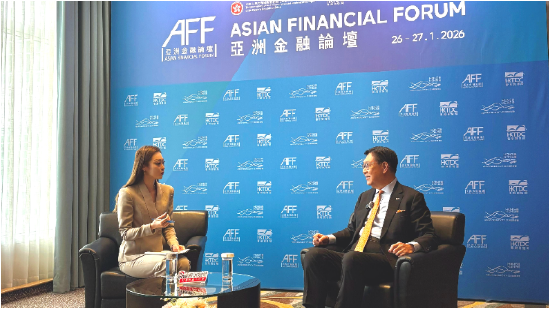
地缘环境变化让生意更难做?香港贸发局主席马时亨:愈多国家向中国靠拢 机遇与挑战永远共存
Xin Lang Cai Jing· 2026-01-28 12:41
文/新浪财经香港站 赵岚 第19届亚洲金融论坛中,主办方香港贸发局主席马时亨在接受新浪财经专访时表示,当下全球地缘格局 深度调整,经济发展的不确定性显著提升,但任何时期风险和机遇都共同存在。当前,越来越多国家在 向中国靠拢,同时也紧盯中国市场的前景,对香港市场和内地市场而言,机遇大于挑战。 愈多国家向中国靠拢 机遇与挑战永远共存 马时亨表示,目前全球地缘环境持续变化,唯一能确定的就是"不确定性",但每一个时代,都永远有挑 战,也永远有机遇。这种机遇体现在越来越多国家主动向中国靠拢、深化与中国市场联动的实际行动 中,香港作为超级联系人,更能清晰感知这种趋势带来的红利。 在中东地区,这种靠拢趋势非常明显。自从香港特首前年带队赴中东交流取得成果后,中东资本开始加 码对中国的投资。 有中东地区政府代表对记者表示,希望分享中国红利,看好与内地基建、能源企业合作,参与中东本地 的智慧城市、光伏电站等项目建设。 中东主权基金参会代表表示,目前正通过香港资本市场投资中国内地的科技、互联网和新能源公司。香 港在其中承担资本对接、风险对冲、项目统筹角色,香港政府或公营机构帮助促成多笔跨境合作。 东南亚市场方面,越南、印尼等地的东 ...