半导体

Search documents
中国资产深夜大涨,美股科技股普涨,半导体集体拉升,国际油价大跳水
21世纪经济报道· 2026-03-16 23:14
Market Performance - The US stock market saw all three major indices rise, with the Dow Jones up 0.83%, the Nasdaq up 1.22%, and the S&P 500 up 1.01% [1] - Major European indices also closed higher, with Germany's DAX 30 up 0.5% and the UK's FTSE 100 up 0.55% [1] Technology Sector - Major tech stocks experienced significant gains, with META rising 2.33%, Amazon nearly 2%, and Nvidia up 1.63%, reaching an intraday high of 4.31% [2] - Nvidia's CEO Jensen Huang raised the revenue forecast to $1 trillion by 2027 during the GTC conference, where new chip architecture was announced [3] - The Philadelphia Semiconductor Index rose by 1.96%, with notable increases in stocks like SanDisk (over 6%), Western Digital (over 5%), and Micron Technology (3.68%) [3] Chinese Tech Stocks - The Nasdaq Golden Dragon China Index increased by 0.95%, with significant gains in popular Chinese stocks such as BYD (up 8.2%), Xiaomi (5.4%), and Li Auto (5.3%) [3] Commodity Prices - Gold and silver prices declined, with spot gold fluctuating around $5000 and silver around $80 per ounce [3] - International oil prices fell sharply, with WTI crude oil futures closing at $93.50 per barrel (down 5.28%) and Brent crude at $100.21 per barrel (down 2.84%) [5] Cryptocurrency Market - The cryptocurrency market showed strength, with Bitcoin surpassing $74,000 (up 3.63%) and Ethereum rising over 9% to $2361 [6]



【光大研究每日速递】20260317
光大证券研究· 2026-03-16 23:06
Core Viewpoint - The article discusses the potential investment opportunities in various sectors amid rising concerns of "stagflation" in overseas economies, suggesting a focus on upstream resource products, essential consumer goods, and sectors benefiting from government policies and technological advancements [5]. Group 1: Investment Strategies - In the event of stagflation, upstream resource products such as oil, coal, non-ferrous metals, and agricultural products are recommended as core holdings [5]. - Essential consumer sectors including food and beverage, pharmaceuticals, and essential retail are highlighted as stable investment options [5]. - The article suggests exploring hard technology sectors like semiconductors, aerospace, high-end equipment manufacturing, and AI computing as flexible investment choices, alongside traditional and new infrastructure related to government spending [5]. Group 2: Market Performance - The article notes that the domestic equity market showed mixed performance, with the ChiNext Index rising by 2.51% [6]. - New energy-themed funds outperformed, with a net value increase of 4.22%, while other sector-themed funds experienced declines [6]. - The issuance of public funds, particularly FOF products, has been robust, with 30 new funds established, including 7 FOF funds [6]. Group 3: Sector-Specific Insights - The article mentions that oriented silicon steel prices have increased for the first time since October 12, 2024, indicating a potential upward trend in metal prices [7]. - The construction materials sector is experiencing significant price increases, with a focus on traditional materials and new materials, particularly in the fiberglass and electronic fabric segments [9]. - The disposable glove industry is expected to see price increases, benefiting domestic leading companies due to cost control and market share expansion [10].

【策略】海外“滞胀”担忧升温,哪些板块有望受益?——策略周专题(2026年3月第2期)(张宇生/郭磊)
光大证券研究· 2026-03-16 23:06
Core Viewpoint - The A-share market is experiencing a divergence, with major indices generally declining, particularly the ChiNext and CSI 500, while the Shanghai 50 and small-cap indices have seen relatively smaller declines [4]. Group 1: Important Events Review - The Ministry of Industry and Information Technology issued recommendations to prevent security risks associated with open-source AI [5]. - The National People's Congress concluded its fourth session, passing several resolutions and laws [5]. - The Governor of the People's Bank of China indicated that the central bank will continue to implement a moderately loose monetary policy in the next phase [5]. Group 2: Inflation and Investment Strategy - Concerns about "stagflation" are rising overseas, prompting a shift in investment logic from "pro-cyclical growth" to "anti-inflation, stable growth, and high certainty" [6]. - Recommended core holdings include upstream resource products (oil, coal, non-ferrous metals, agricultural products) and essential consumer goods (food and beverages, pharmaceuticals, essential retail) [6]. - It is advised to also consider sectors benefiting from independent prosperity and policy support, such as hard technology (semiconductors, aerospace, high-end equipment manufacturing, AI computing) and government consumption (traditional and emerging infrastructure) [6]. Group 3: Market Outlook - The external disturbances are expected to gradually weaken, making market performance more promising [7]. - The overall tone of the National Two Sessions is stable, which is likely to lay a solid policy foundation for stock market growth [7]. - The upcoming month will see a concentration of data and policy validation, which is expected to support economic and corporate profit data in the capital market [7].

黄仁勋抢吃龙虾:英伟达新核弹10倍算力提升,OpenClaw自由了
机器之心· 2026-03-16 22:59
Core Viewpoint - The keynote by NVIDIA's CEO Jensen Huang at the GTC conference emphasizes a significant transformation in computing, likening it to the personal computer and internet revolutions, with a projected market growth to $1 trillion between 2025 and 2027, primarily driven by large-scale cloud computing [4][6]. Group 1: AI Computing and Infrastructure - NVIDIA's new Vera Rubin architecture represents a complex AI computing system, with the NVL72 model achieving a 50-fold increase in token performance per watt, significantly exceeding Moore's Law [10][18]. - The Vera Rubin NVL72 system integrates 72 Rubin GPUs and 36 Vera CPUs, achieving a tenfold increase in inference throughput while reducing token costs to one-tenth compared to previous architectures [18][19]. - The introduction of the Vera Rubin Ultra NVL576 allows for vertical scaling of up to 576 GPUs, enhancing the efficiency of large-scale AI factories [21][22]. Group 2: AI Processing Units - The new Language Processing Unit (LPU) architecture, developed in collaboration with Groq, optimizes inference pipelines and enhances performance, achieving up to 35 times higher throughput per megawatt [31][34]. - The LPX architecture is designed for trillion-parameter models, balancing power consumption, memory, and computational efficiency, with the potential for significant revenue growth for AI service providers [41][34]. Group 3: AI Deployment and Security - NVIDIA's NemoClaw platform enhances the OpenClaw framework by providing enterprise-level security, enabling safe deployment of AI agents in corporate environments [46][49]. - The integration of local and cloud models within NemoClaw allows for continuous learning and capability expansion while adhering to privacy and security protocols [53][56]. Group 4: Physical AI and Robotics - NVIDIA is expanding its AI capabilities into the physical world, partnering with major automotive manufacturers to develop L4 autonomous vehicles using NVIDIA DRIVE Hyperion technology [60][62]. - The introduction of the NVIDIA Isaac simulation framework and new open models aims to facilitate the development and deployment of next-generation intelligent robots [60].
英伟达GTC大会全文:黄仁勋宣告推理时代到来,龙虾就是新操作系统
Hua Er Jie Jian Wen· 2026-03-16 22:57
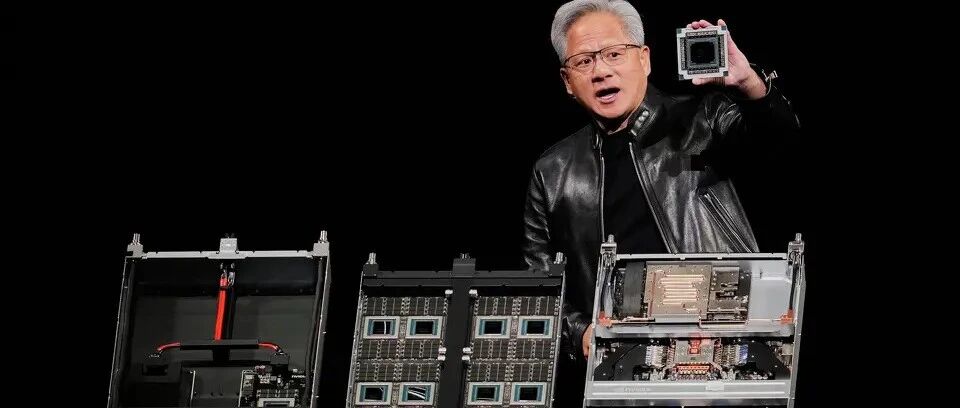
Core Insights - The event focuses on three major platforms: CUDA-X, system platform, and the new AI factory platform, emphasizing the importance of the ecosystem [1] - NVIDIA celebrates the 20th anniversary of CUDA, highlighting its revolutionary architecture and extensive integration into mainstream ecosystems [2] - The company has built a vast installation base of CUDA GPUs and computing systems over 20 years, which accelerates growth through a flywheel effect [3][4] - NVIDIA's libraries and tools are crucial assets for activating computing platforms and solving real-world problems, with significant updates announced at the event [10] Group 1: AI and Computing Evolution - The rise of generative AI and the launch of ChatGPT have fundamentally changed computing architecture and logic [13] - The demand for inference has skyrocketed, with computational needs increasing by approximately 1 million times [14] - NVIDIA's infrastructure is positioned to support the growing demand for AI across various fields, with a projected demand reaching $1 trillion by 2027 [15] Group 2: AI Factory and Token Production - Data centers are evolving from traditional storage to AI factories focused on token production, with the Vera Rubin system expected to enhance revenue by about 5 times [40] - NVIDIA's architecture allows for the lowest token cost globally, making it a competitive choice for data center installations [18] Group 3: OpenClaw and Agentic Systems - The introduction of OpenClaw represents a significant shift in enterprise IT, necessitating every company to develop an Agent strategy [30] - The NemoClaw reference design provides a secure framework for implementing Agentic systems in enterprises [31] Group 4: Physical AI and Robotics - The era of physical AI is emerging, with partnerships in autonomous driving, industrial robotics, and humanoid robots [35] - NVIDIA's collaborations with major automotive companies aim to integrate AI into RoboTaxi platforms, enhancing the future of transportation [36]
3月17日隔夜要闻:美股收高 英伟达推出太空计算服务 伦敦金交所遭故障 伊外长否认与美接触
Xin Lang Cai Jing· 2026-03-16 22:36
Company - Nvidia launched the Rubin chip, enhancing computing power by five times, with a market potential of one trillion dollars [3][7] - Nvidia anticipates AI chip revenue to reach at least one trillion dollars by the end of 2027 [3][7] - Nvidia introduced space computing services, aiming to integrate artificial intelligence into space applications [3][7] - Uber and Nvidia plan to roll out robot taxis in 28 cities starting next year [3][7] - Roche collaborates with Nvidia to significantly expand AI computing power, establishing the largest AI factory in the industry [3][7] - Meta is set to invest up to 27 billion dollars in procuring Nebius computing power [3][7] - Fertitta Entertainment is in talks to acquire Caesars Entertainment for 6.5 billion dollars [3][7] Industry - Oil prices are experiencing fluctuations, with Brent crude remaining above 100 dollars per barrel for three consecutive days [6][7] - The S&P 500 index achieved its best single-day performance since February, boosted by falling oil prices [7] - Research indicates that by 2026, the market share of pure electric vehicles in the EU and Norway will reach 23% [7] - Morgan Stanley still expects the Federal Reserve to lower interest rates in June despite rising oil prices impacting market expectations [7] - UBS forecasts that gold prices could rise by 20% from current levels by 2026 [8]

英伟达发布Rubin芯片,算力提升五倍,市场万亿美元
Xin Lang Ke Ji· 2026-03-16 22:23
Core Insights - Nvidia officially launched the Vera Rubin AI acceleration platform at the GTC 2026 conference, featuring a chip built on TSMC's 3nm process with 336 billion transistors, a 60% increase over the previous Blackwell generation [2] - The combined procurement orders for the Blackwell and Rubin architectures are expected to reach $1 trillion by 2027, double Nvidia's previous forecast [2] Group 1: Vera Rubin Platform Details - The Vera Rubin platform is a six-chip collaborative system, integrating a Vera CPU and two Rubin GPUs, along with four additional chips to form a complete AI factory infrastructure [3] - The Rubin GPU features 336 billion transistors, 288GB of HBM4 memory, and a memory bandwidth of 22TB/s, achieving inference performance of 50 PFLOPS and training performance of 35 PFLOPS, significantly surpassing Blackwell's capabilities [3] Group 2: Efficiency and Design Innovations - The Vera Rubin platform reduces inference token costs by 90% compared to Blackwell and decreases the number of GPUs needed for training mixture of experts (MoE) models by 75% [5] - The NVL72 rack features 100% liquid cooling and a modular design that reduces installation time from two hours to five minutes [5] Group 3: Future Developments - The Rubin Ultra system, set for release in 2027, will feature a new Kyber rack architecture with 576 GPUs, achieving an inference performance of 15 ExaFLOPS and a total memory capacity of 365TB [6] - Nvidia maintains a strict annual iteration schedule with planned releases for Blackwell (2024), Blackwell Ultra (2025), Rubin (2026), Rubin Ultra (2027), and Feynman (2028) [6] Group 4: Cloud Partnerships and Deployment - The Vera Rubin platform has entered mass production, with initial deployments scheduled for late 2026, including major cloud providers like AWS, Google Cloud, Microsoft Azure, and Oracle Cloud [7] - Microsoft plans to deploy the Vera Rubin NVL72 rack system for new AI data center projects, while CoreWeave will integrate Rubin systems into its AI cloud platform starting in late 2026 [7] Group 5: Strategic Vision and Expansion - Nvidia's narrative at GTC emphasizes the transition of AI from a tool to an "intelligent agent" paradigm, introducing the OpenClaw AI agent framework and the NemoClaw open-source project [8] - The company is also advancing the Vera Rubin Space-1 initiative to build a data center in orbit, aiming for computational power equivalent to 25 times that of the H100 [8] - Nvidia announced the Nvidia Groq 3 language processing unit (LPU), following a $20 billion acquisition of AI chip startup Groq, positioning itself against AMD in the inference market [8]
黄仁勋:龙虾就是新操作系统!英伟达7种芯片拼出算力怪兽,放话2027营收万亿美元
量子位· 2026-03-16 22:12
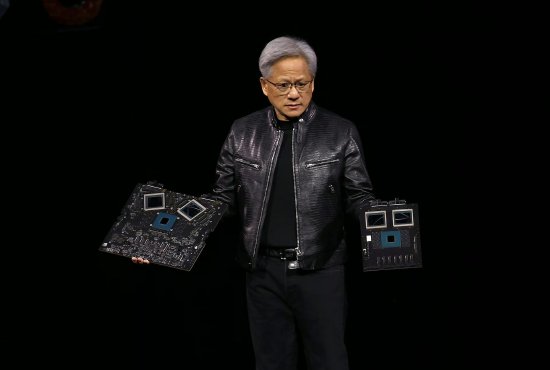
Core Insights - The core message of the article revolves around NVIDIA's ambitious revenue forecast of at least $1 trillion by 2027, driven by advancements in AI technology and token economics [5][6]. Group 1: Event Overview - The GTC 2026 event featured 450 sponsoring companies, 1,000 technical sessions, 2,000 speakers, and 110 robots, resembling an annual pilgrimage for the AI industry [1]. - CEO Jensen Huang, referred to as the "Token King," emphasized the evolution of NVIDIA's technology over the past 25 years, from GeForce graphics cards to the current AI landscape [3]. Group 2: Token Economics - The AI process requires increasing token generation, which in turn demands more computational power [4]. - Huang presented a model illustrating token throughput and generation rates, highlighting the economic implications of token production [12][14]. - The pricing structure for token usage ranges from free tiers for customer acquisition to $150 per million tokens for high-demand tasks [15]. Group 3: Technological Advancements - The introduction of the Vera Rubin platform aims to enhance token throughput by 2-10 times compared to previous generations [20]. - Vera Rubin features a complex AI computing system with seven types of chips and five types of racks, achieving 3.6 exaflops of computing power [27]. - The system utilizes 100% liquid cooling and innovative optical interconnects to overcome traditional bandwidth limitations [33][36]. Group 4: Integration of Groq - NVIDIA's acquisition of Groq, known for its deterministic data flow processors, aims to optimize AI inference tasks by separating processing workloads [50][56]. - The integration allows for high-throughput tasks to be handled by Vera Rubin while latency-sensitive tasks are managed by Groq, effectively reducing overall processing delays [58]. Group 5: OpenClaw and Future Vision - OpenClaw is positioned as a transformative open-source project that redefines resource management and scheduling in AI applications [67][70]. - Huang envisions a future where every engineer has an annual token budget, indicating a shift in compensation structures within the tech industry [79]. - Upcoming innovations, including the Feynman architecture, promise to further enhance computational capabilities and support both copper and optical interconnects [84][86].
英伟达正式发布LPU,CPU重磅更新:GPU不再是GTC唯一主角
半导体行业观察· 2026-03-16 22:10
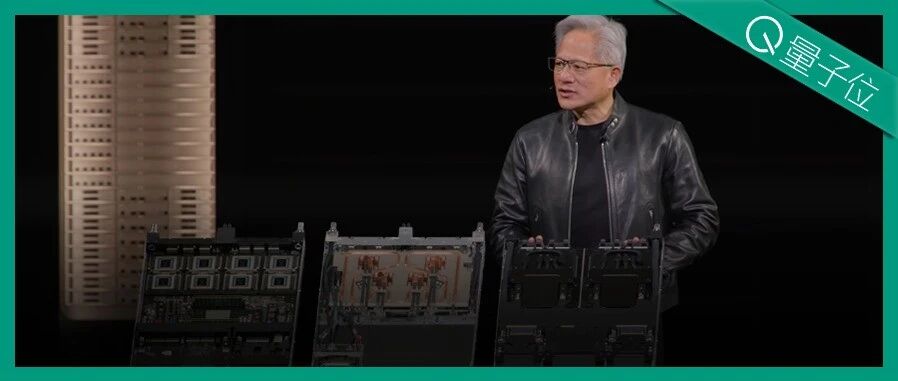
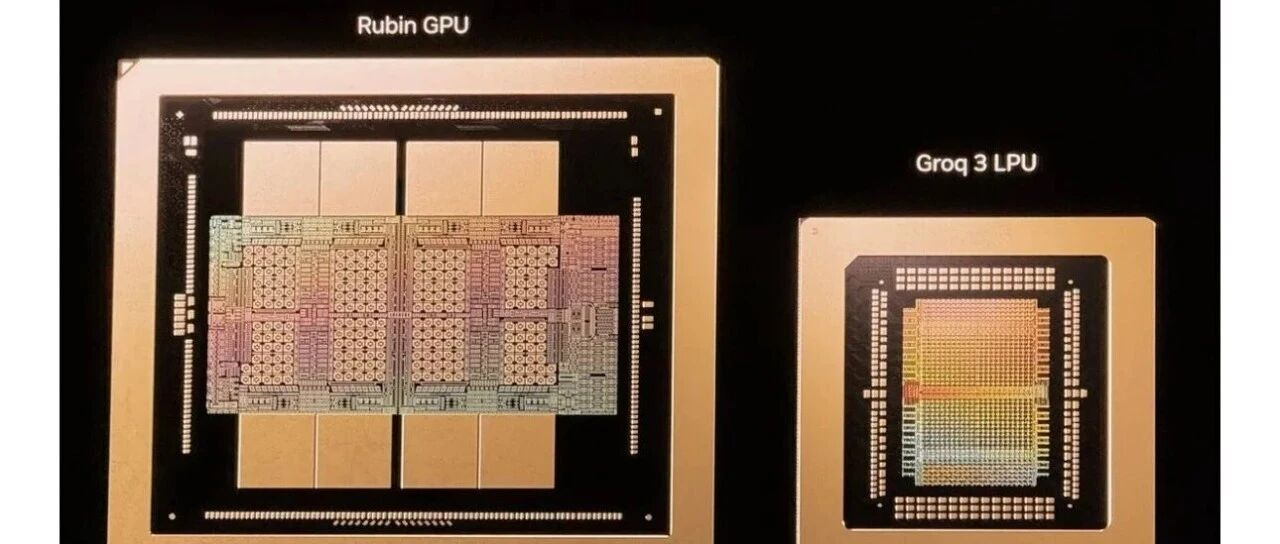
Core Insights - Nvidia's CEO Jensen Huang outlined the company's vision to maintain its leadership in the AI boom, predicting a $1 trillion order backlog within the next year [1][5] - Huang emphasized that the development of AI is still in its early stages, likening the current transformation to the personal computer and internet revolutions [4][5] Product Announcements - Nvidia introduced several new chips and systems at GTC 2026, including the Groq 3 LPU, which enhances AI model interactivity with low latency and high throughput [6][7] - The Groq 3 LPU features 500 MB of integrated SRAM, providing 150 TB/s bandwidth, significantly surpassing traditional HBM memory [9] - Nvidia plans to build a Groq 3 LPX rack containing 256 Groq 3 LPUs, offering 128 GB of SRAM and 40 PB/s inference acceleration bandwidth [11] CPU Developments - The new 88-core Vera CPU was unveiled, claiming a 50% performance increase over standard CPUs, with a focus on AI workloads [16][19] - Vera CPU architecture supports high memory bandwidth, achieving 1.2 TB/s, which is double that of its predecessor, Grace [22] - The Vera CPU is designed to compete directly with AMD and Intel in the CPU market, marking Nvidia's entry into direct CPU sales [18][19] Market Position and Challenges - Nvidia's revenue surged from $27 billion in 2022 to $216 billion last year, with a market capitalization reaching $4.5 trillion [42] - Despite strong quarterly reports, Nvidia's stock has faced volatility due to concerns about the sustainability of the AI boom [43][45] - The company is encountering competition from tech giants like Google and Meta, which are developing their own processors [46][56] Future Outlook - Huang envisions 2026 as a pivotal year for inference capabilities in AI, emphasizing the importance of efficient processing for AI applications [50] - Nvidia is shifting focus from GPUs to inference computing solutions, as evidenced by Meta's deployment of Nvidia's Vera CPUs without GPUs [56] - The company is also exploring new computing solutions that utilize multiple CPUs independent of GPUs, indicating a strategic pivot in its product offerings [57]
英伟达预计到2027年底AI芯片收入将达到至少1万亿美元
Xin Lang Cai Jing· 2026-03-16 21:35
Core Insights - Nvidia's CEO Jensen Huang announced at the GTC conference that the company's Blackwell and Rubin chips are expected to generate at least $1 trillion in revenue by the end of 2027, an increase from the previous estimate of $500 billion by the end of 2026 [1][5] - The stock initially rose by 4.8% following the announcement but later closed up 1.6% at $183.19, indicating some volatility in investor sentiment [1][5] Product Developments - Nvidia introduced a new chip utilizing technology acquired from the startup Groq, which is designed to enhance the response speed of AI systems [3][7] - The company also showcased a general-purpose CPU, marking its expansion into a domain traditionally dominated by Intel, with Huang stating that the CPU opportunity is "definitely" a multi-billion dollar business [3][7] - The Groq 3 LPU, a language processing unit aimed at accelerating large language model inference, was announced to be included in Nvidia's product lineup [4][8] Market Context - Nvidia's dominance in AI chip spending has positioned it as the highest-valued company globally, but investors are seeking more evidence of sustained market growth [3][7] - The company faces increasing competition from firms like Advanced Micro Devices Inc. and challenges from its own clients who are exploring in-house chip development for AI tasks [3][7]