咖啡

Search documents
万字长文 | AI落地的十大问题
Tai Mei Ti A P P· 2025-09-18 05:24
Core Viewpoint - The year 2025 is seen as a critical juncture for the practical application of enterprise-level AI, transitioning from experimental tools to essential components of business operations, despite challenges in scaling and execution [1][5]. Group 1: AI Implementation Challenges - Companies face significant gaps between AI technology awareness and practical application, with discrepancies in understanding and goals between management and execution teams [8]. - A majority of AI projects (90%) fail to meet expectations, with 70% of executives reporting unsatisfactory results, primarily due to viewing AI merely as a tool rather than a collaborative partner [16][18]. Group 2: Data Quality and Management - Data quality issues span the entire data lifecycle, affecting AI implementation outcomes, with many CIOs questioning the value of accumulated data [31][33]. - The Hong Kong Hospital Authority has accumulated nearly 6 billion high-quality medical data points over 30 years, emphasizing the importance of structured data for effective AI application [36]. Group 3: AI Reliability and Interpretability - As AI becomes more widely adopted, ensuring the reliability and interpretability of AI technologies is crucial, particularly in high-stakes environments like finance [21][24]. - The "model hallucination" issue, where AI generates incorrect information, poses significant challenges for trust and compliance in sectors requiring high accuracy [23][28]. Group 4: Scene Selection for AI Projects - Companies often struggle with selecting appropriate AI application scenarios, caught between the allure of technology and practical business needs [44]. - The case of Yixin demonstrates how AI can transform financial services by providing tailored solutions to underserved markets, highlighting the importance of aligning technology with user needs [46][48]. Group 5: Knowledge Base Development - A dynamic and continuously updated knowledge base is essential for maximizing the value of AI applications, moving from static information storage to knowledge-driven processes [78][80]. - The Eastern Airlines' approach to knowledge management illustrates the shift towards integrating AI into operational processes, enhancing efficiency and service quality [83]. Group 6: Human-Machine Collaboration - The evolution of AI agents from simple task executors to collaborative participants in complex business scenarios is critical for digital transformation [87]. - Companies like Midea are leveraging AI to enhance production efficiency and redefine operational models, demonstrating the potential of AI in driving business innovation [89][91]. Group 7: Talent Acquisition and Development - The competition for AI talent is intensifying, with a significant mismatch between the demand for skilled professionals and the available talent pool, highlighting the need for strategic talent management [97][99].


从一杯咖啡到第三空间,星巴克如何用数智化赋能咖啡体验?
3 6 Ke· 2025-09-17 13:55
Core Insights - Technology is transforming consumer logic, shifting from mere transactions to building long-term relationships between brands and consumers [4][5][6] - Starbucks' innovation through its Shenzhen Innovation Technology Center (SITC) exemplifies the integration of technology and consumer experience, enhancing its competitive edge in the Chinese market [6][9][32] Technology and Consumer Experience - The evolution of consumer expectations highlights the demand for personalized interactions, with 71% of consumers wanting brands to provide tailored experiences [5] - The concept of "third space" at Starbucks has evolved to encompass not just coffee consumption but also social and emotional connections, supported by technological advancements [11][13][22] Starbucks' Digital Transformation - SITC's mission is to empower partners through technology, allowing them to focus on customer engagement rather than operational tasks [23][29] - The implementation of automated inventory management and AI tools has streamlined operations, enabling partners to enhance customer interactions [24][25][26] Product Innovation and Personalization - Starbucks leverages data-driven insights to innovate its product offerings, exemplified by the recent breakfast project in Shenzhen, which aligns with local consumer habits [17][19] - The "True Taste No Sugar" initiative showcases how technology enables customization across various beverage categories, providing consumers with unique experiences [19][21] Balancing Scale and Personalization - SITC addresses the inherent conflict between brand scalability and consumer personalization, creating a framework that allows for efficient operations while delivering tailored experiences [21][32] - The integration of technology not only enhances operational efficiency but also enriches the emotional value of consumer interactions, moving from a one-size-fits-all approach to a more individualized service [21][32] Commitment to Innovation - Starbucks has committed approximately 1.5 billion RMB to SITC over the next three years, aiming to attract talent and resources for ongoing innovation [32] - The establishment of SITC represents Starbucks' long-term investment in the Chinese market, positioning it as a model for digital transformation in the retail and coffee industry [32]


拟出售在华资产之际,星巴克15亿深圳新设科技中心
2 1 Shi Ji Jing Ji Bao Dao· 2025-09-17 11:56
Core Viewpoint - Starbucks is establishing its China Innovation and Technology Center (SITC) in Shenzhen while simultaneously preparing to sell its Chinese business, indicating a strategic shift to enhance digital capabilities and operational efficiency amidst increasing competition in the coffee market [2][5][6]. Group 1: Starbucks' New Initiatives - The SITC, launched with an initial investment of approximately 1.5 billion yuan, aims to serve as Starbucks' innovation hub and digital headquarters in China, focusing on enhancing technology and data infrastructure [2][3]. - Over the past two years, SITC has facilitated significant digital advancements, including the upgrade of over 7,800 stores to electronic menu boards and the implementation of a new product innovation system that offers over 500 coffee combinations [3][4]. - The center is also involved in various major projects related to user experience, product innovation, supply chain, and partner development, leveraging Shenzhen's vibrant innovation ecosystem [4]. Group 2: Business Sale and Market Context - Reports indicate that major investment firms, including Carlyle, EQT, Sequoia China, and Boyu Capital, are preparing final bids for a controlling stake in Starbucks China, with a decision expected by the end of October [5][6]. - Starbucks' CEO has expressed confidence in the Chinese market, emphasizing the intention to retain a significant stake in the business while seeking partners to support future growth [7]. - Despite a recent revenue decline of 7% year-over-year in Q4 2024, Starbucks China has shown signs of recovery, with a net income of $790 million in Q3, marking an 8% increase [7][8]. Group 3: Competitive Landscape - The Chinese coffee market is rapidly evolving, with local brands like Luckin Coffee and Kudi gaining market share through competitive pricing and quick service, posing challenges for Starbucks [6][9]. - Data shows that while Starbucks has expanded to over 7,828 stores in China, local competitors are aggressively penetrating lower-tier cities, with Luckin Coffee having nearly 35% of its stores in these markets [9][10]. - The coffee industry in Shenzhen is particularly robust, with a market size projected to grow from 47.64 billion yuan to 178 billion yuan over the next five years, highlighting the potential for further expansion [8][9].
广东第一家!瑞幸咖啡巴西主题店开进大湾区
Sou Hu Wang· 2025-09-17 10:43
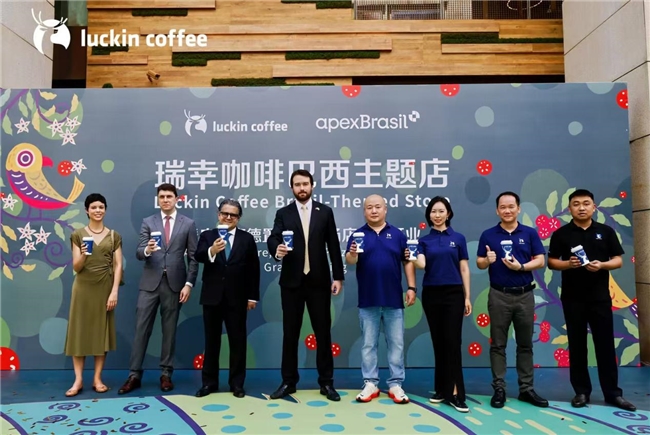
Core Viewpoint - The opening of the fourth Luckin Coffee Brazil-themed store in Guangzhou marks a significant step in promoting Brazilian coffee culture in China and enhancing Sino-Brazilian economic and cultural cooperation [1][4]. Group 1: Company Expansion - Luckin Coffee has opened its first Brazil-themed store in Guangdong, which is the first province in China to have over 4,000 Luckin Coffee stores, highlighting the brand's strong market presence [3]. - The company plans to establish over 30 Brazil-themed stores nationwide as part of its ongoing cultural collaboration with Brazil [4]. Group 2: Economic and Cultural Cooperation - The opening of the Brazil-themed store aligns with a memorandum signed in 2024 for a 10 billion yuan coffee bean procurement deal and the launch of the Brazil Coffee Culture Festival 2.0 [4]. - The Brazil Export and Investment Promotion Agency emphasizes the importance of increasing the presence of Brazilian coffee in Guangdong, as China has been Brazil's largest trading partner since 2009 [4][6]. - Luckin Coffee has been recognized as a "Strategic Cooperation Partner in Sino-Brazilian Coffee Culture" by the Brazil Export and Investment Promotion Agency, acknowledging its contributions to economic and cultural exchanges [6].

9.9元的逆袭:全球咖啡进入“中国时代”
Sou Hu Cai Jing· 2025-09-17 05:47
Core Insights - The coffee industry, which thrived in the Middle East and grew in Europe, is now facing significant competition from China, leading to strategic shifts among international coffee chains [1][3][4] Group 1: Market Dynamics - International coffee giants like Starbucks are planning to sell significant stakes in their Chinese operations, with Starbucks reportedly looking to sell 70% of its stake in China [1] - Coca-Cola is preparing to package and sell its Costa brand, which was acquired for £3.9 billion (approximately ¥34.7 billion) seven years ago, now listed at £2 billion (approximately ¥19.4 billion) [1] - The competitive landscape in China has shifted dramatically, with local brands like Luckin Coffee and Kudi rapidly expanding and capturing market share through innovative business models [3][11] Group 2: Local Brand Expansion - Local brands have successfully redefined coffee consumption in China, moving from a high-end, elite perception to a more accessible daily beverage, with prices as low as ¥9.9 [13][16] - The average annual coffee consumption in China has increased from 6 cups in 2016 to 22 cups in 2024, particularly in lower-tier cities [13][16] - Luckin Coffee and Kudi are now looking to expand their successful models into Southeast Asia and beyond, with Luckin already entering Singapore and planning to open stores in the U.S. [16][18] Group 3: Challenges in International Markets - Despite their domestic success, Chinese coffee brands face challenges in international markets, where established brands like Starbucks still dominate [20][21] - The operational costs and consumer preferences in developed markets differ significantly from China, making it difficult for Chinese brands to replicate their low-cost models abroad [22][24] - Chinese brands are adapting their strategies to local tastes and preferences, such as adjusting sweetness levels for Southeast Asian consumers [24][26] Group 4: Future Outlook - The global coffee market still holds significant potential, with regions like Southeast Asia expected to grow at an annual rate of 8% over the next five years [16] - Chinese coffee brands are leveraging their digital capabilities and cost efficiencies to challenge established players, but they will need time to build brand recognition and consumer loyalty in new markets [28]

9.17犀牛财经早报:基金费率改革或影响短债基金 华为发布面向智能世界2035十大技术趋势
Xi Niu Cai Jing· 2025-09-17 01:49
Group 1 - The China Securities Regulatory Commission (CSRC) is seeking public opinion on a draft regulation that may increase redemption costs for short-term bond funds, impacting their investment value [1] - Financial companies are exploring three alternative strategies in response to the potential changes: direct bond trading, dedicated bond accounts, and investing in bond ETFs and interbank certificates of deposit index funds [1] - The public fund issuance market has seen a significant increase, with 122 funds launched from September 1 to September 16, a 45.24% increase compared to the same period in August [1] Group 2 - The investigation into delisted companies has revealed widespread financial fraud, leading to fines totaling hundreds of millions and market bans for responsible individuals [2] - Trust companies are increasingly engaging in equity investment trusts, positioning this as a new growth area, particularly in strategic emerging industries [2] - The domestic production rate of analog chips used in home appliances is projected to reach 65% by the end of 2024, indicating a significant advancement in local manufacturing capabilities [2] Group 3 - Coffee futures are nearing record highs due to speculation about reduced supply from Brazil, the world's largest coffee producer, driven by concerns over tariffs and drought [2] - Huawei has identified ten key technology trends for 2035, predicting a tenfold increase in total computing power and the rise of artificial general intelligence (AGI) as a transformative force [3] - Quantum technology is advancing towards practical applications, with the launch of a quantum computing cloud service capable of supporting 1,000 qubits, marking a significant milestone in commercialization [5] Group 4 - The stock market has seen fluctuations, with major indices experiencing declines ahead of a significant Federal Reserve decision, while some Chinese concept stocks have shown resilience [16] - The U.S. retail sales data has influenced bond yields and currency values, with the dollar index hitting a three-year low and oil prices rising to a two-week high [17]
星巴克买家将定 红杉中国、博裕资本等机构入围决赛
Zhong Guo Jing Ying Bao· 2025-09-16 13:26
Core Viewpoint - Starbucks is in the final bidding stage for the sale of its China business, with results expected by the end of October 2023, as interest from over 20 institutions has been expressed [1][2] Group 1: Investment Interest and Bidders - A consortium including Boyu Capital, Carlyle Group, Sequoia China, Springhill Capital, and EQT has reached the final round of bidding for Starbucks China [1] - Starbucks CEO Brian Niccol mentioned that the company is looking for a strategic partner that aligns with its values, with over 20 interested parties [1][2] - Notable bidders have strong investment records in the consumer sector, with Sequoia China and Boyu Capital having made significant investments in various brands [3] Group 2: Financial Performance and Market Context - In Q2 2025, Starbucks China generated $790 million in revenue, accounting for approximately 8% of total revenue and nearly 40% of international revenue outside North America [1] - Starbucks China had previously indicated intentions to adjust its business strategy in the region, with revenue growth of 5% and 8% in the first two quarters of 2023 [2] - The competitive landscape in the Chinese coffee market has intensified, with local brands like Luckin Coffee and Kudi Coffee gaining market share through lower-priced products [4] Group 3: Strategic Considerations - Retaining a stake in the China business may help maintain Starbucks' brand valuation and market appeal, as complete divestment could signal a lack of confidence in the market [1][5] - Starbucks aims to preserve control over product quality and brand image by not fully transferring operational control to franchisees [5] - The company is focusing on expanding its presence in lower-tier cities and optimizing its store expansion strategy [8] Group 4: Market Trends and Consumer Behavior - The coffee market in China has seen significant investment activity, with nearly 60 financing events from 2021 to 2023, although investment enthusiasm has waned in the latter half of 2023 [3] - Starbucks is exploring new retail channels and community engagement through partnerships, such as with Xiaohongshu, to create themed community spaces in its stores [8][9] - The company is adapting its definition of "community" to include online interest-based groups, aiming to attract younger consumers [9]
阿里妈妈献礼中国农民丰收节:当AI改变土地与乡村、品牌与产业
Huan Qiu Wang Zi Xun· 2025-09-16 08:21
Core Insights - The integration of AI technology and digital solutions is transforming traditional agricultural practices and enhancing the branding and marketing of local products in China [1][6] - Companies like Carbin Koneer, Xinlu Coffee, and Lin Qingxuan are leveraging AI tools to optimize their marketing strategies, product innovation, and supply chain management, leading to significant growth and improved farmer incomes [2][3][5] Group 1: AI and Digital Transformation - AI technology is being utilized to create innovative marketing strategies, allowing brands to generate creative content efficiently and reduce costs [2] - Digital marketing tools are enabling brands to analyze consumer preferences and seasonal demands, guiding product development and enhancing market penetration [3][5] - The use of AI in supply chain management is improving procurement processes and incentivizing farmers, resulting in increased production and income for agricultural communities [3][5] Group 2: Case Studies of Successful Brands - Carbin Koneer has successfully utilized AI to create a unique brand identity and optimize its product offerings, significantly increasing sales and brand recognition [2] - Xinlu Coffee has transformed its business model by embedding AI throughout its commercial processes, leading to a substantial increase in market share and farmer income [3] - Lin Qingxuan has effectively addressed inventory challenges through AI-driven marketing strategies, resulting in improved conversion rates and customer loyalty [5] Group 3: Economic and Social Impact - The shift from traditional agricultural products to branded goods is creating a positive feedback loop that enhances farmer income and stimulates regional economic growth [6] - The collaboration between local brands and AI technology is fostering a sustainable growth model that benefits both producers and consumers [6] - The transformation of local products into recognized national brands is contributing to the revitalization of rural economies in China [6]
阿里妈妈用AI改变土地与乡村、品牌与产业
Yang Shi Wang· 2025-09-16 07:47
Core Insights - The integration of AI technology and digital solutions is transforming the agricultural landscape in China, enabling brands to enhance their market presence and product value [1][6] - Companies like Carbin Koneer, Xinlu Coffee, and Lin Qingxuan are leveraging AI tools to optimize marketing strategies, supply chain management, and product innovation, leading to significant business growth and improved farmer incomes [2][3][5] Group 1: AI and Digital Solutions in Agriculture - AI technology is being utilized to create innovative marketing strategies and optimize supply chains, allowing traditional agricultural products to transition into recognized brands [6] - The use of AI tools has enabled brands to automate content creation, analyze consumer preferences, and enhance product offerings, resulting in increased market competitiveness [2][3][5] Group 2: Case Studies of Successful Brands - Carbin Koneer utilized AI to generate creative content and analyze market trends, leading to a successful launch of seasonal product lines and a stable supply chain with Xinjiang cotton [2] - Xinlu Coffee adopted AI-driven marketing strategies to enhance brand visibility and optimize supply chain management, resulting in increased farmer incomes and a market penetration rate of 45% [3] - Lin Qingxuan leveraged AI for precise consumer targeting and marketing efficiency, transforming inventory challenges into opportunities and significantly increasing ROI [5]
东北版Manner火了,最高日出千杯,主打“不骗穷人”
3 6 Ke· 2025-09-16 02:10
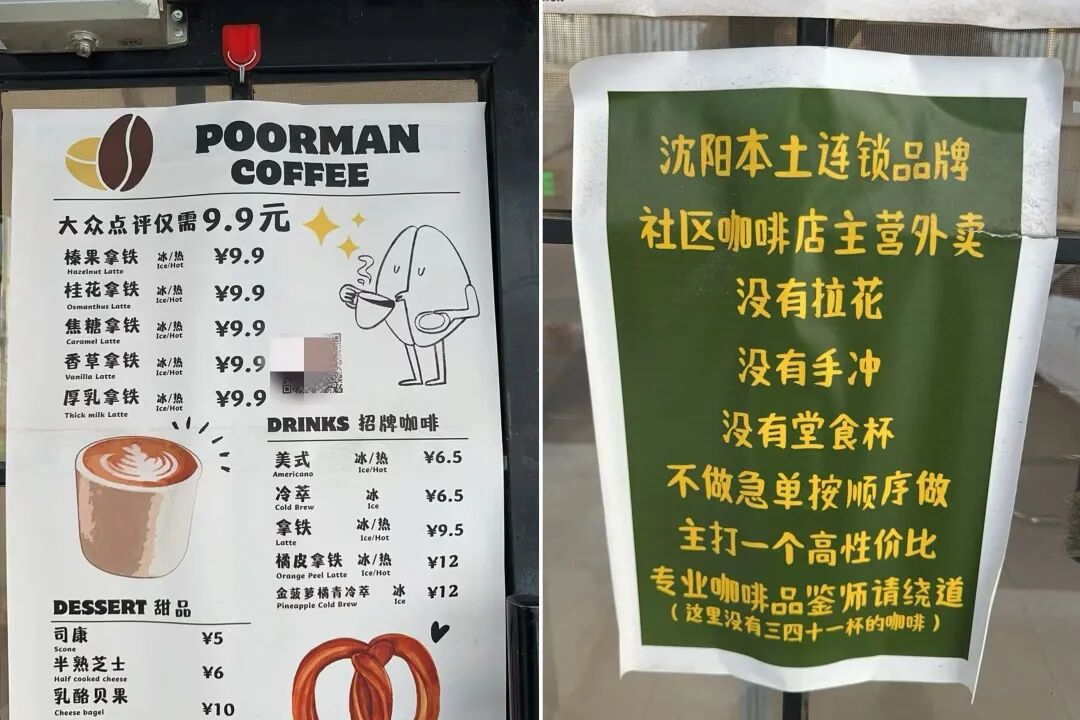
Core Insights - The article discusses the emergence of low-priced coffee brands in China, particularly focusing on "Poor Man Coffee" in Shenyang and "W Coffee" in Zhanjiang, which have gained popularity for their affordability and high sales volume [1][2][8]. Group 1: Business Model and Strategy - "Poor Man Coffee" offers coffee at an average price below 10 yuan, with a daily sales volume exceeding 500 cups and a repurchase rate close to 50% [1][6]. - The brand emphasizes simplicity, avoiding complex coffee-making techniques and targeting cost-conscious consumers, as indicated by their slogan "good coffee, not expensive" [4][2]. - The menu includes over 60 products, with the lowest-priced Americano at 6.5 yuan per cup, allowing customers to enjoy a meal and drink for under 10 yuan [4][6]. Group 2: Market Position and Performance - "Poor Man Coffee" has opened 21 stores, with daily revenues ranging from 2,000 to 8,000 yuan, and all locations are profitable due to low rent and renovation costs [6][19]. - The brand's founder noted that over 70% of orders come from delivery services, highlighting the importance of this channel in their business model [6][19]. - "W Coffee" in Zhanjiang, despite its humble appearance, has also achieved high customer traffic, demonstrating the viability of low-cost coffee shops in less affluent areas [8][12]. Group 3: Industry Trends - The coffee market in China is experiencing a price war, with prices dropping below 10 yuan, which is attracting a broader consumer base and increasing purchase frequency [17][15]. - The success of low-priced coffee brands indicates a shift in consumer preferences towards value and taste over brand prestige, suggesting a potential for new entrants in the market [17][19]. - The article suggests that the current environment is favorable for individual entrepreneurs looking to establish small coffee shops, as demonstrated by the success of "Poor Man Coffee" and similar brands [19].