
创新药

Search documents
西南证券:2025年创新药迎来β行情 2026年创新药行情将进入精选个股阶段
Zhi Tong Cai Jing· 2025-12-31 03:52
Group 1: Core Insights - The report from Southwest Securities indicates that by early 2025, Hong Kong-listed companies will begin to achieve business development (BD) milestones, with innovative drugs leading the market surge [1] - The Chinese innovative drug sector is expected to accelerate following the government's support for drug pricing mechanisms and the development of innovative drugs and medical devices, as highlighted in the March government work report [1] - The innovative drug sector is predicted to transition from a broad market rally to a selective stock picking phase by 2026, with a focus on three key areas: overseas expansion, brain-computer interfaces, and AI in healthcare [1] Group 2: Overseas Expansion - By December 5, 2025, the number of BD projects for Chinese innovative drugs going overseas reached 166, an increase of 54 projects compared to the entire year of 2024 [1] - The upfront payments for these projects totaled $6.3 billion, representing a growth of over 199% from 2024 [1] - The total amount for overseas projects reached $141.97 billion, an increase of over 136.8% from 2024, with over 52% of the molecules in early clinical stages [1] Group 3: Brain-Computer Interfaces - The 15th Five-Year Plan emphasizes the development of brain-computer interfaces as a new economic growth point, with several provinces introducing fee standards and including some projects in medical insurance [2] - The application of brain-computer interface technology is primarily focused on medical rehabilitation, particularly for patients with stroke and spinal cord injuries, with potential expansion into education, entertainment, and industrial sectors [2] Group 4: AI in Healthcare - Five national departments issued guidelines to promote and regulate the application of AI in healthcare, setting clear short-term (by 2027) and long-term (by 2030) goals across eight major areas [3] - AI in healthcare is entering a new phase of technological integration and industry restructuring, with key applications including AI health management, clinical decision support systems, medical imaging diagnostics, surgical robotics, genetic sequencing, and drug development [3] Group 5: Recommended Companies - The report recommends several companies for investment, including Heng Rui Medicine, BeiGene, Mindray Medical, United Imaging Healthcare, and others, indicating a diverse portfolio in the healthcare sector [4]

ETF盘中资讯|续创阶段新低,港股通创新药ETF(520880)溢价逆向走高,千万资金逢跌揽筹!机构:2026年战略性布局创新药
Sou Hu Cai Jing· 2025-12-31 03:36
Core Viewpoint - The Hong Kong Stock Connect Innovative Drug ETF (520880) has experienced a continuous decline for four days, reaching a new low since July 10, indicating a strong buying interest despite the downturn [1][2]. Group 1: Market Performance - The Hong Kong Stock Connect Innovative Drug ETF (520880) has seen a price drop of 0.80%, currently priced at 0.499, with a trading volume of 124,339 shares [1]. - The ETF has been in a downward trend since September, with the current adjustment lasting over three months, leading to the ETF trading below its issuance price [2]. Group 2: Investment Strategy - Analysts suggest that 2026 will be a strategic year for investing in innovative drugs, as the current market conditions may present a favorable entry point for investors [2]. - The ETF tracks the Hang Seng Hong Kong Stock Connect Innovative Drug Select Index, which has three key advantages: it exclusively includes innovative drug companies, has a high concentration of leading firms (over 72% in the top ten), and offers better risk control by reducing the weight of less liquid stocks [2][3]. Group 3: Composition and Risk Management - The top ten holdings of the ETF account for 72.57% of its total weight, showcasing a significant concentration in leading innovative drug companies [3]. - The ETF is designed to mitigate risks associated with less liquid stocks by enforcing a forced reduction in their weight, thus controlling tail risks effectively [2][3].

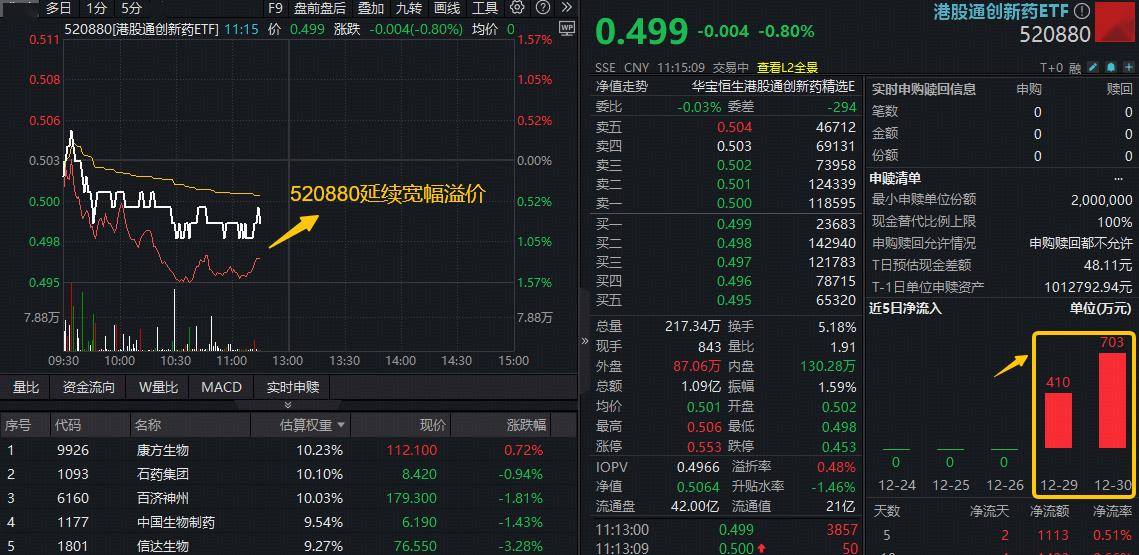
续创阶段新低,港股通创新药ETF(520880)溢价逆向走高,千万资金逢跌揽筹!机构:2026年战略性布局创新药
Xin Lang Cai Jing· 2025-12-31 03:25
Group 1 - The Hong Kong innovation drug sector continues to experience a downturn, with leading companies like BeiGene and China Biologic falling over 1%, and Innovent Biologics and 3SBio dropping more than 3% [1][7] - The Hong Kong Innovation Drug ETF (520880) has seen a decline for four consecutive days, reaching a new low since July 10, with a premium rising inversely, indicating strong buying interest [8][1] - Recent analysis from Zhongyou Securities indicates that the innovation drug sector is in a continuous correction phase, primarily driven by a retreat from previously optimistic business development (BD) expectations [3][10] Group 2 - Looking ahead to 2026, the maturity of clinical data is expected to be a key factor driving the innovation drug market, with BD being a necessary outcome of enhanced competitiveness of domestic new drugs [3][10] - Dongwu Securities suggests that the current period may represent a favorable configuration window for the Hong Kong innovation drug sector, which has been in adjustment since September, lasting over three months [10] - The Hong Kong Innovation Drug ETF (520880) and its associated funds track the Hang Seng Hong Kong Innovation Drug Select Index, which has three unique advantages: it is purely focused on innovation drugs, has a high concentration of leading companies, and offers better risk control [10][11] Group 3 - The top ten holdings in the Hong Kong Innovation Drug ETF account for over 72% of the index, highlighting the dominance of leading companies in the sector [4][10] - The total market capitalization of the top ten companies in the ETF is approximately HKD 12.87 billion, with BeiGene having a weight of 11.51% and a market cap of HKD 3.07 billion [4][10] - For investors looking to reduce volatility while still focusing on innovation drugs, the only drug ETF in the market (562050) is recommended, which emphasizes both innovation drugs and traditional Chinese medicine [12][13]
12月30日港股创新药ETF(513120)份额增加9500.00万份
Xin Lang Cai Jing· 2025-12-31 01:05
Core Insights - The Hong Kong Innovative Drug ETF (513120) experienced a decline of 1.55% on December 30, with a trading volume of 2.959 billion yuan [1] - The fund's shares increased by 95 million to a total of 19.475 billion shares, with a notable increase of 780 million shares over the past 20 trading days [1] - The latest net asset value of the fund is calculated at 23.736 billion yuan [1] Performance Metrics - The performance benchmark for the Hong Kong Innovative Drug ETF is the return rate of the CSI Hong Kong Innovative Drug Index (denominated in RMB) [1] - Managed by Guangfa Fund Management Co., the fund has achieved a return of 21.87% since its inception on July 1, 2022 [1] - Over the past month, the fund has recorded a return of -9.90% [1]
专访中国银河证券首席经济学家章俊:新“新三样”领衔,构筑中国产业发展新基座
2 1 Shi Ji Jing Ji Bao Dao· 2025-12-30 23:13
Core Insights - The new "new three samples" (robots, artificial intelligence, and innovative drugs) represent a shift in China's economic focus from factor expansion to innovation-driven growth, emphasizing the importance of technological path definition and standard-setting rights [1][2][10] - The transition reflects a systemic reassessment of growth paradigms and competitive logic, moving away from traditional resource input models towards a focus on technological breakthroughs and original innovation [2][3] Group 1: New "New Three Samples" - Robots, AI, and innovative drugs are not merely a change in industrial preference but are seen as foundational technologies for future industries, providing a sustainable technological base for broader industrial evolution [10][11] - The core constraints for these new samples are not capital and labor but rather algorithm capabilities, computing power, foundational models, and clinical data accumulation [2][3] Group 2: Robotics Industry - China has the most comprehensive and responsive robot industry chain globally, with significant advantages in scale production and product iteration speed [4][5] - The country is at a critical juncture, poised to transition from "running alongside" to "leading" in the robotics sector, contingent on overcoming foundational technology and high-end segment challenges [5] Group 3: Artificial Intelligence - China leads globally in AI application but faces limitations in foundational technologies; vast data resources provide a unique advantage but are not a panacea for all technical shortcomings [6] - To advance from a partial lead to a comprehensive one, China must enhance investments in high-end chips, computing systems, and foundational algorithms while improving data marketization and international standard-setting participation [6] Group 4: Innovative Drugs - The rapid increase in outbound transactions indicates that Chinese pharmaceutical companies are gaining recognition in global markets, yet the proportion of original drugs remains low, highlighting the need for breakthroughs in original innovation and global development capabilities [7][8] - The industry's evolution is marked by a shift from generic and modified drugs to first-in-class and best-in-class assets, with improvements in target selection and early clinical validation capabilities [7][8] Group 5: Strategic Implications - The development direction of the new "new three samples" signifies a significant upgrade in the concept of industrial security, integrating technology, biological, and data security into a unified framework [3] - The strategic importance of these technologies extends beyond immediate industrial growth, shaping long-term competitive capabilities and national security [3][10]

今日视点:“制度创新+科技突破”助力A股行稳致远
Zheng Quan Ri Bao· 2025-12-30 22:30
Group 1 - In 2025, the A-share market's trading activity increased significantly, with a total transaction amount reaching 417.8 trillion yuan, a year-on-year growth of over 60% [1] - The rise in trading activity is driven by a clear focus on technology, which is reshaping market logic [2] - Regulatory reforms aimed at promoting a virtuous cycle of "technology-capital-industry" were implemented, including the launch of the "1+6" reform measures on the Sci-Tech Innovation Board and the introduction of new listing standards for innovative companies [3] Group 2 - By the end of Q3 2025, the total investment by life and property insurance companies in stocks and securities investment funds reached 5.59 trillion yuan, a significant increase of 36.2% from the beginning of the year [4] - The domestic AI model DeepSeek achieved key breakthroughs, shifting the industry focus from technical challenges to real-world applications, while the robotics sector progressed from technology demonstrations to commercial viability [4] - The rise of high-tech industries has led to increased orders and overall value enhancement across the supply chain [4] Group 3 - The overall ecology of the A-share market is being profoundly changed by the combination of institutional support and industrial breakthroughs, with a notable shift in industry structure towards technology-related sectors [5] - The quality of listed companies is improving, with R&D investment exceeding 1.16 trillion yuan in the first three quarters of 2025, marking three consecutive years of over 1 trillion yuan in R&D spending [5] - A new valuation system is emerging, where innovation metrics such as R&D conversion efficiency and patent quality are becoming important decision-making factors for investors [5] Group 4 - The synergy between technological breakthroughs and institutional innovation is expected to lead to a more mature A-share market, with ongoing reforms facilitating the "technology-capital-industry" cycle [6]

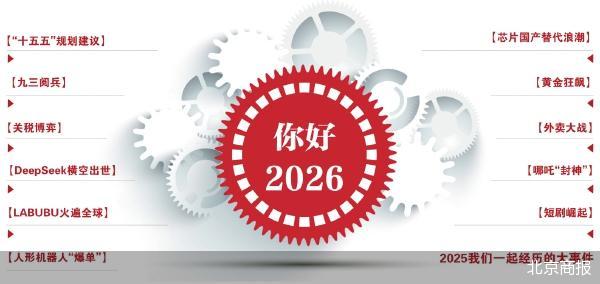
2026年新年献词:不确定的年代,做确定的你
Bei Jing Shang Bao· 2025-12-30 15:57
Core Viewpoint - The year 2025 is positioned as a pivotal moment in history, marked by significant developments in technology, economy, and societal changes, particularly in the realms of hard technology and new consumption [1][4][9]. Group 1: Economic and Technological Landscape - The economic future is closely tied to advancements in technology, with a focus on hard technology and new consumption as key coordinates for development in 2025 [4][6]. - China is facing unprecedented challenges and opportunities as it attempts to integrate industrialization, information technology, intelligence, and urbanization [4]. - The capital market is witnessing a surge in hard technology investments, particularly in areas like chips and innovative pharmaceuticals, which are crucial for narrowing the technological gap [4][6]. Group 2: New Consumption Trends - New consumption is evolving beyond mere material goods to encompass cultural and service-oriented aspects, indicating a shift in consumer behavior and preferences [6]. - Emotional and trendy consumption is rapidly gaining traction, reflecting a societal shift where consumers are increasingly valuing experiences and emotional connections over traditional goods [4][6]. - The service industry is identified as a fertile ground for the emergence of new consumption giants, highlighting the need for innovation in service delivery [6]. Group 3: Societal Implications - The relationship between national developments and individual experiences is emphasized, suggesting that the fate of the country is intertwined with the actions and aspirations of its citizens [3][9]. - The narrative of personal agency is reinforced, indicating that individuals have the potential to shape their futures amidst the uncertainties of a rapidly changing world [10]. - The importance of continuous innovation in systems, technology, and business practices is underscored as essential for meeting new demands and creating new supply [6].
医药行业2026年投资策略:创新药板块进入精选个股行情,关注出海、脑机接口、AI医疗三大方向
Southwest Securities· 2025-12-30 11:50
Core Insights - The report indicates that the innovative drug sector is entering a phase of selective stock picking in 2026, following a beta market in 2025. The A-share pharmaceutical industry has risen by 15.9% since the beginning of 2025, underperforming the CSI 300 index by 0.65 percentage points, ranking 17th among industries [2][14]. - The report highlights three key investment directions for 2026: overseas expansion of pharmaceuticals, brain-computer interfaces, and AI in healthcare [2]. Investment Strategy Overview - The innovative drug sector is expected to shift from a broad market rally to a focus on selective stocks in 2026. The average increase for 75 innovative drug sample indices in A-shares reached 54.8%, with Hong Kong's indices doubling [2]. - The report notes that as of December 5, 2025, there were 166 overseas business development (BD) projects, a significant increase from the previous year, with upfront payments reaching $6.3 billion, a growth of over 199% compared to 2024 [2]. Key Investment Directions Overseas Expansion - The report emphasizes the acceleration of Chinese innovative drugs entering international markets, with ADCs and bispecific antibodies being hot topics. The potential for GLP-1R target new drugs remains strong in areas such as long-acting formulations and oral medications [2]. Brain-Computer Interfaces - The report outlines the government's strategic push for brain-computer interfaces as a new economic growth point, with applications in medical rehabilitation for conditions like stroke and spinal cord injuries [2]. AI in Healthcare - The report discusses the establishment of clear short-term and long-term goals for AI in healthcare, covering various applications such as AI health management and clinical decision support systems [2]. Recommended Stocks - The report recommends several companies for investment, including Heng Rui Medicine (600276), BeiGene (688235), Mindray Medical (300760), and others, indicating a diversified approach across the innovative drug and medical device sectors [2].


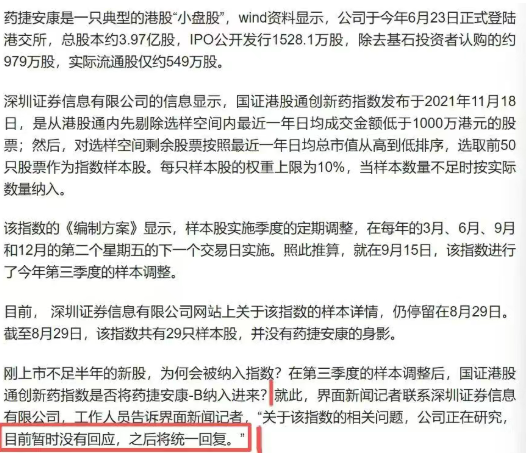
年底了,当初药捷安康纳入指数还没有给说法
Xin Lang Cai Jing· 2025-12-30 08:52
Group 1 - The Shenzhen Securities Information Company has not provided an explanation regarding the inclusion of Yaojie Ankang in the index, despite several months having passed since the event [2][3][7] - There is a growing concern among investors about the lack of communication from the Shenzhen Securities Information Company, which is seen as a critical infrastructure in China's capital market [4][8] - Investors are urging the company to take responsibility and communicate transparently about the situation to foster the development of index-based investments in China [4][8] Group 2 - Yaojie Ankang's market capitalization experienced significant fluctuations, rising to nearly 270 billion HKD before rapidly declining to approximately 60 billion HKD [6] - The company's stock price saw dramatic changes, with a rise of 77% followed by a drop of 54% within a short period, indicating high volatility in the market [6][7] - The inclusion of Yaojie Ankang in multiple indices has drawn widespread attention and concern from the market, highlighting the impact of index inclusion on stock performance [6][7]
海思科:创新药HSK44459片新增适应症临床试验获批准
Zheng Quan Shi Bao Wang· 2025-12-30 08:34
Core Viewpoint - The company Haishi Ke (002653) has received approval from the National Medical Products Administration for clinical trials of its drug HSK44459 for the treatment of inflammatory bowel disease, including ulcerative colitis and Crohn's disease [1] Group 1 - The National Medical Products Administration issued a "Clinical Trial Approval Notification" for HSK44459, indicating that the application for the new indication meets the requirements for drug registration [1] - Haishi Ke's subsidiary, Shanghai Haishi Shengnuo Pharmaceutical Technology Co., Ltd., has also received a "Acceptance Notification" for its clinical trial applications for HSK50042 and HSK55879 [1]
