
运动服饰

Search documents
收购锐步?安踏回应了
Guo Ji Jin Rong Bao· 2025-08-04 14:03
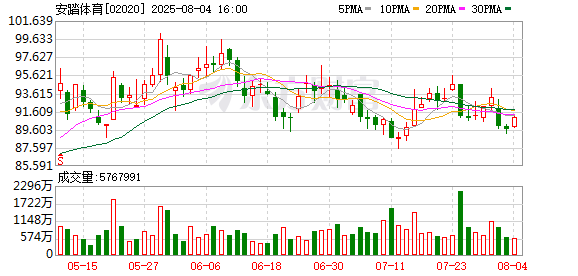
Core Viewpoint - Anta Group is reportedly set to acquire the Reebok brand from Authentic Brands Group (ABG), with the transaction already completed [2] Group 1: Reebok's Historical Context - Reebok was founded in 1895 in Bolton, England, originally known for its first spiked running shoes [2] - The brand transitioned to the U.S. market in 1979 and experienced significant growth, even surpassing Nike in market share during its peak [2] - Reebok partnered with the NFL in 2000 and sponsored numerous athletes for the 2004 Athens Olympics [3] Group 2: Recent Ownership Changes - Adidas acquired Reebok in 2005 for $3.8 billion to enhance competition with Nike, but Reebok's market share began to decline [3] - In 2021, Adidas sold Reebok to ABG for €2.1 billion, with ABG delegating regional operations to partners, including a focus on the Chinese market [3][4] Group 3: Current Performance and Future Prospects - Reebok's global market share is projected to remain below 1.5% by 2024, indicating ongoing struggles in the second-tier brand category [4] - Anta Group, founded in 1991, has successfully expanded its brand portfolio through acquisitions, including FILA, which has become a significant revenue contributor [5][6] - Anta's revenue for 2024 is expected to reach ¥70.826 billion, a 13.58% increase year-on-year, with a net profit growth of 52.36% to ¥15.596 billion [6]


安踏回应收购锐步传闻:以官方信息为准
Bei Ke Cai Jing· 2025-08-04 08:38
Core Viewpoint - Anta Group is reportedly set to acquire the Reebok brand from Authentic Brands Group, having completed the capital contribution process, although Anta has not officially confirmed these market rumors [1] Group 1: Company Background - Reebok was established in 1958 and was once the third-largest sports brand globally, with a product range that includes athletic shoes, apparel, and fitness gear [1] - In 2006, Adidas acquired Reebok for $3.8 billion to enhance its competitive stance against Nike [1] - Following the acquisition, Reebok's performance declined, leading to its sale by Adidas to ABG for $2.5 billion in 2021 [1] Group 2: Market Context - The acquisition of Reebok is part of a broader trend in the sportswear industry where major brands are consolidating to strengthen their market positions [1] - The previous sale of other brands like Rockport, CCM Hockey, and Greg Norman by Adidas for €400 million indicates a strategic shift in brand management within the industry [1]
爱马仕、普拉达业绩增长不佳;加拿大鹅喜获高增长|看时尚
2 1 Shi Ji Jing Ji Bao Dao· 2025-08-04 01:35
Group 1: Company Performance - Hermès reported a 9% sales growth in Q2, reaching €3.9 billion, with all regions showing growth. Leather goods sales increased by 14.8% to €1.76 billion, while watch sales declined by 5.5% to €130 million [14] - Adidas achieved a 7.3% increase in net sales for H1, totaling €12.1 billion, with a gross margin rise of 0.9 percentage points to 51.9% and operating profit up 70% to €1.2 billion [2] - Prada's H1 revenue reached €2.74 billion, marking a 9.1% increase at constant exchange rates, with retail sales up 10.1% to €2.453 billion [2][3] Group 2: Strategic Developments - Kering announced a €20 million signing bonus for new CEO Luca de Meo, alongside a nearly €9 million annual salary, which has positively impacted the company's stock price, rising 24% since the announcement [3] - PUMA appointed Andreas Hubert as COO, effective September 1, to streamline operations by integrating procurement, IT, and logistics under one role [6] - Arena appointed Mark Pinger as the new Chief Brand Officer, effective October 1, leveraging his background in sports and experience in strategic roles [7] Group 3: Market Trends and Challenges - L'Oréal's Q2 sales grew by 1.6% to €22.47 billion, with an operating margin of 21.1%, indicating a recovery from previous performance issues [8] - Canada Goose reported a strong start to the new fiscal year with a 22.4% revenue increase to CAD 107.8 million, showcasing brand resilience [9] - SMCP's sales grew by 2.7% to €601.1 million, with all regions outside Asia showing growth, indicating a stable performance despite regional challenges [11] Group 4: Leadership Changes and Impacts - Jil Sander's CEO Serge Brunschwig resigned after six months, indicating potential instability in leadership [13] - Nicolas Puech, the largest individual shareholder of Hermès, no longer holds shares, raising concerns about brand image and market confidence [5][6]

爱马仕、普拉达业绩增长不佳;加拿大鹅喜获高增长
2 1 Shi Ji Jing Ji Bao Dao· 2025-08-04 01:29
Group 1: Financial Performance - Hermès reported a 9% sales growth in Q2, reaching €3.9 billion, with all regions showing growth [15] - Adidas achieved a 7.3% increase in net sales to €12.1 billion, with a significant 70% rise in operating profit to €1.2 billion [2] - Prada's net revenue for H1 reached €2.74 billion, reflecting a 9.1% growth at constant exchange rates [3] - Canada Goose experienced a robust start to the fiscal year with a 22.4% increase in global revenue to CAD 107.8 million [10] - L'Oréal's sales for H1 were €22.47 billion, with a 1.6% growth, and an operating profit margin of 21.1% [9] - SMCP reported a 2.7% increase in sales to €601.1 million, with growth in all regions except Asia [11] Group 2: Management Changes - Kering appointed Luca de Meo as CEO, offering a €20 million signing bonus, which positively impacted the stock price [4] - PUMA appointed Andreas Hubert as COO, aiming to streamline operations by integrating various functions [8] - Arena announced Mark Pinger as the new Chief Brand Officer, effective October 1, 2025 [8] - Jil Sander's CEO Serge Brunschwig resigned after six months in the position [14] Group 3: Brand and Market Insights - The performance of Prada's main brand declined by 1.9%, while Miu Miu surged by 49.2%, indicating a divergence in brand performance [3] - Hermès' leather goods sales grew by 14.8%, while the watch segment faced challenges with a 5.5% decline [15][16] - L'Oréal's digital transformation efforts are beginning to show results, with a growth acceleration from Q1 to Q2 [9] - The luxury market is showing resilience, with brands like Canada Goose capitalizing on strong demand [10]



爱马仕、普拉达业绩增长不佳;加拿大鹅喜获高增长|二姨看时尚
Sou Hu Cai Jing· 2025-08-04 01:21
Group 1: Company Performance - Hermès reported a 9% increase in sales for the second quarter, reaching €3.9 billion, with all regions showing growth [14] - Adidas achieved a 7.3% increase in net sales for the first half of the fiscal year, totaling €12.1 billion, with a gross margin of 51.9% [2] - Prada's net revenue for the first half of the fiscal year reached €2.74 billion, reflecting a 9.1% growth at constant exchange rates [2] - Canada Goose reported a strong start to the new fiscal year with a 22.4% increase in global revenue, amounting to CAD 107.8 million [9] - Kering's stock price rose 24% following the appointment of Luca de Meo as CEO, who received a €20 million signing bonus [3] - SMCP's sales increased by 2.7% to €601.1 million, with all regions outside Asia showing growth [11] Group 2: Operational Changes - PUMA appointed Andreas Hubert as COO, effective September 1, to streamline operations and integrate various functions [6] - Arena announced Mark Pinger as the new Chief Brand Officer, effective October 1, leveraging his sports background for brand growth [7] - Jil Sander's CEO Serge Brunschwig resigned after six months, indicating potential instability in leadership [13] Group 3: Market Trends and Insights - L'Oréal's second-quarter sales grew by 1.6%, with an operating profit margin of 21.1%, indicating a positive trend in digital transformation [8] - The luxury market shows a divergence in brand performance, with Prada's main brand experiencing a slight decline while Miu Miu surged by 49.2% [2][3] - The disappearance of shares held by Hermès' largest individual shareholder may impact brand image and market confidence [5]
耐克回到起跑线
3 6 Ke· 2025-08-03 23:41
Core Insights - Nike's brand connection with China has weakened over the past two decades, leading to a significant decline in revenue and brand narrative clarity [4][5][6] - The latest financial report indicates a 21% year-over-year revenue drop in the Greater China region, with e-commerce down 31% and wholesale channels down 24% [4][17] - The company's shift towards a Direct to Consumer (DTC) model has created initial efficiencies but has also led to a disconnect with local market dynamics [16][29] Group 1 - Nike's advertising strategy in the early 2000s effectively resonated with a nation eager for recognition and success, exemplified by Liu Xiang's Olympic victory [1][2] - The brand's previous dominance in the market was characterized by consistent double-digit growth, with little competition, leading to complacency [8][12] - The rise of the sneaker resale market in 2019 marked a shift in consumer behavior, focusing more on investment potential rather than product experience [9][10] Group 2 - Under CEO John Donahoe, Nike adopted a DTC approach, which initially seemed effective but ultimately led to a loss of brand identity and connection with consumers [15][21] - The restructuring of the organization to prioritize efficiency over brand essence has diluted Nike's core narrative centered around sports [23][28] - The company's response to market challenges has been slow and ineffective, revealing deeper issues within its global structure and decision-making processes [30][32] Group 3 - The introduction of the "Win Now" strategy aims to restore Nike's brand spirit by focusing on local market needs and empowering regional leadership [36][38] - The shift back to professional and technical products reflects a recognition of changing consumer preferences towards lifestyle and comfort [45][46] - Nike's recent organizational changes indicate a move towards greater local adaptability, essential for regaining market relevance in China [40][46]

《浪浪山小妖怪》授权衍生单品超400个;lululemon“夏日乐挑战”上海站登场丨消费早参
Mei Ri Jing Ji Xin Wen· 2025-08-03 23:21
Group 1 - The film "浪浪山小妖怪" has achieved a box office of over 86 million yuan within a day of its release, showcasing the commercial value of IP development [1] - Over 400 licensed derivative products were launched simultaneously with the film, indicating a comprehensive approach to IP commercialization [1] - Companies within the related industry chain are expected to enhance performance through diversified monetization strategies, accelerating the restructuring of the cultural industry value chain [1] Group 2 - Lululemon's "Summer Fun Challenge" in Shanghai attracted nearly 6,000 participants and 1,500 teams, highlighting the effectiveness of community marketing strategies [2] - The event reinforces brand loyalty and is likely to boost sales, providing support for the company's stock price [2] - The sportswear sector is gaining market favor due to increased consumer participation, reflecting economic vitality and consumer confidence [2] Group 3 - Delisi has signed a strategic cooperation agreement with Xiamen Haifusheng Food Group and New Sanhe (Yantai) Food Co., focusing on product supply, market expansion, and freeze-dried pet food R&D [3] - This collaboration aims to leverage complementary advantages and create development opportunities in the growing pet economy sector [3] - The entry of traditional meat product companies into the pet food industry may intensify market competition and drive technological upgrades within the sector [3]

可选消费W31周度趋势解析:欧美公司进入业绩密集披露期,特朗普政府关税不明确引发市场动荡-20250803
Haitong Securities International· 2025-08-03 14:35
Investment Rating - The report assigns an "Outperform" rating to multiple companies including Nike, Midea Group, JD Group, Gree Electric, Anta Sports, Haier Smart Home, and others, while Lulu Lemon is rated as "Neutral" [1]. Core Insights - The report highlights that the earnings season in Europe and America is causing market volatility, exacerbated by uncertainties surrounding tariffs from the Trump administration [4][6]. - The performance of various sectors shows that gambling, overseas cosmetics, and pet products are outperforming the MSCI China index, while sectors like luxury goods and overseas sportswear are experiencing significant declines [4][12]. Sector Performance Overview - Weekly performance: Gambling > Overseas Cosmetics > Pets > Gold and Jewelry > Snacks > Domestic Cosmetics > Domestic Sportswear > Credit Cards > US Hotels > Daily Necessities > Luxury Goods > Overseas Sportswear, with respective weekly changes of 0.6%, -0.6%, -1.6%, -2.2%, -2.2%, -2.5%, -2.7%, -4.5%, -5.5%, -6.6%, -7.6%, and -9.0% [5][15]. - Monthly performance: Gambling > Domestic Sportswear > Domestic Cosmetics > Credit Cards > Luxury Goods > Overseas Cosmetics > US Hotels > Snacks > Daily Necessities > Gold and Jewelry > Overseas Sportswear > Pets, with respective monthly changes of 4.3%, -0.3%, -3.1%, -4.2%, -4.5%, -5.1%, -5.7%, -8.1%, -8.4%, -11.7%, -12.4%, and -14.4% [12][15]. - Year-to-date performance: Gold and Jewelry > Domestic Cosmetics > Overseas Cosmetics > Pets > Snacks > Daily Necessities > Credit Cards > Gambling > Domestic Sportswear > US Hotels > Overseas Sportswear > Luxury Goods, with respective year-to-date changes of 142.3%, 49.4%, 35.6%, 34.8%, 20.9%, 20.7%, 7.4%, 3.3%, 2.4%, -1.5%, -11.0%, and -13.7% [12][15]. Valuation Analysis - The report indicates that most sectors are still undervalued compared to their average valuations over the past five years, with expected PE ratios for 2025 as follows: - Overseas Sportswear: 31.7x (51% of 5-year average) - Domestic Sportswear: 12.8x (74% of 5-year average) - Gold and Jewelry: 24.7x (43% of 5-year average) - Luxury Goods: 23.3x (41% of 5-year average) - Gambling: 17.4x (26% of 5-year average) - Overseas Cosmetics: 39.7x (62% of 5-year average) - Domestic Cosmetics: 30.9x (58% of 5-year average) - Pets: 41.7x (45% of 5-year average) - Snacks: 22.4x (37% of 5-year average) - Daily Necessities: 23.3x (71% of 5-year average) - US Hotels: 28.9x (18% of 5-year average) - Credit Cards: 29.7x (59% of 5-year average) [10][19].
吴声2025年度演讲:词是旧的,意义才是新的
Hu Xiu· 2025-08-03 14:09
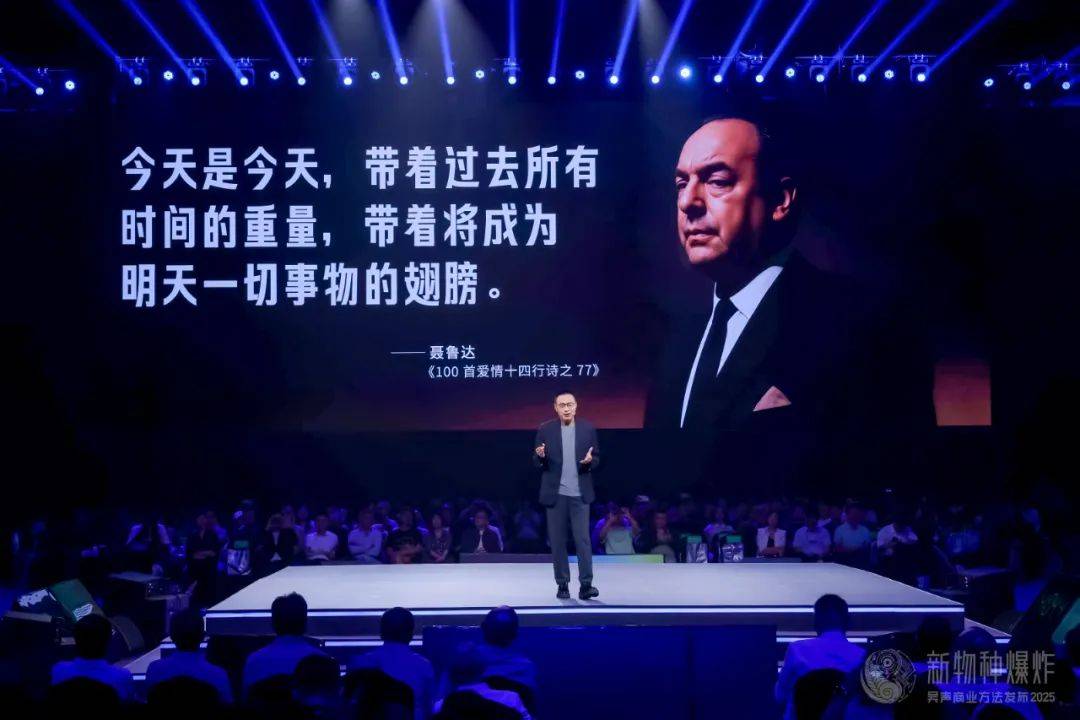
Core Insights - The event "New Species Explosion 2025" emphasizes the significance of AI in reshaping business through a philosophical lifestyle cycle, focusing on the reconstruction of meaning in specific scenarios [1][2][21] - The presentation outlines four innovative methods for "meaning reconstruction": NOW (connection in the present), FLOW (smooth human-machine interaction), HERE (narrative beyond presence), and EGO (consensus of self) [1][22][26] Group 1: Scene Creation and Evolution - The concept of "scene creation" has evolved over the past decade, highlighting the importance of well-designed scenarios in driving the growth of new business entities [6][14] - The case of "Three Wings Bird" illustrates the transition from product-focused strategies to personalized home scene customization, emphasizing the need for effective time management over mere spatial efficiency [9][10] - Red Star Macalline's transformation into an "AI home life destination" showcases the integration of home appliances, furniture, and decoration into a cohesive business model [12][14] Group 2: Instant Emergence and Meaning Reconstruction - The notion of "instant emergence" suggests that the evolution of AI applications will occur through meticulously designed scenarios, avoiding superficial trends [15][19] - The advancements in AI technology, such as Amazon's robotics and Google's Gemini Robotics, indicate a shift towards cognitive capabilities, although the full potential of AI remains to be realized [17][19] - The potential economic impact of AI is significant, with projections suggesting a GDP growth of 20-30%, indicating a transformative phase for society [19] Group 3: Connection and User Engagement - The concept of NOW emphasizes the importance of real-time connections facilitated by AI, which compresses processes and enhances user engagement [26][29] - The success of brands like Three Squirrels demonstrates the effectiveness of a decentralized organizational model that aligns with the values of younger consumers [34][35] - Xiaomi's approach to integrating consumer electronics into the automotive sector exemplifies the restructuring of organizational systems to enhance connectivity and efficiency [36] Group 4: Fluid Human-Machine Interaction - The evolution of human-machine interaction is characterized by the emergence of "intelligent agents" that enhance user experiences through seamless integration [47][50] - The concept of "physical AI" is reshaping interactions in the physical world, allowing for a more intuitive and responsive environment [57][59] - Brands like AAC Technologies are pioneering the integration of sensory technology to create immersive human-machine interactions [58][59] Group 5: Narrative Beyond Presence - The importance of physical presence in retail is highlighted through the innovative store concepts of brands like Anta, which create immersive and community-focused experiences [80][81] - The shift towards experiential retail emphasizes the need for physical spaces to resonate with digital narratives, enhancing customer engagement [84][85] - The concept of "here" as a narrative tool underscores the significance of local culture and community in shaping brand experiences [91][93] Group 6: Consensus of Self - The emphasis on individual uniqueness and collective consensus is illustrated through brands like Mao Geping, which focus on personalized beauty experiences [106][107] - The concept of "new balanceism" in health and wellness reflects a growing societal focus on achieving equilibrium in the face of rapid technological change [110][113]
美关税“割肉”阿迪达斯数千万欧元;耐克更惨:净利暴跌86%!
Sou Hu Cai Jing· 2025-08-02 23:49
Core Viewpoint - Adidas reported a challenging outlook in its Q2 2025 financial results, primarily impacted by U.S. tariff policies, which are expected to increase costs by approximately €200 million in the second half of the year [1] Group 1: Financial Performance - Adidas achieved Q2 revenue of €5.95 billion, reflecting a year-on-year growth of 2.2%, with a gross margin increase of 0.9 percentage points [1] - The revenue growth was largely attributed to reduced product discounts, lower shipping costs, and a strategic move to ship a significant amount of goods to the U.S. before the tariffs took effect [1] - As of the end of June, Adidas's inventory surged by 16%, reaching €5.26 billion [1] Group 2: Impact of Tariffs - The U.S. has established new trade agreements with Vietnam and Indonesia, imposing tariffs of 20% and 19% on imports from these countries, which are key manufacturing locations for Adidas [1] - Adidas CEO Bjorn Gulden expressed concerns that these tariffs could lead to broader inflation, making it difficult to predict the subsequent impact on consumer demand [1] - Other major sports brands, including Nike and Puma, have also reported significant impacts from U.S. tariff policies, with Nike experiencing an 86% year-on-year drop in net profit [2] - Nike executives indicated that U.S. tariffs could increase their costs by approximately $1 billion, highlighting that the sports consumer goods sector may be one of the most affected areas by these policies [2]