
农产品加工

Search documents
国泰君安期货商品研究晨报:农产品-20251210
Guo Tai Jun An Qi Huo· 2025-12-10 01:50
2025年12月10日 国泰君安期货商品研究晨报-农产品 观点与策略 | 棕榈油:关注MPOB报告利空出尽反应 | 2 | | --- | --- | | 豆油:美豆驱动不足,豆油震荡为主 | 2 | | 豆粕:USDA报告平淡,盘面低位震荡 | 4 | | 豆一:反弹震荡 | 4 | | 玉米:关注现货 | 6 | | 白糖:偏弱运行 | 7 | | 棉花:震荡偏强关注下游需求20251210 | 8 | | 鸡蛋:现货震荡 | 10 | | 生猪:提前交易冬至预期 | 11 | | 花生:关注油厂收购 | 12 | 国 泰 君 安 期 货 研 究 所 棕榈油:关注 MPOB 报告利空出尽反应 豆油:美豆驱动不足,豆油震荡为主 | | | 【基本面跟踪】 油脂基本面数据 | | 棕榈油主力 | 单 位 元/吨 | 收盘价 (日盘) | 涨跌幅 -0.67% | 收盘价 (夜盘) | 涨跌幅 0.74% | | --- | --- | --- | --- | --- | --- | --- | | | 豆油主力 | 元/吨 | 8,648 8,190 | -0.49% | 8,712 7,998 | -2.3 ...
更多优质农产品走向世界
Ren Min Ri Bao· 2025-12-10 01:38
Core Insights - Zhejiang province is enhancing its agricultural exports by leveraging customs support to help local companies access international markets, particularly in Southeast Asia and Europe [2][3] - The province's agricultural products, including fish and bamboo shoots, are being processed to meet international standards, thus increasing their competitiveness in global markets [2][3] Group 1: Agricultural Product Export Initiatives - The Qianjiang Customs has implemented a comprehensive support strategy to assist companies in exporting agricultural products, including establishing monitoring systems for water quality and food safety [2] - Companies like Hangzhou QianDao Lake Development Group are successfully exporting fish products to Singapore and expanding into Malaysia and Indonesia [2] - Local enterprises are developing high-value bamboo shoot products tailored to market demands, enhancing their export potential [2] Group 2: Regulatory Support and Market Expansion - The Qianjiang Customs provides guidance on legal regulations and export processes, helping small enterprises like Zhejiang Jiande Longxin Food Company navigate international markets [3] - The customs authority has facilitated the export of honey products by ensuring compliance with quality and safety standards, enabling access to over 40 countries [3] - Zhejiang's total import and export value reached 4.6 trillion yuan in the first ten months of the year, reflecting a 5.3% year-on-year growth [3]

等待美联储靴子落地:申万期货早间评论-20251210
申银万国期货研究· 2025-12-10 00:35
Group 1 - The core viewpoint of the article emphasizes the importance of the retail industry in fostering a complete domestic demand system and strengthening the domestic circulation during the "14th Five-Year Plan" period, advocating for a shift towards quality and service-driven growth [1] - The U.S. Federal Reserve is expected to continue its rate cuts amid internal disagreements, with market pricing indicating a high likelihood of a 25 basis point cut [1] - The Chinese government is focusing on stabilizing economic growth while enhancing quality and efficiency, with plans for more proactive fiscal policies and moderately loose monetary policies [2][10] Group 2 - The article highlights the performance of key commodities such as government bonds, oils, and copper, noting that the 10-year government bond yield has decreased to 1.83% [2][10] - The manufacturing PMI for November is reported at 49.2%, indicating a slight increase, while exports have grown by 5.7% year-on-year, reflecting strong resilience in foreign trade [2][10] - In the oil market, palm oil prices have shown slight increases, while soybean oil prices are under pressure due to improved supply expectations [3][27] Group 3 - The article discusses the copper market, indicating a continued tight supply of concentrates and a shift in global copper supply-demand expectations towards a deficit [18] - The article also mentions the performance of various commodities, including a decline in aluminum prices due to uncertainties surrounding future Fed rate cuts and a slight decrease in zinc prices amid stable supply [20][19] Group 4 - The article outlines the recent developments in the agricultural sector, particularly in soybean planting in Brazil, which has reached 86% completion, and the impact of this on global supply dynamics [26] - It also notes that domestic cotton prices are expected to remain strong due to stable demand and limited supply, despite some pressure from macroeconomic factors [29]


海关精准施策 帮助企业开拓市场——更多优质农产品走向世界(市场万花筒)
Ren Min Ri Bao· 2025-12-09 22:36
Group 1 - Zhejiang Qiandao Lake has excellent water quality, leading to high-quality fish products that are successfully exported to markets like Singapore, Malaysia, and Indonesia [1] - Qianjiang Customs has implemented comprehensive support measures for enterprises, including on-site guidance for ecological aquaculture bases and establishing monitoring systems for water quality and disease control [1] - The bamboo shoot processing industry in Hangzhou Fuyang District is actively developing high-value-added products to expand export markets, with companies producing various bamboo shoot products tailored to market demands [1] Group 2 - Zhejiang Jiande Longxin Food Company, a small enterprise specializing in chicken essence seasoning, received assistance from customs to navigate export regulations and adapt their product to meet international standards [2] - The Tonglu County, known for its bee product processing, benefits from Qianjiang Customs' support in quality safety supervision and management of beekeeping bases, enabling exports to over 40 countries [2] - Zhejiang Province's total import and export value reached 4.6 trillion yuan in the first ten months of the year, reflecting a year-on-year growth of 5.3%, with ongoing efforts to optimize customs processes for agricultural products [2]
深山小野果 长成大产业(美丽中国·生态优势下的特色产业)
Ren Min Ri Bao· 2025-12-09 22:32
Core Viewpoint - The article highlights the transformation of the wild fruit "刺梨" (thorn pear) into a significant economic asset in Guizhou, evolving into a billion-yuan industry through local initiatives and ecological advantages [2][11]. Group 1: Industry Development - The "刺梨" fruit, previously overlooked, has gained popularity in Guizhou, being developed into beverages and pastries, leading to its emergence as a billion-yuan industry [2][11]. - The local government has recognized the potential of "刺梨" and has integrated its cultivation into ecological restoration and agricultural restructuring efforts since 2015 [6][10]. - By 2019, Guizhou included "刺梨" in its list of 12 agricultural specialty industries, with a stable planting area of 1.52 million acres [11]. Group 2: Agricultural Practices - The cultivation of "刺梨" began with local farmers learning from successful practices in other regions, leading to the establishment of over 2,000 acres of "刺梨" in the area [5][6]. - Technical training and support from agricultural experts have been crucial in ensuring the successful transition from wild to cultivated "刺梨," with a focus on improving yield and quality [7][8]. - The local community has seen a significant increase in knowledge and expertise among farmers, contributing to the establishment of demonstration gardens and standardized cultivation practices [8][10]. Group 3: Economic Impact - The establishment of Guizhou Chuhai Agricultural Technology Development Co., Ltd. in 2018 has facilitated the guaranteed purchase of "刺梨" at prices above market rates, ensuring farmers' profits [10]. - The company has developed over 20 products from "刺梨," including beverages and health supplements, and has secured 26 patents, enhancing the product's market competitiveness [10][11]. - In 2024, the company is projected to purchase over 8,500 tons of "刺梨," generating more than 51 million yuan in income for local farmers [11].

乡村优质生活空间,啥模样?(这些新提法,写入“十五五”规划建议⑦)
Ren Min Ri Bao Hai Wai Ban· 2025-12-09 22:32
Core Viewpoint - The article emphasizes the importance of improving rural living conditions and infrastructure in China, highlighting the government's initiatives to create a "high-quality living space" in rural areas, which is expected to enhance the quality of life for farmers and promote urban-rural integration [1][4]. Group 1: Rural Infrastructure and Living Conditions - The article discusses the ongoing transformation of rural areas in China, focusing on enhancing living conditions and infrastructure, including sanitation, waste management, and transportation networks [3][4]. - Key statistics indicate that the average coverage of sanitary toilets in rural areas has reached 76%, with over 90% of administrative villages managing household waste, and more than 45% of rural wastewater being treated [3][4]. - The "14th Five-Year Plan" has led to significant improvements in public services, including healthcare and elderly care facilities, with over 14,000 mutual aid elderly care facilities and more than 16,000 elderly care homes established [4][6]. Group 2: Agricultural and Economic Development - The article highlights the critical role of industrial revitalization in rural development, asserting that increasing farmers' income is essential for improving living conditions and accessing quality public services [7][8]. - Data shows that during the "14th Five-Year Plan," 210 characteristic industrial clusters, 250 modern agricultural parks, and 1,098 strong agricultural towns have been established, with projected revenues for agricultural processing enterprises reaching approximately 18 trillion yuan by 2024 [7][8]. - The "15th Five-Year Plan" aims to develop multiple functions of agriculture, integrating production, processing, and tourism to enhance food security and promote ecological sustainability [8][9].

更多优质农产品走向世界(市场万花筒)
Ren Min Ri Bao· 2025-12-09 22:32
Group 1 - Zhejiang Qiandao Lake has excellent water quality, leading to high-quality fish products that are successfully exported to markets like Singapore, Malaysia, and Indonesia [1] - Qianjiang Customs has implemented comprehensive support measures for enterprises, including on-site guidance for establishing water quality monitoring and disease control systems, and optimizing processing environments to meet national and international standards [1] - The bamboo shoot processing industry in Hangzhou Fuyang District is actively developing high-value-added products, with local companies expanding their export markets by producing various bamboo shoot products tailored to market demands [1] Group 2 - Zhejiang Jiande Longxin Food Company, a small enterprise specializing in chicken essence seasoning, received assistance from customs to navigate export regulations and adapt their product to meet international market requirements [2] - The Tonglu County, known for its bee product processing, benefits from Qianjiang Customs' support in quality safety supervision and management of beekeeping bases, enabling local bee products to be exported to over 40 countries and regions [2] - In the first ten months of the year, Zhejiang Province's total import and export value reached 4.6 trillion yuan, a year-on-year increase of 5.3%, highlighting the growth of high-quality agricultural products in international markets [2]
万紫千红百县兴
Jing Ji Ri Bao· 2025-12-09 22:19
Core Insights - Agricultural Bank of China (ABC) is actively supporting local agricultural development in Guangdong Province through tailored financial products and services aimed at enhancing rural revitalization and industrial growth [4][10]. Group 1: Financial Support for Agriculture - ABC has introduced various financial products such as "惠农e贷" (Huinong e-loan) and "科技e贷" (Technology e-loan) to support the gold pomelo industry in Meizhou, providing loans totaling 16.9 billion yuan to 278 agricultural leading enterprises and small businesses [7]. - The bank's efforts have resulted in the support of 5,702 households in the pomelo industry, with a total issuance of 11.1 billion yuan in "惠农e贷" [7]. - In the white pigeon breeding sector, ABC has launched the "白鸽e贷" (White Pigeon e-loan) product, which has provided over 28 million yuan in loans, significantly boosting the local industry [9]. Group 2: Impact on Local Economy - The financial support from ABC has enabled local farmers and enterprises to expand their operations, such as a couple in Meizhou who received a 260,000 yuan loan to enhance their pomelo orchard [5]. - The white pigeon industry in Qingyuan has seen a dramatic increase in production, with annual output rising from 4 million to 28 million birds, generating over 900 million yuan in value [8]. - The introduction of the "农业全产业链贷" (Agricultural Full Industry Chain Loan) has facilitated the expansion of the blue crayfish industry in Huizhou, with a loan of 1.4 million yuan helping a company to scale up its operations [10][11]. Group 3: Strategic Initiatives - ABC's initiatives align with the "百千万工程" (Hundred Counties, Thousand Towns, and Ten Thousand Villages Project), which aims to promote high-quality development across rural areas in Guangdong [4][6]. - The bank has committed to enhancing financial services for rural revitalization, with a total county loan balance exceeding 600 billion yuan and agricultural loans surpassing 500 billion yuan as of October 2025 [11]. - ABC has been recognized for its outstanding performance in providing financial services for rural revitalization, receiving an "excellent" rating from the central bank for five consecutive years [11].


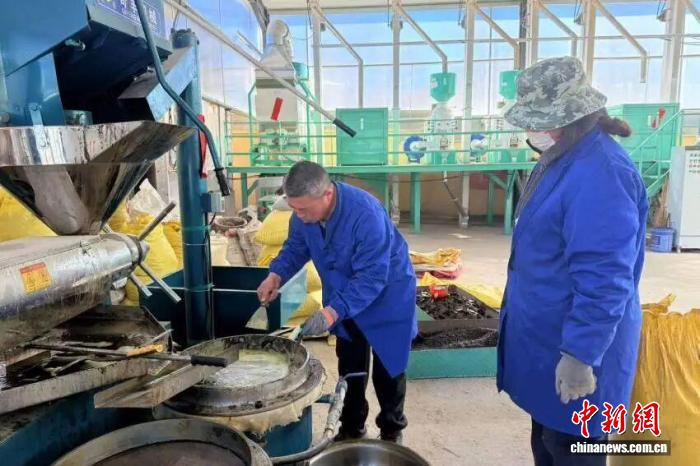
(乡村行·看振兴)山西长子:小杂粮加工“金钥匙” 开启乡村增收新路径
Zhong Guo Xin Wen Wang· 2025-12-09 11:29
Core Insights - The article highlights the development of a small grain processing industry in Wang Village, Changzi County, Shanxi, as a key driver for rural revitalization and income generation [1][3]. Group 1: Industry Development - Wang Village has established a small grain processing factory that operates efficiently, producing various products including millet, corn grits, edible oil, and flour [3]. - The factory has a daily production capacity of up to 10,000 pounds of millet, over 3,000 pounds of flour and oil, and 5,000 pounds of corn grits [3]. Group 2: Economic Impact - An investment of over 1 million yuan has been made to build the small grain processing factory, which has created stable employment for over 10 villagers, resulting in an annual income increase of more than 30,000 yuan per person [5]. - The village collective has also seen an annual income increase of over 200,000 yuan from this initiative [5]. Group 3: Future Plans - Wang Village plans to deepen the small grain processing industry chain, enhance research and development efforts, and introduce more high-value-added products to further boost villagers' income and strengthen the village's collective economy [5].
南华期货油料产业周报:中国采购美豆节奏偏慢,国内开放抛储打压盘面-20251209
Nan Hua Qi Huo· 2025-12-09 11:11
Report Industry Investment Rating No relevant information provided. Core Viewpoints of the Report - The external market of US soybeans focuses on whether the 53 bushels per acre yield in the December supply and demand report has a continued downward trend. The US claims that China will purchase 12 million tons of soybeans, but as of now, China has only completed less than 40% of the purchase, and the completion date may be postponed. It's necessary to consider whether the annual balance sheet of US soybeans can maintain stable export demand. If the inventory remains at around 300 million bushels, the annual price of US soybeans will continue to fluctuate around the cost line. The domestic soybean meal lacks a clear unilateral driving force and will follow the US market in the short - term. In the medium - term, the shipping schedule of China's US soybean purchases and the scale of state reserve releases will determine the domestic supply in the first quarter [1]. - Rapeseed meal is in a state of both weak supply and demand. The current rapeseed inventory and crushing have been exhausted, and the rapeseed meal inventory is also declining rapidly. However, due to the arrival of Australian rapeseed and the expectation of supply recovery, the rapeseed meal market is weak. Moreover, it is currently the off - season for aquatic consumption, so the demand growth is limited, and the rapeseed meal inventory is expected to increase in the future [1]. Summary by Relevant Catalogs Chapter 1: Core Contradictions and Strategy Recommendations 1.1 Core Contradictions - **Soybean Meal**: The external market of US soybeans has uncertainties in supply (potential yield reduction) and demand (China's slow purchase pace). The domestic soybean meal market lacks a clear driving force and is affected by China's purchase of US soybeans and state reserve releases [1]. - **Rapeseed Meal**: It is currently in a state of weak supply and demand. Although the current inventory is low, the expected supply recovery and weak demand in the off - season lead to an expected increase in inventory [1]. 1.2 Trading - Type Strategy Recommendations - **Trend Judgment**: The market trend is weak and declining [19]. - **Price Range**: The M2601 contract is expected to fluctuate between 2800 - 3200. After the contract switch, M2603 and M2605 may reach previous low levels [19]. - **Strategy Suggestions**: Reduce or exit the previously sold 3300 call options on M2601; reduce the position of the previously sold 2600 call options on rapeseed meal 2601 as the option approaches expiration; consider short - selling M2603 and M2605 [19]. 1.2.1 Basis, Spread, and Hedging Arbitrage Strategy Recommendations - **Basis Strategy**: In the previous period, the basis operation could be considered around 170 - 150 for M1 - 5. In the absence of a basis purchase, consider one - time price purchases during the downward cycle [20]. - **Spread Strategy**: Previously, the M1 - 5 spread was considered to stop falling around 170, and a positive spread trading idea should be maintained before downstream contract roll - over [20]. - **Hedging Arbitrage Strategy**: Short the spread between soybean meal 2601 and rapeseed meal 2601 when the spread is around (650, 700) [20]. 1.3 Industry Customer Operation Suggestions - **Price Range Forecast**: The price range of soybean meal is predicted to be 2800 - 3300, with a current volatility of 8.5% and a historical percentile of 3.1% in the past 3 years. The price range of rapeseed meal is predicted to be 2250 - 2750, with a current volatility of 9.8% and a historical percentile of 0.9% in the past 3 years [22]. - **Hedging Strategy**: - **Traders**: Short 25% of the M2605 contract at 2850 - 2900 to hedge the risk of inventory value decline [22]. - **Feed Mills**: Long 50% of the M2605 contract at 2700 - 2750 to lock in the purchase cost [22]. - **Oil Mills**: Short 50% of the M2605 contract at 2850 - 2950 to lock in profits and offset production costs [22]. 1.4 Basic Data Overview - **Futures Prices**: The closing prices of soybean meal and rapeseed meal futures contracts showed different degrees of decline. The price of CBOT soybeans remained unchanged, and the offshore RMB exchange rate increased slightly [23]. - **Spreads**: The spreads between different futures contracts of soybean meal and rapeseed meal also showed various changes. The basis of soybean meal in Rizhao and rapeseed meal in Fujian showed different trends [23]. - **Import Costs and Pressing Profits**: The import costs of US and Brazilian soybeans decreased, and the pressing profits of US and Brazilian soybeans also changed. The pressing profits of Canadian rapeseed also showed certain fluctuations [24]. Chapter 2: This Week's Important Information and Next Week's Attention Events 2.1 This Week's Important Information - **Positive Information**: The US government will announce a $12 billion agricultural assistance plan. As of December 4, the sowing of 2025/26 Brazilian soybeans was 94% complete. China's state - owned grain reserve company COFCO will auction 512,500 metric tons of imported soybeans [26][27]. - **Negative Information**: The US soybean exports to China decreased compared with the same period in previous years. The net sales volume of US soybeans in the 2025/26 season decreased [29]. - **Spot Transaction Information**: Downstream customers continue to purchase on a short - term basis [30]. 2.2 Next Week's Important Events - Monday: Domestic weekly inventory data, USDA export sales report. - Tuesday: USDA export inspection report, Brazil Secex weekly report. - Wednesday: CFTC agricultural product position report, USDA monthly supply and demand report. - Thursday: USDA export sales report. - Saturday: CFTC agricultural product position [35]. Chapter 3: Market Analysis 3.1 Price - Volume and Capital Analysis - **Domestic Market**: - **Unilateral Trend**: The domestic soybean meal market followed the external market and declined. The rapeseed meal market also declined due to the news of Australian rapeseed imports [34]. - **Capital Flow**: Key profitable seats in soybean meal and rapeseed meal reduced long positions and increased short positions. The market sentiment index was average according to the soybean meal option PCR [34]. - **Spread Structure**: The spread between different futures contracts of soybean meal and rapeseed meal is mainly related to the seasonal supply. This week, the spread between January and May contracts of soybean meal and rapeseed meal strengthened due to the decline of the May contract [40]. - **Basis Structure**: The basis of soybean meal remained stable, while the basis of rapeseed meal declined. The spot price difference between soybean meal and rapeseed meal increased. The far - month basis is expected to remain stable, and the spread is expected to maintain a positive spread [45]. - **External Market**: - **External Trend**: The external market declined due to China's slow purchase pace, the US crop subsidy policy, and the exit of long - position funds before the USDA report [56]. - **Capital Position**: The CFTC data is lagging and has no reference value. It is expected to return to normal progress in January [62]. Chapter 4: Valuation and Profit Analysis 4.1 Regional Profit Tracking - The pressing profit in the US soybean - producing area decreased slightly, while the profit in the Brazilian and Argentine producing areas increased. The domestic pressing profit of Canadian rapeseed increased due to the decline in rapeseed prices [68]. 4.2 Import - Export and Pressing Profit Tracking - Recently, US soybeans declined, and the domestic market followed suit. The news of state reserve releases led to a greater decline in the domestic market, and the profit of purchasing ships decreased [72]. - Regarding supply and ship - purchasing, the sentiment for purchasing Brazilian soybeans is average, and the far - month US soybean purchases will be carried out through state reserve rotation. The purchase of rapeseed is expected to remain cautious due to the import margin factor [74]. Chapter 5: Supply - Demand and Inventory Projection 5.1 International Supply - Demand Balance Sheet Projection - **US**: The US soybean production in November is expected to be 4.3 billion bushels, a decrease of 48 million bushels from the September forecast, mainly due to the decline in yield. The export volume is expected to be 1.64 billion bushels, a decrease of 50 million bushels from the previous forecast. The pressing volume remains unchanged, and the ending inventory is expected to decline slightly. The average seasonal price is expected to increase by $0.50 to $10.50 per bushel [95][96][97]. - **Global**: In the 2025/26 global soybean supply - demand forecast for November, the beginning inventory and production decreased, the pressing volume decreased by 1.7 million tons, the export volume increased by 200,000 tons, and the ending inventory decreased by 2 million tons [98][99][100]. 5.2 Domestic Supply and Projection - **Soybean Import**: The purchase sentiment of Brazilian soybeans is average, and the far - month US soybean purchases are mainly through state reserve rotation. The expected arrival volume of soybeans in December is 7.5 million tons, 6 million tons in January, and 5 million tons in February. The rapeseed import remains at a low level [101]. 5.3 Domestic Demand and Projection - The domestic soybean pressing volume is expected to remain high, but the domestic soybean meal consumption is difficult to increase significantly after the previous high - level stocking [103]. 5.4 Domestic Inventory and Projection - The domestic soybean inventory is at a seasonal high but is expected to decline in the fourth quarter and stabilize and rebound in the first quarter of next year. The domestic soybean meal inventory is also expected to remain at around 600,000 tons in the first quarter of next year [105].