煤炭开采

Search documents
焦煤焦炭周度报告-20251107
Zhong Hang Qi Huo· 2025-11-07 11:22
Group 1: Report Summary - This week, coking coal and coke showed relative resilience in the black steel industry chain, maintaining a sideways oscillation. The macro - level disturbances eased, and the market gradually returned to trading based on its own fundamentals. The strong performance of coking coal was mainly driven by the rising price of thermal coal, reduced inventory pressure on mining enterprises, limited supply increase, and the expectation of winter storage, which released price elasticity. However, the decline in steel mill profitability and hot metal production restricted the upward space of coking coal prices. The short - term futures market is expected to maintain a slightly bullish oscillating trend, and attention should be paid to the rhythm and intensity of downstream winter storage. As hot metal production gradually declined, coke consumption decreased, but production also dropped, resulting in a relatively balanced supply - demand pattern. The third round of coke price hikes has been implemented, slightly improving the loss of coke enterprises, but they are still in the loss range, and the fourth round of price hikes has been initiated. High furnace material prices have continuously reduced steel mill profitability, intensifying the game between steel and coke enterprises. Steel mills will resist price hikes more strongly, limiting the profit space of coke enterprises. The subsequent price hike space of coke depends on the upward range of coking coal, and the futures market fluctuates with coking coal [6]. - As of November 4, the capital availability rate of sample construction sites was 59.82%, a week - on - week increase of 0.12 percentage points. The capital availability rate of non - housing construction projects was 61.22%, a week - on - week increase of 0.07 percentage points, and that of housing construction projects was 53.19%, a week - on - week increase of 0.38 percentage points. Since November 10, 2025, China has suspended the 15% additional tariff on imported coking coal from the United States, and the import tariff has dropped to 13%. Thailand has launched an anti - circumvention investigation into hot - rolled steel plates from China [7]. - Domestic coking coal supply has slightly shrunk. Upstream coking coal inventory has slightly increased, but the pressure is not significant. Independent coke enterprises have slightly replenished coking coal, while steel mills have maintained just - in - time procurement. Coke production has slightly decreased. Hot metal production has declined, leading to lower coke consumption. The third round of price hikes has been implemented, slightly improving the loss situation [7]. Group 2: Bull - Bear Focus - Bullish factors include low inventory pressure of coking coal, strong performance of thermal coal prices, and the expectation of industry winter storage. Bearish factors are the weakening profitability of steel mills, low willingness to replenish raw material inventory, and the decline in hot metal production due to environmental protection factors [10]. Group 3: Data Analysis - As of the week of November 7, the operating rate of 523 sample mines was 83.76%, a month - on - month decrease of 1.02%, and the daily average output was 73.83 tons, a decrease of 2.01 tons. The operating rate of 314 sample coal washing plants was 37.61%, a month - on - month increase of 1.15%, and the daily average output was 27.53 tons, an increase of 1.01 tons. As of the week of November 1, the customs clearance volume of Mongolian coal at the Ganqimaodu Port rebounded but was slightly lower than the same period last year. Overall, the supply of coking coal has limited room for increase [13]. - As of the week of November 7, the clean coal inventory of 523 sample mines was 165.59 tons, an increase of 1.06 tons; the clean coal inventory of 314 sample coal washing plants was 294.97 tons, an increase of 10.55 tons; and the port coking coal inventory was 304.27 tons, an increase of 14.12 tons. The downstream replenishment rhythm of coking coal has slowed down, and the inventory depletion rate has decreased, resulting in a slight increase in weekly inventory, but the mine inventory pressure has been significantly reduced [15]. - As of November 7, the coking coal inventory of all - sample independent coke enterprises was 1070.02 tons, an increase of 17.54 tons. The available inventory days were 12.65 days, an increase of 0.4 days compared with the previous period. The coke inventory of independent coke enterprises was 58.3 tons, a decrease of 1.57 tons. This week, the production and sales of independent coke enterprises were relatively balanced, inventory decreased, and the willingness to replenish coking coal remained, but the replenishment amplitude was narrower than before [18]. - As of November 7, the coking coal inventory of 247 steel enterprises was 787.3 tons, a decrease of 9.02 tons. The available inventory days were 12.84 days, a decrease of 0.12 days compared with the previous period. The coke inventory was 626.64 tons, a decrease of 2.41 tons compared with the previous period, and the available days were 11.07 days, a decrease of 0.5 days. Recently, the profitability of steel mills has continuously declined, and the willingness to replenish raw materials is weak, mainly for just - in - time procurement [22]. - As of November 7, the capacity utilization rate of all - sample independent coke enterprises was 72.31%, a decrease of 1.13% compared with the previous period, and the daily average output of metallurgical coke was 63.59 tons, a decrease of 1 ton compared with the previous period. The capacity utilization rate of 247 steel enterprises was 84.99%, a decrease of 0.22% compared with the previous period, and the daily average coke output was 46.09 tons, a decrease of 0.12 tons compared with the previous period. As downstream consumption weakened, coke production also decreased, resulting in a relatively balanced supply - demand pattern [24]. - As of the week of November 7, China's coke consumption was 105.4 tons, a decrease of 0.96 tons. From the data of 247 steel enterprises, the daily average hot metal output was 234.22 tons, a decrease of 2.14 tons. Recently, hot metal production has gradually declined, and coke consumption has also decreased, but it is still in a relatively high range [26]. - As of November 7, the average profit per ton of coke for independent coke enterprises was a loss of 22 yuan/ton. The third round of price hikes has been implemented, slightly improving the loss. However, high raw material prices have continuously reduced steel mill profitability. As of November 7, the profitability of 247 steel enterprises was 39.83%, a further decrease of 5.19% compared with the previous period. The decline in steel mill profitability will intensify the game between steel and coke enterprises, and steel mills will resist price hikes more strongly, delaying the implementation of the next price hike or reducing the possibility of implementation, thus limiting the profit space of coke enterprises [28]. - The spot and futures prices of coking coal and coke maintained a slightly bullish oscillating trend [30]. Group 4: Market Outlook - The strong performance of coking coal is mainly driven by the rising price of thermal coal, reduced inventory pressure on mining enterprises, limited supply increase, and the expectation of winter storage, which releases price elasticity. However, the decline in steel mill profitability and hot metal production restricts the upward space of coking coal prices. The short - term futures market is expected to maintain a slightly bullish oscillating trend, and attention should be paid to the rhythm and intensity of downstream winter storage [33]. - As hot metal production gradually declines, coke consumption decreases, but production also drops, resulting in a relatively balanced supply - demand pattern. The third round of coke price hikes has been implemented, slightly improving the loss of coke enterprises, but they are still in the loss range, and the fourth round of price hikes has been initiated. High furnace material prices have continuously reduced steel mill profitability, intensifying the game between steel and coke enterprises. Steel mills will resist price hikes more strongly, limiting the profit space of coke enterprises. The subsequent price hike space of coke depends on the upward range of coking coal, and the futures market fluctuates with coking coal [36].
构建煤炭行业央企ESG评价体系:聚焦绿色转型与安全治理
Shenwan Hongyuan Securities· 2025-11-07 10:47
Investment Rating - The report rates the coal industry as "Positive" [1] Core Insights - The coal industry faces dual pressures of green transformation and safety production as ESG disclosure becomes mandatory by 2025 [4] - A tailored ESG evaluation system for coal enterprises is proposed, focusing on "green mining," "safety production," and "smart management" [4] - The evaluation system includes 4 categories of positive indicators and 1 category of negative indicators, totaling 23 primary indicators and 59 secondary indicators, with a maximum score of 100 [4] Summary by Sections 1. Coal Central Enterprises ESG Policies: Green Transformation in a Critical Phase - The coal industry is a pillar of national energy security and economic development, facing pressures to ensure energy security while promoting low-carbon transformation [9][10] - Recent policies emphasize high-quality development in the coal sector, focusing on green, safe, intelligent, and efficient growth paths [10] 2. Building the ESG Evaluation System for Coal Central Enterprises: Balancing Green and Safety - The ESG evaluation system is based on general indicators and tailored to the coal industry's characteristics, with 4 categories of positive indicators and 1 negative indicator [14] - The system includes general, environmental, social, and governance indicators, with a total of 22 primary indicators and 56 secondary indicators [14] - Environmental indicators focus on carbon reduction and include new metrics for "green mining and ecological restoration" [15][17] - Social indicators assess the coal enterprises' contributions to social development, with a new focus on "energy supply responsibility" [18][19] - Governance indicators emphasize safety production and smart management, with new metrics for "safety production governance" and "dividend mechanisms" [20][21] 3. Detailed ESG Evaluation Framework - The evaluation framework includes specific scoring for each indicator, ensuring a comprehensive assessment of ESG performance [28][29] - Positive indicators cover various aspects, including energy consumption, greenhouse gas emissions, pollution prevention, and community engagement [28] - Negative indicators focus on violations and penalties, with a scoring system that deducts points for each infraction [24][29]
嘉友国际:与Mongolian Mining Corporation签订长期合作协议补充协议
Mei Ri Jing Ji Xin Wen· 2025-11-07 08:45
Core Viewpoint - The company,嘉友国际, has signed a supplementary long-term cooperation agreement with Mongolian Mining Corporation, which will result in the sale of an additional 2.5 million tons of coking coal products from 2026 to 2030, potentially positively impacting the company's financial status and operational results [1] Group 1 - The supplementary agreement extends the existing long-term cooperation with MMC and its affiliates [1] - The total volume of coking coal products to be sold under the new agreement is 2.5 million tons [1] - The implementation of this agreement is expected to have a positive effect on the company's future financial condition and operational performance, although the specific impact will depend on subsequent business execution [1]

煤炭开采板块11月7日跌0.24%,郑州煤电领跌,主力资金净流出5.62亿元
Zheng Xing Xing Ye Ri Bao· 2025-11-07 08:41
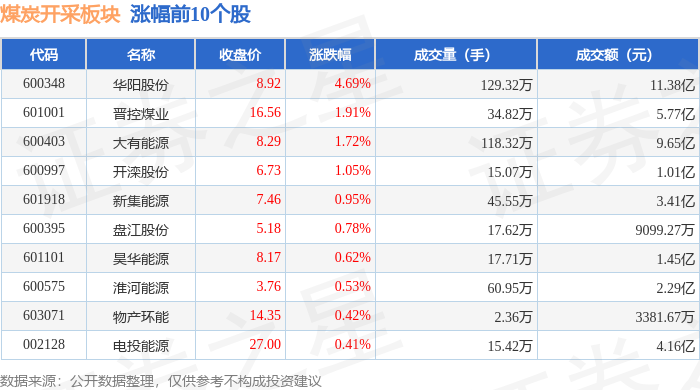
Core Insights - The coal mining sector experienced a decline of 0.24% on November 7, with Zhengzhou Coal Power leading the drop [1][2] - The Shanghai Composite Index closed at 3997.56, down 0.25%, while the Shenzhen Component Index closed at 13404.06, down 0.36% [1] Stock Performance - The top-performing stocks in the coal mining sector included: - Biyang Co. (600348) with a closing price of 8.92, up 4.69% and a trading volume of 1.2932 million shares, totaling 1.138 billion yuan [1] - Jinko Coal Industry (601001) closed at 16.56, up 1.91% with a trading volume of 348,200 shares, totaling 577 million yuan [1] - Conversely, Zhengzhou Coal Power (600121) saw a significant decline, closing at 5.48, down 2.66% with a trading volume of 1.2162 million shares, totaling 676 million yuan [2] Capital Flow - The coal mining sector experienced a net outflow of 562 million yuan from major funds, while retail investors contributed a net inflow of 553 million yuan [2][3] - Notable capital flows included: - China Shenhua (601088) with a net inflow of 35.4985 million yuan from major funds, but a net outflow of 28.0975 million yuan from speculative funds [3] - Biyang Co. (600348) had a net inflow of 18.1573 million yuan from major funds, while speculative funds saw a net outflow of 48.245 million yuan [3]


一文读懂 IEA《世界能源投资 2025》
GOLDEN SUN SECURITIES· 2025-11-07 07:08
Investment Rating - The report maintains a rating of "Buy" for several key companies in the coal mining sector, including Yanzhou Coal Mining Company, China Shenhua Energy, and others [5][12]. Core Insights - Global energy investment is projected to reach $3.3 trillion in 2025, marking a 2% increase from 2024, with a significant shift towards clean energy investments outpacing fossil fuels [1][4]. - The report highlights that while clean energy investments are surging, challenges such as grid bottlenecks, supply chain pressures, and regional imbalances pose significant risks to the energy transition [1][4]. - The focus of energy investments is irreversibly shifting towards clean energy, with the modernization of the grid, supply chain resilience, and financing in emerging markets being critical for successful transition [4][56]. Summary by Sections 1. Power Investment - Global power investment is expected to reach a record $1.5 trillion in 2024, driven by low-emission power, grid, and battery storage investments [16]. - Solar energy faces financial pressures due to overcapacity, while wind energy remains stable, and nuclear power is experiencing a revival [20][21]. - Grid investment is lagging behind renewable energy deployment, with significant bottlenecks in supply chains and labor shortages [48][49]. 2. Energy Supply - Fossil fuel supply investment is expected to decline by 2% in 2025, marking the first decrease since 2020, primarily due to falling oil prices and rising costs [2][56]. - Coal investment is at a record high driven by China and India, although growth rates are slowing [56][59]. - Investment in low-carbon technologies is robust, with liquid biofuels and low-emission hydrogen expected to see a 30% increase in 2025 [57]. 3. Terminal Demand - Electrification is accelerating, with significant investments in the transportation sector, while building investments are stagnating due to policy rollbacks and cost pressures [3][55]. - Industrial energy efficiency is rebounding in China and the U.S., but global low-emission steel investments are contracting significantly [3][55]. 4. Investment Strategy - The report recommends focusing on companies that are well-positioned in the coal mining sector, particularly those with strong performance metrics [9][12].




煤炭供给侧收紧,全市场唯一煤炭ETF(515220)领涨超1%,规模近130亿元
Mei Ri Jing Ji Xin Wen· 2025-11-07 06:41
Group 1 - The tightening of coal supply is becoming the current investment theme in the coal industry, with an expectation that the oversupply situation will gradually reverse, leading to a potential increase in coal prices [1] - The demand for winter coal storage is expected to rise, which may improve the coal supply-demand balance and could lead to restrictions on imported coal in the future [1] - The coal mining industry is likely to see improved supply-demand dynamics and price increases, which may enhance the performance elasticity of related companies [1] Group 2 - The only coal ETF in the market, Coal ETF (515220), tracks the CSI Coal Index (399998) and has a scale of nearly 13 billion yuan, with a high dividend yield of over 5.3% in the past 12 months as of September 30 [1] - In the context of declining risk-free interest rates, the value of allocating to Coal ETF (515220) is highlighted, suggesting a strategy of gradually accumulating positions to seize investment opportunities in the coal sector [1]
电投能源涨2.01%,成交额2.89亿元,主力资金净流入985.38万元
Xin Lang Zheng Quan· 2025-11-07 05:39
Core Viewpoint - Electric Power Investment Energy has shown a significant increase in stock price and trading volume, indicating positive market sentiment and potential growth opportunities in the coal and aluminum sectors [1][2]. Company Overview - Electric Power Investment Energy Co., Ltd. is located in Tongliao City, Inner Mongolia, and was established on December 18, 2001, with its listing date on April 18, 2007. The company primarily engages in the production, processing, and sales of coal products, thermal power, and electrolytic aluminum [1]. - The main revenue composition includes aluminum products (55.11%), coal products (30.29%), power products (13.02%), and others (1.59%) [1]. Financial Performance - For the period from January to September 2025, Electric Power Investment Energy achieved a revenue of 22.403 billion yuan, representing a year-on-year growth of 2.72%. However, the net profit attributable to shareholders decreased by 6.40% to 4.118 billion yuan [2]. - Cumulative cash dividends since the A-share listing amount to 11.815 billion yuan, with 4.550 billion yuan distributed over the past three years [3]. Shareholder Information - As of September 30, 2025, the number of shareholders decreased by 11.29% to 27,100, while the average circulating shares per person increased by 12.72% to 82,831 shares [2]. - Among the top ten circulating shareholders, Hong Kong Central Clearing Limited holds 47.2447 million shares, an increase of 18.5055 million shares compared to the previous period [3]. Market Activity - On November 7, the stock price increased by 2.01% to 27.43 yuan per share, with a trading volume of 289 million yuan and a turnover rate of 0.48%. The total market capitalization reached 61.486 billion yuan [1]. - Year-to-date, the stock price has risen by 46.06%, with notable increases of 8.55% over the last five trading days, 14.63% over the last twenty days, and 33.54% over the last sixty days [1].

潞安环能跌2.02%,成交额2.99亿元,主力资金净流出2685.60万元
Xin Lang Cai Jing· 2025-11-07 02:46
Core Viewpoint - Lu'an Environmental Energy experienced a stock price decline of 2.02% on November 7, trading at 15.50 CNY per share with a market capitalization of 46.367 billion CNY, amidst a net outflow of 26.856 million CNY in main funds [1] Financial Performance - For the period from January to September 2025, Lu'an Environmental Energy reported operating revenue of 21.1 billion CNY, a year-on-year decrease of 20.82%, and a net profit attributable to shareholders of 1.554 billion CNY, down 44.45% year-on-year [2] Shareholder Information - As of September 30, 2025, the number of shareholders for Lu'an Environmental Energy was 73,200, a decrease of 9.60% from the previous period, with an average of 40,855 circulating shares per shareholder, an increase of 10.63% [2] - The company has cumulatively distributed 25.851 billion CNY in dividends since its A-share listing, with 14.505 billion CNY distributed over the past three years [3] Major Shareholders - As of September 30, 2025, the top circulating shareholders included Guotai Junan CSI Coal ETF, holding 47.291 million shares, and Hong Kong Central Clearing Limited, holding 39.944 million shares, which saw a reduction of 4.797 million shares compared to the previous period [3]

港股异动 | 中国秦发(00866)涨超4% 获纳入MSCI全球小型股指数 公司拥有印尼五大矿区采矿权
智通财经网· 2025-11-07 01:58
Core Viewpoint - China Qinfa has been included in the MSCI Global Small Cap Index, effective after the market close on November 24, 2025, which is expected to enhance its visibility among international investors [1] Group 1: Stock Performance - China Qinfa's stock rose over 4% and is currently trading at 3.2 HKD with a trading volume of 3.4588 million HKD [1] Group 2: MSCI Inclusion - The inclusion in the MSCI Global Small Cap Index is a significant milestone for the company, as MSCI indices are widely referenced by international institutional investors [1] Group 3: Mining Operations - The company's wholly-owned subsidiary, PT Trisula Sumber Energi (TSE), is in the pre-operational planning stage for coal mining in South Kalimantan, Indonesia, with construction expected to begin in Q1 2026 [1] - China Qinfa holds mining rights for five major mining areas in Indonesia: SDE, TSE, SME, VSE, and IMJ, with the SDE area planned to have a production capacity of 30 million tons [1]
NACCO Industries(NC) - 2025 Q3 - Earnings Call Transcript
2025-11-06 14:30
Financial Data and Key Metrics Changes - The third quarter operating profit was almost $7 million, an improvement from the second quarter's break-even results [4] - Q3 2025 EBITDA increased to $12.5 million, up from $9.3 million in Q2 [4] - Consolidated revenues were $76.6 million, up 24% year over year, while gross profit improved 38% to $10 million [10] - Net income for Q3 2025 was $13.3 million, or $1.78 per share, compared to $15.6 million, or $2.14 per share in 2024 [11] - EBITDA for Q3 2025 was $12.5 million versus $25.7 million for the same period last year [11] Business Line Data and Key Metrics Changes - Utility coal mining segment's results were impacted by contractual pricing mechanics, leading to a reduced per ton sales price [4] - Contract mining segment saw tons delivered grow 20% year over year and 3% sequentially, driven by higher customer demand [5] - Minerals and royalties segment's operating profit increased due to improved earnings from equity investments and higher royalty revenues [14] Market Data and Key Metrics Changes - The Mississippi Lignite Mining Company's results were affected by a reduced contractually determined per ton sales price in 2025 [11] - The contract mining segment is positioned as a core driver of future growth, with a strong pipeline of potential new deals [6] Company Strategy and Development Direction - The long-term strategy aims for $150 million of annual EBITDA in the next five to seven years [8] - The company is focused on execution, operational discipline, and driving long-term returns for shareholders [18] - Recent government support is strengthening all business segments [18] Management's Comments on Operating Environment and Future Outlook - Management expressed confidence in the trajectory and future growth, citing strong demand for energy and services [18] - Anticipated improvements in profitability for 2026, driven by expected improvements in sales price and cost per ton delivered [12] Other Important Information - The company is terminating its pension plan, which will trigger a non-cash settlement charge [15] - Total debt outstanding decreased to $80.2 million from $95.5 million at June 30 [16] - The company is forecasting up to $44 million in capital spending for the remainder of the year and up to $70 million in 2026 [17] Q&A Session Summary Question: Inquiry about contract mining segment's ROIC - Management indicated that the current ROIC is affected by both past and future projects, with a mismatch between assets and current profitability [22][24] Question: Preference between drag line and surface work - Management stated that they are flexible and can provide various mining services, emphasizing the importance of finding long-term partners [29][30] Question: Status of solar project - Management confirmed that they are diligently working on getting solar projects safe harbored for tax credit purposes [53]