
酒类

Search documents
贵州茅台称上市公司无聘请代言人做营销的相关考虑;青岛啤酒称不排除对优质资产进行整合配置
Mei Ri Jing Ji Xin Wen· 2025-05-13 00:10
Group 1: Guizhou Moutai - Guizhou Moutai has no current plans to use celebrity endorsements for marketing, as stated by the company's vice president during the 2024 annual performance briefing [1] - The company is focusing on brand rejuvenation and the integration of liquor and tourism, exemplified by the appointment of Zhang Yixing as the spokesperson for Moutai's cultural tourism segment [1] - The upcoming "2025 Guizhou Huang Xiaoxi T Music and Arts Festival" will feature Zhang Yixing, highlighting Moutai's strategy to attract younger consumers [1] Group 2: Qingdao Beer - Qingdao Beer remains committed to its core beer business while exploring opportunities in non-beer sectors, indicating potential future asset integration [2] - The company aims to leverage its brand and quality advantages to expand market presence and diversify its product offerings [2] - Qingdao Beer acknowledges the growth potential in the Chinese beer market and plans to develop new business growth points through strategic acquisitions [2] Group 3: Yanghe Distillery - Yanghe Distillery has established Jiangsu Yanghe Cultural Media Co., Ltd., marking its expansion into the cultural media sector [3] - The new company will engage in various activities, including liquor operations, TV series production, and brand management, enhancing Yanghe's brand influence [3] - This move allows Yanghe to integrate its brand culture into consumers' lives, potentially creating new profit growth avenues [3]


多次试水酒类后再推低度酒新品 元气森林:这次做酒是认真的
Nan Fang Du Shi Bao· 2025-05-12 11:58
Core Viewpoint - Yuanqi Forest is seriously entering the low-alcohol beverage market with the launch of its first sparkling wine product named "Lang," aiming to cater to the changing drinking habits of young consumers who seek emotional value and social experiences [1][2]. Company Summary - Yuanqi Forest has previously attempted to enter the low-alcohol market with a product called "Pingye Xida" in early 2020, but it did not achieve significant market presence [1]. - The company has established a dedicated team for the development of "Lang," indicating a long-term commitment to the low-alcohol segment rather than a one-off product [4][5]. - The product "Lang" features a 9% alcohol content, packaged in 500ml cans, and is designed to appeal to consumers who enjoy social drinking without seeking to get drunk [2][4]. - The pricing strategy for "Lang" positions it competitively against similar products like RIO, with a 6-pack priced at approximately 99 yuan on JD and 62 yuan on Tmall [2][3]. Industry Summary - The low-alcohol beverage market in China is projected to grow from 200 billion yuan in 2020 to over 570 billion yuan by 2024, with a compound annual growth rate of 30% expected from 2021 to 2025 [4]. - Despite the initial explosive growth of the low-alcohol market, there has been a noticeable cooling trend since 2022, with a significant drop in financing events for new brands [5][6]. - Many beverage companies, including East Peng, Uni-President, and Coca-Cola, have attempted to enter the low-alcohol market, but most have struggled to make a significant impact [6][7]. - Industry experts suggest that beverage companies need to adopt a differentiated strategy and understand the nuances of alcohol production to succeed in this new category [6][7]. - Yuanqi Forest's founder, Tang Binsen, has a history of investing in various alcohol sectors, including low-alcohol and craft beer, indicating a strategic focus on these areas [8][11].

从杂货铺到千亿巨头,三得利做对了什么?
虎嗅APP· 2025-05-10 13:44
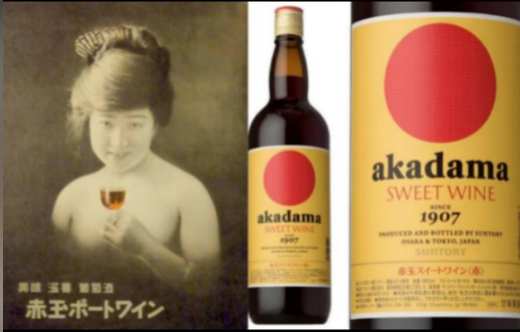
Core Viewpoint - Suntory has successfully transformed from a small wine shop into a beverage giant with over 160 billion RMB in revenue by leveraging localization strategies and understanding consumer preferences in Japan and abroad [3][4]. Group 1: Development Stages of Suntory - The history of Suntory can be divided into four key phases: 1. 1899-1920: Establishment of Japanese wine, achieving a breakthrough from 0 to 1 2. 1920-1945: Introduction of Japanese whisky, creating a second growth curve 3. 1945-1989: Transitioning whisky from a high-end product to a mass-market item 4. 1989-present: Dual breakthroughs in both affordable and premium whisky, revitalizing the Japanese whisky category [5][23][42]. Group 2: Key Strategies for Success - Suntory's success is attributed to its ability to localize Western products, adapting them to Japanese tastes and consumption habits, which is evident in its wine and whisky offerings [4][20]. - The company identified the opportunity for "domestic substitution" during the Meiji Restoration, leading to the development of local products that catered to Japanese consumers [10][11]. - Suntory's approach included modifying recipes, enhancing packaging, and creating suitable consumption scenarios, which allowed it to penetrate the market effectively [12][16][22]. Group 3: Wine Development - The initial failure in the wine market was due to high prices and taste preferences that did not align with Japanese consumers, leading to a market share of less than 1% for wine at the time [8][9]. - Suntory's breakthrough came with the introduction of "Akadama Port Wine" in 1907, which achieved over 60% market share by being affordable and appealing to local tastes [19]. - The company utilized local ingredients and production methods to significantly reduce costs, making its products accessible to the general public [18]. Group 4: Whisky Development - The introduction of whisky faced challenges due to cultural preferences and market positioning, leading to the initial failure of the "White Label" whisky [28][29]. - Suntory's successful "Kaku Bottle" whisky launched in 1937 was characterized by a smooth taste that resonated with Japanese consumers, capturing 70% of the market by 1945 [41]. - The company shifted its strategy to make whisky a part of everyday life, promoting it in various consumption scenarios, including dining [50][59]. Group 5: Recent Challenges and Innovations - The Japanese whisky market faced a decline due to economic changes and shifting consumer preferences, leading to a 40% drop in consumption from its peak in 1983 [70][72]. - Suntory's recent strategies include the "Highball Revival Plan," which aims to position whisky as a more accessible alternative to beer by introducing ready-to-drink canned whisky products [75][76].
从杂货铺到千亿巨头,三得利做对了什么?
Hu Xiu· 2025-05-10 02:18
Core Insights - Suntory's revenue for 2024 is projected to exceed 160 billion RMB, positioning it among the top three global beverage companies, significantly outperforming competitors like Nongfu Spring and Wahaha [1] - The company has successfully localized Western products, such as wine and whiskey, to cater to Japanese tastes, exemplifying a history of adaptation and innovation [3][4] Group 1: Company Overview - Suntory's "Akadama Port Wine" broke the Western monopoly on the wine market and remains a milestone product in Japanese wine history [1] - The company has established itself as a leader in the beverage industry, with its Yamazaki whiskey achieving record auction prices, highlighting its global appeal [1] Group 2: Market Positioning - Suntory's Ulong tea has successfully captured the Chinese market, becoming the second-largest brand in the no-sugar tea segment, demonstrating effective market penetration strategies [2] - The company has positioned its Ulong tea as a representative of "Chinese tea," effectively competing against established brands like Ito En [2] Group 3: Historical Development - Suntory's development can be divided into four key phases, starting from the establishment of Japanese-style wine in the late 19th century to the current dual focus on affordable and premium whiskey [5][7] - The first phase (1989-1920) involved the introduction of Japanese wine, while the second phase (1920-1945) focused on creating Japanese whiskey, marking significant growth for the company [7][27] Group 4: Localization Strategy - The founder, Shinjiro Torii, recognized the potential of wine in Japan and adapted Western wine to suit local tastes, leading to the creation of "Akadama Port Wine" [6][12] - Suntory's strategy included modifying the wine's formula to reduce acidity and increase sweetness, making it more palatable for Japanese consumers [13][21] Group 5: Cultural Integration - Suntory effectively utilized cultural symbols in branding, such as the red circle label representing Japan's national flag, to evoke national pride among consumers [19] - The company has successfully integrated its products into Japanese dining culture, promoting wine as a staple in izakayas (Japanese pubs) [14][75] Group 6: Whiskey Market Transformation - The introduction of the "Kaku Bottle" whiskey in 1937 marked a significant shift, establishing a uniquely Japanese whiskey that resonated with local consumers [38][47] - Suntory's whiskey has evolved from a high-end product to a widely consumed beverage, with strategic marketing and pricing adjustments facilitating this transition [56][77] Group 7: Recent Challenges and Innovations - The company faced challenges due to economic downturns and changing consumer preferences, leading to a decline in whiskey consumption [83][89] - Suntory's recent strategies include launching canned whiskey products to appeal to younger consumers and compete with beer, reflecting a shift in marketing and distribution approaches [102][103]
欧盟对美千亿反制清单“项目多”,涉及民用飞机、汽车、农产品等
Huan Qiu Shi Bao· 2025-05-09 22:53
Group 1 - The EU plans to impose retaliatory tariffs on a range of US products, including civilian aircraft, automobiles, medical devices, agricultural products, and alcoholic beverages, if ongoing trade negotiations fail [1][2] - The EU has initiated a public consultation regarding countermeasures against US imports valued at €95 billion (approximately $107.4 billion), which will be implemented if no trade agreement is reached with Washington [1] - The list of products for potential tariffs includes hundreds of agricultural and industrial items, with previously excluded products like bourbon whiskey now included [1] Group 2 - The EU is seeking to negotiate an agreement to avoid a 20% "reciprocal tariff" on all US goods imported into the EU, while also facing a 25% tariff on all imported cars from the US [2] - The EU Commission has stated that the US tariffs violate fundamental World Trade Organization (WTO) rules, emphasizing the importance of adhering to international trade agreements [2] - The EU is preparing for various outcomes while remaining committed to negotiating a solution with the US, as highlighted by the EU Commission President's remarks on the negative impact of US tariff policies on the global economy [2]

欧盟甩出的950亿欧元对美关税反制清单都有什么?飞机、汽车…
Di Yi Cai Jing· 2025-05-09 10:29
欧委会将在6月底或7月初对答复进行审核,并制定最终的产品清单。 当地时间8月,欧盟委员会(下称"欧委会")就对美国关税反制措施的产品清单展开公众咨询。 欧委会拿出了一份价值950亿欧元的进口产品清单和一份价值44亿欧元的欧盟对美出口产品清单,其中包括可能被 征收出口关税的废金属(废钢和化学品)。不过欧委会此次没有列出可能的关税水平。 据第一财经记者梳理,该清单涉及美国对欧洲出口的葡萄酒、波本酒和其他烈酒、鱼类、飞机、汽车和汽车零部 件、化学品、电气设备、保健产品和机械等产品。欧盟没有将医药产品或半导体产品列入清单。 欧委会还表示,将准备就美国开征的所谓"对等关税"和汽车关税向世界贸易组织(WTO)提出磋商请求,认为这 些关税公然违反WTO基本原则。 8日,欧委会的声明表示,此次公布清单是为了进行公开咨询,"如果欧盟与美国正在进行的谈判不能取得互利的 结果并取消美国的关税,欧盟可能会对这些产品采取反制措施。" 欧盟解释,自美国征收不合理的有害关税(unjustified and harmful tariffs)以来,欧盟一直优先考虑通过谈判,包 括在美国宣布的90天部分暂停关税的框架内,找到一个互利和平衡的解决 ...
*ST椰岛: 海南椰岛2024年年度股东大会会议资料
Zheng Quan Zhi Xing· 2025-05-09 09:23
Core Viewpoint - The 2024 Annual General Meeting of Hainan Yedao (Group) Co., Ltd. will address significant financial challenges, including a substantial decline in revenue and net profit, alongside a focus on governance and operational improvements [1][2][3]. Meeting Agenda - The meeting will cover the announcement of the meeting start, introduction of attendees, reading of meeting rules, and voting on various proposals [1][2]. - The meeting will be held on May 20, 2025, with both on-site and online voting options available [1][2]. Financial Performance - The company reported a revenue of 175.21 million yuan in 2024, a decrease of 21.97% compared to 2023 [3][4]. - The net profit attributable to shareholders was -136.14 million yuan, an improvement from -149.16 million yuan in the previous year [3][7]. - The total assets decreased by 15.09% to 886.39 million yuan, while net assets dropped by 55.71% to 108.36 million yuan [3][4]. Operational Challenges - The decline in revenue is attributed to poor market performance and delays in new product launches, particularly in the liquor and beverage segments [5][6]. - The company faced significant losses due to inventory write-downs and increased credit impairment losses [6][7]. Governance and Management - The board of directors emphasized the importance of maintaining shareholder rights and ensuring efficient meeting procedures [1][2]. - The company plans to enhance management controls, improve operational efficiency, and focus on core business development [15][16]. Proposals for Approval - Key proposals include the approval of the 2024 annual report, financial statements, and the decision not to distribute profits due to negative net profit [21][22]. - The independent directors and audit committee will present their reports for shareholder review [22][23]. Future Plans - The company aims to strengthen its internal control systems and improve communication with investors to foster better relationships [14][15]. - The board will focus on optimizing management practices and expanding financing channels to mitigate debt risks [15][16].

欧盟公布对美关税反制清单
第一财经· 2025-05-09 02:23
Core Viewpoint - The European Union (EU) has announced a retaliatory tariff list against the United States, indicating potential tariffs on a wide range of American exports if trade negotiations fail and existing tariffs are not lifted [1][2]. Group 1: EU's Retaliatory Tariff Plans - The EU plans to impose retaliatory tariffs on U.S. products worth €95 billion if ongoing trade negotiations do not yield results [1]. - The proposed tariff list includes U.S. civil aircraft, passenger cars, medical devices, chemicals, plastic products, agricultural products, and alcoholic beverages, including bourbon whiskey, which was previously removed from the list [1]. - The EU aims to reaffirm the importance of international trade rules and intends to consult the World Trade Organization regarding the U.S. tariffs, which they believe violate fundamental principles of the organization [1]. Group 2: Impact of U.S. Tariffs on EU - Since January, the U.S. has imposed tariffs on €379 billion worth of EU exports, accounting for 70% of the total EU exports to the U.S. [2]. - The EU claims that U.S. tariffs are increasing operational costs for businesses, suppressing growth, and exacerbating inflation, leading to greater economic uncertainty [2].
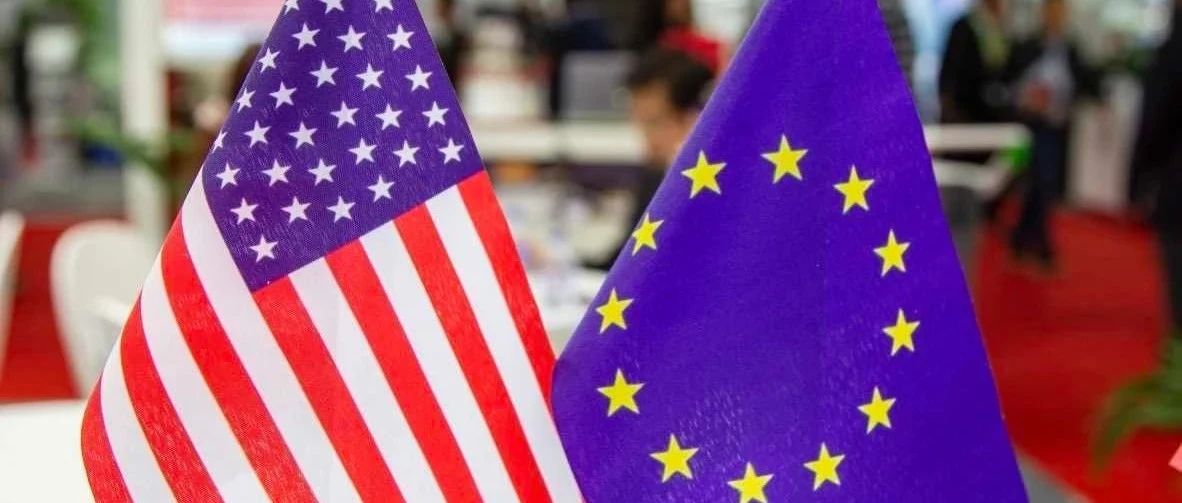
欧盟公布对美关税反制清单 瞄准美国飞机等产品
Zhong Guo Xin Wen Wang· 2025-05-08 17:47
Group 1 - The EU announced a retaliatory tariff list against the US, planning to impose tariffs on US exports worth €95 billion if trade negotiations fail [1] - The proposed tariffs will target US products including civilian aircraft, cars, medical devices, chemicals, plastics, agricultural products, and alcoholic beverages [1] - The EU aims to reaffirm the importance of international trade rules and plans to request consultations with the WTO regarding US tariffs [1] Group 2 - Since January, the US has imposed tariffs on €379 billion worth of EU exports, accounting for 70% of the EU's total exports to the US [2] - The EU claims that US tariffs are increasing business costs, suppressing growth, and exacerbating inflation, leading to greater economic uncertainty [2]