
农业

Search documents
“百千万工程”推进路上的坚实金融后盾 ----农行广东分行倾力服务“百千万工程”
21世纪经济报道· 2025-12-23 00:50
Core Viewpoint - The article emphasizes the proactive role of Agricultural Bank of China Guangdong Branch in supporting the "Hundred Counties, Thousand Towns, and Ten Thousand Villages High-Quality Development Project," showcasing its commitment to rural revitalization through substantial financial support and innovative service models [1][3]. Financial Support and Achievements - As of October 2025, the Agricultural Bank of China Guangdong Branch has provided over 600 billion yuan in county loans and over 500 billion yuan in agricultural loans, marking an increase of 210 billion yuan and 160 billion yuan respectively since the project's initiation [1]. - The bank has been recognized as "Excellent" in the People's Bank of China’s evaluation of financial services for rural revitalization for five consecutive years, establishing itself as a solid financial backbone for the "Hundred Counties, Thousand Towns" initiative [1]. Systematic Approach and Collaboration - The bank has implemented a systematic approach by launching four major actions focused on financial services for industrial revitalization, county empowerment, aesthetic enhancement, and quality improvement [3]. - It has established a regular communication mechanism with provincial departments to align financial services with policy directions and project needs, resulting in the issuance of 1 billion yuan in loans across 12 pilot counties [4]. Focus Areas for Development - The bank targets three key areas: industrial development, urban-rural construction, and farmer income increase, channeling credit resources to stimulate local economies [5][6]. - In the industrial development sector, the bank has created a financial service system that supports the entire industrial chain, with over 320 billion yuan in loans for food security, reflecting a 38% increase since the beginning of the year [6]. Support for Cultural and Tourism Industries - The bank has introduced specialized policies and products to support key cultural and tourism projects, with outstanding loans in this sector nearing 200 billion yuan, benefiting over 1,500 enterprises [8]. Rural Financial Services and Accessibility - The bank has developed a model combining mobile financial service teams and rural revitalization service stations to enhance accessibility in underserved areas, planning to establish 200 service stations in towns lacking physical branches [13]. - A dedicated customer manager system has been implemented to ensure tailored financial services are available at the community level [13]. Product Innovation and Customization - The bank has established a comprehensive product system with over 100 tailored financial products for rural industries, including customized loans for marine ranching and rural industrial development [14]. - Collaborative efforts with investment funds have been initiated to support high-quality county economic development projects, including a 360 million yuan investment in a local company [14]. Case Studies of Financial Impact - In Meizhou, the bank has supported the local pomelo industry with 1.1 billion yuan in loans, benefiting over 5,700 farmers and contributing to a nearly 10 billion yuan annual output value [15]. - In Qingyuan, the bank's "White Pigeon Loan" has facilitated the expansion of local poultry farming, with over 28 million yuan in loans issued, significantly boosting local production [17]. - In Huizhou, the bank has provided 150 million yuan in credit to support the development of a comprehensive tourism project, creating over 100 jobs and stimulating local economic activity [18].


12月LPR利率未动,油厂豆粕库存增加
Dong Zheng Qi Huo· 2025-12-23 00:42
1. Report Industry Investment Ratings - **Foreign exchange futures (US Dollar Index)**: Bearish, suggesting the US Dollar Index will weaken [13] - **US stock index futures**: Expected to trend strongly with oscillations [15] - **Stock index futures**: Long - position allocation of various stock indices in a balanced manner [18] - **Treasury bond futures**: Long - term varieties are bottoming out. Allocation investors can buy when interest rates rise, and trading investors can buy on dips and exit quickly [22] - **Black metals (rebar/hot - rolled coil)**: Adopt an oscillatory mindset towards steel prices [25] - **Agricultural products (soybean meal)**: Expected to remain weak. In the absence of major South American weather anomalies, consider shorting on rallies for the May contract [26] - **Black metals (coking coal/coke)**: In the short term, coking coal lacks upward momentum. Pay attention to downstream restocking [29] - **Non - ferrous metals (lead)**: In a single - sided trade, focus on opportunities to stop losses on short positions; in arbitrage, adopt a wait - and - see approach [33] - **Non - ferrous metals (zinc)**: In a single - sided trade, look for opportunities to buy on pullbacks; in a calendar spread, maintain long positions in positive spreads; in an international spread, consider reverse arbitrage [37] - **Non - ferrous metals (polysilicon)**: Spot prices are expected to be resistant to decline. New prices' success depends on downstream price transmission. Due to large price fluctuations and risk - control measures, investors are advised to hold positions with caution [42] - **Non - ferrous metals (industrial silicon)**: Current production cuts are insufficient to reverse the inventory build - up. Consider shorting on rallies [45] - **Non - ferrous metals (lithium carbonate)**: In the short term, strong inventory reduction and postponed production resumption support bullish sentiment. However, after production resumes and demand weakens in the off - season, prices may correct. In the long - term, consider buying on dips [47] - **Non - ferrous metals (copper)**: In a single - sided trade, expect high - level oscillations; in arbitrage, adopt a wait - and - see approach [51] - **Non - ferrous metals (nickel)**: If cobalt pricing is implemented, consider mid - term long positions on dips. If RKAB is set at 250 million wet tons, nickel prices will rise significantly. But if both expectations are unmet, consider shorting on rallies [56] - **Energy and chemicals (crude oil)**: Short - term risk premiums support oil prices, with increased volatility [60] - **Energy and chemicals (asphalt)**: Short - term prices are expected to be stable at the bottom [62] - **Energy and chemicals (PTA)**: The short - term market remains strong. Hold long positions and monitor downstream negative feedback [65] - **Energy and chemicals (urea)**: For the 01 contract, expect oscillations. For the 05 contract, after a certain margin of safety is provided, consider low - buying to bet on spring - farming restocking and new export quota policies [67] - **Energy and chemicals (styrene)**: Temporarily maintain an oscillatory pattern. In the medium - term, look for low - buying opportunities [70] - **Energy and chemicals (caustic soda)**: Supply - demand contradictions have eased. A decline in liquid chlorine prices may support caustic soda prices [72] - **Energy and chemicals (PVC)**: In the short term, expect low - level oscillations. In 2026, new production capacity is limited, and exports are expected to improve. If low - valuation persists before and during spring maintenance, there may be an upward trend [74] 2. Core Views - Trump is expected to nominate a new Fed Chairman in early January, boosting market risk appetite and causing the US Dollar Index to decline [12] - The Fed's internal differences over interest rate cuts are significant, and the market may re - price the long - term interest rate cut path. Short - term risk appetite has improved [14] - After the Bank of Japan's less - than - expected interest rate hike, A - shares have increased in volume, and the market is in an offensive state [17] - With the unchanged policy interest rate and rising risk appetite, Treasury bond futures have declined, but long - term varieties are bottoming out [20] - Steel prices are oscillating strongly, with short - term supply - demand contradictions not prominent, and the market is starting to bet on winter stockpiling [24] - The supply of imported soybeans is sufficient, and soybean meal inventory has increased again. The market lacks bullish factors [26] - Coking coal and coke are in a state of weak supply and demand. Pay attention to downstream restocking and future supply - demand changes [28] - The lead market is in a state of weak supply and demand, and prices are likely to oscillate [33] - The zinc market's short - term fundamentals have few contradictions, and prices are likely to rise in the medium - term [37] - The polysilicon market has a problem of inventory build - up and weak demand. New prices' success depends on downstream price transmission [40] - The supply and demand of industrial silicon depend on production cuts. Current production cuts may not reverse inventory build - up [44] - The lithium carbonate market has short - term bullish sentiment, but prices may correct after production resumes. In the long - term, consider buying on dips [46] - Geopolitical risks support the copper price, but short - term fundamentals are weakening, and the price is expected to oscillate at a high level [50] - The nickel market has uncertainties in RKAB and cobalt pricing. Consider mid - term long positions on dips under certain conditions [56] - Geopolitical conflicts have increased the risk premium of crude oil, but floating crude oil is a bearish factor [59] - The asphalt market has seen inventory build - up, and short - term prices are expected to be stable at the bottom [61] - The PTA market is rising due to expectations of inventory reduction, but there are differences between the industrial and financial sectors, and attention should be paid to downstream negative feedback [64] - The urea market's 01 contract is expected to oscillate, and the 05 contract should focus on spring - farming restocking and new export quota policies [67] - The styrene market is in an oscillatory pattern, and the key lies in the pure benzene segment. Look for low - buying opportunities in the medium - term [70] - The caustic soda market's supply - demand contradictions have eased, and a decline in liquid chlorine prices may support the price [72] - The PVC market is in the bottom range, with short - term supply - demand contradictions difficult to resolve. In 2026, supply - demand may improve [74] 3. Summaries by Directory 3.1 Financial News and Comments 3.1.1 Macro Strategy (Foreign Exchange Futures - US Dollar Index) - Trump will soon nominate a new Fed Chairman, which will increase market risk appetite and lead to a decline in the US Dollar Index [12] - Trump will launch a "ground" crackdown on drug - trafficking, and US officials have held constructive talks with Ukraine and European representatives [11] 3.1.2 Macro Strategy (US Stock Index Futures) - Fed official Milan believes that not cutting interest rates in 2026 will lead to a recession risk. The Fed has internal differences on interest rate cuts, and the market may re - price the long - term interest rate cut path [14] 3.1.3 Macro Strategy (Stock Index Futures) - The State Council is planning major projects. In December, LPR remained unchanged. A - shares increased in volume on December 22, and the market is in an offensive state [16][17] 3.1.4 Macro Strategy (Treasury Bond Futures) - In December, LPR remained unchanged, and the central bank conducted 67.3 billion yuan of 7 - day reverse repurchase operations, with a net withdrawal of 63.6 billion yuan. Treasury bond futures declined, but long - term varieties are bottoming out [19][20] 3.2 Commodity News and Comments 3.2.1 Black Metals (Rebar/Hot - Rolled Coil) - Magang's new galvanizing line project was successfully commissioned. 242 steel enterprises have completed the ultra - low emission transformation. Steel prices are oscillating strongly, and short - term supply - demand contradictions are not prominent [23][24] 3.2.2 Agricultural Products (Soybean Meal) - Last week, the inventory of soybeans in major domestic oil mills decreased, while the inventory of soybean meal increased. The supply of imported soybeans is sufficient, the market lacks bullish factors, and soybean meal is expected to remain weak [26] 3.2.3 Black Metals (Coking Coal/Coke) - Coking coal prices in Changzhi are fluctuating. Coking coal and coke are in a state of weak supply and demand. Pay attention to downstream restocking and future supply - demand changes [27][28] 3.2.4 Non - Ferrous Metals (Lead) - The government has cracked down on illegal mining. In November 2025, China's lead - acid battery exports decreased. The Shanghai Futures Exchange will waive multiple trading fees in 2026. The lead market is in a state of weak supply and demand, and prices are likely to oscillate [30][31][33] 3.2.5 Non - Ferrous Metals (Zinc) - The Shanghai Futures Exchange will waive multiple trading fees in 2026. In November 2025, zinc concentrate imports increased, and galvanized sheet exports decreased month - on - month. The short - term fundamentals of zinc have few contradictions, and prices are likely to rise in the medium - term [34][35][37] 3.2.6 Non - Ferrous Metals (Polysilicon) - The Guangzhou Futures Exchange has adjusted the designated delivery warehouses and quality inspection institutions for polysilicon futures. The polysilicon market has a problem of inventory build - up and weak demand. New prices' success depends on downstream price transmission [38][40] 3.2.7 Non - Ferrous Metals (Industrial Silicon) - In November 2025, China exported 54,888.405 tons of industrial silicon. The supply and demand of industrial silicon depend on production cuts. Current production cuts may not reverse inventory build - up [44] 3.2.8 Non - Ferrous Metals (Lithium Carbonate) - In November 2025, China's lithium spodumene imports reached a record high. The lithium carbonate market has short - term bullish sentiment, but prices may correct after production resumes. In the long - term, consider buying on dips [46] 3.2.9 Non - Ferrous Metals (Copper) - BHP will focus on Canadian copper mining. In November 2025, China's copper ore concentrate imports increased, and refined copper imports decreased. Geopolitical risks support the copper price, but short - term fundamentals are weakening, and the price is expected to oscillate at a high level [48][49][50] 3.2.10 Non - Ferrous Metals (Nickel) - Vale Indonesia says the reduction in RKAB will not affect next year's production. The nickel market has uncertainties in RKAB and cobalt pricing. Consider mid - term long positions on dips under certain conditions [52][56] 3.2.11 Energy and Chemicals (Crude Oil) - The arrival volume of crude oil in Shandong exceeded 2.6 million tons. Geopolitical conflicts have increased the risk premium of crude oil, but floating crude oil is a bearish factor [57][59] 3.2.12 Energy and Chemicals (Asphalt) - Asphalt refinery and social inventories have increased. Short - term prices are expected to be stable at the bottom [61] 3.2.13 Energy and Chemicals (PTA) - On December 22, the PX price rose. The PTA market is rising due to expectations of inventory reduction, but there are differences between the industrial and financial sectors, and attention should be paid to downstream negative feedback [63][64] 3.2.14 Energy and Chemicals (Urea) - The weekly operating rate of compound fertilizers decreased. The 01 contract of urea is expected to oscillate, and the 05 contract should focus on spring - farming restocking and new export quota policies [66][67] 3.2.15 Energy and Chemicals (Styrene) - The inventory of styrene in East China ports increased. The styrene market is in an oscillatory pattern, and the key lies in the pure benzene segment. Look for low - buying opportunities in the medium - term [68][70] 3.2.16 Energy and Chemicals (Caustic Soda) - The caustic soda market in Shandong is stable. The supply - demand contradictions have eased, and a decline in liquid chlorine prices may support the price [71][72] 3.2.17 Energy and Chemicals (PVC) - The price of PVC powder in the domestic market has declined. The PVC market is in the bottom range, with short - term supply - demand contradictions difficult to resolve. In 2026, supply - demand may improve [73][74]
全球媒体聚焦 | 英媒:美国经济的“黄金时代”为何迟迟未至?
Sou Hu Cai Jing· 2025-12-22 23:36
Core Viewpoint - The article discusses the disparity between the U.S. government's optimistic economic projections and the current economic reality faced by most Americans, highlighting disappointing employment figures and rising unemployment rates [1][2]. Employment and Unemployment - In the first 11 months of the year, the U.S. added an average of only 55,000 jobs per month, a significant decline of 67% compared to 2024 [2] - The unemployment rate rose to 4.6% in November, marking the highest level in four years [2]. Tariff Policies and Manufacturing - The new government has implemented tariff policies aimed at bringing manufacturing jobs back to the U.S., but manufacturing employment has only increased in two out of ten months [4]. - The average effective tariff rate has surged from 2.4% to 16.8%, the highest level since 1935 [4]. Economic Impact of Tariffs - The chaotic implementation of tariffs has been acknowledged by officials, indicating that the process has been more painful than anticipated [5]. - Tariffs on foreign goods are likely to be passed on to consumers, leading to increased prices for goods on store shelves [6]. Inflation and Consumer Prices - The Consumer Price Index (CPI) in November showed a year-on-year increase of 2.7%, remaining above the Federal Reserve's target of 2% inflation [7]. Government Response and Economic Outlook - The government has adjusted tariffs on certain imported goods and announced a $12 billion agricultural aid plan, alongside proposals to distribute checks to citizens funded by tariff revenues [8]. - Despite government optimism for economic acceleration in the first quarter of the following year, economists express skepticism about the benefits for low-income Americans, especially considering rising healthcare costs [8].

信心足 思路明 行动快——从省委经济工作会议现场看发展
He Nan Ri Bao· 2025-12-22 23:33
"我们不能盲目追求产量的增长,要看到数字背后的附加值,只有这样才能推动河南由农业大省向农业 强省转变。" 敏捷的行动来自经济大省的主动担当。会议指出,要突出内需主导,挖掘释放消费和投资潜力。深入实 施提振消费专项行动,加快新型消费服务综合体建设,高质量推进"两重"等项目建设,进一步促进民间 投资发展。 "会议提出要优化新能源与智能网联汽车产业生态,以长远的心态来谋划路径,我们才能把步子走得更 扎实一些。" "我提议可以充分发挥手头的资源优势,协调为创新驱动发展搭建舞台,会后我们就可以着手组建工作 专班。" "会上披露的经济成绩单,让我们既倍感振奋又与有荣焉。"省政府驻京办副主任孙兰红说,驻京办坚持 贯彻落实国家及河南招商引资和对外开放合作发展战略、政策,积极宣传河南经济社会发展新成就,下 一步将继续为我省经济社会高质量发展提供坚实信息支撑。 明朗的思路来自会议清晰的奋斗方向。记者注意到,"充分用好优势,纵深推进融入和服务全国统一大 市场"被摆在明年十项重点任务的首位:持续破除卡点堵点,实施营商环境优化提升行动,深入整治"内 卷式"竞争,开展郑州市要素市场化配置综合改革试点,完善"空铁公水"立体交通网络,提升国 ...
从“农家乐”到“和美新乡村”:四川农文旅融合的共富新实践
Xin Lang Cai Jing· 2025-12-22 23:28
Core Viewpoint - The article emphasizes the importance of integrating agriculture, culture, and tourism (Agri-Culture-Tourism integration) as a key strategy for rural revitalization and modernization in China, particularly highlighting the successful practices in Sichuan province [1][2]. Group 1: Deep Motivations for Agri-Culture-Tourism Integration - The traditional "farm stay" model has faced challenges such as homogenization and sustainability issues, necessitating a shift towards Agri-Culture-Tourism integration to support comprehensive rural revitalization and farmer prosperity [2]. - Agri-Culture-Tourism integration aims to reshape the multiple values of agriculture and the functions of rural areas by incorporating cultural and tourism elements, transforming rural spaces into holistic living environments [2]. Group 2: Sichuan's Pathways for Innovative Integration - Sichuan has developed various distinctive pathways for Agri-Culture-Tourism integration, including the creative transformation of dormant cultural resources into experiential and consumable products [3][4]. - The use of modern technology, such as AR, enhances visitor experiences by providing interactive and informative content about agricultural practices and local culture [3]. - Community involvement is crucial, with models that connect farmers, cooperatives, and enterprises to ensure that local residents benefit from tourism, fostering a sense of cultural confidence and shared experiences [4]. - Sichuan promotes ecological tourism that aligns with environmental protection, offering high-quality ecological products and services while maintaining ecological integrity [4]. Group 3: Theoretical Insights on Sustainable Development - The foundation of Agri-Culture-Tourism integration lies in maintaining the agricultural base and cultural essence, emphasizing the need for systematic value reconstruction and product development [5][6]. - Establishing a community of shared interests among farmers, local collectives, enterprises, and government is essential for ensuring long-term benefits from the integrated model [6]. - Differentiated development is encouraged, focusing on unique local resources to create an irreplaceable core attraction [6]. - The ultimate goal is to achieve a harmonious new rural landscape characterized by prosperous industries, ecological livability, and effective governance [6]. Group 4: Future Directions for Agri-Culture-Tourism Integration - Future efforts should deepen the integration levels, moving from mere physical combinations to more profound interactions, such as developing rural art festivals and comprehensive agricultural projects [7]. - Expanding cross-sector collaborations with education, health, and outdoor leisure industries is recommended [7]. - Strengthening technological support by incorporating advanced technologies like the metaverse and AI to create immersive experiences is essential [7]. - Promoting equitable wealth distribution among all villagers is crucial for achieving common prosperity [7].
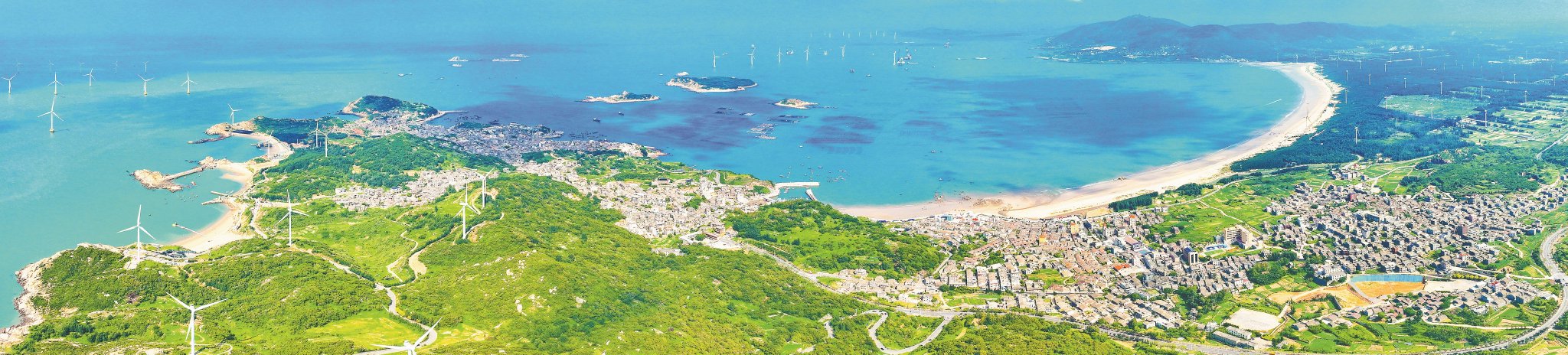
平潭扬帆,驶向更美好的明天!
Xin Lang Cai Jing· 2025-12-22 23:27
Core Viewpoint - Pingtan is undergoing significant development and transformation, focusing on industrial upgrades, social improvements, urban quality enhancement, and deepening cross-strait integration, driven by the strategic blueprint outlined by General Secretary Xi Jinping [8][20]. Group 1: Industrial Development - Pingtan's GDP is projected to grow at an average rate of 3% from 2021 to 2024, with fixed asset investment totaling 77.9 billion yuan [8]. - The Pingtan port has resumed regular cross-strait shipping operations, with 449 shipments completed since the resumption, and a total value of 2.54 billion yuan for Taiwanese agricultural products imported [8][9]. - The digital economy is expanding, with over 3,600 new digital economy enterprises established during the 14th Five-Year Plan, and the launch of the Cross-Strait Integration Intelligent Computing Center with a computing power scale of 2,300P [10][11]. Group 2: Urban and Rural Quality Enhancement - Pingtan has improved urban infrastructure, including the construction of 60 kilometers of new water supply pipelines and 120 kilometers of sewage pipelines, enhancing the overall urban quality [14]. - The number of new school places has increased by 13,205, and the number of hospital beds per thousand people has risen from 3.91 to 5.88, indicating significant improvements in education and healthcare [15]. - The rural economy is thriving, with 11 villages reporting collective incomes exceeding 1 million yuan, a 57% increase year-on-year [15]. Group 3: Cultural and Tourism Integration - Pingtan has implemented 62 key cultural and tourism projects with a fixed asset investment of 11.8 billion yuan, a 127% increase compared to the previous five-year period [17]. - The region is promoting various cultural events and sports competitions, with over 250 brand events held in the past five years, enhancing tourism and local engagement [18]. - The expected total number of tourists during the 14th Five-Year Plan is 46 million, with total tourism expenditure projected at 48.6 billion yuan, representing 2.1 and 2.2 times the figures from the previous five-year period [19]. Group 4: Cross-Strait Exchanges - Pingtan has attracted 56 Taiwanese agricultural enterprises and introduced 144 new agricultural varieties, fostering deep agricultural integration between the two sides [21]. - The establishment of the Taiwan Youth Entrepreneurship Incubation Center aims to support Taiwanese youth in entrepreneurship, addressing challenges such as financing and market access [22]. - The region is enhancing cross-strait exchanges through various initiatives, including the "Kirin Craftsman" vocational skills competition, which promotes skills exchange and collaboration [22].
【宝鸡】劳务品牌带动就业创业40万人次
Shan Xi Ri Bao· 2025-12-22 22:50
Core Insights - Baoji City has cultivated 38 distinctive labor brands, leading to employment and entrepreneurship for 400,000 people [1][2] - The city has implemented comprehensive policies and established a complete policy chain for labor brand development, including funding support and standards [1] - Baoji's labor brands are diversified and tailored to key industries, enhancing the integration of brands with industrial development [1] Group 1: Labor Brand Development - Baoji City has adopted innovative methods to enhance labor brand construction, making it a key task and annual goal [1] - The city has held the first municipal labor brand development conference in the province and issued the "Implementation Plan for Labor Brand Cultivation" [1] - A guidance team of 31 experts has been established to provide ongoing support to grassroots initiatives [1] Group 2: Economic Impact - The titanium industry in Baoji has reached a total output value of 56 billion yuan, while the brand value of Xifeng liquor has surpassed 330 billion yuan [1] - The "one bowl of noodles" economy has achieved a total industrial output value of 16.2 billion yuan, highlighting the increasing support of labor brands for key industries [1] - During the 14th Five-Year Plan period, the labor economy income in Baoji is projected to reach 32.3 billion yuan, creating a virtuous cycle of brand establishment and employment [2] Group 3: Training and Management - Baoji City has strengthened training, promotion, and management, establishing a training system that covers the entire occupational cycle [2] - The city has created seven master skill studios and included specialty occupations in the subsidy catalog [2] - A unified brand identity and dynamic management have been implemented to protect the rights of workers and promote brand upgrades [2]

【学习贯彻党的二十届四中全会精神】贴实际、聚人心、重实效
Xin Lang Cai Jing· 2025-12-22 20:23
(来源:工人日报) 从"乡音土语"到直播助力,从理论宣讲到火热实践……连日来,广西、江苏、河北、北京大学等各地各 单位宣讲团深入基层一线,搭建多元宣讲平台,创新理论话语表达,推动宣讲活动走深走实、落地生 效。 "全会提出加快农业农村现代化,扎实推进乡村全面振兴,就是给大伙儿送福利,既有让钱包鼓起来 的'增收礼',更有让精神爽起来的'文化礼'。""00后话百年"宣讲团成员黎建党"唠家常"式的话语,让广 西壮族自治区大新县硕龙镇的宣讲现场氛围格外热烈。 宣讲活动开展以来,广西宣讲团根据基层实际,用群众喜闻乐见的形式宣讲全会精神。来宾市通过"象 州姑娘""呗侬山歌传理论"等宣讲品牌,用百姓视角、百姓语言、百姓故事解读全会精神。玉林市创 新"微"宣讲形式,依托"厅厦邻理""板凳会"等平台,在大榕树下、长廊凉亭、农家小院等场所开展宣 讲,努力把全会精神讲实、讲活。 线上直播为基层宣讲提供助力。 11月21日,"启航'十五五'奋力'挑大梁'"党的二十届四中全会精神联学联讲活动在江苏省启东市启动。 活动通过江苏理论宣讲共建共享平台、全省64家县级融媒体中心同步直播,吸引433万人次在线收看。 目前,江苏各级宣讲团开展超过7 ...
刚果(金)副总理桑巴:刚中合作持续走深走实
Xin Hua She· 2025-12-22 14:57
12月18日,刚果(金)副总理兼国民经济部长达尼埃尔·穆科科·桑巴在首都金沙萨接受新华社记者 专访。新华社发(伯努瓦·年巴摄) 桑巴不久前率团访问浙江省,出席中非经贸和文化论坛,并考察当地高校、企业和商贸平台。他 说,此次访问让他更直观地了解中国坚持对外开放的发展逻辑。 新华社金沙萨12月22日电(记者史彧)刚果(金)副总理兼国民经济部长达尼埃尔·穆科科·桑巴日 前在首都金沙萨接受新华社记者专访时表示,刚果(金)和中国的合作不断走深走实,不仅体现在经贸 合作层面,而且深入到人文层面,这让刚中关系具有很强的稳定性。 在浙江期间,桑巴重点走访了义乌等地,对当地高度国际化的商业生态印象深刻。在他看来,义乌 不仅是重要的商品集散地,还是不同文化交流交汇的场所。"商业交流让不同国家的人群更好地相识相 知。" 桑巴强调,中国是刚果(金)信赖的合作伙伴。刚中合作的深度,已经深入到人文层面,这种长期 形成的历史积淀,使刚中关系在多元合作格局中保持稳定性和连续性。 桑巴认为,中国经济是推动全球经济增长的一股重要动力。中国在经济发展以及减贫方面的经验, 对包括非洲国家在内的发展中经济体具有重要借鉴意义。 展望未来,桑巴表示,刚中 ...

南非学者:非中科技合作赋能非洲社会经济转型
Xin Hua Wang· 2025-12-22 13:04
Core Viewpoint - The article emphasizes the deepening cooperation between Africa and China in information and communication technology, digital infrastructure, and emerging technologies, which is expected to inject new momentum into Africa's economic and social development [1]. Group 1: Economic Impact - Emerging technologies such as the Internet of Things, big data analytics, and artificial intelligence present opportunities for Africa to leverage these advancements and reliable tech partnerships to drive socio-economic transformation [1]. - By 2030, these technologies are projected to contribute approximately $1.5 trillion to Africa's economic growth [1]. Group 2: Cooperation Framework - The partnership between Africa and China is expanding across government sectors and major telecommunications and mobile communication enterprises, effectively bridging the digital divide and promoting inclusive economic participation and growth [1]. - China has become Africa's largest trade and development partner, actively promoting global southern development through initiatives like the Belt and Road Initiative and the Forum on China-Africa Cooperation [1]. Group 3: Infrastructure Development - Chinese government and enterprises play a crucial role in building communication infrastructure in Africa, including the construction of communication backbone networks and fiber optic networks, which support sectors such as healthcare, education, and financial services [1]. - Collaboration extends to renewable energy and sustainable agriculture, with joint laboratories and research centers established to enhance scientific cooperation and support the training of local tech talent in Africa [1]. Group 4: Future Outlook - The cooperation between China and Africa is vital in bridging the digital divide, and both parties should further deepen technological collaboration as a key area for promoting sustainable socio-economic transformation and modernization in Africa [2].