芯片半导体

Search documents
股市必读:英唐智控(300131)11月18日董秘有最新回复
Sou Hu Cai Jing· 2025-11-18 16:28
Core Viewpoint - The company is currently undergoing a transformation strategy through acquisitions, which has led to fluctuations in stock prices due to various market factors. Group 1: Stock Performance - As of November 18, 2025, the company's stock closed at 11.27 yuan, up 4.64%, with a turnover rate of 11.42% and a trading volume of 1.19 million hands, amounting to a transaction value of 1.33 billion yuan [1] - On November 14, the stock price had dropped below the level prior to the acquisition announcement on October 24, raising concerns among investors [2] Group 2: Acquisition Details - The company has signed a framework agreement for the acquisition of 100% of Guanglong Integrated and 80% of Aojian Microelectronics, aimed at enhancing operational capabilities and quality [4] - The company has not identified any situations that would harm the legitimate rights and interests of the company and its shareholders in relation to the acquisition [4] Group 3: Investor Relations - The company emphasizes the importance of investor relations management and adheres to regulatory requirements for information disclosure [3] - The company has engaged in share buybacks to enhance investor confidence, despite not meeting dividend conditions [2] Group 4: Market Conditions - Stock price fluctuations are attributed to macroeconomic conditions, industry volatility, and market sentiment [3][6] - The company is actively working on the audit and evaluation of the acquisition, indicating ongoing efforts to stabilize its market position [6] Group 5: Product and Market Strategy - The company has seen a significant increase in its storage chip business due to industry demand, with a diverse range of products including DRAM, NAND flash, and SSDs [5] - The acquisition is expected to accelerate the establishment of a domestic R&D team and enhance innovation capabilities, aligning product development with domestic market needs [6]

长城投研速递:短期市场或延续震荡
Sou Hu Cai Jing· 2025-11-17 09:49
Domestic Macro - In October, major economic indicators showed a decline, with industrial, consumption, and investment growth rates slowing compared to September. The high base from last year's policy stimulus and the misalignment of holidays contributed to short-term disturbances, indicating insufficient domestic demand and external pressure that require policy support [1][7] - The industrial added value in October grew by 4.9% year-on-year and 0.17% month-on-month, while from January to October, it increased by 6.1% year-on-year. Real estate development investment from January to October was 73,563 billion yuan, down 14.7% year-on-year, and new commercial housing sales area decreased by 6.8% year-on-year [7] Foreign Macro - Overseas markets continued to experience fluctuations, particularly in US tech stocks, which affected sentiment in the A-share market. The S&P 500 index rose by 0.08%, while the Nasdaq index fell by 0.45% [8] - Several factors contributed to the ongoing adjustment in US stocks, including the absence of key economic data during the government shutdown, hawkish statements from Federal Reserve officials regarding interest rate cuts, and concerns over the sustainability of debt financing for AI giants [8][9] Bond Market - The bond market is expected to remain in a favorable period despite some pressure on the fundamentals. The central bank has indicated that during this critical economic transition, it is not advisable to overly focus on total data changes [10][15] - The overall liquidity in the market is anticipated to stay relatively loose in the medium term, with the bond market likely to continue benefiting from this environment [15] Equity Market - The market is entering a period of total policy and profit vacuum, with accelerated rotation in the tech sector and increased highlights in low-position consumption and dividends. The high-yield, risk-free financial assets are diminishing, and the influx of new capital is far from over [20] - The Shanghai Composite Index fell by 0.18%, the Shenzhen Component Index dropped by 1.40%, and the ChiNext Index decreased by 3.01% last week, with 20 out of 31 industries showing gains [16][20] Investment Strategy - Emerging technology is expected to be a main focus, with cyclical consumption looking towards transformation. Attention should be given to sectors that have experienced prolonged corrections and significant adjustments [21][22] - Specific directions include technology growth, manufacturing expansion, cyclical consumption, and financial sectors, with a focus on areas such as internet, robotics, semiconductor, and consumer electronics [22]
杨德龙:大盘反复震荡整理 显示4000点附近多空分歧较大
Xin Lang Ji Jin· 2025-11-17 04:15
Group 1 - The Shanghai Composite Index has recently reached a ten-year high, with the 4000-point mark seen as a significant threshold, indicating the start of a new market cycle rather than its end [1][2] - The current market is characterized by a rotation among sectors, with "small tech stocks" leading the way, followed by "medium stocks" and eventually "traditional blue-chip stocks" [1][2] - The traditional blue-chip sectors, including liquor, duty-free, and pharmaceuticals, have shown signs of recovery, indicating potential for further gains [2] Group 2 - The Hong Kong stock market has attracted significant inflows, particularly in dividend stocks, with net purchases exceeding 460 billion yuan this year, reflecting the appeal of high dividend yields [3] - The Hang Seng Technology Index has performed well despite recent adjustments, suggesting a continued bullish outlook for the Hong Kong market over the next two to three years [3] - The strong performance of the technology sector aligns with national policies supporting innovation, particularly in areas like AI, semiconductors, and robotics, which are expected to drive future growth [4][5] Group 3 - The humanoid robotics sector is emerging as a significant industry, with expectations of substantial market changes driven by large-scale applications [5] - The robotics industry is anticipated to enter a phase of order validation next year, followed by a focus on performance realization in subsequent years, emphasizing the importance of tracking company fundamentals [6]
市场风格快速轮动,A500ETF易方达(159361)、科创板50ETF(588080)等助力构建攻守兼备新范式
Mei Ri Jing Ji Xin Wen· 2025-11-11 07:14
Market Overview - The market has experienced an overall adjustment, with a rotation of hot sectors. Leading stocks in the banking and photovoltaic sectors are rising, while the previously strong consumer sector is undergoing a correction. The semiconductor and technology sectors opened high but closed lower. As of 14:30, the CSI A500 index fell by 0.7%, the ChiNext index dropped by 1.0%, and the STAR Market 50 index decreased by 1.1% [1]. Investment Insights - China Galaxy Securities indicates that the hidden main line in the sector rotation may be the theme of the year-end market performance, suggesting that the market is preparing for a new upward trend. The third-quarter reports of listed companies show resilience in fundamentals, with notable structural highlights. As the pace of subsequent policy implementation becomes clearer, the expectation of price recovery underlines the logic of reversing the "involution" sectors. The technology sector's industrial trends and performance are entering a verification phase, maintaining a long-term positive trend for the A-share market [1]. Investment Strategy - In the context of frequent market style switching, the difficulty of investor operations has increased. A suggested allocation strategy is to use the A500 index as the core, paired with the ChiNext index and the STAR Market 50 index in a "2:1:1" configuration. From April 1 to November 7, this strategy has yielded a cumulative increase of approximately 34% [1]. ETF Options - A500 ETF (E Fund, 159361), ChiNext ETF (159915), and STAR Market 50 ETF (588080) track the aforementioned indices and all implement a low management fee rate of 0.15% per year, which can help investors navigate market volatility and continuously capture core growth opportunities in the A-share market [1].
4000点震荡拉锯:牛市格局未变
和讯· 2025-11-10 10:14
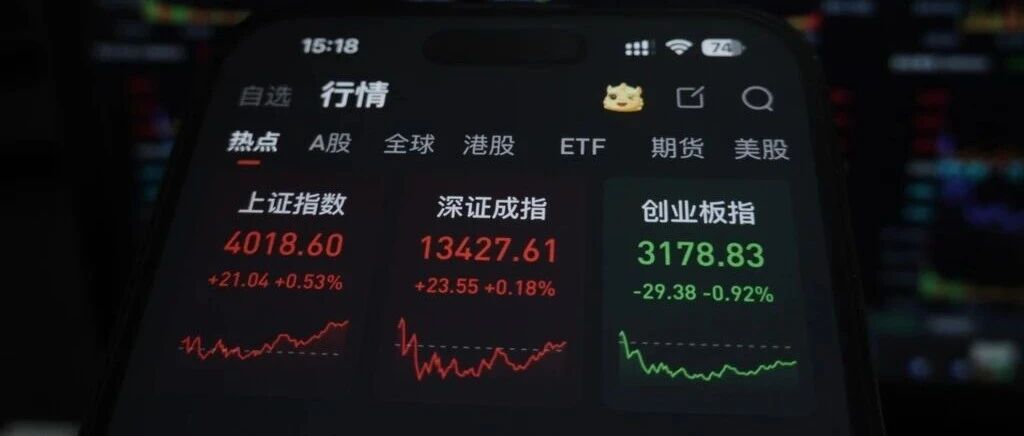
Market Overview - A-shares showed mixed performance with the Shanghai Composite Index rising by 0.53% and the Shenzhen Component Index increasing by 0.18%, while the ChiNext Index fell by 0.92% [2] - The trading volume in the Shanghai and Shenzhen markets reached 2.17 trillion, an increase of 175.4 billion compared to the previous trading day [2] Technology Sector Analysis - The technology sector has been performing well this year, with significant gains in humanoid robots, semiconductor chips, and algorithm computing [3] - Recent adjustments in technology stocks should not be interpreted as a trend reversal; rather, they reflect profit-taking behavior from investors [4] - The "15th Five-Year Plan" emphasizes technological innovation as a key policy direction, indicating strong future support for sectors like AI and semiconductor technology [4] Investment Outlook - The market is expected to experience structural opportunities in 2026, driven by potential policy benefits and improved capital conditions [2][8] - There is a belief that the bull market in A-shares and Hong Kong stocks will continue, with a shift of household savings into the capital market already underway [8] - Historical trends suggest that a complete bull market typically benefits a wide range of industries, not just a few sectors [8] Traditional Sector Opportunities - Traditional sectors may see phase-based rotation opportunities in the coming year, although their growth may not match that of technology stocks [8] - The current market environment shows lower overall valuations and leverage compared to previous peaks, suggesting that the recent rise above 4000 points may not indicate a bubble [7][8]

资本锚定未来!览富财经网闭门会议解锁二级投资市场五大黄金赛道
Sou Hu Cai Jing· 2025-11-10 06:56
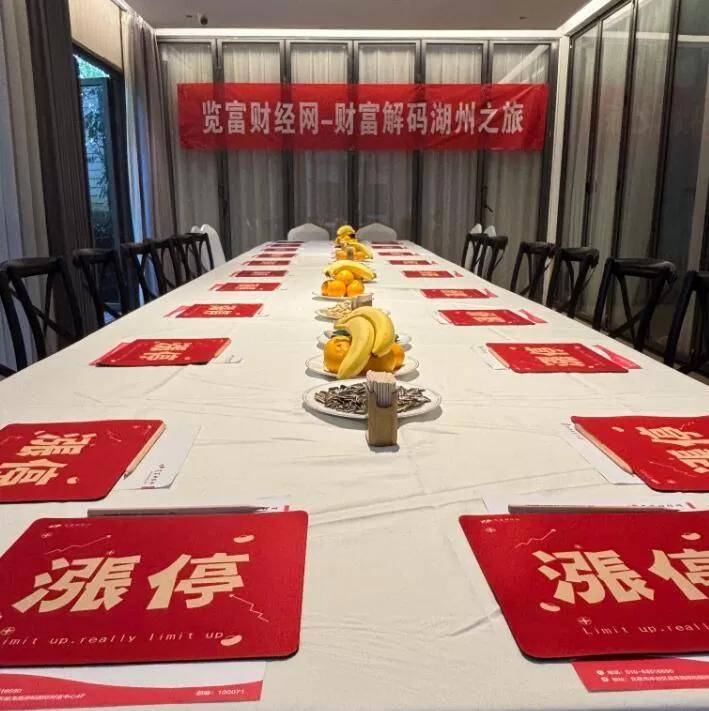
Core Insights - The conference "Wealth Decoding Huzhou Tour" focused on reviewing capital market trends and exploring future investment opportunities in the context of economic cycles and industry changes [1][5] - Key industries identified for future investment include Artificial Intelligence (AI), computing power, energy storage, semiconductor chips, and robotics, which are seen as the most promising sectors in the capital market [2][3][4] Group 1: Industry Trends - The AI sector is viewed as a core driver of the new technological revolution, with investments shifting from infrastructure to industry applications, creating significant value reassessment opportunities [2][3] - The computing power industry is experiencing explosive growth, with investment opportunities across data centers, high-speed communication networks, and advanced chips, indicating a sustained high investment climate [3] - Energy storage technologies are critical for stabilizing renewable energy integration, with a market potential in the trillion-dollar range, addressing the energy demands of computing power [3][4] Group 2: Semiconductor and Robotics - The semiconductor industry is essential for supporting AI and computing power, with investment strategies focusing on the entire supply chain, particularly in domestic alternatives and high-growth segments like automotive electronics [3][4] - The robotics sector is expanding from industrial applications to commercial and domestic uses, with a focus on intelligent upgrades and innovative applications, positioning it as a leader in smart manufacturing and services [4] Group 3: Strategic Insights - The conference provided a platform for listed companies to align their strategic planning with identified industry trends, seeking technological breakthroughs and investment opportunities in the highlighted sectors [4][5] - The event emphasized the importance of collaboration between capital and industry, fostering a deeper understanding and strategic synergy between listed companies and investment institutions [4][5]
杨德龙:美股科技股再次暴跌是否有泡沫破裂风险?
Xin Lang Ji Jin· 2025-11-07 08:49
Core Viewpoint - The recent significant drop in US tech stocks is primarily driven by concerns over the AI bubble, particularly following comments from an OpenAI executive regarding government-backed financing for AI chip investments. This has raised fears among investors about the sustainability of the tech stock rally, especially with notable declines in major stocks like Nvidia, which has reached a market cap of $5 trillion, raising questions about valuation bubbles and potential corrections [1][2]. Group 1: Market Dynamics - The US tech stock market has experienced multiple declines recently, with some leading stocks dropping over 3% in a single day. This has prompted warnings from prominent Wall Street investors about the risks of a bubble burst [1]. - Nvidia's market cap of $5 trillion is equivalent to approximately 36 trillion yuan, highlighting the significant valuation concerns in the current market context [1]. - Historical patterns suggest that Warren Buffett has successfully exited the market before previous downturns, with Berkshire Hathaway's recent quarterly report indicating a record cash reserve of $380 billion, suggesting a strategy of avoiding potential losses in a bubble [1][2]. Group 2: Comparisons with Historical Bubbles - The current AI-driven tech bubble shares similarities with the 2001 dot-com bubble, but there are key differences, such as the actual performance of AI-related companies, which have shown real earnings growth compared to the speculative nature of many dot-com stocks [2]. - While the current AI stock valuations are high, they have not reached the extreme levels seen during the dot-com bubble, although the market capitalization of AI stocks is over ten times larger than that of the dot-com era [2]. Group 3: Economic Factors - The risk of a US economic recession is increasing, exacerbated by a prolonged government shutdown, which has reached 36 days, potentially threatening economic stability and impacting tech stock valuations [4]. - There is significant division among Federal Reserve officials regarding interest rate cuts, with a 70% probability of a 25 basis point cut expected in December, which could influence market sentiment and stock valuations [4]. Group 4: Impact on Global Markets - A potential decline in US tech stocks is likely to affect A-shares and Hong Kong stocks, particularly as many Chinese companies are listed in both markets. However, the long-term impact may be limited, as some investors may shift capital from US tech stocks to Chinese markets seeking opportunities [5][6]. - The current tech rally in A-shares and Hong Kong stocks is supported by strong policy backing and a significant increase in new retail investors entering the market, with 25 million new accounts opened this year [6]. - The differentiation in performance among tech stocks is expected, with some speculative stocks potentially facing declines, while companies with solid fundamentals may emerge as market leaders [6]. Group 5: Investor Sentiment - Major investment banks like Goldman Sachs and Morgan Stanley have warned of a potential 10% to 20% correction in US stocks, indicating a consensus among top financial institutions regarding high valuations in the current market [7]. - The A-share and Hong Kong tech stocks still have considerable room for growth compared to their US counterparts, suggesting that the current market dynamics may not lead to an immediate end to the tech rally in these regions [7].

中银消费金融有限工司人工咨询号码
Sou Hu Cai Jing· 2025-11-07 07:38
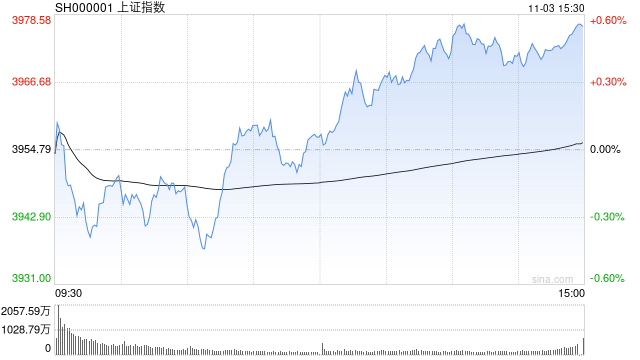
Market Overview - The market showed mixed performance with the Shanghai Composite Index slightly up by 0.05% while the Shenzhen Component and ChiNext Index both fell over 1% [2] - The number of rising stocks exceeded 2600, indicating a generally positive sentiment despite some declines in specific sectors [2] Key Sectors - **Hainan Free Trade Zone**: Stocks such as Intercontinental Oil and Gas and Haima Automobile reached their daily limit up, driven by positive sentiment regarding the alignment of the China-ASEAN Free Trade Area 3.0 with Hainan's development [4] - **Coal Sector**: Antai Group hit the daily limit up, with other coal stocks also performing well. The price of coking coal increased by 10.29% over the last 60 days, reaching 1581.25 RMB per ton [5] Policy and Corporate Developments - **AI and Manufacturing**: The Ministry of Industry and Information Technology emphasized the importance of integrating AI into manufacturing, aiming to enhance productivity and innovation across key industries [7] - **Leadership Change at Kweichow Moutai**: A change in leadership occurred with Chen Hua taking over as the new chairman, which may influence the company's strategic direction [8] Financial Insights - **OpenAI's Revenue**: OpenAI's CEO expressed optimism about the company's revenue, claiming it exceeds the previously reported $13 billion, despite ongoing losses [9] - **Shishi Pharmaceutical's Approval**: Shishi Pharmaceutical's Vitamin B6 injection received approval for consistency evaluation, which could enhance its market position [10] Investment Outlook - **Solid-State Battery Technology**: The solid-state battery sector is expected to see accelerated capital expenditure and a potential reversal in supply-demand dynamics, with significant growth anticipated from 2025 onwards [11] - **Energy Storage Market**: The energy storage market is poised for growth driven by economic factors and increasing demand from data centers, with lithium battery demand expected to grow over 30% by 2026 [11]
【IPO一线】又一家半导体公司拟冲刺IPO!专精特新“小巨人”航中天启启动上市辅导
Ju Chao Zi Xun· 2025-11-06 07:22
Core Viewpoint - The company Hangzhong Tianqi (Chongqing) Microelectronics Co., Ltd. is set to initiate its A-share listing process, marking its emergence as a leading enterprise in the power line carrier communication chip sector in China's capital market [1][4]. Company Overview - Established in January 2019 and headquartered in Chongqing Liangjiang New Area, the company specializes in integrated circuit design focused on communication and smart terminal chips [3]. - Despite being relatively young, the company has rapidly grown into a recognized entity, achieving status as a national intellectual property advantage enterprise and a national high-tech enterprise, and being listed among the fourth batch of "specialized, refined, and innovative" small giant enterprises [3]. Technological Strength - The company boasts over 100 effective intellectual property rights, including integrated circuit layout design registrations and patents, which underpin its market position [3]. - Its core product, the HPLC power line carrier communication chip and module, is based on a leading domestic RISC-V chip architecture, showcasing superior performance [3]. Market Performance - The company has achieved near-total coverage in domestic provincial network bidding, with cumulative shipments of single and dual-mode modules exceeding 40 million sets, generating over 1 billion yuan in related business revenue [3]. - It has consistently ranked among the top in market sales within the power line carrier communication sector, establishing itself as a domestic leader [3]. Capital Movements - Prior to initiating the listing guidance, the company completed a Series A financing round in September 2024, led by Shenzhen Capital Group, with participation from Fosun Chuangfu and Liangjiang Fund, injecting new capital for its development [4]. - The shareholding structure is stable, with the controlling shareholder and actual controller, Sun Xiangyang, holding a total of 75.2685% of the company's shares through direct and indirect means [4]. Industry Outlook - The market for power line carrier communication chips is expected to grow significantly, driven by the advancement of the "dual carbon" strategy and the ongoing development of smart grid infrastructure [4]. - Successful entry into the capital market is anticipated to further strengthen the company's technological advantages and market position, contributing positively to the domestic semiconductor sector [4].

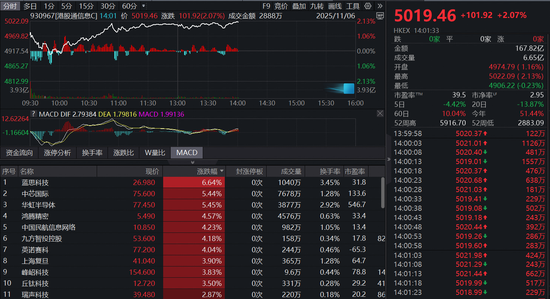
港股芯片产业链爆发 中芯国际华虹半导体携手涨超5%!港股信息技术ETF(159131)即将上市!标的指数盘中涨超2%
Xin Lang Ji Jin· 2025-11-06 06:24
Core Viewpoint - The Hong Kong semiconductor market is experiencing a significant surge, with the first ETF focused on the Hong Kong semiconductor industry showing strong performance, particularly in the technology sector [1][2]. Group 1: ETF Performance - The Hong Kong Information Technology ETF (159131) has seen an increase of over 2% during trading, with notable gains in constituent stocks such as Lens Technology, which rose over 6%, and SMIC and Huahong Semiconductor, both increasing over 5% [1][2]. - The ETF is the first in the market to track the Hong Kong Stock Connect Information C index, supporting T+0 trading, making it a unique investment vehicle for the semiconductor industry [2][3]. Group 2: ETF Composition - The ETF's index is composed of 70% hardware and 30% software, focusing on semiconductor, electronics, and computer software sectors, including 41 Hong Kong hard-tech companies [3][4]. - Major holdings include SMIC with a weight of 19%, Xiaomi Group at 10.28%, and Huahong Semiconductor at 5.11%, excluding large-cap internet companies like Alibaba and Tencent, thus providing a sharper focus on AI hard-tech trends [3][4]. Group 3: Index Characteristics - The index has a single sample weight cap of 15%, with adjustments made every six months based on market fluctuations, which may lead to individual stock weights exceeding this limit [5].