
蛋鸡养殖

Search documents
多方携手助力海南自贸港高质量发展
Qi Huo Ri Bao Wang· 2025-06-24 18:09
Group 1 - The event titled "Futures Empowering the Development of Hainan Free Trade Port Enterprises, Supporting High-Quality Advancement of the Real Economy" was held in Haikou, focusing on the innovative applications of futures and derivatives in Hainan's unique industries, climate risk management, and cross-border trade [1] - Hainan has actively participated in the construction of China's futures market, establishing multiple delivery warehouses and brands, with 30 futures companies involved in the "Insurance + Futures" project in 2024, providing price risk protection for 4,344 tons of live pigs and 61,000 tons of natural rubber, benefiting nearly 400,000 farming households [2] - The Dalian Commodity Exchange (DCE) has established a dual-core industry service system focusing on "Enterprise Risk Management Plans" and "Farmer Income Protection Plans," and is committed to building a talent training platform for futures [3] Group 2 - Hainan, as a tropical agricultural province, faces climate risks such as high temperatures affecting industries like rubber and tropical fruits. The DCE has developed weather index derivatives since 2002, with the latest version of the "Central Meteorological Station-DCE Temperature Index" launched in 2023, covering 23 cities [4] - The Zhengzhou Commodity Exchange (ZCE) has been tracking international weather derivative market trends and has signed a strategic cooperation agreement with the National Meteorological Information Center to enhance temperature index compilation and weather derivative development [5] - Leading companies shared practical experiences in hedging, with Hainan Mining Co., Ltd. managing cross-border operational risks through a combination of tools, and other companies utilizing futures markets to improve operational efficiency and manage price risks [7][8] Group 3 - In 2024, 1,503 listed companies in China published hedging announcements, with a participation rate of nearly 30%, marking an 11-year continuous growth in participation [8] - The industry faces challenges such as high compliance costs and a shortage of professional talent, which need to be addressed collaboratively by exchanges, associations, and enterprises [8] - The Hainan Securities Regulatory Bureau plans to deepen consensus and collaboration to enhance the role of the futures market in supporting the high-quality development of the real economy in Hainan [8]
让鲜蛋丰富高原群众“菜篮子”(点赞新时代)
Ren Min Ri Bao· 2025-06-22 22:10
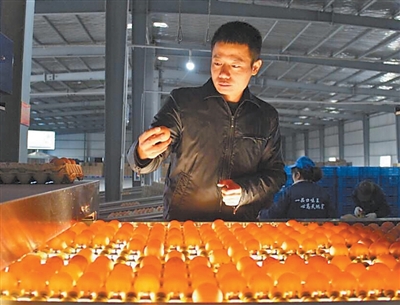
Core Viewpoint - The establishment of a high-altitude egg production facility in Tibet addresses local demand for fresh eggs, which previously relied on imports from other regions due to low self-sufficiency rates [1][2]. Group 1: Company Overview - The Tibet Hongnong Agricultural Development Co., Ltd. has built an egg production park at an altitude of 3,800 meters, overcoming challenges associated with high-altitude poultry farming [1]. - The facility utilizes automated feeding systems and intelligent environmental control to maintain optimal conditions for egg-laying hens [1]. Group 2: Production and Growth - Since its inception in 2021, the facility has expanded from an initial 70,000 chicks to over 1 million high-yield hens, producing more than 800,000 fresh eggs daily [2]. - The eggs produced have shown superior quality, with no harmful bacteria detected, and have even entered markets outside Tibet, such as Hubei and Fujian [2][3]. Group 3: Local Impact and Employment - The project has created 142 jobs for local farmers and has provided training for over 30 local employees in Wuhan, enhancing their skills in poultry farming [2][3]. - The self-sufficiency rate for fresh eggs in Tibet has significantly increased, leading to more affordable prices in the local market [3].

华联期货鸡蛋周报:供过于求,蛋价承压-20250622
Hua Lian Qi Huo· 2025-06-22 13:38
1. Report Industry Investment Rating - No information provided 2. Core Views of the Report - The spot price of eggs in the main producing areas rebounded from a low level this week, but the overall storage volume was small and the support for the market was limited. Currently in the seasonal off - season of demand, coupled with the plum rain season in the South, the egg price is under pressure [7][17]. - In May, the national laying - hen inventory reached a new high this year. Although it is expected that the laying - hen inventory will stop increasing in June, the reduction in supply is limited, and the demand is weak. The egg price may fall to a new low this year [7]. - The chicken - fry replenishment volume is currently at a historical high, and the supply of eggs is under pressure in the medium term. The egg price may continue to decline in the near term but may have bottom support in the second half of the year [9][10]. 3. Summary According to the Directory 3.1 Week - level Views and Strategies Fundamental Views - The spot price of eggs in the main producing areas was 2.73 yuan per catty, a decrease of 0.05 yuan per catty from last week, a decline of 1.80%. The low - price area reported 2.60 yuan per catty. Cold storage and food enterprises made tentative purchases, but the storage volume was small [7]. - In May, the national laying - hen inventory was about 1.275 billion, a month - on - month increase of 1.76% and a year - on - year increase of 6.78%. The number of newly opened - production chickens was greater than the number of old chickens leaving the market. In June, the number of newly opened - production chickens is expected to decline slightly, and the laying rate of laying hens will decrease. The overall demand is in the off - season, and the egg price is under pressure [7]. Strategy Views and Outlook - The chicken - fry replenishment volume is at a high level, and the egg price is under medium - term pressure. The egg price may continue to decline in the near term. It is recommended to continue holding the short position of out - of - the - money call options for near - month contracts. For far - month contracts, pay attention to the support at the 3600 level of the 09 contract and consider going long lightly in case of an over - decline [9][10]. - The 08 contract has a large premium. It is recommended to be cautious about chasing up, with a short - term pressure level of 3700 [10]. 3.2 Futures and Spot Markets - The spot price of eggs in the main producing areas rebounded from a low level. The average price was 2.73 yuan per catty, a decrease of 0.05 yuan per catty from last week, a decline of 1.80%. The low - price area reported 2.60 yuan per catty. Cold storage and food enterprises made tentative purchases, but the support for the market was limited. Currently in the seasonal off - season of demand, the egg price is under pressure [7][17]. 3.3 Supply Side - In May, the national laying - hen inventory was about 1.275 billion, a month - on - month increase of 1.76% and a year - on - year increase of 6.78%. It is expected that the laying - hen inventory will stop increasing in June, and the supply pressure may ease [29]. - In May, the total sales volume of chicken fry was 45.32 million, a month - on - month decrease of 3.66%. Although the sales volume decreased month - on - month, it was still at a high level. The supply pressure of eggs remains unchanged, and the egg price is under medium - term pressure [35]. - Due to low egg prices and rising feed costs, the enthusiasm for chicken culling has increased, but the number of cullable chickens is limited this month. The total culling volume of old hens this week was 539,100, a month - on - month decrease of 0.44% [40][43]. 3.4 Demand Side - The demand for eggs shows seasonal characteristics. The price usually reaches the lowest level around April, the highest level in late May, and the highest level of the year in mid - to - late September [60]. - Currently in the seasonal off - season of demand, the terminal replenishment is cautious, and the overall demand lacks positive support [7]. 3.5 Cost Side - Corn prices are rising due to reduced supply and trade frictions. Although the supply of soybean meal will be alleviated, the feed cost of laying - hen farming is expected to rise in the medium term, providing bottom support for the egg price [65]. - The egg cost line is an important driving factor for price changes, and the egg price, cost, and profit are generally positively correlated [69]. 3.6 Cost and Profit - This week, the cost of laying - hen farming was 3.55 yuan per catty, a month - on - month increase of 0.03 yuan per catty, an increase of 0.85%. The farming profit was - 0.82 yuan per catty, a month - on - month decrease of 0.08 yuan per catty, a decline of 8.89% [76].
一斤3元左右,济南鸡蛋价格“跳水”,跌至五年来新低
Qi Lu Wan Bao Wang· 2025-06-20 03:40
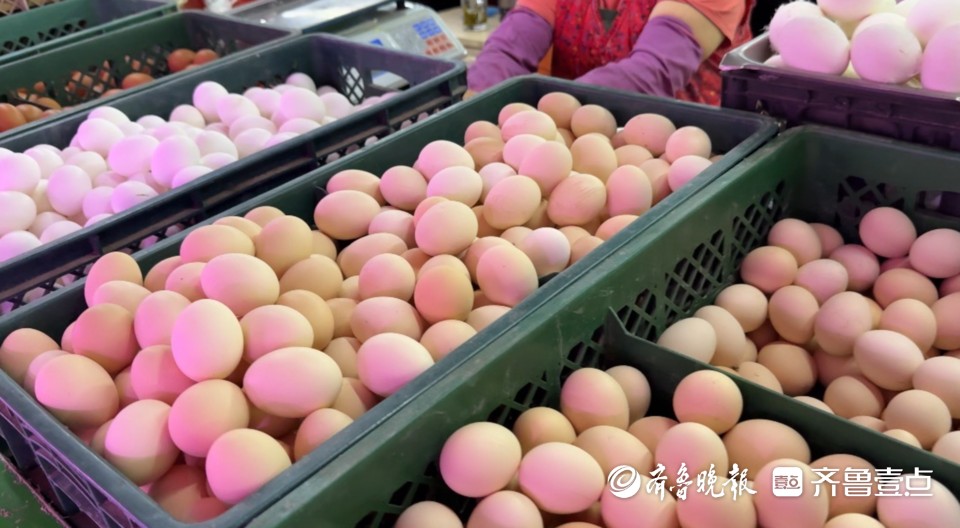
Core Viewpoint - The egg market in Jinan has seen a significant price drop, reaching a five-year low, primarily due to oversupply and stable demand, leading to a decrease in both wholesale and retail prices [1][2][4]. Group 1: Price Trends - The retail price of eggs in Jinan has fallen to around 2.99-3.19 yuan per pound, which is 10% lower than the previous month [2]. - The wholesale price of eggs is reported at 2.99 yuan per pound, down 0.71 yuan compared to the same period last year [4]. - The price of a box of eggs (30 pounds) has decreased from approximately 130 yuan before the Spring Festival to 83 yuan as of June 18 [4]. Group 2: Supply and Demand Dynamics - The supply of eggs has increased significantly due to a rise in the number of laying hens, with the national stock reaching 1.334 billion, a 7.23% increase year-on-year [6]. - Despite the increase in production, the overall market demand has not risen correspondingly, leading to an oversupply situation [6]. - The stable demand has resulted in a situation where prices are not significantly affecting sales volume, maintaining overall profit levels for retailers [2]. Group 3: Impact on Producers - Egg producers are facing substantial losses, with wholesale prices down 20%-30% year-on-year, leading to selling prices around 2.79 yuan per pound [5][6]. - The production cost for egg producers is estimated to be between 3.5-3.65 yuan per pound, resulting in losses of 0.7-0.9 yuan per pound sold [6]. - Producers are currently cautious about expanding their operations further, with many opting to observe market conditions before making additional investments [6].
蛋鸡产业非笼养转型的商业价值
Sou Hu Cai Jing· 2025-06-18 01:55
Core Viewpoint - The global egg-laying hen industry is transitioning from traditional caged systems to cage-free models, driven by consumer concerns for animal welfare and food safety, government regulations, and corporate sustainability strategies. Group 1: Commercial Factors - Over 2,500 cage-free commitments have been made globally, with a transition rate of 75% in 2023, particularly notable in Europe (80%) and the U.S. (73%) [1][19][27] - The EU and several countries have banned or plan to phase out caged systems, while 10 states in the U.S. have prohibited battery cages, necessitating proactive planning by companies in regions without such legislation [1][30] - Transitioning to cage-free systems requires capital investment, with lower stocking densities impacting profitability and increasing feed and labor costs. Strategies to mitigate these costs include phased transitions, raising prices, securing contracts, and employee training [1][40][41] Group 2: Animal Welfare - Cage-free systems significantly improve the living conditions of hens, with no significant difference in mortality rates compared to enriched cages, and health issues can be managed through better design and management [3][61] - Cage-free systems allow hens to express natural behaviors such as flapping, dust bathing, and perching, which are severely restricted in caged environments [3][65] - Psychological well-being is enhanced in cage-free systems, with reduced fear and stress levels, leading to increased positive behaviors like exploration and dust bathing [4] Group 3: Human Factors - Consumers are increasingly concerned about hen welfare and are willing to pay a premium for cage-free eggs, believing them to be more nutritious, safe, and natural [5][6] - The nutritional quality of cage-free eggs can be superior under good management, and food safety risks are more related to management practices than the type of system used [6][7] - Farmers face challenges in transitioning due to costs and labor, but consumer demand and market access opportunities drive the shift, with professional training improving success rates [7] Group 4: Environmental Impact - Cage-free systems increase feed, electricity, and land use, with feed being the primary environmental impact source, particularly due to land use changes from soybean and palm oil production [8][9] - Strategies to mitigate environmental impacts include using alternative feeds, optimizing formulations, selecting specific breeds, and adjusting consumption patterns, as demonstrated by companies like Barilla and Kipster [9]

淡季来临 鸡蛋现货价格缺乏上涨驱动力
Qi Huo Ri Bao· 2025-06-15 22:52
Core Insights - The egg price is continuously declining, leading the egg-laying industry into a loss situation, despite an increase in the enthusiasm for replenishing stock among producers [1][2] Group 1: Market Dynamics - In the first half of 2025, the egg market is experiencing a downturn, with producers facing losses, yet the sales of commercial layer chicks increased by 20% year-on-year from January to April [1] - The cash flow cost for egg-laying operations in Hebei is between 2.6 to 2.7 yuan per jin, with prices dropping below this cost since early June, indicating a critical cash flow loss situation [2] - The market sentiment is pessimistic regarding short-term price increases due to high production capacity, with many producers and traders planning to stockpile eggs at low prices in anticipation of a price recovery before the Mid-Autumn Festival [3] Group 2: Production Challenges - The industry is facing a cash flow loss threshold, with daily losses of approximately 500 yuan for every 10,000 hens, highlighting the financial strain on producers [2] - There is a notable increase in the rate of old hen culling, but the overall resilience of producers is evident, as many are opting for molting strategies instead of panic culling [2] - The market is experiencing a supply-demand imbalance, with small-sized eggs being oversupplied and facing sales pressure, while larger eggs are in short supply [3] Group 3: Health Issues - The prevalence of chicken diseases has increased, with infection rates in some areas reaching 30%, leading to a significant drop in egg production rates among affected flocks [4] - The market price for non-productive chickens has decreased from approximately 5 yuan per jin last year to 3.6 yuan per jin, exacerbating the financial pressures on producers [4]

(乡村行·看振兴)山西高平:项目建设“提速” 特色产业“开花”
Zhong Guo Xin Wen Wang· 2025-06-11 10:08
Group 1: Vegetable Industry Project - The Gao Ping City is accelerating the construction of the Wuguifeng Vegetable Industry Project, expected to be completed and operational by September, covering an area of 531 acres with four functional zones: modern agricultural demonstration area, facility greenhouse production area, leisure tourism picking area, and open-air vegetable production area [1] - The project aims to cultivate high-demand crops such as tomatoes, cucumbers, and strawberries, while also planting medicinal and edible crops like Tianma, with an expected annual production of 5 million high-quality seedlings, benefiting surrounding vegetable bases covering 100,000 acres [1][2] - The project utilizes advanced technology for precise control over the entire growth cycle of vegetable crops, achieving green, efficient, high-quality production goals, and enhancing both yield and quality [2] Group 2: Poultry Industry Project - The Ma Village is constructing a second phase of a high-quality egg chicken breeding project, with plans to build three modern chicken houses and related facilities, aiming to expand production based on market conditions [3] - Upon completion of both phases, the project will house 800,000 egg-laying hens, producing 35 tons of high-quality eggs daily, totaling 12,000 tons annually, and creating over 100 job opportunities [3]
宁夏证监局深耕走访“全实效”助推上市公司高质量发展
Zheng Quan Shi Bao Wang· 2025-06-05 01:42
Core Viewpoint - Ningxia Securities Regulatory Bureau is implementing measures to support private enterprises and enhance high-quality development through comprehensive company visits and problem-solving initiatives [1][2][3][4] Group 1: Company Visits and Support - The bureau aims for full coverage of listed companies in the region, having conducted five joint visits this year, with plans for a second round by the end of the year [2] - The bureau is focusing on high-tech, manufacturing, and traditional manufacturing companies, interpreting policies related to mergers, acquisitions, and dividends [2] - Companies eligible for dividends have announced a total cash dividend of 3.689 billion, a year-on-year increase of 41.85%, with the number of dividend-paying companies reaching a historical high [2] Group 2: Risk Management and Governance - The bureau emphasizes proactive risk management by visiting companies to assess their operational conditions and governance structures [3] - Two companies are set to raise over 3.4 billion through targeted placements and public REITs, with the bureau engaging in detailed discussions about their management and industry conditions [3] - The bureau is focusing on high-risk companies to ensure they implement necessary improvements and manage expectations effectively [3] Group 3: Addressing Challenges for SMEs - The bureau is addressing urgent issues faced by small and medium-sized enterprises, coordinating solutions for nearly 70% of the problems identified [4] - Specific companies in niche markets are being supported to enhance their core businesses and develop new productive capacities [4] - A mechanism for ongoing visits and follow-ups is being established to ensure continuous support and problem resolution for listed companies [4]


晓鸣股份(300967) - 300967晓鸣股份投资者关系管理信息20250528
2025-05-28 10:29
Group 1: Industry Overview - The egg chicken industry in China is characterized by a "small scale, large group" structure, leading to low price control and significant profit fluctuations [3][4] - The market share of the company exceeds 20%, establishing it as a benchmark enterprise in the industry [4][6] - The average sales price of chicken products increased by approximately 19.72% year-on-year, reaching about 3.36 CNY per bird [24] Group 2: Business Strategy - The company aims to enhance its brand and product quality through a focus on safety, traceability, and brand recognition [3][20] - Future strategies include optimizing the chicken breeding industry scale and product structure while ensuring sustainable development [7][11] - The company has established a comprehensive biosecurity system, evolving through four stages to ensure safety and efficiency in production [5][13] Group 3: Market Dynamics - The demand for high-quality, traceable products is increasing among consumers, leading to a shift towards branded and premium products [3][20] - The company is actively expanding its product range, including non-cage eggs and processed food products, to meet diverse consumer preferences [10][20] - The company has not encountered significant barriers in expanding its market presence, despite regional differences in breeding standards [16] Group 4: Financial Performance - The company reported a slight decrease in the sales volume of chicken products by 2.58% year-on-year, but maintained a market share of over 20% [24] - The company’s revenue and market share have been steadily increasing, indicating strong financial health [4][18] Group 5: Risk Management - The company has implemented a robust risk assessment framework to address climate anomalies and their impact on production cycles [17] - A complete biosecurity system is in place to mitigate risks associated with animal diseases, with no major outbreaks reported since the company's inception [13] Group 6: Future Outlook - The egg chicken industry is expected to see increased supply from imported breeds and a steady rise in consumer demand, particularly in the food service sector [21][22] - The company plans to maintain a focus on core business areas while exploring new opportunities in emerging markets such as pre-prepared foods and pet food [7][25]
鸡蛋价格为何持续下行
Jing Ji Ri Bao· 2025-05-25 22:03
Core Viewpoint - The continuous decline in egg prices is attributed to high production levels and weak demand, leading to a supply-demand imbalance in the market [1][3][4]. Group 1: Current Market Conditions - As of May 20, the average wholesale price of eggs in China was 7.83 yuan/kg, down 5.9% from 8.32 yuan/kg on April 24, and down 27.8% from 10.84 yuan/kg in September 2024 [1]. - The high inventory of laying hens, approximately 1.13 billion, has resulted in a sufficient supply of eggs, contributing to the downward pressure on prices [1][3]. - The market saw a temporary increase in egg prices due to pre-holiday stocking during the "May Day" holiday, peaking at 8.32 yuan/kg on April 24 before declining again [1]. Group 2: Impact on Egg Producers - The egg production industry has been in a loss-making phase since February, with losses exceeding 0.6 yuan per kg of eggs produced [3]. - Rising feed costs, particularly for corn and soybean meal, have further strained the profitability of egg production [3]. - The majority of egg-laying hens are currently in a high production phase, maintaining a supply surplus in the market [3]. Group 3: Future Market Outlook - The egg prices are expected to remain low in the latter part of Q2 due to stable production levels from increased replenishment of laying hens and weak consumer demand [4]. - The third quarter is traditionally a peak season for egg consumption, which may lead to a potential recovery in prices as demand increases from various seasonal events [4]. - There is a possibility of a turnaround in the egg production sector as producers may eliminate outdated production capacity, potentially leading to profitability in Q3 [4].