
汽车制造业

Search documents
东风汽车申请电动汽车的电池系统与电动汽车专利,节省大量成本
Jin Rong Jie· 2025-12-02 00:34
Group 1 - The core viewpoint of the news is that Dongfeng Motor Corporation has applied for a patent related to an electric vehicle battery system, which aims to enhance efficiency and reduce costs in electric vehicle technology [1][2]. Group 2 - The patent application, titled "Battery System for Electric Vehicles," was published under CN121019313A and was filed on September 2025 [1]. - The battery system includes a battery box, power battery, auxiliary battery, DC-DC converter, and battery management module, all designed to be integrated within a single battery box [1]. - The design allows for shared battery management systems between the power and auxiliary batteries, eliminating the need for separate housing and components, thus saving costs and space [1]. - The configuration reduces wire lengths between components, minimizing energy loss and further contributing to cost savings [1]. Group 3 - Dongfeng Motor Corporation was established in 2001 and is based in Wuhan, primarily engaged in the automotive manufacturing industry [2]. - The company has a registered capital of 858,937,000 RMB and has invested in 45 enterprises, participated in 5,000 bidding projects, and holds 5,000 patent records [2].

安闻科技(天津)有限公司成立,注册资本5000万人民币
Sou Hu Cai Jing· 2025-12-01 23:28
Core Viewpoint - Anwen Technology (Tianjin) Co., Ltd. has been established with a registered capital of 50 million RMB, fully owned by Anwen Technology Group Co., Ltd. [1] Company Overview - The legal representative of Anwen Technology (Tianjin) Co., Ltd. is Zhang Haifeng [1] - The company is classified as a limited liability company (wholly owned by a legal person) [1] - The business scope includes software development and sales, technical services, automotive parts manufacturing, smart vehicle equipment manufacturing, and various other manufacturing and sales activities [1] Financial Information - The registered capital of Anwen Technology (Tianjin) Co., Ltd. is 50 million RMB [1] Industry Classification - The company operates within the manufacturing industry, specifically in the automotive manufacturing sector [1] - The address of the company is located in Wuqing District, Tianjin [1] Regulatory Information - The company is subject to approval for certain projects, including power generation, transmission, and distribution [1]
多国公布CPI 通胀形势反复加大政策难度
Sou Hu Cai Jing· 2025-12-01 20:56
来源:滚动播报 (来源:经济参考报) 欧美日等发达经济体近期纷纷公布最新的居民消费价格指数(CPI)数据,物价压力虽然趋缓,但通胀 水平普遍仍处于央行目标之上。多国面临经济疲弱的局面,多项政策实施难度加大。 欧元区物价趋稳 疲弱经济待提振 欧元区多个国家最新公布的通胀数据显示,部分国家尽管物价涨势趋缓,但仍高于欧洲央行通胀目标 2%水平,为未来降息节奏增添不确定性。值得注意的是,主要国家的通胀和经济形势分化也对区域经 济政策前景构成挑战。 法国国家统计和经济研究所11月底发布的最新数据显示,法国11月CPI初值同比上升0.9%,与10月相 同,但低过预期的1%,通胀保持稳定主要是由于服务价格升幅放缓以及能源相关的制成品价格跌幅扩 大。 德国联邦统计局近期公布的初步数据显示,德国11月通胀率预计为2.3%。若剔除食品和能源价格因 素,德国11月核心通胀率为2.7%。 德国商业银行首席经济学家约尔格·克雷默表示,尽管德国经济在过去两年连续衰退,且今年以来基本 停滞,但剔除波动较大的能源和食品价格因素后,通胀率仍明显高于2%。他指出,德国第三季度工资 加速上涨,也不利于通胀进一步回落。"抗击通胀的最后阶段往往最为困 ...
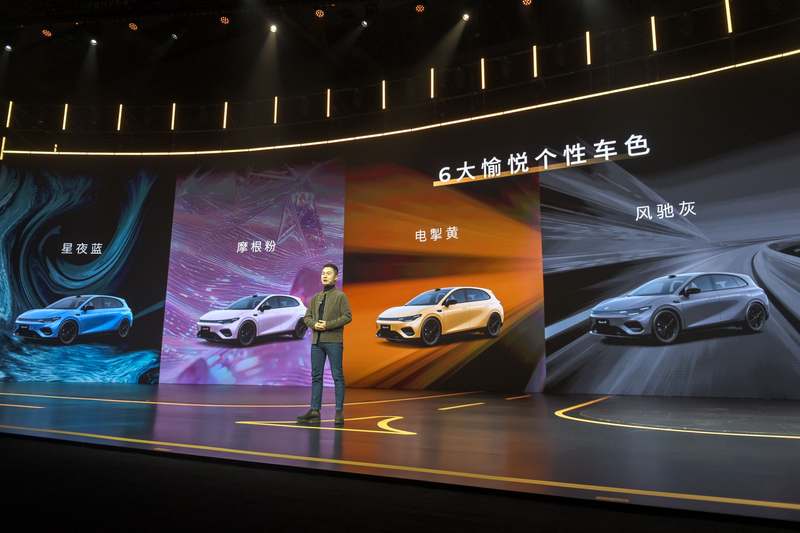
Lafa5上市,曹力:零跑已提前达成今年50万辆销售目标
Xin Jing Bao· 2025-12-01 14:20
Group 1 - The core message of the article highlights that Leap Motor has achieved its sales target of 500,000 vehicles for the year ahead of schedule and aims to reach an annual sales target of 1 million vehicles by 2026 [1] - The newly launched Leap Motor Lafa5 is positioned as a "high-performance sports coupe" with a range of 605 kilometers and features Qualcomm's 8295P smart cockpit and end-to-end lidar-assisted driving capabilities [1][3] - The introductory price for the Leap Motor Lafa5 is set between 92,800 yuan and 116,800 yuan, valid until December 31, 2025 [1] Group 2 - The Leap Motor Lafa5 is equipped with Qualcomm's 8295P flagship cockpit chip, a 14.6-inch 2.5K high-definition central control screen, and an 8.8-inch liquid crystal instrument panel [3] - The vehicle also incorporates two AI models, DeepSeek and Tongyi Qianwen, enhancing its technological capabilities [3]

纳百川(301667):注册制新股纵览 20251201:动力电池+储能热管理双轮驱动
Shenwan Hongyuan Securities· 2025-12-01 14:13
Investment Rating - The investment rating for the company is positioned in the middle to lower range, with an AHP score of 1.69, placing it in the 22.6% percentile of the non-innovation system AHP model [2][5]. Core Insights - The company has successfully transitioned from fuel vehicle thermal management to new energy vehicle battery thermal management and has expanded into the energy storage thermal management market. Its battery liquid cooling plates and related products are in mass production, with significant growth potential in both domestic and international markets [2][7]. - The company is a strategic supplier for CATL, with a market share of approximately 12.16% in 2024. It has also engaged in product testing with BYD and negotiations with LG Energy and Tata Group for overseas supply [7][8]. - The energy storage thermal management system has become a significant growth driver, with revenue from these products increasing from 0.36 billion in 2022 to 3.37 billion in 2024, representing a CAGR of 204% [8]. Summary by Sections AHP Score and Expected Allocation Ratio - The company achieved an AHP score of 1.69, indicating a middle to lower performance level in the market. The expected allocation ratios for different investor categories are 0.0211% for Class A and 0.0181% for Class B under neutral conditions [5][6]. New Stock Fundamentals and Highlights - The company leads in the liquid cooling plate segment and has successfully transitioned to new energy vehicle applications. It has established mass production capabilities for various cooling products and is in the market promotion phase for its battery integration box [6][7]. Comparable Company Financial Metrics - The company’s revenue for 2022-2024 was 10.31 billion, 11.36 billion, and 14.37 billion respectively, with net profits of 1.13 billion, 0.98 billion, and 0.95 billion. The company’s gross margin has been declining, with figures of 21.79%, 19.15%, and 17.36% over the same period, which is lower than comparable companies [14][17]. Fundraising Projects and Development Vision - The company plans to raise funds for a project to produce 3.6 million sets of water cooling plates annually, which will enhance its production capacity and support the integration of core components with battery boxes. The project is expected to yield significant returns [26][28].
比亚迪11月新能源汽车销量48.02万辆,创年内新高
Feng Huang Wang· 2025-12-01 13:28
Core Viewpoint - BYD reported a total of 480,186 vehicle sales in November, a decrease from 506,804 units sold in the same month last year, while the year-to-date sales reached 4.18 million units, reflecting a year-on-year growth of 11.3% [1] Group 1: Sales Performance - In November, BYD's passenger car sales amounted to 474,921 units, which included 237,540 pure electric vehicles and 237,381 plug-in hybrid vehicles [1] - The November sales figures set a new record for the year, indicating strong demand and performance in the market [1] - Overseas sales exceeded 130,000 units in November, marking a historical high for the company [1]

纳百川(301667):动力电池+储能热管理双轮驱动
Shenwan Hongyuan Securities· 2025-12-01 13:15
Investment Rating - The report assigns a rating of "Neutral" to the company based on its AHP score of 1.69, which places it in the 22.6% percentile of the non-innovation system AHP model [7][8]. Core Insights - The company has successfully transitioned from fuel vehicle thermal management to new energy vehicle battery thermal management and has expanded into the energy storage thermal management market. It is a strategic supplier for CATL, with a market share of approximately 12.16% in 2024 [2][9]. - The company’s revenue from energy storage thermal management products has grown significantly, from 36 million yuan in 2022 to 337 million yuan in 2024, representing a CAGR of 204% [11]. - The global market for battery liquid cooling plates is projected to reach 14.5 billion yuan in 2025, with a growth rate of 95.95% compared to 2022 [13]. - The company is also focusing on capacity expansion and product upgrades, with plans to produce 3.6 million sets of water cooling plates annually, integrating core components with battery box production [16][32]. Summary by Sections AHP Score and Expected Allocation Ratio - The company’s AHP score, adjusted for liquidity premium factors, is 1.69, indicating a mid-to-low level performance in the market [7][8]. New Stock Fundamentals and Features - The company leads in the liquid cooling plate segment and has established a stable supply capability, with ongoing negotiations for product supply with major clients like BYD and LG Energy [9][10]. - The company has completed over 300 product projects for various automotive manufacturers, including NIO and Mercedes-Benz, and has adapted over 200 vehicle models [9][10]. Comparable Company Financial Metrics - The company’s revenue from 2022 to 2024 was 1.031 billion, 1.136 billion, and 1.437 billion yuan, respectively, with net profits declining from 113 million to 95 million yuan during the same period [20][21]. - The company’s gross margin has decreased from 21.79% in 2022 to 17.36% in 2024, which is below the average of comparable companies [20][22]. Fundraising Projects and Development Vision - The company plans to raise funds for a new production project aimed at producing 3.6 million sets of water cooling plates annually, with a projected internal rate of return of 7.06% [30][33].
长城汽车(601633.SH):11月销量为13.32万台,同比增长4.57%
Ge Long Hui· 2025-12-01 12:33
格隆汇12月1日丨长城汽车(601633.SH)公布,2025年11月公司销量为13.32万台,同比增长4.57%; 产量为13.42万台,同比持平。2025年1-11月,公司累计销量为119.97万台,同比增长9.26%;累计产量 为119.45万台,同比增长8.51%。11月新能源车销售4.01万台,1-11月累计销售36.47万台。11月海外销 售5.73万台,1-11月累计销售44.86万台。 ...

赛力斯:11月新能源汽车产销大幅增长,推动总销量同比增长36.34%
Hua Er Jie Jian Wen· 2025-12-01 11:31
赛力斯(601127)2025年11月产销快报要点解读 分产品结构 新能源汽车业务: 11月产销分别为5.51万辆和5.52万辆,同比增长42.02%和49.84% 其中赛力斯汽车11月产销5.13万辆和5.17万辆,同比大幅增长51.22%和59.73% 核心数据 单月表现: 11月总产量5.89万辆,同比增长30.36% 11月总销量5.81万辆,同比增长36.34% 累计表现: 1-11月累计产量46.04万辆,同比增长0.73% 1-11月累计销量45.31万辆,同比下降0.52% 赛力斯汽车单月销量增速接近60%,表现强劲 其他车型: 11月产销大幅下滑,同比分别下降40.50%和49.68% 关键观察点 新能源汽车成为主要增长驱动力,占总销量比例约95% ...

广汽丰田取得侧围搬运机构及搬运拼装装置专利
Jin Rong Jie· 2025-12-01 00:37
Group 1 - The core point of the article is that GAC Toyota Motor Co., Ltd. has obtained a patent for a "side wall handling mechanism and handling assembly device," with the authorization announcement number CN117125470B, and the application date is September 2023 [1] Group 2 - GAC Toyota Motor Co., Ltd. was established in 2004 and is located in Guangzhou, primarily engaged in the automotive manufacturing industry [1] - The company has a registered capital of 133,389.61 thousand USD [1] - According to data analysis, GAC Toyota has invested in 3 companies, participated in 1,625 bidding projects, has 283 trademark information entries, and holds 1,516 patent information entries, along with 1,469 administrative licenses [1]