
汽车制造

Search documents
今日新闻丨蔚来芯片子公司完成22亿元首轮融资!丰田1月全球销量82.2万辆!蔚来电池科技有限公司成立!
电动车公社· 2026-02-27 16:07
Group 1 - Toyota achieved global sales of 822,000 units in January 2026, marking a 4.7% year-on-year increase and setting a record for January sales [2][5] - The Toyota Group, including Daihatsu and Hino, reported total sales of 887,000 units [2] - Despite a generally poor global automotive market in January, Toyota's growth was primarily driven by fuel vehicles, with electric models like the Platinum 3X maintaining reputation and sales [5] Group 2 - NIO Battery Technology (Shanghai) Co., Ltd. was officially established on February 26, with a registered capital of 100 million RMB [6] - The newly established Shanghai battery company will focus on research and development, complementing the manufacturing focus of the Anhui battery company established in 2022, creating a "R&D + production" dual-track strategy [7] - NIO's chip subsidiary, Anhui Shenji Technology Co., Ltd., completed its first round of equity financing, raising over 2.2 billion RMB, with a post-investment valuation nearing 10 billion RMB [8] - Anhui Shenji is the first domestic company to develop 5nm automotive-grade chips and has achieved large-scale commercialization, with over 150,000 units shipped since production began in 2024 [8] - This financing success positions NIO alongside BYD, Xpeng, and Li Auto as a company that has successfully spun off its chip division, indicating progress in the domestic high-end chip market and supporting NIO's long-term plans in autonomous driving and intelligent systems [9]



开年,合资车大降价
投资界· 2026-02-27 15:49
Core Viewpoint - The automotive market in China is expected to face intense competition in 2026, with companies adopting aggressive strategies to capture market share amid uncertain consumer sentiment and declining sales figures [3][4][6]. Market Overview - The China Association of Automobile Manufacturers reported that in January 2026, the production and sales of passenger vehicles were 2.062 million and 1.988 million units, respectively, representing a year-on-year decline of 4.1% and 6.8% [8]. - The retail sales of domestically produced narrow passenger vehicles in January 2026 were 1.544 million units, down 13.9% year-on-year [8]. Competitive Landscape - Major automakers like Honda and Toyota have initiated price cuts and promotional strategies to stimulate sales, indicating a shift in market dynamics where "cooperation" among competitors is unlikely [4][10]. - The competition is characterized by aggressive pricing strategies, with models like the Honda Accord and Toyota RAV4 being offered at significantly reduced prices to attract customers [4][11]. Industry Trends - The trend of "official price cuts" is seen as just the beginning of a more intense market battle, as companies strive to survive in a challenging environment [12][17]. - The shift towards electric vehicles (EVs) is ongoing, but traditional fuel vehicle models are also expected to undergo price adjustments and upgrades to remain competitive [17][18]. Future Outlook - The automotive industry is at a critical juncture, with companies needing to adapt to changing consumer preferences and market conditions to avoid being left behind [15][16]. - The competitive landscape is expected to become more brutal, with both joint ventures and domestic brands engaging in fierce competition to secure their positions in the market [18].

雷军:打造汽车电池制造的标杆工厂、灯塔工厂
Sou Hu Cai Jing· 2026-02-27 15:00
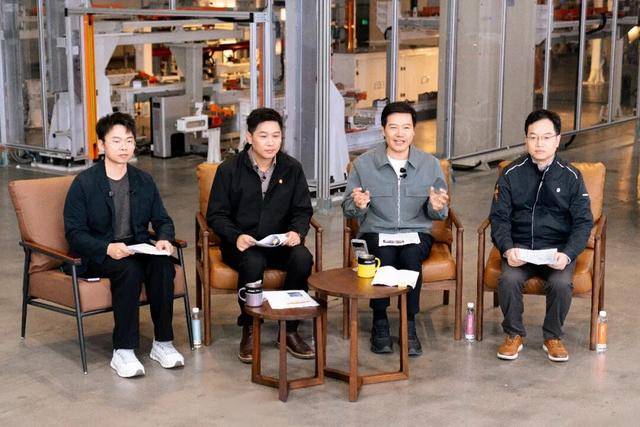
Core Viewpoint - Xiaomi is committed to safety in its automotive division, emphasizing a comprehensive safety strategy that includes significant investments in technology and infrastructure to ensure the safety of its vehicles [2][3][6]. Group 1: Safety Commitment - Xiaomi has established a dedicated safety team of over 3,500 personnel, including a Safety Committee with veto power and various specialized teams focused on risk identification, accident investigation, and emergency response [3][4]. - The company aims to create the safest vehicles in its class, with a motto of "safety above all" guiding its development philosophy [2][3]. Group 2: Safety Features and Innovations - The new generation SU7 features 90.3% high-strength steel and aluminum, with critical areas reinforced by 2200MPa ultra-high-strength steel, making it one of the strongest vehicles in production [5]. - The vehicle is equipped with nine airbags, including two new side airbags for rear passengers, and includes advanced safety technologies such as laser radar and a ballistic coating for battery protection [5][6]. Group 3: Battery Safety and Development - Xiaomi has a dedicated battery research team of over 220 people and has filed 486 patents related to battery systems, with 190 already approved [6][7]. - The company emphasizes a multi-faceted approach to battery safety, focusing on intrinsic safety, structural integrity, thermal management, electrical safety, functional safety, and data security [6][7]. Group 4: User Engagement and Services - During the recent Spring Festival, Xiaomi offered various user service activities, including 24-hour roadside assistance and reimbursement for travel expenses due to vehicle breakdowns, covering 295 cities [7]. - The company has also launched promotional activities for its vehicles, including financing options and special purchase benefits for the Xiaomi YU7 model [9].

一杯盖碗茶,谈出“落地时间表”:多位川籍企业家明确年内落地成都计划
Sou Hu Cai Jing· 2026-02-27 14:55
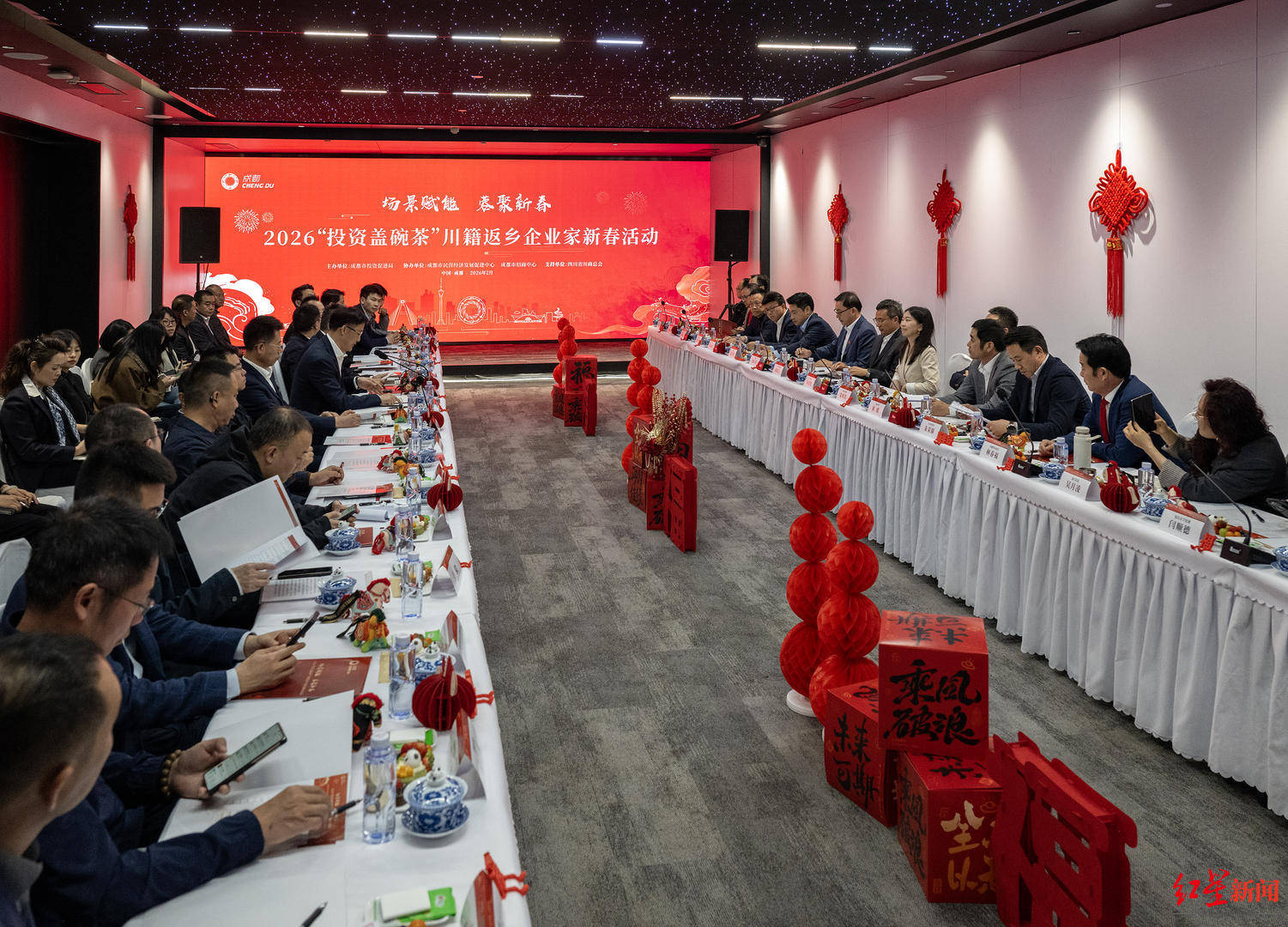
Group 1 - The event titled "Gaiwan Tea" in Chengdu aimed to encourage investment from Sichuan entrepreneurs, gathering over 30 representatives from various regions to explore collaboration opportunities [1][3] - Entrepreneurs visited advanced manufacturing sites, including the Sino-German Intelligent Connected Vehicle Testing Base and FAW-Volkswagen Chengdu, to understand local production capabilities [3][5] - The Chengdu Future Technology City showcased a complete industrial ecosystem, emphasizing the integration of research and industry [5][7] Group 2 - Discussions at the Chengdu Investment Center highlighted innovative mechanisms for investment coordination and collaboration among enterprises [7][8] - Entrepreneurs expressed interest in establishing projects in Chengdu, with specific plans for investments in robotics and digital economy sectors [11][13] - The event facilitated a platform for resource matching and market access, contributing to the sustainable development of the local private economy [8][15]
新一代SU7增加外侧机械门把手,将成立小米汽车安全顾问委员会
Xin Jing Bao· 2026-02-27 14:37
Group 1 - The core focus of the news is on Xiaomi's advancements in automotive safety, particularly regarding the new SU7 model and its safety features [1] - Xiaomi's founder and CEO Lei Jun emphasized the company's commitment to battery development, having established a strong research team and a battery pack factory five years ago [1] - The new SU7 model has increased its airbag count from 7 to 9, enhancing safety for rear passengers, and Lei Jun reminded users about the importance of seatbelt usage for optimal airbag effectiveness [1] Group 2 - Xiaomi plans to establish a Safety Advisory Committee for its automotive division, inviting vehicle safety experts from universities and research institutions to evaluate and oversee safety measures [2]
马斯克又画饼:特斯拉20年后将在月球建厂,机器人10年内让工作成为“可选项”
Hua Er Jie Jian Wen· 2026-02-27 14:11
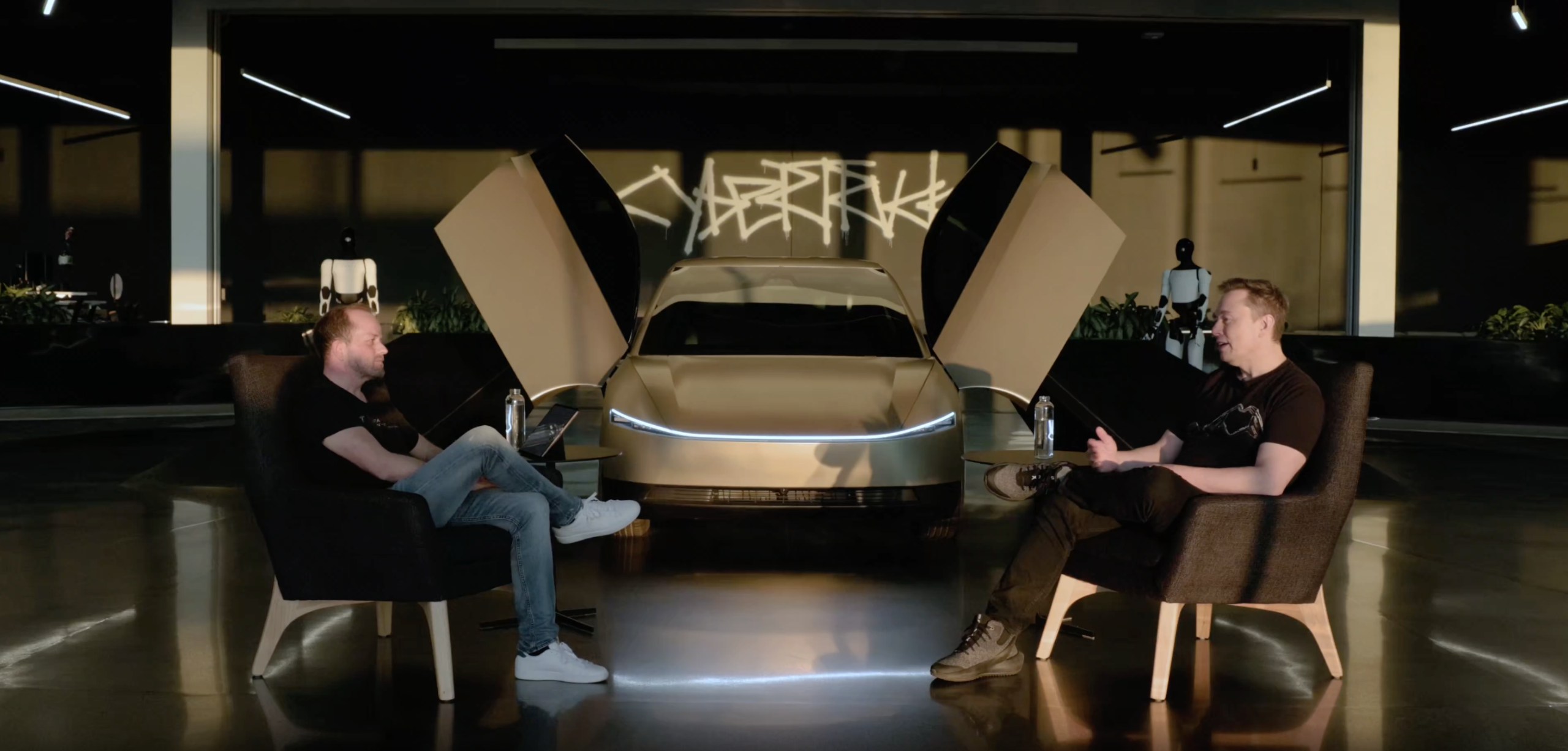
Core Insights - Tesla's CEO Elon Musk outlined ambitious plans for the company, including the potential for a factory on the Moon within 20 years and significant advancements in AI and autonomous driving technology [1][3]. Group 1: Future Vision - Musk envisions a prosperous future for Tesla, stating that in 20 years, the company could have a factory on the Moon, and he encourages investors to hold onto their Tesla stocks as they will be valuable [3][4]. - He believes that in the next 5 to 10 years, Tesla's fundamentals are clear and promising, indicating a bright future for the company [3][4]. Group 2: AI and Robotics - Musk emphasized the transformative potential of AI and robotics, suggesting that work could become optional within the next decade, similar to a hobby [4][38]. - He described the future capabilities of Tesla's humanoid robot, Optimus, which he believes could excel in medical roles, providing superior healthcare compared to current human practitioners [4][41]. Group 3: FSD and Market Position - Tesla's Full Self-Driving (FSD) software is set to launch in Europe, with Musk stating that it could be approved in the Netherlands by March 20 [5][6]. - He criticized traditional automakers for their lack of innovation, predicting that non-autonomous gasoline vehicles will become as rare as flip phones in the future [5][17]. Group 4: Production Plans - Musk announced that 2023 will be a significant year for Tesla, with five factories ramping up production across major product lines, including the Cybertruck and the Semi truck [6][13]. - The Cybertruck is expected to begin trial production in April, with plans for mass production by the end of the year [6][9]. Group 5: Berlin Gigafactory - Musk expressed pride in the Berlin Gigafactory, highlighting its rapid construction and the potential for significant expansion to become Europe's largest manufacturing complex [4][35]. - He indicated that the factory will produce not only vehicles but also battery cells and other components, aiming for vertical integration [23][12].


世界首次五百强断崖差,日本149家,美国151家,中国3家,现在呢?
Sou Hu Cai Jing· 2026-02-27 13:53
Core Insights - The global economic landscape has shifted from a US-Japan dominance to a US-China rivalry, with Japan losing its prominence and falling to a third-tier position [2][4]. Group 1: US Economic Performance - The US maintains a strong economic presence, with a slight decrease in the number of Fortune 500 companies from 151 in 1995 to 138 in 2025, reflecting a loss of only 13 companies [4]. - Major US tech companies like Apple, Microsoft, and Amazon dominate the high-value sectors, achieving an average profit of $9.7 billion, which is more than double that of Chinese firms [4]. Group 2: Japan's Decline - Japan's representation in the Fortune 500 has drastically decreased from 149 companies in 1995 to only 38 in 2025, a decline of over 70% [4]. - The once-strong Japanese electronics and automotive sectors have either been surpassed by Chinese and Korean competitors or have gradually diminished, with only Toyota and Mitsubishi UFJ Financial Group remaining in the top 100 [4]. Group 3: China's Rise - China has seen a remarkable increase in Fortune 500 companies, growing from 3 in 1995 to 130 in 2025, making it the second-largest country in terms of representation, just behind the US [6][10]. - The rise of Chinese companies is attributed to a gradual process, starting with state-owned enterprises in energy and finance, followed by the emergence of private firms like BYD and Pinduoduo, which have quickly climbed the rankings [6][10]. Group 4: Financial Performance of Chinese Companies - The top Chinese companies by revenue include State Grid Corporation with ¥42,322.24 million and China National Petroleum Corporation with ¥31,844.66 million, showcasing significant earnings [7]. - Despite the increase in quantity, the average profit of Chinese firms is only $4.2 billion, significantly lower than that of US companies, indicating a need for improvement in quality and international presence [7][8]. Group 5: Economic Transition - The last thirty years have seen a shift in the global economic center, driven by different developmental paths: the US leveraging innovation and globalization, Japan lagging due to industrial upgrades, and China capitalizing on reform and a complete industrial chain [8][10].
雷军回应小米汽车建电池包工厂雷军谈小米汽车电池研发
Xin Jing Bao· 2026-02-27 13:45
Core Viewpoint - Xiaomi's founder and CEO Lei Jun emphasized the importance of developing in-house battery technology for their electric vehicles, highlighting the need for a strong battery research and development team and the establishment of a battery pack factory to ensure quality and safety [1] Group 1: Battery Technology Development - Xiaomi is committed to mastering battery technology as a key component of their electric vehicle strategy, which involves significant investment in research and development [1] - The establishment of a battery pack factory is aimed at enhancing collaboration with suppliers and improving battery quality and safety [1] - The focus on battery technology is expected to lead to better vehicle range and charging speed, which are critical for the success of electric vehicles [1] Group 2: Strategic Positioning - The decision to produce their own battery packs reflects Xiaomi's long-term vision and commitment to becoming a competitive player in the electric vehicle market [1] - By developing in-house capabilities, Xiaomi aims to differentiate itself from competitors who may rely solely on external suppliers for battery components [1]
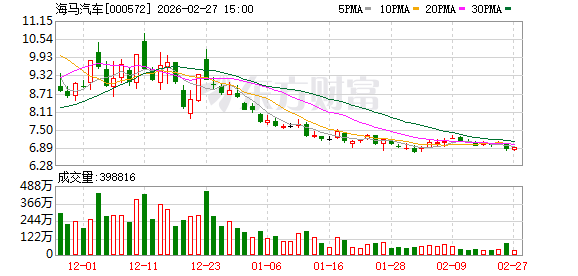
海马汽车:若有达到披露标准的合作事项,公司将严格按照规定及时履行信息披露义务
Zheng Quan Ri Bao· 2026-02-27 13:35
Group 1 - The company maintains an open and cooperative attitude, actively seeking win-win opportunities through communication with various partners [2] - The company commits to fulfilling information disclosure obligations in a timely manner for any cooperation matters that meet disclosure standards [2]

手机集体涨价后,汽车会是下一个吗?
Di Yi Cai Jing· 2026-02-27 13:25
Core Viewpoint - The automotive industry is facing a significant shortage of DRAM chips, leading to increased costs and potential price hikes for vehicles due to rising chip prices [1][2][4]. Group 1: Chip Price Increases - The price of general DRAM is expected to rise by 55% to 60%, while NAND Flash prices are projected to increase by 33% to 38%. High-end automotive-grade DDR5 chips have seen price surges of up to 300% [1]. - Since the second half of 2025, automotive storage chips have experienced substantial price increases, with car-grade DRAM prices rising by 180% in three months and DDR4 prices increasing over 150% [2]. - The current shortage is attributed to a shift in supply dynamics, as major DRAM manufacturers are reducing production of lower-margin DDR4 chips in favor of higher-margin HBM and DDR5 chips [2][3]. Group 2: Impact on Automotive Costs - The cost of DRAM chips for a mid-range electric vehicle, which typically requires 5 to 6 chips, has increased from approximately 700 yuan to about 2000 yuan, reflecting a nearly threefold rise [4][5]. - The overall cost pressure on automotive manufacturers is expected to lead to an increase in vehicle prices, with estimates suggesting a cost increase of 1000 to 3000 yuan due to rising storage chip prices [5]. - Some manufacturers, like Volkswagen and BYD, have secured priority supply through long-term agreements, but the overall price increases remain unavoidable [5]. Group 3: Market Dynamics and Consumer Behavior - The average price of passenger vehicles in China has risen, with the average price reaching 186,000 yuan in January 2026, an increase of 15,000 yuan [6]. - The average price of new energy vehicles also saw a significant rise, reaching 195,000 yuan in January 2026, up from 179,000 yuan in December 2025 [6]. - The ongoing "trade-in" policy for vehicles in 2026 is expected to stimulate consumer demand, particularly in the mid-to-high-end market segment [6].

