餐饮

Search documents
投融界观察:暖春消费旺,直播电商成为春节消费新风口
Sou Hu Cai Jing· 2026-02-13 12:46
Group 1: Core Insights - The 2026 Spring Festival is marked by a strong consumer demand across various sectors, including travel, dining, and shopping, driven by the longest 9-day holiday in history [1] - The consumption market is characterized by quality, experience, and digitalization, reflecting the continuous optimization of China's consumption structure and new trends in industry development [1] Group 2: Travel Market Dynamics - The travel market during the 2026 Spring Festival shows a robust demand and supply, with diverse travel experiences and upgraded consumption [3] - A notable trend is "reverse holidaying," where young people choose to celebrate the festival in their work cities with family, leading to significant growth in tourist numbers in first-tier and new first-tier cities [3] - High-end accommodation and unique experiences are increasingly popular, with a marked rise in bookings for luxury hotels, hot springs, and family-friendly resorts, as consumers seek quality over traditional tourism [3] Group 3: Dining and New Year Goods - The dining and New Year goods market is evolving with a focus on health and innovation, maintaining traditional elements while introducing new vitality [4] - There is a strong demand for dining experiences during the festival, with various options such as home-cooked meals, hotel reservations, and food delivery maintaining high activity levels [4] - Health-oriented products like nuts, dried fruits, and organic oils are seeing significant sales growth, replacing traditional high-fat and high-sugar items as consumer preferences shift [4] Group 4: E-commerce and Live Streaming Impact - E-commerce and live streaming are reshaping the distribution of New Year goods, with live streaming becoming a key sales channel, as evidenced by a threefold increase in sales of gift boxes on Douyin during the festival period [5] - Regional specialties, such as Chaoshan marinated goose and Zhejiang sauce duck, have successfully expanded from local markets to nationwide sales, with a 223% year-on-year increase in transaction value for these products [5] - The ongoing consumer demand is driving innovation and upgrades in related industries, with companies leveraging technology and services to optimize their offerings and capture the Spring Festival consumption boom [5]


到南方小城去过年
21世纪经济报道· 2026-02-13 12:14
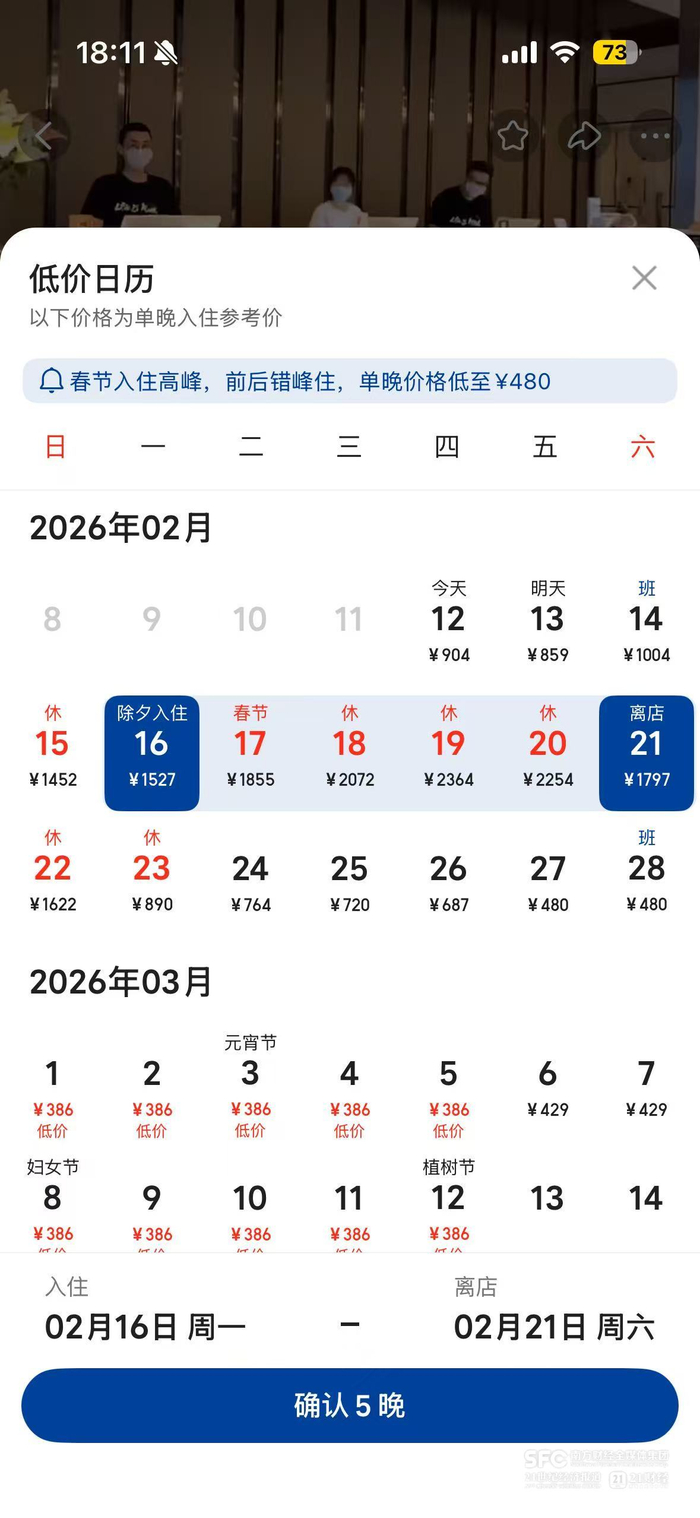
Core Insights - The article highlights the trend of tourists from first-tier cities opting for smaller cities to celebrate the Spring Festival, with Quanzhou emerging as a popular destination due to its cultural heritage and favorable prices [1][10]. Group 1: Tourism Trends - Quanzhou has become a representative city for Spring Festival tourism, attracting visitors with its historical culture and culinary offerings, making it a new "World Food Capital" by 2025 [1][16]. - Data from Meituan Travel indicates that hotel bookings in Yunnan's Pu'er for the Spring Festival have surged, with a 139% increase in tourism growth and a 183% rise in hotel bookings compared to the previous year [3][12]. - The demand for unique local experiences, such as traditional cultural activities and local cuisine, has significantly increased, with searches for intangible cultural heritage experiences rising over 60% [12][13]. Group 2: Hotel and Pricing Dynamics - Hotel prices in smaller cities like Quanzhou and Chaozhou have seen substantial increases, with some hotels charging rates comparable to those in Beijing during the Spring Festival [5][10]. - In Quanzhou, the average hotel booking price has reportedly doubled during the holiday period, with popular hotels reaching prices over 1500 yuan per night [5][10]. - The proportion of hotel bookings for stays of two days or more during the Spring Festival in Pu'er has reached 46%, indicating a strong demand for family-friendly accommodations [4]. Group 3: Local Economic Impact - The influx of tourists has prompted local businesses to adapt, with many restaurants and hotels remaining open during the Spring Festival to cater to the increased demand [20][21]. - Quanzhou's local economy is benefiting from the tourism boom, with over 100 new hotel brands established in the past two years, enhancing the city's hospitality offerings [20][21]. - The city is also focusing on promoting its unique culinary culture, with efforts to avoid homogenization in food offerings and instead highlight local specialties [21].
全聚德总经理周延龙:以“+餐饮”重构增长边界 | 2026商业新愿景
Jing Ji Guan Cha Wang· 2026-02-13 11:19
Group 1 - The year 2025 is crucial for the Quanjude Group as it aims to solidify its foundation and accumulate momentum amidst challenges in the dining industry, including structural adjustments and differentiated consumer demand [2] - The company is focusing on a dual-driven strategy of "catering + food," enhancing core stores, and creating immersive spaces that integrate traditional Beijing cuisine with urban culture and tourism experiences [2] - Quanjude is leveraging holiday economies to boost consumption, achieving new operational highs in key stores, while also advancing the transformation of dining into food products and expanding sales channels [2] Group 2 - In 2026, the company plans to continue its core concept of "+ catering," deepening the integration of dining with sports, culture, exhibitions, and commercial complexes, transforming meals into cultural experiences and social interactions [3]


蜜雪集团海外扩张加速,新业务与供应链布局引关注
Jing Ji Guan Cha Wang· 2026-02-13 11:19
Group 1: Overseas Market Expansion - The company plans to open its first store in Brazil at a shopping center in São Paulo by March 2026, having signed a procurement order for 4 billion coffee beans and plans to build a supply chain factory [2] - The target for Southeast Asia is to increase the number of stores to 10,000 by the end of 2027, with an average annual growth rate of approximately 20%, while optimizing operational efficiency by closing underperforming stores [2] - Since November 2025, the company has opened franchise operations in 16 countries and regions, including Southeast Asia, Japan, South Korea, Australia, and South America, with plans for further expansion [2] Group 2: New Business and IP Development - The company is preparing to launch a theme park, with job postings for roles such as performance coordination and content writing at its Zhengzhou headquarters, indicating a potential rollout of the Snow King IP in physical locations, though specific investment scale and opening dates are yet to be announced [3] - The 福鹿家 brand has approximately 1,200 stores as of August 2025, with a goal to achieve profitability of 1.07 million yuan in 2024, making its performance in 2025 a point of interest for potential growth [3] Group 3: Supply Chain and Operational Optimization - The company is enhancing its global supply chain, with a production base in Hainan set to commence operations in the first half of 2025, and plans to extend upstream to improve the standardization of agricultural product partnerships [4] - Future focus will be on cost control and improving franchisee efficiency [4] Group 4: Institutional Perspectives - There is a divergence in institutional views on the company; UBS downgraded its rating to "neutral" in January 2026, citing risks of declining gross margins, while domestic institutions like Guotai Junan and Western Securities remain optimistic about the company's overseas expansion potential [5]
炒菜机器人渗透率提升,助推餐饮品牌规模化扩张
ZHONGTAI SECURITIES· 2026-02-13 10:45
Investment Rating - The industry investment rating is "Increase" [2][18] Core Insights - The penetration rate of cooking robots is increasing, driving the scale expansion of restaurant brands. The cooking robot market is expected to grow significantly, with a projected market size of 3.17 billion in 2024 and 11.7 billion by 2030 [7][12] - Labor costs in the restaurant industry are rising, with the proportion of labor costs reaching 28.6% in 2025, potentially exceeding 35% due to minimum wage increases and social security regulations. The shortage of chefs is projected to reach 3 million by 2025, making cooking robots essential for improving operational efficiency [8][12] - Major companies are investing in cooking robots to enhance operational efficiency, with deployment expected to exceed 150,000 restaurant locations by 2027. Cooking robots can reduce meal preparation time from 5-10 minutes to an average of 2-3 minutes, improving efficiency by over 40% and reducing labor costs by 40-60% [15][16] Summary by Sections Industry Overview - The industry comprises 128 listed companies with a total market value of 4,540.967 billion [4] Market Trends - The cooking robot market is rapidly expanding, with applications primarily in community canteens, group meals, and fast food scenarios. By 2028, the penetration rate in group meals and fast food is expected to reach around 50% [12][15] Company Developments - Companies like Guoquan, JD, and Zhengda are actively investing in the cooking robot sector, with significant deployments already in place. For instance, Guoquan plans to invest in cooking robot companies and has launched new projects [16]
北京检查年夜饭市场秩序:未现“天价”套餐,禁止“时令价”模糊标示
Bei Jing Shang Bao· 2026-02-13 10:39
Core Viewpoint - The Beijing market regulatory authority is actively monitoring the New Year's Eve dinner market to ensure fair pricing and food safety as the holiday approaches, with no reports of unreasonable pricing practices so far [1][2][3] Group 1: Price Regulation - The market regulatory authority has emphasized that New Year's Eve dinner packages must not use vague pricing terms like "seasonal price" and must clearly display prices for all items, including beverages and fresh produce [3] - Additional fees for items not previously priced, such as napkins and takeout containers, are prohibited, and businesses cannot raise prices after collecting deposits without valid reasons [3] - The authority is conducting on-site inspections focusing on price transparency and has not found any instances of "sky-high New Year's Eve dinners" or other unreasonable pricing behaviors [1][2] Group 2: Food Safety Measures - Inspections are also focused on food safety, including verifying the legality of business licenses, health management of staff, and the procurement and storage of ingredients [1][3] - The regulatory body is ensuring that food processing and ingredient sourcing meet safety standards to prevent potential hazards [1][3] - There is a strong emphasis on respecting cultural traditions while implementing measures to reduce food waste during the holiday [3] Group 3: Industry Response - In response to regulatory guidance and consumer demand, many restaurants are offering smaller New Year's Eve dinner packages tailored for family gatherings, such as those for four or six people [2] - Some restaurants are innovating by providing festive-themed takeout bags and proactively offering leftover packaging services [2]
新春走基层丨到南方小城去过年
2 1 Shi Ji Jing Ji Bao Dao· 2026-02-13 10:09
Core Insights - The trend of traveling to smaller cities during the Spring Festival is gaining popularity, with many tourists from first-tier cities seeking traditional experiences in places like Quanzhou [1][10] - Quanzhou has emerged as a popular destination due to its favorable prices, suitable winter climate, rich cultural heritage, and recognition as a new World Food City [1][10] Group 1: Travel Trends - Data from Meituan Travel indicates that hotel bookings in Yunnan's Pu'er for the Spring Festival have surged, with a 139% increase in tourism growth and an 183% rise in hotel booking popularity compared to the previous year [2] - The search volume for attractions in Pu'er, such as Jingmai Mountain, has increased by 123%, indicating a growing interest among tourists [2][3] - The trend of "reverse Spring Festival" travel is highlighted, with various smaller cities like Pu'er and Quanzhou becoming unexpected hotspots for travelers from major cities [1][2] Group 2: Hotel and Accommodation Insights - In Quanzhou, hotel prices have significantly increased, with some popular hotels seeing rates double during the Spring Festival period, reaching over 1500 yuan per night [3][10] - The proportion of hotel bookings for stays of two days or more during the Spring Festival in Pu'er has reached 46%, indicating a strong demand for family-friendly accommodations [3] - The rapid increase in hotel supply in Quanzhou, with over 100 new hotel brands added in recent years, reflects the growing tourism demand [14] Group 3: Cultural and Culinary Attractions - Traditional cultural experiences, such as folk events and intangible cultural heritage activities, have seen a 117% increase in search interest, showcasing the appeal of cultural tourism [8] - Culinary experiences are a major draw for tourists, with Quanzhou's food culture being a significant factor in attracting visitors, especially after its recognition as a UNESCO Creative City of Gastronomy [9][10] - The local government is actively promoting Quanzhou's unique culinary offerings, aiming to maintain its distinctiveness amidst rising tourism [17] Group 4: Economic and Infrastructure Development - Quanzhou's GDP surpassed 1 trillion yuan in 2020, indicating its economic strength and well-developed infrastructure, which supports its growing tourism sector [10] - The development of a comprehensive high-speed rail network in China facilitates easy travel between cities, enhancing accessibility to smaller tourist destinations [13] - Local governments are implementing measures such as free public transport during the Spring Festival to attract more visitors and stimulate consumption [13]
北京春节加大奖金投放力度!五大渠道教您有奖发票抽奖
Xin Lang Cai Jing· 2026-02-13 10:06
Group 1 - The core idea of the news is that during the Spring Festival, Beijing will increase the prize money for the lucky invoice program to encourage consumer participation in specific industries [1] - The eligible industries for the invoices include retail, catering, accommodation, cultural arts, entertainment, tourism, sports, and residential services, applicable to both online and offline businesses in Beijing [1] - The invoice must have a total amount of 100 yuan (inclusive) or more and must be a fully digitalized value-added tax ordinary invoice [2] Group 2 - The invoice date must be on or after February 11, 2026, and the invoice title must be in the name of the individual participant [3] - Invoices must not be forged, altered, or previously canceled [4] Group 3 - Consumers can participate through five channels: Alipay, WeChat Pay, JD Pay, Douyin Pay, and UnionPay Cloud Flash Payment [4][6][9][10][13] - Each channel has a similar process: open the app, upload the invoice, and receive instant results regarding the lottery [5][7][11][12][14] - Prize money will be distributed within 10 working days after verification of the winning invoice [6][8][12][14]
推动物价合理回升,我们该怎么花钱?
Xin Lang Cai Jing· 2026-02-13 09:02
Core Viewpoint - The year 2026 is anticipated to be a year of price increases, with various sectors already showing signs of rising prices, including food and consumer goods [1][6]. Group 1: Economic Policy and Price Trends - The Central Economic Work Conference has indicated that promoting stable economic growth and a reasonable recovery of prices will be a key consideration in monetary policy [1][6]. - The National Development and Reform Commission and the central bank have expressed intentions to facilitate a reasonable price recovery, focusing on a balanced approach where some prices may rise while ensuring essential living costs remain stable [1][3]. Group 2: Factors Influencing Price Increases - Regulatory measures have been implemented to address "involution" in competition, leading to a necessary increase in prices in the food and beverage sector, including the adjustment of delivery costs for riders [3][5]. - The cleaning up of substandard products in the renewable energy sector has resulted in higher costs for compliant products, which will reflect in their selling prices [3][5]. Group 3: Consumer Impact and Strategies - The anticipated price increases will affect consumers, but there is a focus on increasing household incomes through the implementation of urban and rural resident income growth plans [7][10]. - Consumers are advised to take advantage of government subsidies for purchasing new products, such as vehicles and electronics, to mitigate the impact of rising prices [9][10]. - Emphasis is placed on investing in durable goods rather than frequently purchasing cheaper, lower-quality items, which can lead to long-term savings [12][13].

6天亏光90万,我劝普通人别做梦 || 深度
Xin Lang Cai Jing· 2026-02-13 09:02
Core Viewpoint - The article discusses the rise and fall of various food entrepreneurs in China, highlighting the pitfalls of the food and beverage industry, particularly in the context of franchise and startup failures driven by unrealistic expectations and poor business models [2][36]. Group 1: Business Models and Failures - A small eatery named "Home is Ben" in Chengdu gained popularity through AI-generated music and a unique branding approach, but struggles with low sales and high losses [2][6]. - The owner of "Home is Ben" believes that his restaurant serves as a vehicle for cultural promotion rather than a traditional business, yet he faces significant financial challenges, selling only 40-50 yuan daily and incurring monthly losses of 6,000 yuan [6][8]. - Many entrepreneurs in the food industry are depicted as falling into traps set by misleading business models, with examples of individuals investing heavily in impractical ventures, such as a six-story milk tea building that fails to attract customers [9][12]. Group 2: Common Pitfalls in Entrepreneurship - The article outlines a series of failed business ventures, including a bakery that lost 40,000 yuan due to poor location and a lack of customer interest, and a juice shop that only sells a few cups daily [12][13]. - Entrepreneurs often ignore market research and financial fundamentals, leading to significant losses, as illustrated by a woman who lost 20,000 yuan on a traditional medicine milk tea shop [15][22]. - The prevalence of "quick recruitment companies" that exploit aspiring entrepreneurs by charging high franchise fees without delivering on promises is highlighted, with many individuals falling victim to these scams [36][37]. Group 3: Psychological Factors and Market Trends - The article suggests that many aspiring entrepreneurs are driven by a desire for quick wealth, often ignoring the risks involved, which leads to repeated failures in the food and beverage sector [38][40]. - The rise of social media and the allure of success stories contribute to unrealistic expectations among potential business owners, making them susceptible to scams and poor investment decisions [38][40]. - The narrative emphasizes that the journey of entrepreneurship is fraught with challenges, and many individuals fail to recognize the importance of thorough planning and market understanding before investing [42][45].