
存储芯片

Search documents
存储概念股迭创新高 基金经理现分歧
Zheng Quan Shi Bao· 2025-11-16 17:55
以存储芯片龙头股德明利为例,三季报显示共有73只基金对其持仓,较半年报减少84只,合计持有 1353.19万股(Wind季报基金持仓统计为不完全统计),持股比例为8.44%。其中,易方达供给改革、 广发科技创新C和广发中小盘精选C的持仓数量均超过100万股。 另一只个股东芯股份,自今年7月底启动上涨以来,于9月初创下了历史高点136元,随后进入调整。截 至11月14日,该股收盘报93.5元/股,市值413.5亿元。三季报披露,东芯股份的持仓基金包含嘉实基 金、南方基金、华夏基金、国联安基金、鹏华基金等,累计有34个基金产品持仓。 9月初起势的江波龙,则持续展示强势姿态,上周创下331.50元的历史高价。三季报显示,该公司2025 年前三季度实现营业收入167.34亿元,同比增长26.12%;实现归母净利润7.13亿元,同比增长27.95%。 截至三季度末,共有44只基金重仓持有江波龙,总持股数量为559.28万股,其中德邦半导体产业重仓最 多,为120万股。截至11月14日,该基金年内收益率达到76.77%。 由于存储芯片大热,聚辰股份也在11月成为公募基金调研的重点对象之一。根据三季报披露,持有该股 的公募 ...
下周有三个热点
表舅是养基大户· 2025-11-16 13:33
Group 1 - The article emphasizes the importance of upcoming economic data releases in the U.S. after the government shutdown, particularly the non-farm payroll data for September, which is expected to influence market sentiment and interest rate expectations [1][3][12] - The article highlights the significance of earnings reports from major companies, specifically Nvidia in the U.S. and Xiaomi in Hong Kong, as they hold substantial weight in their respective markets [1][3][12] - Geopolitical tensions in the Asia-Pacific region are noted as a factor that could impact institutional investors' decisions, particularly foreign capital [1][3] Group 2 - The article discusses the recent decline in the market's expectation for a Federal Reserve rate cut in December, which has fallen below 50%, primarily due to the government shutdown and hawkish comments from Fed officials [3][12] - It presents the performance of various asset classes, indicating that global risk assets have entered a period of volatility following the Fed's rate cuts, with specific reference to the S&P 500 and Hang Seng Tech Index [5][10][14] - The article mentions the contrasting strategies of major investment firms like Bridgewater and Berkshire Hathaway regarding technology stocks, with Bridgewater reducing exposure to individual tech stocks while increasing holdings in broader indices [18][20][23] Group 3 - The article notes significant developments in the A-share market, including a major shareholder's decision to reduce their stake in a prominent company, which is viewed as a neutral event with limited impact on the market [27][29] - It discusses the overall IPO and refinancing environment in the A-share market, suggesting that while current restrictions are in place, a return to normal financing functions is inevitable [33] - The article concludes with a mention of weekly highlights and insights from the investment community, indicating ongoing analysis and strategies in response to market conditions [35][37]


【财联社早知道】上调多达60%!三星电子11月提高内存芯片价格,机构称存储行业的“超级周期”或已经悄然启动
财联社· 2025-11-16 11:01
Group 1 - Samsung Electronics is raising memory chip prices by up to 60% in November, indicating a potential "super cycle" in the storage industry [1] - The State Council emphasizes the need to cultivate new consumption scenarios and business formats, with optimism for the recovery of the offline retail sector [1] - A company reports that its storage revenue is still largely driven by DDR3, but the proportion of new process products like DDR4 will gradually increase [1]

机构论后市丨短期内市场或维持宽幅震荡;关注“涨价扩散”行情
Di Yi Cai Jing· 2025-11-16 09:49
Market Outlook - The A-share market is expected to maintain a wide range of fluctuations in the short term, with the overall direction still in a bull market [2] - Short-term market may lack strong catalysts, leading to a focus on defensive and consumer sectors, while mid-term attention shifts to TMT and advanced manufacturing sectors [2] Price Increase Trends - The market is currently experiencing a "price increase diffusion" trend, particularly in the energy storage industry, with significant price rises in upstream and midstream materials due to supply-demand mismatches and growing storage demand [3] - The energy storage market is becoming a new growth direction for the lithium battery sector, with high configuration value in the tight links of the entire industry chain [3] AI Sector Insights - The AI sector continues to show strong demand, but there are notable supply shortages; focus should be on storage chips, gas turbines, SOFC batteries, solid-state transformers, and energy storage [4] - The AI demand remains robust, but the supply side issues need to be addressed, suggesting a wait for new catalysts in the AI market [4] Aviation Industry - The supply-demand dynamics in the aviation sector are improving, with expectations of reduced supply growth and improved ticket prices due to high passenger load factors [5] - The industry is projected to significantly reduce losses in Q4 2025, with profit elasticity expected to be released in 2026 [5] Gold Market - The liquidity crisis is easing, leading to a recovery in gold prices as short-term pressures are alleviated [6] - Following the end of the U.S. government shutdown, key economic data will be disclosed, allowing the Federal Reserve to reassess the economic situation, supporting a mid-term bullish outlook for gold [6]
这家公司,想取代DRAM和SRAM
半导体行业观察· 2025-11-16 03:34
Core Viewpoint - FMC has completed a €100 million (approximately $116.2 million) Series C funding round to advance its FERAM chip technology aimed at replacing DRAM and SRAM in AI data centers, following the failure of Intel's Optane in this space [2][3]. Funding Details - The funding includes €77 million from oversubscribed equity financing and €23 million from public funds, marking one of the largest financings in the semiconductor industry [3]. - This brings FMC's total funding to approximately $141.6 million, showcasing strong investor confidence in its technology [2]. Technology and Market Position - FMC's FERAM technology offers speed comparable to DRAM and SRAM but is non-volatile and more energy-efficient [2]. - CEO Thomas Rückes emphasizes that energy efficiency is becoming a critical factor for the next generation of AI, as memory chips are a major bottleneck in AI technology stacks [3]. Product Offerings - FMC has two main products: DRAM+ aims to replace DRAM with non-volatile memory that reduces power consumption, while CACHE+ targets SRAM replacement, offering ten times the density and reduced standby power consumption [3][4]. Manufacturing and Industry Challenges - The manufacturing feasibility of FERAM is not the primary concern; rather, the acceptance of the technology by the upstream supply chain is crucial [4]. - Significant changes in server architecture and operating systems will be required for the integration of FMC's products, posing a challenge for widespread adoption [4]. Market Potential and Future Outlook - FMC aims to commercialize its DRAM+ and 3D CACHE+ solutions and expand its global business, targeting a storage chip market exceeding €100 billion [5]. - The success of FMC's technology compared to Optane will become clearer by 2030, as the company seeks to establish new industry standards in AI data centers [5].

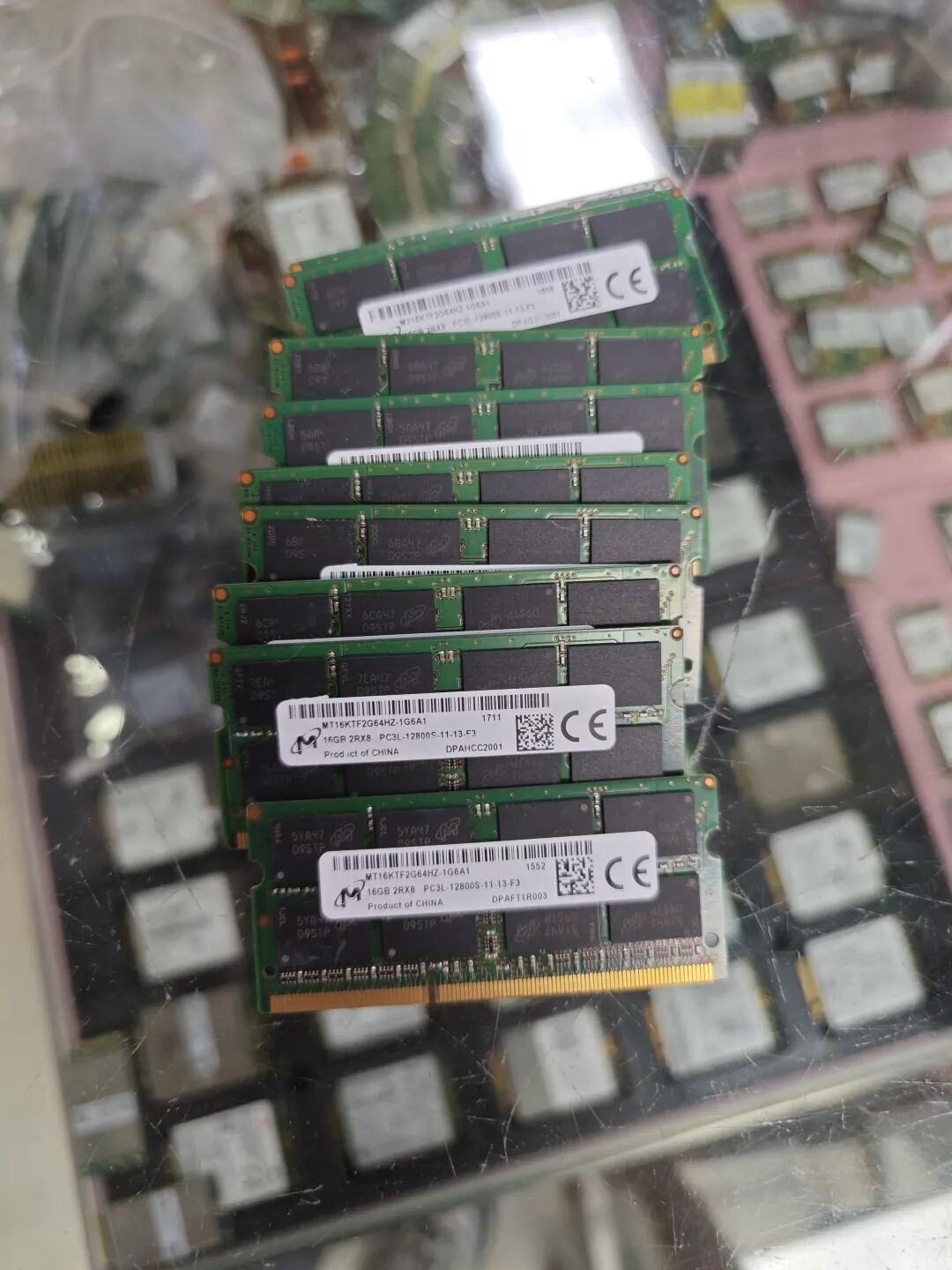
实探华强北丨“上午和下午的价格都不一样”,内存条炒成“黑金条”
Xin Lang Cai Jing· 2025-11-16 02:47
Core Viewpoint - The price of various storage products has significantly increased since April, with some products experiencing price hikes of up to three times, driven by supply shortages and rising demand, particularly from the AI sector [1][5][6]. Price Trends - Storage products, such as a 64GB LPDDR5 memory module, have seen prices rise from around 1,000 yuan to 4,200 yuan, marking a threefold increase [1]. - The price of a 16GB DDR4 memory module has increased from under 200 yuan at the beginning of the year to over 400 yuan by mid-November [2]. Market Dynamics - The surge in storage prices is attributed to a supply-demand imbalance, primarily influenced by significant capital investments in AI infrastructure by major tech companies like Alibaba and Tencent [5][6]. - The demand for high-end storage products, such as HBM and high-capacity DDR5, is outpacing supply as leading manufacturers prioritize these products over lower-margin items [6]. Impact on Consumer Electronics - The rising costs of storage components have led to increased prices for consumer electronics, with assembly costs for computers rising by at least 200 yuan, resulting in a noticeable decline in orders for assembled computers [7]. - Smartphone prices have also been affected, with models like the Redmi K90 series seeing price increases of up to 600 yuan due to higher storage costs [7]. Opportunities for Domestic Manufacturers - The current shortage in the storage market presents a valuable opportunity for domestic manufacturers to capture market share as global supply chains face disruptions [8].

存储芯片还在涨价!铠侠砸出个“黄金坑”?
Shang Hai Zheng Quan Bao· 2025-11-16 01:45
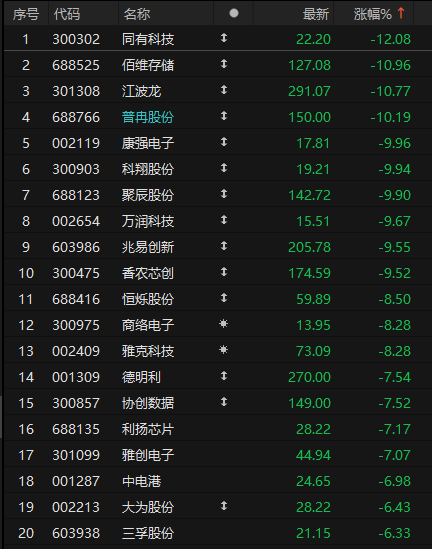
Core Viewpoint - The A-share storage chip sector experienced a significant decline on November 14, with multiple stocks dropping over 10% following disappointing earnings from Kioxia Holdings, which negatively impacted the U.S. storage chip market and subsequently the A-share market [1][3][5]. Group 1: Market Performance - On November 14, several stocks in the A-share storage chip sector, including Tongyou Technology, Bawei Storage, and Jiangbolong, saw declines exceeding 10%, while 13 other stocks fell by more than 7% [1][5]. - Kioxia Holdings reported a second-quarter revenue of 448.3 billion yen, below market expectations of 461.1 billion yen, with a year-on-year decline of 6.8% and a net profit drop of over 60% [3][5]. - Despite the downturn on November 14, Kioxia's stock had increased by over 470% year-to-date, indicating a strong performance prior to the earnings report [7]. Group 2: Price Trends and Market Outlook - The global storage market entered a new high-growth cycle this year, driven by AI development, with storage chip prices rising significantly [3][10]. - On November 14, it was reported that Samsung Electronics raised prices for some memory chips by up to 60% compared to September, due to strong demand from data centers and supply constraints [3][10]. - Kioxia's second-quarter results did not reflect the price increases that began in the third quarter, as the company had fixed-price agreements with Apple for mobile NAND chips [5][10]. - Analysts remain optimistic about Kioxia's third-quarter performance, projecting record revenues between 500 billion and 550 billion yen, driven by increased demand for NAND products related to AI [10][11]. Group 3: Diverging Views on Future Demand - There is a growing divergence in market sentiment regarding future storage demand, with some analysts expressing concerns about potential overcapacity and reduced demand if the AI sector underperforms [11][12]. - The ongoing supply constraints for eMMC and DDR5 chips suggest that while supply remains tight, actual end-user demand may not be as robust as anticipated [11]. - The situation in North America, particularly regarding data center construction and energy supply, could significantly impact storage demand, with concerns about the feasibility of AI investments due to energy constraints [11][12].
内存条变身「电子茅台」,谁买单?
Xin Lang Ke Ji· 2025-11-16 00:49
Core Viewpoint - The recent surge in memory prices, driven by increased demand from the AI industry and supply chain constraints, has led to significant price hikes in DRAM and SSD products, creating a "super cycle" in the memory supply chain [2][8][10]. Group 1: Price Trends - The price of 16GB DDR4 memory has increased from around 200 yuan to over 400 yuan within a year, with some models seeing price increases of over 300% [5][7]. - High-end DDR5 memory prices have also surged, with some models doubling in price, such as the G.Skill Royal 32GB DDR5-6000, which has reached 2500 yuan [6][7]. - TrendForce reported a staggering 171.8% year-over-year increase in DRAM prices by Q3 2025, outpacing traditional safe-haven assets like gold [7][10]. Group 2: Supply Chain Dynamics - The memory market is experiencing a structural supply shortage, exacerbated by major manufacturers like Samsung and SK Hynix prioritizing high-end products over DDR4, leading to a significant reduction in DDR4 production [10][11]. - The demand for memory from the AI sector is a primary driver, with AI servers requiring eight times more DRAM than standard servers, significantly increasing overall demand [8][10]. - The shift in production focus from traditional consumer electronics to high-performance server memory is expected to continue, impacting the availability of DDR4 and LPDDR4 products until at least mid-2026 [13][22]. Group 3: Market Speculation - Speculative behavior in the memory market has intensified, with some dealers hoarding memory products in anticipation of further price increases, leading to artificial price inflation [14][16]. - The phenomenon of "memory speculation" has drawn parallels to past gold market behaviors, where rapid price fluctuations can lead to significant financial risks for uninformed investors [17][20]. - The current market dynamics suggest that while there are opportunities for profit, the risks associated with speculation are high, particularly for average consumers [20][22]. Group 4: Future Outlook - The memory market is expected to stabilize as domestic manufacturers like Changxin Technology and Yangtze Memory Technologies ramp up production, potentially alleviating supply constraints [22]. - The ongoing demand from AI and emerging technologies will continue to shape the memory market, but a return to rational pricing is anticipated as production capacities increase [22]. - Companies that focus on core technology and steady production expansion are likely to emerge as long-term winners in this evolving landscape [22].
A股:周五市场下跌原因找到了!大家做好准备,不出意外,下周剧本是这样的!
Sou Hu Cai Jing· 2025-11-14 17:54
截至本周五收盘,沪指报3990.49点,跌0.97%;深成指报13216.03点,跌1.93%;创业板指报3111.51点,跌2.82%。三大指数均低开低走,沪指失守 4000点关口,创业板跌幅超过2%。板块方面,海南自贸区、燃气以及创新药概念表现相对突出,而存储芯片、贵金属、可控核聚变等板块调整幅 度较大。两市下跌个股超过3300只,市场整体处于弱势格局。 虽然A股的调整幅度略显突然,但结合近期市场背景,周五的下跌其实是在多重因素叠加下的结果——既有外部宏观冲击,也有内部结构性压力。 美联储鹰派言论:在美国就业数据走弱的背景下,数位美联储官员仍密集释放"维持2%通胀目标"并推迟降息的信号。这与此前市场预期的宽松路 径产生明显反差,直接推高了风险资产的调整压力。 美股科技股大幅回调:隔夜纳斯达克指数领跌,美光科技、西部数据、闪迪等存储巨头股价全线重挫,部分跌幅超过5%。日本铠侠股价盘中触及 跌停,更是引发全球科技股的连锁反应。A股存储板块率先感受到冲击,芯片、半导体等成长赛道资金迅速收缩。 股债汇"三杀"效应:美股下跌、美债收益率走高、美元指数走强,使全球风险情绪显著降温,亚太市场在周五同步承压。对A股投资者 ...
存储概念股逆势拉升 SanDisk Corp(SNDK.US)涨超5%
Zhi Tong Cai Jing· 2025-11-14 16:16
Core Viewpoint - The storage sector in the U.S. stock market experienced a rally, driven by significant price increases in storage chips by Samsung Electronics due to soaring demand from AI data centers and cloud computing giants [1] Group 1: Market Performance - U.S. storage stocks saw gains, with SanDisk Corp rising over 5%, Micron Technology increasing over 4%, Western Digital up over 2%, and Seagate Technology turning positive [1] Group 2: Price Adjustments - Samsung Electronics has reportedly raised prices for certain critical storage chips by up to 60% compared to September, reflecting a severe shortage driven by the exponential demand from AI data center construction [1] Group 3: Demand Dynamics - Morgan Stanley noted a fundamental shift in the drivers of the storage supercycle, with demand now coming from AI data centers and cloud service giants rather than traditional price-sensitive consumer electronics customers [1] - The strategic necessity of acquiring storage products, including DRAM and NAND, has led to a significant reduction in price sensitivity among these new demand sources [1] - The substantial capacity required for High Bandwidth Memory (HBM) is structurally constraining the production capacity of DDR4 and DDR5 for the three major storage giants [1]

