
食品

Search documents
进博引力场:小展台大机遇!进博会为各国中小企业参展商带来“好收成”
Yang Guang Wang· 2025-11-10 03:24
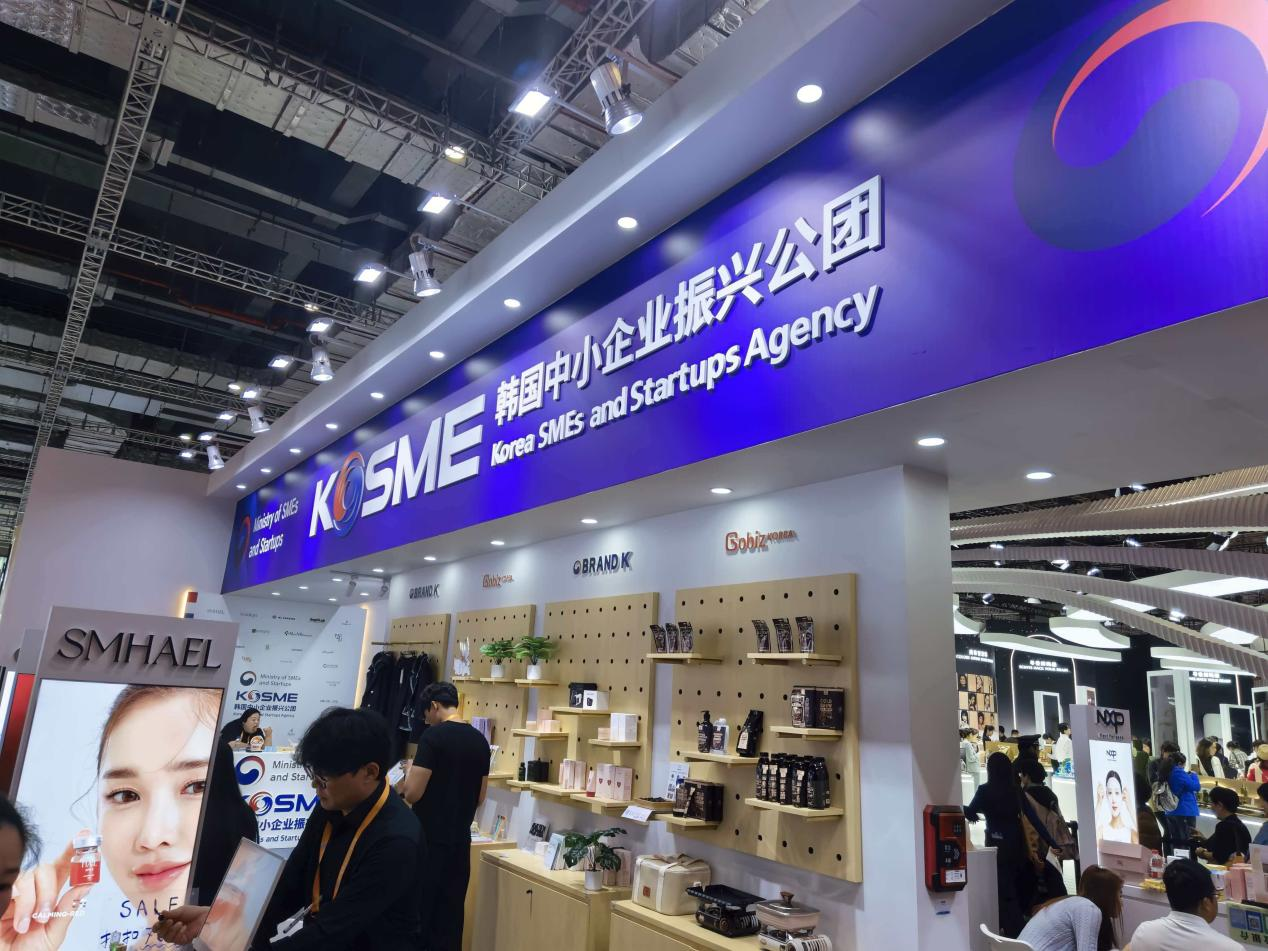
Group 1 - The eighth China International Import Expo (CIIE) features over 1,500 small and medium-sized enterprises (SMEs) from more than 50 countries, showcasing unique and high-quality products, creating a vibrant marketplace for opportunities [1] - The event is characterized as a "world bazaar," with diverse languages and live broadcasts, highlighting the dynamic nature of the consumer goods exhibition area [1] - The participation of SMEs is crucial for attracting consumers, media, and offline stores, as emphasized by the representatives from the Korean SMEs who noted the importance of such events for connecting with buyers [2] Group 2 - The Italian jewelry exhibition features over 100 handcrafted jewelry pieces from 12 SMEs, showcasing Italy's rich craftsmanship and cultural heritage [6] - The event is seen as significant for Italian SMEs, providing a platform for international exposure and business opportunities [6] - Malaysia's participation includes 250 enterprises in the food and beverage sector, with the event acting as a catalyst for Malaysian SMEs to enter the Chinese market [8] Group 3 - Australia's participation includes over 160 companies, with representatives highlighting the event as an excellent opportunity for networking and market expansion [12] - The CIIE serves as a platform for small brands to gain visibility, emphasizing China's openness to global trade and collaboration [12]

小进博”接力“大进博”,12月“进博优品”喊你“下单
Xin Jing Bao· 2025-11-10 03:23
Core Points - The eighth China International Import Expo (CIIE) is concluding, with a new event called "Small CIIE" scheduled for mid-December [1] - The 2025 CIIE Quality Products Trade Fair will take place from December 19 to 21 at the National Exhibition and Convention Center in Shanghai, featuring a variety of new products [1][2] - The event aims to extend the impact of the CIIE and maintain consumer interest, with activities including product showcases, ordering, and cultural performances [1] Industry Insights - The CIIE Quality Products Trade Fair is designed to target specific high-quality products, focusing on consumer sales while attracting various stakeholders such as buyers, service providers, and channel distributors [2] - The event will facilitate both online and offline ordering, aiming to convert new products into marketable goods and drive sales [2] - The exhibition will feature two main halls: Hall 3H for food products (fruits, dairy, meat, seafood, beverages, alcohol, and condiments) and Hall 4.1H for consumer goods and health products, including beauty products from France and home appliances from Germany, Japan, and the USA [2]
“ 小进博”接力“大进博”,12月“进博优品”喊你“下单”
Bei Ke Cai Jing· 2025-11-10 03:21
Core Points - The 2025 Import Expo Quality Products Trade Fair will take place from December 19 to 21 at the National Exhibition and Convention Center in Shanghai, serving as an extension of the Import Expo [1][2] - The event aims to showcase new products that debuted at the eighth Import Expo, allowing professional buyers and individual consumers to place orders on-site [1][2] - The trade fair will feature various activities, including a special area for time-honored brands, cultural performances, and tasting events, enhancing the consumer experience [1] Industry Summary - The Import Expo Quality Products Trade Fair targets specific high-quality products, focusing on consumer sales while attracting various stakeholders such as buyers, service providers, and channel distributors [2] - The event will facilitate both online and offline ordering, aiming to convert new products into commercial successes and leverage the traffic generated by the Import Expo [2] - The 3H hall will primarily showcase food products, while the 4.1H hall will focus on consumer goods and health products, including beauty items from France and home appliances from Germany, Japan, and the USA [2]
视频丨土拨鼠油、高山奶酪 进博会“全勤生”带来阿尔卑斯“土特产”
Yang Shi Xin Wen Ke Hu Duan· 2025-11-10 03:06
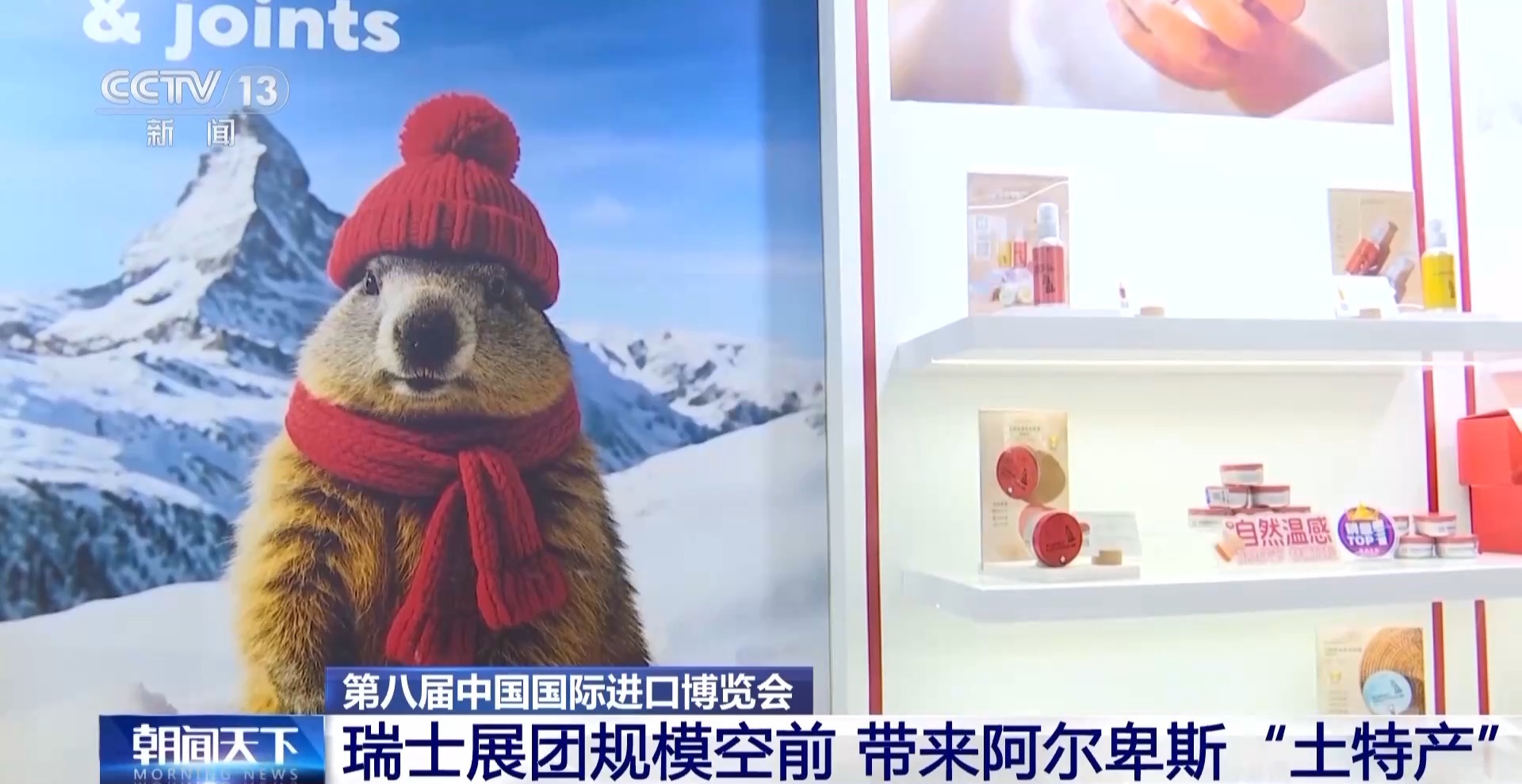
Core Insights - The article highlights the participation of Swiss companies at the eighth China International Import Expo (CIIE), showcasing a variety of unique Swiss products and emphasizing the significance of "Swiss manufacturing" beyond traditional items like watches and knives [1][3]. Group 1: Swiss Center Participation - The Swiss Center brought 26 exhibitors and 36 brands to the CIIE, marking the largest Swiss exhibition to date [3]. - A new position, "Customer Success Manager," was established to assist Swiss companies in entering the Chinese market, indicating a strategic focus on business development [3]. Group 2: Unique Swiss Products - The article introduces "Marmot Oil," a traditional Swiss product made from marmot oil mixed with various natural plants from the Alps, known for its muscle pain relief properties [5][7]. - Another featured product is "Alpine Cheese," which must be produced at altitudes above 900 meters, showcasing a unique method of consumption involving heating and scraping the melted cheese [9]. Group 3: Business Development and Market Access - The Swiss Center has facilitated over 100 Swiss companies to showcase their products at the CIIE, focusing on promoting brands and finding business partners in the Chinese market [11]. - The CIIE is viewed as an excellent platform for connecting overseas markets with Chinese consumers, enhancing the visibility of Swiss products [13].
在开放的大舞台上相向而行、相互成就
Ren Min Ri Bao· 2025-11-09 22:20
Group 1 - The eighth China International Import Expo (CIIE) features 67 participating countries and international organizations, with Thailand, UAE, Nigeria, Georgia, Sweden, and Colombia as guest countries [1] - The event serves as a platform for showcasing unique products and innovative achievements, promoting cooperation and mutual development among participating nations [1][2] - Colombia's participation includes 29 companies from agriculture, handicrafts, and cosmetics, marking a record number for the country at the expo [2] Group 2 - Kyrgyzstan, as a first-time participant, highlights natural products like honey and handmade soap, emphasizing the expo as an excellent platform for visibility and collaboration [2] - Sweden focuses on green technology, digital transformation, and high-end manufacturing, viewing the expo as a vital opportunity for bilateral trade and cultural exchange [2][3] - The expo facilitates connections for African SMEs, with the Democratic Republic of Congo's exhibitor expressing optimism about leveraging the event for business growth [3][4] Group 3 - Sri Lanka promotes its Ceylon tea at the expo, viewing it as a bridge for discovering business opportunities and enhancing cooperation among global southern countries [4] - Armenia showcases products like mineral water and wine, with participants expressing hope for increased recognition and orders from Chinese consumers [4] - The expo blends commerce and culture, with immersive experiences in various national pavilions, enhancing cultural exchange and understanding [5] Group 4 - The "Charming Friendly Cities" section at the expo highlights local cooperation achievements, featuring twin city exhibitions that showcase diverse cultural and economic ties [5]
数据点评 | 通胀回升的三大因素(申万宏观·赵伟团队)
赵伟宏观探索· 2025-11-09 16:03
Core Viewpoints - The inflation rebound in October is primarily driven by factors other than the anti-involution effect, with significant contributions from commodity price increases [2][60] - The Consumer Price Index (CPI) rose to 0.2% year-on-year, up from -0.3% in the previous month, while the Producer Price Index (PPI) decreased by 2.1% year-on-year, showing a slight improvement from -2.3% [9][59] Group 1: Factors Influencing Inflation - Factor 1: The anti-involution effect led to an increase in coal prices, but its impact on downstream PPI was limited. In contrast, copper prices, which were less affected by anti-involution, saw a significant increase, contributing 0.2% to the PPI [2][10][60] - Factor 2: The CPI's rise above zero was attributed to a low base and reduced supply in certain food categories, with pork prices remaining low despite the anti-involution effect. The food CPI increased by 1.5 percentage points to -2.9% year-on-year [2][17][61] - Factor 3: Core CPI continued to rise, supported by improved travel demand and rising gold prices. The core CPI increased to 1.2% year-on-year, with significant price increases in accommodation and travel services due to the overlapping National Day and Mid-Autumn Festival [3][24][61] Group 2: Future Outlook - The price increases in bulk commodities are expected to continue influencing inflation, but the impact of anti-involution on downstream prices may take time to materialize. The PPI is projected to remain around -2.2% year-on-year in the fourth quarter [4][37][62] - Although the low base, steady improvement in service consumption demand, and high gold prices may support core CPI, the limited rebound in CPI for the year is anticipated due to the tapering of national subsidies and slow recovery in downstream PPI [4][37][62] Group 3: Regular Tracking - The CPI showed an overall increase, with contributions from both food and non-food items. The food CPI rose by 1.5 percentage points to -2.9% year-on-year, with significant increases in fresh vegetables and fruits [5][43][63] - Non-food items such as household appliances and communication tools saw a decline in CPI, with household appliances dropping to 5.0% and communication tools to 1.2% [5][48][63] - The overall service CPI increased, with core service CPI performing better than seasonal trends, rising to 0.8% year-on-year [7][52][63]
进博特写:从组团到“单飞”?展商展现“看得见”的成长
Zheng Quan Shi Bao Wang· 2025-11-09 12:10
Group 1 - The eighth China International Import Expo (CIIE) saw nearly 200 Canadian companies participating, a significant increase compared to the previous year, with approximately 30 companies from Ontario and British Columbia each [1] - Many Canadian companies are participating for the first time, with support from the Canada International Trade Promotion Association (CITPA) aimed at fostering the growth of small and medium-sized enterprises [1][2] - Some companies that initially participated in the expo as part of a group have now begun to exhibit independently, showcasing their growth and success in the market [2][3] Group 2 - The CITPA has organized Canadian exhibitors across various pavilions, including consumer goods, food, and health products, highlighting the diversity of offerings [2] - New Zealand's dairy company, Fonterra, has not only participated but has also taken on the role of a group exhibitor, bringing 26 New Zealand companies to the expo this year, up from 12 and 21 in the previous two years [4] - The presence of innovative products, such as the plasma continuous annealing line from Plasmait, demonstrates the expo's role in showcasing cutting-edge technology and attracting attention from various industries [4]
食品饮料行业周报:周观点:茅台披露分红回购方案,把握底部配置机遇-20251109
GOLDEN SUN SECURITIES· 2025-11-09 09:15
Investment Rating - The report maintains an "Overweight" rating for the food and beverage industry, indicating a positive outlook for investment opportunities in this sector [4]. Core Insights - The report highlights that Kweichow Moutai has announced a mid-term dividend and share buyback plan, reflecting confidence in the company's growth and commitment to shareholder returns. The proposed dividend is 23.957 yuan per share, totaling 30 billion yuan, which represents 66.08% of the net profit for the first half of 2025 [2]. - The report notes that the sales performance of Moutai's products has shown improvement in September and October, suggesting a recovery in demand for premium liquor. The overall pressure on liquor sales is expected to ease, with a gradual release of genuine demand as prices stabilize [2][3]. - In the beer and beverage sector, the introduction of innovative products like "Xiao Piao" by China Resources Beer and the steady growth of Uni-President's Q3 performance indicate a positive trend in the market. Uni-President reported a net profit of 2.013 billion yuan for the first three quarters of 2025, a year-on-year increase of 23.1% [3]. Summary by Sections White Wine - Kweichow Moutai's mid-term dividend and buyback plan is a significant indicator of the company's confidence and shareholder value focus. The stock's current dividend yield is 3.76% based on projected profits [2]. - The report emphasizes that the sales pressure in the white wine sector has peaked, with expectations for demand recovery as prices return to value [2]. Beer and Beverage - The beer segment is entering a seasonal lull, but the report suggests focusing on companies with strong growth potential and significant product contributions, such as Yanjing Beer and Zhujiang Beer [3]. - The beverage sector is characterized by intense competition, with Uni-President's Q3 results showcasing resilience and growth potential in a challenging market [3]. Food - The high-end retail market is recovering, with significant sales growth reported in various regions, indicating a rebound in consumer confidence and spending [4]. - The report suggests that advancements in technology sectors like AI and chips are likely to drive consumption upgrades in the food industry [4].

3家A股公司火了,获超百家机构调研
Zheng Quan Shi Bao· 2025-11-09 00:07
Group 1 - Institutional research activity remains high with 418 listed companies disclosing investor research records as of November 7, maintaining the same level as the previous week [1] - Companies such as Anji Technology, Trina Solar, and Tongyu Communication received over a hundred institutional visits [1] - Nearly 50% of companies that were researched reported positive earnings, with notable stock price increases around 30% for companies like Longda Co., CITIC Metal, and Changbao Co. [3] Group 2 - The focus of institutional research this week includes interpretations of Q3 operational results, potential opportunities in Q4, and analysis of development prospects brought by the "14th Five-Year Plan" [3][12] - Companies like Qichuang Data reported a significant increase in R&D investment, reaching 230 million yuan, up approximately 83.5 million yuan year-on-year, primarily for upgrading computing service platforms [6] - Yingstone Innovation also saw increases in R&D and marketing expenses, with R&D costs rising due to custom chip investments and personnel salaries [6] Group 3 - Blue Biological's R&D investment grew by 23.29% year-on-year, maintaining a high level within the industry, focusing on technology-driven development [7] - Petty Co. is increasing marketing efforts for the "Double Eleven" shopping festival, reporting a 30% year-on-year growth in overall GMV [10] - BoTuo Bio anticipates a rapid increase in market demand for flu virus testing due to the seasonal rise in flu activity, having already prepared inventory for distribution [10] Group 4 - The "14th Five-Year Plan" is a focal point for companies like China Energy Construction, which aims to focus on integrated hydrogen energy and related products [14] - HNA Holding plans to optimize its fleet structure during the "14th Five-Year Plan" period to ensure stable development [14] - Jinzhou Pipeline highlights a national investment of 5 trillion yuan for underground pipeline construction, predicting an annual market growth rate of over 8% in the pipeline manufacturing industry [15]
170家海外企业和27家机构连续8年参展 “进博会是展品变商品的高效转化器”
Ren Min Ri Bao· 2025-11-08 22:15
Core Insights - The China International Import Expo (CIIE) has seen consistent participation from 170 overseas companies and 27 institutions over its eight-year history, showcasing the growing commitment of foreign enterprises to the Chinese market [1] - The expo serves as an effective platform for transforming exhibits into commercial products, enhancing investment confidence and fostering innovation within the Chinese market [2][3] Group 1: Company Participation and Growth - Amorepacific showcased nearly 300 products, including over 20 new launches exclusive to China, indicating a strong commitment to the Chinese market [2] - Lesaffre has experienced significant growth in investment and business performance in China, leveraging the expo's platform for rapid development [2] - Hansgrohe expanded its exhibition space from 36 square meters in 2018 to 180 square meters in 2025, highlighting its growth trajectory in the Chinese market [2] Group 2: Innovation and Development - Emerson has established 15 manufacturing bases and 8 R&D centers in China, aiming to meet local demands while supporting global markets [3] - Fosun Pharma emphasizes open innovation, showcasing advancements in medical technology and committing to further innovation in China [3] - Toyota and Pony.ai introduced a mass-production version of their autonomous vehicle at the expo, with plans to deploy 1,000 units in major cities next year [3] Group 3: Market Opportunities and Global Sharing - The CIIE acts as a bridge for foreign companies entering the Chinese market while facilitating the export of Chinese goods [4] - L'Oréal's participation reflects its confidence in the Chinese market, with plans for future collaborations and product launches [4] - Charoen Pokphand Group presented 231 products, including new Thai offerings, while also supporting the export of Chinese products [5]