交通运输

Search documents
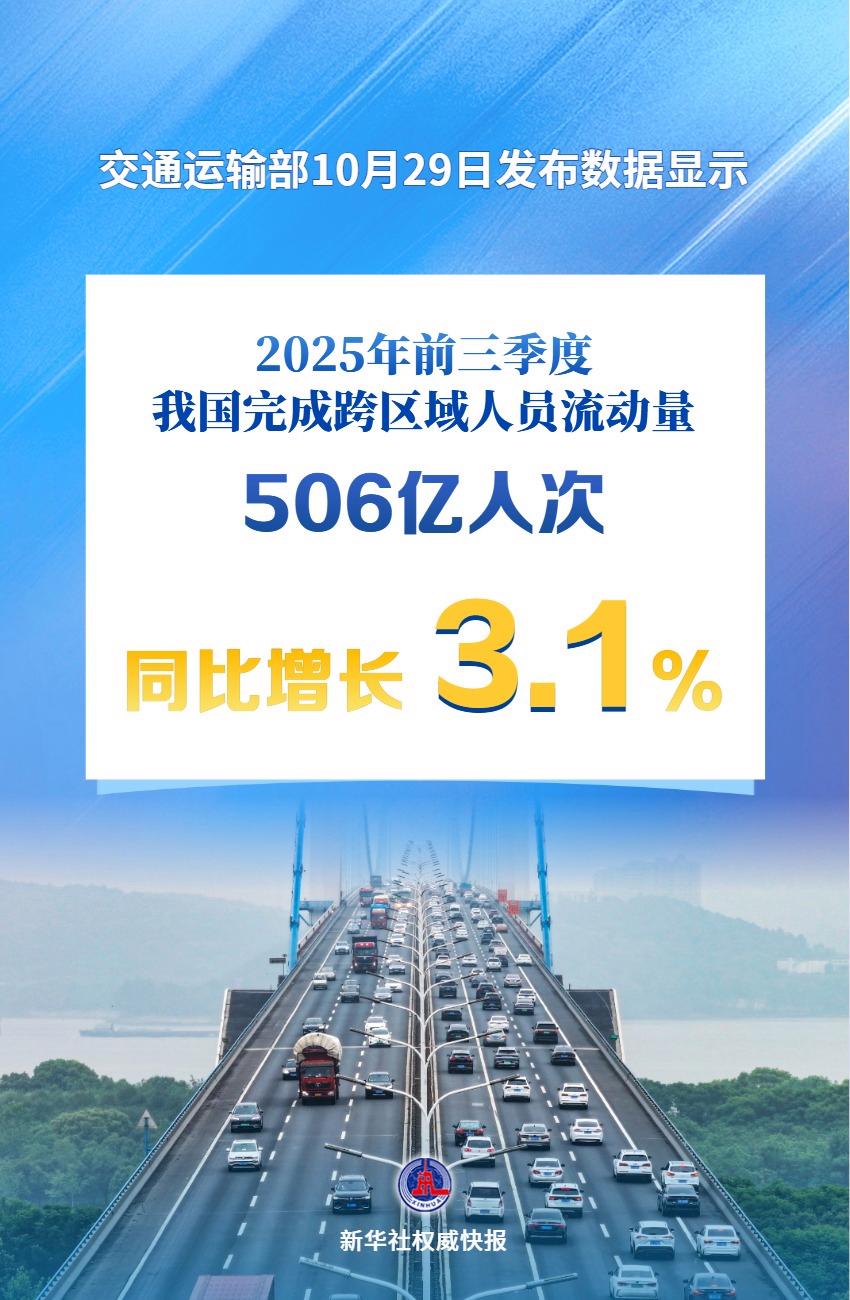
超500亿人次!前三季度我国人员流动量持续增加
Xin Hua She· 2025-10-29 02:11
Group 1 - The Ministry of Transport reported that by the third quarter of 2025, the cross-regional passenger flow in China reached 50.6 billion trips, reflecting a year-on-year growth of 3.1% [1][2] - The total volume of freight transport reached 4.325 billion tons, with a year-on-year increase of 3.89% [2] - Port cargo throughput amounted to 1.357 billion tons, showing a year-on-year growth of 4.6% [2] - Fixed asset investment in transportation reached 2.6 trillion yuan [2] Group 2 - The overall economic operation of the transportation industry is stable, with new growth drivers accelerating and resilience in development being continuously demonstrated [2] - The industry is exhibiting a trend of overall stability and progress [2]

视频丨北极深潜、枢纽封顶、热脉贯通 中国工程再突破
Huan Qiu Wang Zi Xun· 2025-10-28 23:58
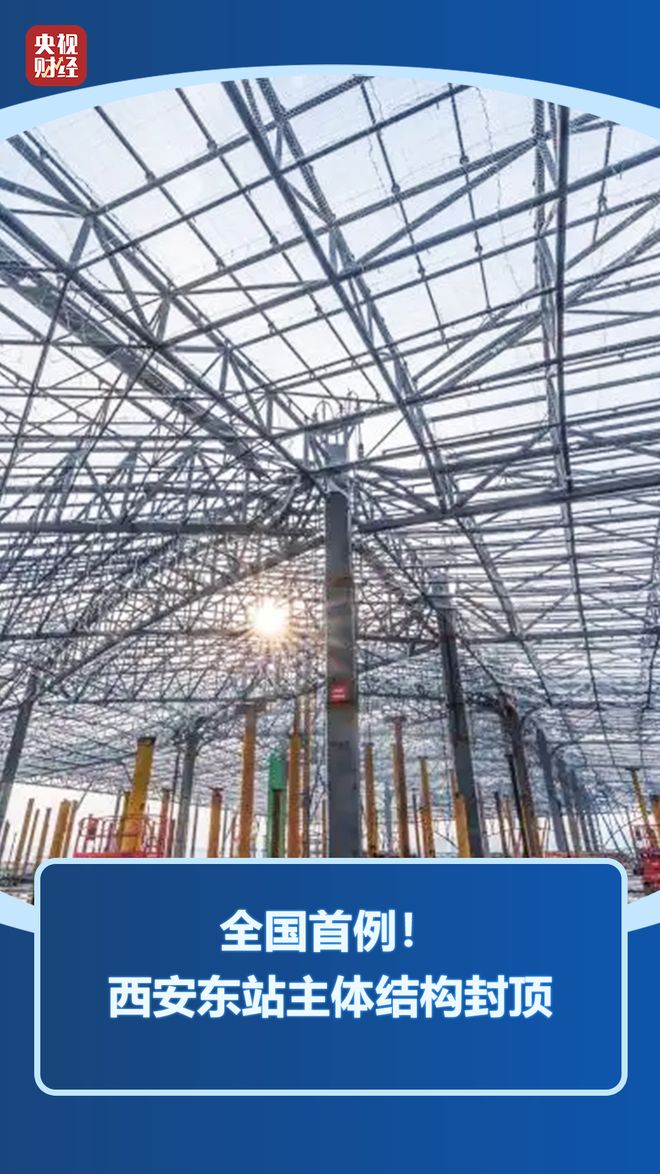
Group 1: Major Achievements in Infrastructure and Exploration - China has achieved historic breakthroughs in major engineering and frontier exploration, including the world's only continuous manned deep-sea diving in the Arctic, the completion of the main structure of Xi'an East Station, and the connection of the longest long-distance heating pipeline in the country [1] Group 2: Arctic Manned Deep-Sea Diving - The Arctic manned deep-sea diving team successfully completed 43 diving missions using the "Fendouzhe" manned submersible, in collaboration with the "Jiaolong" submersible, marking a new model of underwater cooperative operations [2][4] - The team conducted the first manned deep-sea scientific exploration in the Arctic ice zone, reaching a maximum depth of 5,277 meters, and collected valuable samples and observation data to support research on rapid climate change in the Arctic [4] Group 3: Xi'an East Station - The main structure of Xi'an East Station, a key project in China's 14th Five-Year Plan, has been completed, covering a total area of 394,000 square meters and featuring 13 platforms and 27 tracks [5][8] - The station is expected to handle over 36.5 million passengers annually, significantly alleviating passenger flow pressure in the Xi'an railway hub [5] Group 4: Long-Distance Heating Pipeline - The "Liaohuo into Jinan" project, which utilizes waste heat from a power plant in Liaocheng to provide heating for Jinan, has achieved full-line connection, with a total length of 110 kilometers and a diameter of 1.6 meters, making it the longest and largest heating pipeline in China [9][12] - The project is expected to reduce coal consumption by 1.2989 million tons and cut carbon dioxide emissions by 3.564 million tons each heating season, equivalent to the carbon sequestration of four Saihanba forest farms in a year [12]
盘中突发!A股跳水4000点得而复失,盘后大利好,十五五规划建议
Sou Hu Cai Jing· 2025-10-28 23:49
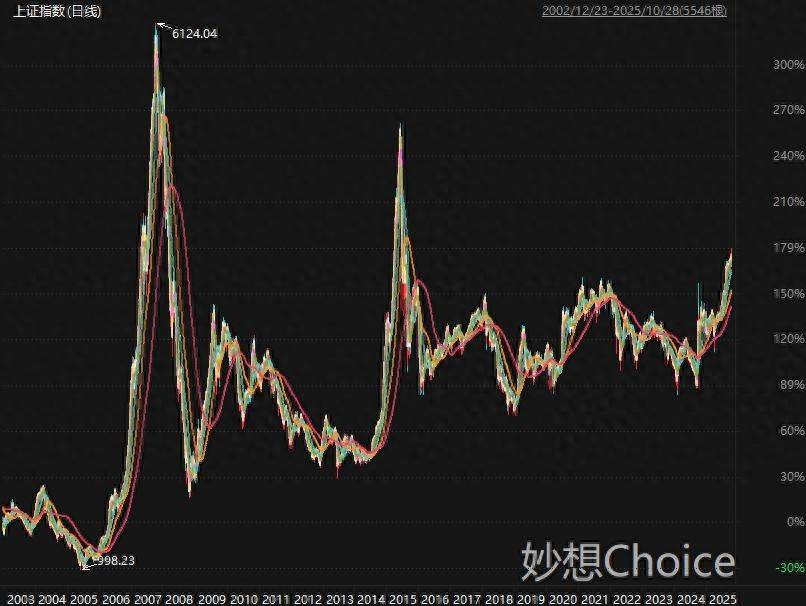
Group 1 - The People's Bank of China (PBOC) has announced the resumption of government bond trading, which is expected to release liquidity and benefit both the stock and bond markets [5] - Following the announcement, the bond market saw an overall increase, with the 30-year main contract rising by 0.55%, the 10-year main contract by 0.25%, the 5-year main contract by 0.15%, and the 2-year main contract by 0.08% [5] - The A-share market opened lower but later surged, with the Shanghai Composite Index breaking the 4000-point mark for the first time in 10 years, although trading volume was insufficient, indicating a lack of strong buying momentum [1][3] Group 2 - Compared to previous years (2007 and 2015), the current market atmosphere appears less enthusiastic, primarily driven by technology stocks, while other sectors, including the securities sector, have shown weak performance [3] - The current 4000-point level in the A-share market is viewed as a continuation of the bull market rather than a peak, as the domestic economy has not fully recovered and the Federal Reserve's interest rate cuts are just beginning [3] - The upcoming earnings reports from major cloud companies in the U.S. are anticipated to be critical for further market support [3] Group 3 - In the stock market, certain sectors such as defense, transportation, textiles, and computers have shown gains, while sectors like non-ferrous metals, beauty care, and steel have experienced declines [12] - The storage sector saw a significant drop, attributed to a recent price increase, while major PCB companies like Shenghong Technology reported disappointing third-quarter results, leading to a slight market correction [9][12] - Public fund reports indicate a significant increase in holdings in sectors such as electronics, communication, and new energy, with electronic sector holdings exceeding 20%, suggesting potential overcrowding risks [9]


浙商早知道-20251029
ZHESHANG SECURITIES· 2025-10-28 23:33
Market Overview - On October 28, the Shanghai Composite Index fell by 0.22%, the CSI 300 decreased by 0.51%, the STAR Market 50 dropped by 0.84%, the CSI 1000 declined by 0.22%, the ChiNext Index decreased by 0.15%, and the Hang Seng Index fell by 0.33% [3][4] - The best-performing sectors on October 28 were Comprehensive (+2.06%), Defense and Military Industry (+1.07%), Transportation (+0.24%), Textile and Apparel (+0.19%), and Computer (+0.13%). The worst-performing sectors were Non-ferrous Metals (-2.72%), Beauty and Personal Care (-1.51%), Steel (-1.35%), Construction Decoration (-0.88%), and Coal (-0.79%) [3][4] - The total trading volume of the A-share market on October 28 was 21,653 billion, with a net inflow of 2.258 billion HKD from southbound funds [3][4] Key Insights - From January to September 2025, the profit growth of industrial enterprises maintained a recovery trend, primarily influenced by a low base effect. The impact of "anti-involution" remains to be observed, with its sustainability and intensity dependent on substantial supply-side policy effects. Overall, "anti-involution" may support a moderate recovery in industrial profits, but its strength is yet to be determined [5] - Industrial profits are significantly affected by base effects, indicating that the current readings may not fully reflect underlying economic conditions [5] - High-tech manufacturing has emerged as a crucial driver for the high-quality development of industrial enterprises [5]
华尔街见闻早餐FM-Radio | 2025年10月29日
Hua Er Jie Jian Wen· 2025-10-28 23:29
Market Overview - US stock indices reached new highs, driven primarily by a few tech giants like Microsoft, Nvidia, and Apple, while most other stocks declined [3] - Microsoft announced a new partnership with OpenAI, leading to a 2% increase in its stock price, regaining a market cap of $4 trillion [3] - Nvidia's CEO expressed optimism about AI, resulting in a nearly 5% surge in its stock price, pushing its market cap close to $5 trillion [3] - Gold prices fell below $4,000 per ounce, marking a continuation of a downward trend, while silver experienced a V-shaped recovery [3][10] - The Chinese stock market saw the Shanghai Composite Index briefly surpass 4,000 points before closing down 0.2% [3] Key Developments - The "15th Five-Year Plan" emphasizes the need for breakthroughs in key technologies and the implementation of "AI+" initiatives, with a strong focus on finance [5][14] - The US private sector added an average of 14,000 jobs per week as of October 11, indicating a modest employment growth [6] - OpenAI transitioned to a profit-oriented organization, securing a $250 billion Azure service order from Microsoft, which holds a 27% stake in OpenAI [18] - Nvidia plans a $1 billion equity investment in Nokia to collaborate on AI and 6G networks, while also launching several partnerships in various sectors [17][21] Company Earnings - China Bank reported a return to profit growth in Q3, driven by non-interest income [26] - Ping An Insurance's Q3 net profit surged by 45.4%, showing accelerating growth [26] - ZTE's Q3 revenue increased by 5.11%, but net profit fell by 87.84% [27] - Sunny Solar's Q3 revenue grew by 20.83%, with a 57.04% increase in net profit [27] Industry Trends - The gold market is experiencing significant fluctuations, with a notable drop in ETF holdings, indicating reduced demand for safe-haven assets [15] - The AI sector is facing scrutiny, with concerns about potential bubbles as interest rates are expected to rise [21] - The gas turbine supply shortage is impacting the expansion of AI data centers, leading to increased demand for modified jet engines [38] Upcoming Events - The Federal Reserve is set to announce its interest rate decision, with market participants closely watching for any changes in monetary policy [39] - Major companies including Microsoft, Alphabet, Meta, Caterpillar, and Boeing are scheduled to release their earnings reports [40]




转债市场日度跟踪20251028-20251028
Huachuang Securities· 2025-10-28 14:45
Report Summary 1. Report Industry Investment Rating No information about the industry investment rating is provided in the report. 2. Core Viewpoints - The convertible bond market experienced a volume - shrinking decline on October 28, 2025, with compressed valuations. The CSI Convertible Bond Index decreased by 0.24% compared to the previous day, and the trading sentiment in the convertible bond market weakened. The total convertible bond market turnover was 57.096 billion yuan, a 14.27% decrease from the previous day [1]. - The convertible bond price center declined, and the proportion of high - priced bonds decreased. The overall weighted average closing price of convertible bonds was 133.05 yuan, a 0.25% decrease from the previous day. The proportion of bonds with a closing price above 130 yuan decreased by 2.07 percentage points [2]. - In the industry performance, more than half of the underlying stock industry indices declined. Among A - share markets, the top three declining industries were non - ferrous metals (-2.72%), beauty care (-1.51%), and steel (-1.35%); the top three rising industries were national defense and military industry (+1.07%), transportation (+0.24%), and textile and apparel (+0.19%) [3]. 3. Summary by Relevant Catalogs Market Main Index Performance - The CSI Convertible Bond Index closed at 484.03, down 0.24% for the day, up 2.01% for the week, up 1.05% for the month, and up 16.76% since the beginning of 2025. Other major indices also showed different degrees of decline or increase [7]. - In terms of market style, large - cap value stocks were relatively dominant. Large - cap growth decreased by 0.26%, large - cap value decreased by 0.25%, mid - cap growth decreased by 0.97%, mid - cap value decreased by 1.76%, small - cap growth decreased by 0.29%, and small - cap value decreased by 0.61% [1][8]. Market Fund Performance - The trading volume in the convertible bond market decreased, with a turnover of 57.096 billion yuan, a 14.27% decrease from the previous day. The total turnover of the Wind All - A index was 2.165307 trillion yuan, an 8.12% decrease from the previous day. The net outflow of main funds from the Shanghai and Shenzhen stock markets was 34.079 billion yuan, and the yield of the 10 - year treasury bond decreased by 2.44 basis points to 1.82% [1]. Convertible Bond Price and Valuation - The convertible bond price center declined. The overall weighted average closing price was 133.05 yuan, a 0.25% decrease from the previous day. The price median was 132.09 yuan, a 0.44% decrease from the previous day. The proportion of high - priced bonds above 130 yuan decreased by 2.07 percentage points [2]. - The convertible bond valuation was compressed. The fitted conversion premium rate of 100 - yuan par value was 30.23%, a 0.55 - percentage - point decrease from the previous day. The overall weighted par value was 101.66 yuan, a 0.22% decrease from the previous day [2]. Industry Performance - In the underlying stock market, 21 industries declined. The top three declining industries were non - ferrous metals (-2.72%), beauty care (-1.51%), and steel (-1.35%); the top three rising industries were national defense and military industry (+1.07%), transportation (+0.24%), and textile and apparel (+0.19%) [3]. - In the convertible bond market, 21 industries declined. The top three declining industries were non - ferrous metals (-1.97%), steel (-1.17%), and household appliances (-1.05%); the top three rising industries were building decoration (+0.14%), machinery and equipment (+0.14%), and national defense and military industry (+0.13%) [3]. - In terms of different sectors, the closing price of the large - cycle sector decreased by 0.61%, manufacturing decreased by 0.28%, technology decreased by 0.16%, large - consumption decreased by 0.30%, and large - finance decreased by 0.16%. The conversion premium rate, conversion value, and pure bond premium rate of each sector also showed different changes [3]. Industry Rotation - The national defense and military industry, transportation, and textile and apparel industries led the rise in industry rotation. The national defense and military industry had a daily increase of 1.07% in the underlying stock market and 0.13% in the convertible bond market; transportation had a 0.24% increase in the underlying stock market and a -0.34% decrease in the convertible bond market; textile and apparel had a 0.19% increase in the underlying stock market and a -0.04% decrease in the convertible bond market [61].
10月28日上证央企(000042)指数跌0.18%,成份股中金黄金(600489)领跌
Sou Hu Cai Jing· 2025-10-28 10:01
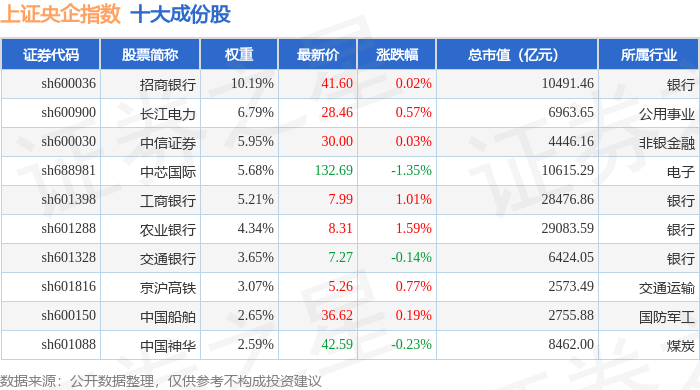
Market Overview - The Shanghai Central Enterprise Index (000042) closed at 1852.7 points, down 0.18%, with a trading volume of 79.123 billion yuan and a turnover rate of 0.33% [1] - Among the index constituents, 16 stocks rose while 33 fell, with AVIC Shenyang Aircraft (中航沈飞) leading the gainers at 1.92% and Zhongjin Gold (中金黄金) leading the decliners at 3.49% [1] Key Constituents - The top ten constituents of the Shanghai Central Enterprise Index are as follows: - China Merchants Bank (招商银行): 10.19% weight, latest price 41.60 yuan, market cap 1,049.146 billion yuan [1] - Yangtze Power (长江电力): 6.79% weight, latest price 28.46 yuan, market cap 696.365 billion yuan [1] - CITIC Securities (中信证券): 5.95% weight, latest price 30.00 yuan, market cap 444.616 billion yuan [1] - SMIC (中芯国际): 5.68% weight, latest price 132.69 yuan, market cap 1,061.529 billion yuan [1] - Industrial and Commercial Bank of China (工商银行): 5.21% weight, latest price 7.99 yuan, market cap 28,476.86 billion yuan [1] - Agricultural Bank of China (农业银行): 4.34% weight, latest price 8.31 yuan, market cap 29,083.59 billion yuan [1] - Bank of Communications (交通银行): 3.65% weight, latest price 7.27 yuan, market cap 6,424.05 billion yuan [1] - Beijing-Shanghai High-Speed Railway (京沪高铁): 3.07% weight, latest price 5.26 yuan, market cap 257.349 billion yuan [1] - China Shipbuilding Industry (中国船舶): 2.65% weight, latest price 36.62 yuan, market cap 275.588 billion yuan [1] - China Shenhua Energy (中国神华): 2.59% weight, latest price 42.59 yuan, market cap 846.200 billion yuan [1] Capital Flow - The net outflow of main funds from the index constituents totaled 3.92 billion yuan, while retail investors saw a net inflow of 2.021 billion yuan [1] - The detailed capital flow for key stocks includes: - AVIC Shenyang Aircraft: Main funds net inflow of 284 million yuan [2] - Yangtze Power: Main funds net inflow of 231 million yuan [2] - Agricultural Bank of China: Main funds net inflow of 127 million yuan [2] - Industrial and Commercial Bank of China: Main funds net inflow of 86 million yuan [2] - China Petroleum (中国石油): Main funds net inflow of 6.5195 million yuan [2] ETF Information - The Gold Stock ETF (product code: 159562) tracks the CSI Hong Kong-Shanghai Gold Industry Index, with a recent five-day change of -0.55% and a P/E ratio of 24.55 times [4] - The latest share count is 1.26 billion, a decrease of 32 million shares, with a net inflow of main funds amounting to 7.874 million yuan [4]





交通运输行业资金流出榜:招商轮船等6股净流出资金超5000万元
Zheng Quan Shi Bao Wang· 2025-10-28 08:40
Core Insights - The transportation sector experienced a net outflow of funds amounting to 3.58 billion yuan on October 28, with 126 stocks in the sector, of which 72 rose and 45 fell [1] Fund Flow Summary - The top three stocks with the highest net inflow of funds were Qin Port Co., Ltd. (1.74 billion yuan), Xiamen Port Authority (1.69 billion yuan), and Haitong Development (47.49 million yuan) [1] - The stocks with the highest net outflow of funds included China Merchants Energy (95.87 million yuan), Daqin Railway (90.14 million yuan), and Ganyue Expressway (83.35 million yuan) [2] Performance Summary - The transportation sector rose by 0.24% on the same day, with the overall market index (Shanghai Composite Index) declining by 0.22% [1] - The top performers in terms of daily price increase included Qin Port Co., Ltd. (10.03%), Xiamen Port Authority (10.00%), and Haitong Development (10.04%) [1]





奋进“十五五” 续写新篇章|“人享其行、物畅其流”加快实现 重塑区域经济格局
Yang Shi Wang· 2025-10-28 03:21
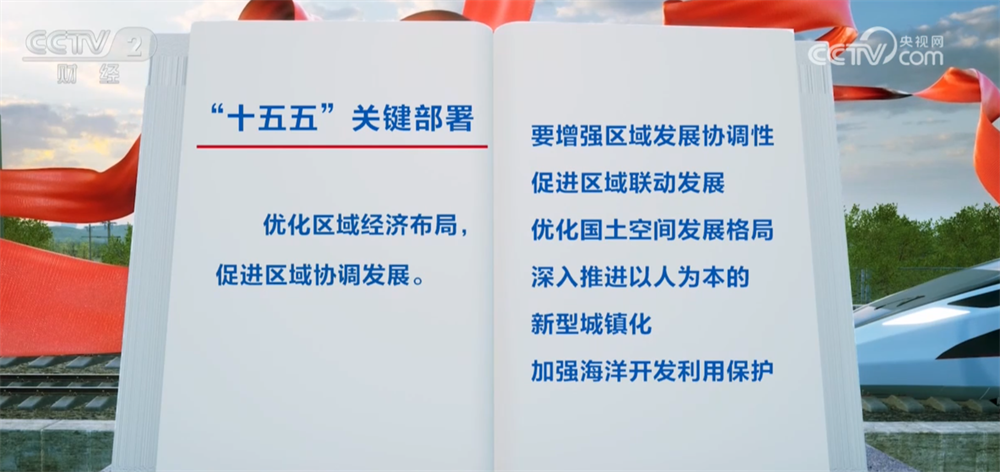
Core Points - The article emphasizes the importance of promoting regional coordinated development as a crucial support for achieving high-quality development and advancing Chinese-style modernization [1] - The "14th Five-Year Plan" suggests optimizing regional economic layout and promoting coordinated development [1] Group 1: Regional Development Strategies - The article discusses the integration of various strategies such as regional coordinated development, major regional strategies, functional area strategies, and new urbanization strategies to enhance productivity layout and leverage key regional growth [2] - It highlights the need to enhance regional development coordination, promote inter-regional development, and optimize land spatial development patterns [2] Group 2: Infrastructure Development - The completion of the Urumqi-Weili Highway is set to transform the economic landscape of Xinjiang by significantly reducing travel time between Urumqi and Korla from 7 hours to 3 hours [3] - The highway, with a total investment of 46.7 billion and a length of 319.7 kilometers, is nearing completion, with the last major project being the Victory Tunnel [3][5] - The construction of the highway has faced unprecedented challenges due to high altitude and harsh conditions, but it is expected to be operational by the end of this year [5] Group 3: Economic Impact - The new highway is anticipated to stimulate local economies, with businesses such as dairy production and hospitality already preparing for increased traffic and economic activity [9] - The article notes that the national comprehensive transportation network has connected over 80% of county-level administrative regions, supporting approximately 90% of the economy and population [11] - The development of advanced transportation networks is expected to significantly enhance the flow of goods and people, thereby supporting sustained economic growth [11]
热点思考 | 投资“失速”的真相?(申万宏观·赵伟团队)
申万宏源研究· 2025-10-28 01:36
Group 1 - The core viewpoint of the article highlights a significant decline in fixed asset investment growth across various sectors, reaching historical lows in the second half of 2025, with a notable drop of 9.1 percentage points to -6.5% by September, marking the lowest point in five years [1][10][19] - Investment in broad infrastructure, services, real estate, and manufacturing has all seen substantial declines, with respective drops of 13.1, 11.1, 9.3, and 9.1 percentage points, leading to negative growth rates of -3.3%, -6.6%, -21.2%, and -1.5% [1][10][19] - The decline in investment is attributed to several factors, including accelerated debt resolution efforts that have occupied investment funds, with over half of the investment decline explained by this issue [2][29] Group 2 - The construction and installation investment has decreased significantly, contributing to the overall decline in fixed asset investment, with a drop of 16.4 percentage points to -15.7% by September [2][19] - The eastern region has experienced a more pronounced decline in construction and installation investment compared to central and western regions, with cumulative declines of 3.9, 3, and 2.3 percentage points respectively [2][19] - The article identifies that the push for debt resolution has led to a requirement for enterprises to expedite the repayment of debts, further impacting investment negatively [3][40] Group 3 - The lack of new projects is also affecting current investment levels, with renovation projects maintaining high growth while new construction investments have significantly declined [4][44] - The article notes that the yield rates for investments in transportation, public utilities, and environmental management have fallen into negative territory, indicating poor returns on investment in these sectors [4][44] - Recent fiscal measures have been implemented to alleviate the pressure on investment caused by debt resolution, including the allocation of 500 billion yuan for local projects aimed at addressing debt issues [6][66] Group 4 - The article discusses the potential for policy optimization to improve corporate financial health, as high accounts receivable ratios have been noted, particularly among private enterprises [5][53] - The reduction in accounts receivable growth rates for both joint-stock and private enterprises suggests a potential recovery in cash flow, which could support investment revitalization [5][59] - Historical precedents indicate that effective debt repayment policies can lead to significant improvements in corporate investment activity, as seen in past government initiatives [5][60]