奢侈品

Search documents
上海LV巨轮爆火!周围星巴克限流,奶茶店爆单……未来将拆除?
Bei Jing Shang Bao· 2025-06-30 12:20
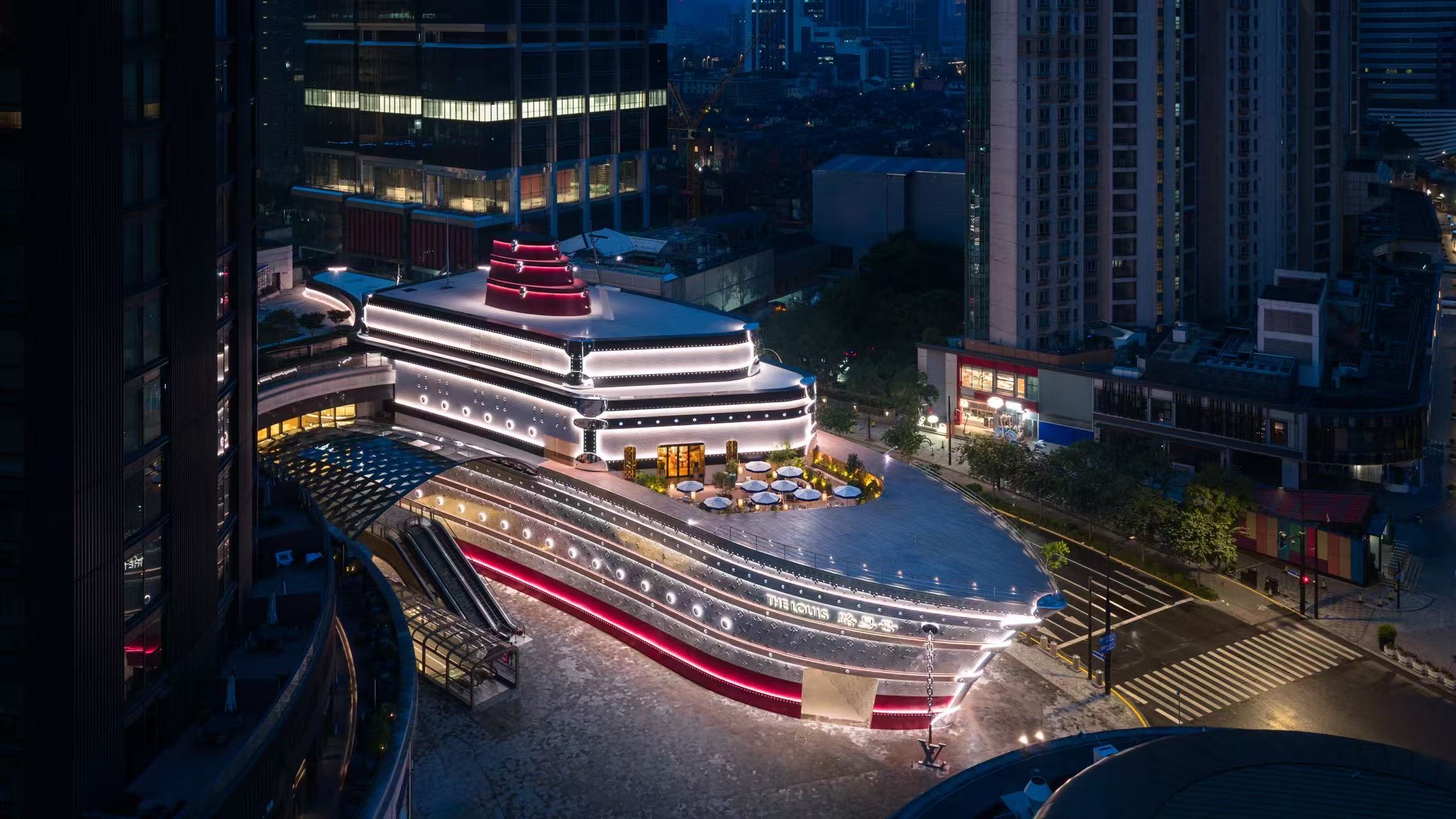
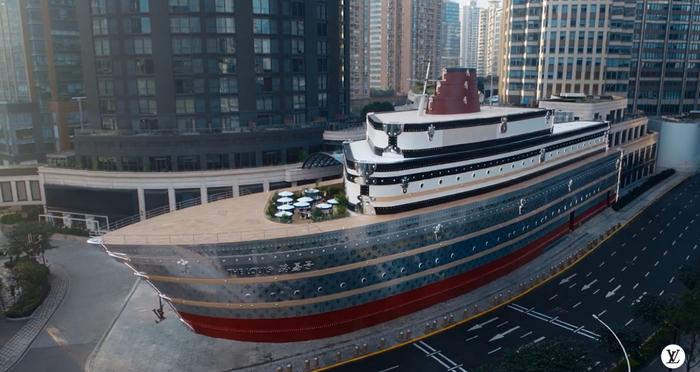
Group 1 - LVMH's Q1 2025 report shows a 3% year-on-year decline in overall revenue to €20.311 billion [2][8] - The fashion and leather goods segment, including LV and Dior, experienced a 5% revenue drop to €10.108 billion [8] - The Asia-Pacific market (excluding Japan) saw an 11% revenue decline, significantly worse than the expected 4.69% drop, reducing its contribution to total revenue from 33% in 2024 to 30% in 2025 [8] Group 2 - The "Louis Vuitton Cruise Ship" project in Shanghai has attracted significant foot traffic, with nearby Starbucks also experiencing high customer volume [2][5] - The "Louis Vuitton Cruise Ship" features a total area of 1,600 square meters and includes a three-level experiential space with exhibitions and a boutique [5] - Despite rumors of the "Cruise Ship" being a construction barrier, LVMH confirmed it is a fully operational store with no current plans for removal [6][8] Group 3 - LVMH's management indicated that Louis Vuitton's revenue performance is above the group's average, justifying continued investments [9] - The overall market performance varied, with only the European market showing a 2% growth while other major markets faced declines [8] - The U.S. market showed a slight overall decline, despite some segments performing well, with organic revenue down 3%, below analyst expectations [8]

奢侈品不香了?前世界首富遭遇“史上最大危机”
Hu Xiu· 2025-06-30 09:04
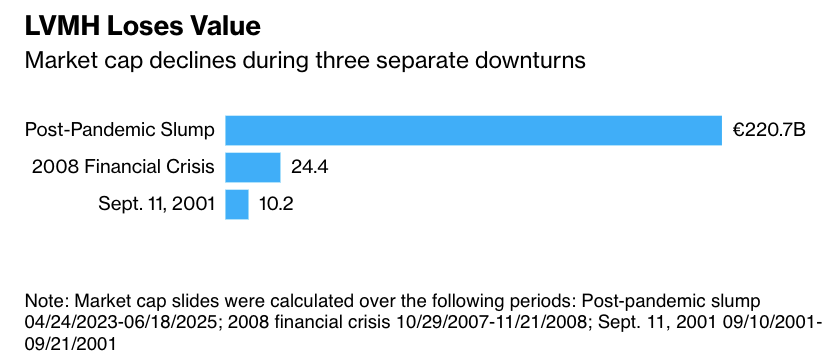
Core Insights - LVMH is facing its most severe industry downturn in 36 years under the leadership of Bernard Arnault, with significant challenges impacting its luxury brand empire [2][3][5] Group 1: Industry Challenges - The personal luxury goods market, valued at €364 billion, is rapidly declining, revealing vulnerabilities in LVMH compared to more resilient competitors like Hermès [3][5] - The crisis is exacerbated by LVMH's past acquisition spree, which has led to management complexities and investor concerns regarding succession planning [4][11] Group 2: Financial Performance - LVMH's stock price has nearly halved since its peak in April 2023, resulting in a market value loss of approximately €221 billion [5] - The company has lost its title as France's most valuable company to Hermès, highlighting the shift in market dynamics [5] Group 3: Brand Performance - The wine and spirits division, particularly Moët Hennessy, is experiencing significant challenges, including a CEO dismissal and declining sales, leading to layoffs [16][26] - Dior, LVMH's second-largest fashion brand, has seen a decline in growth, prompting a leadership change to revitalize its performance [20][22] Group 4: Strategic Moves - LVMH has begun divesting underperforming brands, such as Off-White and Stella McCartney, and is expected to continue evaluating its assets, particularly in the wine and spirits sector [15][25] - The company is exploring potential restructuring and strategic realignment to address the current market challenges [10][14] Group 5: Succession Planning - Bernard Arnault's family holds significant control over LVMH, with a focus on ensuring the family's continued influence in the company's future [19][30] - The lack of a clear succession plan raises concerns among investors, despite the establishment of a mid-term succession strategy [36][37]
中产滑落,奢侈品在中国卖不动了?|氪金·大消费
36氪· 2025-06-30 08:40
Core Viewpoint - The luxury goods market is experiencing a downturn, particularly in China, as consumer behavior shifts towards more conservative spending due to economic instability and changing perceptions of value [5][10][32]. Group 1: Market Performance - Customer traffic at luxury retail locations, such as Beijing SKP, has decreased significantly, with reports indicating a two-thirds drop compared to three years ago [3][4]. - Major luxury brands like Hermès and LVMH have reported disappointing financial results, with Hermès achieving a revenue of €4.13 billion in Q1 2025, a 7% year-on-year increase but below market expectations [6][8]. - LVMH's revenue fell by 3% to €20.3 billion, while Kering's revenue dropped by 14% to €3.883 billion, with the Asia-Pacific market seeing a 25% decline [8][9]. Group 2: Consumer Behavior - The middle class, particularly represented by wage earners, is increasingly cautious, with many former luxury consumers now opting to only look rather than buy [14][16]. - A survey indicated that 65.95% of previous luxury consumers have reduced their purchasing frequency, with 81.25% citing a shift in consumption mindset towards value for money [19][20]. - Consumers are also more inclined to purchase luxury goods abroad due to lower taxes and favorable exchange rates, leading to a decline in domestic luxury spending [21][22]. Group 3: Brand Strategy and Market Adaptation - Luxury brands are facing challenges in maintaining their pricing strategies, as continuous price increases have led to a loss of entry-level consumers [25][26]. - Despite the challenges, brands like LVMH and Hermès continue to emphasize price increases, with LVMH indicating a 2% to 3% annual price increase potential [26][27]. - The rise of local brands and affordable luxury options, such as gold jewelry, is drawing consumers away from traditional luxury brands, prompting a need for luxury brands to adapt their strategies [27][30]. Group 4: Future Directions - To attract younger consumers, luxury brands are diversifying their product offerings, including entering the beauty market and collaborating with popular IPs [31][32]. - The shift in consumer preferences towards value and functionality suggests that luxury brands must rethink their marketing and product strategies to sustain growth in a changing market landscape [32].
LV巨轮直冲对面星巴克海妖logo、开业请大师烧香?围观上海滩「风水大战」成打工人新乐子
3 6 Ke· 2025-06-30 08:16
Core Viewpoint - The opening of Louis Vuitton's flagship store "Louis Ship" in Shanghai has sparked a unique public interest due to its architectural design and its perceived feng shui implications, particularly its alignment with the nearby Starbucks [1][4][6]. Group 1: Louis Vuitton's "Louis Ship" - The "Louis Ship" measures 114.5 meters in length, 30 meters in height, and has a total area of 1,600 square meters, featuring three levels dedicated to exhibitions, a boutique, and a café [7][10]. - The store is expected to remain in Shanghai's Jing'an District for at least two years, attracting significant public attention and foot traffic since its unveiling [7][12]. Group 2: Starbucks' Response - Starbucks' flagship store, which opened in 2017, is the largest in the world at 2,700 square meters and features an immersive coffee experience [14]. - In response to the feng shui debate, Starbucks engaged in promotional activities and social media campaigns to leverage the increased attention, including a "Happy Creation" event [21][23]. Group 3: Feng Shui Debate - The pointed bow of the "Louis Ship" is said to create a "sharp angle kill" effect directed at Starbucks, which has led to discussions about the potential negative impacts of such feng shui [4][14][16]. - Starbucks' logo, featuring the Siren from Greek mythology, is humorously positioned as a protective figure against the "Louis Ship," adding to the narrative of competition between the two brands [18][21]. Group 4: Public Engagement and Marketing - The opening of the "Louis Ship" led to a surge in visitors at Starbucks, with reports of long queues and increased customer traffic, suggesting a mutually beneficial outcome for both brands [23][24]. - Social media engagement included a photo editing competition where users creatively altered images of the "Louis Ship" and Starbucks, further enhancing brand visibility [24][25].

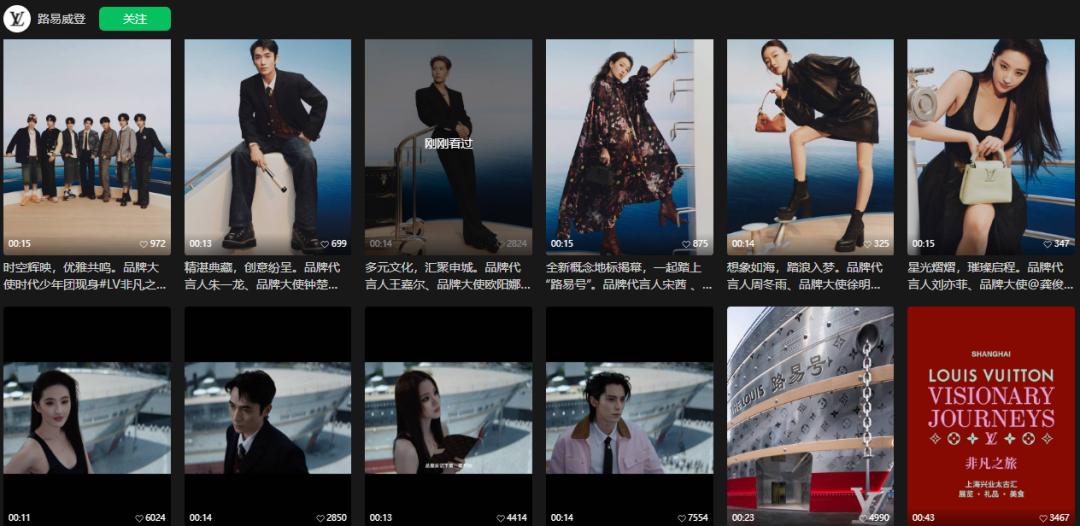
2025年奢侈品行业网络营销监测报告
艾瑞咨询· 2025-06-30 03:10
Industry Trends - The personal luxury goods market in mainland China has shown fluctuations over the past decade but is overall on a growth trajectory, with expectations to become the largest luxury market globally by 2030, capturing 25% of the market share, surpassing the US and Europe [3][8] - Consumer preferences are shifting from "symbolic consumption" to "lifestyle and cultural resonance," emphasizing sustainable consumption and technology-driven experiential innovations as key trends [1][3] Advertising Investment Trends - In January-February 2025, the luxury goods industry's online advertising investment index experienced a mild year-on-year growth of 1.2%, reaching a near four-year peak during this period [8][11] - Advertising investments are closely linked to seasonal peaks, with significant increases observed in January, May, and September, aligning with holiday shopping spikes [8][11] Advertising Strategies - The advertising landscape is evolving, with a notable shift towards OTT platforms, while mobile remains the primary advertising terminal; video platforms account for 67.7% of the advertising investment [18][21] - Full-screen and video pre-roll ads are favored, comprising over 80% of the advertising formats used in the industry [18][21] Creative Trends - Local celebrity endorsements are crucial for brands to expand their audience, with an increasing trend of collaboration with sports stars [21][24] - Seasonal marketing strategies focus on limited edition packaging and cultural symbols to enhance product appeal during peak sales periods like New Year and Valentine's Day [24][27] Marketing Observations - The luxury goods market is witnessing a shift towards a more rational and younger consumer base, with demands for quality, culture, and personalized experiences [2][33] - Brands are encouraged to adopt differentiated marketing strategies based on user segmentation to effectively meet diverse consumer needs and gain competitive advantages [2][33] Multi-Channel Marketing Integration - The luxury industry must balance short-term traffic acquisition with long-term brand value, utilizing diverse marketing methods to create an integrated marketing ecosystem [36][39] - Online and offline channels are increasingly merging, with brands focusing on precise targeting and enhanced consumer experiences to drive sales and brand loyalty [36][39]


兰博基尼家族“继承大战”;LV“巨轮”进上海|二姨看时尚
2 1 Shi Ji Jing Ji Bao Dao· 2025-06-30 00:06
Group 1: Luxury Goods Industry - Galeries Lafayette sold its BHV men's building in Paris for €50 million as part of an asset optimization strategy to enhance the competitiveness of its core store [2] - Bentley launched a high-end picnic series priced at $463, aiming to extend its luxury brand into lifestyle products [3] - Louis Vuitton introduced a luxury flagship store on a cruise ship in Shanghai, emphasizing unique experiences to attract young consumers [11] - Prada announced the departure of CEO Patrizio Bertelli after 18 months, reflecting concerns over performance amid increasing competition in the luxury market [12] Group 2: Retail and E-commerce - Sasa International reported a reduction in its mainland store count to 9, with online sales accounting for 80% of total sales, but still faced a loss of HK$15 million [7] - Nike's revenue in Greater China declined by 13% year-on-year, highlighting challenges in regaining consumer favor against local brands [10] - Pop Mart's sales in Southeast Asia increased fivefold after partnering with Lazada, indicating successful international expansion efforts [5] Group 3: Market Trends and Strategies - Unilever's acquisition of the American natural personal care brand Dr. Squatch for an estimated $1 billion is part of its strategy to expand in the high-end natural personal care market [4] - The luxury goods sector is experiencing a balance between maintaining high-end appeal and catering to younger consumers, as seen in various strategic moves by brands [2][11]
中产滑落,奢侈品在中国卖不动了?
3 6 Ke· 2025-06-27 09:26
Core Viewpoint - The luxury goods market in China is experiencing a significant downturn, primarily due to the decline of the middle class and changing consumer behavior, leading to reduced sales and cautious expansion strategies by luxury brands [1][4][6]. Market Performance - Customer traffic at Beijing SKP has decreased by two-thirds compared to three years ago, with a sharp decline noted at the end of last year [1]. - Hermès reported a first-quarter revenue of €4.13 billion, a 7% year-on-year increase, but below market expectations of €4.16 billion [2]. - LVMH's first-quarter revenue fell by 3% to €20.3 billion, with declines across nearly all business segments [3]. - Kering Group's revenue dropped by 14% to €3.883 billion, with a 25% decline in the Asia-Pacific market [3]. Consumer Behavior - The middle class, particularly represented by wage earners, is increasingly cautious, with many former luxury consumers now only purchasing classic items or refraining from buying altogether [4][6]. - A survey indicated that 65.95% of previous luxury consumers have reduced their purchasing frequency, with 81.25% citing a shift in consumption mindset towards perceived value [6]. Pricing Strategies - Luxury brands' traditional strategy of price increases to filter consumers is losing effectiveness, as rising prices exceed consumer psychological thresholds [5][6]. - Despite the downturn, LVMH and Hermès continue to emphasize price increases, with LVMH indicating a 2% to 3% annual price increase potential [8]. Market Dynamics - The rise of gold and light luxury brands is diverting consumers from traditional luxury brands, with significant interest in local brands noted [8][10]. - Coach's parent company reported a 7% increase in sales to $1.584 billion, with a 45% rise in net profit, indicating a shift towards more affordable luxury options [10]. Future Trends - By 2030, millennials are expected to contribute over half of luxury goods purchasing power, prompting brands to adapt their designs and marketing strategies to attract younger consumers [11]. - Luxury brands are increasingly exploring collaborations with popular IPs and expanding into beauty products to engage younger demographics [11].
LV巨轮驶来,首发经济为何青睐上海?
第一财经· 2025-06-27 06:07
Core Viewpoint - The article highlights the significance of Shanghai as a hub for international brands, showcasing the recent launch of Louis Vuitton's "Louis Ship" as a symbol of the city's cultural and economic vibrancy, and its ability to attract new consumption models and experiences [1][2][3]. Group 1: Investment and Infrastructure - The "Louis Ship" project has a substantial investment scale, covering an area of 1,600 square meters, featuring a three-level experiential space that combines exhibitions, a café, and retail [1]. - Shanghai's transportation infrastructure is well-developed, with domestic and international flights, railways, and road networks, facilitating the influx of tourists. In 2024, the city is expected to receive over 6.7 million inbound tourists, a year-on-year increase of 84% [3]. - The local government has created a favorable business environment, exemplified by the successful hosting of over 100 themed events in Jing'an District, attracting more than 20 million visitors and generating an economic contribution of 14.3 billion yuan [3]. Group 2: Market Dynamics and Consumer Behavior - The internationalization of Shanghai attracts global brands due to the high acceptance of new business models among consumers, particularly among Generation Z and millennials who value cultural and emotional connections over mere product functionality [2]. - The presence of over 2,000 well-known brands in the Nanjing West Road area, with more than 70% being international brands, creates a fertile ground for brand collaboration and development [4]. Group 3: Government Support and Talent Pool - The efficient collaboration between government departments has enabled rapid project execution, as seen in the "Louis Ship" project, which took only about three months from conception to completion [4]. - Shanghai's rich talent pool, high levels of foreign language proficiency, and advanced technology contribute to its innovative capacity and support for new consumption models [4]. Group 4: Future Prospects - The concept of "first economy" encompasses not only flagship stores but also events and product launches, with Shanghai positioning itself as a premier destination for inbound tourism and new brand experiences [5][6]. - The continuous efforts in enhancing the industrial ecosystem, diverse scenarios, and optimized business environment are expected to lead to more first economy projects in Shanghai, revitalizing the consumer market [6].
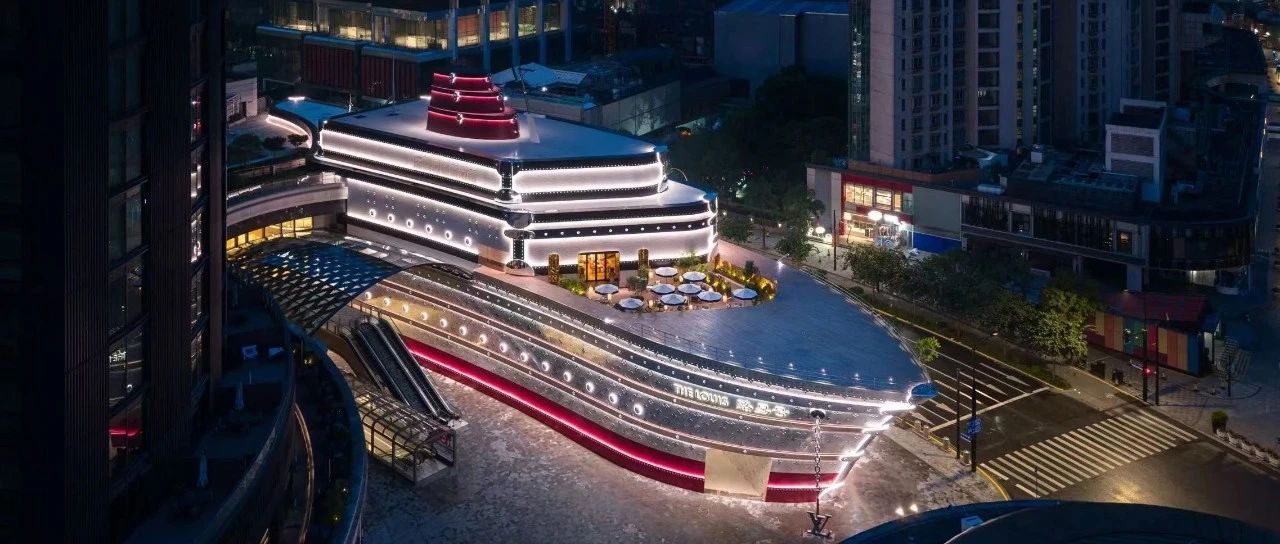
路易威登“巨轮”泊岸上海,或为全国提供零售创新示范
Xin Lang Cai Jing· 2025-06-26 14:21
Core Insights - Louis Vuitton is set to open "Louis, The Boat" in Shanghai on June 28, featuring a 1,600 square meter space with a retrospective exhibition and retail areas [1][2][4] - The brand's CEO expresses optimism about China's economic development and consumer confidence, indicating strong revenue performance compared to the LVMH group average [2][4] - Louis Vuitton has a long history in China, having opened its first store in Shanghai in 1994, and has since established multiple locations in the city [4][6] Group 1: Investment and Expansion - The new space in Shanghai represents Louis Vuitton's continued investment in the Chinese market, reflecting the city's status as a major luxury goods market [4][6] - The brand has opened eight stores in Shanghai, making it a key city for luxury brands in China [6][19] - Louis Vuitton's strategy includes hosting large-scale events and exhibitions to enhance brand visibility and consumer loyalty [9][10] Group 2: Cultural Engagement and Retail Innovation - The "Visionary Journeys" exhibition will showcase over 140 items, reinforcing the brand's heritage and craftsmanship [6][7] - The integration of retail and dining experiences in "Louis, The Boat" marks a significant step in diversifying the brand's offerings in China [12][13] - Louis Vuitton aims to establish itself as a cultural brand by collaborating with artists and providing unique retail experiences [14][16] Group 3: Market Position and Future Plans - The brand's ongoing projects in Shanghai and other cities demonstrate a commitment to localized operations and cultural relevance [16][19] - Louis Vuitton plans to expand its presence in China with new flagship stores and a beauty line, indicating a broader strategy to integrate into consumers' lifestyles [14][19] - The brand's collaboration with major events, such as Formula 1, aims to enhance brand recognition and consumer engagement in the luxury market [10][19]
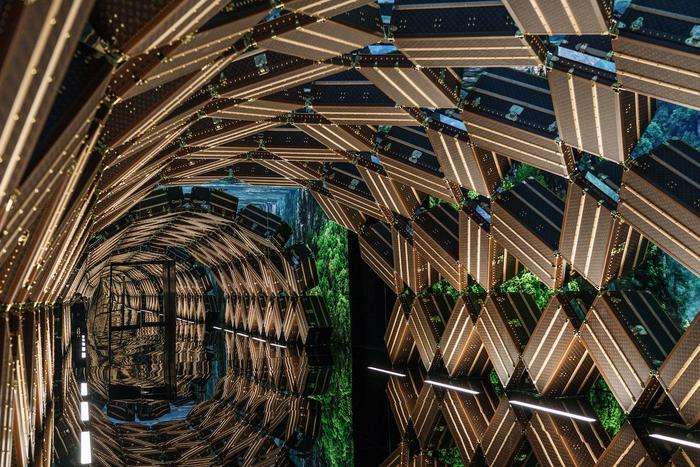
壹快评|LV巨轮驶来,首发经济为何青睐上海
Di Yi Cai Jing· 2025-06-26 13:20
Core Insights - Louis Vuitton's new landmark "Louis Ship" has debuted in Shanghai, highlighting the city's status as an international hub and its innovative spirit [1][3] - The project represents a significant investment with a total area of 1,600 square meters, featuring a three-level experiential space [3] Investment and Economic Impact - The "Louis Ship" project covers 1,600 square meters, with a height of 30 meters and a length of 114.5 meters, showcasing a blend of exhibition, café, and retail experiences [3] - Shanghai is experiencing a surge in international brand launches, with significant projects from companies like Starbucks, Apple, Disney, and LEGO, indicating a robust consumer market [3][6] Consumer Trends - The acceptance of new business models and consumer experiences in Shanghai is driven by the diverse and personalized demands of younger generations, particularly Gen Z and Millennials [6] - Consumers are increasingly valuing cultural and emotional connections with brands, which aligns with the offerings of international brands [6] Infrastructure and Accessibility - Shanghai's comprehensive transportation network, including domestic and international flights, railways, and cruise services, supports the influx of tourists and enhances the city's capacity to host international projects [6][8] - The city is projected to welcome over 6.7 million inbound tourists in 2024, marking an 84% increase year-on-year, with international tourism revenue expected to reach $11 billion [6] Business Environment - The successful establishment of the "Louis Ship" reflects Shanghai's commitment to creating a favorable business environment, with over 100 themed events attracting more than 20 million visitors in the Jing'an District alone [7] - The Nanjing West Road area, known for its high density of luxury brands, provides a conducive ecosystem for both international and local brands to thrive [7] Collaboration and Efficiency - The rapid development of the "Louis Ship" project, completed in approximately three months, demonstrates the efficiency of local government processes and inter-departmental collaboration [8] - The presence of skilled professionals and a high level of technological advancement in Shanghai contribute to the city's attractiveness for new economic initiatives [8] Future Outlook - The ongoing development of the "first launch economy" in Shanghai is expected to continue, with more projects enhancing consumer experiences and revitalizing the market [8]