消费金融

Search documents
京东正式入主捷信,消金行业格局生变
Di Yi Cai Jing· 2025-05-28 13:43
Core Viewpoint - The entry of JD Group into the consumer finance sector through the acquisition of Jiexin Consumer Finance marks a significant shift in the industry landscape, indicating a trend of "the rich getting richer" as major players strengthen their positions amid stricter regulations and market challenges [2][8]. Company Summary - Jiexin Consumer Finance, established in November 2010, was one of the early pioneers in China's consumer finance sector, expanding rapidly through offline marketing strategies and reaching an asset scale of 104.5 billion yuan by 2019 [3]. - However, due to intensified market competition and regulatory tightening, Jiexin faced significant losses, reporting a net profit of -3.199 billion yuan in 2023 and continuing its downward trend into 2024 [3]. - The company’s total assets were approximately 4.903 billion yuan, with total liabilities around 7.233 billion yuan, resulting in a net asset deficit of about -2.34 billion yuan, indicating severe financial distress [3]. - The rebranding to JD Consumer Finance represents a transformative opportunity for Jiexin, leveraging JD's technological and market advantages to revitalize its business model [3][4]. Industry Summary - The consumer finance industry is undergoing a restructuring phase, with major internet companies like JD, Baidu, and Alibaba entering the market, which may lead to a significant reshaping of competitive dynamics [2][4]. - The industry is characterized by a "Matthew Effect," where leading companies with substantial capital and advanced risk control technologies continue to dominate, while smaller firms struggle to survive [8]. - As of the end of 2024, there were 31 consumer finance companies in China, with a notable increase in the concentration of capital among top players, while some smaller firms faced challenges in meeting regulatory requirements [6][7]. - The competitive landscape is becoming increasingly complex, with traditional banks and numerous internet companies vying for market share, intensifying the pressure on new entrants like JD Consumer Finance [6][8].

《金融重塑消费力》报告重磅发布:金融赋能消费新逻辑
Bei Jing Shang Bao· 2025-05-28 10:47
Core Viewpoint - The report "Financial Reshaping Consumption Power" emphasizes the necessity of boosting consumption in the context of economic transformation, highlighting the role of the financial industry in transitioning from mere "funding supply" to "ecosystem construction" [1][4]. Group 1: Consumption Boosting as an Economic Imperative - The need to boost consumption has shifted from an optional strategy to a mandatory requirement due to significant changes in the global economic landscape and domestic economic transformation [3]. - In 2024, the contribution rate of final consumption expenditure to economic growth in China is projected to be 44.5%, a notable decline from 2023 [3]. Group 2: Financial Role in Consumption Enhancement - The core logic for boosting consumption is encapsulated in the concepts of "ability to consume," "willingness to consume," and "daring to consume," which are interrelated and essential for a comprehensive approach to consumption enhancement [4]. - Financial mechanisms can effectively alleviate budget constraints through consumer credit, thereby facilitating the realization of consumption desires and stimulating economic circulation [4][5]. - The report warns against excessive financialization, which could lead to risks such as capital idling and squeezing real consumption demand [4]. Group 3: Financial Product and Service Diversification - Financial institutions are encouraged to provide a diverse range of products and services to lower consumption barriers and meet the varied needs of consumers, thereby unleashing consumption potential and driving overall economic expansion [6][7]. - The report identifies credit policies as a primary tool for boosting consumption, noting a significant drop in loan interest rates from the "3" range to the "2" range due to competitive pressures [7][8]. Group 4: Institutional Transformation and Collaboration - Financial institutions are transitioning from a focus on "traffic competition" to "ecosystem co-construction," with banks and consumer finance companies diversifying their offerings to enhance user engagement [11][12]. - The rise of consumption-related REITs has become a new highlight in the capital market, with an average increase of over 30% in the first quarter of 2025 [12]. Group 5: Innovation and Risk Management in Financial Services - Financial technology is seen as a key to breaking through existing challenges, with significant improvements in digital risk control models leading to lower non-performing loan rates [13]. - The report emphasizes the importance of balancing policy incentives with risk prevention to maintain a healthy cycle between consumption finance and the real economy [13][14].

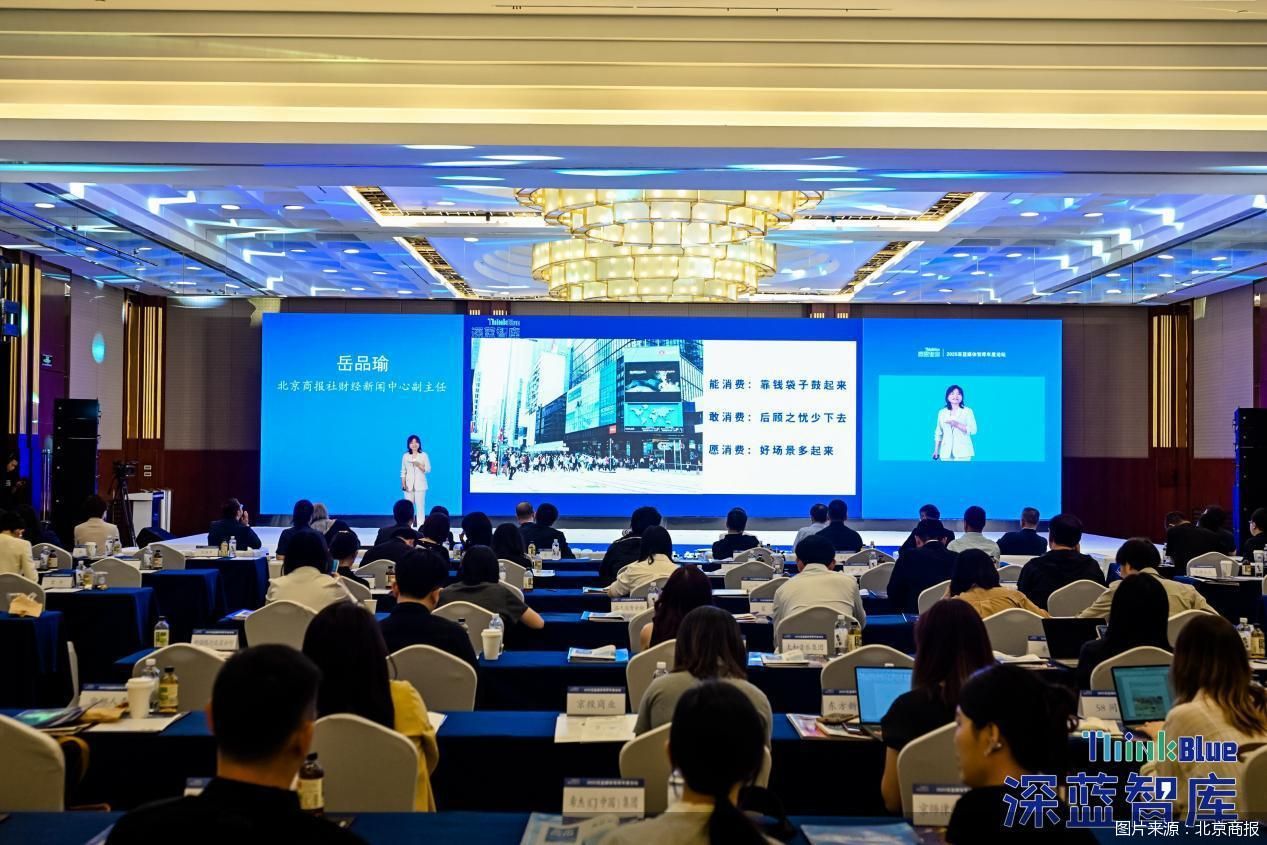
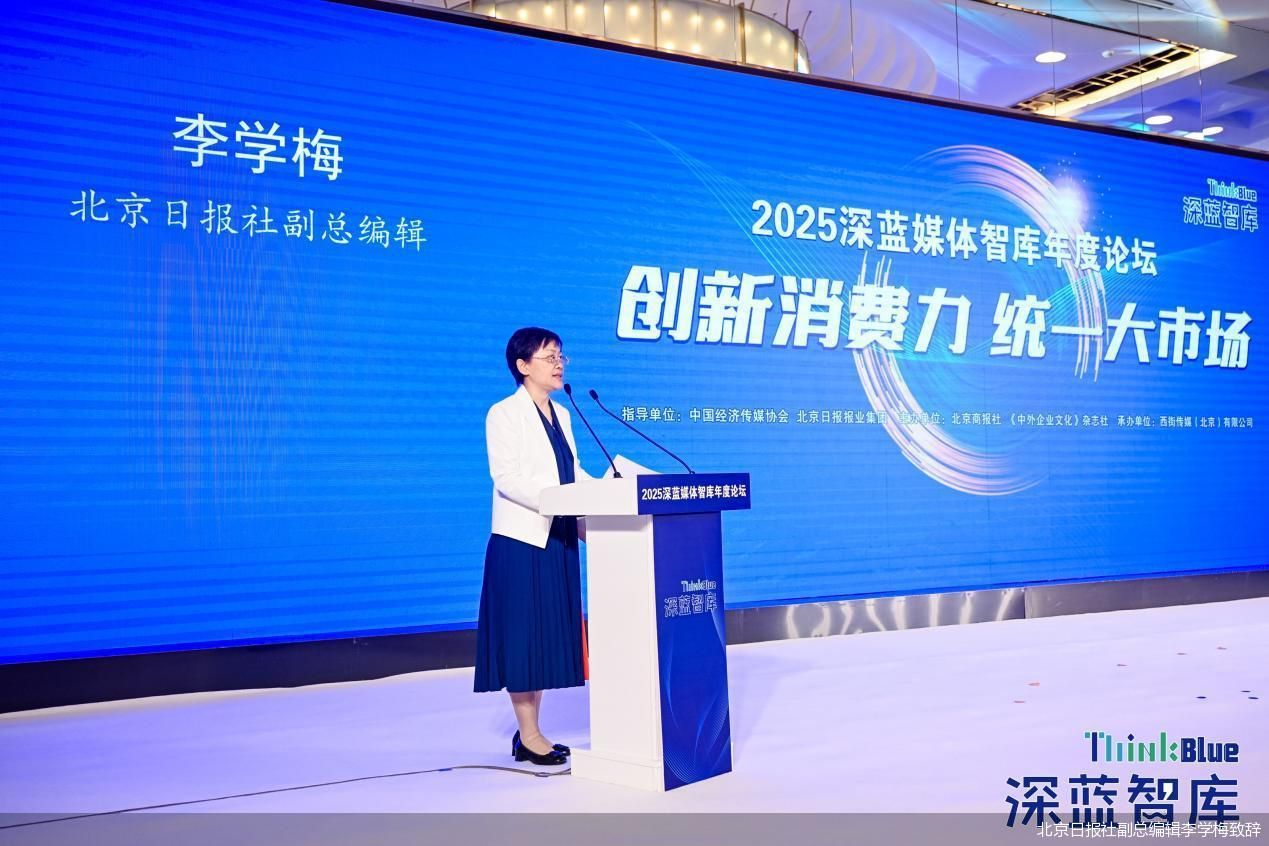
北京日报社副总编辑李学梅: 践行媒体使命,深蓝智库聚焦内需难点,赋能北京经济发展
Bei Jing Shang Bao· 2025-05-28 08:05
Core Insights - The "2025 Deep Blue Media Think Tank Annual Forum" was held in Beijing, focusing on the role of professional media in promoting domestic consumption and the integration of media and finance [1][3] - The Deep Blue Media Think Tank, part of the Beijing Daily Media Group, has published 30 reports and organized 31 salons since its establishment in 2023, aiming to enhance its influence in the finance sector [3] - The forum's theme was "Innovative Consumption Power, Unified Big Market," featuring discussions on high-quality development paths in tourism, liquor, and catering industries, along with the release of six annual reports on various hot topics [3][4] Group 1 - The forum provided a high-end platform for elites to exchange ideas and share experiences, focusing on the high-quality development of the consumption market [4] - The Deep Blue Think Tank aims to bridge gaps in various industries by conducting in-depth research and providing recommendations to boost consumption and expand domestic demand [3][4] - The event gathered hundreds of guests from various sectors to explore practical solutions for stimulating consumption and promoting innovation [3][4] Group 2 - The forum utilized a "theme + topic" format to delve into cutting-edge issues in consumption, tourism, liquor, and catering, showcasing the responsibilities of media think tanks in the new era [4] - The Deep Blue Think Tank plans to continue leveraging its media advantages to transform research findings into actionable cases and reports, contributing to market potential and economic development in Beijing [3][4]
倒计时3天!金鼎奖·金融助力消费优秀案例评选火热进行中
Xin Lang Cai Jing· 2025-05-28 02:38
Group 1 - The "Jinding Award · Financial Support for Consumption Excellent Case Collection" activity is nearing its end, with only 3 days left for submissions [1] - The collection targets various financial institutions including banks, insurance companies, consumer finance companies, and payment institutions [1] - Categories for submission include innovative consumption scenarios, payment facilitation, consumer credit innovation, government-business collaboration, and green consumption promotion [1][2] Group 2 - Evaluation criteria for submissions include innovation, overall effectiveness, sustainability, and risk control [2] - The collection period is from now until May 30, 2025, with submissions to be sent to a specified email address [3] - The evaluation process involves expert review based on defined criteria, and awarded cases will be promoted through various media channels [3]
短途文旅与家居“焕新”共振
Jin Rong Shi Bao· 2025-05-28 01:46
Group 1: Travel Trends - The Dragon Boat Festival travel market is expected to be dominated by short trips, with a focus on cultural experiences and seasonal cuisine, particularly in regions like the Yangtze River Delta, Beijing-Tianjin-Hebei, Pearl River Delta, and Sichuan-Chongqing [2] - National surrounding travel bookings are projected to increase by 23% year-on-year, while searches for cultural experience tours during the Dragon Boat Festival have surged by 50% [2] - The rise in data reflects consumers' preference for personalized, diverse, and high-quality cultural tourism experiences, highlighting the dual development of cultural heritage and tourism industry value [2] Group 2: Cultural and Tourism Activities - The Ministry of Culture and Tourism has initiated various cultural and tourism consumption promotion activities, encouraging localities to host unique events during holidays like the Dragon Boat Festival [2] - Regions with rich cultural heritage, such as Chengdu, Luoyang, and Wuzhen, are launching themed activities that incorporate traditional customs and intangible cultural heritage [3] Group 3: Consumer Behavior and Economic Impact - The holiday period is a key driver for service consumption, with significant growth in tourism, travel, and communication services observed in early 2023 [3] - As income levels rise and consumer attitudes shift, there is a growing emphasis on service quality, experience, and personalization, leading to a transition from goods consumption to service consumption [3] Group 4: E-commerce and Financial Initiatives - E-commerce platforms are launching various promotional activities to boost consumption during the Dragon Boat Festival and the upcoming "6.18" shopping festival, leveraging government subsidy policies [5] - Financial institutions are also introducing special offers to stimulate demand for consumer electronics, with initiatives like trade-in programs and interest-free installment plans [6] - The integration of financial services with trade-in policies aims to enhance consumer convenience and align with diverse consumption needs, contributing to the high-quality development of the consumption market [6]
规模增长显著 市场信心回升
Jin Rong Shi Bao· 2025-05-28 01:41
Group 1 - The demand for service consumption scenarios such as tourism, dining, and home decoration is continuously rising, driving consumption finance companies to enhance their capabilities and optimize consumer credit services to match market needs [1] - The financing situation of consumption finance companies has shown significant growth in scale and a rebound in market confidence, particularly with the active issuance of asset-backed securities (ABS) and steady progress in financial bond issuance [1][2] - As of May 23, the total issuance of bank and internet consumer loan ABS has exceeded 100 billion yuan, reaching 113.847 billion yuan [2] Group 2 - The issuance of asset-backed notes (ABN) in personal consumer finance has seen a substantial year-on-year increase, with 117 issuances totaling 97.31 billion yuan in the first quarter, representing a growth of 53.3% compared to the previous year [3] - Personal consumer finance ABN issuance accounted for 35 deals and 31.64 billion yuan, with respective increases of 169.2% and 213.2% year-on-year, making it the main issuance type [3] - Traditional consumption finance companies are actively participating in ABS issuance, with notable issuances from companies like Nanyin Fubao, Zhongyuan, and Haier, totaling 7.458 billion yuan across 5 ABS [3] Group 3 - Since the beginning of 2025, consumption finance companies have been diversifying their financing channels, with financial bond issuance becoming a significant means of funding, totaling 6.1 billion yuan from five companies as of May 24 [4] - Specific issuances include Hangyin Consumer Finance with 2 financial bond issuances totaling 2.5 billion yuan, and other companies like Mashang Consumer Finance and Ningyin Consumer Finance with respective issuances of 1.5 billion yuan and 1 billion yuan [4] - The coupon rates for some bonds have been disclosed, with rates around 2%, the lowest being 1.69% for Hangyin's first financial bond and the highest at 2.05% for Mashang's first financial bond [4]
消费金融 厚积薄发
Bei Jing Shang Bao· 2025-05-27 13:39
Core Viewpoint - Consumer finance plays a crucial role in the modern economic system, acting as an important engine for domestic demand and facilitating the flow of goods and services, thereby promoting smooth economic circulation [1][4] Group 1: Industry Overview - Consumer finance is defined as financial activities aimed at meeting the consumption needs of individuals and families for final goods and services [4] - The sector has evolved significantly, with innovations in service models and product forms, particularly through online and intelligent solutions, enhancing accessibility and convenience [1][6] Group 2: Market Dynamics - The consumer finance market has experienced rapid growth driven by policy support, technological advancements, and changing consumer attitudes, with a notable surge in online credit services [7] - However, the market is now facing challenges such as increased competition, regulatory tightening, and a shift from acquiring new customers to deepening relationships with existing ones [8][9] Group 3: Structural Changes - There is a noticeable structural differentiation in consumer finance demand, with high-income groups showing reduced credit demand while low-income groups are increasingly seeking emergency credit [11][12] - The overall contribution of domestic demand to economic growth is projected to be 69.7% in 2024, with final consumption expenditure contributing 44.5%, indicating a need for improved consumer confidence and spending [12][13] Group 4: Policy and Regulatory Environment - Recent policies, such as the "Special Action Plan to Boost Consumption," aim to enhance financial support for consumer finance, focusing on both supply and demand sides [16][17] - Financial institutions are encouraged to adapt to regulatory requirements and enhance their core competitiveness through innovation and improved customer service [18] Group 5: Future Outlook - The future of consumer finance is expected to be shaped by sustainable economic development, rising income levels, and the integration of services such as e-commerce, education, and healthcare [15] - The industry is likely to focus on compliance, technology, and differentiated service offerings to navigate the evolving market landscape [18]

狂飙之下 风险如何防范
Bei Jing Shang Bao· 2025-05-27 13:39
政策驱动下,中国消费金融行业狂飙突进。人民银行创设消费信贷专项再贷款,个人消费贷款自主支付 的金额上限可阶段性从30万元提高至50万元,贷款期限延长至7年……一系列举措正在推动消费金融成 为扩内需的核心引擎。 而当监管按下风险防控的"加速键",爆发式增长过后的消费金融行业迎来新挑战。整体来看,相关金融 从业机构既要承接政策红利释放的市场空间,又需破解业务急速扩张后信用不良、欺诈以及管理漏洞等 三重困局。如何在释放普惠价值与筑牢风控防线之间找到平衡点,成为行业高质量发展的核心命题。 三大症结 据行业测算,2024年国有银行个人消费贷余额(含信用卡透支)增量突破1万亿元,持牌消费金融行业 资产规模和贷款余额在2023年末突破万亿元。 同时,消费金融行业的风险在政策红利与市场扩张的交织中持续累积,风险特征均呈现多维度交织态 势。综合业务模式、技术应用、市场环境等多维度考虑,消费金融行业风险主要表现在信用风险、管理 风险以及欺诈风险三个方面。 三大风险症结中,信用风险被一致视为消费金融领域的核心风险,主要表现为借款人因收入波动还款能 力降低、过度负债或恶意逃废债,还款意愿降低并最终造成违约。 根据上市银行披露的数据, ...

消金机构:万亿市场谋差异
Bei Jing Shang Bao· 2025-05-27 13:39
Core Insights - The government work report for 2025 emphasizes the importance of boosting consumption and enhancing investment efficiency as a top priority for expanding domestic demand [1] - Consumer finance companies are crucial in activating small credit demand to inject financial momentum into the consumption market, particularly targeting underbanked long-tail customer segments [1][3] - The industry faces significant challenges due to intensified market competition and stricter compliance requirements, necessitating innovation in business models, risk management, and digital transformation [1][6] Industry Overview - As of now, there are 31 licensed consumer finance companies in China, with 22 being bank-affiliated and the rest funded by industrial institutions and e-commerce [3] - The total asset scale and loan balance of the consumer finance industry have both surpassed one trillion yuan, indicating a robust growth trend despite a slowdown in overall growth rates [3] - Six consumer finance institutions have total assets exceeding 60 billion yuan as of the end of 2024, with leading players like Ant Group and Zhaolian maintaining strong positions [3] Market Dynamics - Consumer finance companies primarily offer small, unsecured loans to individuals, catering to daily consumption needs, with most products targeting low to middle-income groups [3][4] - The average loan amount is typically below 50,000 yuan, with terms not exceeding 12 months and annual interest rates ranging from 5% to 24% [3] - The focus on underserved markets and long-tail customers is fundamental to the inclusive finance approach of consumer finance institutions [4] Innovation and Technology - The application of new technologies such as AI, big data, and cloud computing has significantly reduced risk pricing and expanded product diversity, enhancing accessibility for consumers [8] - Many consumer finance institutions are leveraging digital tools to integrate services like installment payments and credit loans into various consumer scenarios, thereby increasing user engagement [8] - The industry is encouraged to build an open ecosystem that promotes data sharing and collaborative marketing, utilizing technology for personalized services [8][10] Challenges and Compliance - The industry is experiencing a shift from growth-focused strategies to refined operations, with a clear divide between leading and lagging institutions [6] - Increased competition has led to a rise in customer acquisition costs and regulatory pressures, prompting institutions to innovate in marketing and compliance [7] - Rising non-performing loan rates and the infiltration of illicit financial activities pose significant risks to the operational stability of consumer finance companies [7] Future Outlook - The industry is expected to continue focusing on digital transformation and self-operated capabilities to create differentiated financial services [8][10] - There is a call for supportive policies to enhance the lending capacity of consumer finance companies, including adjustments to loan limits and diversified financing channels [10] - Targeting new customer segments such as employees of emerging productivity enterprises and residents of lower-tier cities is seen as a key growth opportunity [9][10]

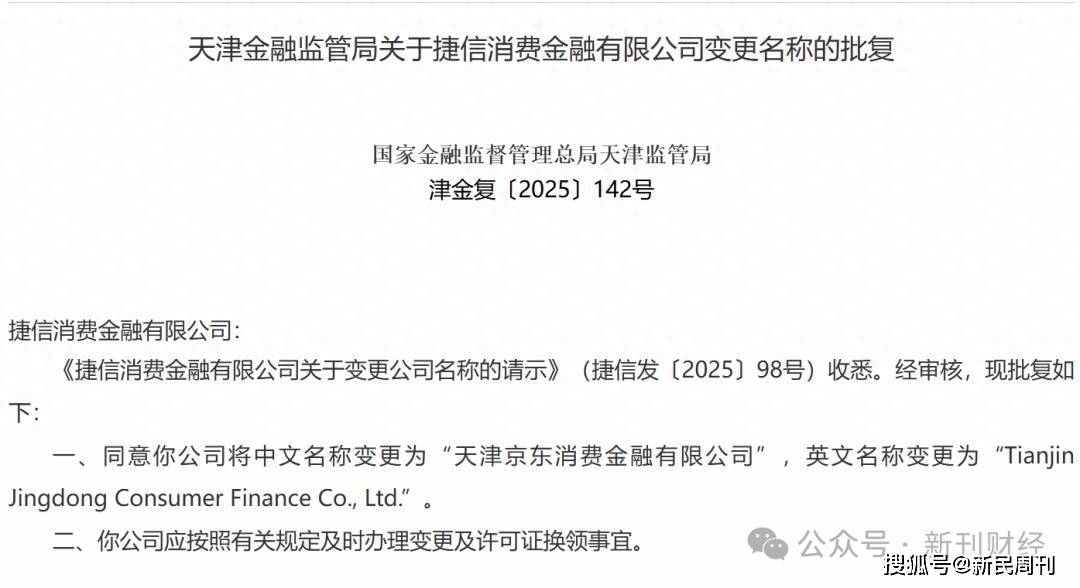
“京东消金”登场、“捷信消金”退场!新平台如何打破财务困局?
Sou Hu Cai Jing· 2025-05-27 08:50
Core Viewpoint - The financial performance of Jiexin Consumer Finance in 2024 does not indicate a recovery of its core business but rather reflects a phase of "financial embellishment" resulting from restructuring [1][9]. Group 1: Company Restructuring and Performance - JD successfully entered the consumer finance sector through the restructuring of Jiexin Consumer Finance, which was renamed Tianjin JD Consumer Finance [1][4]. - The Tianjin Financial Regulatory Bureau approved the name change, indicating the completion of JD's brand integration efforts [1][4]. - JD acquired a 65% stake in Jiexin Consumer Finance in December 2024, establishing control over the company [4]. Group 2: Financial Condition and Challenges - Jiexin Consumer Finance reported total assets of €5.98 billion (approximately ¥49.03 billion) and total liabilities of €8.83 billion (approximately ¥72.33 billion) as of the end of 2024, indicating a negative net asset value of €2.85 billion (approximately -¥23.40 billion) [5][7]. - The company achieved a net profit of €59 million (approximately ¥483 million) in 2024, a significant turnaround from a loss of €109 million (approximately ¥893 million) in 2023, but this profit was largely due to one-time gains from restructuring rather than a recovery of core operations [7][9]. - Interest income was only €5 million (approximately ¥41 million), and net interest income showed a loss of €20 million (approximately ¥164 million), indicating a near halt in traditional lending activities [8][9]. Group 3: Competitive Landscape and Future Directions - The consumer finance industry is evolving rapidly, with Ant Group's consumer finance platform surpassing competitors in terms of assets and profitability, providing a model for JD to consider [10][11]. - JD Consumer Finance is still in the early stages of transformation and must navigate a complex regulatory environment and intense competition to establish a sustainable business model [10][12]. - The future success of JD Consumer Finance hinges on its ability to integrate its financial services with its e-commerce ecosystem and effectively manage risk and asset quality [9][12].