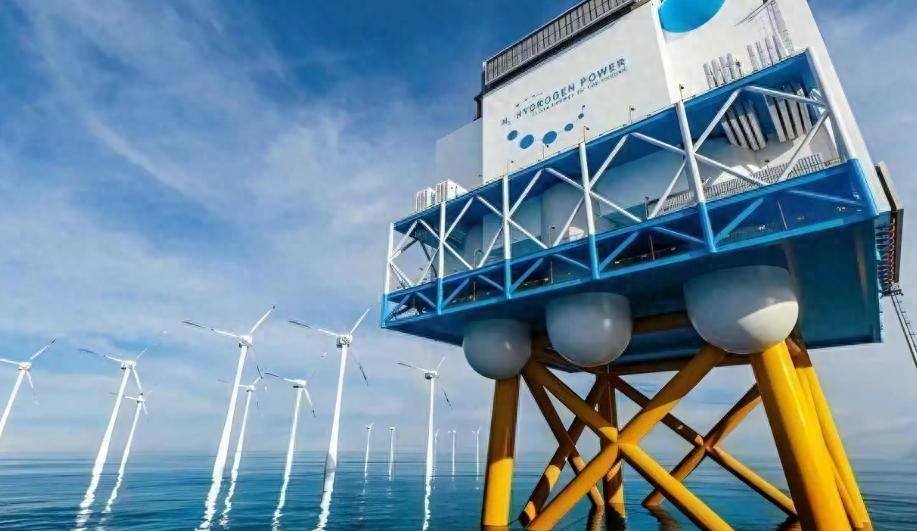
氢能

Search documents
投身相关产业、立足岗位奋斗 这群年轻人选择做“绿领”
Ren Min Ri Bao· 2025-10-28 00:49
Core Viewpoint - The article highlights the emergence and significance of "green collar" jobs in the context of China's push for a comprehensive green transformation in its economy and society, as emphasized by the 20th National Congress of the Communist Party of China. It showcases the stories of three young professionals in the green energy sector, illustrating their roles and the appeal of these careers to the younger generation [1]. Group 1: Wind Energy Sector - Wind energy is recognized as a clean, safe, and renewable energy source, with professionals like Dong Guiying playing a crucial role in assessing wind resources for wind power projects [2][3]. - Dong Guiying's work involves complex data analysis to create accurate wind resource profiles, which significantly impact project profitability. A mere 0.1 m/s difference in average wind speed can lead to substantial variations in annual energy output [2][3]. - The meticulous nature of wind resource assessment requires constant vigilance and adaptability to changing weather conditions, reflecting the dedication and passion of professionals in this field [3][4]. Group 2: Hydrogen Energy Sector - Hydrogen fuel cells are gaining traction as a clean energy source, with professionals like Cai Kainan responsible for rigorous testing and safety assessments of these systems [5][6]. - Safety is paramount in hydrogen fuel cell testing, with extensive protocols in place to prevent gas leaks and ensure operational integrity. The testing process can take up to a month, involving various checks to ensure reliability [6][7]. - Cai Kainan emphasizes the importance of continuous learning in the rapidly evolving hydrogen energy sector, with plans to enhance his skills in data analysis to improve testing systems [7]. Group 3: Energy Storage Sector - The development of small-scale energy storage systems, such as the floating photovoltaic power station managed by Chen Siwei, is crucial for enhancing energy efficiency in marine aquaculture [8][9]. - Chen Siwei's role involves overseeing the integration of renewable energy sources and ensuring the stability of energy supply, which has led to significant cost reductions for aquaculture operations [9][10]. - The increasing demand for specialized energy storage personnel indicates a promising future for careers in this sector, as the industry focuses on safety and professional standards [10].
【电新】“十五五”规划呼之欲出,推动氢能和核聚变能成为新的经济增长点——碳中和领域动态追踪(一百六十三)(殷中枢/郝骞)
光大证券研究· 2025-10-27 23:04
Core Viewpoint - The article discusses the strategic planning and development of future industries in China, focusing on key areas such as quantum technology, biomanufacturing, hydrogen energy, nuclear fusion energy, brain-computer interfaces, embodied intelligence, and sixth-generation mobile communication as new economic growth points [4]. Group 1: Energy Sector Development - The clean energy transition is crucial for achieving carbon neutrality goals, with China making significant advancements in solar, wind, and energy storage sectors, establishing a global leadership position in these areas [5]. - Hydrogen energy and nuclear fusion are identified as essential components for deep decarbonization, with hydrogen serving as a flexible carrier and nuclear fusion as a clean baseload power source, potentially forming a key combination for future energy development [5]. Group 2: Hydrogen Energy Industry - Recent policies in China have increasingly supported the hydrogen energy sector, including renewable energy consumption assessments and funding for green methanol projects, indicating a strong governmental push for hydrogen development [6]. - The hydrogen industry is expected to benefit from continuous cost reductions driven by technological advancements and scale, alongside supportive policies for various downstream applications, creating new opportunities for the green hydrogen and ammonia industry [6]. Group 3: Nuclear Fusion Developments - Since 2025, China's nuclear fusion sector has entered a rapid development phase, marked by significant milestones such as the "China Circulation No. 3" entering a new testing phase and the establishment of the China Fusion Energy Co., Ltd. [7]. - Multiple technological routes and projects, including the "Circulation No. 4" and laser fusion power stations, are progressing, indicating a promising future for controlled nuclear fusion projects in China [8].

可转债周报20251026:哪些转债或受益于“十五五”?-20251027
Tianfeng Securities· 2025-10-27 09:16
Group 1 - The report identifies key industries that may benefit from the "14th Five-Year Plan," including aerospace equipment, deep-sea technology, and marine industries, suggesting a focus on raw materials, components, and manufacturing tools related to these sectors [12][16] - In the renewable energy sector, the report highlights bonds related to offshore wind power and hydrogen energy, mentioning companies like Qifan Cable and Longi Green Energy as potential beneficiaries [17][18] - The report emphasizes the importance of integrated circuits, high-end equipment, and industrial mother machines as areas of sustained attention, with specific mention of companies involved in semiconductor design and medical equipment [20][21] Group 2 - The report notes that the convertible bond market saw an overall increase, with the China Securities Convertible Bond Index rising by 1.47% and the Shanghai Stock Exchange Convertible Bond Index by 1.56% [4][35] - It highlights that 24 industries experienced gains, with defense, electronics, and computer sectors leading the market, while communication and beauty care sectors lagged [4][38] - The report indicates a rise in the weighted average conversion value of convertible bonds, with an average of 101.05 yuan, reflecting a positive trend in market valuation [5][47] Group 3 - The report discusses the supply and terms of convertible bonds, noting no new listings but 11 bonds under primary approval, indicating ongoing market activity [6][70] - It mentions that 12 convertible bonds are expected to trigger adjustments, with a focus on redemption and downshift clauses, suggesting a dynamic regulatory environment [6][70] - The report provides insights into the performance of various convertible bonds, highlighting significant price movements and market trends [4][40]






“十五五”规划重点布局,可控核聚变概念股掀涨停潮
Sou Hu Cai Jing· 2025-10-27 08:00
Group 1: Market Reaction - The A-share controllable nuclear fusion sector experienced a significant surge, with stocks such as Antai Technology, Xiamen Tungsten, and Dongfang Tantalum hitting the daily limit, reflecting positive market sentiment towards nuclear fusion energy development [1][4] - The market's response indicates strong investor interest and optimism regarding the future potential of nuclear fusion as a key area for economic growth [4] Group 2: Policy and Industry Development - The 24th Central Committee of the Communist Party of China approved a proposal for the 15th Five-Year Plan, emphasizing the strategic importance of industries like quantum technology, biomanufacturing, hydrogen energy, and nuclear fusion [1][3] - The clean energy transition is crucial for achieving China's dual carbon strategy, with hydrogen and nuclear fusion energy identified as complementary solutions for deep decarbonization [3][4] Group 3: Company Highlights - Western Superconducting Technologies, a leader in low-temperature superconductors, is a core supplier for major nuclear fusion projects, with significant contracts and a 65.75% year-on-year revenue growth in its superconducting business [5] - Yongding Co., a pioneer in high-temperature superconductors, reported a staggering 917.66% increase in net profit, driven by substantial orders from nuclear projects [5] - Lianchuang Optoelectronics, a global leader in high-temperature superconducting magnets, secured a 5 billion yuan order for a hybrid reactor system, showcasing its innovative technology [5][6] Group 4: Technological Advancements - Since 2025, China's nuclear fusion sector has entered a rapid development phase, marked by significant technological breakthroughs and the establishment of key companies like China Fusion Energy Co. [4] - Shanghai Electric has emerged as a comprehensive supplier for fusion equipment, successfully delivering critical components for international projects, demonstrating its manufacturing capabilities [6]


国富氢能携手PT. BTG新加坡签约 共拓东南亚氢能消纳市场
Zhi Tong Cai Jing· 2025-10-27 07:32
Core Insights - Jiangsu Guofu Hydrogen Energy Technology Equipment Co., Ltd. (Guofu Hydrogen) signed a strategic cooperation agreement with PT. Batam Teknologi Gas (PT. BTG) in Singapore, focusing on the hydrogen energy sector in Malaysia, Singapore, and Indonesia to promote regional low-carbon economic development and support carbon neutrality goals [1][2][3] Group 1: Strategic Partnership - The partnership aims to leverage PT. BTG's extensive experience in gas consumption and transportation in Indonesia and Malaysia, as well as its hydrogen consumption capabilities in Singapore, to support local demand for liquid hydrogen [1][2] - PT. BTG will be responsible for the distribution of liquid hydrogen produced at the factory, with part of the supply directed to local hydrogen refueling stations in Malaysia, while the remainder will be distributed across Indonesia, Malaysia, and Singapore [2] Group 2: Market Positioning - Guofu Hydrogen is positioned as a comprehensive solution provider for the entire hydrogen energy industry chain, with core capabilities in production, storage, transportation, and application [2] - The collaboration will also involve joint investment in hydrogen production facilities in Indonesia, enhancing the regional hydrogen supply chain [2][3] Group 3: Future Development - This agreement marks a significant step for Guofu Hydrogen in expanding its presence in the Southeast Asian hydrogen market, aiming to contribute to the establishment of a low-carbon energy system in the region [3]
2025年国际能源变革论坛举行
中国能源报· 2025-10-27 07:13
Core Viewpoint - The 2025 International Energy Transformation Forum emphasizes the integration of green low-carbon initiatives and artificial intelligence, showcasing China's commitment to energy transformation and sustainable economic growth [1][3]. Group 1: Energy Transformation and Global Trends - Developing countries are becoming the main force in global energy transformation, showing significant progress and potential in the energy sector [6]. - The global energy system is undergoing profound changes, with countries exploring green low-carbon development paths that align with their national conditions [3][5]. - China has established the largest and fastest-growing renewable energy system globally, contributing to energy technology innovation and leading the energy transformation [5][6]. Group 2: Achievements and Innovations - As of July 2025, China's renewable energy installed capacity reached 2.17 billion kilowatts, with wind power at 570 million kilowatts and solar power exceeding 1.1 billion kilowatts [10]. - Non-fossil energy installed capacity has historically surpassed 60%, marking a significant shift in the energy supply landscape [11]. - China is the only country with a complete nuclear power industrial system, operating 59 nuclear power units with a total capacity of 62.48 million kilowatts [12]. Group 3: Digitalization and AI in Energy - The integration of AI in the energy sector is reshaping supply-demand dynamics, technology pathways, and security frameworks [14]. - The development of AI-driven models, such as the "Big Watt·Electric Control" model, enhances grid safety and optimizes operations in the context of renewable energy variability [16]. - Digital transformation in nuclear power construction is being driven by AI, big data, and IoT technologies, improving operational efficiency and data management [17][18]. Group 4: International Cooperation and Future Vision - The forum released the "Global Energy Low Carbon Transition Development 2030 Suzhou Vision," calling for enhanced international cooperation in energy security, innovation, and capital mobilization [6]. - The commitment to clean energy technology and international collaboration is crucial for advancing energy transformation in developing countries [6].
“十五五”,风、光、氢、储四大领域将深度融合
中国能源报· 2025-10-27 05:00
Core Viewpoint - The article emphasizes that during the "14th Five-Year Plan" period, China's renewable energy industry achieved significant development, exceeding planning targets, and is now entering a new phase of comprehensive market-oriented development during the "15th Five-Year Plan" period, presenting strategic opportunities for "scale expansion" and "quality improvement" [3]. Group 1: Photovoltaics - The photovoltaic industry has transitioned from being a "supplementary energy" to a "main energy" source, with a cumulative installed capacity of 1.11 billion kilowatts by July this year, accounting for 30% of the total installed capacity in the country, surpassing coal power [5]. - China has established the world's most complete and competitive photovoltaic industry system, with over 80% global market share in key manufacturing segments such as silicon materials, wafers, cells, and modules [5]. - The cost of photovoltaic power generation has decreased by over 90% in the past decade, highlighting its economic advantages [5]. - The photovoltaic industry is expected to enter a new stage of higher quality development, with ongoing technological innovations and expanded application scenarios, including "photovoltaics + agriculture" and "photovoltaics + livestock" [6][7]. - By 2030, distributed photovoltaic systems are projected to increase from 40% to over 50% of the total installed capacity [6]. Group 2: Wind Power - The wind power industry has made a historic leap from "resource development" to "system leadership" during the "14th Five-Year Plan" period, significantly enhancing its strategic position in energy security and green industrial chain construction [9]. - China maintains the world's largest cumulative installed capacity for wind power, with over half of the global offshore wind power capacity [11]. - The wind power industry aims to achieve an annual new installed capacity of 12 million kilowatts starting in 2026, with a five-year cumulative target of over 60 million kilowatts [12]. - The industry is shifting focus from "scale-driven" to "value-driven," emphasizing quality and efficiency improvements [12][13]. Group 3: New Energy Storage - New energy storage has seen a nearly 30-fold increase in cumulative installed capacity, reaching 94.91 million kilowatts by mid-2025, making it the second-largest flexible adjustment resource in China's power system [17]. - The industry is experiencing a shift from "mandatory storage" to "demand-based configuration," moving from "policy-driven" to "market-led" development [18]. - The National Development and Reform Commission and the National Energy Administration have set a target for new energy storage capacity to exceed 180 million kilowatts by 2027, with an expected direct investment of about 250 billion yuan [17]. Group 4: Hydrogen Energy - Hydrogen energy has transitioned from pilot demonstrations to large-scale development during the "14th Five-Year Plan," with significant policy support and a complete development framework emerging [20]. - The hydrogen energy industry is expected to play a crucial role in energy structure transformation and green development, with a focus on expanding application scenarios across various sectors [21]. - The strategic development of hydrogen energy is supported by multi-layered policy tools and aims to establish a comprehensive hydrogen energy project management system [21]. Group 5: Overall Strategic Outlook - The coordinated development of wind, solar, hydrogen, and storage is seen as a strategic mission to address key challenges in high-proportion consumption, industrial chain security, and economic viability [22]. - The article outlines a vision for a new energy system that leverages technological innovation and market mechanisms to solidify China's leading position in the global energy transition [22].

首批氢能试点名单公布,银行有哪些机会?
Zhong Guo Jing Ying Bao· 2025-10-27 01:30
Core Insights - The hydrogen energy industry in China is transitioning from demonstration applications to large-scale promotion, with 41 projects and 9 regions supported by the National Energy Administration [5] - The hydrogen energy sector is seen as a key area for investment, driven by carbon neutrality goals and increasing financial support from commercial banks [5][10] Group 1: Policy and Development Plans - The "China Hydrogen Development Report (2025)" indicates that 2025 will be a pivotal year for the hydrogen industry in China, with a production and consumption scale exceeding 36.5 million tons, making China the world's leader [6] - By 2035, China aims to establish a comprehensive hydrogen industry system covering transportation, energy storage, and industrial applications, significantly increasing the share of renewable energy hydrogen in terminal energy consumption [6] - New policies from the National Development and Reform Commission include targets for renewable energy non-electric consumption, aiming for 15% by 2025 and 20% by 2030, marking a significant milestone for the hydrogen sector [7] Group 2: Regional Initiatives - Xiamen plans to build 3 hydrogen refueling stations and establish a demonstration route for hydrogen fuel cell vehicles by 2027, indicating a comprehensive approach to hydrogen industry development [7] - Inner Mongolia's action plan focuses on enhancing the hydrogen equipment manufacturing industry, aiming for a well-established supply chain and innovation capabilities by 2027 [8] - Jiangsu's plan targets a hydrogen industry scale exceeding 100 billion yuan by 2027, with over 100 hydrogen refueling stations and 10,000 fuel cell vehicles promoted [8] Group 3: Financial Support and Investment - Financial institutions are increasingly supporting the hydrogen industry, with policies encouraging loans and financing for key projects [10] - Major banks are actively engaging with hydrogen enterprises, providing tailored financial solutions to address funding challenges [12][14] - The establishment of specialized branches, such as the hydrogen-focused branch in Beijing, highlights the growing financial services dedicated to the hydrogen sector [11] Group 4: Market Opportunities - The hydrogen industry is viewed as entering a "golden period," with significant growth in credit allocation surpassing that of solar and wind energy sectors [12] - The focus on infrastructure development and production supply in the hydrogen sector necessitates substantial bank financing, with many banks adapting their credit models to support innovative hydrogen enterprises [12][13] - The diverse applications of hydrogen energy across various sectors, including transportation and industry, position it as a crucial component in achieving carbon neutrality goals [14]






国富氢能(02582)携手PT. BTG新加坡签约 共拓东南亚氢能消纳市场
智通财经网· 2025-10-27 00:39
Core Insights - Jiangsu Guofu Hydrogen Energy Technology Equipment Co., Ltd. (Guofu Hydrogen) signed a strategic cooperation agreement with PT. Batam Teknogi Gas (PT. BTG) to focus on hydrogen energy in Malaysia, Singapore, and Indonesia, promoting regional low-carbon economic development and supporting carbon neutrality goals [1][5] Company Overview - Guofu Hydrogen is a comprehensive solution provider for the entire hydrogen energy equipment industry chain, possessing core capabilities in hydrogen production, storage, transportation, and utilization [3][5] - PT. BTG, founded by entrepreneur Hendri, is a leading provider of industrial and medical gas solutions in Batam Island, with extensive experience in gas consumption and transportation in Indonesia and established hydrogen consumption capabilities in Singapore [3] Strategic Collaboration - The collaboration centers on liquid hydrogen consumption and cross-regional distribution, with PT. BTG responsible for distributing liquid hydrogen from the factory to local refueling stations in Malaysia and across Indonesia, Malaysia, and Singapore [5] - Both companies will jointly invest in building hydrogen plants in Indonesia and PT. BTG will procure essential equipment from Guofu Hydrogen, including liquid hydrogen transport tanks and refueling station equipment [5] Market Positioning - The partnership aims to establish a stable consumption network for hydrogen and enhance the low-carbon energy system in Southeast Asia, marking a significant step for Guofu Hydrogen in expanding its market presence in the region [5] - The "Green Hydrogen + Green Electricity" model is gaining attention in the market, aligning with Singapore's "Smart Nation 2025" initiative, which emphasizes the need for new energy supply solutions for data centers [3]

中国攻克海水制氢技术,石油或变白菜价?全球能源将迎来大变局
Sou Hu Cai Jing· 2025-10-26 12:23
Core Insights - The emergence of seawater hydrogen production technology marks a significant breakthrough for China's energy landscape, potentially leading to a major shift in global energy dynamics [1][16] - This technology allows for hydrogen production without reliance on freshwater resources, significantly reducing environmental pollution and production costs [3][5] Group 1: Seawater Hydrogen Technology - Seawater hydrogen production technology utilizes direct electrolysis of seawater, offering advantages over traditional methods that rely on freshwater or fossil fuels [3] - The technology addresses challenges such as salt corrosion and low electrolysis efficiency through the development of corrosion-resistant coatings and new catalysts [3][5] - By 2025, the cost of producing hydrogen from seawater in China is projected to fall below 20 yuan per kilogram, establishing a strong foundation for large-scale industrialization [5] Group 2: Green Hydrogen Industry - The green hydrogen industry is rapidly emerging, primarily relying on renewable energy for water electrolysis, aligning with global carbon neutrality goals [8] - The development of hydrogen fuel cell vehicles and the establishment of hydrogen refueling stations are expected to reduce oil demand in the transportation sector [8][10] - China's green hydrogen projects span 25 provinces, with a total capacity of 1,182 megawatts, indicating significant progress in the sector [10] Group 3: Impact on Oil Demand and Market Dynamics - The demand for oil is increasingly influenced by the substitution effect of clean energy, with green hydrogen poised to replace a portion of oil consumption [12][14] - As green hydrogen becomes more cost-effective, it is expected to exert downward pressure on oil prices, potentially leading to a scenario where oil prices drop significantly [14][16] - The international energy agency predicts that the global hydrogen market could reach a trillion-dollar scale by 2030, diminishing oil's competitiveness in certain sectors [12] Group 4: Strategic Implications for China - China's advancements in seawater hydrogen technology position it as a leader in energy transition, enhancing both energy independence and international competitiveness [16] - The widespread application of hydrogen technology is anticipated to drive a transformation in the traditional oil industry, necessitating adaptation to new market realities [14][16] - The integration of renewable energy resources for hydrogen production not only supports domestic energy autonomy but also enhances China's role in global energy transitions [14][16]