家电

Search documents
国金红利量化选股混合A:2025年第四季度利润429.03万元 净值增长率0.74%
Sou Hu Cai Jing· 2026-01-24 04:29
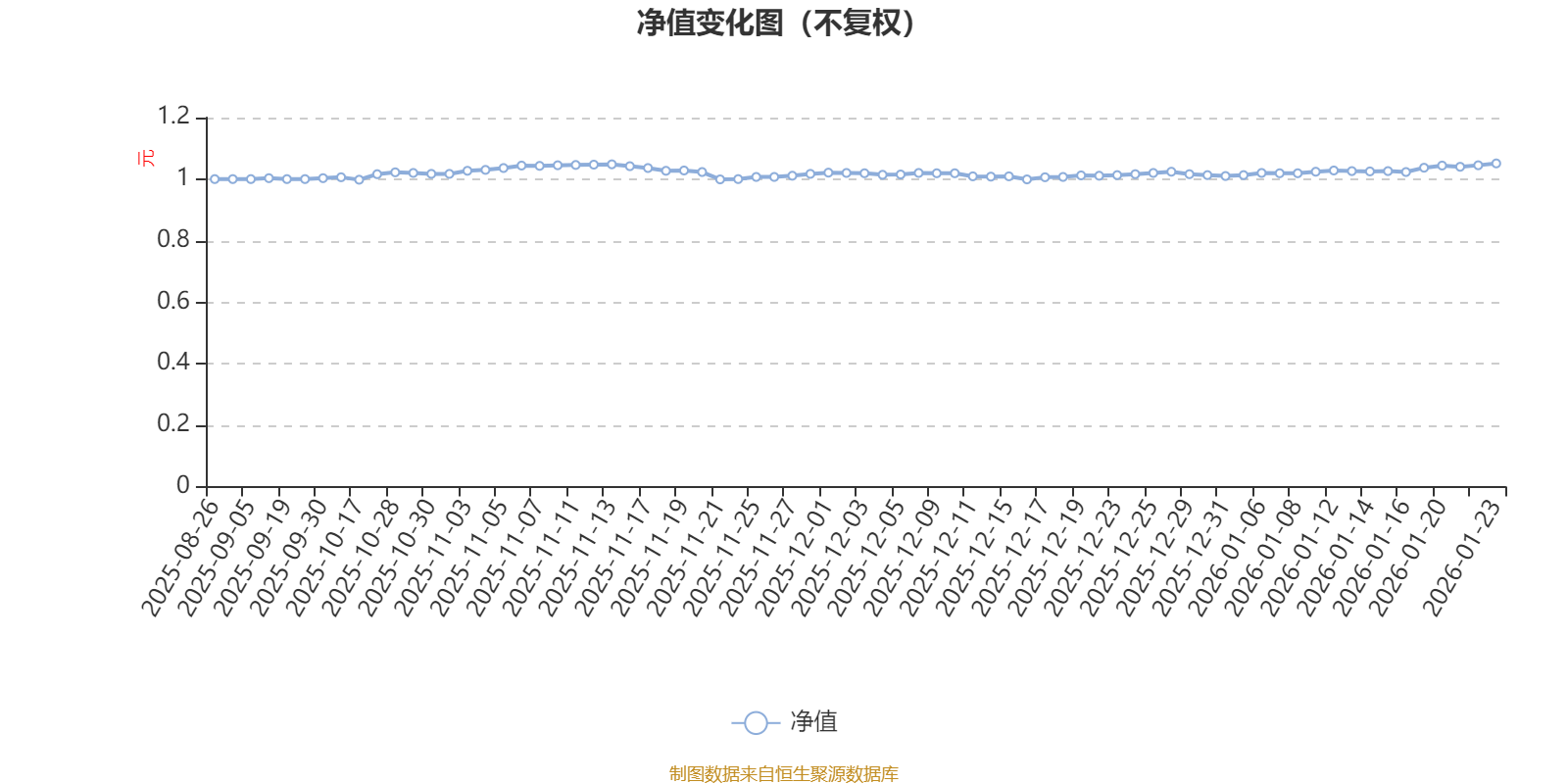
Core Viewpoint - The AI Fund Guojin Hongli Quantitative Stock Selection Mixed A (024385) reported a profit of 4.2903 million yuan for Q4 2025, with a weighted average profit per fund share of 0.0116 yuan, indicating a stable performance in a challenging market environment [1] Fund Performance - The fund's net value growth rate for the reporting period was 0.74%, with a total fund size of 312 million yuan as of the end of Q4 [1] - As of January 23, the unit net value was 1.051 yuan, reflecting a positive trend in fund valuation [1] Fund Manager Insights - The fund manager, Ma Fang, oversees seven funds, with the Guojin Quantitative Multi-Factor A achieving the highest one-year cumulative net value growth rate of 70.06%, while the Guojin Quantitative Multi-Strategy A recorded the lowest at 49.44% [1] - The fund management indicated that during the reporting period, the fund was in a closed period at certain times, adhering to a steady investment rhythm driven by quantitative models based on market conditions [1] Top Holdings - As of the end of Q4 2025, the fund's top ten holdings included Agricultural Bank of China, Gree Electric Appliances, Nanjing Bank, Tangshan Port, Guangdong Expressway A, Shandong Expressway, Phoenix Media, Shanghai Electric, TBEA Co., and Anhui Expressway [1]






美的集团亚太区域总裁蒋轩:广货家电如何在东南亚争第一
2 1 Shi Ji Jing Ji Bao Dao· 2026-01-23 23:08
Core Insights - Midea aims to become a global leader in white goods and HVAC, targeting over 400 billion yuan in revenue by 2024 [1] - The company has significantly increased its overseas OBM revenue, which now accounts for over 45% of its TO C business, with notable contributions from the Asia-Pacific region [1] - Midea's manufacturing base in Thailand has become its largest overseas facility, with nine factories, and is positioned as a key hub for both manufacturing and sales in the ASEAN market [8] Group 1: Global Expansion Strategy - Midea's transition from product export to a full-chain approach of R&D, manufacturing, and branding is a strategic upgrade to enhance its global presence [2] - The company has established Thailand as its "second home" for manufacturing due to favorable political and labor conditions, as well as its ability to serve both local and export markets [7] - Midea's acquisition of Toshiba's local factories has facilitated its manufacturing expansion in Thailand, allowing it to address tariff challenges and diversify its supply chain [7] Group 2: Cost and Efficiency - Production costs in Thailand are higher than in China, but Midea has found that the overall cost advantage lies in local manufacturing due to tariff differences [4][6] - The company is focusing on local talent development to improve operational efficiency and reduce costs associated with expatriate management [6] Group 3: Market Penetration and Brand Strategy - Midea's multi-brand strategy is crucial for penetrating diverse ASEAN markets, leveraging both its own brand and acquired international brands like Toshiba [9] - The company is investing significantly in after-sales service to build brand reputation and customer trust, learning from past experiences of other Chinese brands in the region [10] Group 4: Sales and Distribution Channels - Midea is employing a tiered approach to build its after-sales service network, including authorized service points and exclusive service providers to ensure quality and efficiency [11][12] - The company is focusing on enhancing brand awareness and conversion rates through targeted marketing strategies, with a current investment split of 50% on awareness, 30% on consideration, and 20% on conversion [14][15] Group 5: Future Global Strategy - Midea's future global strategy will emphasize regional operations to meet local demands while ensuring inter-regional collaboration [18][19] - The company recognizes the need to adapt its R&D, supply chain, and product quality to align with local market requirements, moving beyond a purely export-oriented mindset [18][19]


消费市场暖意浓
Xin Lang Cai Jing· 2026-01-23 17:51
Core Insights - The article highlights the significant impact of the "old-for-new" policy in Qinghai, which has stimulated consumer spending and contributed to economic growth in 2025, with total consumption reaching over 19.7 billion yuan [4][5][10] Group 1: Old-for-New Policy - The "old-for-new" policy has provided substantial benefits to consumers and businesses, with a total fiscal subsidy of 1.69 billion yuan, covering over 1.52 million people and driving consumption of 19.7 billion yuan [5] - The policy has facilitated the purchase of 92,000 new vehicles, 496,000 home appliances, 615,000 digital products, and 31,900 home renovation items [5][6] - The design of the policy has been tailored to meet the needs of various consumer groups, including those affected by natural disasters and low-income households, enhancing its effectiveness [5][6] Group 2: Consumption Growth and Economic Impact - From January to November 2025, retail sales of new energy vehicles increased by 23.4%, while smart home appliances and audio-visual equipment saw a growth of 28.6% [6] - The policy has created a virtuous cycle of "consumption growth - business development - employment increase," contributing to job stability [6][10] Group 3: Launch Economy - Qinghai has positioned the launch economy as a key driver for market vitality and urban consumer branding, with policies supporting the establishment of new stores and product launches [7][8] - The introduction of 16 supportive measures for brand entry and development has encouraged numerous well-known brands to enter the Qinghai market, enhancing consumer experience [8][9] Group 4: Innovative Consumption Scenarios - The integration of cultural and ecological elements into consumption scenarios, such as the "noodle + cycling" model, has attracted tourists and boosted local businesses [11] - The collaboration between urban and rural markets has created a new landscape for consumption, with significant growth in retail sales across various sectors [11][12] Group 5: Future Outlook - The Qinghai Provincial Department of Commerce aims to expand domestic demand and boost consumption in 2026, launching a series of promotional activities to stimulate the market [12] - The ongoing release of policy benefits and innovative consumption scenarios is expected to sustain market vitality and support high-quality economic development in Qinghai [12]



宏观对话行业-出海的-第二增长曲线
2026-01-23 15:35
Summary of Key Points from Conference Call Records Industry Overview - **Macro Dialogue Industry**: The acceleration of Chinese enterprises going abroad is expected to continue until mid-2027, initially focusing on infrastructure sectors such as construction machinery, logistics equipment, and power equipment, transitioning to manufacturing equipment in the second half of 2026, followed by local production and operational phases [1][3] Core Insights and Arguments - **Currency and Debt Risk Mitigation**: Chinese enterprises can reduce exchange rate and debt risks through the internationalization of the RMB and the establishment of international financial infrastructure, such as the Hong Kong Gold Exchange. For instance, investments in Egypt can now be made directly in RMB [1][4][5] - **Innovative Drug Export Stages**: The export of innovative drugs is categorized into three stages: licensing out (collaborating with top global pharmaceutical companies), independent development (self-research and international clinical trials), and global sales. Significant increases in licensing transactions are expected by 2025, with investment opportunities in bispecific antibodies, ADC drugs, and weight-loss medications anticipated for 2026 [1][8][9][10] - **Basic Chemical Industry Advantages**: The basic chemical industry ranks fourth in direct exports, leveraging its industrial chain and scale advantages to gain market share and price advantages in overseas markets, benefiting from the "East rises, West declines" trend [1][11][12] Emerging Opportunities - **Automotive Industry Export Growth**: The export of passenger vehicles is projected to reach 6.5 million units in 2026, with over 50% being new energy vehicles. Companies like BYD are expected to perform well, with a target of 1.5 million units for 2026 [2][22][23] - **Household Appliance Industry Strategies**: The household appliance sector employs strategies such as OEM, acquisitions of local brands, and independent brand expansion. Companies like Midea and Haier have established a global presence, with significant contributions from vacuum cleaner and small appliance sectors [1][17][20] Systemic Risks and Financial Innovations - **Systemic Risks in Going Abroad**: Geopolitical risks, emerging market debt risks, and exchange rate inflation have historically suppressed overseas revenue valuations. However, these risks are expected to ease starting in 2026, allowing for more stable international operations [4][6][7] - **Debt Risk Reduction for Emerging Markets**: High interest rates in emerging markets limit their ability to mitigate debt risks. China can help by issuing sovereign debt backed by commodities like gold, thereby lowering financing costs and default risks for these countries [6] Future Role of Chinese Enterprises - **Global Economic Order Evolution**: As the old order disintegrates, China's strategic push for international financial infrastructure and RMB internationalization is expected to significantly reduce systemic risks for outbound enterprises, enhancing their role in the global economy, particularly in Asia, Africa, and Latin America [7] Investment Focus Areas - **Key Investment Areas**: Attention should be directed towards the tire industry, pesticide formulations, fertilizers, and products benefiting from downstream exports, such as long filaments and spandex, which show strong growth potential [16] Conclusion - The conference call highlighted the ongoing transformation and international expansion of Chinese enterprises across various sectors, emphasizing the importance of strategic adaptation to global market dynamics and the potential for significant investment opportunities in the coming years.


全国市场运行和消费促进工作会议:坚持扩大内需战略基点
Zheng Quan Shi Bao Wang· 2026-01-23 14:41
Group 1 - The national market operation and consumption promotion meeting emphasized the strategic focus on expanding domestic demand, with a plan to develop a "15th Five-Year" plan for consumption expansion [1] - The meeting highlighted the importance of upgrading and expanding commodity consumption, with specific measures to implement a consumption goods replacement policy, particularly in large items like automobiles and home appliances [1] - The first batch of 625 billion yuan in national subsidies for the consumption goods replacement policy has been fully allocated to local governments, leading to significant increases in the market size of home appliances and mobile phones by 2025 [1] Group 2 - According to the National Bureau of Statistics, there is a shift in resident consumption from primarily goods to a balance between goods and services, with service retail expected to grow faster than goods retail in 2025 [2] - E-commerce platforms are accelerating the connection to service consumption, with online service consumption projected to grow by 22% in 2025, particularly in areas like sports events, tourism, and dining [2] - The meeting called for the cultivation of new growth points in service consumption, promoting digital, green, and health consumption, as well as enhancing international consumption environments and organizing special promotional activities [2]
江苏明确:2026年将持续推进大规模设备更新
Zheng Quan Shi Bao Wang· 2026-01-23 13:56
Core Viewpoint - Jiangsu Province is implementing a large-scale equipment update and consumer goods trade-in policy starting in 2026, aimed at promoting economic growth and enhancing consumer spending through various subsidies and support measures [1][2][3][4]. Group 1: Large-Scale Equipment Update - The policy expands support for equipment updates to include new sectors such as old residential elevators, elderly care facilities, fire rescue equipment, inspection and testing, video security, and commercial facilities like shopping centers and supermarkets [1] - There is a focus on updating elevators that are over 15 years old, with priority given to those over 20 years old, and increased support for small and medium-sized enterprises [1] - The investment threshold for applying for equipment update projects will be lowered, and the review process will be optimized [1] Group 2: Consumer Goods Trade-In - The policy supports the scrapping and updating of vehicles, providing a one-time subsidy for individuals who scrap eligible gasoline and diesel vehicles, as well as certain new energy vehicles [2] - For scrapped vehicles replaced with new energy vehicles, a subsidy of 12% of the vehicle price (up to 20,000 yuan) is offered, while for fuel vehicles with an engine size of 2.0 liters or less, the subsidy is 10% (up to 15,000 yuan) [2] - Consumers can receive subsidies for trading in old appliances like refrigerators, washing machines, and air conditioners, with a 15% subsidy on the purchase price (up to 1,500 yuan) for energy-efficient products [3] Group 3: Recycling and Circular Economy - The policy aims to enhance recycling networks and support high-level recycling projects through long-term special government bond funding [4] - It promotes the establishment of a three-tier recycling system for renewable resources and encourages the development of "Internet + second-hand" models [4] - There is a focus on regulating the trading of second-hand goods and the remanufacturing of used equipment, ensuring that remanufactured products meet quality and safety standards [4]
前瞻全球产业早报:中国科学家全球首创“纤维芯片”
Qian Zhan Wang· 2026-01-23 13:16
Group 1: Trade and Economic Growth - In 2025, Shenzhen's total import and export volume reached 4.55 trillion yuan, marking a year-on-year growth of 1.4%, setting a new historical high and maintaining its position as the leading city in mainland China [2] - The export volume was 2.74 trillion yuan, achieving 33 consecutive years of growth, while imports increased by 8% to 1.81 trillion yuan [2] - Shanghai's Pudong New Area is projected to have a GDP of approximately 1.88 trillion yuan in 2025, accounting for about one-third of Shanghai's total GDP, with plans to reach 2 trillion yuan by 2026 [4] - Hangzhou's GDP is expected to reach 230.11 billion yuan in 2025, reflecting a year-on-year growth of 5.2% [4] Group 2: Technological Innovations - Chinese scientists from Fudan University have developed the world's first fiber chip, which matches traditional chips in information processing capabilities while being flexible and capable of complex deformations, supporting emerging fields like brain-machine interfaces [3] - Baichuan Intelligence launched the M3 Plus medical model, achieving a hallucination rate of 2.6%, the lowest globally, and introduced "evidence anchoring" technology to enhance the reliability of medical conclusions [5] Group 3: Corporate Developments - Baichuan Intelligence has released a new medical model, M3 Plus, which significantly improves accuracy and reliability in medical scenarios [5] - Beijing's Chuanqiu Company has booked over 20 space tourists, with plans for its first manned flight by 2028 [6] - Sony and TCL have signed a strategic cooperation agreement to establish a joint venture in the home entertainment sector, with TCL holding a 51% stake [8] - Nvidia has overtaken Apple to become TSMC's largest customer, accounting for approximately 13% of TSMC's total revenue [11] Group 4: Market Trends and Investments - Anthropic's annualized revenue has exceeded $9 billion as of the end of 2025, doubling since last summer, with plans for a new funding round targeting $25 billion [13][14] - OpenAI's CEO is negotiating a new funding round of at least $50 billion, aiming for a valuation between $750 billion and $830 billion [16] - Amazon plans to build its first "superstore" in Illinois, combining various retail experiences, with an expected opening in 2027 [17]

格力电器:截至2025年9月30日股东总数为575123户
Zheng Quan Ri Bao Wang· 2026-01-23 13:15
Core Viewpoint - Gree Electric Appliances (000651) announced on January 23 that as of September 30, 2025, the total number of shareholders will be 575,123. The company will fulfill its disclosure obligations in subsequent regular reports, such as the 2025 annual report [1]. Group 1 - The total number of shareholders for Gree Electric Appliances is projected to reach 575,123 by September 30, 2025 [1]. - The company commits to complying with legal and regulatory disclosure requirements in future reports [1].
海尔智家(06690)1月23日斥资193.07万元回购7.5万股A股
智通财经网· 2026-01-23 12:55
智通财经APP讯,海尔智家(06690)发布公告,于2026年1月23日斥资193.07万元回购7.5万股A股;于2026 年1月22日斥资10.28万欧元回购4.9万股。 ...

中信建投红利智选混合A:2025年第四季度利润74.46万元 净值增长率1.12%
Sou Hu Cai Jing· 2026-01-23 11:36
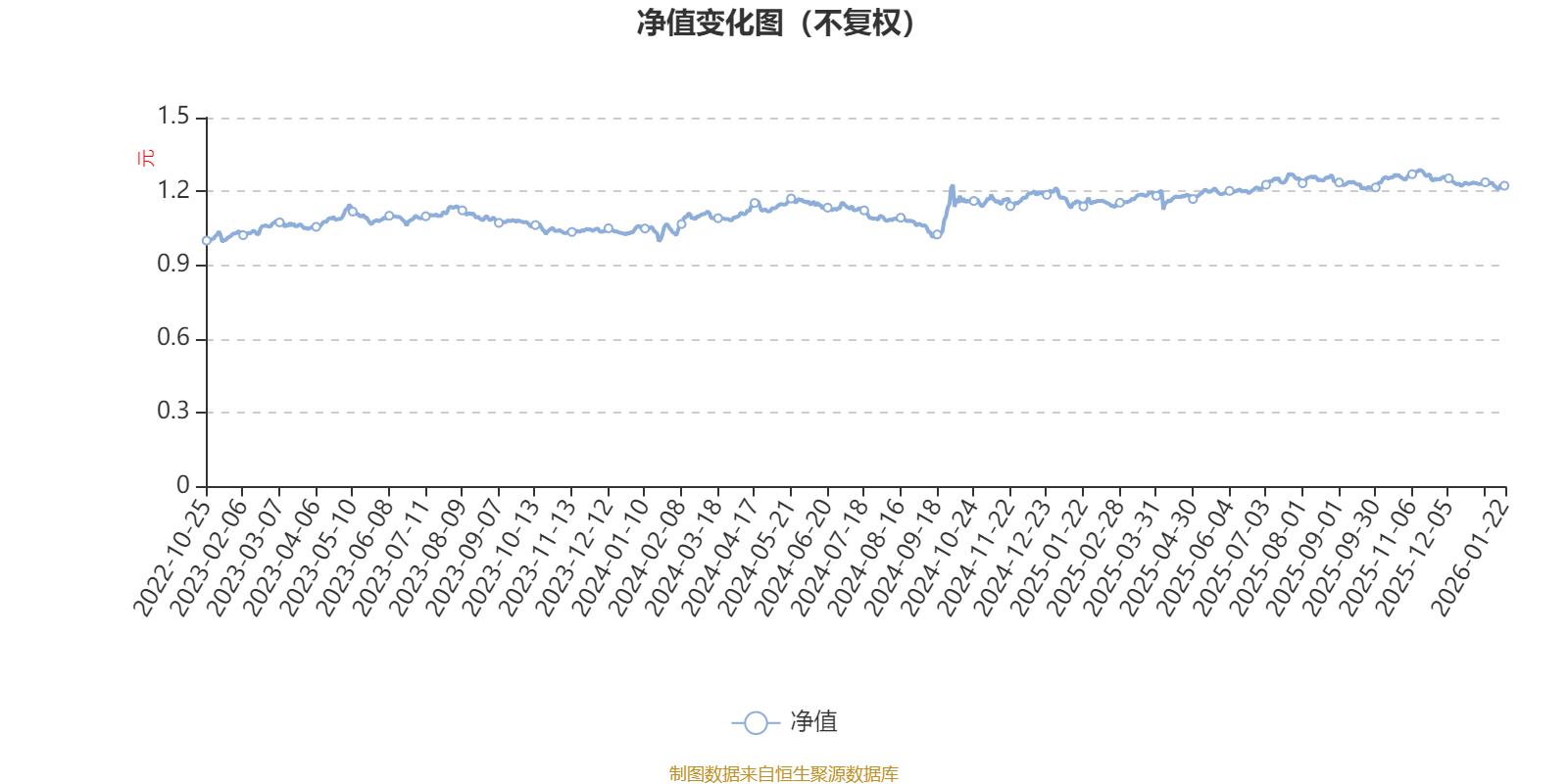
Core Viewpoint - The AI Fund, CITIC Securities Dividend Smart Selection Mixed A (016774), reported a profit of 744,600 yuan for Q4 2025, with a weighted average profit per fund share of 0.0216 yuan, and a net value growth rate of 1.12% for the period [4]. Fund Performance - As of January 22, the fund's unit net value was 1.223 yuan, with a total fund size of 30.8486 million yuan [4][16]. - The fund manager, Wang Peng, oversees 8 funds, with the highest one-year return of 47.34% for CITIC Securities CSI 1000 Index Enhanced A, while CITIC Securities Dividend Smart Selection Mixed A had the lowest at 7.38% [4]. Market Outlook - The fund management anticipates a transition from "repair-type growth" to "high-quality growth" in the Chinese economy, with increasing internal momentum [5]. - Key sectors expected to drive growth include artificial intelligence, high-end manufacturing, biotechnology, and advanced materials, supported by policy and industry developments [5]. - Consumer-related sectors are projected to experience moderate recovery due to improving income expectations and ongoing policy support, favoring companies with strong brand power and stable cash flow [5]. Fund Metrics - As of January 22, the fund's performance metrics include a three-month return of -2.74%, a six-month return of -3.82%, a one-year return of 7.38%, and a three-year return of 19.12%, ranking it within the respective peer groups [5]. - The fund's Sharpe ratio over the past three years is 0.6169, ranking 120 out of 383 comparable funds [10]. - The maximum drawdown over the past three years is 13.44%, with the largest quarterly drawdown occurring in Q3 2024 at 12.16% [12]. Investment Strategy - The fund maintained an average stock position of 89.82% over the past three years, with a peak of 93.32% at the end of Q1 2025 and a low of 67.38% at the end of 2022 [15]. - The top holdings of the fund include COFCO Sugar, Nanjing Bank, China Ping An, Agricultural Bank of China, Gree Electric Appliances, China Petroleum, China Construction Bank, Fuanna, Bank of Communications, and China Shenhua Energy [19].