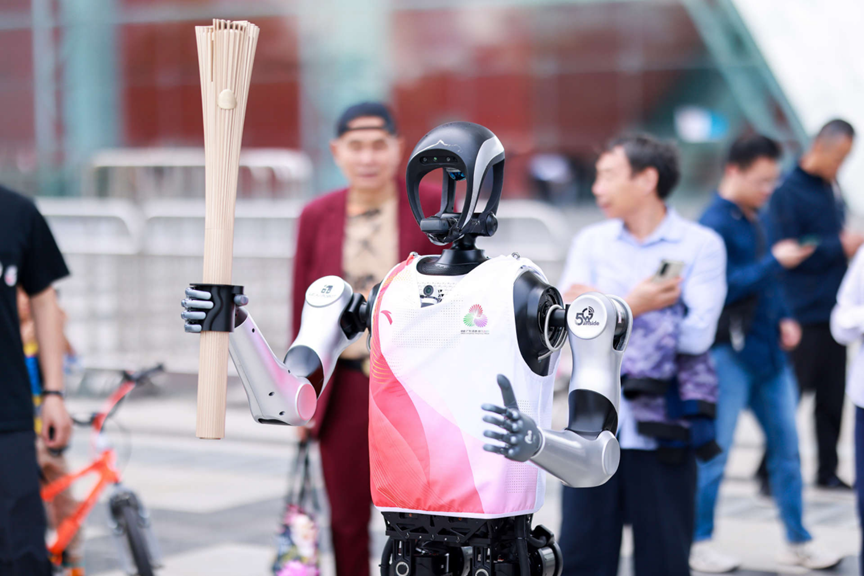
人形机器人“夸父”

Search documents
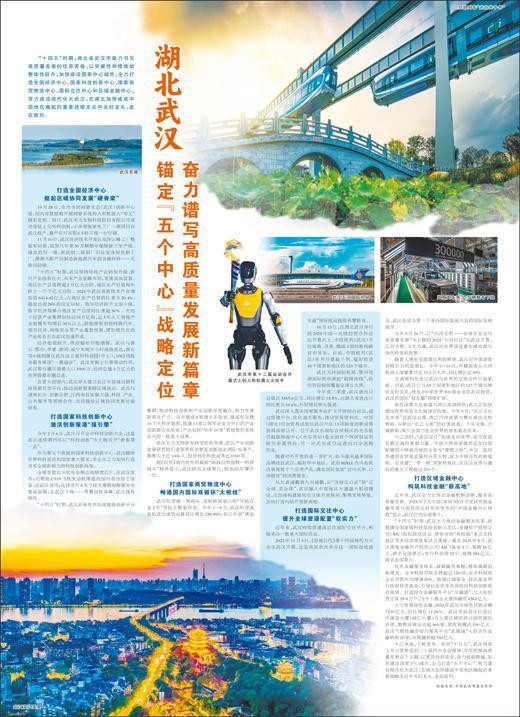
人民日报聚焦湖北武汉:锚定“五个中心”战略定位 奋力谱写高质量发展新篇章
Ren Min Wang· 2025-12-04 06:49
Core Insights - Wuhan is striving for high-quality development during the "14th Five-Year Plan" period, aiming to become a national central city and a key strategic hub in central China [1][4][13] Economic Development - Wuhan's GDP has surpassed 2 trillion yuan, with an annual increase of 100 billion yuan [4] - The high-tech industry added value reached 641.44 billion yuan, accounting for 30.4% of the GDP, exceeding the target of 28% [4] - The digital economy has ranked among the top ten in the country, contributing over 50% to the GDP [4] - The optical-electronic information industry cluster is advancing towards a trillion-level scale, with AI industry growth averaging over 30% annually [4] Regional Collaboration - Wuhan has established high-speed rail connections with nearby cities, enhancing regional collaboration [4] - The city is leading the creation of a technology resource-sharing platform in the middle reaches of the Yangtze River, promoting cross-regional innovation [5] Technological Innovation - Wuhan has been designated as a national technology innovation center, focusing on high-level innovation platforms and deep integration of technology and industry [6] - The city has launched several groundbreaking technologies, including the world's first high-precision chip and advanced processing equipment for aircraft engines [6] - Wuhan ranks eighth globally in the "2024 Nature Index - Research Cities" [6] Trade and Logistics - Wuhan's Yangluo Port saw a 258.86% increase in cargo volume in the first nine months of the year [8] - The city has established new routes for the China-Europe Railway Express, with over a thousand trips annually [8] - In the first three quarters, Wuhan's import and export value reached 336.96 billion yuan, accounting for 54.6% of Hubei's total [8] International Engagement - Wuhan has hosted significant international events, enhancing its global presence [10] - The city has established friendly relations with 127 cities in 65 countries, expanding its international network [10] Financial Development - Wuhan ranks tenth in the national financial center index, reflecting its growing financial services sector [12] - The city has launched several financial innovation initiatives, including a national-level technology insurance demonstration zone [12] - Green loans in Wuhan reached 723 billion yuan, with a year-on-year growth of 12.28% [13]

广东强化科技创新和产业创新深度融合
Ren Min Ri Bao· 2025-12-01 22:11
Group 1 - The core theme of the articles revolves around the integration of technology innovation and industrial development in Guangdong, emphasizing the establishment of innovation platforms and the promotion of deep integration between research and industry [1][2][3][4][5]. - Guangdong has established a robust ecosystem for innovation, with over 100 robot companies and nearly 10 universities and research institutions in Shenzhen's "Robot Valley," facilitating close collaboration between academia and industry [1]. - The National High-Performance Medical Device Innovation Center in Shenzhen has successfully developed several groundbreaking technologies, including the first domestic ECMO system, showcasing the center's role in bridging research and industry [2]. - Guangdong's reforms in technology achievement transformation, such as granting ownership rights to research teams, have led to the establishment of successful companies like Zhongke Yuntu, which specializes in drone remote sensing [3]. - The province's focus on policy innovation has resulted in significant funding for research and development, with a projected R&D expenditure of 510 billion yuan in 2024, reflecting a commitment to enhancing the innovation ecosystem [5]. Group 2 - The Guangdong provincial government has implemented a series of measures to support enterprise-led innovation, increasing the proportion of projects led by companies in key research and development plans to over 80% [4]. - The province's emphasis on creating a favorable policy environment has led to approximately 90% of research funding and patent applications originating from enterprises, highlighting the central role of companies in driving innovation [5]. - Guangdong is actively formulating a comprehensive plan for deepening scientific and technological system reforms during the 14th Five-Year Plan period, aiming to build a modern industrial system and enhance its competitive edge globally [5].
激情全运会 活力大湾区丨科技多维度赋能本届全运会 闭幕式“液态画布”备受期待
Yang Guang Wang· 2025-11-20 02:49
Core Insights - The 15th National Games showcase the integration of advanced technology in sports, highlighting the theme of "technology empowering sports" [1][2][3] Group 1: Technological Innovations - Over 130 high-tech products have been applied in various aspects of the event, including venue operations, safety assurance, and humanistic care [1] - Notable technologies include the remote-controlled submersible "Haima," which collects combustible ice from depths of over 1500 meters, demonstrating the synergy between technology, sports, and environmental sustainability [1] - The event features humanoid robots, AI-generated mascots, and other innovations that enhance the precision and efficiency of event services [2] Group 2: Event Experience and Community Engagement - Four core scenarios of technology application include the opening ceremony, smart venues, event security, and assistance for the disabled [1] - The integration of 14 technology-driven projects in the event has improved the overall experience, making it more engaging for participants and spectators [2] - The closing ceremony on November 21 will showcase cutting-edge technologies such as liquid canvas, naked-eye 3D, and 5G cloud control, further emphasizing the role of technology in urban development and collaboration in the Guangdong-Hong Kong-Macau Greater Bay Area [3]
让产业“家底”更加殷实——推动“十五五”时期经济社会发展向新而行②(评论员观察)
Ren Min Ri Bao· 2025-11-16 21:57
Core Insights - The development of a modern industrial system is essential for China's modernization and is a key focus for integrating technological and industrial innovation [2][3] - The emphasis on problem-oriented approaches aims to address weaknesses in the industrial system, fostering deep integration between innovation chains and industrial chains [2][3] Group 1: Technological and Industrial Innovation - The robot industry is rapidly evolving, with humanoid robots like "Kua Fu" participating in significant events, showcasing advancements in technology and skills [1] - China is projected to account for two-thirds of global robot patent applications in 2024, maintaining its position as the largest industrial robot market for 12 consecutive years [1] - The synergy between technological innovation and industrial innovation is crucial for driving new industries and upgrading traditional sectors, contributing to the construction of a modern industrial system [1] Group 2: Strategic Focus and Safety - The 20th Central Committee of the Communist Party has prioritized building a modern industrial system as a strategic task for the 14th Five-Year Plan, emphasizing the importance of a robust real economy [2] - Ensuring technological independence and security is fundamental to the industrial system, with advancements in key areas like high-speed rail and 5G technology reinforcing China's competitive edge [2] Group 3: Innovation and Enterprise Role - Effective transformation of innovations into practical applications is vital, with pilot testing being a critical step in moving from laboratory success to industrial implementation [3] - Companies play a central role in innovation, with examples like the General Technology Group's breakthroughs in machine tools and Huawei's advancements in operating systems highlighting the importance of enterprise-led innovation [3] - The forecast for the 14th Five-Year Plan period indicates that strategic emerging industries such as new energy and new materials will create several trillion-yuan markets, emphasizing the need for integrated development of education, technology, and talent [3]
活力大湾区 满满科技范
Ren Min Ri Bao· 2025-11-15 02:22
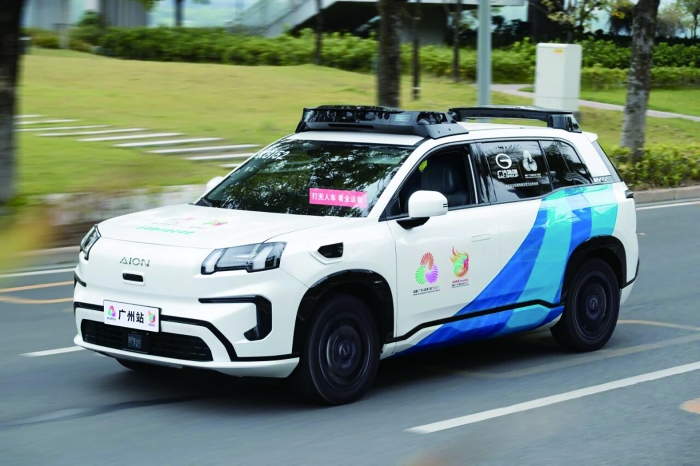
Core Insights - The 15th National Games is showcasing the integration of advanced technology in sports events, emphasizing the role of innovation in enhancing the overall experience and operational efficiency [4][11]. Group 1: Technological Integration - Over 130 high-tech products are being utilized across four main areas: event opening, smart venues, event security, and technology for assisting the disabled [4]. - The event features a "smart brain" that manages the operation of venues, ensuring smooth event execution through real-time monitoring of 9,873 devices [5][6]. - AI technologies are being employed for live broadcasting, data tracking, and crowd management, shifting the operational model from experience-based to data-driven management [7]. Group 2: Venue and Infrastructure Enhancements - More than 90% of the 75 competition venues in Guangdong have been upgraded with AI, big data, and cloud computing technologies, enhancing their functionality and efficiency [6]. - The implementation of 5G technology and a "cluster communication" system facilitates real-time communication across regions, improving coordination among event organizers and security teams [6]. Group 3: Urban and Transportation Innovations - The use of micro-nano passive cooling coatings on buildings aims to reduce energy consumption and carbon emissions during the event [8]. - Autonomous driving services provided by Didi enhance transportation efficiency for attendees, showcasing the practical application of self-driving technology [8]. - Smart traffic management systems in Macau ensure real-time monitoring and quick response to traffic conditions during the events [9]. Group 4: Industry and Social Impact - The event serves as a platform for the practical application of robotics and AI technologies, with companies like Leju Robotics and UBTECH securing orders from major automotive manufacturers [10]. - Innovations showcased during the games are expected to transition into everyday applications, benefiting urban development and industry growth [11]. - The integration of assistive technologies for the disabled highlights the commitment to inclusive urban development and social progress [11].
科技点亮十五运会 智能技术赛后将加速商用
Shang Hai Zheng Quan Bao· 2025-11-13 17:55
Group 1: Technological Innovations at the Event - The 15th National Games showcased over 130 high-tech products focusing on artificial intelligence and new-generation information technology to enhance event operations and spectator experience [5][11] - The event featured the first-ever collection of the Olympic flame from combustible ice at a depth of 1522 meters in the South China Sea, marking a historic achievement in sports [6][9] - A humanoid robot named "Kua Fu" participated in the torch relay, utilizing a 5G-A network for real-time interaction, demonstrating advancements in robotics and communication technology [7][10] Group 2: Autonomous Vehicles and Robotics - Over 300 autonomous vehicles were deployed in Guangzhou for the event, operating on five bus routes and 11 support lines, showcasing the city's commitment to smart transportation [11][13] - AI-powered patrol robots were utilized for security and order maintenance during the event, with seven units deployed for practical testing and demonstration [11][13] - The event served as a testing ground for various intelligent technologies, including autonomous driving and security robots, with plans for post-event applications in urban transportation and public safety [13] Group 3: Enhanced Spectator Experience - The "Event Freedom Perspective System" provided multi-angle video capture of various sports, enhancing viewer engagement and aiding athletes in performance analysis [12] - An AI-powered assistant was developed to provide real-time information about the event schedule and venues, improving visitor experience [12] - A cultural AR digital RMB wallet was introduced, allowing cashless payments and interactive experiences with event mascots, integrating technology with cultural elements [12]



聚焦大湾区丨湾区携手 同心筑梦——粤港澳共同承办十五运会展现“一国两制”实践新气象
Xin Hua Wang· 2025-11-08 00:21
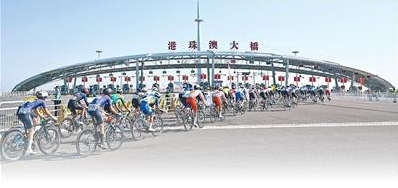
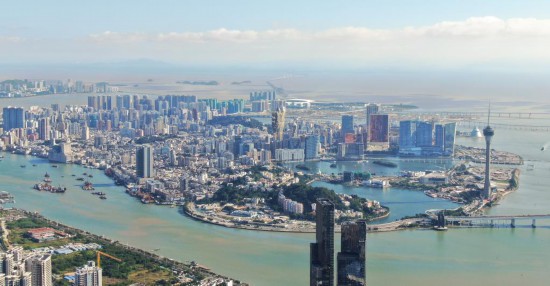
Core Points - The 15th National Games torch relay has concluded, showcasing the collaborative spirit of the Guangdong-Hong Kong-Macao Greater Bay Area, symbolized by the "Heart of Unity" flame [1] - The event highlights the practical implementation of "One Country, Two Systems" and the progress in regional integration [1] Group 1: Deepening Connectivity - The 15th National Games features cross-border events, with the introduction of 16 dedicated self-service lanes at Hong Kong's international airport and other key locations, allowing participants to pass through customs in just 7 seconds using facial recognition technology [2] - An estimated 5,000 individuals are expected to utilize these exclusive arrangements, significantly enhancing customs efficiency [2] - The event includes two cross-border competitions, with a "port as the racecourse" model, enabling athletes to pass through customs seamlessly during high-speed competitions [2] Group 2: Regulatory Cooperation - Organizing cross-border events necessitates deep collaboration among the three regions in areas such as regulatory recognition and information sharing [4] - A "1+4" liaison mechanism has been established to address cross-border cooperation challenges, including a dedicated coordination department for Hong Kong and Macao [4] - Over 6,000 mainland participants will travel to Hong Kong and Macao, while 3,000 from Hong Kong and Macao will compete in the mainland, marking the highest participation numbers to date [4] Group 3: Technological Empowerment - The event features the first-ever use of a humanoid robot, "Kua Fu," as a torchbearer, showcasing advancements in robotics and 5G technology [5] - In Shenzhen, over 300 autonomous vehicles are deployed, with 260 serving key transport needs, and drones are utilized for aerial surveillance in Hong Kong [8] - Approximately 40% of the core technologies used in the event originate from Hong Kong, demonstrating the integration of research and application between the regions [8] Group 4: Cultural Integration - The joint hosting of the games serves as a significant opportunity for youth from the three regions to engage and foster a sense of national identity [9] - Various cultural activities, including sports events and volunteer programs, have been organized to enhance interaction among the youth of the Greater Bay Area [11] - Travel bookings in major cities of the Greater Bay Area have surged, with a week-on-week increase of over 40% in travel searches, indicating a boost in consumption driven by the event [11]
人形机器人“火炬手”现身十五运 5G-A助力具身智能“加速跑”
Xin Lang Cai Jing· 2025-11-07 13:49
Core Insights - The world's first humanoid robot equipped with 5G-A technology, named "Kua Fu," successfully completed a torch relay as the "0th torchbearer" at the 15th National Games, marking a significant milestone in the integration of 5G-A and embodied intelligence [1][3] - The event showcased the capabilities of 5G-A in real-time control and communication, enabling the robot to perform complex tasks independently without human assistance [3][6] Group 1 - The humanoid robot carried a 1.6 kg torch and demonstrated fluid movements and stability, highlighting advancements in motion control algorithms and remote operation via 5G-A technology [1] - China Mobile optimized over 20 stations along the relay route to create a high-speed information network, ensuring real-time transmission of high-definition footage and precise execution of commands by the robot [3] - Huawei implemented multiple 5G-A solutions to enhance network quality, achieving peak rates of up to 5 Gbps and supporting AI interactions and high-capacity applications [3][6] Group 2 - A collaborative demonstration of a 5G-A embodied intelligent robot for power grid inspections was launched by China Mobile and partners, showcasing the robot's ability to operate in hazardous environments [4][6] - The embodied intelligent robot improved inspection efficiency by 84% for Southern Power Grid, indicating a shift from laboratory experiments to real-world applications [6] - The 5G-A network supports high-precision positioning and large-scale data collection, essential for the development and adaptation of humanoid robots across various industries [6][8] Group 3 - As of October 2025, the user base for 5G-A packages in China exceeded 45 million, with extensive deployment across over 330 cities [6][8] - 5G-A is evolving into a core foundation for an intelligent society, facilitating applications across industrial production, home life, and healthcare services [8]

马斯克万亿薪酬计划获批;科兴制药递表港交所;雷鸟创新完成C轮融资 | 科技一周
Sou Hu Cai Jing· 2025-11-07 07:01
Group 1: Corporate Developments - Elon Musk's 10-year compensation plan approved by Tesla shareholders with 75% majority, potentially worth around $1 trillion in stock [2] - OpenAI's annual revenue expected to exceed $20 billion by the end of this year, with a goal of reaching "hundreds of billions" by 2030 [3] - Apple plans to launch its first low-cost Mac laptop priced under $1,000 in the first half of next year, targeting students and general users [4] Group 2: Technology and AI - Google accelerates the market release of its most powerful AI chip, the seventh-generation Tensor Processing Unit (TPU) named Ironwood, which is four times faster than its predecessor [5] - A strategic partnership formed between ChipLink Integrated and Yuxin Electronics to strengthen the AI semiconductor supply chain, focusing on AI server power management chips [8][9] Group 3: Robotics and Innovation - The world's first 5G-A humanoid robot, "Kua Fu," successfully completed a torch relay at the 15th National Games, showcasing its capabilities in dynamic tasks [6][7] - Xiaopeng Motors' CEO responds to concerns about the company's IRON robot, emphasizing its autonomous capabilities and plans for mass production by the end of 2026 [10] Group 4: Market Insights - Sinovac Biotech submits an application for listing on the Hong Kong Stock Exchange, with a history dating back to 1989 and a focus on biopharmaceutical innovation [11] - Thunderbird Innovation completes a C-round financing to enhance its position in the global consumer-grade AI+AR glasses market, setting a record for single financing amount in 2025 [12] - Deep AI secures 200 million RMB in funding within three months to advance the commercialization of embodied intelligent robots [13]


机器人火炬手“夸父”亮相,安世中国:已建立充足的成品与在制品库存
Zheng Quan Shi Bao· 2025-11-03 00:18
Key Points - A new stock subscription is available today [1] - The State Council meeting on October 31 focused on deepening reforms in key areas and expanding institutional openness [3] - The Ministry of Finance and the State Taxation Administration announced tax policies related to gold trading, exempting VAT until the end of 2027 for certain transactions [3] - The China Securities Regulatory Commission released draft guidelines for the performance benchmarks of publicly offered securities investment funds [4] - A significant breakthrough in nuclear energy was reported, with China achieving thorium-uranium fuel conversion based on molten salt reactors [4] - The China Listed Companies Association reported improved performance among listed companies, highlighting the role of innovation and structural upgrades [5] - The 15th National Games torch relay featured a humanoid robot "Kua Fu" as a torchbearer, marking a global first [5] - Anshi China has established sufficient inventory to meet customer demand through the end of the year and beyond [7] - Vanke A is set to receive a loan of up to 22 billion yuan from Shenzhen Metro Group [7] - Long-term growth in new energy vehicle sales was reported for Chang'an Automobile and Seres [7] - Great Wall Motors reported October sales of 143,100 vehicles, a year-on-year increase of 22.5% [8] - ST Yifei signed an overseas procurement order worth approximately 190 million yuan [9] - Tianqi Co. signed a strategic cooperation framework agreement with Foxconn Automotive [10] - Several companies are undergoing significant changes, including mergers and acquisitions, and stock repurchases [13][14][15][16]