恒生港股通高股息低波动指数

Search documents
办年货都在找“折扣”?——有一份自带“折上折”的红利资产请查收
Sou Hu Cai Jing· 2026-02-12 03:26
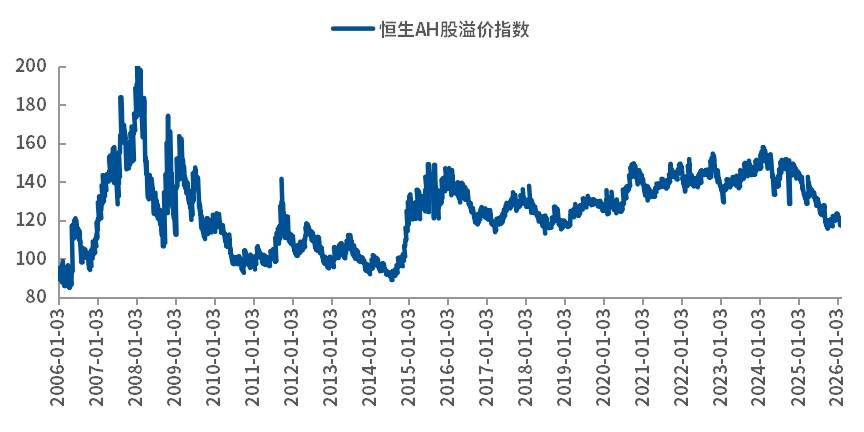
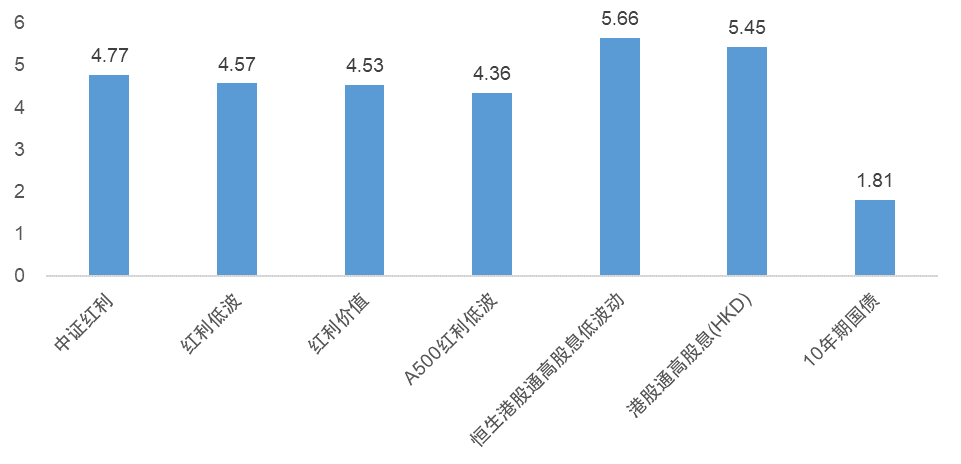
Core Viewpoint - The article discusses the investment opportunities in Hong Kong dividend stocks, highlighting their attractive pricing compared to A-shares, which can be seen as a "discount" in the investment market [1][2][3]. Group 1: Price Comparison - Many high-quality companies are listed on both A-shares and H-shares, leading to price discrepancies where H-shares are often cheaper than A-shares [2][3]. - Historical data shows that H-shares can be priced at 50% to 60% of their A-share counterparts due to factors like market liquidity and investor structure [3][4]. Group 2: Dividend Yield - The lower price of H-shares results in a higher dividend yield, as the formula for dividend yield is dividend amount divided by stock price [11]. - The article emphasizes that H-shares generally offer more attractive dividend yields compared to A-shares, providing a sense of stability for investors in a volatile market [11][14]. Group 3: Investment Strategy - Direct investment in H-shares can be challenging for ordinary investors due to potential liquidity issues and performance risks [15]. - Index investing is recommended as a strategy to mitigate risks, with specific products like the Hong Kong High Dividend Index and the Hang Seng High Dividend Low Volatility Index being highlighted for their focus on high dividend yields and stability [18][20]. Group 4: Market Environment - The article notes that the investment landscape remains uncertain, influenced by factors such as Federal Reserve interest rate changes and domestic economic recovery [21]. - Allocating a portion of the portfolio to Hong Kong dividend assets is suggested as a strategy to balance potential capital gains with the security of high dividend yields in a fluctuating market [21].

节前波动加大,如何跨市场构建一个攻守有道的红利组合?
Sou Hu Cai Jing· 2026-02-11 03:06
Core Viewpoint - The article emphasizes the importance of dividend strategies as a stable investment approach amidst market volatility, highlighting the "Dividend Three Heroes" as a framework for long-term investment planning [1]. Group 1: Dividend Strategy Overview - The "China Securities Dividend Quality ETF" focuses on high-quality companies with solid fundamentals, excluding banks, and aims for a balance between dividend yield and growth potential [3][5]. - The index prioritizes sectors such as pharmaceuticals, food and beverage, and non-ferrous metals, showcasing a "value growth" characteristic that has historically outperformed mainstream dividend indices [5][6]. Group 2: Performance Metrics - The "China Securities Dividend Quality Total Return Index" has shown a total return of 588.87% with an annualized return of 17.97% since its inception, indicating strong performance compared to other indices [6]. - The annualized volatility and maximum drawdown of the "China Securities Dividend Quality Total Return Index" are relatively controlled, suggesting a favorable risk-return profile [6][10]. Group 3: Comparison with Other Indices - The "China Securities Dividend Index" includes 100 stocks with high cash dividend yields and consistent dividend payments, outperforming benchmark indices for six consecutive years since 2020 [8][10]. - The "Hang Seng High Dividend Low Volatility Index" offers a higher dividend yield of 6.83% compared to the "China Securities Dividend Index" at 5.07%, indicating a potentially better value proposition in the current market [14][13]. Group 4: Investment Recommendations - The article suggests a diversified approach to dividend investing, combining core defensive positions with growth-oriented and low-volatility options to navigate market fluctuations effectively [19][18].

红利板块集体上行,恒生红利低波ETF易方达(159545)、红利ETF易方达(515180)标的指数“三连阳”
Sou Hu Cai Jing· 2026-02-10 13:39
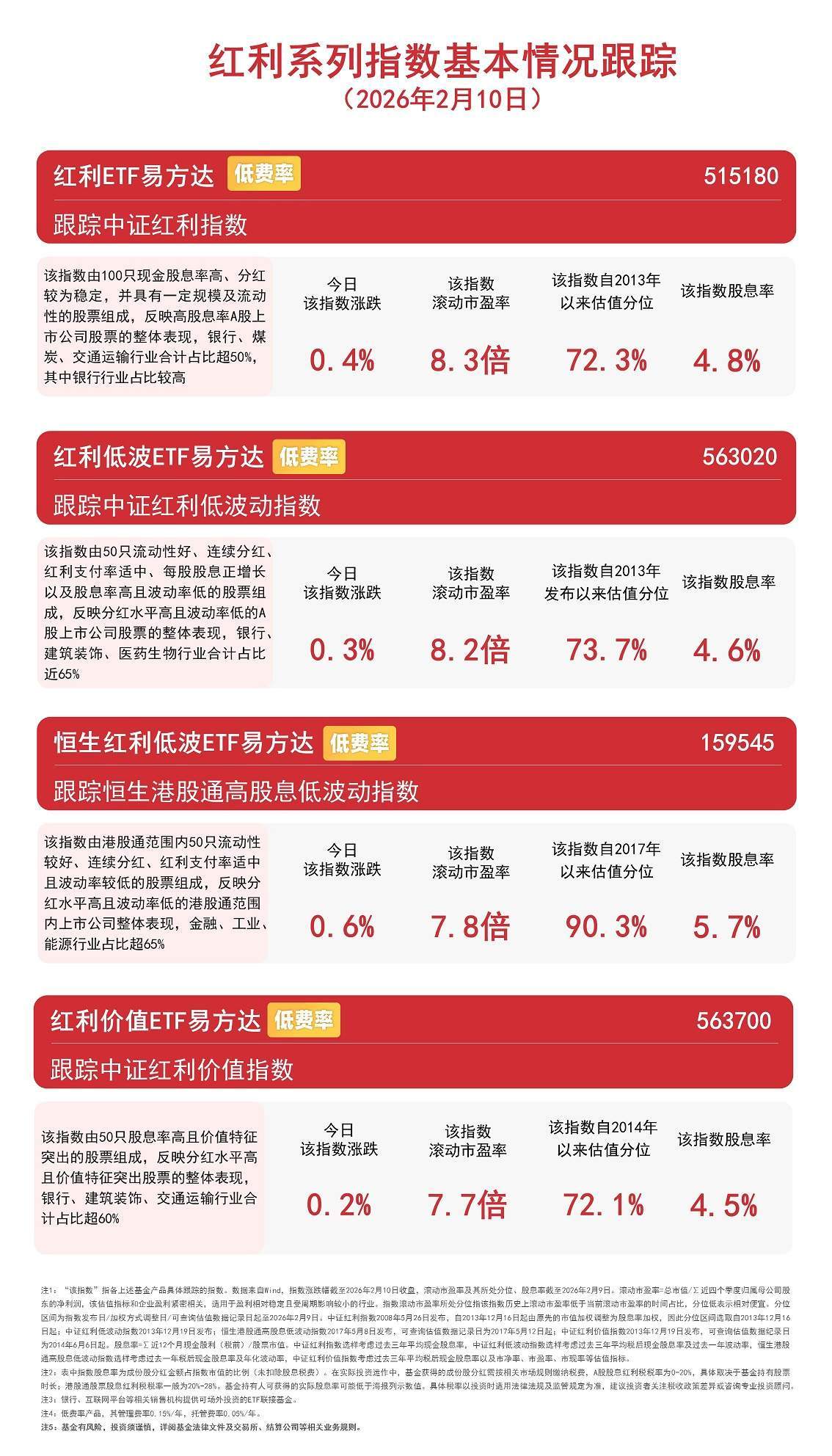
Group 1 - The Hang Seng High Dividend Low Volatility Index rose by 0.6%, while the CSI Dividend Index increased by 0.4%, achieving a "three consecutive days of gains" [1] - The E Fund Hang Seng High Dividend Low Volatility ETF (159545) saw a net subscription exceeding 10 million units today [1] - E Fund's dividend ETFs, including the Hang Seng High Dividend Low Volatility ETF and the Dividend ETF, received net inflows of 190 million yuan and 490 million yuan respectively over the past week [1] Group 2 - E Fund is currently the only fund company that implements low fee rates for all its dividend ETFs, with a management fee rate of 0.15% per year for its products [1] - The CSI Dividend Index consists of 100 stocks with high cash dividend yields and stable dividends, with over 50% of its composition from the banking, coal, and transportation sectors [3] - The CSI Low Volatility Dividend ETF tracks stocks with good liquidity, continuous dividends, and low volatility, with nearly 65% of its composition from the banking, construction decoration, and pharmaceutical sectors [3]
风止高息处,用红利资产坚守长期现金流
Jin Rong Jie· 2026-02-10 13:09
Group 1 - The core viewpoint emphasizes the importance of dividend assets that provide stable cash flow and defensive resilience in a low interest rate environment, particularly for ordinary investors seeking to navigate market fluctuations [1] Group 2 - Dividend indices are not merely single stock selections but a sophisticated toolbox that caters to diverse investment needs, with various indices in the A-share market focusing on different aspects and complementing each other [2] - The CSI Dividend Index is recognized as the benchmark for A-share dividend investment, selecting companies with stable dividends over the past three years and high dividend yields, comprising 100 quality stocks willing to share profits with shareholders [2] - The CSI Dividend Low Volatility Index combines high dividend characteristics with low volatility, resulting in better performance stability, while the CSI Dividend Value Index focuses on undervalued, fundamentally solid high dividend stocks to enhance valuation safety [2] - Data shows that the annualized volatility of the CSI Dividend Low Volatility Index over the past year is 11.34%, lower than that of the other two indices, and the rolling P/E ratio of the CSI Dividend Value Index is 7.73 times, lower than the other indices [2] Group 3 - The newly launched CSI A500 Dividend Low Volatility Index in 2025 achieves a dual breakthrough by focusing on quality leading companies while expanding industry coverage, significantly increasing weights in sectors like pharmaceuticals, oil and gas, and public utilities compared to previous indices [3] Group 4 - The Hong Kong dividend indices, influenced by market liquidity and dividend tax rules, generally exhibit higher dividend yields, with two core indices complementing A-share indices: the CSI Hong Kong Stock Connect High Dividend Investment Index focuses on high dividend characteristics, while the Hang Seng Hong Kong Stock Connect High Dividend Low Volatility Index combines high dividends with low volatility [6] - In a low interest rate environment, relying solely on deposits may not meet the rigid cash flow needs of daily expenses or support long-term asset appreciation, making dividend indices with stable dividends and solid fundamentals a suitable choice for ordinary investors [6] Group 5 - The "Dividend+" strategy aims to enhance the quality and sustainability of dividends by focusing on companies with stable profitability and ample free cash flow, ensuring that investors can anchor their returns more on long-term value [8] - The National Value 100 Index targets undervalued, high-margin quality stocks, while the National Free Cash Flow Index captures "cash cow" companies with sustainable cash flow generation capabilities [8] Group 6 - E Fund has diversified its dividend product line, offering four differentiated investment solutions tailored to various investor needs [10] - For investors seeking regular cash flow, E Fund offers ETFs with different dividend schedules, allowing for monthly dividends [11] - For those focused on long-term compounding value, the E Fund Dividend ETF, which tracks the CSI Dividend Index and has a scale exceeding 100 billion, provides opportunities for reinvestment of annual dividends [12] - Investors looking to enhance long-term returns can consider high-growth indices while maintaining a solid dividend base, balancing stability and potential returns [13] - For investors pursuing lower volatility and more stable performance on a high dividend basis, E Fund offers specific ETFs, while those seeking stronger valuation safety can consider value-focused ETFs [14]
当市场风格切换,红利资产往往这样走
Sou Hu Cai Jing· 2026-01-26 07:52
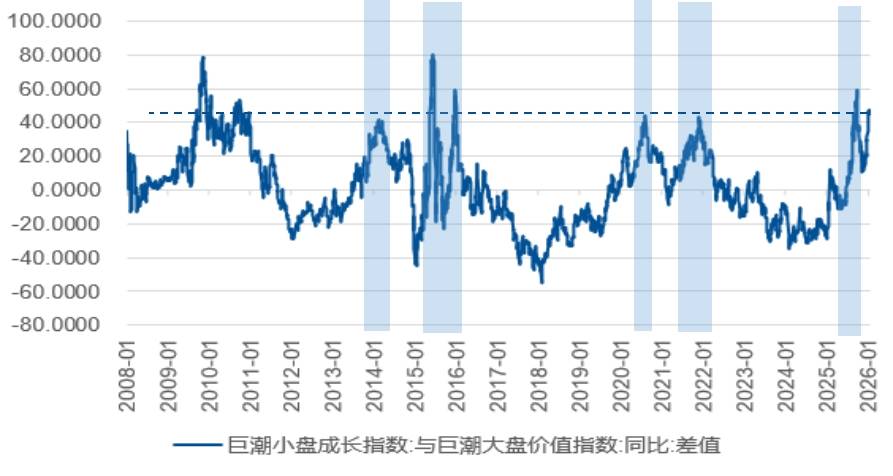
Core Viewpoint - The recent extreme performance of small-cap growth stocks, driven by sectors like AI applications, electric grids, and semiconductors, has led to a historical divergence between large-cap value stocks and small-cap growth stocks, indicating a potential market reversal [1] Historical Review of Style Divergence - Historical analysis shows that after reaching extreme divergence, value stocks typically experience a "value recovery" within a month, with significant excess returns for dividend indices [3][5] - In previous instances of style divergence peaks, the average excess returns of dividend indices relative to the CSI 300 were 4.95%, 6.95%, 1.26%, and 9.47% in January 2014, May 2015, December 2015, and December 2021 respectively [4] Recent Market Signals - Recent regulatory measures have cooled down overheated speculative trading, signaling a shift towards a performance-driven "slow bull" market, which may pressure growth stocks and lead to a return to value stocks [6] - There has been a notable inflow of funds into value sectors, particularly in non-ferrous metals and chemicals, indicating a recovery in dividend assets [6] Optimal Strategy in a Slow Bull Market - Dividend products, characterized by stable dividends and lower volatility, are essential for long-term investment portfolios, providing absolute returns and smoothing account fluctuations [7] - In anticipation of a "slow bull" market, a multi-factor dividend strategy is recommended, incorporating factors like low volatility and value, which can enhance both dividend income and capital gains [7]
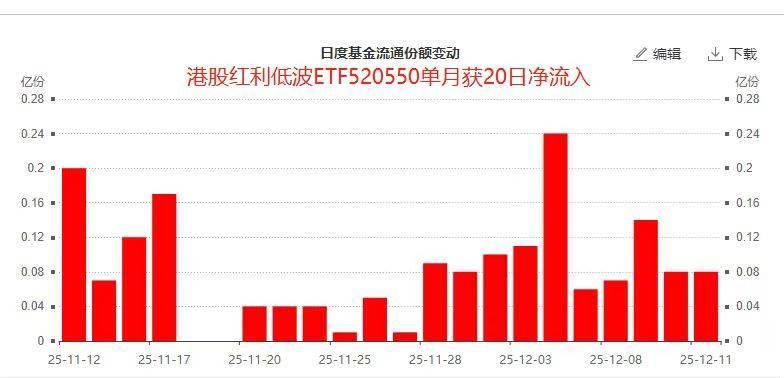
单月20日汹涌净流入!港股红利低波ETF(520550)“压舱石”效应尽显
Sou Hu Cai Jing· 2025-12-12 02:49
Group 1 - The core viewpoint is that as market volatility increases towards year-end, funds are rapidly flowing into defensive assets, with the Hong Kong Dividend Low Volatility ETF (520550) experiencing significant net inflows over 20 trading days [1][3] - The fund's share size has expanded dramatically, with a year-to-date increase of 441.96%, reaching a historical high [1] - In the context of recent adjustments in domestic risk assets, stable and high-dividend Hong Kong stocks have shown remarkable resilience, becoming a key choice for funds seeking stable returns [3] Group 2 - The current policy environment aims to guide long-term capital into the market and maintain capital market stability, which is a clear directive [3] - Analysis from Huatai Securities indicates that policies are focused on promoting long-term capital from public funds, insurance, and pensions, providing multi-layered support for the market [3] - The ETF's core appeal lies in its high dividend yield, with the tracked index showing a 12-month dividend yield of 6.5%, significantly higher than the 10-year government bond yield of 1.85% [3] Group 3 - The fund is designed with a low comprehensive fee rate of 0.2% and employs a monthly dividend assessment mechanism and T+0 trading to enhance capital efficiency [3] - The fund's holdings are primarily in mature sectors such as finance and energy, with a 5% weight limit on individual stocks to diversify risk and dynamically exclude stocks with significant declines to avoid "dividend traps" [3] - Investors can participate in the fund through linked funds (Class A: 024029/Class C: 024030) [3]
降息预期或升温! 这会怎么影响港股红利指数
Sou Hu Cai Jing· 2025-12-09 03:15
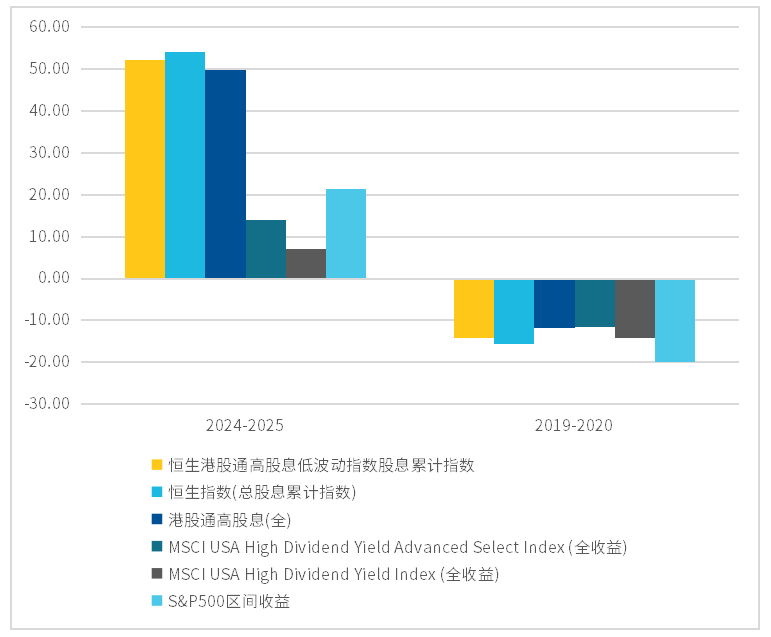
Core Viewpoint - The expectation of a Federal Reserve rate cut in December has surged to around 89%, leading to a positive response in global markets, including significant gains in the Nasdaq, S&P 500, and Hong Kong stock markets. However, high-dividend assets have shown even more resilience, with the Hang Seng High Dividend Low Volatility Index recording a 5% increase over the past month, highlighting its unique value during a rate-cutting cycle [1]. Group 1: Differential Response of Dividend Assets to Rate Cuts - The performance of high-dividend assets in Hong Kong is more influenced by the reasons behind rate cuts rather than the occurrence of rate cuts themselves. Historical analysis shows that during the 2019-2020 rate cut cycle, driven by the COVID-19 pandemic, the Hang Seng High Dividend Low Volatility Index fell by 14.16%, while the broader Hang Seng Index dropped by 15.69%. In contrast, during the 2024-2025 preventive rate cut cycle, the same index rose by 52.10% [2]. - The U.S. high-dividend index also exhibited similar divergence: during the preventive rate cut cycle, the S&P U.S. Dividend Growth Index increased by 11.60%, whereas it fell by 18.56% during the crisis-driven rate cuts in 2020, slightly outperforming the S&P 500's decline of 19.9% [2]. Group 2: Key Factors Influencing High-Dividend Asset Performance - An in-depth analysis of the last 20 years of Federal Reserve rate cut cycles reveals that the performance of high-dividend assets can be attributed to two main factors: preventive measures versus crisis response. In preventive rate cuts, high-dividend assets typically achieve excess returns of 15%-20%, as seen in the 1998 and 2024-2025 cycles. Conversely, during crisis response rate cuts, while high-dividend assets show relative resilience, absolute returns remain negative [5]. - The financial sector, which holds a significant weight in high-dividend indices, also impacts overall performance. High-dividend assets tend to perform well when CPI declines moderately and the financial sector is not under additional pressure [5]. Group 3: Conclusion on Securing Certain Returns in a Rate-Cutting Environment - The current market environment suggests that the upcoming Federal Reserve rate cut is primarily preventive, aimed at avoiding a "hard landing" for the U.S. economy rather than responding to an existing recession. With the U.S. economic fundamentals remaining stable, as evidenced by record online retail sales on Black Friday, the anticipated rate cut is expected to enhance the performance of high-dividend assets in Hong Kong [8]. - High-dividend investments focus on securing tangible cash flow returns rather than chasing short-term trends. In a rate-cutting cycle, high-dividend assets represent a favorable investment opportunity, providing both stable dividends and potential valuation recovery [8][9].
连续22日“吸金”,恒生红利低波ETF(159545)规模突破60亿元,创历史新高
Mei Ri Jing Ji Xin Wen· 2025-12-01 02:38
Group 1 - The Hong Kong stock market is showing strength, particularly in the dividend sector, with the Hang Seng High Dividend Low Volatility Index rising by 0.5% as of 10:00 AM, and constituent stocks like Luk Fook Holdings increasing by over 7% [1] - The Hang Seng Dividend Low Volatility ETF (159545) has seen net inflows for 22 consecutive trading days, with its latest scale exceeding 6 billion yuan, marking a new high since its inception [1] - Analysts suggest that the dividend sector in Hong Kong will remain attractive due to institutional investors' demand for stable returns towards the end of the year, alongside expectations of interest rate cuts by the Federal Reserve, which could positively impact the Hong Kong market [1] Group 2 - The management and custody fee rate for the Hang Seng Dividend Low Volatility ETF (159545) is only 0.2% per year, making it one of the low-cost options in the Hong Kong dividend ETF market [2] - Other dividend ETFs under E Fund, such as E Fund Dividend ETF (515180), Dividend Low Volatility ETF (563020), and Dividend Value ETF (563700), also implement this low fee structure, providing investors with cost-effective and diversified tools for high dividend asset allocation [2]
市场午后震荡,资金流向红利资产,恒生红利低波ETF(159545)盘中净申购近1亿份
Mei Ri Jing Ji Xin Wen· 2025-11-27 07:08
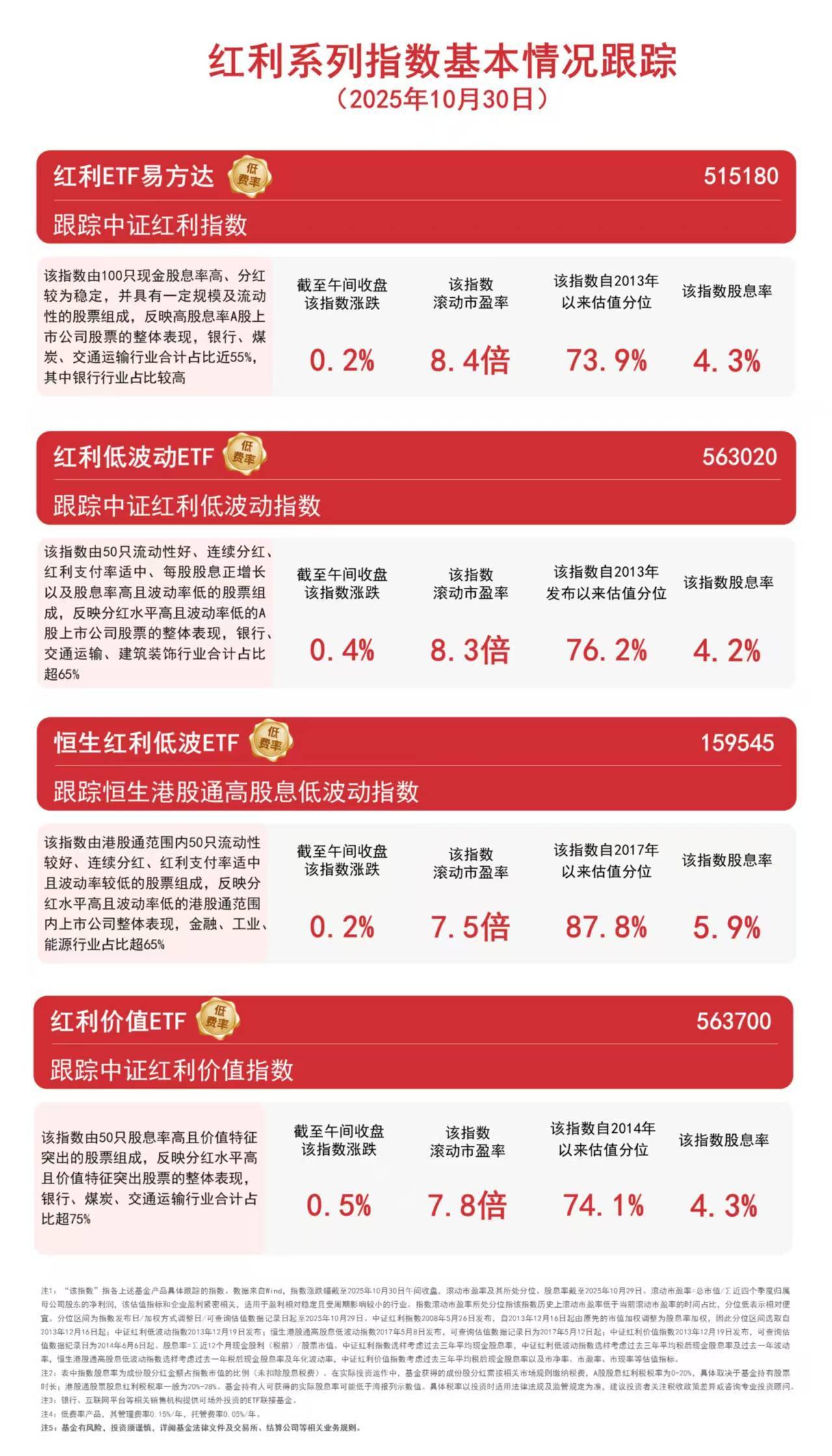
Group 1 - The core viewpoint of the article highlights the resilience of high-dividend sectors in the current market environment, particularly in response to weak economic data and a strong US dollar, which have led to decreased market risk appetite [1] - The Hang Seng High Dividend Low Volatility Index has seen a 0.1% increase, with the Hang Seng Dividend Low Volatility ETF (159545) experiencing a net subscription of nearly 100 million units during the day, accumulating over 500 million yuan in the first three trading days of the week [1] - According to China Merchants Securities, high-dividend strategies are favored by investors during periods of economic uncertainty, and potential economic stimulus policies may further benefit certain high-dividend cyclical industries due to expected profit recovery [1] Group 2 - The Hang Seng Dividend Low Volatility ETF (159545) tracks an index composed of 50 liquid stocks within the Hong Kong Stock Connect that have a history of continuous dividends, moderate payout ratios, and low volatility, with energy, finance, and public utilities sectors accounting for over 55% of the index [1] - The current dividend yield of the index is approximately 5.8%, making it an attractive option for investors seeking income [1] - Various dividend ETFs, including the Hang Seng Dividend Low Volatility ETF (159545) and others under E Fund, implement a management fee rate of 0.15% per year, which aids investors in low-cost allocation to high-dividend assets [1]
红利板块震荡上行,红利ETF易方达(515180)、恒生红利低波ETF(159545)受资金关注
Sou Hu Cai Jing· 2025-10-30 05:02
Core Insights - The article discusses the recent financial performance of a leading technology company, highlighting a significant increase in revenue and net profit for the last quarter [4] - It emphasizes the company's strategic investments in research and development, which are expected to drive future growth [4] Financial Performance - The company reported a revenue of $10 billion for the last quarter, representing a 15% increase year-over-year [4] - Net profit reached $2 billion, marking a 20% increase compared to the same period last year [4] Strategic Initiatives - The company has allocated $1 billion towards research and development, aiming to enhance its product offerings and maintain competitive advantage [4] - New product launches are anticipated to contribute significantly to revenue growth in the upcoming quarters [4] Market Position - The company continues to hold a leading position in the technology sector, with a market share of approximately 25% [4] - Competitive analysis indicates that the company is well-positioned against its main rivals, which have seen slower growth rates [4]