手打柠檬茶

Search documents
现制柠檬茶迈入百亿赛道,广东撑起“半壁江山”
Nan Fang Nong Cun Bao· 2026-02-26 12:35
Core Insights - The current ready-to-drink lemon tea market in China is projected to reach 11 billion yuan by 2025, with a year-on-year growth of 15.8% [3][4] - Guangdong province is leading the development of the ready-to-drink lemon tea industry, accounting for nearly 50% of the national market share [5][4] Industry Overview - The number of ready-to-drink lemon tea stores in China has increased from over 3,000 in 2020 to over 20,000 by 2025, representing a growth of approximately 7 times with a compound annual growth rate exceeding 47% [10][9] - More than 50% of the stores are chain brands, with the top three brands holding a market share of 22.7% [11][10] - The southern region of China shows a strong preference for lemon tea, with a high frequency of consumption and a solid market foundation [12][13] Regional Insights - By December 2025, the South China region will have the highest number of ready-to-drink lemon tea stores, accounting for 54.7% of the total, with Guangdong alone having over 9,000 stores, representing 45.3% [16][20] - Major cities like Guangzhou, Foshan, Shenzhen, Dongguan, Huizhou, and Zhanjiang rank among the top ten in store numbers, with Foshan having the highest density at approximately 13.52 stores per 100,000 people [21][22] Market Dynamics - The booming consumption atmosphere has led to an increase in the cultivation of fragrant lemons, attracting significant capital and entrepreneurs into the market [24] - Since 2021, the annual registration of companies related to ready-to-drink lemon tea has stabilized at around 1,000, with over 3,200 companies expected by December 2025 [25][26] Company Spotlight - LINLEE, a brand founded in Guangdong, has seen a net increase of over 400 stores in 2025, bringing its total to nearly 2,000 stores across 31 provincial-level administrative regions and over 200 cities, with annual sales exceeding 20 million cups [29][30] - The brand has developed a competitive edge through its "LINLEE Duck" IP system, enhancing interaction with consumers and distributing over 110 million "LINLEE Ducks" in 2025 [32][33] Supply Chain Impact - The strong market demand has positively impacted the upstream lemon cultivation industry, with fresh lemon consumption in China exceeding 2.7 million tons in 2023, and the ready-to-drink tea segment consuming over 150,000 tons [36] - In Guangdong, the planting area for fragrant lemons has surpassed 20,000 acres, with production expected to exceed 200,000 tons by 2025, reflecting a year-on-year growth of 154.7% [38]


价格卷不动,奶茶品牌又开始玩消费升级了
东京烘焙职业人· 2026-02-01 08:32
Core Viewpoint - The article discusses the resurgence of bakery offerings among tea beverage brands as a response to market saturation and the need for product innovation, indicating a strategic shift towards enhancing customer experience and increasing average transaction value [5][19]. Group 1: Market Trends - Tea beverage brands are re-entering the bakery segment after previously scaling back, indicating a shift in strategy to attract customers and boost sales [5][19]. - The integration of bakery products is seen as a way to enhance customer spending, with the potential to increase average transaction values by approximately 10 yuan per customer [20]. Group 2: Business Models - Two primary models are emerging: cautious testing through "store-in-store" formats and deeper integration with dedicated bakery-themed stores [6][14]. - Brands like Linli and Chayan Yuese are experimenting with limited bakery offerings in their stores, while others like Heytea and Lelecha are expanding dedicated bakery locations [7][8][16]. Group 3: Historical Context - The "tea + bakery" model was previously popularized by brands like Nayuki in 2015, but faced challenges due to market competition and cost-cutting measures [17][18]. - The current revival of bakery offerings is viewed as a necessary strategy for tea brands to find new growth avenues amidst increasing competition [19]. Group 4: Market Opportunities and Challenges - The bakery market remains fragmented, with nearly 70% of brands having fewer than 30 stores, presenting an opportunity for tea brands to penetrate and consolidate the market [21]. - However, the operational complexities of managing bakery products, which require stringent supply chain and quality control measures, pose significant challenges for tea brands [21].
具身智能“领跑”,自变量机器人完成10亿元新融资
2 1 Shi Ji Jing Ji Bao Dao· 2026-01-20 08:19
Group 1: Technology and Manufacturing Sector - The technology and manufacturing sectors have seen over 20 significant financing cases, highlighting the increasing prominence of hard technology [1] - The company Zivariable Robotics secured 1 billion RMB in A++ round financing, backed by major investors like ByteDance and Sequoia China [21] - Star Ring Fusion completed 1 billion RMB in A round financing, setting a record for private fusion companies in China [1][24] - Other notable financings include over 600 million RMB for Jindie Space in B round financing focused on RISC-V chips and nearly 100 million RMB for Zhongke Kuyuan in quantum computing [1][25] Group 2: Healthcare Sector - The healthcare sector remains active with significant financing and innovation in niche areas [1] - Shizai Bio raised 400 million RMB in C round financing to advance universal stem cell drug development [14] - Qinhao Pharmaceutical completed over 300 million RMB in financing to tackle difficult drug targets, while Oricell raised 70 million USD to accelerate CAR-T therapy internationalization [1][11] Group 3: Investment Trends - The week of January 12-18, 2026, saw 27 financing events in the domestic primary market, totaling approximately 5.221 billion RMB [2][3] - The majority of financing cases were concentrated in Shanghai, Beijing, and Guangdong, with 5, 4, and 8 cases respectively [6] - Active investment institutions included Yifeng Investment and Songhe Capital, each completing 2 financing cases primarily in technology and healthcare sectors [8] Group 4: Consumer Services - LINLEE, a hand-crafted lemon tea brand, completed several million RMB in A round financing to support market expansion and product innovation [10] - The brand focuses on high-quality ingredients and unique product combinations to enhance consumer experience [10] Group 5: Regional Financing Distribution - The financing activities were predominantly concentrated in major cities, with Guangdong leading in the number of cases [6][7]



喝奶茶,更易“咖啡因”过量?
3 6 Ke· 2025-12-30 02:09
Core Viewpoint - The controversy surrounding BaWang Tea Ji's high caffeine content in its beverages has sparked significant public discussion, leading to a notable drop in its stock price. The company clarified that caffeine is naturally present in tea, similar to coffee, and provided data to support its claims about caffeine levels in its drinks [1][4]. Group 1: Company Response and Market Reaction - BaWang Tea Ji's stock fell over 14% following public concerns about its caffeine content [1]. - The company issued a statement emphasizing that caffeine is not exclusive to coffee and is naturally occurring in tea, which is often referred to as "theine" in cultural contexts [1]. - BaWang Tea Ji introduced a new product with approximately 50% less caffeine, named "Light Caffeine · Bo Ya Jue Xuan" [1]. Group 2: Caffeine Content in Tea Beverages - Caffeine in tea is not a new concept, and many brands, including BaWang Tea Ji, openly disclose the caffeine content in their products [4]. - BaWang Tea Ji's drinks have caffeine levels ranging from 89.2 mg to 241.3 mg per cup, depending on the product [4][5]. - Other brands, such as Heytea, have implemented a "Caffeine Traffic Light" system to categorize their drinks based on caffeine content, with red indicating over 100 mg, yellow between 50 mg and 100 mg, and green below 50 mg [7][9]. Group 3: Caffeine in Tea and Its Sources - Caffeine is a natural compound found in about 100 plant species, including coffee and tea, and is chemically identical in both [18]. - Research indicates that tea leaves can contain higher caffeine levels than coffee beans, with the order of caffeine content being tea leaves > coffee leaves > coffee beans [18]. - Factors such as tea variety, harvesting time, and environmental conditions significantly influence the caffeine content in tea leaves [20]. Group 4: Consumer Awareness and Recommendations - BaWang Tea Ji's app provides information on caffeine content and advises consumers to manage their intake based on personal sensitivity [5]. - Other brands also provide caffeine content labels and recommendations for consumption timing to help consumers make informed choices [9][11]. - It is suggested that individuals sensitive to caffeine should limit their intake, especially close to bedtime, to avoid potential negative effects [25].
“读秒捡钱”,这个春节县城奶茶赚疯了
Ge Long Hui· 2025-12-26 14:10
Core Insights - The rapid development of tea beverage brands in county-level markets reflects a significant shift in consumer preferences and market dynamics, with major brands like Starbucks and Heytea expanding into these areas [4][19] - The tea beverage industry experienced a surge in demand during the recent Spring Festival, with a notable increase in delivery orders from county markets, indicating a robust growth potential in these previously underserved regions [6][5] Market Trends - The number of new chain tea beverage stores in county areas exceeded 9,000 in 2022, with an overall opening rate of approximately 36%, showcasing the rapid expansion of this market segment [10] - Major tea brands have reported a 65% year-on-year increase in delivery orders during the Spring Festival period, highlighting the growing consumer base and demand in county markets [6] Consumer Behavior - Consumers in county areas are increasingly seeking diverse beverage options, with a shift from traditional offerings to modern tea drinks, reflecting changing tastes and preferences among younger demographics [5][19] - The average price of a tea beverage ranges from 10 to 20 yuan, making it accessible to a broad consumer base while still generating significant daily revenue for stores [11] Business Strategies - Brands are focusing on improving order fulfillment speed and operational efficiency to capitalize on peak demand periods, with some stores achieving beverage preparation times of around one minute [8][9] - The expansion strategy includes targeting lower-rent locations outside of prime commercial areas, allowing for cost savings while still reaching a wide customer base through delivery services [16][18] Competitive Landscape - The tea beverage market is becoming increasingly competitive, with many brands facing challenges related to product homogeneity and market saturation, prompting a focus on differentiation and innovation [11][12] - The rise of online marketing and delivery platforms has become crucial for brand visibility and sales, particularly in county markets where traditional foot traffic may be lower [18][23]
湖南品牌柠季三赴进博会 向世界讲述中国茶饮出海故事
Zhong Guo Jing Ji Wang· 2025-11-05 06:30
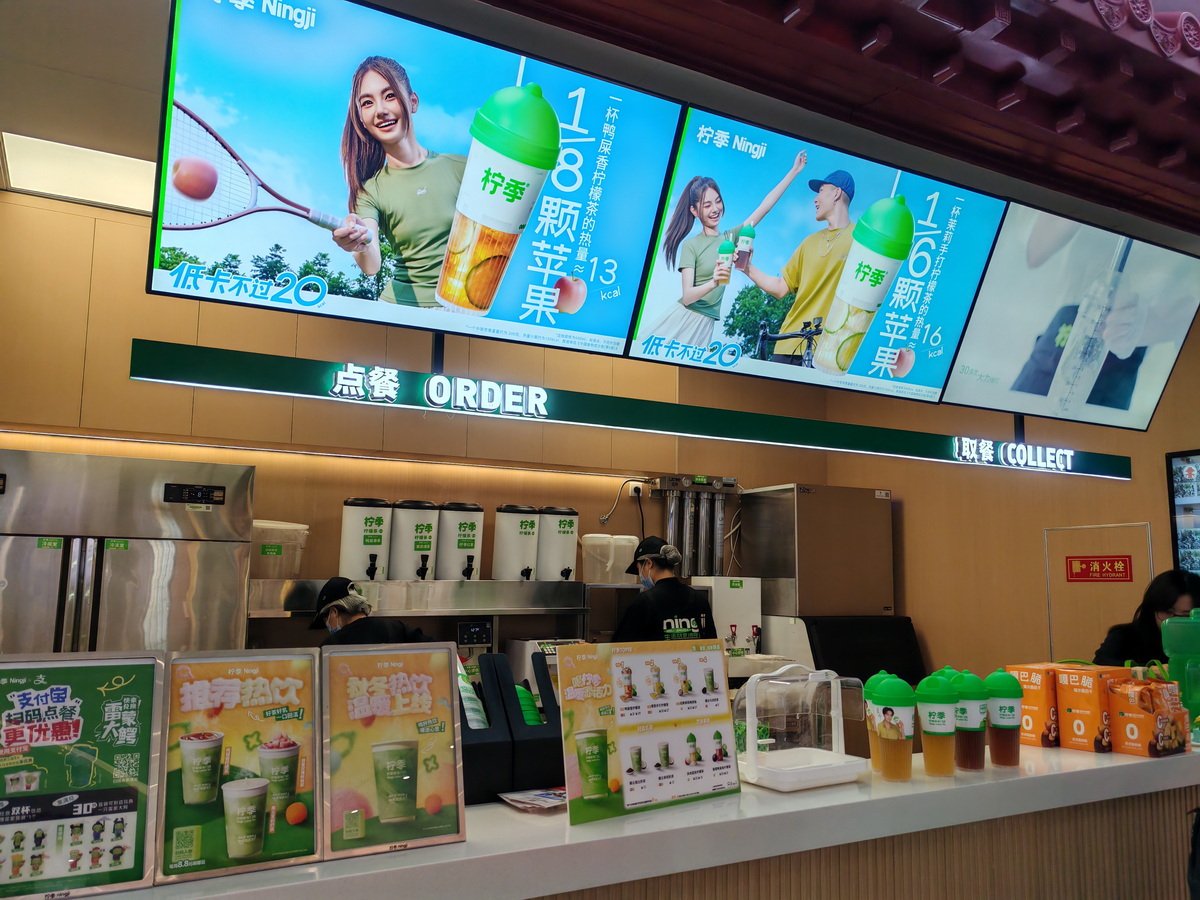
Core Insights - The 8th China International Import Expo (CIIE) is being held in Shanghai from November 5 to 10, showcasing the new image of Chinese tea beverages in the context of digitalization and globalization [1] - Ningji, a rising tea beverage brand from Changsha, is presenting its classic products and the trendy IP "Little Alligator Raymond" at the expo, emphasizing its youthful and vibrant brand image [3] Company Strategy - Ningji has integrated digitalization into its brand DNA since its inception, achieving comprehensive intelligence from business front-end to decision-making back-end [3] - The company has established a supply chain empowerment system through external collaborations and a data-driven closed-loop process for product development and market launch [3] Supply Chain and Logistics - To support its national strategy, Ningji has built five regional distribution centers across China, ensuring fresh fruit delivery to thousands of stores daily [4] - The company employs innovative preservation technology and temperature-controlled logistics in collaboration with logistics firms like SF Express, ensuring fresh delivery of ingredients from warehouses to stores [4] Global Expansion - Ningji is actively exploring international markets, with 33 overseas signed stores in countries like Malaysia, Singapore, Australia, and Cambodia [5] - The brand adopts a differentiated strategy for market expansion, focusing on franchise opportunities in Southeast Asia while refining its direct sales model in the U.S. [5] Brand Development - Ningji aims to enhance its global market influence by researching consumer preferences in target markets and integrating local cultural elements into its brand strategy [5] - The company continues to strengthen its product and system capabilities, showcasing the vitality and innovative power of new-style Chinese tea beverage brands [6]
48小时卖30万杯!“冬天第一杯热奶茶”杀疯了
东京烘焙职业人· 2025-10-29 08:32
Core Insights - The article highlights the surge in demand for hot beverages as temperatures drop, with significant sales figures reported for various popular drinks [4][6][10]. Group 1: Market Trends - The topic "First Cup of Milk Tea in Winter" has garnered over 20 million views on Xiaohongshu, indicating a strong consumer interest in hot drinks [6]. - Major brands like Cha Bai Dao and Xi Tea have reported impressive sales, with Cha Bai Dao's "Super Thick Taro" selling nearly 200,000 cups on its first day and Xi Tea's "Snowy Yak Milk" selling out in multiple locations within 10 days [10][12]. - The trend of hot drink consumption is reflected in increased order volumes at physical stores, with some locations reporting that over half of the orders are for hot beverages [8][9]. Group 2: Product Innovations - Many brands are reintroducing popular products from previous years, such as Cha Bai Dao's "Super Thick Taro" and Xi Tea's "Snowy Yak Milk," which have proven to be successful in driving sales [14][17]. - New flavor combinations are emerging, with brands experimenting with unconventional ingredients like sweet soy sauce and salted egg yolk, pushing the boundaries of traditional sweet beverages [21][23]. - Seasonal ingredients like pumpkin, sweet potato, and rice are becoming popular in beverage menus, with pumpkin being particularly prominent [24][26]. Group 3: Consumer Preferences - The article notes a shift towards using familiar, homey ingredients in drinks, which resonate well with consumers and provide a sense of nostalgia [29]. - Hot fruit teas made with ingredients like pear and orange are gaining popularity, offering a refreshing option during the colder months [30][32]. - Brands are encouraged to innovate while maintaining a balance between classic flavors and new combinations to attract a broader customer base [19][35].




东方:古村上演国潮秀
Hai Nan Ri Bao· 2025-10-04 01:06
Core Points - The event "Guochao Market" held in Beili Village from October 1 to 3 showcased a blend of traditional culture and modern creativity, attracting both locals and tourists [2][3] - The highlight of the event was a fashion show featuring traditional Li ethnic clothing, which captivated the audience and sparked interest in local craftsmanship [2] - Various performances, including guzheng music, traditional arts, and local songs, contributed to the festive atmosphere and received enthusiastic applause from attendees [2][3] Summary by Sections - **Event Overview** - The "Guochao Market" event took place in Beili Village, integrating traditional culture with contemporary trends, and aimed to promote local culture and tourism [2][3] - **Cultural Performances** - The event featured a lion dance performance, a fashion show titled "Run, Li Ethnic Girl," and various artistic displays, including flower arrangement and painting, showcasing the richness of Li culture [2] - Local artists and performers engaged the audience with diverse acts, including guzheng ensembles and original songs, enhancing the cultural experience [2][3] - **Local Cuisine and Activities** - The market area offered a variety of local delicacies, such as glutinous rice sweet wine and handmade lemon tea, which attracted many visitors [3] - Interactive experiences like DIY coin making and traditional crafts were popular among families, emphasizing the educational aspect of the event [3] - **Cultural Significance** - The event was not only a celebration for the National Day and Mid-Autumn Festival but also a strategic effort by the local tourism bureau to highlight the historical and cultural significance of the region [3]
赶海、尝鲜、摄影、畅饮……2025开渔季,让西葛驿站承包你的八月浪漫
Nan Fang Nong Cun Bao· 2025-08-15 14:05
Core Viewpoint - The article highlights the opening of the fishing season in the South China Sea, specifically the 2025 fishing carnival in Maoming Bohe, which features various activities aimed at attracting tourists and celebrating local seafood culture [5][6][18]. Group 1: Event Details - The 2025 South China Sea (Maoming Bohe) fishing carnival commenced on August 15, 2025, at the Xige Station, attracting numerous visitors eager to taste the "first fresh catch" of the season [6][7]. - Xige Station has organized six main themed activities, including beachcombing, seafood banquets, and photography contests, to provide an immersive experience of "sea flavor + fun" for tourists [7][8]. - The best viewing time at Xige Beach is from 17:30 to 18:30, where visitors can enjoy the sunset and the unique scenery of fishing boats departing and returning [10][12]. Group 2: Culinary Highlights - The highlight of the fishing carnival is the seafood banquet, which will be held from August 15 to 17, featuring three sets of coastal-themed meals that emphasize fresh seafood and traditional fishing flavors [18][19]. - After dinner, visitors can enjoy the Tide Sound Bar with hand-squeezed lemon tea and participate in the beach beer music festival from 19:00 to 23:00 during the same dates, featuring live music and local delicacies [20][21][22]. Group 3: Photography Contest - A photography contest titled "Xige Station 2025 Fishing Festival" has been initiated, encouraging participants to capture moments from beachcombing, seafood banquets, and the music festival, with submissions accepted until August 31 [25][26]. - Participants can win dining vouchers and seafood gift boxes by sharing their entries on social media platforms with specific hashtags and providing necessary contact information [28][29]. Group 4: Overall Experience - The activities at Xige Station are designed to create a vibrant atmosphere from sunrise to night, allowing visitors to engage with the sea, enjoy fresh seafood, and relax with drinks, promoting a sense of community and enjoyment [31][32].
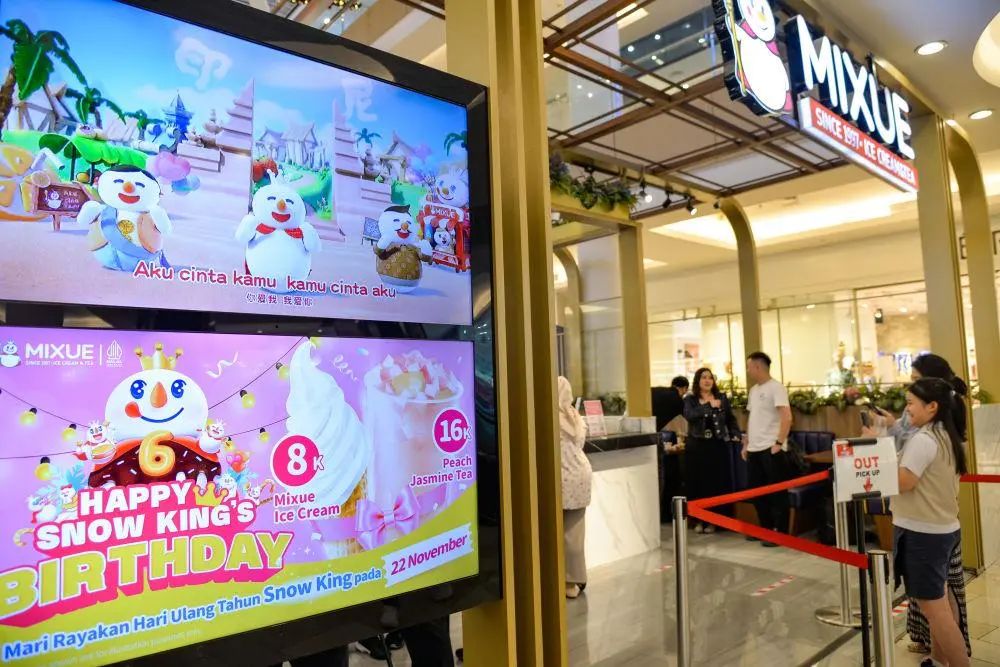
“雪王”和labubu,抢首富
Jing Ji Wang· 2025-06-26 11:32
Group 1 - The core viewpoint of the articles highlights the rise of new consumer brands like Mixue Ice City, Pop Mart, and Laopu Gold, which are gaining significant market share and investor interest in the traditional consumer goods sector [1][3][5] - Mixue Ice City has become the richest person in Henan with a net worth of 117.9 billion yuan, surpassing Pop Mart's founder Wang Ning, who had a net worth of 146.7 billion yuan [1] - The rapid expansion of Mixue Ice City is notable, with plans to exceed 46,000 stores by 2024 and international ventures into countries like Indonesia, Vietnam, and Australia [1][7] Group 2 - Pop Mart has successfully created a new market segment called "trendy toys + surprise economy," leveraging its innovative product lines and strong operational capabilities [3][5] - Laopu Gold is redefining the traditional gold market by combining old craftsmanship with new aesthetics, positioning itself as a trendy alternative to luxury brands [3][5] - The current consumer environment emphasizes high cost-performance, emotional value, and unique features, which are critical factors driving the popularity of these new consumer brands [5] Group 3 - The overseas expansion of these brands is becoming a significant growth point, with over a hundred Chinese consumer companies actively pursuing international markets [5] - Mixue Ice City plans to invest at least 4 billion yuan in Brazil over the next 3-5 years, creating approximately 25,000 jobs in the local market [7] - The articles suggest that the new consumer products from China are gaining global appeal, particularly among younger audiences, showcasing a blend of Chinese taste and aesthetics [7]