
数字娱乐

Search documents
中国及香港股票策略-2026 年展望:主题、风险、政策灵活性及 2026 年一季度首选标的-China & HK Equity Strategy_ 2026 Outlook_ Themes, risks, policy optionality and preferred picks for 1Q26
2025-11-27 02:17
Summary of Key Points from the Conference Call Industry Overview - The report focuses on the **China & Hong Kong equity market** with a specific outlook for **2026** and investment strategies for **1Q26** [2][5][10]. Core Insights and Arguments - **Constructive Stance**: The report maintains a positive outlook on MXCN/CSI300, predicting a further rally in 2026 with targets set at **100** for MXCN, **5,200** for CSI300, and **16,000** for MXHK, reflecting growth rates of **15%**, **15%**, and **9%** year-on-year respectively [2][7][8][9]. - **Investment Themes**: Four key investment themes for 2026 are highlighted: 1. **Anti-involution**: Expected to accelerate post-March NPC, improving margins and return on equity (ROE) [5][6]. 2. **AI Infrastructure Growth**: Anticipated growth in global AI infrastructure capex will benefit localization plays in China [5][6]. 3. **Global Macro Support**: Positive macroeconomic conditions, including easing fiscal and monetary policies in developed markets, are expected to boost overseas sales [5][6]. 4. **K-shaped Recovery**: Consumption recovery is expected to favor food & beverage and premium luxury sectors, while mid-tier consumption may suffer [5][6]. Risks Identified - **Geopolitical Tensions**: Ongoing tensions between the US and China, particularly ahead of the US mid-term elections, pose risks to market stability [5][6]. - **Earnings Consensus Risks**: The report notes a potential decline in consensus EPS growth for MXCN from approximately **15%** to **9%** due to intense competition in quick commerce platforms [5][6]. - **Property Market Concerns**: Reports of softening luxury sales and price declines in mainland China may trigger policy changes, including relaxation of home purchase restrictions in prime districts [5][6]. Sector Recommendations - **Overweight (OW)**: Communication Services, IT, Materials, and Staples sectors are recommended for investment [6][11][12]. - **Underweight (UW)**: Energy and Utilities sectors are advised against [6][11][12]. - **Top Picks for 1Q26**: Notable stocks include Baidu, NetEase, Midea, MIXUE, PDD, Pop Mart, Trip.com, Tingyi, Futu, Innovent, CATL, and COLI [6][13][15]. Valuation and Earnings Insights - **Valuation Normalization**: Since September 2024, MXCN/CSI300 has shown a return of **29%/30%** in USD terms, indicating a recovery from previous valuation discounts [20][22]. - **Earnings Growth**: The report highlights a broadening recovery in earnings across various sectors, despite weak headline EPS growth at the index level [42][44]. Additional Important Points - **EPS Revision Trends**: The breadth of EPS revisions has improved significantly, indicating a potential for recovery in earnings [58][59]. - **Market Under-Ownership**: The report emphasizes that China equity remains under-owned both domestically and internationally, suggesting potential for increased allocation [5][6]. This summary encapsulates the key insights and recommendations from the conference call, providing a comprehensive overview of the current state and future outlook of the China & Hong Kong equity markets.
中国真的“消费不足”吗?主要还是太卷
Hua Er Jie Jian Wen· 2025-11-24 12:02
Core Insights - The long-held belief of "insufficient consumption" in China is fundamentally misinterpreted, as actual consumption levels are comparable to or exceed those of developed economies in key categories [1][2] - The primary constraint on China's consumption performance is not the absolute consumption volume but rather the extremely low price levels and structural competitive pressures [1][3] Consumption Quantity - Quantitative research indicates that China's consumption is not inferior when compared to developed markets, challenging the perception of a significant gap [2] Price Dynamics - Despite adequate consumption volume, nominal consumption totals remain low due to pricing issues, with Chinese goods and services priced significantly below global averages, often less than 40% of U.S. prices [3][4] - Factors contributing to low pricing include declining inflation, weak income expectations, efficient supply chains from China's "world factory" status, excessive industry competition, and price controls in service sectors [3][6] Macro Consumption Disparity - The commonly cited metric of household consumption as a percentage of GDP shows China at approximately 40%, significantly lower than the U.S. at 68%, Japan at 54%, and South Korea at 48% [4] Impressive Consumption Volumes - Data from organizations like FAO indicates that per capita consumption in essential goods, particularly protein, eggs, seafood, and vegetables, has surpassed global averages, even exceeding that of the U.S., Japan, and South Korea [5] - In housing, the per capita living space in China reached 49 square meters in 2021, surpassing the UK and France, though still below the U.S. [5] Structural Factors - China's dominant position as a global manufacturer in sectors like electric vehicles and home appliances provides significant cost advantages, resulting in lower consumer prices [6] - Intense competition and disruptive innovation, driven by industry policies and rapid technological advancements, have led to aggressive pricing strategies [6] - Price controls in critical service sectors, such as healthcare and education, ensure affordability but contribute to lower nominal consumption figures [6] Misinterpretation of Consumption Gaps - The perceived macro consumption gap is overstated, with potential for consumption upgrades focusing on higher quality and experiential goods and services [7] Investment Opportunities - The coexistence of high consumption volumes and low prices suggests that companies must enhance operational capabilities to achieve superior returns, leading to the introduction of the E2SG investment framework to identify competitive winners [8] Comparative Analysis - Comparing China to culturally and economically similar East Asian economies like Japan and South Korea may provide a more accurate perspective on consumption dynamics [10] - Adjusting for the inclusion of "social transfers" in GDP calculations could significantly improve China's consumption-to-GDP ratio, narrowing the gap with South Korea and Japan [10] Strategic Focus Areas - Companies should focus on efficiency through cost control and operational speed to capture market share in a low-price environment [11] - Enhancing consumer experience through unique products and emotional value can drive premium pricing and market share growth [11] - Seizing opportunities in service sectors with high demand and low supply can lead to significant growth [11] - Global expansion may be a viable strategy for companies facing intense domestic competition, as seen with successful cases like Geely and Midea [11]
江苏发布行动计划为文旅发展“划重点”
Jiang Nan Shi Bao· 2025-09-04 14:41
Core Viewpoint - Jiangsu Province is focusing on high-quality development of its cultural tourism industry through a three-year action plan, aiming to enhance product supply, expand consumer services, and optimize the market environment [1][2][4][6] Group 1: Action Plan Overview - The action plan includes six major actions and 22 key tasks to promote the cultural tourism industry [1] - Key actions involve improving product supply, expanding consumer services, and optimizing the market environment [1][6] Group 2: Leveraging Events for Tourism - The "Su Super" football league has attracted significant attendance and online viewership, with 149.4 million people attending matches and 13.3 billion online views [2] - The action plan proposes themed travel routes and creative products to convert sports event traffic into tourism revenue [2] Group 3: Museum and Night Tourism - Popular museums have seen a 25% increase in night-time consumption, prompting the plan to encourage extended hours and new night tourism projects [3] - The goal is to reach 150 million annual visitors to registered museums by 2027 [3] Group 4: Infrastructure and Technology - The plan emphasizes the development of cultural and ecological tourism corridors and the integration of modern technology in the tourism sector [4] - It encourages the creation of smart tourism experiences and supports technological advancements in the industry [4] Group 5: Industry Cluster Development - The action plan aims to cultivate high-quality cultural tourism enterprises and promote the growth of digital cultural companies, targeting over 3,000 digital cultural enterprises by 2027 [6] - The plan also seeks to establish national and provincial cultural and tourism industry demonstration zones [6] Group 6: Institutional Mechanisms - The plan proposes innovative mechanisms for public service enhancement and financial support for tourism enterprises [7] - It emphasizes the need for coordinated development of cultural tourism within the broader economic framework of the province [7]
杜庆昊:数字经济如何提振消费
Jing Ji Ri Bao· 2025-08-27 00:14
Group 1 - The core viewpoint emphasizes that consumption is a fundamental force driving economic growth, and the recent Central Political Bureau meeting highlighted the need to strengthen support for boosting consumption [1] - The digital economy is significantly influencing consumption by expanding consumer groups, with a notable increase in internet penetration among the elderly population, exceeding 50% for those aged 60 and above [2] - New products and services are emerging from the digital economy, including wearable devices and online shopping, which simplify traditional service transactions and activate potential consumption [2][3] Group 2 - The digital economy promotes fairness and efficiency in consumption by providing equal access to various consumer groups through open data and digital platforms, while also reducing transaction costs and enhancing consumer willingness [3] - Employment stability is crucial for consumption stability, and the development of the digital economy can expand job opportunities and increase income for residents, thereby encouraging consumption [4] - The consumption environment, influenced by legal, social, and technological factors, needs to be improved to foster consumer confidence and safety in digital transactions [5] Group 3 - The digital economy creates new consumer products that can drive industrial upgrades and supply changes, expanding new consumption spaces [6] - The application of digital technologies and data elements in strategic emerging industries can create new consumption growth points and enhance industrial efficiency [6]
浙数文化股价微跌0.71% 子公司完成1.4亿元战略增资
Jin Rong Jie· 2025-07-30 18:24
Group 1 - The stock price of Zhejiang Shuju Culture is reported at 13.98 yuan, down 0.71% from the previous trading day, with a trading volume of 517 million yuan and a fluctuation of 2.77% [1] - Zhejiang Shuju Culture operates in the gaming and digital culture sector, with main businesses including digital entertainment, big data, and media integration [1] - The company's subsidiary, Chuanbo Dainao Technology, has recently completed a capital increase, attracting an investment of 140 million yuan from the Zhejiang Provincial Industrial Fund, resulting in a 20% shareholding [1] Group 2 - Zhejiang Shuju Culture has forecasted a net profit of over 300 million yuan for the first half of 2025 [1] - Chuanbo Dainao Technology has completed two phases of strategic investment payments totaling 140 million yuan, while maintaining its controlling position in the company [1] - On July 30, the net inflow of main funds was 16.85 million yuan, accounting for 0.1% of the circulating market value [1]

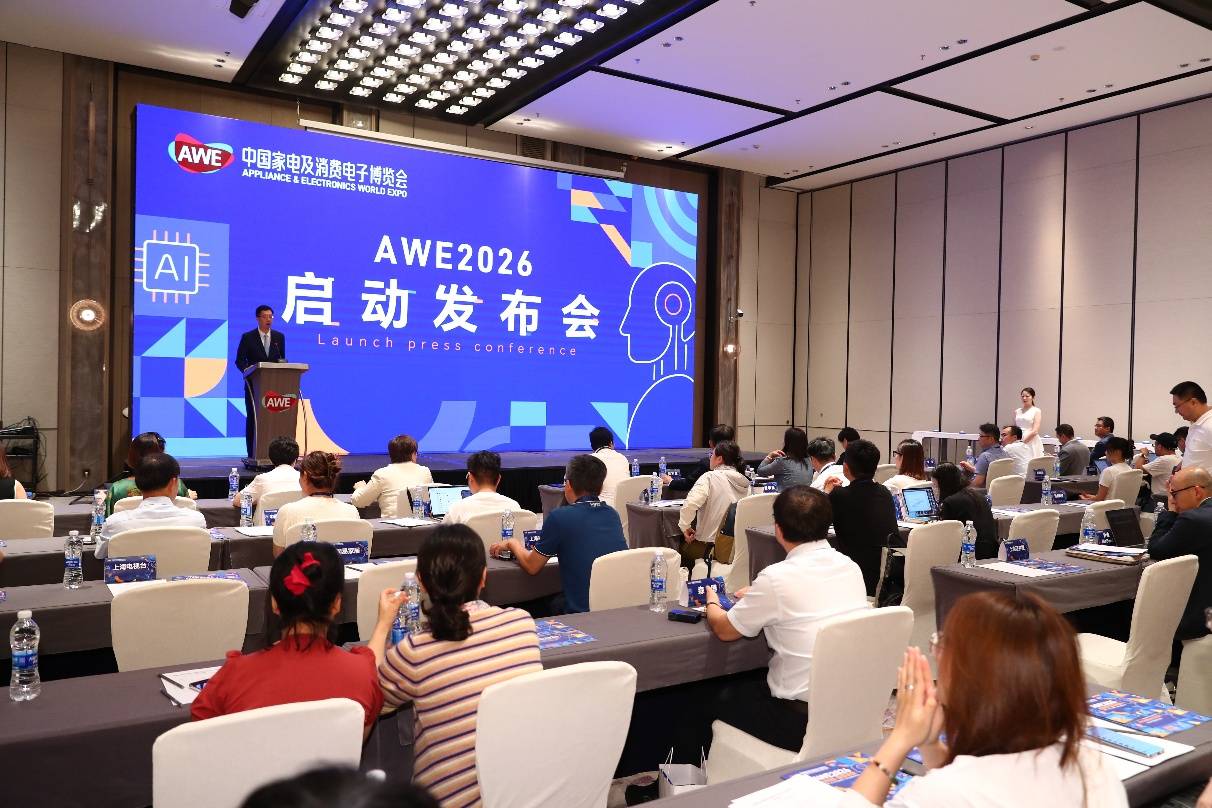
AWE2026首次采用“一展双区”模式 将于明年3月12日正式开幕
Feng Huang Wang· 2025-07-24 07:05
Group 1 - The 2026 China Household Appliances and Consumer Electronics Expo (AWE2026) was launched on July 22, 2023, in Shanghai, with the theme "AI Technology, Enjoying the Future" [1] - AWE2026 will adopt a "one exhibition, two zones" model, taking place from March 12-15, 2026, with a planned exhibition area of 170,000 square meters [1] - The previous AWE2025 attracted over 1,000 global enterprises, covering 140,000 square meters, with total attendance exceeding 192,000, and a nearly 30% year-on-year increase in overseas visitors [1] Group 2 - The new exhibition zones will focus on different themes: the New International Expo Center will emphasize smart living across various fields, while the Shanghai Oriental Hub will showcase advanced consumer electronics technologies [1] - AI technology is driving the household appliance and consumer electronics industry towards smart and low-carbon upgrades, according to Xu Dongsheng, Vice President of the China Household Electrical Appliances Association [2] - AWE2026 will feature industry forums and international procurement activities, aiming to enhance international influence and promote consumption, with the previous "AWE Renewal Consumption Festival" achieving over 2 billion yuan in online sales in 2025 [2]
“AI科技、慧享未来”——AWE2026开启一展双区新时代
Sou Hu Cai Jing· 2025-07-24 02:28
Group 1 - AWE2026 will be held from March 12-15, 2026, in Shanghai, featuring a theme of "AI Technology, Enjoying the Future" and adopting a new "One Exhibition, Two Zones" model [2][3] - The exhibition area is expected to exceed 170,000 square meters, with over 1,200 participating brands and an anticipated attendance of over 200,000 visitors [2] - The two exhibition zones will have synergistic functions, with the New International Expo Center focusing on smart living solutions and innovations across various fields, while the Shanghai Oriental Hub will concentrate on advanced consumer electronics technologies [3] Group 2 - The New International Expo Center will showcase innovations in smart home, digital entertainment, green energy, and smart cities, emphasizing a human and scenario-centric approach [3] - The Shanghai Oriental Hub will highlight cutting-edge fields such as AI, new information technologies, and smart home solutions, featuring four thematic exhibition areas [3] - AWE2026 aims to create a diverse content ecosystem by inviting tech media and influencers, expanding its international outreach [4] Group 3 - During AWE2025, over 1,000 companies participated, with a display area of 140,000 square meters and total attendance exceeding 192,000, marking a 25% year-on-year increase [4] - The number of overseas visitors during AWE2025 grew by nearly 30% [4]

持续放大数字贸易强劲动能
Jing Ji Ri Bao· 2025-05-13 21:47
Group 1 - The core viewpoint of the articles emphasizes the importance of digital trade as a new driving force for international trade recovery and economic growth, particularly in the context of increasing global economic uncertainty [1][2][4] - China's cross-border e-commerce import and export volume is projected to reach 2.63 trillion yuan in 2024, marking a year-on-year growth of 10.8%, highlighting its role as a major engine for foreign trade growth [1] - The development of digital trade in China is supported by advancements in digital technology, infrastructure, and a favorable business environment, with significant growth in areas such as big data, artificial intelligence, and cloud computing [1][3] Group 2 - The articles outline the need for a robust digital trade infrastructure, including the development of platforms utilizing blockchain technology and enhancing cross-border e-commerce services [2][3] - There is a focus on nurturing leading digital trade enterprises in sectors like cross-border e-commerce and artificial intelligence, aiming to create a comprehensive digital trade ecosystem [3] - Strengthening international cooperation in digital trade is crucial, with efforts to expand into emerging markets and actively participate in multilateral digital trade rule-making [4]