检验检测设备

Search documents
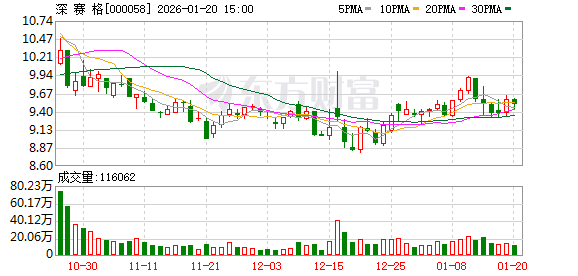
深赛格:公司持续巩固发展电子市场流通和物业经营管理与城市服务两大存量业务
Zheng Quan Ri Bao· 2026-01-20 09:38
Group 1 - The company is focusing on consolidating its existing businesses in electronic market circulation and property management while also emphasizing strategic emerging industries such as inspection and testing equipment manufacturing and services, as well as new energy applications [2] - The company's production and main business operations have not undergone substantial changes [2] - The company adheres to strict information disclosure regulations and confirms that there are no undisclosed significant matters [2] Group 2 - As a state-controlled listed company, the company is committed to effective management and enhancing its intrinsic value while safeguarding shareholder rights [2] - The company has consistently returned profits to investors, having implemented cash dividends for 10 consecutive years [2] - The company aims to preserve and increase the value of state-owned assets [2]


专家解读“两新政策”:仪器设备更新注重优化提质
仪器信息网· 2026-01-14 09:02
Core Viewpoint - The article discusses the 2026 "Two New" policy, emphasizing quality improvement and efficiency enhancement through lowering the investment threshold for small and medium enterprises (SMEs) and optimizing the timing of fund allocation while strictly combating fraudulent subsidy claims [1][2]. Group 1: Policy Implementation - The 2026 equipment update will focus on optimizing quality and efficiency, particularly highlighting the upgrade of inspection and testing equipment as a key component in building a quality-oriented nation and enhancing the overall quality infrastructure [2]. - The policy will lower the investment threshold for applying for equipment update projects, which will expand the policy's reach and strengthen effective investment momentum [2][3]. Group 2: Fund Allocation - In terms of fund usage, the policy will adopt a more precise approach to implementation, emphasizing the principles of "timeliness" and "balance," aligning policy effects with market demand and macroeconomic cycles [3]. - The central government will allocate funds for consumer goods replacement on a quarterly basis, while local governments will develop balanced funding usage plans by sector to ensure smooth implementation of the replacement policy [3]. Group 3: Compliance and Regulation - The article highlights that illegal activities such as "first raise, then subsidize" and fraudulent claims will be strictly targeted in 2026 [3].
625亿元!“国补”继续,第一批资金已提前下达
Sou Hu Cai Jing· 2026-01-04 05:51
Core Viewpoint - The National Development and Reform Commission and the Ministry of Finance have released a notice regarding the implementation of large-scale equipment updates and consumer goods replacement policies in 2026, focusing on optimizing support scope, subsidy standards, and implementation mechanisms. Group 1: Support Scope Optimization - The 2026 policy continues the support scope from 2025, adding new areas such as the installation of elevators in old residential communities and equipment updates in elderly care institutions. It also includes updates for fire rescue and inspection equipment in the safety sector, and equipment updates for offline commercial facilities like shopping centers and supermarkets in the consumer infrastructure sector [1][3]. - The policy emphasizes enhancing the "subsidy rate" for key consumer goods that have a broad coverage and strong driving effect, continuing to implement subsidies for scrapping and replacing cars, as well as for six categories of household appliances including refrigerators, washing machines, televisions, air conditioners, computers, and water heaters. Additionally, the subsidy for digital products has been expanded to include smart products such as smartphones, tablets, smartwatches, smart glasses, and smart home products [1][3]. Group 2: Subsidy Standard Optimization - For equipment updates, the subsidy for updating old residential elevators will shift from a fixed amount to a tiered subsidy based on the number of elevator floors. In the case of scrapping old operational trucks, priority will be given to those replaced with electric trucks [2][3]. - In the consumer goods replacement aspect, while maintaining the upper limit for car subsidies, the fixed subsidy will be adjusted to a percentage of the vehicle price. The subsidy for household appliances will focus on products with a 1st-level energy efficiency or water efficiency rating, providing 15% of the product price as a subsidy, with a maximum of 1,500 yuan per item. The subsidy standards for digital and smart products will remain unchanged from previous standards [2][3]. Group 3: Implementation Mechanism Optimization - The policy aims to optimize the project application mechanism and review process, lowering the investment threshold for project applications, and increasing support for small and medium-sized enterprises to expand the policy's coverage [3][4]. - In terms of consumer goods replacement, the policy will improve the funding allocation method, enhance the implementation details across the entire chain, and strictly combat fraudulent subsidy claims and illegal practices such as "price hikes before subsidies." It also emphasizes the need for a unified subsidy standard nationwide for various categories of products [3][4].

2026年“两新”政策出炉,有哪方面优化?
Zheng Quan Ri Bao· 2026-01-01 12:11
Core Viewpoint - The National Development and Reform Commission (NDRC) and the Ministry of Finance have announced a new policy for 2026 aimed at promoting large-scale equipment upgrades and the replacement of consumer goods, with a total funding plan of 62.5 billion yuan allocated for the first batch of special long-term bonds to support these initiatives [1] Group 1: Policy Optimization - The 2026 "Two New" policy has optimized three main areas: support scope, subsidy standards, and implementation mechanisms [2][3][4] - In terms of support scope, the policy continues to support equipment updates in various sectors, including the addition of elevators in old residential areas and equipment updates in elderly care institutions [2] - The policy also focuses on key consumer goods for replacement, including cars and six categories of home appliances, while expanding the subsidy for digital and smart products [2] Group 2: Subsidy Standards - The subsidy standards for equipment updates have been adjusted, with a shift from fixed subsidies to tiered subsidies based on the number of elevator stops for residential elevators [3] - For vehicle replacement, the policy maintains the upper limit for subsidies while changing the structure to a percentage of the vehicle price, with specific caps for electric and fuel-efficient vehicles [3] Group 3: Implementation Mechanisms - The implementation mechanisms have been optimized to lower the investment threshold for project applications and enhance support for small and medium-sized enterprises [4] - The policy includes measures to prevent fraudulent claims and ensures a unified subsidy standard across the country for various consumer goods [4] - The NDRC plans to strengthen coordination and monitoring to ensure the effective execution of the policy and the orderly use of subsidy funds [4]
2026“国补”来了,一图读懂
Xin Lang Cai Jing· 2026-01-01 09:29
Group 1: Equipment Updates - The government is increasing investments in updating equipment for old residential elevators and elderly care institutions, as well as enhancing safety equipment for fire rescue and inspection [3][7]. - There is a focus on updating equipment in consumer infrastructure, including commercial complexes, shopping centers, department stores, and large supermarkets [3]. Group 2: Consumer Goods Trade-In - The initiative aims to concentrate resources on key consumer goods with a broad coverage and strong driving effect, enhancing the "subsidy rate" [4][8]. Group 3: Subsidy Standard Optimization - The subsidy for updating old residential elevators will shift from a fixed amount to a tiered subsidy based on the number of elevator floors [7]. - The subsidy for scrapping old operational trucks will prioritize support for electric truck replacements [7]. - The automotive subsidy will remain capped but will transition from a fixed amount to a percentage of the vehicle price [9][11]. Group 4: Appliance Trade-In Adjustments - The subsidy for home appliances will be adjusted to cover products with a 1st-level energy efficiency or water efficiency rating, providing 15% of the product's final sale price, with a cap of 1,500 yuan per item [14]. - The eligible appliances include refrigerators, washing machines, televisions, air conditioners, water heaters, and computers, with a limit of one subsidy per person per category [14]. Group 5: Digital and Smart Product Subsidies - The subsidy for digital and smart products remains unchanged, covering items with a sales price not exceeding 6,000 yuan, providing 15% of the final sale price, capped at 500 yuan per item [17]. Group 6: Implementation Mechanism Optimization - The project application mechanism and review process will be optimized to lower the investment threshold for project applications, increasing support for small and medium-sized enterprises [18][19]. - The funding distribution method will be improved, and strict measures will be taken against fraudulent subsidy claims and illegal practices [20].

2026“国补”继续 第一批625亿元超长期特别国债已下达
Yang Shi Xin Wen Ke Hu Duan· 2025-12-31 03:36
Core Viewpoint - The National Development and Reform Commission (NDRC) and the Ministry of Finance have released a notification regarding the implementation of large-scale equipment updates and consumer goods replacement policies in 2026, focusing on optimizing support scope, subsidy standards, and implementation mechanisms [1][2][3][4] Group 1: Support Scope Optimization - The 2026 policy continues to support the 2025 scope, adding new areas such as elevator installations in old residential communities and equipment updates in elderly care institutions [1] - In the safety sector, updates for firefighting and inspection equipment are included, while consumer infrastructure now covers commercial complexes and large supermarkets [1] - The policy maintains subsidies for scrapping and replacing cars, as well as for six categories of household appliances, and expands digital product subsidies to include smart devices [1] Group 2: Subsidy Standard Optimization - The subsidy for updating old residential elevators will now be tiered based on the number of floors, rather than a flat rate [2] - For scrapping old operational trucks, there is a priority for electric truck replacements, while car subsidies will be adjusted to a percentage of the vehicle price [2] - Household appliance subsidies will focus on energy-efficient products, providing 15% of the product price with a cap of 1,500 yuan per item [2] Group 3: Implementation Mechanism Optimization - The policy aims to streamline project application and review processes, lowering investment thresholds to support small and medium-sized enterprises [2] - It includes measures to combat fraudulent claims and ensures a unified subsidy standard across the nation for various categories [2] - The NDRC will coordinate with other departments to implement the policy effectively and ensure local governments adhere to the guidelines [3] Group 4: Funding and Execution - A total of 625 billion yuan in special long-term bonds has been allocated to support the consumer goods replacement program for 2026, with early disbursement to meet seasonal demand [4] - The NDRC will work with relevant departments to monitor and manage the use of subsidy funds, ensuring a smooth implementation of the policy [4]
二〇二六年“两新”政策优化实施(政策速递) 明确支持范围、补贴标准和工作要求
Sou Hu Cai Jing· 2025-12-31 02:24
Core Viewpoint - The Chinese government has announced a significant policy initiative for 2026, allocating 62.5 billion yuan for a long-term special bond to support the replacement of old consumer goods and equipment upgrades, aiming to stimulate consumption and support various sectors, including elderly care and digital products [1][2]. Group 1: Policy Support and Funding - The National Development and Reform Commission (NDRC) and the Ministry of Finance have issued a notice regarding the implementation of a large-scale equipment update and consumer goods replacement policy for 2026, with an early allocation of 62.5 billion yuan in special bonds [1]. - The policy aims to meet consumer demand during peak seasons such as New Year's Day and the Spring Festival [1]. Group 2: Optimizations in Policy - The 2026 policy includes three main optimizations: expanding the support scope, adjusting subsidy standards, and improving implementation mechanisms [2][3]. - In the support scope, the policy now includes the installation of elevators in old residential areas and equipment updates in elderly care institutions, as well as updates for safety equipment and commercial facilities [2]. - The consumer goods replacement program will continue to support the scrapping and replacement of vehicles and household appliances, with an expanded subsidy for digital and smart products [2]. Group 3: Subsidy Standards and Implementation - The subsidy standards have been optimized, with differentiated subsidies based on the number of floors for elevator updates and prioritizing electric vehicles for old freight truck replacements [3]. - For consumer goods, the subsidy for household appliances will focus on energy-efficient products, with a cap of 1,500 yuan per item, while digital products will maintain previous subsidy standards [3]. - The implementation mechanism has been improved to lower investment thresholds for project applications, enhance support for small and medium-sized enterprises, and ensure a unified subsidy standard across the country [3].
2026年“国补”新变化:优化补贴范围和标准
Xin Hua She· 2025-12-31 01:48
Core Viewpoint - The 2026 "Two New" policy aims to enhance equipment updates and promote the replacement of consumer goods, addressing key social issues and supporting economic development through targeted subsidies and optimized implementation mechanisms [1][2][7]. Group 1: Policy Changes - The 2026 "Two New" policy expands the support scope to include the installation of elevators in old residential areas, equipment updates in elderly care institutions, and updates for commercial facilities like shopping centers and supermarkets [2][4]. - The policy continues to support the replacement of old vehicles and household appliances, including cars, washing machines, refrigerators, and extends subsidies to digital and smart products such as smartphones and smart home devices [2][3]. Group 2: Subsidy Standards - The subsidy standards for equipment updates have been optimized, with a shift to differentiated subsidies based on the number of floors for old residential elevators, potentially easing financial burdens for high-rise buildings [4]. - For automotive subsidies, the policy adjusts from fixed amounts to a percentage of the vehicle price, with specific rates for new energy vehicles and fuel-efficient cars, ensuring better alignment with consumer needs [5][6]. Group 3: Implementation Mechanisms - The policy introduces an optimized project application and review process, lowering the investment threshold for project applications and increasing support for small and medium-sized enterprises [7]. - A unified subsidy standard will be implemented nationwide for various categories, addressing discrepancies in local subsidy standards and ensuring that more consumers benefit from the policy [7].
2026“国补”继续!“两新”政策部署来了,将优化支持范围
Xin Hua She· 2025-12-30 23:21
Core Viewpoint - The 2026 "National Subsidy" policy has been announced, focusing on large-scale equipment updates and the replacement of consumer goods, with specific support for electric vehicles and smart products like smart glasses [1][6]. Group 1: Support Scope Optimization - The support scope for equipment updates will continue from 2025, adding new categories such as the installation of elevators in old residential areas and equipment updates in elderly care institutions [2][7]. - In the consumer goods replacement program, the focus will be on key consumer products with strong market impact, including continued subsidies for vehicle scrappage and replacement, as well as for six categories of home appliances [2][7]. - The subsidy for digital products will now include smart products, covering smartphones, tablets, smartwatches, smart glasses, and smart home products [2][7]. Group 2: Subsidy Standard Optimization - The subsidy for updating old residential elevators will shift from a fixed amount to a tiered system based on the number of floors [3][8]. - For scrapping old commercial vehicles, there will be a priority for replacing them with electric vehicles [3][8]. - The consumer goods replacement subsidy will maintain the upper limit for vehicle subsidies while adjusting the fixed subsidy to a percentage of the vehicle price; home appliance subsidies will be set at 15% of the price for energy-efficient products, with a maximum of 1,500 yuan per item [3][8]. Group 3: Implementation Mechanism Optimization - The project application and review processes will be streamlined to lower the investment threshold for applications, enhancing support for small and medium-sized enterprises [4][9]. - The funding distribution method will be optimized, and strict measures will be taken against fraudulent claims and price inflation before subsidies [4][9]. - A unified subsidy standard will be implemented nationwide for vehicle scrappage, replacement, and six categories of home appliances, with coordination among various government departments to ensure effective policy execution [4][9].
刚刚,国务院通知增加一领域检验检测设备更新
仪器信息网· 2025-12-30 12:43
Core Viewpoint - The article discusses the newly released policy for large-scale equipment updates and consumer goods replacement in 2026, outlining the support scope, subsidy standards, and implementation mechanisms [2][3]. Summary by Sections Support Scope Optimization - The 2026 policy continues the support range from 2025, adding new areas such as the installation of elevators in old residential communities and equipment updates in elderly care institutions. It also includes updates for fire rescue and inspection equipment, as well as equipment updates for offline commercial facilities like shopping centers and supermarkets [2]. Subsidy Standard Optimization - For equipment updates, the subsidy for residential old elevator updates will shift from a fixed amount to a tiered subsidy based on the number of elevator floors. The policy prioritizes electric trucks for the scrapping and updating of old operational trucks. In the consumer goods replacement aspect, the subsidy for cars remains capped, but the fixed subsidy will be adjusted to a percentage of the vehicle price. The subsidy for home appliances will focus on energy-efficient products, providing 15% of the product price with a maximum of 1500 yuan per item [3]. Implementation Mechanism Optimization - The policy aims to streamline the project application and review processes, lowering the investment threshold for project applications and increasing support for small and medium-sized enterprises. It also includes measures to combat fraudulent claims and ensures a unified subsidy standard across the country for various categories, including car scrapping and replacement, home appliances, and digital products [3][4].