
民航官方直销平台

Search documents
航旅纵横被指大面积误发通知,最新回应:为用户提供专项补偿
Zheng Quan Shi Bao Wang· 2025-12-02 03:17
Core Insights - The incident of "mass erroneous notifications" by Hanglv Zongheng has led to significant user complaints and a commitment from the company to provide compensation for actual losses incurred by users [1][2] Company Overview - Hanglv Zongheng is a mobile service product launched by China Civil Aviation Information Network Co., Ltd. (also known as CAAC) and has over 100 million active users [2][3] - The company has expanded its services beyond flight information to include hotel bookings, airport transfers, and duty-free shopping [3] Recent Developments - On November 29, 2023, users received incorrect notifications about flight cancellations due to a system malfunction, resulting in additional costs for some users [1] - In July 2023, Hanglv Zongheng launched a "Civil Aviation Official Direct Sales Platform" that integrates direct ticket sales from 37 domestic airlines, aiming to create a platform similar to China's railway ticketing system [3]
航旅纵横推出“民航首乘旅客认证”服务
Zhong Guo Jing Ji Wang· 2025-10-17 07:46
Core Insights - The trend of staggered travel has emerged as a new mainstream in the civil aviation market following the recent National Day and Mid-Autumn Festival holidays [1] - The launch of the "Civil Aviation First-Time Passenger Certification" service aims to address the pain points of first-time travelers, providing them with dedicated service guarantees [1][2] - The official direct sales platform by Hanglv Zongheng offers transparent, safe, and convenient ticket purchasing services, emphasizing six major commitments [2] Group 1: First-Time Passenger Services - Hanglv Zongheng has partnered with multiple airlines and airports to provide exclusive services for first-time passengers, including priority check-in, security, boarding, and various discounts [1] - As of October 10, over 13% year-on-year increase in domestic flight ticket bookings has been recorded, totaling over 13.64 million tickets [1] Group 2: Direct Sales Platform - The official direct sales platform has integrated 39 domestic airlines, covering a wide range of domestic flight ticket sales [3] - The platform allows travelers to manage their ticket changes directly through the platform, enhancing self-service capabilities [3] - Future development will focus on international flight ticket integration and system development to expand the range of direct sales tickets available [3]
外卖大战之后,互联网平台开始“围剿”携程
3 6 Ke· 2025-09-05 02:52
Core Viewpoint - The entry of new players into the OTA market has not led to a fierce price war like in the food delivery industry, but rather highlights the shortcomings of Ctrip's business model [1][21]. Financial Performance - Ctrip reported a revenue of 14.864 billion RMB for Q2 2025, a 16% year-on-year increase, and a net profit of 4.8 billion RMB, up 26% year-on-year [4][7]. - The breakdown of revenue shows accommodation booking income at 6.225 billion RMB (up 21%), transportation ticketing at 5.397 billion RMB (up 11%), vacation travel at 1.079 billion RMB (up 5%), and business travel management at 692 million RMB (up 9%) [7][9]. Market Dynamics - Ctrip's stock price rose by 12.42% over two days following the earnings report but then fell by 3.5% over three consecutive days due to market caution regarding increased competition from new entrants like JD, Douyin, and Hanglv [6][19]. - The OTA market is seeing new entrants focusing on standardized operations, which could challenge Ctrip's existing business practices [21][28]. Competitive Landscape - Ctrip's market share has declined from 67% in 2019 to an expected 57% in 2024, indicating a loss of influence in the OTA sector [28]. - New players are adopting innovative business models, such as Douyin's live streaming for travel bookings, which could further erode Ctrip's market position [26][29]. Consumer Sentiment - Ctrip has faced significant consumer complaints, with over 138,700 complaints reported, highlighting issues such as price manipulation and hidden fees [11][12]. - The company's reputation is suffering due to its aggressive profit-seeking strategies, which may lead to customer attrition if competitors offer better service [15][29].


保险像赌博,机票比别家贵,航旅纵横正在疯狂挑战用户底线?
Hu Xiu· 2025-08-28 00:13
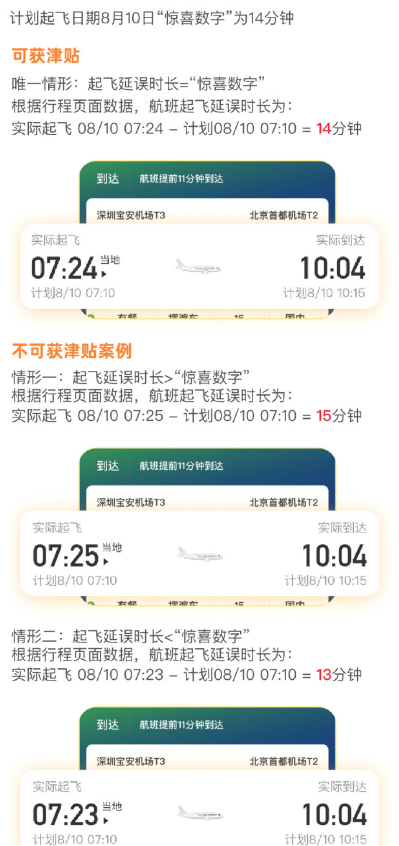
Core Viewpoint - The recent launch of a low-cost flight delay insurance product by the company has faced significant backlash from consumers, who describe it as extremely difficult to claim, likening it to a game of chance rather than a legitimate insurance product [1][4]. Group 1: Insurance Product Controversy - The "Surprise Number" delay insurance, priced at 9.9 yuan, requires users to experience a flight delay that matches a randomly set number to receive compensation, which many consumers find unreasonable [5][9]. - Users have reported experiences where they purchased the insurance under the impression of easy claims, only to discover the stringent conditions that led to no compensation [10][11]. - Legal experts suggest that the product's design may violate insurance regulations and consumer rights, potentially classifying it as an unreasonable insurance product [15][16]. Group 2: Direct Sales Platform Issues - The company has launched a direct sales platform for airline tickets, promoting it as having "0 price difference, 0 bundling, and 0 tricks," yet users have found ticket prices to be higher than those on other platforms [2][17][21]. - Despite the platform's intention to provide consumers with better pricing, many users have reported instances where the same tickets were significantly more expensive compared to other booking channels [24][27]. - The company's customer service has defended the pricing discrepancies by attributing them to various market factors, but this explanation has not satisfied many users who expected better pricing from an official platform [30][32]. Group 3: User Trust and Future Outlook - The controversies surrounding the insurance product and ticket pricing have led to a decline in user trust, which is critical for the company's long-term success as a travel service provider [33][34]. - To maintain its position as a legitimate direct sales platform, the company must address these issues and improve its operational model and service quality [34][35].
中国民航信息网络(00696.HK):1H25业绩符合市场预期;处理量表现平稳 回款改善助力业绩实现增长
Ge Long Hui· 2025-08-23 11:11
Core Viewpoint - The company's 1H25 performance aligns with market expectations, showing a slight decline in revenue but an increase in net profit [1] Financial Performance - Revenue for 1H25 was 3.895 billion yuan, a year-on-year decrease of 3.6% [1] - Net profit attributable to shareholders was 1.448 billion yuan, a year-on-year increase of 5.9%, meeting market expectations [1] - AIT business revenue grew by 2.1%, while system integration business revenue fell by 38.5%, impacting overall revenue growth [1] - The company reported a 4.2% decrease in operating costs, primarily due to reduced depreciation costs and lower sales costs in the integration business [2] Business Segments - The AIT business processed a total booking volume that increased by 5.3% year-on-year, while the processing volume for foreign and regional airlines decreased by 7.8% [1] - Revenue from settlement services, data networks, and technical support saw varied performance, with settlement services growing by 12.4% and technical support increasing by 30.4% [1][2] Development Trends - The company holds a 20.66% stake in China Aviation Information Technology Co., Ltd., which operates the "Huanglv Zongheng" app, recently launching a direct sales platform for airlines [2] - Monitoring user activity and commercialization potential of the app is recommended [2] Profit Forecast and Valuation - The profit forecasts for 2025 and 2026 remain unchanged at 2.327 billion yuan and 2.581 billion yuan, respectively [2] - The current stock price corresponds to a P/E ratio of 13.6 for 2025 and 12.1 for 2026, with a target price of 13 HKD, indicating a potential upside of 10.2% [2]
国内航司集体“站台”航旅纵横背后,民航的“反内卷”开始了|姗言两语
Di Yi Cai Jing· 2025-07-31 08:25
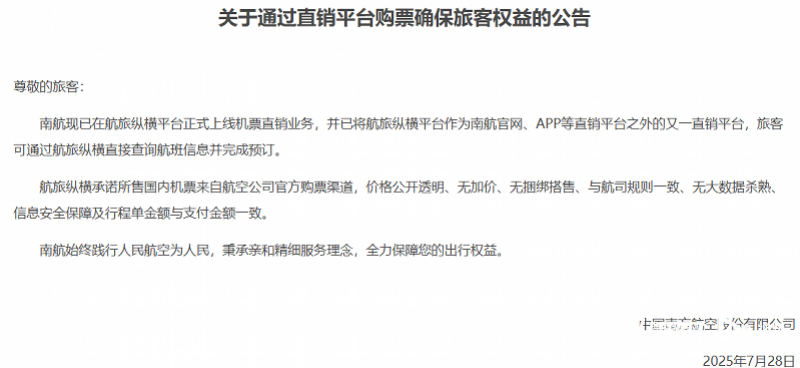
Group 1 - The core idea of the news is the launch of the "Civil Aviation Official Direct Sales Platform" by Hanglv Zongheng, which aims to provide a direct sales channel for airline tickets, eliminating intermediaries and addressing issues like bundling and price hikes commonly found in traditional OTAs [1][2] - Major Chinese airlines, including Air China, China Eastern Airlines, and China Southern Airlines, have endorsed this platform, stating that all tickets sold are directly from the airlines, ensuring price transparency and compliance with airline rules [1][2] - The initiative is part of a broader effort by the Civil Aviation Administration of China (CAAC) to combat "involution" in the aviation industry, which refers to inefficient and homogeneous competition that undermines profitability despite market growth [2] Group 2 - The CAAC has recognized the need for a unified official ticket sales platform to reduce reliance on online sales platforms, which often lead to price wars and low-quality competition among airlines [2] - The current platform still faces challenges in gaining traveler acceptance due to its lack of advantages in ticket pricing, payment options, and transfer flight selections compared to OTAs [3] - Industry experts suggest that addressing overcapacity and homogeneous competition is crucial for alleviating price involution, emphasizing the need for airlines to innovate and cater to diverse traveler demands [3]



机票销售“博弈” 航司票代“对决”
Nan Fang Du Shi Bao· 2025-07-30 02:58
Core Viewpoint - The launch of the "Civil Aviation Official Direct Sales Platform" by Hanglv Zongheng marks a significant shift in the airline ticket sales market, aiming to reshape the competitive landscape and reduce reliance on third-party agents [1][4][5] Group 1: Platform Features and Promises - The platform integrates direct sales resources from 37 domestic airlines, emphasizing six key promises: price transparency, no bundled sales, alignment with airline refund and change policies, no data discrimination, protection of user information, and accurate billing [2][3] - Users can compare and purchase direct tickets from multiple airlines on a single interface, similar to the railway ticketing system "12306" [2][3] Group 2: Market Dynamics and Challenges - The direct sales initiative is seen as a response to the long-standing issues in the ticket sales market, including price manipulation and lack of transparency in refund policies [5][6] - The traditional model of ticket sales through online travel agencies (OTAs) has led to a significant market share, with OTAs accounting for over 70% of ticket sales, creating a complex relationship between airlines and third-party agents [5][6] Group 3: Industry Impact and Future Outlook - The introduction of the direct sales platform is expected to pressure smaller ticket agents, while larger travel agencies may remain relatively unaffected due to their customer resources and service capabilities [8][9] - Airlines are likely to gain more market power and offer consumers a more transparent pricing system, but the long-term effects of this market transformation remain to be seen [9]

三大航与航旅纵横达成直销合作,机票无捆绑销售不一定最便宜
Nan Fang Du Shi Bao· 2025-07-29 08:52
Core Insights - The launch of the "official direct sales platform for civil aviation" by the company has attracted significant attention due to its focus on no bundled sales [1] Group 1 - The platform aims to provide a more transparent and direct purchasing experience for consumers in the civil aviation sector [1] - This initiative is expected to disrupt traditional sales models in the airline industry, potentially leading to increased competition [1] - The move aligns with broader trends in the industry towards digital transformation and direct consumer engagement [1]
三大航与航旅纵横达成直销合作 机票无捆绑销售不一定最便宜
Nan Fang Du Shi Bao· 2025-07-29 06:22
Core Viewpoint - The launch of the "Civil Aviation Official Direct Sales Platform" by Hanglv Zongheng has garnered significant attention, with multiple airlines announcing direct sales partnerships, aiming to provide a transparent and non-bundled ticket purchasing experience [1][2][5] Group 1: Platform Features - The platform integrates direct sales resources from 37 domestic airlines, emphasizing six commitments: price transparency, no bundled sales, alignment with airline refund and change policies, no data discrimination, user information security, and accurate reimbursement documentation [5] - Users can compare and purchase direct sales tickets from multiple airlines on a single interface, similar to the railway ticketing platform "12306" [5][8] Group 2: Market Reactions - Public opinion on the platform is mixed, with some users finding that tickets are still more expensive compared to other travel platforms that offer subsidies and discounts [7] - Complaints have arisen regarding customer service issues, such as difficulties in ticket issuance and lack of responsive support [7] Group 3: Industry Context - The direct sales initiative is seen as a move to address "inward competition" in the airline industry, where airlines have relied heavily on online travel agencies (OTAs) for ticket sales, often leading to price wars and reduced profitability [9][10] - The Civil Aviation Administration of China has highlighted the need for regulatory measures to improve direct sales and reduce reliance on OTAs, which have been known to bundle additional services that complicate pricing for consumers [10][11] Group 4: Financial Performance - Major airlines are currently facing losses due to various factors, including changes in passenger demographics and competition from high-speed rail, with ticket prices continuing to decline [11]
中国思考-反内卷,药引与根治
2025-07-28 01:42
Summary of Key Points from the Conference Call Industry Overview - The report discusses the concept of "anti-involution" in the context of China's economic landscape, particularly focusing on the supply-side challenges that are more complex compared to the previous cycle from 2015 to 2018 [2][3]. Core Insights and Arguments 1. **Policy Signals**: There is a notable increase in policy signals regarding "anti-involution," with comparisons made to the supply-side reform 1.0 period. The current challenges differ significantly from those faced between 2015 and 2018 due to changes in industry competition and macroeconomic conditions [2][3]. 2. **Structural Reforms Needed**: To achieve lasting results in anti-involution, there is a consensus on the necessity for deeper structural reforms, including adjustments to local incentive mechanisms and tax reforms aimed at rebalancing towards consumption [3][10]. 3. **Recent Government Actions**: - On July 16, the State Council emphasized a combination of short-term and long-term measures to regulate competition in the new energy vehicle sector. - On July 18, the State Administration for Market Regulation held discussions with major food delivery platforms. - The Ministry of Industry and Information Technology announced supply-side reforms in ten key industries, including non-ferrous metals and petrochemicals [7]. 4. **Market Signals Ignored**: The report highlights that part of the competition's involution is due to ignored market signals, leading to continued capacity expansion despite falling prices [10]. 5. **Historical Context**: The report draws parallels between the current economic situation and past experiences, noting that anti-involution will not be a quick fix. The GDP deflator index has been negative for nine consecutive quarters since Q2 2023, indicating entrenched deflationary pressures [11]. 6. **Capacity Utilization and Industry Dynamics**: The report notes that the current overcapacity is largely in emerging industries, with 50-90% of capacity owned by the private sector, making administrative capacity reduction more challenging compared to the previous cycle [11][19]. 7. **Potential for Mergers and Acquisitions**: There is an expectation for large enterprises in the polysilicon industry to form acquisition funds to consolidate smaller firms, although execution remains uncertain due to declining demand and high inventory levels [12]. 8. **Gradual Progress Expected**: The report suggests that while some upstream industries may see moderate consolidation, the urgency for adjustment is lower compared to previous reforms [17][20]. 9. **Reform Timing and Delays**: The implementation of formal plans for capacity reduction may experience delays of 3-8 months, reflecting the complexities of the current economic environment compared to the 2015-2018 period [20]. Other Important Insights - **Demand Recovery Limitations**: The report indicates that the cyclical growth may fluctuate at lower levels due to debt and demographic challenges, with limited upside for demand recovery without decisive stimulus measures [18]. - **Need for Comprehensive Policy Mix**: The optimal policy combination would involve more aggressive demand rebalancing measures alongside faster structural reforms to achieve sustainable re-inflation [24]. - **Caution Against Overly Aggressive Measures**: The report warns that overly aggressive capacity reduction without sufficient demand support could lead to deeper deflation after a brief improvement in prices [24]. This summary encapsulates the key points discussed in the conference call, providing insights into the current state of the industry and the anticipated direction of policy and economic reforms in China.