
沪深300指数成分股

Search documents
内外部因素共振导致A股调整,耐心等待更明确的入场信号
British Securities· 2025-12-16 01:45
Market Overview - The A-share market experienced a weak oscillation pattern with a low opening and subsequent recovery, influenced by negative sentiment from external markets, particularly the decline in Japanese and Hong Kong stocks [2][4][8] - The insurance and consumer sectors saw gains, while technology stocks faced significant declines, indicating a lack of sustained support from new capital [2][6][7] Sector Performance - The insurance sector led the market with notable gains, driven by regulatory adjustments that lowered risk factors for investments in key indices [6][7] - Consumer stocks, particularly in retail and food and beverage, were active due to recent government policies aimed at boosting consumption [6][7] - Conversely, sectors such as semiconductor, energy metals, and bioproducts experienced declines, reflecting broader market weaknesses [4][5][6] Investment Strategy - Investors are advised to adopt a cautious approach, waiting for clearer entry signals, while long-term investors may consider buying on dips [2][7] - Focus should be on sectors with strong earnings support, including technology growth areas (semiconductors, AI, robotics) and cyclical industries (solar, batteries, chemicals) [2][7] - Avoid high-valuation stocks lacking performance backing, emphasizing the importance of selecting fundamentally sound investments [2][7]
风险因子下调鼓励险资“买得进”“拿得住”
Jin Rong Shi Bao· 2025-12-10 02:03
Core Viewpoint - The adjustment of risk factors by the regulatory authority is a significant step in implementing the "long money, long investment" system, aimed at encouraging long-term and value investments in the market [1][7]. Group 1: Regulatory Changes - The Financial Regulatory Bureau issued a notice adjusting the risk factors for insurance companies investing in the CSI 300 index, the CSI Dividend Low Volatility 100 index, and stocks listed on the Sci-Tech Innovation Board [1][6]. - The risk factor for stocks held for over three years in the CSI 300 and CSI Dividend Low Volatility 100 indices has been reduced from 0.3 to 0.27, while for stocks held for over two years on the Sci-Tech Innovation Board, it has been reduced from 0.4 to 0.36 [2][4]. Group 2: Impact on Insurance Companies - The adjustment allows insurance companies to allocate more capital to stock investments, as lower risk factors mean less capital is required to cover potential risks [2][4]. - Analysts estimate that if the minimum capital is fully allocated to the CSI 300 stocks, it could release approximately 108.6 billion yuan [4]. Group 3: Long-term Investment Encouragement - The primary intention behind the notice is to guide insurance capital towards long-term holding rather than merely providing short-term capital relief [4][6]. - The regulatory authority aims to encourage insurance funds to not only invest but also hold onto their investments for longer periods, thereby reducing market volatility [4][7]. Group 4: Growth of Insurance Capital - As of September 2025, the total investment balance of insurance companies exceeded 37 trillion yuan, with stock and securities fund investments reaching 5.59 trillion yuan, accounting for 14.92% of total investments, up from 12.8% the previous year [7]. - The role of insurance capital in the capital market is expected to become increasingly significant, with projections indicating that new equity investments from insurance funds could remain around one trillion yuan in 2026 [7].
东兴证券:降低险企部分投资业务风险因子 进一步释放险资活力
智通财经网· 2025-12-09 03:49
Core Viewpoint - The report from Dongxing Securities highlights the increased role of capital markets as stabilizers during significant changes in Sino-US economic relations, emphasizing the importance of insurance capital in maintaining market stability and improving operational efficiency for insurance companies [1][4]. Summary by Sections Regulatory Changes - The Financial Regulatory Bureau issued a notice adjusting risk factors related to insurance companies, aiming to enhance their long-term investment management capabilities and better align asset-liability management [2]. - The adjustments include differentiated risk factors based on holding periods for investments in the CSI 300 index, the CSI Low Volatility 100 index, and stocks listed on the Sci-Tech Innovation Board [2][3]. Specific Adjustments - For insurance companies holding CSI 300 and CSI Low Volatility 100 index stocks for over three years, the risk factor was reduced from 0.3 to 0.27 [3]. - For stocks on the Sci-Tech Innovation Board held for over two years, the risk factor was lowered from 0.4 to 0.36 [3]. - The risk factors for export credit insurance and overseas investment insurance were also adjusted, with the premium risk factor decreasing from 0.467 to 0.42 and the reserve risk factor from 0.605 to 0.545 [3]. Market Impact - The adjustments are expected to accelerate the entry of insurance capital into the market, thereby stabilizing market fluctuations and enhancing liquidity [4]. - The changes support a wide range of investment styles, including large-cap blue chips, high-dividend stocks, and technology growth, promoting a balanced and healthy development of the equity market [4]. Investment Recommendations - The report suggests focusing on leading companies in the non-banking sector, which are better positioned to leverage policy innovations and capitalize on policy benefits [5]. - Additionally, the investment value of securities and insurance ETFs should be closely monitored due to the growing demand for differentiated investment [5].

相关风险因子下调 险资增量长钱入市可期
Zheng Quan Ri Bao· 2025-12-07 15:43
Core Viewpoint - The recent notification from the National Financial Regulatory Administration aims to enhance the solvency of insurance companies and encourage them to increase their market investments, particularly in long-term assets [1][2][3]. Group 1: Regulatory Changes - The notification adjusts risk factors for insurance companies' investments in specific indices, which will improve their solvency ratios and create more room for market investments [1][2]. - The risk factor for stocks held over three years in the CSI 300 index and the CSI Dividend Low Volatility 100 index has been reduced from 0.3 to 0.27, while the risk factor for stocks in the Sci-Tech Innovation Board held over two years has been lowered from 0.4 to 0.36 [2][3]. Group 2: Market Impact - If the released funds are fully allocated to the CSI 300 index components, it is estimated that approximately 108.6 billion yuan will enter the market [1][3]. - As of the end of Q3 this year, the balance of insurance capital invested in stocks was 3.62 trillion yuan, with a potential increase in solvency ratios by 1 percentage point if no additional stock allocation occurs [3][4]. Group 3: Future Investment Strategies - The notification aligns with previous regulatory efforts to encourage insurance capital to invest more in the market, emphasizing long-term and patient capital [4]. - By 2025, policies will be implemented to ensure that large state-owned insurance companies allocate 30% of new premiums to A-share investments and increase the equity investment limit to 50% of total assets [4]. Group 4: Current Trends - The proportion of equity investments by insurance companies has reached a record high, with a total of 5.59 trillion yuan invested in stocks and securities, accounting for 14.92% of total investment [4].
短期或震荡蓄势!机构最新研判
Zhong Guo Zheng Quan Bao· 2025-12-07 14:37
Core Viewpoint - The A-share market is experiencing a rebound with major indices showing collective weekly gains, and investors are expected to adopt a more cautious approach as the year-end approaches, leading to a focus on dividend and large-cap stocks as preferred investment choices [1][8]. Group 1: Market Trends - The A-share indices, including the Shanghai Composite and ChiNext, have recovered key levels of 3900 and 3100 points respectively [1]. - The market is anticipated to remain in a state of fluctuation and consolidation in the short term, with a lack of strong catalysts [1][7]. - Seasonal effects are expected to favor large-cap and dividend stocks in December, based on historical performance data [9]. Group 2: Investment Opportunities - The adjustment of risk factors for insurance companies' investments in specific indices is expected to unlock significant capital, potentially bringing in hundreds of billions in new funds to the market [2]. - The upcoming important meeting in December is likely to provide policy direction and liquidity signals, with sectors such as new productivity, domestic consumption, and precious metals being highlighted as potential beneficiaries [6][4]. - Analysts suggest focusing on sectors with structural opportunities, including traditional manufacturing, resource sectors, and dividend-paying stocks like banks and energy companies [5][7]. Group 3: Institutional Insights - Citic Securities emphasizes that the market will likely experience a rotation of structural opportunities, with a focus on sectors that can benefit from global exposure and profit margin improvements [5]. - China Galaxy recommends monitoring sectors that may receive policy support during the upcoming meeting, as well as technology growth sectors that may see recovery after previous valuation adjustments [6]. - Morgan Asset Management highlights the potential for growth in robotics and semiconductor sectors, indicating a shift towards fundamentals-driven market dynamics in 2026 [10].
——申万宏源策略《关于调整保险公司相关业务风险因子的通知》点评:鼓励长期资金入市的方向延续
Shenwan Hongyuan Securities· 2025-12-07 02:38
Core Insights - The report discusses the adjustment of risk factors for insurance companies' investments, specifically the reduction of risk factors for stocks held for over three years in the CSI 300 and the low-volatility dividend index from 0.3 to 0.27, and for stocks held for over two years in the Sci-Tech Innovation Board from 0.4 to 0.36 [3][4][17] - The adjustment is seen as a marginal impact, with the potential for a significant increase in equity allocation by insurance funds in the long term [17][21] Quantitative Assessment of Risk Factor Adjustment - The report provides three scenarios for the proportion of stocks held for over three years in the CSI 300 and low-volatility dividend index: current situation at 13.0%, mid-term neutral at 42.1%, and optimistic at 50.3% [7][15] - For stocks held for over two years in the Sci-Tech Innovation Board, the current situation is at 0.6%, mid-term neutral at 1.9%, and optimistic at 2.9% [7][15] - The minimum capital released from the risk factor adjustment is estimated at 141 billion, 457 billion, and 554 billion under the three scenarios, respectively, with potential increases in stock investment of 514 billion, 1669 billion, and 2015 billion [15][17] Encouragement of Long-term Capital Market Entry - The adjustment is viewed as a supportive policy for encouraging long-term capital entry into the market, particularly for state-owned insurance companies that have already increased their equity investment ratios [17][21] - The report emphasizes the importance of increasing the equity allocation ratio of insurance funds as the main source of potential market entry space, estimating a potential increase of 32,431 billion if the equity and fund investment ratio reaches the regulatory cap of 30% [17][20] Market Dynamics and Future Outlook - The report notes that the spring market's economic and industrial catalysts are yet to be clarified, with supply-demand logic becoming a primary concern [21] - The adjustment of risk factors may lead to a favorable environment for insurance companies to engage in high-dividend stock investments while maintaining a focus on cost-effectiveness [21]
申万宏源策略《关于调整保险公司相关业务风险因子的通知》点评:鼓励长期资金入市的方向延续
Shenwan Hongyuan Securities· 2025-12-07 01:17
Core Insights - The report discusses the adjustment of risk factors for insurance companies' investments, specifically the reduction of risk factors for stocks held for over three years in the CSI 300 and the low-volatility 100 index from 0.3 to 0.27, and for stocks in the Sci-Tech Innovation Board held for over two years from 0.4 to 0.36 [4][17][21] - The adjustment is seen as a marginal impact, with the potential for a significant increase in equity allocation by insurance funds in the long term [21][26] Quantitative Assessment of Risk Factor Adjustment Impact - The report presents three scenarios for the proportion of stocks held for over three years in the CSI 300 and low-volatility 100: current situation at 13.0%, mid-term neutral at 42.1%, and mid-term optimistic at 50.3% [9][19] - For stocks held for over two years in the Sci-Tech Innovation Board, the current situation is at 0.6%, mid-term neutral at 1.9%, and mid-term optimistic at 2.9% [9][19] - The minimum capital released due to the risk factor adjustment is estimated at 141 billion, 457 billion, and 554 billion under the three scenarios, respectively, with potential increases in stock investment of 514 billion, 1669 billion, and 2015 billion [17][19][21] Insurance Fund Allocation Trends - As of Q3 2025, insurance companies' investment in stocks and funds exceeded 15%, nearing a new high since 2015, but still below the regulatory cap of 30% [21][22] - If the allocation to stocks and funds were to increase to the 30% cap, an additional 32,431 billion could be invested in stocks [25][21] - The report emphasizes that the increase in equity allocation by insurance companies is a gradual process, with significant potential for future growth [21][26] Policy Implications - The adjustment of risk factors is viewed as a supportive policy for encouraging long-term capital market participation, particularly for state-owned insurance companies that have already increased their equity allocation [21][26] - The report suggests that the adjustment will provide additional incentives for other insurance companies to increase their equity investments [21][26] - The overall impact of the risk factor adjustment is considered marginal compared to the potential for long-term increases in equity allocation by insurance funds [21][26]
周末,监管开始释放利好了,下周要涨?
Sou Hu Cai Jing· 2025-12-06 13:13
Group 1 - The core point of the news is the adjustment of the risk factor for insurance companies from 0.3 to 0.27, which releases more funds into the market, potentially increasing liquidity in the A-share market [1] - Experts estimate that over 100 billion yuan will flow into the market due to this adjustment, although this amount may not significantly impact the large scale of the A-share market [1] - The adjustment targets core assets such as the CSI 300 index and the CSI Dividend Low Volatility 100 index, which are expected to stabilize the market and promote a gradual bull market over time [1] Group 2 - The timing of this adjustment is seen as a response to declining market confidence and shrinking transaction volumes, as well as negative sentiment from significant shareholder reductions [3] - The adjustment is viewed as a measure to boost market confidence and stabilize the index around 3900 points in the short term, with a focus on increasing transaction volumes [3] - The current market situation indicates that while the index may improve, there are still underlying adjustments needed, emphasizing the importance of managing positions to seize opportunities and mitigate risks [3]

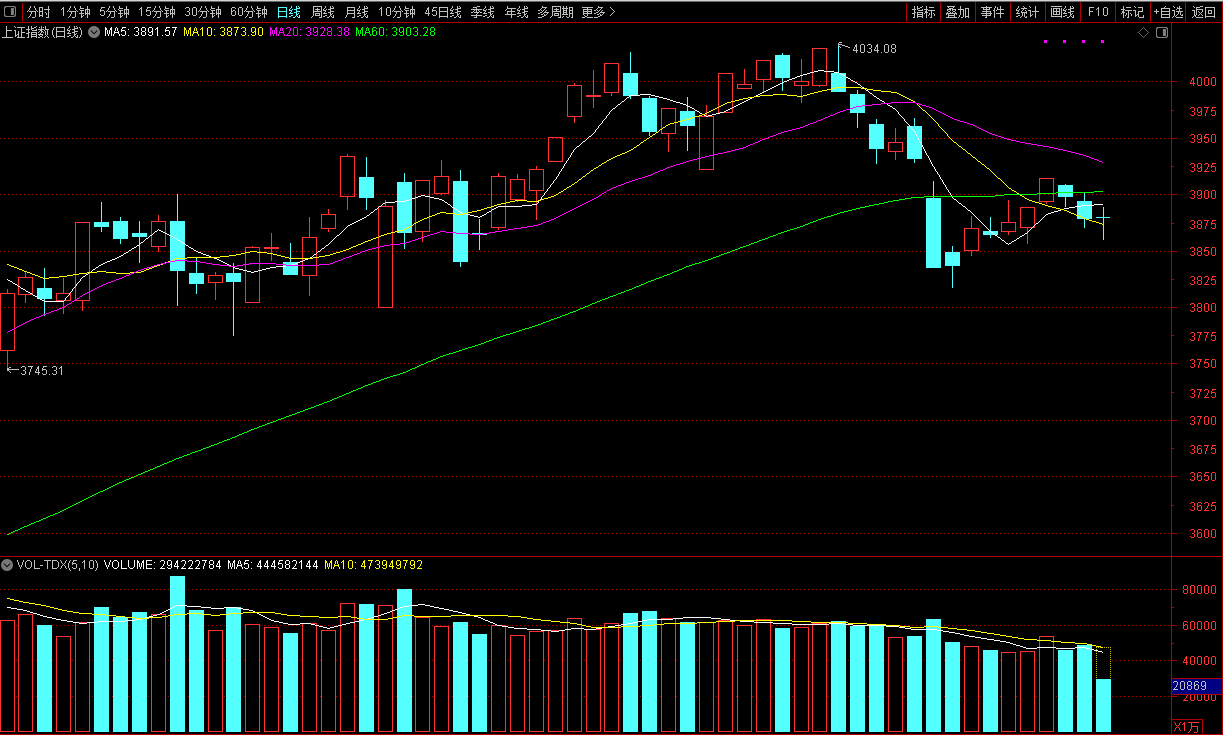
金融监管总局:险企持仓超三年的沪深300指数成分股的风险因子下调至0.27
Bei Jing Shang Bao· 2025-12-05 12:16
Core Viewpoint - The Financial Regulatory Administration has announced adjustments to the risk factors for insurance companies related to certain stock indices, indicating a regulatory shift aimed at managing investment risks more effectively [1] Group 1: Regulatory Changes - The risk factor for stocks held by insurance companies for more than three years in the CSI 300 Index and the CSI Dividend Low Volatility 100 Index has been reduced from 0.3 to 0.27 [1] - This adjustment is based on the weighted average holding period over the past six years [1]