
电源管理

Search documents
转债市场周报:转债分歧加剧,预计资产夏普下降-20260301
Guoxin Securities· 2026-03-01 11:16
Report Industry Investment Rating No information provided in the text Core Viewpoints - The divergence in the convertible bond market has intensified, and it is expected that the Sharpe ratio of assets will decline. The main sectors will "separate the wheat from the chaff", and attention should be paid to the sub - directions that have lagged behind in the early stage and have performance support [3][18] Summary by Relevant Catalogs Market Focus (2026/2/24 - 2026/2/27) Stock Market - After the Spring Festival, the market showed a warming trend, with major indices oscillating upwards and trading volume steadily increasing to about 2.5 trillion yuan. The market sentiment was generally positive. Upstream resource products became the main line of the market, with sectors such as non - ferrous metals, oil and gas, chemicals, and coal taking turns to perform, while the media sector adjusted significantly due to the adjustment of the film and entertainment and AI application sectors [1][8] - By industry, most Shenwan primary industries rose last week. Steel (12.27%), non - ferrous metals (9.77%), basic chemicals (7.15%), environmental protection (6.96%), and coal (5.92%) led the gains; media (-5.10%), commercial retail (-1.64%), food and beverage (-1.54%), and non - bank finance (-1.18%) performed poorly [9] Bond Market - At the beginning of the week, the bond market adjusted continuously under the suppression of factors such as the unexpected implementation of the Shanghai real - estate new policy and the strong linkage between stocks and commodities. On Friday, the capital market loosened, and the tone of the Politburo meeting was stable. Market sentiment gradually stabilized, and the yields of various maturities declined slightly. The whole week showed a pattern of gradually stabilizing during the adjustment. The 10 - year Treasury bond rate closed at 1.7877% on Friday, down 0.51bp from the last trading day before the Spring Festival [1][9] Convertible Bond Market - Last week, most convertible bond issues fell. The CSI Convertible Bond Index fell 0.23% for the whole week, the median price rose 1.22%, the calculated arithmetic average parity rose 3.46% for the whole week, and the market conversion premium rate decreased by 4.65% compared with the previous week. In terms of individual bonds, Youcai (polyester staple fiber), Shuangliang (space photovoltaic), Guanglian (commercial aerospace), Dazhong (lithium mine), and Guanzhong (environmental protection) convertible bonds led the gains; Huicheng (advanced packaging), Weidao (semiconductor equipment), Ruichuang (military industry), Xinfu (software), and Hengshuai (automotive motor) convertible bonds led the losses [2][9][13] - Most industries in the convertible bond market fell last week. Steel (4.73%), non - ferrous metals (1.99%), public utilities (1.90%), and building decoration (1.87%) performed well, while media (-4.45%), social services (-2.47%), commercial retail (-2.33%), and non - bank finance (-2.23%) performed poorly [12] - The total trading volume of the convertible bond market last week was 27.2551 billion yuan, with an average daily trading volume of 681.38 million yuan, a slight decrease from the previous week [15] Views and Strategies (2026/3/2 - 2026/3/6) Stock Market - After the new year, the introduction of structural monetary policies and the relaxation of real - estate control in Shanghai are better than the previous stable and moderate policy expectations, which is beneficial for maintaining a relatively high risk preference in the equity market. From the perspective of past seasonal effects, the winning rate of small - cap stocks is extremely high between the Spring Festival and the Two Sessions, and after the Two Sessions, the correlation between the stock market trend and performance gradually increases. During the spring rally, the price - increase chain in the technology + resource product sectors has obvious excess returns. As the economic data for January - February are gradually released, it is expected that March - April will be an important window for the market to further verify price increases and performance. The main sectors will face "separating the wheat from the chaff", and sectors that have lagged behind in the early stage and have current performance are more advantageous [3][18] Convertible Bond Market - After the Spring Festival, the divergence in the convertible bond market has increased. On the 25th and 26th, the premium rates of high - price and high - premium targets were significantly compressed. Some investors are worried that the spring market will gradually come to an end in terms of duration. According to the previous judgment (the sustainability of the polarized valuation of convertible bonds depends on the stock market expectations), it is expected that the volatility of convertible bonds in March (especially the volatility of the premium rate) will further increase. It should be recognized that there are obvious differences between selecting convertible bonds and selecting underlying stocks at this stage. Most of the core targets related to the main equity lines are expected to have a poor Sharpe ratio for convertible bonds at a conversion premium rate of over 30%, and they are not the best choice for the current portfolio allocation. Bond selection needs to sort out the upward logic one by one and screen by considering both the price and premium rate of the available convertible bond targets [3][18] - In the context of power shortages in North America, most convertible bonds related to main lines such as high - volume orders for gas turbines, price increases in the upstream and downstream of the electronic industry chain such as power semiconductors/silicon wafers/carrier tapes, and the increasing prosperity of liquid cooling are all high - price and high - premium, and many targets are close to triggering redemption. At present, when the divergence in the convertible bond market has emerged, the volatility of convertible bonds may be greater than that of the underlying stocks in the short term, and the odds are limited. Some targets are about to enter the conversion period. If the major shareholders reduce their holdings and the market corrects, and the convertible bond valuation is significantly compressed, then additional allocation can be considered [18] - For the AI main line, consider allocating to the divergent fields that have relatively lagged behind in the early stage and have performance support, such as computing power leasing, energy storage, embodied intelligence, and autonomous driving [18] - Against the background of the global increase in strategic reserves of resource products and the downward trend of the US dollar, pay attention to the polyester industry chain, engineering machinery, resource products and mining services. In addition, pay attention to the innovative drug industry chain, two - wheeled vehicles, and the post - cycle of the real - estate chain [18] - If the equity market turns down, funds will replenish the defensive sectors that have fallen significantly in the early stage. Referring to past experience, at the beginning of the equity market decline, the parity and valuation of the entire convertible bond market will fall together. Then, the low - price bottom - position varieties with high ratings will stabilize first. It is recommended to reduce positions as a response. After that, pay attention to the defensive sectors such as banks and power that have adjusted more in the early stage [18] Valuation Overview - As of last Friday (2026/02/27), for equity - biased convertible bonds, the average conversion premium rates of convertible bonds with parities in the ranges of 80 - 90 yuan, 90 - 100 yuan, 100 - 110 yuan, 110 - 120 yuan, 120 - 130 yuan, and above 130 yuan were 54.87%, 46.47%, 35.03%, 26.27%, 23.02%, and 15.61% respectively, which were at the 99%/99%, 98%/99%, 99%/99%, 98%/98%, 98%/100%, and 98%/97% percentile values since 2010/2021 [19] - For bond - biased convertible bonds, the average YTM of convertible bonds with parities below 70 yuan was -5.14%, which was at the 1%/3% percentile values since 2010/2021 [19] - The average implied volatility of all convertible bonds was 49.88%, which was at the 95%/98% percentile values since 2010/2021. The difference between the implied volatility of convertible bonds and the long - term actual volatility of the underlying stocks was 8.63%, which was at the 96%/98% percentile values since 2010/2021 [19] Primary Market Tracking - Last week (2026/2/24 - 2026/2/27), Xianghe and Tonglian convertible bonds announced their issuance, and Aiwei convertible bonds were listed [26] - As of the announcements on February 27, there are no convertible bonds announced for issuance and listing next week (2026/3/2 - 2026/3/6). Last week, the exchanges accepted applications from 2 companies (Zuoli Pharmaceutical and Zhenyu Technology), and the general meetings of shareholders passed the applications of 3 companies (Shenghui Integration, Aopute, and Shenling Environment). There are no new companies approved for registration by the exchanges, passed by the listing committees, or with board proposals. As of now, there are a total of 102 convertible bonds to be issued, with a total scale of 166.28 billion yuan, including 5 that have been approved for registration with a total scale of 4.39 billion yuan and 7 that have passed the listing committee with a total scale of 6.97 billion yuan [29]


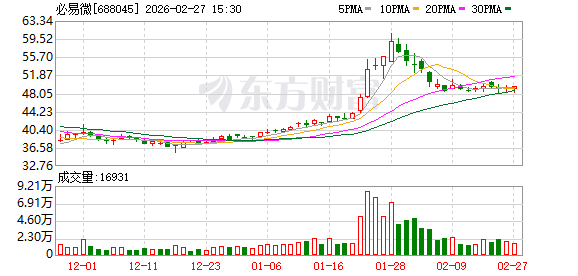
必易微:2025年净利1207.54万元 同比扭亏
Zhong Guo Zheng Quan Bao· 2026-02-28 01:48
Group 1 - The company reported a revenue of 683 million yuan for 2025, a year-on-year decrease of 0.7% [4] - The net profit attributable to shareholders was 12.08 million yuan, marking a turnaround from a loss in the previous year [4] - The basic earnings per share were 0.17 yuan, with a weighted average return on equity of 0.88%, an increase of 2.1 percentage points from the previous year [11] Group 2 - The company specializes in power management, motor drive control, battery management, signal chain, and microcontrollers [8] - The company has adjusted its product structure in response to market changes, leveraging product performance and customer resources to expand market share [8] - The company aims to drive growth through technological innovation, cost reduction, and flexible pricing strategies [8] Group 3 - The current price-to-earnings ratio (TTM) is approximately 286.22 times, with a price-to-book ratio (LF) of about 2.5 times and a price-to-sales ratio (TTM) of approximately 5.13 times [4]


研报掘金丨国海证券:维持华虹半导体买入评级
Ge Long Hui A P P· 2026-02-24 05:51
Core Viewpoint - Guohai Securities maintains a "Buy" rating for Huahong Semiconductor (1347.HK), projecting a revenue of $660 million in Q4 2025, representing a year-on-year increase of 22.4% with a gross margin of 13.0% driven by ASP improvements and cost reduction efforts [1] Group 1 - Revenue growth is supported by power management and flash memory products [1] - The 12-inch product line is expected to have pricing power in 2026, with new factory capacity and the "China for China" trend supporting both volume and price increases [1] - Depreciation pressure remains a concern despite the positive outlook [1] Group 2 - Projected EPS for 2026-2028 is $0.08, $0.10, and $0.11 respectively [1]

涨!涨!涨!半导体行业掀涨价风暴
Xin Lang Cai Jing· 2026-02-11 10:16
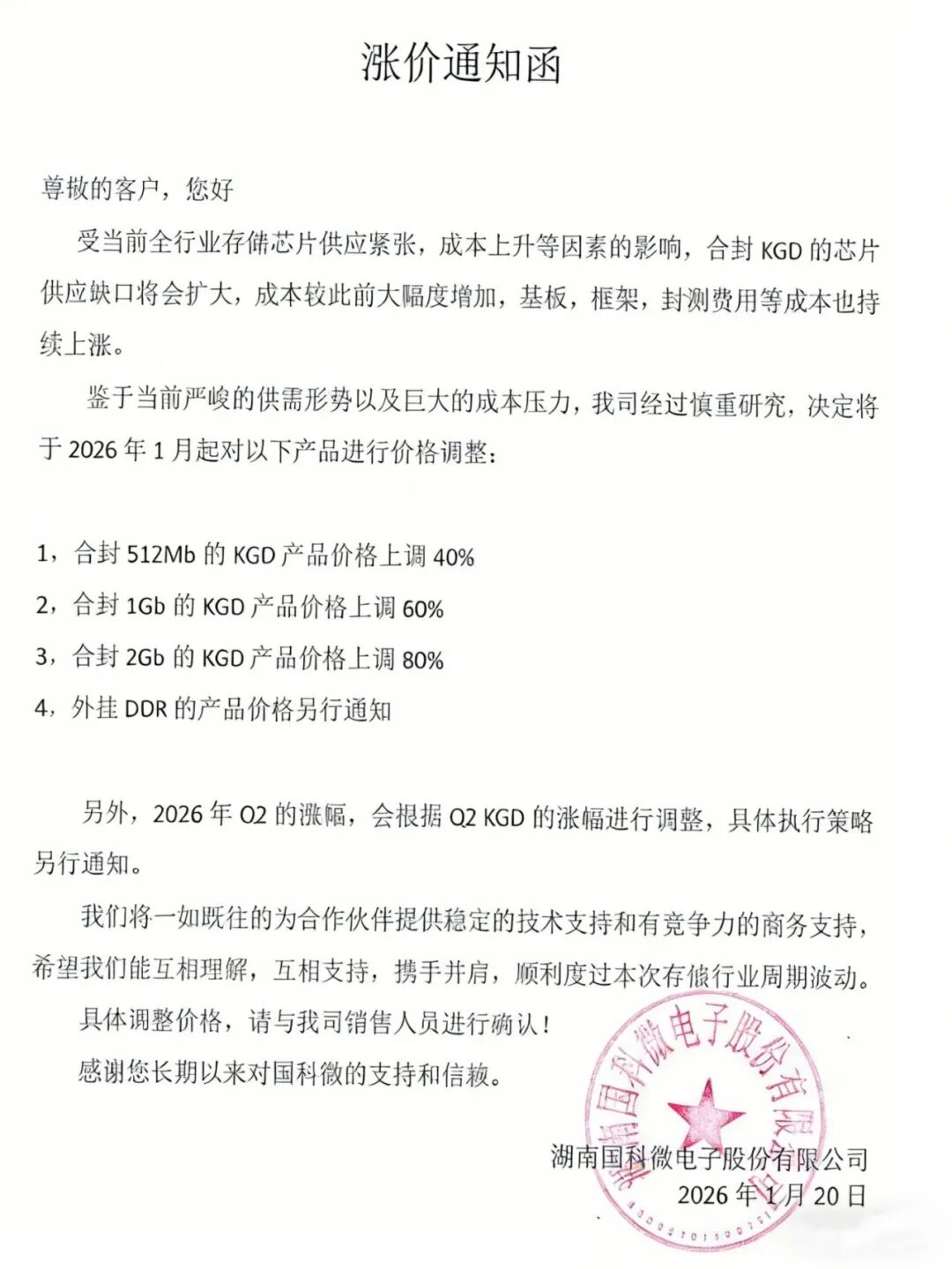
Core Viewpoint - The global semiconductor industry is experiencing a new wave of price increases across the entire supply chain, driven by surging AI demand and rising raw material costs [1][3][61]. Group 1: Price Increases in Domestic Semiconductor Companies - Over 20 semiconductor companies have officially announced price increases [2][62]. - Domestic chip manufacturers are significantly raising prices, with increases as high as 80% for certain products [4][63]. - Guokewai announced price hikes for its KGD storage products, with increases of 40% to 80% [6][66]. - Zhongwei Semiconductor is raising prices for MCU and NOR Flash products by 15% to 50% due to supply chain pressures [9][73]. - Biyiwei has also announced price increases across its entire product line, citing rising raw material costs [17][76]. Group 2: Price Increases in International Semiconductor Companies - International semiconductor giants are also raising prices, with ADI increasing prices by 15% to 30% starting February 1, 2026 [21][81]. - Infineon plans to raise prices for power switches and IC products due to increased demand from AI data centers [24][83]. - Texas Instruments is expected to raise prices by over 30% across nearly all categories due to rising costs [21][81]. Group 3: Price Increases in Wafer Foundry and Packaging - Wafer foundries are increasing prices, with TSMC raising advanced process prices by 3% to 10% [25][85]. - Packaging and testing services are seeing price increases of up to 30%, driven by high demand and capacity constraints [27][86]. Group 4: Impact of Raw Material Costs - The prices of precious metals like gold, silver, and copper are rising, significantly impacting chip manufacturing costs [57][116]. - The increase in raw material costs is leading to a ripple effect across the semiconductor supply chain, prompting many companies to raise their product prices [57][116]. Group 5: Effects on End Markets - The price increases in storage chips are affecting end markets, with PC manufacturers like Dell and Lenovo planning price hikes of 10% to 30% [59][118]. - In the smartphone sector, rising storage costs are pressuring new product pricing, particularly for low-end models [59][118]. - The automotive electronics sector is also feeling the impact, with companies like Xiaomi and NIO reporting cost pressures due to rising semiconductor prices [59][119].



英集芯跌2.06%,成交额2.14亿元,主力资金净流出1082.09万元
Xin Lang Cai Jing· 2026-01-14 06:24
Group 1 - The core viewpoint of the news is that Yingjixin's stock has experienced fluctuations, with a recent decline in share price and significant trading activity, indicating market volatility [1] - As of January 14, Yingjixin's stock price was 21.38 yuan per share, with a market capitalization of 9.274 billion yuan and a trading volume of 214 million yuan [1] - The company has seen a year-to-date stock price increase of 7.22%, but has declined by 4.89% in the last five trading days [1] Group 2 - Yingjixin reported a revenue of 1.169 billion yuan for the period from January to September 2025, representing a year-on-year growth of 14.16% [2] - The net profit attributable to shareholders for the same period was 114 million yuan, showing a year-on-year increase of 28.54% [2] - The company has distributed a total of 171 million yuan in dividends since its A-share listing, with 155 million yuan distributed over the past three years [3] Group 3 - As of September 30, 2025, Yingjixin had 15,600 shareholders, an increase of 13.58% from the previous period [2] - The average number of circulating shares per shareholder decreased by 11.95% to 19,194 shares [2] - Hong Kong Central Clearing Limited is the seventh largest circulating shareholder, holding 3.3207 million shares, an increase of 614,100 shares from the previous period [3]

纳芯微:逐浪先锋的创“芯”路
Shang Hai Zheng Quan Bao· 2025-12-24 20:11
Core Viewpoint - The article highlights the growth and strategic direction of Naxin Micro, emphasizing its focus on the energy and automotive markets as key areas for development and its recent achievement of becoming the first Chinese analog chip supplier approved by Bosch [3][10]. Group 1: Company Growth and Market Position - Naxin Micro has captured nearly one-third of the domestic analog chip market in the energy sector and close to 50% market share in automotive three-electric systems [3]. - The company achieved revenue exceeding 8 million yuan and a net profit of over 1 million yuan within its first year of operation [2]. - By 2025, 52% of Naxin Micro's revenue is projected to come from the energy market, while 34% will come from the automotive electronics market, demonstrating the effectiveness of its strategic planning [5][6]. Group 2: Strategic Focus and Market Opportunities - In 2020, Naxin Micro identified energy and automotive markets as relatively untapped opportunities, diverging from the crowded consumer electronics sector [5]. - The company aims to maintain a strategic focus on these two markets while also exploring smart terminal markets such as robotics and smart appliances [6]. Group 3: Mergers and Acquisitions - Naxin Micro acquired the magnetic sensor company Maigen, enhancing its product offerings and application scenarios across automotive, industrial, and consumer electronics sectors [7]. - The acquisition is seen as a synergistic move, with the integration of Maigen expected to significantly bolster Naxin Micro's core capabilities [7]. Group 4: Industry Trends and Future Outlook - The semiconductor industry is undergoing a significant reshaping, with a predicted period of consolidation and increased competition [8]. - Naxin Micro is committed to technological innovation and collaboration with leading clients to enhance its competitive edge in the semiconductor market [8][9]. Group 5: Global Expansion and Capital Market Activities - Naxin Micro successfully completed its "A+H" dual capital platform setup, marking its transition from a China-focused company to a global player [10]. - The company plans to allocate 25% of the funds raised from its Hong Kong IPO to expand its overseas sales network and market promotion [10].

思瑞浦决定终止筹划重大资产重组,自12月10日开市起复牌
Zhong Guo Ji Jin Bao· 2025-12-10 00:31
Core Viewpoint - Sirepu has decided to terminate its major asset restructuring plan to acquire shares of Ningbo Aura Semiconductor Co., Ltd. and will resume trading on December 10 [2][4]. Group 1: Termination of Restructuring - The company announced that the conditions for implementing the major asset restructuring are not fully mature, leading to the decision to terminate the plan after careful consideration and consensus with all parties involved [4]. - On November 25, Sirepu signed a share acquisition intention agreement with nine major shareholders of Aura, who collectively hold 86.12% of Aura's shares [4][5]. - The transaction was still in the planning stage, with no formal agreements signed and no proposals submitted for board or shareholder approval [5]. Group 2: Impact on Business Operations - The termination of the restructuring will not adversely affect the company's business operations, production activities, or financial status [6]. - Sirepu plans to explore various business cooperation opportunities with Aura in the future under suitable conditions [6]. Group 3: Company Background - Sirepu, listed on the Shanghai Stock Exchange's Sci-Tech Innovation Board since September 21, 2020, specializes in the research and sales of analog and mixed-signal products, covering applications in industrial, new energy, automotive, communication, consumer electronics, and healthcare sectors [6]. - Aura focuses on the research and development of high-performance, high-quality, and highly reliable integrated circuit products, including clock analog chips, power management analog chips, RF analog chips, MEMS sensors, and water meter sensors [6].


均胜电子(00699):全球汽车Tier1的技术外溢:从智能汽车到具身智能
Soochow Securities international· 2025-12-08 11:09
Investment Rating - The report initiates coverage with a "Buy" rating for the company, projecting a target price of HKD 23 based on a 2026 average valuation of PE=18x and a target market capitalization of HKD 35.6 billion [8]. Core Insights - The company is transitioning from the "Takata integration shadow" to a new phase characterized by "global safety cash cow + intelligent automotive Tier 1 + robotics second curve" [9]. - The automotive safety business is expected to maintain stable revenue growth in the mid-to-high single digits over the next three years, supported by the clearing of historical recall and restructuring costs, alongside increasing orders for new energy vehicles [7]. - The company is positioned as a leading global Tier 1 supplier in automotive safety, electronics, and robotics, with a comprehensive product line and platform-based R&D system [9][27]. Summary by Sections Investment Highlights - The company has become one of the few global suppliers capable of providing a complete set of passive safety systems to multinational automakers through acquisitions of KSS and Takata assets, with safety business revenue stabilizing in the hundreds of billions [7]. - The automotive electronics segment focuses on smart cockpits, connected vehicles, ADAS/domain control, and new energy management systems, forming a complete product line and platform-based R&D system [7]. - The company is advancing into robotics, creating integrated solutions for robotic control and collaborating with leading robotics players, which is expected to generate meaningful revenue in 3-5 years [8]. Financial Projections - Revenue projections for 2025-2027 are estimated at RMB 626 billion, RMB 670 billion, and RMB 719 billion, representing year-on-year growth of 12%, 7%, and 7% respectively. Net profit attributable to shareholders is projected at RMB 16 billion, RMB 18 billion, and RMB 20 billion, with growth rates of 67%, 12%, and 11% respectively [8]. Business Development Stages - The company has undergone several development stages: 1. Foundation Stage (2004-2010): Focused on local component supply and quality system establishment [10]. 2. Internationalization Stage (2011-2018): Transitioned to a global Tier 1 supplier through acquisitions [11]. 3. Optimization Stage (2019-2024): Focused on smart and electric vehicle trends, optimizing global operations [12]. 4. Re-entrepreneurship Stage (2025-present): Aiming for dual pillars of automotive and robotics Tier 1 development [13]. Market Position - The company ranks 41st among the largest automotive parts suppliers globally, with projected revenue of RMB 559 billion in 2024. It holds a 26.1% market share in China and a 22.9% share globally in passive safety [19][30]. - The revenue structure is highly internationalized, with approximately 25.3% from the Chinese market and 74.7% from overseas markets [21]. Competitive Landscape - The global automotive passive safety market is characterized by a high concentration of suppliers, with the top three companies holding over 90% market share. The company ranks second globally and in China, benefiting from increasing industry consolidation [42][43].

纳芯微港股挂牌:以传感器、信号链、电源管理三大体系挺进全球市场
Sou Hu Cai Jing· 2025-12-08 10:42
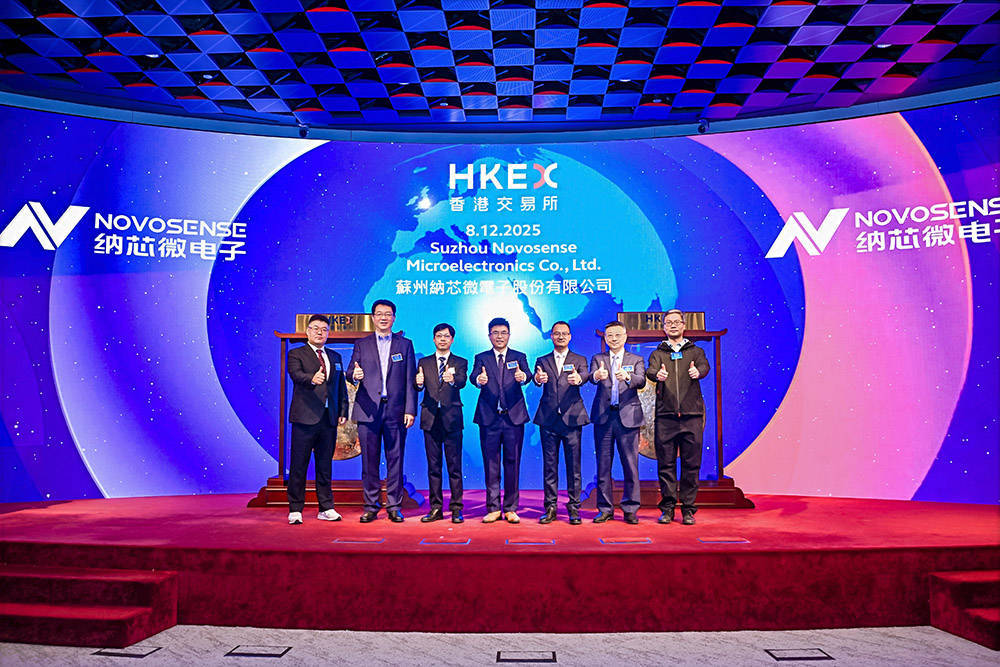
Core Viewpoint - Naxin Micro officially listed on the Hong Kong Stock Exchange on December 8, 2025, marking a new phase in the company's globalization strategy [1] Group 1: Global Strategy - Naxin Micro positions Hong Kong as its overseas headquarters, serving as a strategic hub for global customer service, supply chain collaboration, and ecosystem development [3] - The company aims to enhance its participation and influence in the international analog chip industry [3] Group 2: Market Position and Product Development - Naxin Micro is one of the few companies in China with deep layouts in three core areas: sensors, signal chains, and power management [3] - The company has established a leading advantage in key sectors such as automotive electronics, general energy sources, and smart terminals [3] Group 3: Future Plans - The CEO of Naxin Micro stated that the Hong Kong listing is not only a milestone for business development but also the starting point for the company's global narrative [3] - The company plans to increase investment in underlying technology, expand its product portfolio, improve overseas sales and market systems, and enhance global operational capabilities [3]
纳芯微“A+H”获重磅基石加持
Zhong Guo Jin Rong Xin Xi Wang· 2025-12-01 02:10
Core Insights - Naxin Micro is the first "A+H" analog chip company to receive cornerstone investment from the National Integrated Circuit Industry Investment Fund Phase III, highlighting the strategic importance of the analog chip sector and the company's technological strength [1] - The H-share listing will enhance global capital access, aiding the company in deepening industry chain collaboration and providing competitive domestic alternatives in key sectors such as new energy vehicles and high-end manufacturing [2] Company Overview - Naxin Micro has over 3,600 product models available for sale as of mid-2025, making it one of the few domestic manufacturers covering sensors, signal chains, and power management [1] - According to a Frost & Sullivan report, Naxin Micro ranks first among domestic manufacturers in the Chinese digital isolation chip market, magnetic sensor market, and automotive analog chip market, with a second position among fabless manufacturers [1] - The company's automotive electronic products have shipped over 980 million units as of mid-2025, covering all top ten new energy vehicle models in China for 2024 [1]