
糖浆

Search documents
“万店巨头”赚钱的秘密,藏在这三个字里
3 6 Ke· 2026-02-21 03:41
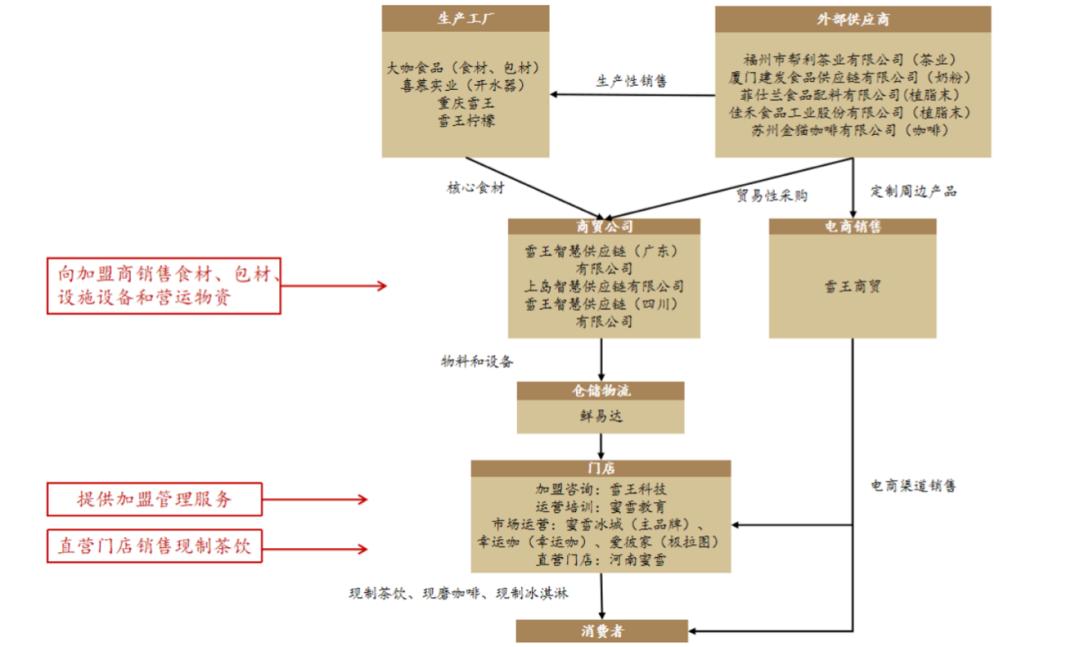
Core Insights - The Chinese consumer market has seen a surge in capitalized consumption brands, with companies like Mixue Ice City and others going public, highlighting a trend towards B2B supply chain models rather than traditional retail [1][2][3] Group 1: Business Model Transformation - Leading consumer brands are shifting their focus from direct consumer sales to B2B supply, with significant revenue coming from supplying franchisees [3][5] - For instance, Mixue Ice City reported that over 90% of its revenue comes from selling ingredients and equipment to franchisees, with only a small fraction from franchise fees [3][5] - Other brands like "Mingming Hen Mang" and "Gu Ming" also show similar revenue structures, with over 99% and 95% of their income derived from franchisee sales, respectively [5][12] Group 2: Supply Chain and Infrastructure - Successful brands have built robust supply chains, investing heavily in logistics, production, and digital systems to maintain competitive advantages [7][8] - Mixue Ice City has developed a comprehensive supply chain, including self-sourced ingredients and a logistics network that covers over 90% of county-level administrative regions in China [7][8] - The establishment of modern warehousing and distribution centers has enabled brands like "Mingming Hen Mang" to achieve efficient nationwide delivery [10][12] Group 3: Market Dynamics and Challenges - As the number of franchise stores increases, individual store profitability is under pressure, leading to longer payback periods for franchisees [13][16] - The saturation of stores in certain areas has resulted in increased competition among franchisees, causing dissatisfaction and financial strain [14][16] - The focus is shifting from merely expanding store numbers to enhancing supply chain efficiency and maintaining profitability for franchisees [17][18]

古汉医药集团股份公司 关于控股子公司重大诉讼的公告
Zhong Guo Zheng Quan Bao - Zhong Zheng Wang· 2026-02-06 22:44
Core Viewpoint - The company, Hunan Qidi Pharmaceutical Bio Co., Ltd., a subsidiary of Guhang Pharmaceutical Group, has initiated a lawsuit against Ningbo Yiduoduo E-commerce Co., Ltd. for the return of contract funds amounting to RMB 20 million due to non-delivery of goods as per the sales contract [3][4]. Group 1: Lawsuit Details - The lawsuit is currently in the first-instance court, with the case number (2026) Jing 0108 Min Chu 2924, and it has not yet been scheduled for a hearing [2]. - The total amount involved in the lawsuit includes the contract amount of RMB 20 million, along with claims for capital occupation losses, legal fees, preservation fees, and litigation costs [3][4]. - The plaintiff, Hunan Qidi Pharmaceutical Bio Co., Ltd., has fully paid the contract amount of RMB 23.292 million but has not received the goods as agreed [4]. Group 2: Legal Claims - The company requests the court to order the defendant to return the contract amount of RMB 20 million and to compensate for capital occupation losses, including breach of contract responsibilities [5]. - The company also seeks to hold the other two defendants, Fuzhou Letuo Enterprise Management Co., Ltd. and Beijing Tuduo E-commerce Co., Ltd., jointly liable for the obligations of the first defendant [6]. - The lawsuit includes a request for the defendants to cover all associated costs, including preservation fees and litigation fees [8]. Group 3: Financial Impact - The company has recognized the potential financial impact of the lawsuit and has fully provisioned for bad debts related to the receivables involved in this lawsuit for the fiscal year 2024 [8]. - The outcome of the lawsuit remains uncertain, and the company cannot currently determine the effect on its current or future profits [8].

古汉医药集团股份公司关于控股子公司重大诉讼的公告
Shang Hai Zheng Quan Bao· 2026-02-06 19:06
Core Viewpoint - The announcement details a significant lawsuit involving a subsidiary of the company, which has filed a civil lawsuit for breach of contract against multiple defendants, seeking the return of contract funds and associated damages [2][4]. Group 1: Lawsuit Details - The lawsuit is currently in the first-instance court stage, with the case number (2026)京0108民初2924, and it has not yet been heard [2]. - The plaintiff is the company's subsidiary, Hunan Qidi Pharmaceutical Bio Co., Ltd., while the defendants include Ningbo Yiduoduo E-commerce Co., Ltd., Fuzhou Letuo Enterprise Management Co., Ltd., and Beijing Tuduo E-commerce Co., Ltd. [5]. - The amount in dispute includes a contract sum of RMB 20 million, along with claims for damages due to fund occupation and related legal fees [3][6]. Group 2: Contractual Background - The plaintiff entered into a product sales contract with the first defendant on February 25, 2022, for a total price of RMB 23.292 million, which has been fully paid, but the defendant failed to deliver the goods as agreed [5]. - The plaintiff is seeking a court order for the return of RMB 20 million and additional compensation for legal fees amounting to RMB 100,000 [6][7]. Group 3: Financial Implications - The company has not yet determined the impact of the lawsuit on its current or future profits due to the uncertainty surrounding the case's outcome [3][8]. - The company has proactively accounted for potential losses by fully provisioning for bad debts related to this lawsuit in its 2024 financial statements [8].
沙滩上的全球化:海南封关后的旅游与贸易图景
3 6 Ke· 2026-02-04 03:49
Core Insights - Hainan has established a multi-layered visa-free entry system, covering 86 countries, which has significantly boosted tourism and foreign trade [1][2] - The zero-tariff policy and processing value-added tax exemptions are key attractions for businesses looking to expand internationally from Hainan [4][5] - Hainan is positioned as a strategic hub for companies aiming to connect with both domestic and international markets, leveraging its unique geographical and policy advantages [20][21] Tourism and Market Growth - The influx of tourists during the New Year holiday saw a fivefold increase in Sanya and nearly threefold in Haikou, leading the nation in growth [1] - The tourism market is thriving alongside industrial development, with a significant increase in foreign trade enterprises registered in Hainan [1][6] Business Environment and Policies - The zero-tariff policy now includes 6,637 tariff items, covering approximately 74% of imported goods, which is a major incentive for businesses [4][5] - Companies registered in Hainan benefit from a reduced corporate income tax rate of 15%, significantly lower than the mainland's 25% [5] - The processing value-added exemption allows goods processed in Hainan to enter the mainland without import duties if they meet a 30% value-added requirement [5] Cross-Border Trade and Payment Systems - Cross-border payment and settlement have become focal points for businesses, with a shift towards using RMB or local currencies for transactions [9][12] - The traditional model of using USD for settlements is being reconsidered as companies explore more efficient payment pathways [10][11] Comparative Analysis with Other Free Trade Zones - Hainan's long-term institutional framework contrasts with the project-based incentives seen in ASEAN countries, making it attractive for companies seeking sustainable growth [14][15] - While ASEAN countries offer immediate tax benefits, Hainan's comprehensive tax structure aims to create a stable environment for long-term investment [17][19] Future Outlook - Hainan's unique position as a gateway between China and Southeast Asia, combined with its policy advantages, presents significant opportunities for businesses looking to establish a presence in the Asia-Pacific region [20][21] - Despite current challenges related to talent attraction and infrastructure, Hainan's potential as a strategic node for international business is recognized [21][22]

未知机构:咖啡豆涨幅最大位于2024年全年参考瑞幸咖啡毛利率2024年同店下滑过-20260129
未知机构· 2026-01-29 02:05
Summary of Conference Call Notes Industry Overview - **Coffee Beans**: The largest price increase is expected in 2024, with reference to Luckin Coffee's gross margin, which is projected to improve by nearly 3 percentage points during a same-store sales decline in 2024 [1][3] - **Sugar**: The main raw materials are white sugar and syrup, which can be substituted for each other. The raw materials are derived from sugarcane and corn [4] - **Corn**: Corn is classified as a strategic material in China, and its price is controlled, leading to stable and manageable prices for corn syrup products [5] - **Dairy**: The primary ingredients are non-dairy creamer and shelf-stable milk [2][6] Key Insights - **Brand Strength**: Do not underestimate the ability of leading brands to showcase their scale advantages [4] - **Product Structure Adjustment**: In extreme situations, companies can adjust their product structure to cope with price fluctuations. Dairy products are also essential goods, and their prices remain relatively stable [7] - **Southeast Asia Recovery**: Current tracking indicates that same-store sales in Southeast Asia have returned to normal levels in 2023, suggesting stable operations and no need for excessive concern [7] Market Dynamics - **Profit Forecasts**: Current profit forecasts do not include overly optimistic expectations for overseas contributions. Any excess contribution would be considered a positive surprise [8] - **Industry Landscape Improvement**: The industry structure has significantly improved, with the top 10 brands' market share expected to reach approximately 27% by 2025, an improvement of nearly 4 percentage points year-on-year, primarily driven by leading brands like Mixue and Gu Ming [8] - **Stock Performance**: The resilience of performance indicates that even if share reductions occur, it will not alter stock price trends [8] - **Market Reactions**: A recent reduction in holdings by a minor shareholder in Gu Ming led to a rebound in stock price, demonstrating market resilience [9] - **Short Selling Concerns**: Overemphasizing concerns about share unlocks plays into the hands of short sellers [10]
佳禾食品净利润断崖式下滑:核心收入来源植脂末受冲击 毛利率不断下滑
Xin Lang Cai Jing· 2026-01-22 10:25
Core Viewpoint - Jiahe Foods has announced a significant decline in its 2025 profit forecast, projecting a net profit of between 30.01 million and 45.01 million yuan, representing a year-on-year decrease of 46.38% to 64.25% [1][7]. Financial Performance - The company expects a non-net profit of between 8.57 million and 12.85 million yuan, down 81.78% to 87.85% year-on-year [1][7]. - The gross profit margin has dropped to 12.56% in the first three quarters of 2025, with a non-net profit margin of only 0.59%, indicating a precarious financial position [1][7]. Impact of "0 Trans Fat" Movement - Jiahe Foods' core revenue source, the plant-based cream (known as "plant fat powder"), has been significantly impacted by the "0 trans fat" movement, leading to a continuous decline in revenue [2][3]. - In 2023, revenue from plant-based cream products was 1.926 billion yuan, accounting for approximately 68% of total revenue, but is projected to drop by 39.82% to 1.159 billion yuan in 2024 [3][10]. Production Capacity and Utilization - The company has seen a substantial amount of idle capacity in its plant-based cream production, with a utilization rate dropping to 39% as production is expected to fall to 105,900 tons in 2024 [3][10]. - The company raised 450 million yuan in 2021 to build a production base with an annual capacity of 120,000 tons, but the current market conditions have led to underutilization of this capacity [3][10]. Sugar Syrup Business - The sugar syrup segment, which includes various types of syrups, has a low gross margin of only 4.63% in 2024, contributing about 15.75% to total revenue [4][11]. - The company is adjusting its strategy in the sugar syrup business due to declining profitability [4][11]. Shift to C-end Business and Coffee Production - Jiahe Foods is investing in coffee production, with plans to allocate 550 million yuan for expanding coffee capacity, aiming to produce various coffee products [6][14]. - The company is also exploring C-end business opportunities, including coffee e-commerce and oat milk beverages, although current revenue from this segment is still limited, nearing 100 million yuan [6][14]. Cash Flow and Inventory Management - Operating cash flow has significantly shrunk, down to 1.184 million yuan in the first three quarters of 2025, with inventory turnover days increasing to 64.05 days [6][13].

35岁创业者涌入海南,押注“下一个香港”
Xin Lang Cai Jing· 2026-01-19 13:18
Core Insights - Hainan Province is experiencing significant growth following the official launch of the Hainan Free Trade Port on December 18, 2025, marking it as China's first "domestic outside" region [2][31] - Key indicators show a surge in tourism and business activity, including a fivefold increase in inbound flight bookings to Sanya and a 46.8% year-on-year growth in duty-free sales [2][31] - The region is attracting various entrepreneurs and businesses, drawn by favorable policies such as low tax rates and the ability to import goods with value-added processing [2][31] Group 1: Economic Indicators - Inbound flight bookings to Sanya increased by 500% year-on-year, while Haikou saw a nearly 300% increase [2][31] - Duty-free sales at Haikou Customs reached 4.86 billion yuan, a 46.8% increase compared to the previous year [2][31] - A total of 5,132 new foreign trade enterprises were registered in the month following the port's launch [2][31] Group 2: Entrepreneurial Activity - Entrepreneurs like Xiao Peng are exploring opportunities in Hainan, motivated by the potential for tax benefits and favorable processing policies [2][31][35] - Xiao Peng's journey reflects a broader trend of individuals seeking to capitalize on the region's emerging market, particularly in sectors like agricultural product processing [34][35] - Zhang Mingfei, another entrepreneur, established a pet food company in Hainan, benefiting from the region's strategic location and favorable import policies [39][40] Group 3: Market Potential and Challenges - Hainan's geographical advantages include proximity to Southeast Asia, with direct shipping routes enhancing trade opportunities [40][42] - Despite the optimism, challenges remain, such as underdeveloped supply chains and high logistics costs that hinder competitiveness in certain sectors [35][49] - The local job market is also a concern, with many businesses focusing on tax benefits rather than hiring, leading to a lack of high-skilled job opportunities [51][50] Group 4: Future Outlook - The potential for Hainan to become a significant hub for cross-border e-commerce and manufacturing is being recognized, with companies like JD.com planning to establish supply chain headquarters in the region [55][56] - The ongoing development of infrastructure and supportive government policies are expected to play a crucial role in shaping Hainan's economic landscape in the coming years [44][45]


原娃哈哈常务副总经理潘家杰入职古茗,担任供应链高级副总裁 | 独家
36氪未来消费· 2025-11-29 12:23
Core Insights - The article discusses the recent appointment of Pan Jiajie as the Senior Vice President of Supply Chain at Guming, highlighting the company's ongoing expansion needs and strategic focus on supply chain management [4][6]. Group 1: Leadership Changes - Pan Jiajie, formerly a senior executive at Wahaha Group, has joined Guming to oversee new business incubation and supply chain operations [4]. - His extensive experience in supply chain management at Wahaha, where he held various leadership roles, is expected to benefit Guming as it continues to grow [5][6]. Group 2: Company Performance and Strategy - Guming has achieved the highest growth rate among six newly listed tea beverage companies in the first half of the year [6]. - The company plans to expand its brand store count by no less than 3,000 by 2025, with a target of reaching 20,000 stores by 2027 [6][7]. - Guming's strategy focuses on maximizing regional density and leveraging supply chain advantages to maintain cost control while rapidly introducing new products [6]. Group 3: Market Position and Challenges - Guming's expansion into first-tier cities is anticipated as a natural progression, necessitating the recruitment of more supply chain talent [7]. - Wahaha Group is currently facing internal turmoil due to ownership disputes and trademark issues, leading to a significant reduction in its workforce [7].

中非创新合作与发展论坛开幕,中非合作又结新成果
Di Yi Cai Jing· 2025-11-20 11:04
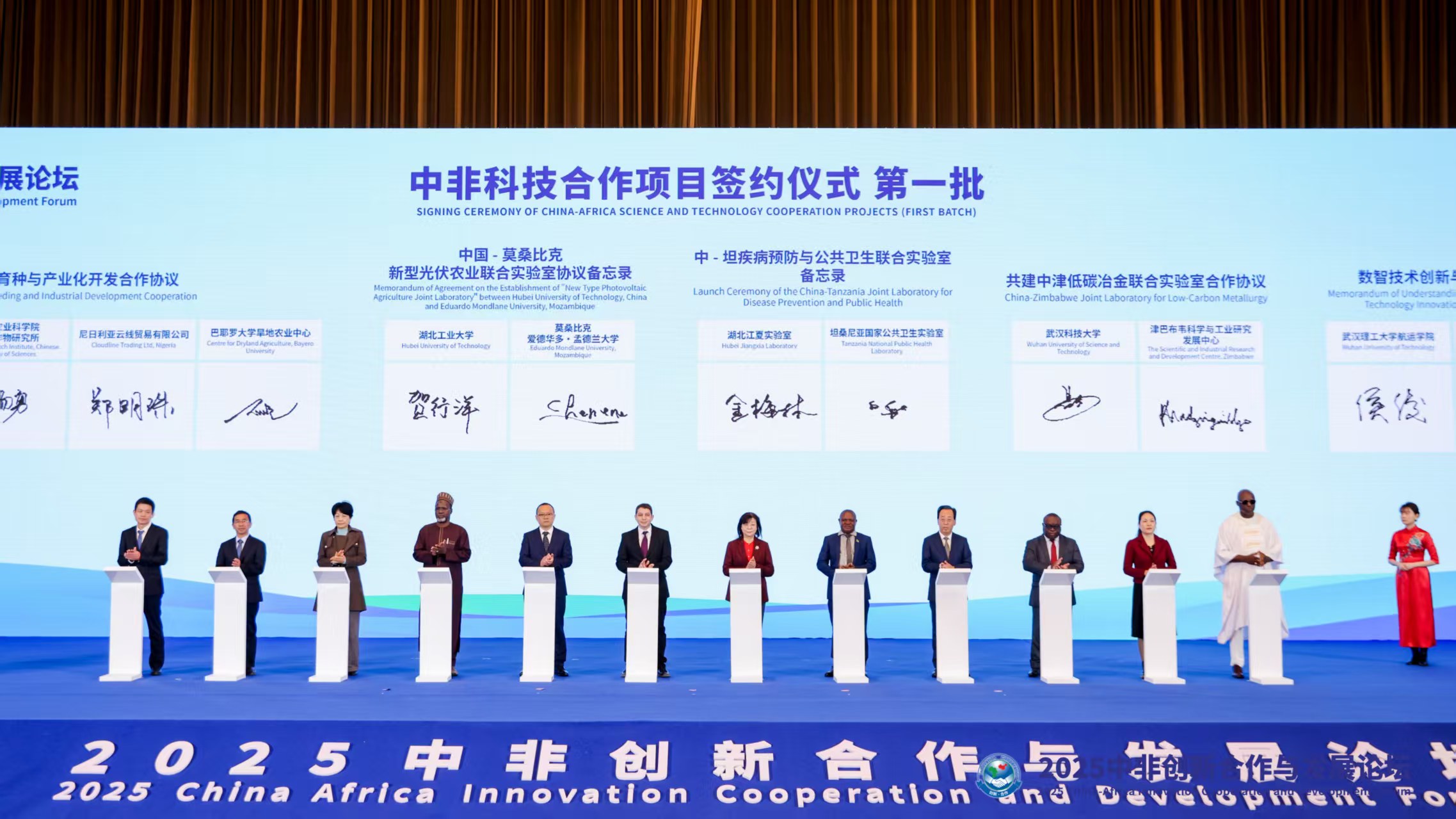
Core Insights - Hubei's trade with Africa exceeded 30 billion RMB in the first seven months of this year, marking a 42.5% year-on-year increase [1][3] - The 2025 China-Africa Innovation Cooperation and Development Forum will be held in Wuhan, aiming to enhance the China-Africa community [1][3] Group 1: Trade and Economic Cooperation - Hubei signed 39 cooperation agreements and established 23 service platforms, showcasing a strong commitment to economic collaboration with Africa [3] - The province's trade with Africa surpassed 50 billion RMB last year, indicating a robust trade relationship [3] Group 2: Scientific and Technological Collaboration - The forum focused on various sectors including industrial integration, technological innovation, and public health, with participation from representatives of 43 countries and regions [3][4] - Hubei has established six sub-centers of the China-Africa Innovation Cooperation Center in Africa, enhancing technology transfer networks [3][4] Group 3: Research and Development Initiatives - The establishment of the China-Tanzania Joint Laboratory for Disease Prevention and Public Health aims to address public health needs in Africa through joint research and local production of medicines [5] - A total of 108 technology transfer projects were introduced, covering fields such as smart manufacturing and big data, with many technologies ready for immediate production [4]
白糖面临国产和进口双重压力 盘面看空观点不变
Jin Tou Wang· 2025-11-17 00:58
Core Viewpoint - The sugar futures market is experiencing fluctuations with a slight increase in prices, while external factors such as tariffs and global supply forecasts are influencing market dynamics [1][2][3] Market Performance - As of November 14, 2025, the main sugar futures contract closed at 5470 CNY/ton, with a weekly decline in open interest by 1719 contracts [1] - During the week of November 10-14, the sugar futures opened at 5457 CNY/ton, peaked at 5515 CNY/ton, and dipped to a low of 5451 CNY/ton, resulting in a weekly change of 0.37% [1] News Recap - Mexico has imposed tariffs of up to 210% on sugar imports from countries without trade agreements, aimed at protecting its domestic industry from price declines, effective from the following Tuesday [2] - Datagro forecasts a global sugar surplus of 1 million tons for the 2025/26 crushing season, a reduction from the previous estimate of 2.8 million tons [2] - The French Ministry of Agriculture has lowered its sugar beet production forecast for the 2025/26 season to 33.7 million tons, down by 500,000 tons from earlier estimates [2] Institutional Perspectives - According to Greeen Dahu Futures, the current transition between old and new domestic sugar is supporting prices due to low industrial inventory, while external market rebounds are also influencing domestic sugar trends. However, a bearish outlook remains due to anticipated supply pressures from new sugar production in China and India [3] - Southwest Futures notes that Brazil is entering a seasonal production decline, while India is expected to see strong production increases. The domestic market is facing dual pressure from both domestic and imported sugar, leading to anticipated price pressures in the coming months [3]