
绿色智能产品

Search documents
春节消费市场活力全面迸发 实现民生实惠与经济增长双赢
Yang Shi Wang· 2026-02-27 08:32
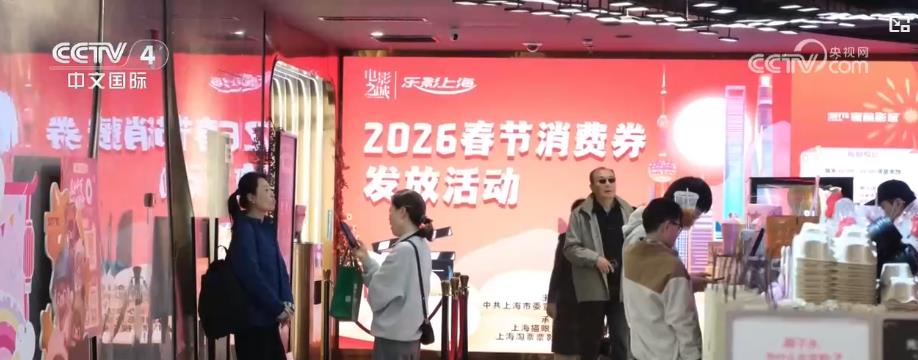
Core Insights - The "2026 Spring Festival Special Event" organized by the Ministry of Commerce aims to enhance consumer experience through various activities, integrating cultural elements with immersive experiences [1] - A total of 20.5 billion yuan is allocated for consumer vouchers and subsidies, effectively stimulating consumer spending during the Spring Festival [3] Group 1: Consumer Spending and Economic Impact - During the Spring Festival, daily sales of key retail and catering enterprises increased by 5.7% compared to the previous year, with a 1.6 percentage point acceleration in growth [6] - The "old-for-new" consumption initiative has benefited over 31 million people, driving sales of 207 billion yuan [4][6] - Various local activities, such as unique temple fairs and lantern exhibitions, contributed to a 12.1% increase in ice and snow consumption and a 29.8% rise in winter vacation spending [6] Group 2: Policy Measures and Collaborative Efforts - The "Spring Festival Shopping" initiative, covering a nine-day holiday period, demonstrates significant policy effectiveness through multi-department collaboration [11] - Key measures include the "old-for-new" program, prize invoices, and financial support, creating a comprehensive consumption promotion framework [11] - The increase in inbound tourism, with a 18.4% rise in orders for inbound travel products, reflects the successful release of consumer vitality [8][11]

权威数读|六组数据,读懂大国消费新气象
Xin Hua She· 2026-02-12 10:56
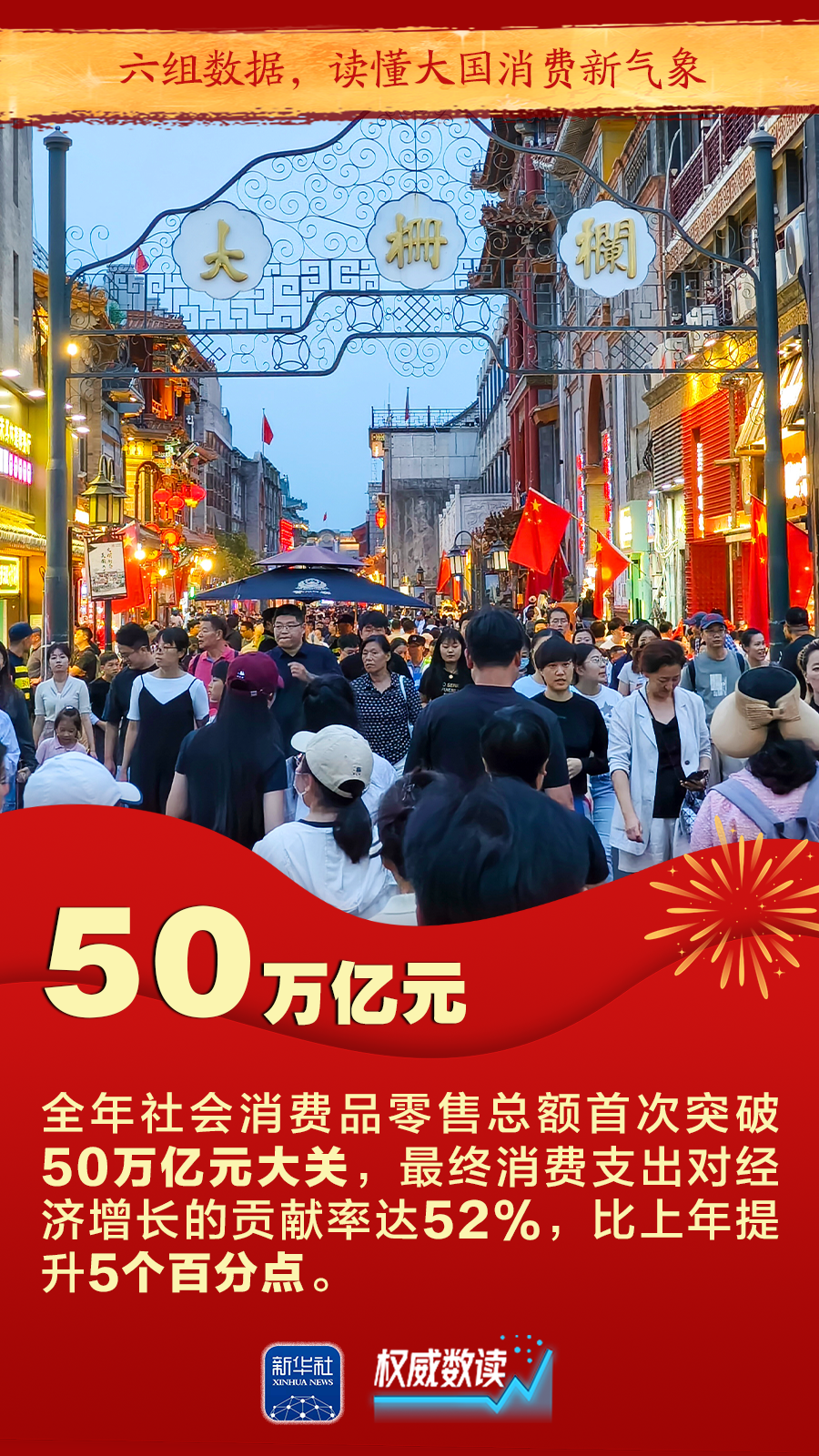
Group 1 - The core viewpoint of the article highlights the characteristics of consumption work in 2025, which include "expansion and upgrading of goods consumption, quality improvement of service consumption, and increasingly diverse consumption scenarios" [1] - Final consumption expenditure is projected to exceed 50 trillion yuan, contributing 52% to economic growth, an increase of 5 percentage points from the previous year [3] - The implementation of a consumption upgrade program is expected to result in sales of 2.61 trillion yuan in related goods, benefiting 366 million people, with a significant number of green and smart products entering households [6] Group 2 - Automobile sales are projected to reach 34.4 million units in 2025, while sales of home appliances and communication equipment are expected to both exceed 1 trillion yuan [9] - The service retail sector is anticipated to grow by 5.5% due to the enhancement of the "1+N" policy system for service consumption and the implementation of actions to improve service consumption quality [12] - Over 60 events will be organized to promote the "Buy in China" and "Export China" brands, including a premium consumption month and an international consumption season, aimed at building an international consumption environment [14]
商务部:2025年全年社会消费品零售总额首次突破50万亿
Zhong Guo Jing Ying Bao· 2026-02-11 13:28
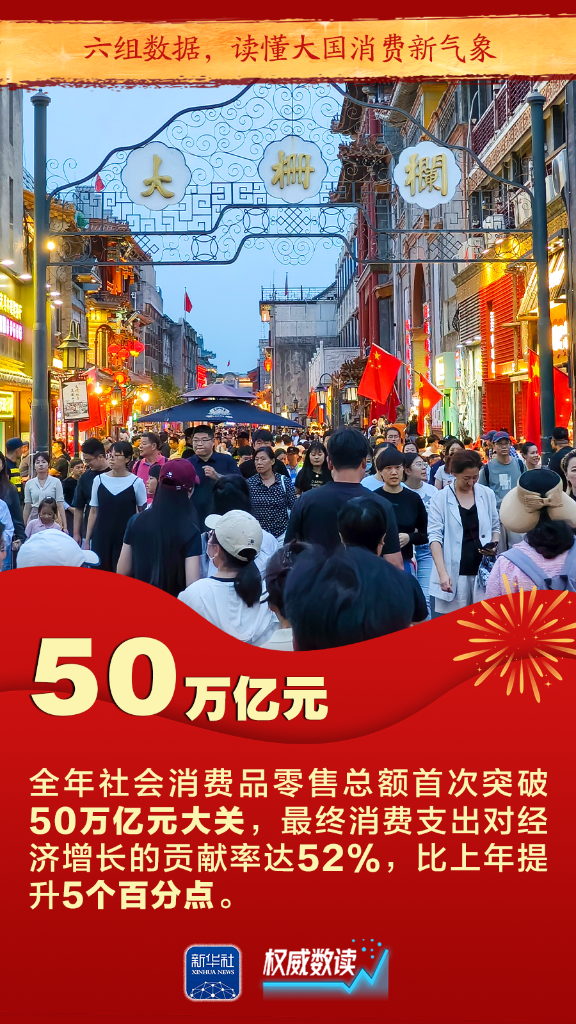
Core Insights - The article discusses the 2025 consumer market performance in China, highlighting significant growth in retail sales and consumer spending, with a total retail sales exceeding 50 trillion yuan for the first time and a contribution rate of final consumption expenditure to economic growth reaching 52% [1] Group 1: Consumer Market Performance - In 2025, the total retail sales of consumer goods reached over 50 trillion yuan, marking a significant milestone [1] - The contribution rate of final consumption expenditure to economic growth increased by 5 percentage points compared to the previous year, reaching 52% [1] Group 2: Key Features of Consumer Work - The expansion and upgrading of goods consumption included a focus on the "old for new" consumption policy, with related sales reaching 2.61 trillion yuan, benefiting 366 million people [1] - The automotive sector saw sales of 34.4 million vehicles, while sales of home appliances and communication equipment both surpassed 1 trillion yuan [1] Group 3: Service Consumption and Diverse Scenarios - The service consumption sector experienced a growth of 5.5%, supported by the implementation of a "1+N" policy system and new service consumption initiatives [1] - Various promotional activities, such as "China Shopping" and "Export China" brands, were organized, with over 60 events held to enhance the international consumption environment [1] - The sales of tax refund goods increased by 95.9% year-on-year, indicating a growing trend of international consumers shopping in China [1]
商务部:我国网络零售额连续13年位居全球第一
Zhong Guo Jin Rong Xin Xi Wang· 2026-02-11 08:09
Core Insights - By 2025, China's online retail sales are projected to reach nearly 16 trillion yuan, maintaining the top position globally for 13 consecutive years [1] - The penetration rate of new energy passenger vehicles in China is expected to reach 53.9% by 2025, an increase of 48.2 percentage points from 2020 [1] - Per capita service consumption expenditure is anticipated to account for 46.1% of total consumption by 2025, up 3.5 percentage points from 2020 [1] Group 1 - The average annual growth rate of rural retail sales of consumer goods is projected to be 5.4%, outpacing urban growth by 0.3 percentage points [1] - Rural online retail sales are expected to exceed 3 trillion yuan for the first time by 2025, representing a 6.7% increase from the previous year [1] - Online sales of agricultural products are forecasted to grow by 9.9%, supporting the urbanization of agricultural products and rural revitalization [1] Group 2 - The Ministry of Commerce will focus on expanding domestic demand as a strategic foundation, closely integrating benefits for people's livelihoods and promoting consumption [1] - Key initiatives include promoting the expansion and upgrading of goods consumption, stabilizing the consumption base, and enhancing service consumption to unleash new vitality [1] - The ministry aims to cultivate and strengthen new types of consumption, stimulating new consumption momentum, and continuously optimizing consumption scenarios to improve consumer experiences [1]
权威数读丨六组数据 读懂大国消费新气象
Xin Hua She· 2026-02-11 06:05
Group 1 - The core viewpoint of the article highlights the characteristics of consumption in China by 2025, which include the expansion and upgrading of goods consumption, improvement of service consumption to benefit the public, and increasingly diverse consumption scenarios [1] Group 2 - By 2025, the sales of related goods from the implementation of the old-for-new consumption policy are expected to reach 2.61 trillion yuan, benefiting 366 million people, with a significant number of green and smart products entering households [3] - The projected automobile sales for 2025 are 34.4 million units, while the sales of home appliances and communication equipment are expected to exceed 1 trillion yuan each [6] - The service retail sector is anticipated to grow by 5.5% due to the improvement of the "1+N" policy system for service consumption and the implementation of actions to enhance service consumption [7] - Over 60 events will be organized to promote the "Buy in China" and "Export from China" brands, including high-quality consumption months and international consumption seasons, along with pilot projects for international consumption environment construction and optimization of tax refund policies for departing tourists [8]
权威数读丨六组数据,读懂大国消费新气象
Xin Hua Wang· 2026-02-11 04:43
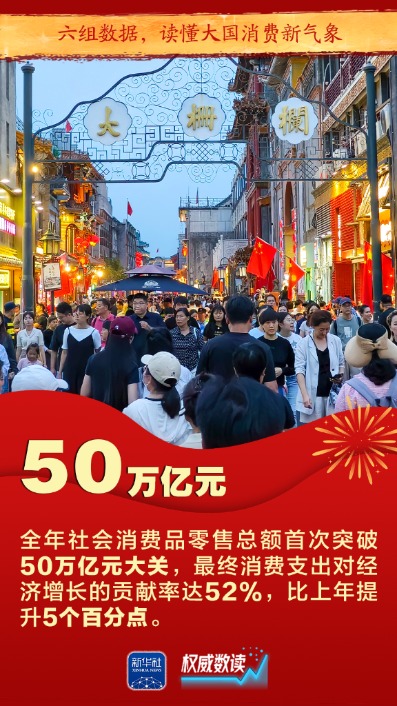
Core Insights - The Chinese consumer market is expected to showcase significant growth and transformation by 2025, characterized by an expansion in goods consumption, improved quality in service consumption, and increasingly diverse consumption scenarios [1]. Group 1: Retail and Consumption Data - The total retail sales of consumer goods in China are projected to exceed 50 trillion yuan for the first time, with final consumption expenditure contributing 52% to economic growth, an increase of 5 percentage points from the previous year [2]. - The sales of products under the "old for new" consumption initiative are expected to reach 2.61 trillion yuan by 2025, benefiting 366 million people, with a significant influx of green and smart products into households [5]. - Automobile sales are forecasted to reach 34.4 million units by 2025, while sales of home appliances and communication equipment are both expected to surpass 1 trillion yuan [8]. Group 2: Service Consumption and Policy Initiatives - The service retail sector is anticipated to grow by 5.5% due to the implementation of a comprehensive "1+N" policy framework aimed at enhancing service consumption and promoting new consumption models and scenarios [9]. - Over 60 events are planned to promote the "Buy in China" and "Export from China" brands, including high-quality consumption months and international consumption seasons, alongside initiatives to optimize the outbound tax refund policy [12].
2025年社会消费品零售总额超50万亿元 消费对经济发展主引擎作用持续显现
Xin Lang Cai Jing· 2026-01-22 15:07
Group 1 - The total retail sales of consumer goods in 2025 are projected to reach 50.1 trillion yuan, with a growth rate of 3.7% [1] - Retail sales of goods are expected to grow by 3.8%, while catering revenue is anticipated to increase by 3.2% [1] - Final consumption expenditure is expected to contribute 52% to economic growth, continuing to play a key role as the main engine of economic development [1] Group 2 - The consumption of durable goods is showing positive growth, with the trade-in of old consumer goods driving sales in related categories to 2.61 trillion yuan, benefiting 366 million people [1] - Retail sales of passenger cars are projected to reach 23.744 million units, reflecting a growth of 3.8% [1] - The retail sales of staple food and oil products in large-scale units are expected to grow by 9.3%, indicating a shift towards health-conscious consumption with organic and green food becoming popular [1] Group 3 - The retail sales of clothing, shoes, hats, and textiles are projected to grow by 3.2%, while daily necessities are expected to see a growth of 6.3% [1] - There is a strong demand for upgraded consumer goods, with retail sales of sports and entertainment products in large-scale units expected to grow by 15.7% [1] - Sales of smart glasses, smartwatches, and smart bands on key platforms are anticipated to increase by over 40% [1] Group 4 - The consumption of specialty products is expected to be vibrant in 2025, with a surge in new product launches in smart connected vehicles and smartphones [2] - Domestic and international brands are accelerating the establishment of flagship stores, stimulating new consumption momentum [2] - The trend of "IP + consumption" is thriving, with sales of movie derivative products during the summer season expected to double year-on-year, leading the consumption wave [2]
商务部:2025年社会消费品零售总额突破50万亿元
Zhong Guo Xin Wen Wang· 2026-01-21 03:43
Group 1 - The core viewpoint of the articles emphasizes the significant growth in consumer spending and the successful implementation of consumption-boosting initiatives in China, particularly in the context of the "14th Five-Year Plan" [1][2][3] Group 2 - In 2025, the total retail sales of social consumer goods reached 50.1 trillion yuan, with a growth rate of 3.7%. Retail sales of goods increased by 3.8%, while catering revenue grew by 3.2%. Final consumption expenditure contributed 52% to economic growth, reinforcing its role as a primary engine for economic development [1] - The consumption of durable goods showed a positive trend, with the sales driven by the "old for new" consumption initiative reaching 2.61 trillion yuan, benefiting 366 million people. The retail volume of passenger vehicles reached 23.744 million units, growing by 3.8%, with the penetration rate of new energy vehicles at 53.9% [1] - Retail sales of home appliances exceeded 1.17 trillion yuan, marking an 11% increase, while sales of communication equipment, cultural office supplies, and furniture grew by 20.9%, 17.3%, and 14.6% respectively [1] - Daily consumer goods maintained stable growth, with retail sales of grain and oil food increasing by 9.3%. Health-conscious consumption became mainstream, with organic and green agricultural products gaining popularity [2] - Retail sales of clothing, shoes, and textiles grew by 3.2%, with new styles like Hanfu and "Ma Mian Qun" gaining traction. Daily necessities saw a growth of 6.3% [2] - Demand for upgraded products surged, with retail sales of sports and entertainment goods increasing by 15.7%. Sales of smart glasses, smartwatches, and smart bands grew by over 40% [2] - The jewelry retail sector saw a growth of 12.8%, with products that blend traditional cultural elements and modern design being favored by consumers [2] - The release of new products in sectors like smart connected vehicles and smartphones invigorated the economy, with domestic brands gaining popularity through innovative collaborations [2]
商务部:2025年消费品以旧换新带动相关品类销售额达2.61万亿元 惠及3.66亿人次
Zheng Quan Shi Bao Wang· 2026-01-21 03:01
Core Viewpoint - The Ministry of Commerce reports that by 2025, the sales revenue from the consumption of old goods for new ones will reach 2.61 trillion yuan, benefiting 366 million people, with a significant increase in green and smart products improving the quality of life [1] Group 1: Consumer Goods Market - The retail sales volume of passenger cars is projected to reach 23.744 million units, reflecting a growth of 3.8% [1] - The penetration rate of new energy passenger vehicles is expected to reach 53.9% [1] Group 2: Home Appliances and Other Categories - Retail sales of home appliances in large-scale units are anticipated to reach 1.17 trillion yuan, marking an 11% increase and surpassing the trillion yuan mark for two consecutive years [1] - Retail sales of communication equipment, cultural and office supplies, and furniture are expected to grow by 20.9%, 17.3%, and 14.6% respectively [1]
2025年进出口额近十万亿!广东外贸连续40年居全国首位
Nan Fang Du Shi Bao· 2026-01-19 13:37
Group 1: Trade Performance - Guangdong's foreign trade reached a record high of 9.49 trillion RMB in 2025, growing by 4.4% year-on-year, maintaining its position as the largest in the country for 40 consecutive years, accounting for 20.9% of national trade [1] - Imports totaled 3.46 trillion RMB, up 7.8%, while exports were 6.03 trillion RMB, increasing by 2.5% [1] - Quarterly trade figures showed consistent growth, with each quarter setting historical highs: 2.13 trillion, 2.41 trillion, 2.47 trillion, and 2.48 trillion RMB respectively [1] Group 2: Trade Partners and Product Structure - Trade with major partners ASEAN, Hong Kong, and the EU exceeded 1 trillion RMB, with growth rates of 5.8%, 12.5%, and 8.4% respectively [2] - Emerging markets such as Central Asia, Africa, and the Middle East saw significant growth rates of 23.6%, 10.7%, and 8.5% [2] - Exports of high-tech products reached 4.15 trillion RMB, accounting for 68.7% of total exports, with notable increases in electronic components and green products [2] Group 3: Import Dynamics - Imports of integrated circuits reached 1.3 trillion RMB, growing by 15.5%, while semiconductor manufacturing equipment imports rose by 33.2% to 736.8 billion RMB [3] - The import of consumer goods like food and dairy also saw double-digit growth, supporting both economic development and living standards [3] Group 4: Business Activity and New Drivers - The number of enterprises engaged in import and export activities in Guangdong reached 172,000, a 17.6% increase, with private enterprises accounting for 63.9% of total trade [4] - High-tech product exports surpassed 1 trillion RMB for the first time, and new business models like cross-border e-commerce are expanding rapidly [4] - The demand for imports continues to grow, leading to Guangdong ranking first among major provinces in import growth [4] Group 5: Customs Innovations - Customs has implemented innovative measures to enhance trade efficiency, including 24/7 appointment customs clearance and improved logistics networks [5] - Targeted regulatory models have been introduced in key areas to support industrial development, resulting in significant tax reductions for import and export enterprises [5] Group 6: Regional Collaboration and Infrastructure - The trade volume between Guangzhou and ASEAN reached a historic high, with a 28% increase, highlighting the importance of regional partnerships [7] - Shenzhen's high-tech product exports accounted for nearly 60% of the province's total, reaching 1.4 trillion RMB, reflecting its strong technological and industrial innovation [8] - The Hong Kong-Zhuhai-Macao Bridge has become a key economic corridor, with trade values surpassing 325.8 billion RMB, marking a 40.1% increase [8] Group 7: Future Outlook - Despite external uncertainties, Guangdong's foreign trade fundamentals remain strong, with a complete industrial system and accelerating new industries [9] - The ongoing development of the Guangdong-Hong Kong-Macao Greater Bay Area is expected to further enhance trade dynamics and attract investment [9]