腾讯广告

Search documents
马化腾:未来人的时间越来越宝贵,帮用户节省时间、提高效率非常重要
Xin Lang Cai Jing· 2026-01-26 10:26
Core Insights - Tencent's CEO Ma Huateng emphasized the importance of WeChat as the company's backbone, highlighting the growth potential of features like video accounts and WeChat e-commerce, and the need for patience and time to integrate new technologies [1][3] WXG (WeChat Group) - WeChat is viewed as a crucial pillar for Tencent, with expectations for growth in video accounts and e-commerce [1][3] - The focus is on leveraging unique characteristics to enhance technology and innovation [1] IEG (Interactive and Entertainment Group) - The IEG is experiencing growth through innovation and learning, with a shift towards "evergreen" games that prioritize continuous content development rather than solely creating new games [1][3] - Tencent is empowering overseas investment companies to enhance their skills during international expansion [1] PCG (Platform and Content Group) - The PCG is actively exploring AI integration, with QQ focusing on user feedback and reintroducing popular features like QQ Show and QQ Farm [2][4] - AI capabilities are being utilized to enhance user experience, such as allowing users to upload materials for image generation [2][4] - Tencent News is committed to high-quality content and is exploring AI to improve information browsing efficiency [2][4] - Application Treasure has developed new scenarios for seamless operation of Android apps on Windows, receiving positive feedback from Microsoft [2][4] - Tencent Video is leveraging AI to promote the adaptation of proprietary content into films through collaboration with other companies [2][4] Advertising and Financial Services - Under AI support, Tencent's advertising revenue is growing rapidly, although its revenue share remains low compared to industry averages, indicating significant future commercialization potential [2][4] - The Financial Technology (FiT) division prioritizes safety over speed in its operations [2][4] Employee Motivation - Ma Huateng encouraged employees to continue evolving and developing new skills, expressing optimism for the future [5]

马化腾员工大会讲话:金融科技不追求速度,继续以安全为首要原则
Bei Jing Shang Bao· 2026-01-26 10:18
Core Viewpoint - Tencent's CEO Ma Huateng emphasized that AI developments, particularly ChatGPT and DeepSeek, are transforming the industry, but each company has its own pace in navigating these changes. Tencent's historical business stability allows for long-term investment in AI [1] Group 1: AI Strategy - Tencent's approach to AI is characterized by a steady and methodical style, focusing on long-term product competitiveness and user experience [1] - The company is actively considering new skills across various business segments and platforms [1] Group 2: Financial Performance - Tencent's advertising revenue is experiencing rapid growth due to AI, yet it remains low compared to the industry average, indicating significant future commercialization potential [1] - In the financial technology sector, Tencent prioritizes safety over speed in its operations [1] Group 3: User Engagement - Tencent's subsidiary, Yuanbao, announced a 1 billion yuan red envelope for the Spring Festival, aiming to convert saved marketing costs into user rewards, enhancing user engagement through nostalgic experiences [1]
腾讯广告重磅加码,助力微信AI小程序成长计划
Xin Lang Cai Jing· 2026-01-13 11:27
Core Insights - The application of large models in the tool sector is continuously evolving, leading to the rise of a full range of AI-driven tool products [1][2] - WeChat Mini Programs have launched the "AI Applications and Online Tool Mini Program Growth Plan," providing comprehensive support including cloud development resources, AI computing power, data analysis, commercial monetization, and traffic incentives [1][2] - The importance of commercial traffic for Mini Program developers is increasingly prominent, with a significant surge in the number of advertisers and a rapid increase in effective traffic leading to an exponential rise in daily active users (DAU) [1][2] - The WeChat ecosystem offers a more efficient profit model through shorter conversion paths [1][2] - Tencent Advertising is enhancing support for developers, collaborating with the WeChat ecosystem to welcome the inaugural year of tool Mini Programs [1][2] - Developers are encouraged to join the growth plan to accelerate their progress [1][2]


现场围观腾讯广告算法大赛,我都想入职了
量子位· 2025-12-24 05:14
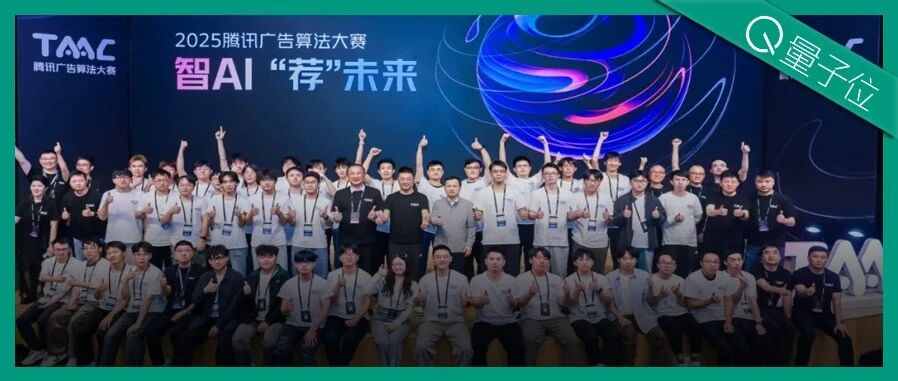
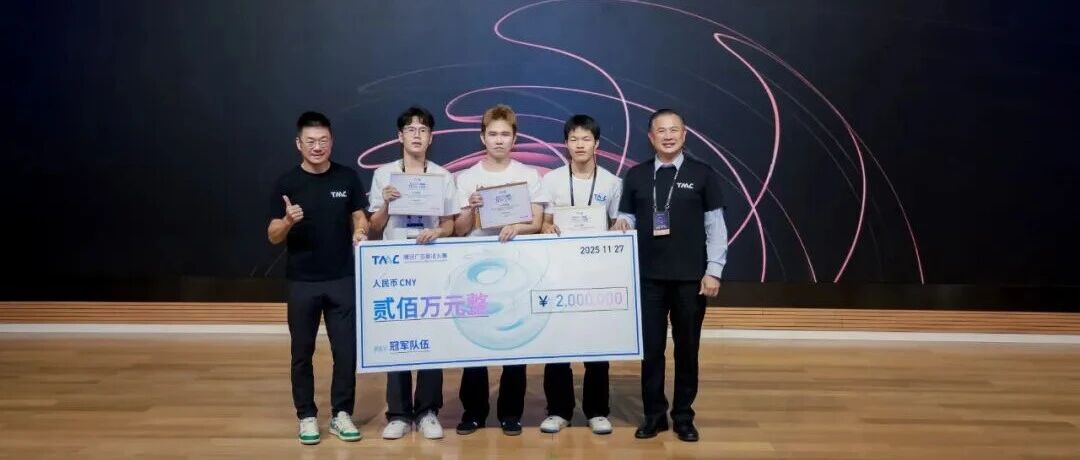
Core Insights - The article discusses Tencent's algorithm competition, highlighting its significance in attracting talent and providing practical experience in cutting-edge AI technologies [1][28][43] Group 1: Competition Overview - The competition offered substantial rewards, including a total prize pool of 3.8 million yuan, with the champion receiving 2 million yuan and all participants gaining access to valuable resources like computing power [32][34] - The competition attracted over 8,400 students and 2,800 teams from nearly 30 countries, showcasing its global reach and influence [34] Group 2: Technical Focus - The competition's theme, "full-modal generative recommendation," addresses advanced challenges in advertising and recommendation systems, emphasizing the integration of various data types such as text, images, and videos [5][11] - Participants faced real-world challenges, including data noise, alignment issues, and the need for efficient modeling of user behavior over long sequences [13][41] Group 3: Talent Acquisition Strategy - Tencent's approach to the competition serves as a recruitment strategy, allowing the company to identify and engage with top talent in a practical setting rather than traditional recruitment methods [39][42] - The competition's structure inherently filters candidates, ensuring that only those capable of handling complex data and modeling challenges progress to the final stages [40][41] Group 4: Industry Context - The competition reflects Tencent's established AI technology framework, which has been validated through real business applications, indicating the company's commitment to innovation and talent development [29][30] - The article notes the competitive landscape for talent in the AI sector, with companies like Tencent offering attractive employment packages and support programs to attract young professionals [44][46]
拿走200多万奖金的AI人才,到底给出了什么样的技术方案?
机器之心· 2025-12-23 04:15
Core Viewpoint - The article emphasizes the significant opportunities for young individuals proficient in AI technology in China, particularly highlighted by the recent Tencent Advertising Algorithm Competition, which showcased innovative solutions to complex advertising challenges [2][5]. Group 1: Competition Overview - The Tencent Advertising Algorithm Competition revealed that all top 10 teams received job offers from Tencent, with the champion team awarded a prize of 2 million yuan [2]. - The competition focused on a real-world problem in advertising that lacks a definitive solution, pushing participants to explore practical and innovative approaches [4][5]. Group 2: Advertising Challenges - Advertising is often viewed negatively, but it is essential for the sustainability of many services and content, leading platforms to seek smarter, less intrusive advertising methods [7]. - The competition addressed how to make advertising more targeted and relevant, reducing unnecessary exposure to users [7][16]. Group 3: Methodologies in Advertising - Two primary methodologies in advertising recommendation systems were discussed: traditional discriminative methods and emerging generative methods [8]. - Discriminative methods focus on matching user profiles with ads based on predefined features, while generative methods analyze user behavior over time to predict future interactions [9][14]. Group 4: Competition Challenges - Participants faced challenges related to the scale of data, involving millions of ads and users, while having limited computational resources [21]. - The complexity of the data structure, including multimodal historical behavior data, added to the difficulty of modeling user interactions effectively [21][22]. Group 5: Champion Team Solutions - The champion team, Echoch, introduced a three-tier session system, periodic encoding, and time difference bucketing to enhance the model's understanding of user behavior over time [28][29]. - They developed a unified model capable of switching strategies between predicting clicks and conversions, addressing the differing objectives of these actions [34][36]. - The team also incorporated randomness in ad encoding to improve exposure for less popular ads, significantly increasing their training focus [37]. Group 6: Runner-Up Team Solutions - The runner-up team, leejt, tackled the challenge of handling large-scale data by compressing the vocabulary size and using shared embeddings for low-frequency ads [42]. - They implemented session segmentation and heterogeneous temporal graphs to manage the complexity of user behavior data effectively [44]. - The team optimized engineering processes to maximize GPU utilization, achieving significant performance improvements in model training [48]. Group 7: Industry Implications - The competition highlighted the transition from discriminative to generative models in advertising, with Tencent already implementing generative models in its internal systems, yielding positive results reflected in financial data [51]. - Tencent plans to open-source the competition data to foster community development and explore the potential of real-time personalized advertising generation in the future [52].
AI没有杀死搜索,反而做大了蛋糕
虎嗅APP· 2025-12-15 14:18
Core Viewpoint - The rise of AI has not killed search engines but rather expanded the overall market for search and advertising, as evidenced by Google's recovery in search market share and advertising growth in Q3 [4][8][22]. Group 1: AI's Impact on Search - AI has not eliminated search but has created a larger "cake" for both search and advertising, with traditional search engines benefiting from the increased user engagement driven by AI [9][17]. - The traditional search model, which relies on keyword matching, has limitations in addressing complex user queries, a gap that AI has begun to fill by providing more comprehensive answers [10][12][15]. - AI has transformed user search behavior, leading to longer and more detailed queries, which in turn enhances the quality of clicks and user intent [31][34]. Group 2: Google's Competitive Advantage - Google's integration of AI into its search engine has allowed it to maintain a competitive edge, leveraging its existing ecosystem to enhance user experience and engagement [19][25]. - The AI features in Google's search have been designed to complement traditional search habits, making it easier for users to access information without disrupting their established behaviors [21][22]. - Google's diverse product ecosystem, with over 20 billion monthly active users across multiple platforms, provides a significant advantage over competitors like Baidu and Tencent, which struggle with fragmentation and competition [42][44]. Group 3: Advertising Evolution - Despite initial concerns about AI's impact on advertising click-through rates, Google's Q3 financial results showed that the monetization rate of AI features is comparable to traditional search [28][29]. - AI has led to a higher quality of clicks, as users engage more deeply with content, resulting in improved conversion rates for advertisers [32][36]. - New advertising tools like AI Max are being developed to better understand user intent and enhance ad targeting, marking a shift towards more effective advertising strategies [38][41]. Group 4: Industry Comparison - The contrasting paths of Google and its Chinese counterparts highlight the importance of ecosystem strength in the AI competition, with Google benefiting from a more integrated approach [46][45]. - The challenges faced by domestic players in China, such as high competition and fragmented user experiences, hinder their ability to capitalize on AI advancements as effectively as Google [44][45].


传媒互联网教育行业2026年度策略
2025-11-24 01:46
Summary of Key Points from Conference Call Records Industry Overview - **Industry Focus**: Media, Internet, and Education sectors are highlighted for 2026 strategies, with significant emphasis on AI-driven advancements and market dynamics [1][2]. Core Insights and Arguments Advertising Sector - **AI Impact**: AI has significantly improved advertising efficiency, with Tencent's advertising revenue growing by 20% year-over-year in Q2 and continuing to rise in Q3. Kuaishou has made notable progress in user profiling and targeted advertising, while Bilibili achieved over 20% growth through AI enhancements [6][4]. - **Competition**: Third-party programmatic advertising platforms like Huishuangzang Technology and Yidian Tianxia are gaining competitiveness, driving transformation in the advertising industry [1][5]. Gaming Industry - **Regulatory Environment**: The normalization of game license issuance ensures a steady supply of content, supported by a resilient consumer environment. Major companies like Century Huatong and Giant Network are expected to benefit from a concentrated release of new products [7][9]. - **Market Dynamics**: The gaming sector is projected to maintain a high level of activity, driven by product innovation and commercial efficiency. Key players include Tencent, Century Huatong, and Giant Network [14][9]. Instant Retail Market - **Market Growth**: The instant retail market is expected to reach 1.175 trillion yuan by 2026, with a year-on-year growth rate of 28%. Major players like Alibaba, Meituan, and JD.com are heavily investing in this space, although profitability is under pressure due to intense competition [11][8]. - **Consumer Trends**: The county-level market is emerging as a new growth point, supported by the increasing number of rural internet users and their consumption habits [11][10]. Autonomous Driving Sector - **Competitive Landscape**: The autonomous driving sector is entering a price competition phase, with companies like Xpeng and Li Auto differentiating themselves through chip technology and self-driving capabilities. This trend is expected to enhance user experience and drive further development in the electric vehicle industry [12][10]. Short Drama and AI Animation - **Market Expansion**: The short drama market is rapidly growing, with approximately 700 million users in China. The market share of Hongguo exceeds 50%, while companies like China Online and Kunlun Wanwei are performing well in overseas markets, particularly targeting the U.S. [18][1]. - **AI Animation Growth**: The supply of AI animation (dynamic comics) has surged, with a compound monthly growth rate of about 83% in the first half of the year, resulting in over 3,000 works produced and a revenue scale that has increased twelvefold [19][3]. Education Sector - **AI Integration**: AI is increasingly penetrating the education sector, with companies like Dou Shen Education expected to achieve full AI integration by 2026, with AI revenue accounting for 90% of total income. Fenbi Education's AI interview courses are projected to enhance profit margins significantly [20][21]. - **Valuation Appeal**: Dou Shen Education's valuation metrics, such as a PS ratio of around 7 and a PE ratio in the 30s, are considered attractive compared to other sectors, which often see PE ratios of 60-70 [21][20]. Additional Important Insights - **Consumer Resilience**: The macroeconomic environment is supporting consumer resilience, with trends like the "lipstick effect" maintaining consumption levels [9][8]. - **Content Supply Recovery**: The film and television sectors are experiencing a recovery in content supply, with stable growth in box office revenues and favorable policies aiding the industry [17][7]. This summary encapsulates the key points from the conference call records, providing a comprehensive overview of the current trends and future outlooks across various sectors.




港股互联网的变化与机会:AI加速巨头提升商业化效率
Guoxin Securities· 2025-11-16 03:15
Investment Rating - The report maintains an "Outperform" rating for the Hong Kong internet sector [1] Core Insights - The Hong Kong internet giants are entering a new growth phase driven by AI, with the Hang Seng Technology Index having increased by 99% since February 2024, and the current TTM valuation at approximately 23x PE, which is at the historical 31% percentile [3][5] - There is a significant gap in monetization rates between domestic internet giants and their overseas counterparts, with Meta's per-user monetization exceeding that of Tencent, and Amazon's monetization rates being 3-7 times higher than domestic e-commerce platforms [3][18] - AI is expected to continue enhancing the monetization efficiency of internet giants, with 2026 potentially marking a year of synergy between AI agents and ecosystems [3][62] Summary by Sections 01: Current Stage of Hong Kong Internet - The sector is experiencing a valuation recovery and profitability improvement, with major companies showing significant operational efficiency gains over the past two years [10] 02: Monetization Rate Discrepancies - Domestic internet giants have a lower monetization rate compared to overseas firms, with Meta's ARPU being approximately 4.1 times that of Tencent's [17][13] - The monetization structure differs, with Meta relying heavily on advertising, while Tencent has a more diversified revenue stream [17][18] 03: AI's Role in Monetization - AI is enhancing both B2B and B2C monetization rates, particularly through improved ad targeting and user intent understanding [24][30] - The deployment of AI technologies is expected to significantly boost advertising revenues for Tencent, with projections indicating substantial growth in various advertising segments [31][32]
腾讯控股(00700):3Q游戏超预期,AI驱动eCPM上行
HTSC· 2025-11-14 05:34
Investment Rating - The report maintains a "Buy" rating for Tencent with a target price of HKD 792.53, up from the previous HKD 759.47 [6][35]. Core Insights - Tencent's 3Q performance exceeded expectations with a revenue growth of 15.4%, driven by increases in value-added services, advertising, and fintech revenues, which grew by 16%, 21%, and 10% respectively [1][2]. - The adjusted net profit for 3Q increased by 18%, surpassing expectations by 7%, primarily due to higher earnings from associated companies [1][6]. - The report highlights the potential of Tencent's gaming segment, particularly with the upcoming release of "Delta Action" expected to generate over RMB 18 billion in revenue in 2026 [1][20]. Revenue and Profitability - 3Q revenue reached RMB 192.9 billion, with a year-over-year growth of 15.4%, exceeding the consensus estimate of RMB 188.9 billion [14]. - Gross profit for 3Q was RMB 108.8 billion, reflecting a gross margin of 56.4%, an improvement from the previous year [14]. - The adjusted operating profit margin for 3Q was 37.6%, indicating strong operational efficiency [14]. Gaming Segment Performance - The gaming revenue for 3Q grew by 15% domestically and 43% internationally, driven by titles such as "Honor of Kings" and "Delta Action" [2][20]. - The report anticipates that Tencent's gaming pipeline will peak in 2026, with significant titles set to launch, including "Rock Kingdom: World" and "Honor of Kings World" [2][28]. Advertising and AI Integration - Advertising revenue increased by 21% in 3Q, with AI-driven enhancements contributing to eCPM improvements [3][33]. - The introduction of the AIM+ system is expected to attract more small and medium advertisers, enhancing overall advertising performance [3][33]. Financial Technology Growth - The fintech segment reported a revenue growth of 10% in 3Q, with a gross margin of 50.2% [4][14]. - The WeChat mini-store's GMV is experiencing rapid growth, supported by a low overlap of public and private domain users, indicating potential for further user acquisition [4][12]. Future Outlook - Revenue forecasts for Tencent have been adjusted upward for 2025-2027, with expected revenues of RMB 755.3 billion, RMB 852.3 billion, and RMB 954 billion respectively [35][36]. - The adjusted net profit estimates for the same period are RMB 2,655 billion, RMB 3,012 billion, and RMB 3,443 billion, reflecting a strong growth trajectory driven by AI and gaming [35][36].
2025 年腾讯每月新增 3.25 亿行代码,鹅厂最热门编程语言又是它!
程序员的那些事· 2025-11-11 06:15
Core Insights - Tencent's 2025 R&D report reveals significant data on product and technology development, highlighting the increasing role of AI in their operations [1] Group 1: Programming Languages and Workforce - The most popular programming language at Tencent shifted from C++ to Go starting in 2021 [3] - As of June 30, 2023, Tencent has approximately 111,221 employees, with 76% of them involved in product and R&D roles [5][9] Group 2: Code Generation and AI Utilization - Tencent generates approximately 325 million lines of new code monthly, with 50% of this code being AI-assisted [6] - 94% of code reviewers at Tencent utilize AI for code review, with AI identifying 28% of code issues, leading to a 44% increase in effective problem detection [6] Group 3: Efficiency Improvements through AI - By 2025, 284 teams at Tencent are using AI to enhance productivity, with over 90% of engineers employing in-house AI tools [8] - Specific improvements include a 50% reduction in compilation time for WeChat, a 31% decrease in delivery cycles for WeChat Pay, and a 40% reduction in compilation time for mobile QQ on iOS [10] Group 4: Automation and Quality Enhancements - Tencent's game art production automation rate has reached 95%, with automated tools achieving quality comparable to manual production [12] - In Tencent Cloud, 65% of new code comes from the AI code assistant Codebuddy, resulting in a 31.5% reduction in bug rates per thousand lines of code [12] - Tencent's advertising iteration efficiency has doubled, with 90% of version releases achieving full process automation [12] - The success rate for deploying Tencent's financial technology environments has improved to 99% [12]