
银发旅游产品

Search documents
广东:发展生态康养度假,推进中医药健康旅游、森林康养基地等建设
Cai Jing Wang· 2025-12-18 02:39
Group 1 - The core viewpoint of the article emphasizes the promotion of integrated development across agriculture, culture, and tourism, with a focus on creating a comprehensive roadmap for high-quality development [1] - The measures include 27 specific actions aimed at enhancing the integration of agricultural, cultural, and tourism sectors, ensuring practical implementation and effectiveness [1] - The initiative aims to expand rural leisure functions by developing various activities such as rural sightseeing, agricultural experiences, and leisure fishing, while also promoting high-quality development of unique accommodations and educational experiences in rural areas [1] Group 2 - The measures propose the development of ecological health and wellness tourism, including the construction of coastal, hot spring, mountain, and lake resort areas, as well as traditional Chinese medicine health tourism and forest wellness bases [1] - There is a focus on enhancing outdoor sports by expanding new activities such as rural hiking, water sports, and mountain off-road racing, with plans to build high-quality outdoor sports destinations [1] - The article highlights the need for innovative and diverse leisure experience scenarios, including the promotion of local cuisine through initiatives like "Guangdong Cuisine" and the development of immersive experiences using technologies such as VR and AR [2]
新消费如何赋能“好生活”?多元路径如何探索?
Xin Jing Bao· 2025-11-28 07:20
Group 1 - The concept of "good life" transcends material wealth, emphasizing a harmonious balance between material and spiritual, individual and societal, creation and enjoyment [2][3] - The rise of "new consumption" reflects a shift from product-centric to experience-centric purchasing, where consumers seek emotional value and unique experiences [5][6] - The trend of "personalized consumption" is becoming prevalent, with consumers increasingly favoring tailored products and services that resonate with their individual lifestyles [5][7] Group 2 - The integration of AI technology in various industries, such as tourism and fashion, is seen as a genuine upgrade that addresses industry pain points and enhances efficiency [9][10] - The tourism sector continues to prioritize core elements of travel, with AI serving to better meet personalized consumer demands rather than replacing the fundamental travel experience [10] - The beauty industry is experiencing a complex relationship with AI, where it serves as a tool for data processing but requires careful interpretation to avoid marketing missteps [9] Group 3 - The "pet economy" is rapidly growing, with an increasing number of tourism and hospitality venues accommodating pet owners, indicating a significant market opportunity [6] - The "de-gendering" trend in the beauty sector shows that male consumers are increasingly purchasing a wider range of skincare products, reflecting a shift in consumer attitudes [6] - The future of consumption in China is expected to evolve towards lifestyle brands that embody cultural values, moving away from mere product replication [7]

用细分产品满足银发群体旅游需求(市场万花筒)
Ren Min Ri Bao· 2025-11-19 22:20
Core Insights - The article emphasizes the potential for growth in the silver-haired tourism market, highlighting the need for differentiated travel products tailored to the elderly population [1][2] Group 1: Market Demand and Consumer Insights - There are approximately 90 million individuals aged 60 to 64 in China, referred to as "new elderly" or "vibrant seniors," indicating a strong consumer potential in this demographic [1] - Current tourism offerings often do not cater to the specific needs of older adults, suggesting a lack of segmentation in the market compared to products for younger age groups [1] Group 2: Product Development and Service Enhancement - Recommendations include adapting travel itineraries to be more suitable for older adults, such as incorporating health monitoring devices and improving accessibility features at tourist sites [1] - The article suggests that tourism products for seniors should include health management services, such as nutritionists and health checks, to better meet their needs [2] Group 3: Thematic and Experience-Based Travel - The article proposes the introduction of themed deep-dive tours, such as nostalgia trips for former "sent-down youth," and special experiences like wedding photo shoots for seniors who missed out on such opportunities [2]


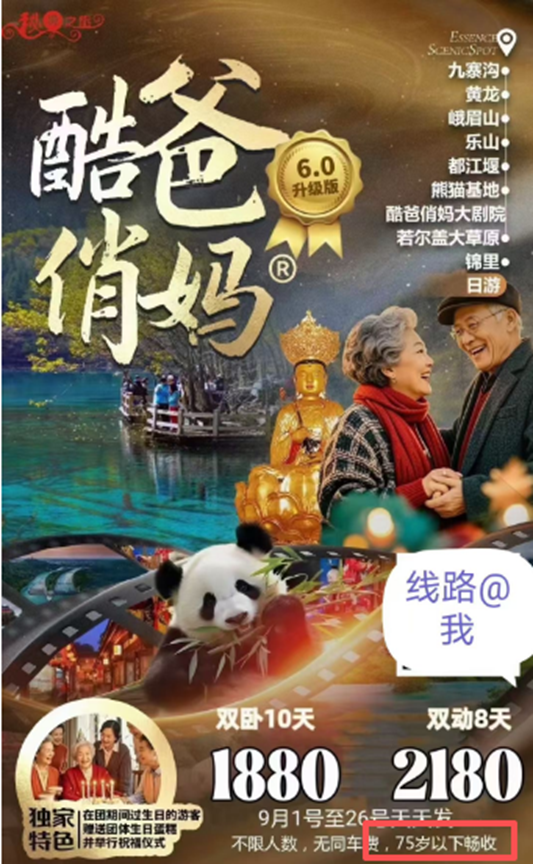
年龄限制、健康证明、免责协议……银发游设“层层路障”,江苏省消保委调查来了→
Yang Zi Wan Bao Wang· 2025-10-28 07:16
Core Insights - The elderly tourism market in Jiangsu Province has significant potential, but there are unmet consumer demands and various barriers to access [1][17] - The survey indicates that 86.55% of elderly travelers have a budget between 1001-5000 yuan, with a high demand for comfortable transportation and medical support [2][17] - Many travel agencies impose age restrictions and require health certificates, which creates additional hurdles for elderly travelers [3][5][6] Group 1: Market Potential and Consumer Demand - The elderly tourism market shows great potential, but the satisfaction level of consumer needs is low due to product homogeneity and service shortcomings [1] - A significant portion of elderly travelers (62.12%) prioritize comfortable transportation and accommodation, while 58.3% seek medical support during travel [2] - Over half of the elderly travelers reported insufficient medical support and inadequate facilities for disabled access at tourist sites [2][17] Group 2: Barriers to Access - More than 70% of respondents aged 70 and above reported being denied participation in tours due to age restrictions [3] - Common requirements include signing additional liability waivers (48.79%), mandatory accompaniment by family members (37.77%), and providing health certificates from higher-level hospitals (22.86%) [5][6] - Some travel agencies have vague age requirements, often only disclosing them at the time of booking or in small print [3][5] Group 3: Contractual and Legal Issues - A significant 34.01% of consumers faced disputes related to tourism, with contract issues being the most prevalent [12] - Many contracts contain unfair terms that shift safety responsibilities onto consumers, and some agencies do not allow refunds for cancellations due to personal reasons [12][13] - Complaints made after the end of the tour are often not accepted, which raises concerns about consumer rights [17] Group 4: Digital Service Challenges - Elderly travelers face difficulties with digital services, with 46.25% experiencing high failure rates in facial recognition and 42.62% finding smart device operations challenging [8] - Some online platforms continue to impose requirements for family accompaniment, and their liability waivers often transfer risk to consumers [5][8] Group 5: Recommendations for Improvement - The Jiangsu Consumer Protection Committee suggests enhancing collaboration among departments to build a robust elderly tourism protection system and promoting compliance among businesses [17][18] - There is a call for travel operators to better understand the elderly market and develop friendly digital services to ensure safe and enjoyable travel experiences [18]
新产品新模式新业态涌现 消费增长潜能持续释放
Shang Hai Zheng Quan Bao· 2025-09-17 19:28
Group 1 - The core viewpoint of the articles highlights the robust growth in consumer spending in China, with retail sales of consumer goods increasing by 4.6% year-on-year in the first eight months of the year, and service retail sales growing by 5.1% [1] - The emergence of "emotional consumption" reflects an upgrade in consumer demand, shifting from basic needs to personalized and quality-oriented demands as material conditions improve [2] - The retail sales of household appliances, audio-visual equipment, cultural office supplies, and furniture saw year-on-year growth rates exceeding 10% in August, significantly outpacing overall retail sales growth [2] Group 2 - The integration of sports events with local tourism and shopping has become a significant driver of economic growth, with Jiangsu Province reporting a nearly 200% increase in summer tourist attraction bookings since July [3] - The "tourism+" model, which combines tourism with various sectors such as performing arts and technology, is gaining popularity and stimulating consumer activity [5] - The introduction of silver tourism trains, aimed at the elderly population, reflects the growing market potential for services catering to aging demographics, with plans for 1,860 such trains in 2024 [6] Group 3 - The application of AI in consumer sectors is driving rapid growth in related industries, with significant increases in the manufacturing value of smart vehicle equipment and integrated circuits [7][8] - Policies aimed at optimizing tax refunds for outbound tourism and supporting the development of international consumer cities are being implemented to enhance domestic demand [9] - The government is focusing on deepening reforms and opening up to facilitate domestic and international economic circulation, with a goal of achieving high-quality development [10][11]
银发经济:未来十年确定性万亿赛道(附参考资料下载)
Sou Hu Cai Jing· 2025-08-18 13:06
Group 1 - The core viewpoint of the article emphasizes that the most certain growth opportunity in the next decade lies in the aging population, particularly the 60-year-old demographic, as they transition from being dependents to empowered consumers [1] - The silver economy in China is projected to reach a market size of 8.3 trillion yuan by 2024, surpassing 20 trillion yuan by 2030, and potentially reaching 106 trillion yuan by 2050, making it the largest silver market globally [17][19] - The aging population in China is significant, with 220 million people aged 65 and above by 2024, accounting for nearly a quarter of the global elderly population [9][13] Group 2 - The article identifies the silver economy as a critical battleground for businesses due to the increasing consumer spending power of the 60s generation, who have a higher savings rate and education level compared to previous elderly groups [19][22] - The demand from this demographic is shifting from survival needs to enjoyment-oriented consumption, with new demands emerging in areas such as travel, anti-aging products, and smart devices [19][60] - The article highlights that the silver economy has a penetration rate of less than 15%, indicating significant opportunities for businesses to explore [22] Group 3 - Companies are encouraged to focus on the "golden demographic" of pre-retirees (ages 55-65) and active retirees (ages 60-70), who contribute over 60% of elderly consumption [23] - The article suggests that marketing strategies should avoid reinforcing negative stereotypes associated with aging and instead promote a positive, active lifestyle for the elderly [63][70] - It emphasizes the importance of understanding the diverse lifestyles of the elderly, moving beyond traditional marketing scenarios to connect with their varied interests and activities [79][81] Group 4 - The article outlines three major opportunity categories for the future: health and wellness, cultural and entertainment, and fast-moving consumer goods [90][92] - The health industry is expected to grow significantly, driven by strong demand and supportive policies, particularly in areas like nutritional supplements and smart health products [98][100] - The tourism market for the elderly is also highlighted, with this demographic accounting for nearly 40% of national tourism, indicating a robust market for tailored travel products [109][113] Group 5 - The article concludes that the silver economy is not just a trend but a long-term growth story, requiring companies to integrate this sector into their core strategies and focus on understanding the needs of the elderly [124][125] - It stresses the need for businesses to adopt a long-term perspective and build barriers in the slow-moving silver economy to capitalize on this demographic shift [125]
建设具有国际影响力的“中国康湾”!青岛发布三年行动计划
Qi Lu Wan Bao Wang· 2025-08-08 13:25
Core Viewpoint - Qingdao aims to establish "China Health Bay" with significant breakthroughs in health living, industry innovation, and quality enhancement by 2027, targeting a health industry scale of 100 billion yuan [1] Group 1: Health Living and Community Development - The plan includes the development of 10 industry-specific parks and 30 high-quality health communities, along with 100 integrated medical and health service facilities [1] - The initiative encourages the transformation of existing commercial buildings into high-end rehabilitation and health apartments, as well as the development of new elderly care institutions [2][3] Group 2: Health Service Innovation - The plan focuses on introducing high-end rehabilitation medical institutions and expanding rehabilitation services in community health centers [2] - It promotes the development of various health tourism services leveraging local resources, including hot springs and traditional Chinese medicine [2] Group 3: Health Consumption and Market Development - The initiative aims to promote new health check-up products and support the development of traditional Chinese medicine health products [3] - It includes plans for senior tourism and the development of health food products with marine characteristics [3] Group 4: Urban Health Quality Enhancement - The plan emphasizes the establishment of community embedded service facilities and the improvement of urban public service systems [3] - It aims to create an age-friendly environment and enhance the overall quality of urban health services [3] Group 5: Implementation and Governance - A leadership group will be established to oversee the implementation of the action plan, supported by a comprehensive policy toolkit and project lists [4] - The Qingdao Development and Reform Commission will lead the high-standard promotion of the plan, encouraging participation from market entities and social capital [4]
辽宁:扩大银发产业规模 让银发经济成为新的经济增长点
Zheng Quan Shi Bao Wang· 2025-06-26 07:17
Core Viewpoint - The implementation plan aims to promote the high-quality development of the silver economy in Liaoning Province, enhancing the welfare of the elderly and stimulating consumption among the elderly population [1][2]. Group 1: Development Goals - By 2027, Liaoning Province plans to establish over 4 silver economy industrial parks, achieve a 70% coverage rate of regional elderly care services, and construct or renovate at least 50 elderly care institutions annually [1]. - The plan emphasizes the development of home and community-based elderly care services, promoting the "Liaoyang to Home" brand and encouraging diverse services such as meal delivery, bathing assistance, and medical support [1][2]. Group 2: Institutional Support - The plan encourages the development of various types of elderly care institutions, including safety net, inclusive support, and fully market-oriented models, while exploring the transformation of public elderly care institutions into state-owned enterprises [2]. - Liaoning Province aims to expand the scale of the silver industry by nurturing business entities and attracting quality enterprises to the region [2]. Group 3: Brand and Standardization - The plan includes initiatives to promote brand development, such as selecting and cultivating a batch of "Liaoning Quality" silver economy products and organizing international expos [3]. - By 2027, the province aims to establish at least 25 local standards and 30 group standards for elderly care services, cultural, and tourism sectors [3]. Group 4: Technological Innovation - The plan encourages the integration of artificial intelligence and new technologies in elderly care, promoting the development of smart nursing and service robots [4]. - Financial products tailored for the elderly will be developed, including savings, investment, and insurance products, alongside expanding tourism services for the elderly [4].
“五一”假期银发消费迎来明显增长 假日经济再添新动力
Zheng Quan Shi Bao Wang· 2025-05-07 10:34
Group 1 - The core viewpoint of the articles highlights the significant growth in the "silver economy" during the recent May Day holiday, indicating a strong potential for consumption among the elderly demographic [1][2][3] - Data from various travel platforms show a notable increase in orders related to the elderly, with a 6.5% year-on-year growth in outbound self-driving tourists aged 60 and above, and a 27% increase in domestic self-driving elderly tourists [1] - The preference of elderly travelers leans towards cultural and scenic tours, with popular domestic destinations including Chengdu, Sanya, and Hangzhou, while international destinations include Italy, New Zealand, and Spain [1][2] Group 2 - The "new silver" demographic, aged 55 to 60, has shown a 43% year-on-year increase in hotel bookings during the May Day holiday, indicating a shift towards quality and emotional value in travel [2] - The silver economy in China is projected to reach a market size of approximately 30 trillion yuan by 2035, accounting for 10% of GDP, with the current market size around 7 trillion yuan [2][3] - The silver economy is attracting significant interest from major live-streaming platforms, with initiatives like "All Parents' Happy Home" targeting the elderly demographic, achieving over 1.74 million views in just four hours [3] Group 3 - The Chinese government has prioritized the development of the silver economy, implementing policies to enhance its scale, standardization, and branding, including the first policy document specifically addressing the silver economy [4] - Local governments are also taking action to promote the silver economy, with initiatives in cities like Xiamen and Hunan focusing on developing personalized travel products for the elderly [4]

让旅行的脚步慢下来(市场万花筒)
Ren Min Ri Bao· 2025-03-25 22:01
Group 1 - The core viewpoint of the articles highlights the shift in tourism from "check-in style" to "immersive travel," reflecting a change in consumer demand for travel experiences [2] - The travel market is seeing a rise in "residential travel," with 3.89 million people traveling to Yunnan last year, averaging 80 days of stay [1][2] - The demographic of travelers is shifting, with 60% of residential travelers aged 20 to 40, and over 70% of the traveling population being born in the 1980s and 1990s [2] Group 2 - The Chinese government is encouraging the development of climate-based tourism products, including winter and summer retreat options, as part of a broader strategy to enhance cultural and tourism consumption [3] - Various regions are actively exploring the development of the residential travel industry, with Yunnan planning to establish at least 3,000 key residential villages and Hainan targeting senior citizens with tailored travel products [3] - The Ministry of Culture and Tourism emphasizes the importance of adapting to changing travel demands and promoting high-quality development in the residential leisure industry to enhance cultural and tourism consumption [3]