雷鸟X3 Pro Project eSIM

Search documents
雷鸟创新携手德国电信亮相MWC 2026,推出首款代理式AI智能眼镜
IPO早知道· 2026-03-03 05:51
Core Viewpoint - RayNeo is collaborating with Deutsche Telekom to showcase the "Magenta AI" application based on the RayNeo X3 Pro at the 2026 MWC, highlighting the strong global expansion of Chinese AR companies [2]. Group 1: Product Features and Innovations - The RayNeo X3 Pro is the world's smallest mass-produced dual-lens full-color MicroLED waveguide AR glasses, providing a solid platform for telecom operators to explore next-generation entry devices [2]. - The AI glasses integrate Deutsche Telekom's Magenta AI, enabling advanced functionalities such as object recognition and real-time translation, while also understanding user environments and needs to autonomously complete complex tasks [2][3]. - The glasses transition from a "user-initiated service" to a "service-understanding user" model, allowing for seamless interactions, such as automatic translation and personalized recommendations based on user gaze [3]. Group 2: Market Position and Future Prospects - During MWC, RayNeo introduced several key products, including the world's first AR glasses with eSIM functionality, marking a shift from being a "mobile accessory" to an "independent terminal" [5]. - The upcoming release of the Air 4 Pro Batman collaboration model in March 2026 in mainland China reflects the company's strategy to blend technology with cultural trends, offering consumers more diverse choices [5]. - RayNeo's efforts at MWC aim to make technology more seamless and life more convenient, positioning the company at the forefront of the AR and AI integration in future lifestyles [7].


华为、字节、Meta同台竞技,AI眼镜势必记住2026这一年
3 6 Ke· 2026-02-26 11:06
Core Insights - The AI glasses market in 2026 is characterized by intense competition, with numerous companies, including major tech giants and startups, launching new products and strategies, marking a shift from niche gadgets to essential tools for various applications [1][2][4] Group 1: Market Dynamics - The AI glasses market is witnessing a "full-scale war" with major players like Meta, Google, Apple, and domestic companies like Huawei and ByteDance all actively participating [1][2] - The CES 2026 event served as a platform for companies to showcase their innovations, with significant product announcements from various manufacturers [2][4] - The trend of "lightweight" and "independence" is evident, as companies prioritize user comfort and reduce reliance on smartphones through features like eSIM and independent processing capabilities [9][10] Group 2: Product Launches and Innovations - Key product launches include: - XGIMI's MemoMind brand entering the smart glasses market [8] - Thunderbird's X3 Pro Project eSIM, the first dual-lens AR glasses with independent connectivity [8] - Rokid's ultra-light AI glasses weighing only 38.5 grams, emphasizing comfort and audio interaction [8] - Modular AR glasses M6 from Xuanjing, designed for hardware upgrades [3][8] - Meta plans to enhance its Ray-Ban Meta glasses, aiming for improved optical comfort and AI interaction [4][8] - Google's three-step strategy includes launching audio smart glasses and collaborating on Project Aura with XREAL [4][8] - Apple is expected to release Apple Glasses by the end of 2026, focusing on a lightweight design and AI integration [4][8] Group 3: Industry Trends and Drivers - The industry is driven by three main factors: cost reduction in the supply chain, advancements in AI interaction, and growing market demand [10][11] - The rapid decrease in component costs, particularly in chips and optical displays, has made AI glasses more affordable for consumers, with prices now in the 2000-3000 yuan range [11] - The introduction of national subsidies for smart glasses is expected to boost market penetration and consumer adoption [14][15] Group 4: Future Competition Landscape - The competition is shifting from hardware specifications to user experience, ecosystem integration, and technological innovation [16][17] - Companies are focusing on creating compelling reasons for daily use, with examples like Rokid's integration of AI glasses into automotive systems and educational tools [17][18] - The future of the industry will depend on ecosystem development, with companies like Google and Huawei aiming to create comprehensive platforms that integrate AI capabilities and user data [20][21]




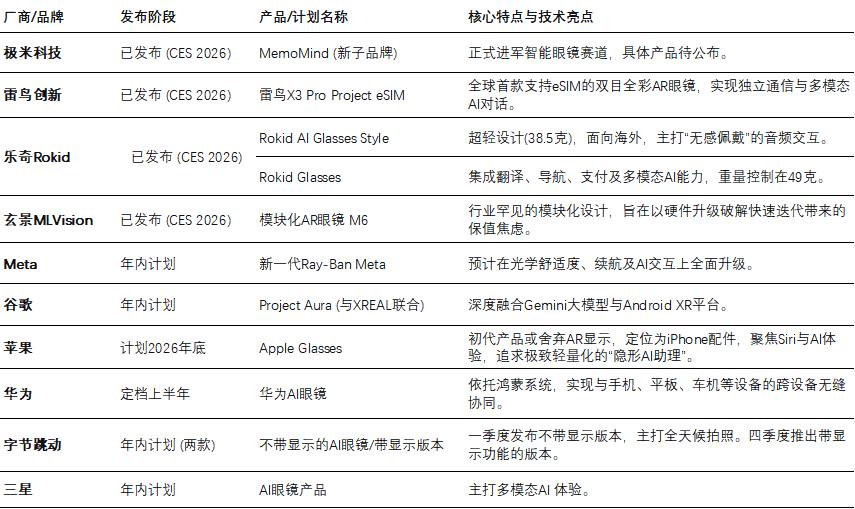
新消费行业周报:泡泡玛特“星星人”新款热销,关注潮玩消费与AI+消费-20260206
Shanghai Securities· 2026-02-06 11:53
Investment Rating - The industry investment rating is "Hold" [9] Core Insights - The total retail sales of social consumer goods in 2025 surpassed 50 trillion yuan, with a growth rate of 3.7% compared to the previous year. Online retail sales reached 15.97 trillion yuan, growing by 8.6%, while service retail sales increased by 5.5%. The contribution rate of final consumption expenditure to economic growth was 52.0%, an increase of 5 percentage points from the previous year [3][9] - The 2026 CES showcased a strong embrace of AI technology, focusing on practical applications. Major chip companies like NVIDIA, AMD, and Intel are shifting their attention to physical AI and edge AI, indicating a significant trend in AI hardware development [12][9] - The popularity of collectible toys is rising, with products from Pop Mart, such as the PUCKY series, gaining significant attention and selling out quickly. This trend suggests a potential new focus in the collectible toy market [14][15] Summary by Sections Macro Consumption - In 2025, the retail sales of social consumer goods reached 50.12 trillion yuan, with online retail and service retail sales growing by 8.6% and 5.5%, respectively. The contribution of final consumption to economic growth was 52.0% [3][9] - Service consumption is becoming more vibrant, with a projected 46.1% of per capita consumption expenditure dedicated to service-related spending in 2025. Various sectors like tourism, entertainment, and sports are expected to see double-digit growth [3][11] AI + Consumption - The CES 2026 highlighted the integration of AI in consumer products, with a focus on AI hardware that is becoming more mature and applicable. The emergence of AI glasses and other smart devices indicates a shift towards consumer-grade AI products [12][9] - Companies such as Luxshare Precision, GoerTek, and KANAT Optical are recommended for investment in the AI hardware sector [16] Collectible Toys - Pop Mart's new product lines, including the "Starry Person" series, have quickly sold out, indicating a strong market interest. The resale prices of these products have seen significant increases, suggesting a robust demand in the collectible toy market [15][16]

6家公司密集在港股IPO;它成立3个月融资4.8亿美元,速成独角兽 | 1月独角兽月报
Sou Hu Cai Jing· 2026-02-05 07:35
Core Insights - The domestic startup market in China is experiencing a surge in financing, with multiple companies securing over 1 billion yuan in funding, including notable firms like Jieyue Xingchen and Geely's flying car company WoFei ChangKong [1][2] Group 1: New Unicorns - In January 2026, 11 new unicorns emerged in China, spanning sectors such as AI, humanoid robots, healthcare, eVTOL, and quantum computing [2] - Humans& became a new unicorn after raising $480 million in seed funding, achieving a post-money valuation of $4.48 billion, backed by investors like NVIDIA and Google Ventures [3][4] - WoFei ChangKong, a subsidiary of Geely, completed nearly 1 billion yuan in financing, reaching a valuation of 10 billion yuan, focusing on low-altitude travel and flying car development [6][7][8] - ZiBian Robot secured 1 billion yuan in A++ round financing, achieving a post-money valuation of over $1 billion, with plans to enhance its humanoid robots and expand into various application scenarios [9] - RayNeo announced a new round of financing exceeding 1 billion yuan, achieving a valuation of $1 billion, and launched the world's first eSIM independent communication AR glasses [10][11] Group 2: IPO Activities - Six unicorn companies went public in January, all listed on the Hong Kong Stock Exchange, marking a concentrated IPO wave at the beginning of the year [12] - Notable IPOs include Zhiyuan, which raised 4.348 billion HKD, and Minimax, which raised 4.189 billion HKD, both focusing on AI and large model technologies [13] - Other companies like Biran Technology and Jingfeng Medical also completed IPOs, with respective fundraising targets of 5.583 billion HKD and 1.2 billion HKD [15] Group 3: Major Financing Events - Jieyue Xingchen completed over 5 billion yuan in B+ round financing, setting a record for the largest single financing in China's large model sector over the past year [16][18] - ByteDance's "Doubao" AI glasses are set to enter the market, with plans for a no-screen version to be released in Q1 2026 and a display version by Q4 2026 [19][20] - Baidu's Kunlun Chip has submitted a confidential IPO application, with a valuation of 21 billion yuan following its latest funding round [22][23]
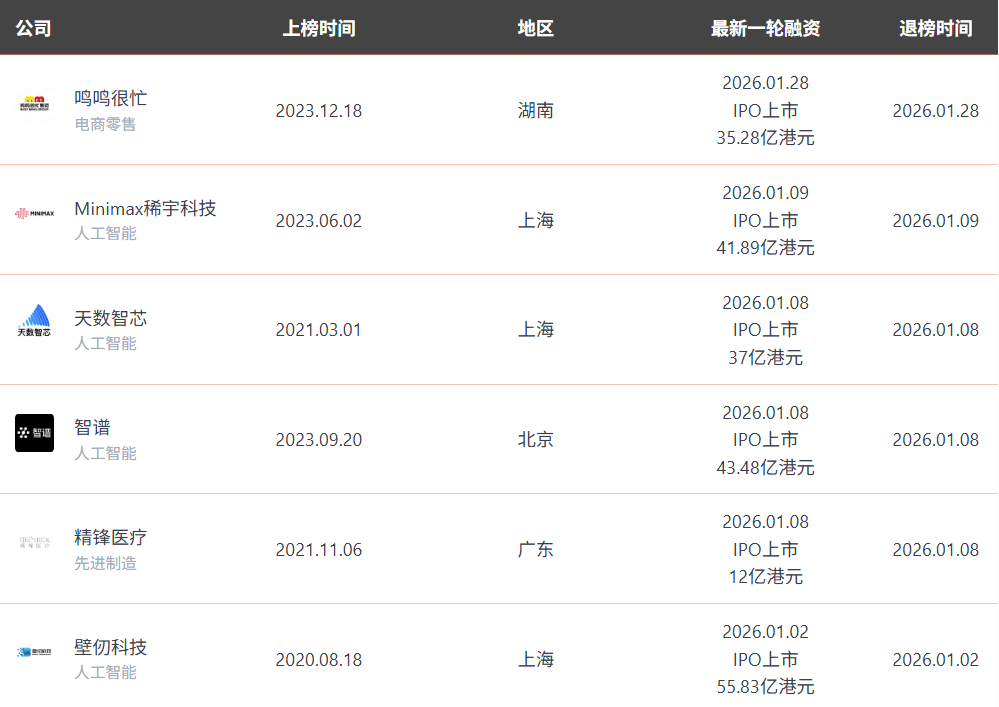
产品迭代出货激增 智能眼镜“热”撬动产业链升级
Xin Hua Wang· 2026-01-26 02:35
Core Insights - The smart glasses market is experiencing explosive growth, with China's shipment volume expected to reach 4.5 million units by 2026, representing a year-on-year increase of 77% [2][5]. Technology and Application Breakthroughs - The launch of the first eSIM smart glasses, "Thunderbird X3 Pro Project eSIM," showcases independent functionalities such as calls, AI conversations, and real-time translation without needing a smartphone [3]. - The integration of AI smart glasses with automotive technology allows users to control vehicle functions remotely and receive real-time navigation and speed information while driving [3]. - Recent advancements in optical technology, lightweight design, and independent communication capabilities have addressed previous limitations of smart glasses, enabling a transition from accessories to standalone devices [3][4]. Market Growth and Demand - The smart glasses market is projected to see significant growth, with shipments expected to reach 2.54 million units in 2025 and 4.51 million units in 2026, reflecting year-on-year growth rates of 92.9% and 77.7%, respectively [5][6]. - The core growth areas for smart glasses in 2026 will focus on consumer scenarios such as home use, travel, health management, content creation, and information services [6]. Industry Chain Upgrades - The demand for smart glasses is driving deep collaboration across the supply chain, enhancing product integration and production efficiency [7]. - Companies are innovating to meet the evolving demands for lightweight, low-power, and high-performance imaging systems, with new products being developed to align with market needs [8]. Challenges and Collaborative Solutions - The smart glasses industry faces challenges including balancing product weight, battery life, performance, and cost, as well as improving user education and market awareness [10]. - The first half of 2026 is expected to see advancements in optical displays and AI chips, but challenges related to production yield, cost control, and supply chain coordination remain [10][11].
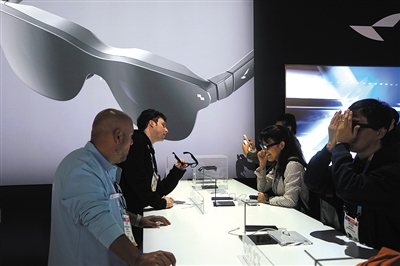
手机遇冷、眼镜预热 eSIM仍在等待“上桌”
Bei Jing Shang Bao· 2026-01-21 23:45
Core Insights - The demand for Apple's iPhone Air, which emphasizes extreme thinness and features eSIM technology, is significantly lower than expected, leading to supply chain cutbacks and potential component discontinuation by the end of 2025 [1] - The eSIM technology's adoption in smartphones is hindered by user habits, manufacturer conservatism, and insufficient cooperation from telecom operators, making it a secondary feature rather than a core component [2][3] Group 1: iPhone Air and eSIM Challenges - The iPhone Air's attempt to innovate with a pure eSIM design has not resonated with mainstream consumers, as many are unwilling to pay a flagship price for a device with compromised core specifications [2] - The cumbersome processes associated with eSIM activation and switching further reduce user acceptance of this technology [2] - Current smartphone models from domestic manufacturers, such as OPPO and Huawei, have adopted eSIM but still support physical SIM cards, indicating a cautious approach to eSIM integration [3] Group 2: Shift to AR Glasses - The industry is shifting focus to AR smart glasses as a more suitable application for eSIM technology, with Thunderbird Innovation launching the "Thunderbird X3 Pro Project eSIM" at CES 2026 [4] - The investment from major telecom operators into the AR glasses sector signifies a strategic interest in integrating eSIM technology into new devices [4] - The design of AR glasses, which prioritizes extreme thinness, aligns well with eSIM's no-card feature, potentially enhancing the device's functionality and independence from smartphones [5] Group 3: Future Potential and Challenges - While eSIM technology shows promise for AR glasses, the current focus in the industry remains on improving optical display and spatial computing capabilities rather than communication features [6] - The existing limitations in AR glasses, such as display technology and battery life, need to be addressed before eSIM can become a core necessity [6] - The potential for eSIM to become a necessity in various scenarios, such as cross-border travel and IoT applications, exists but requires further technological and market developments [7]

手机遇冷眼镜预热 eSIM仍在等待“上桌”
Bei Jing Shang Bao· 2026-01-21 16:11
Core Insights - The demand for Apple's iPhone Air, which emphasizes extreme thinness, is significantly lower than expected, leading to supply chain cutbacks and anticipated component discontinuation by the end of 2025 [1][3] - The iPhone Air's reliance on eSIM technology has not resonated with mainstream consumers due to compromises in battery life, heat management, and other core specifications [1][3] - The slow adoption of eSIM in mobile devices is attributed to user habits, conservative manufacturer strategies, and insufficient cooperation from telecom operators [3][4] eSIM Technology in Mobile Devices - Current mobile devices featuring eSIM, such as OPPO Find X9 Pro and Huawei Mate 80 RS, still support physical SIM cards, indicating a cautious approach from manufacturers [4] - The reluctance to fully embrace eSIM technology is influenced by concerns over user control by telecom operators and uneven global infrastructure support [4] - eSIM is currently viewed as an additional feature rather than a core necessity in mobile devices, as users are accustomed to the convenience of physical SIM cards [4] Shift to AR Smart Glasses - As eSIM faces challenges in mobile applications, the industry is exploring its potential in AR smart glasses, which align better with eSIM's capabilities [5][7] - Thunderbird Innovation's AR glasses, featuring eSIM technology, have received significant investment from Chinese telecom operators, marking a strategic entry into the AR market [6] - The design of AR glasses, which prioritizes extreme thinness, benefits from eSIM's lack of a physical card slot, allowing for more compact designs [7] Market Potential and Challenges - The integration of eSIM in AR glasses is seen as having a clearer potential for adoption compared to mobile devices, given the alignment of form factor and use cases [7][9] - However, the current focus in the AR industry remains on optical display and spatial computing capabilities, with communication technology being a secondary priority [8] - The successful scaling of eSIM in AR devices may depend on advancements in technology and market conditions, such as seamless cross-operator functionalities [9]

终于上桌吃饭,AI眼镜分野于CES:独立重要,智能体更重要
3 6 Ke· 2026-01-12 03:05
Core Insights - CES 2026 showcased a significant shift in the AI landscape, with AI not just as a feature but as a means to redefine user interaction with information [1][6] - AI glasses emerged as a prominent category, indicating a growing consumer interest and potential market viability [5][18] Group 1: AI Glasses Development - AI glasses are evolving from mere concepts to practical devices, with a focus on usability and experience rather than just technological gimmicks [5][18] - The differentiation among AI glasses continues, with AI audio glasses showing disadvantages compared to AI display and multifunctional glasses like Rokid's offerings [5][18] - The introduction of independent operation capabilities in AI glasses, such as the Thunder X3 Pro with eSIM, marks a significant trend towards detaching from smartphones [10][12] Group 2: Market Trends and Consumer Engagement - Consumer interest in AI glasses is high, with significant foot traffic at Rokid's booth during CES, indicating a positive reception for products like the Rokid AI Glasses Style [3][5] - Companies are focusing on making AI glasses practical for daily use, with various manufacturers exploring different approaches to enhance user experience and encourage purchases [18][22] - The emergence of smart agent stores is crucial for the AI glasses industry, allowing developers to define functionalities, similar to how the App Store transformed the smartphone market [28][31] Group 3: Technical Innovations and Challenges - Innovations in connectivity, such as Qualcomm's efforts to achieve low-power WiFi connections, are essential for the independent operation of AI glasses [12][33] - Battery life and ease of recharging are critical factors for the independence of AI glasses, with various designs being tested to improve these aspects [13][33] - The balance between lightweight design and essential functionalities, such as first-person photography and video recording, remains a challenge for manufacturers [32][33]

直击CES 2026:中国AI眼镜扎堆“秀肌肉”
Mei Ri Jing Ji Xin Wen· 2026-01-11 12:42
Core Insights - The 2026 International Consumer Electronics Show (CES 2026) showcased AI glasses as a significant highlight, with over 50 exhibitors, including more than 20 Chinese companies, indicating a strong presence in the market [1][2] Industry Trends - The global smart glasses market saw a shipment volume of 4.296 million units in Q3 2025, marking a year-on-year growth of 74.1%, while China's market reached 623,000 units, growing by 62.3% [1] - The AI glasses industry is focusing on lightweight designs, enhanced display technology, and improved AI capabilities, with a strong emphasis on user comfort and practical applications [2][5] - The integration of AI functionalities is becoming more sophisticated, with a trend towards proactive services and multi-modal interactions in product iterations [2][5] Product Innovations - Rokid launched the Rokid Ai Glasses Style, a lightweight model weighing only 38.5g, capable of music playback, translation, navigation, and AI Q&A [2] - The Rokid Glasses, weighing 49g, features advanced diffraction waveguide technology and supports various AI applications, including real-time navigation and translation [3] - Thunderbird Innovation introduced the world's first dual-lens AR glasses with eSIM functionality, allowing independent communication without a smartphone [3] Market Dynamics - The AI glasses market is expected to reach a shipment volume of 23.687 million units globally in 2026, with China's market projected to exceed 4.915 million units, indicating a shift towards large-scale growth [6] - The entry of internet and cloud companies into the AI glasses sector is increasing industry attention and capital activity, leading to resource integration across the supply chain [7] - The competitive landscape is intensifying, with established companies facing pressure while smaller firms seek differentiation in a crowded market [7] Challenges and Future Outlook - The AI glasses industry is still in its early stages, facing challenges in supply chain management and user experience, which could impact market stability [8] - As the market matures, improvements in supply chain coordination and product quality will be essential for retaining users and ensuring stable growth [8]
聚焦“屏显+AI” TCL携多项“硬科技”亮相CES 2026
Ren Min Wang· 2026-01-11 01:40
Core Insights - TCL showcased its innovations at CES 2026, focusing on "Screen Universe" and "AI Life" with a booth area of 2,453 square meters, marking its 33rd appearance at the event [1] Display Technology Innovations - TCL highlighted several cutting-edge products, including the X11L series SQD-MiniLED TV, which features super quantum dot and super butterfly wing technology, offering advantages such as high color gamut, no color bleeding, more zones, higher brightness, and a thinner design [3] - The SQD-MiniLED TV Q10M series was launched domestically on January 5, further lowering the barrier for high-end picture quality [3] - The TCL Huaxing printed OLED vehicle screen was also presented, designed for high-end smart cockpit interaction, with a material utilization rate exceeding 90%, and its high-generation production line commenced operations in October 2025 [3] AI Integration and Product Offerings - TCL showcased AI applications, including the Thunder X3 Pro Project eSIM, a consumer-grade AR smart glasses with independent communication capabilities, supporting features like phone calls, multimodal AI conversations, and real-time AI translation [5] - Other products such as the Xiaolan Wing AI air conditioner and AiMe companion robot cover various life scenarios, with TCL's global air conditioner sales projected to exceed 20 million units in 2024, reflecting a year-on-year growth of 29.6% [5] Research and Development Commitment - From 2019 to 2024, TCL invested over 60 billion yuan in R&D, with a total of 119,352 patent applications filed by November 2025 [5] - The company has established a R&D center in Silicon Valley and a manufacturing base in Mexico, ranking second in TV shipments in the North American market [5] - TCL aims to strengthen its focus on technology-intensive industries and advance upstream in the supply chain, emphasizing R&D in AI applications and next-generation display technologies [5]