鹏华中证细分化工产业主题ETF

Search documents
资金加仓恒生科技等赛道 宽基核心资产受关注
Zhong Guo Zheng Quan Bao· 2026-02-08 21:55
Group 1 - The consumer and photovoltaic sectors saw significant gains last week, with several related ETFs rising over 3% [1][2] - The A-share market's broad-based products experienced active trading, with ETFs tracking the CSI A500 index exceeding a total transaction volume of 250 billion yuan [1][2] - The market outlook for February suggests a continuation of the upward trend, driven by concentrated earnings forecasts and the recovery of leading companies' performance [1][4] Group 2 - The Hong Kong consumer sector performed strongly, with ETFs such as the Hang Seng Consumer ETF leading the gains [2] - Gold-related ETFs faced a downturn, with an average decline of over 5% across 14 commodity gold ETFs, and some gold stock ETFs dropping more than 13% [2] - The technology sector attracted significant capital inflow, with the Huatai-PineBridge Hang Seng Technology ETF seeing a net inflow of over 3.8 billion yuan last week [3] Group 3 - Several asset management institutions have released macro outlooks for China's equity market in 2026, highlighting diverse growth paths driven by the 14th Five-Year Plan [4][5] - Key investment areas identified include technology, manufacturing, renewable energy, healthcare, and emerging consumer sectors [4][5] - The market is expected to maintain a structural trend in February, with a focus on core growth assets that are currently at historical median valuation levels [5]
资金加仓恒生科技等赛道宽基核心资产受关注
Zhong Guo Zheng Quan Bao· 2026-02-08 20:22
Group 1 - The consumer and photovoltaic sectors saw significant gains, with several related ETFs rising over 3% last week, while gold and artificial intelligence sectors experienced declines, with some ETFs dropping over 9% [1][2] - A-shares market showed active trading in broad-based products, with ETFs tracking the CSI 500 index exceeding a total trading volume of 250 billion yuan, and those tracking the Sci-Tech 50 index surpassing 30 billion yuan [1][2] - The market outlook for February suggests a continuation of the upward trend, driven by concentrated earnings forecasts and the recovery of leading companies' performance, benefiting core assets [1][4] Group 2 - The Hong Kong consumer sector performed strongly, with ETFs such as the Hang Seng Consumer ETF leading the gains, while the photovoltaic sector also showed positive performance [1] - The gold sector underperformed, with commodity gold ETFs declining over 5%, and gold stock ETFs experiencing even greater declines, with some dropping over 13% [2] - The technology sector attracted significant capital inflow, with the Hang Seng Technology ETFs seeing substantial net inflows, particularly the Huatai-PineBridge Hang Seng Technology ETF, which had a net inflow of over 3.8 billion yuan last week [2] Group 3 - The satellite communication sector also experienced notable capital inflow, with the Yongying National Commercial Satellite Communication Industry ETF seeing a net inflow of over 1.8 billion yuan [3] - Several ETFs, including the Huazhong Gold ETF and the Southern CSI Nonferrous Metals ETF, reported net inflows exceeding 10 billion yuan this year [3] - Investment firms are focusing on five key areas for the Chinese equity market by 2026: technology, manufacturing, renewable energy, healthcare, and emerging experiential consumption [3] Group 4 - The market is expected to stabilize in February, with a shift in focus from January's credit and liquidity performance to macro and industry clues [4] - The "14th Five-Year Plan" is anticipated to provide a clearer framework for high-quality development and new growth drivers, stabilizing market perceptions of future growth [4] - Core assets are recommended for continued attention, as their valuations are at historical median levels, with stable profit expectations and increasing foreign capital inflow [4]
热门板块进入高波区间 场外产品跟踪指数“受阻”
Zhong Guo Zheng Quan Bao· 2026-02-04 20:29
Core Insights - The A-share commercial aerospace and non-ferrous metals sectors have entered a phase of wide fluctuations, with related index funds experiencing significant tracking errors and volatility [1][3] - Fund managers have taken measures to suspend large subscriptions over 1 million yuan for certain thematic index funds due to the challenges posed by rapid market movements [4][7] Fund Performance and Flows - In January, the Southern CSI Shenwan Non-ferrous Metals ETF saw net inflows exceeding 18 billion yuan, with several other thematic ETFs attracting over 10 billion yuan each [2] - By the end of January, multiple thematic ETFs, including the Southern CSI Non-ferrous Metals ETF and the Guotai CSI Semiconductor Materials and Equipment ETF, surpassed 20 billion yuan in scale [2] Market Volatility and Management Challenges - The recent volatility in popular sectors has led to significant fluctuations in fund net values, with some satellite-themed index funds rising over 8% on January 23, only to drop over 7% by January 26 [3] - Tracking errors for certain index funds have increased, with some exceeding 1% in January, compared to less than 0.5% in the previous month [3][4] Operational Strategies - Fund managers are advised to implement refined operations and disciplined execution to manage tracking errors effectively, especially during periods of high volatility [5][6] - Strategies include phased investments, algorithmic trading, and prioritizing high liquidity core assets to mitigate impact costs [6] Recommendations for Fund Management - It is suggested to adopt a "core + satellite" sampling replication method to ensure high liquidity and weight in core assets while adjusting cash reserves dynamically based on market conditions [6] - Establishing a multi-dimensional prevention and response mechanism is crucial for managing fund flows and tracking accuracy [6]
流动性转为下行趋势
Guolian Minsheng Securities· 2026-02-01 13:34
Quantitative Models and Factor Analysis Quantitative Models and Construction Methods Model 1: ETF Hot Trend Strategy - **Model Name**: ETF Hot Trend Strategy - **Model Construction Idea**: The strategy is based on selecting ETFs with the highest and lowest prices in an upward trend and further filtering them based on the steepness of the regression coefficients of the highest and lowest prices over the past 20 days[31] - **Model Construction Process**: 1. Select ETFs where both the highest and lowest prices are in an upward trend 2. Construct support and resistance factors based on the steepness of the regression coefficients of the highest and lowest prices over the past 20 days 3. Choose the top 10 ETFs with the highest turnover rate in the past 5 days relative to the past 20 days to construct a risk parity portfolio[31] - **Model Evaluation**: The strategy achieved a return of 61.41% since 2025, with an excess return of 38.22% compared to the CSI 300 Index[31] Model 2: ETF Three-Strategy Fusion - **Model Name**: ETF Three-Strategy Fusion - **Model Construction Idea**: The strategy combines three industry rotation strategies driven by quantitative fundamentals, quality low volatility, and distressed reversal to achieve factor and style complementarity and reduce the risk of a single strategy[34] - **Model Construction Process**: 1. Construct industry rotation strategies based on quantitative fundamentals, quality low volatility, and distressed reversal 2. Combine the three strategies in equal weights to select industries from different dimensions[34] - **Model Evaluation**: The strategy achieved a cumulative return of 12.24% from April 10, 2017, to January 30, 2026, with a Sharpe ratio of 0.74[39] Model 3: All-Weather Strategy - **Model Name**: All-Weather Strategy - **Model Construction Idea**: The strategy aims to achieve stable returns by avoiding the "prediction" dilemma through diversified risk. It follows three basic principles: asset selection, risk adjustment, and structural hedging[53] - **Model Construction Process**: 1. Select assets 2. Adjust risks 3. Perform structural hedging to achieve balanced allocation and smooth out volatility[53] - **Model Evaluation**: The high-volatility version achieved an annualized return of 11.8% with an average maximum drawdown of 3.6% and a Sharpe ratio of 2.3. The low-volatility version achieved an annualized return of 8.8% with an average maximum drawdown of 2.0% and a Sharpe ratio of 3.4[61] Model Backtesting Results ETF Hot Trend Strategy - **Return**: 61.41% since 2025[31] - **Excess Return**: 38.22% compared to CSI 300 Index[31] ETF Three-Strategy Fusion - **Cumulative Return**: 12.24% from April 10, 2017, to January 30, 2026[39] - **Sharpe Ratio**: 0.74[39] All-Weather Strategy - **High-Volatility Version**: - **Annualized Return**: 11.8%[61] - **Average Maximum Drawdown**: 3.6%[61] - **Sharpe Ratio**: 2.3[61] - **Low-Volatility Version**: - **Annualized Return**: 8.8%[61] - **Average Maximum Drawdown**: 2.0%[61] - **Sharpe Ratio**: 3.4[61] Quantitative Factors and Construction Methods Factor 1: Profitability Yield Factor - **Factor Name**: Profitability Yield Factor - **Factor Construction Idea**: Measures the profitability of stocks to identify high-profitability stocks[63] - **Factor Construction Process**: Calculate the profitability yield of stocks and select those with the highest profitability yield[63] - **Factor Evaluation**: Achieved a positive return of 3.24% this week, indicating that high-profitability stocks regained market favor[63] Factor 2: Value Factor - **Factor Name**: Value Factor - **Factor Construction Idea**: Measures the value of stocks to identify high-value stocks[63] - **Factor Construction Process**: Calculate the value of stocks and select those with the highest value[63] - **Factor Evaluation**: Achieved a positive return of 2.67% this week, reflecting that high-value stocks gained market attention[63] Factor 3: Leverage Factor - **Factor Name**: Leverage Factor - **Factor Construction Idea**: Measures the leverage of stocks to identify high-leverage stocks[63] - **Factor Construction Process**: Calculate the leverage of stocks and select those with the highest leverage[63] - **Factor Evaluation**: Achieved a positive return of 1.32% this week, indicating that high-leverage stocks gained market attention[63] Factor Backtesting Results Profitability Yield Factor - **Weekly Return**: 3.24%[63] Value Factor - **Weekly Return**: 2.67%[63] Leverage Factor - **Weekly Return**: 1.32%[63]
牛气冲天!开年哪些行业主题ETF最吸金,数据揭晓答案
Sou Hu Cai Jing· 2026-01-12 05:58
Core Viewpoint - The A-share market is experiencing a strong upward trend as it enters the first week of 2026, with significant increases in major indices and trading volumes, indicating a potential bullish market phase driven by various factors [1][3][10]. Market Performance - As of January 9, all three major indices closed higher, with the Shenzhen Component Index up 1.15%, the ChiNext Index up 0.77%, and the Shanghai Composite Index up 0.92%, reaching 4120.43 points, marking its first return to this level since July 2015 [3]. - The total trading volume for the Shanghai and Shenzhen markets reached 3.12 trillion yuan, a significant increase of 322.4 billion yuan from the previous trading day, marking the fifth occurrence in A-share history of daily trading volume exceeding 3 trillion yuan [3]. - Over the first five trading days of the year, the Shanghai Composite Index rose by 3.82%, the Shenzhen Component Index by 4.40%, and the ChiNext Index by 3.89%, with the STAR 50 Index increasing by 9.80% [3]. Sector Performance - The metals and satellite sectors have attracted significant capital inflows, with 598 industry-themed ETFs collectively receiving a net inflow of 13.827 billion yuan over five trading days [4][5]. - The Southern CSI Nonferrous Metals ETF led the inflows with 3.721 billion yuan, followed by the Yongying National Satellite Communication Industry ETF with 3.589 billion yuan [4]. - The chemical sector also saw high interest, with related ETFs experiencing a net inflow of 3.853 billion yuan [5]. Fund Flows - The nonferrous metals sector saw a total net inflow of 8.983 billion yuan across 10 related ETFs, while the satellite industry attracted 8.821 billion yuan across 6 ETFs [5]. - Conversely, the robotics and battery sectors experienced significant net outflows, with 1.348 billion yuan and 1.077 billion yuan, respectively [6]. - Other sectors with notable outflows included military and pharmaceutical industries, with net outflows of 785 million yuan and 679 million yuan, respectively [6]. ETF Scale Growth - The total scale of 598 industry-themed ETFs reached 1.178127 trillion yuan, with a cumulative growth of 83.468 billion yuan in the first five trading days of the year [7]. - The Southern CSI Nonferrous Metals ETF saw the largest scale increase of 5.555 billion yuan, followed by the Yongying National Satellite Communication Industry ETF with 5.109 billion yuan [7]. - Despite some ETFs experiencing net outflows, significant increases in net asset values have driven overall scale growth in various sectors, including semiconductors and military [8]. Future Market Outlook - Analysts suggest that 2026 may witness a "Bull Market 2.0," driven by improvements in fundamentals, technological trends, asset migration, and policy easing [10]. - The focus is expected to shift towards technology growth as the main line, with cyclical resources as a supporting factor, both showing potential for sustained excess returns [10]. - Key areas of interest include AI infrastructure, commercial aerospace, and strategic metals, with a particular emphasis on sectors benefiting from policy support and improving supply-demand dynamics [11].


航空航天ETF领涨,商业航天进入快速发展期丨ETF基金日报
2 1 Shi Ji Jing Ji Bao Dao· 2025-11-25 03:03
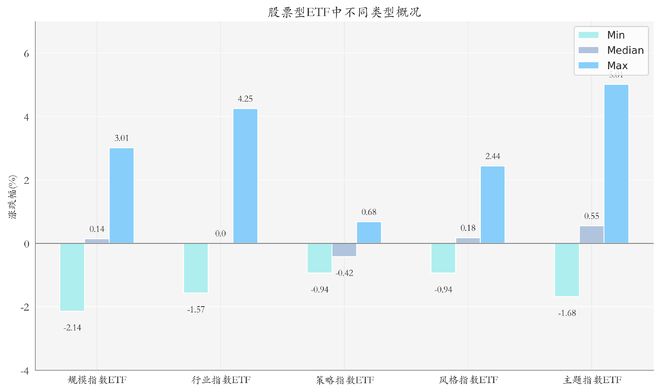
Market Overview - The Shanghai Composite Index rose by 0.05% to close at 3836.77 points, with a daily high of 3854.33 points [1] - The Shenzhen Component Index increased by 0.37% to close at 12585.08 points, reaching a high of 12655.29 points [1] - The ChiNext Index gained 0.31%, closing at 2929.04 points, with a peak of 2951.43 points [1] ETF Market Performance - The median return of stock ETFs was 0.2%, with the highest return from the Penghua SSE Sci-Tech Innovation Board 200 ETF at 3.01% [2] - The highest performing industry ETF was the China Securities Satellite Industry ETF, yielding 4.25% [2] - The highest return among thematic ETFs was the China Securities Aerospace Industry ETF, which achieved 5.01% [2] ETF Gain and Loss Rankings - The top three ETFs by gain were: - Huaxia China Securities Aerospace Industry ETF (5.01%) - Tianhong China Securities Aerospace Industry ETF (4.66%) - Wanji China Securities Aerospace Industry ETF (4.64%) [4] - The top three ETFs by loss were: - Xingyin SSE Sci-Tech Innovation Board Comprehensive Price ETF (-2.14%) - Huaxia China Securities Sci-Tech Innovation 50 ETF (-1.88%) - Jiashi China Securities Rare Metals Thematic ETF (-1.68%) [4] ETF Fund Flow - The top three ETFs by fund inflow were: - Huatai-PB SSE 300 ETF (inflow of 3.665 billion yuan) - Huaxia SSE 50 ETF (inflow of 1.53 billion yuan) - Southern CSI 500 ETF (inflow of 895 million yuan) [6] - The top three ETFs by fund outflow were: - Huabao CSI Bank ETF (outflow of 211 million yuan) - Fuguo CSI Military Industry Leaders ETF (outflow of 209 million yuan) - Guotai CSI Coal ETF (outflow of 207 million yuan) [6] ETF Margin Trading Overview - The highest margin buy amounts were for: - Huaxia SSE Sci-Tech Innovation 50 ETF (593 million yuan) - E Fund ChiNext ETF (440 million yuan) - Guotai CSI All-Share Securities Company ETF (415 million yuan) [8] - The highest margin sell amounts were for: - Huatai-PB SSE 300 ETF (34.95 million yuan) - Southern CSI 500 ETF (7.56 million yuan) - Huaxia SSE 50 ETF (3.97 million yuan) [9] Institutional Insights - Shenwan Hongyuan expects strong resonance between demand and supply in China's military trade, driven by expanding global military trade demand and enhanced product capabilities [10] - Debon Securities highlights a historic opportunity for the commercial aerospace industry, transitioning from manufacturing to application, with significant growth in low-orbit satellite demand [11]

光伏ETF上周领涨,机构称产业链或迎价值重构丨ETF基金周报
2 1 Shi Ji Jing Ji Bao Dao· 2025-11-10 03:08
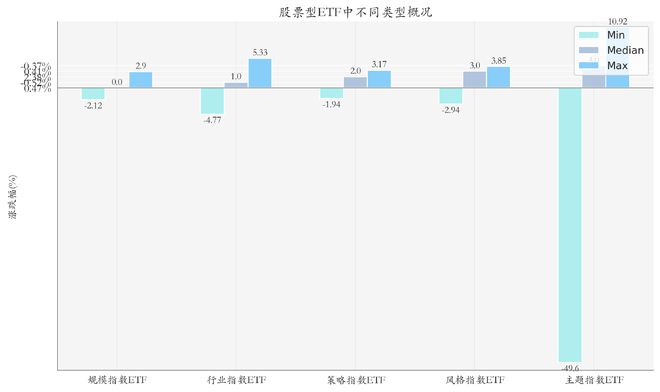
Market Performance - The Shanghai Composite Index rose by 1.08% last week, closing at 3997.56 points, with a peak of 4012.01 points [1] - The Shenzhen Component Index increased by 0.19%, closing at 13404.06 points, with a high of 13496.7 points [1] - The ChiNext Index saw a rise of 0.65%, ending at 3208.21 points, with a maximum of 3240.34 points [1] - In contrast, major global indices experienced declines, with the Nasdaq Composite down 3.04%, the Dow Jones Industrial Average down 1.21%, and the S&P 500 down 1.63% [1] ETF Market Performance - The median weekly return for stock ETFs was 0.31% [2] - The highest weekly return among scale index ETFs was 2.9% for the Penghua CSI 800 Free Cash Flow ETF [2] - The top-performing industry index ETF was the Southern CSI New Energy ETF, with a return of 5.33% [2] - The highest return in thematic index ETFs was 10.92% for the Huaxia CSI Electric Grid Equipment Thematic ETF [4] ETF Liquidity and Fund Flow - Average daily trading volume for stock ETFs decreased by 15.7%, while average daily trading volume increased by 9.3% [6] - The top five stock ETFs with the highest inflows included the Guotai CSI All-Share Securities Company ETF, which saw an inflow of 400 million yuan [9] - The top five stock ETFs with the largest outflows included the E Fund ChiNext ETF, which experienced an outflow of 290 million yuan [10] ETF Financing and Margin Trading - The financing balance for stock ETFs decreased from 49.1454 billion yuan to 47.9148 billion yuan [11] - The highest financing buy amount was 486 million yuan for the Huaxia SSE Sci-Tech 50 ETF [11] ETF Market Size and Composition - The total market size for ETFs reached 572.989 billion yuan, with stock ETFs accounting for 373.4058 billion yuan [14] - Stock ETFs represent 79.0% of the total number of ETFs and 65.2% of the total market size [16] New ETF Issuance - No new ETFs were issued last week, but eight new ETFs were established, including the Huaxia CSI Photovoltaic Industry ETF [17] Industry Insights - Industrial chain restructuring in the photovoltaic sector is anticipated, with Q3 showing a trend of reduced losses in the main chain [17] - The supply-demand relationship in the photovoltaic industry is expected to recover rapidly, driven by supply-side structural reforms and new technological changes [17]
216只ETF获融资净买入 华夏恒生互联网科技业ETF居首
Zheng Quan Shi Bao Wang· 2025-11-10 01:47
Core Viewpoint - As of November 7, the total margin balance for ETFs in the Shanghai and Shenzhen markets is 118.109 billion yuan, showing a decrease of 2.67 billion yuan from the previous trading day [1] Summary by Category ETF Margin Balance - The ETF financing balance is 109.725 billion yuan, down by 2.626 billion yuan from the previous trading day [1] - The ETF margin short balance is 8.384 billion yuan, decreasing by 0.044 billion yuan compared to the previous trading day [1] Net Inflows - On November 7, 216 ETFs experienced net financing inflows, with the top inflow being the Huaxia Hang Seng Internet Technology ETF, which saw a net inflow of 87.3479 million yuan [1] - Other ETFs with significant net inflows include the Penghua CSI Subdivision Chemical Industry Theme ETF, the Da Cheng Hang Seng Technology ETF, the E Fund CSI Overseas Internet ETF, the Huatai-PineBridge CSI Photovoltaic Industry ETF, and the Fortune CSI Hong Kong Stock Connect Internet ETF [1]
FOF基金2025年三季报:偏股型FOF业绩较优,科技主题基金获增持
Ping An Securities· 2025-11-04 10:23
Group 1: FOF Fund Scale and Issuance - As of the end of Q3 2025, the total number of FOF funds reached 518, an increase of 1 from the previous quarter, with a total scale of 1934.9 billion, up 16.8% from the previous quarter [5][8] - In Q3 2025, a total of 19 FOF funds were issued, with an issuance scale of 65.32 billion, a decrease of 64.9% compared to the previous quarter [10] Group 2: FOF Fund Performance - In Q3 2025, 99% of FOF funds achieved positive returns, with equity-oriented FOFs performing particularly well [12] - The median returns for equity, balanced, and debt-oriented FOFs were 2.99%, 12.18%, and 20.98%, respectively [12][13] Group 3: FOF Holdings Analysis - FOF managers favored technology-themed funds, with the top three actively managed equity funds being Caixin Asset Management Digital Economy, Boda Growth Smart Navigation, and E Fund Growth Power [19][20] - The top three passive equity funds favored by FOF managers were GF National Index New Energy Vehicle Battery ETF, Penghua CSI Subdivision Chemical Industry Theme ETF, and Huashang Growth 50 ETF [26][29] - For fixed income plus funds, the most favored were Invesco Great Wall Jingyi Fengli, Yongying Stable Enhancement, and Invesco Great Wall Jingsheng Dual Income [33]

“国家队”最新ETF持仓出炉
券商中国· 2025-11-01 02:21
Core Viewpoint - The "National Team," including Central Huijin Investment and its asset management plans, has maintained a stable position in broad-based ETFs while making minor adjustments in sector-specific ETFs, reflecting a strategic approach to stabilize the A-share market [1][2][3]. Group 1: ETF Holdings and Performance - The "National Team" has kept its holdings in broad-based ETFs largely unchanged, with significant performance in the third quarter, where the average increase of ETFs held exceeded 20%, resulting in a scale increase of over 200 billion yuan [2][6]. - As of mid-2025, the "National Team" holds over 40% of the total A-share ETF market, indicating a strong influence on market stability [3]. - The total scale of ETFs held by Central Huijin Investment and its asset management plans reached 1.55 trillion yuan by the end of the third quarter, marking an increase of over 200 billion yuan from the previous quarter [7]. Group 2: Specific ETF Adjustments - Central Huijin Asset Management's two specialized asset management plans have shown more frequent trading activity, including a reduction in holdings of specific ETFs, which should not be interpreted as a broader "National Team" strategy [4][5]. - Notably, the specialized plans reduced their holdings in the Guotai Zhongzheng 800 Automotive and Parts ETF by 800,000 shares in July, and completely divested from the Huaxia Hang Seng China Mainland Enterprises High Dividend ETF [4]. Group 3: Market Conditions and Influences - The significant rebound in the A-share market during the third quarter was a primary driver of the "National Team's" unrealized gains, supported by favorable domestic liquidity conditions and expectations of U.S. Federal Reserve interest rate cuts [8]. - Factors such as policy support, active trading, and capital inflows contributed to the overall positive market performance, with a notable increase in risk appetite among investors [8].