Gemini AI模型

Search documents
谷歌大动作频频,创业板软件ETF华夏(159256)持仓股润泽科技涨超17%
Mei Ri Jing Ji Xin Wen· 2026-02-26 03:10
Group 1 - A-shares in the software sector experienced fluctuations, with notable gains in specific stocks such as Runze Technology up over 17%, Hand Information up over 5%, and Langxin Technology up over 4% [1] - The market saw active trading with the ChiNext Software ETF (159256) recording a transaction volume exceeding 49 million, ranking first among similar index products [1] - Google announced the integration of its robotics software subsidiary Intrinsic into its core business, aiming to accelerate the adoption of robotics technology in industrial manufacturing [1] Group 2 - The AI application landscape is expanding, with To B AI Agents being deployed across multiple industries and moving towards vertical specialization and edge deployment [2] - The software industry plays a crucial role in the AI industry chain, primarily in the midstream technology layer and downstream application layer, providing essential technical support and facilitating the implementation of AI applications [2] - Notable products in the software sector include the ChiNext Software ETF (159256), ChiNext 200 ETF (159573), and AI ETF (515070) [2]

格林大华期货早盘提示-20260121
Ge Lin Qi Huo· 2026-01-20 23:30
Report Industry Investment Rating - Not provided Core Viewpoints of the Report - The global economy has passed its peak and started to decline due to continuous wrong policies in the US [4] - The US's return to the Monroe Doctrine and its global contraction will have a profound and disruptive impact on major asset classes such as the global economy, US bonds, US stocks, the US dollar, precious metals, and industrial metals [3] Summary by Relevant Content Global Economic and Financial Information - The IMF predicts that global economic growth will stabilize at 3.3% and 3.2% in the current and next years, with the forecast for the current year being revised up by 0.2 percentage points compared to the October estimate last year, mainly driven by the US and China [1] - If Trump appoints a Fed chair seen as overly compliant, the bond market will punish the US, and precious metals are a good hedge against political volatility [1] - The NYSE is developing a blockchain - based tokenized securities trading platform to address the "T + 1" settlement issues [1] - The shortage of high - end storage chips caused by AI is "unprecedented", impacting traditional consumer electronics shipments, and Micron has stopped producing consumer - grade memory brands [1] - Samsung and SK Hynix are reducing NAND wafer production, with the two companies accounting for over 60% of the global NAND flash market [1] - Google's business of selling the Gemini AI model has surged, with API calls exceeding 85 billion and 8 million enterprise subscribers, which is expected to boost Google Cloud server sales [1] - The global bond market has faced large - scale selling due to concerns about the US fiscal deficit, potential European bond sales, and Japanese investor withdrawals [1] - The probability of Rieder from BlackRock being nominated as Fed chair has increased significantly due to his views on interest rates and deficit tolerance [1] Global Economic Logic - US actions such as seizing Venezuelan oil, imposing tariffs on European countries, and investigating the Fed chair have created huge uncertainties in the global political order and economy [2] - The Fed is expected to face uncertainties from July to November 2026, potentially leading to a "flight from US assets" [2] - The Fed will cut interest rates by 25 basis points in December and buy $40 billion in short - term bonds monthly, expanding its balance sheet [2] - The decline in Las Vegas gambling revenue is similar to the early warning signs of the 2008 financial crisis [2] - The US will adjust its economic relations with China and focus on revitalizing its own economy [2] - Consumer K - shaped differentiation in the US is intensifying, with high - income consumers maintaining spending while low - and middle - income families are cutting back [2] - The Bank of Japan has raised interest rates by 25 basis points, and the 10 - year Japanese government bond yield has risen to 2.18% [2] - Google aims to double AI computing power every six months and achieve a 1000 - fold increase in the next 4 to 5 years [2] - TSMC's capital expenditure in 2026 is expected to be between $52 billion and $56 billion, a significant increase of 27% - 37%, indicating the continued AI boom [2]
ETF盘中资讯|谷歌Gemini业务销售额飙升,AI应用商业化有望加速!科创人工智能ETF华宝(589520)近5日连续吸金1.19亿元!
Sou Hu Cai Jing· 2026-01-20 06:07
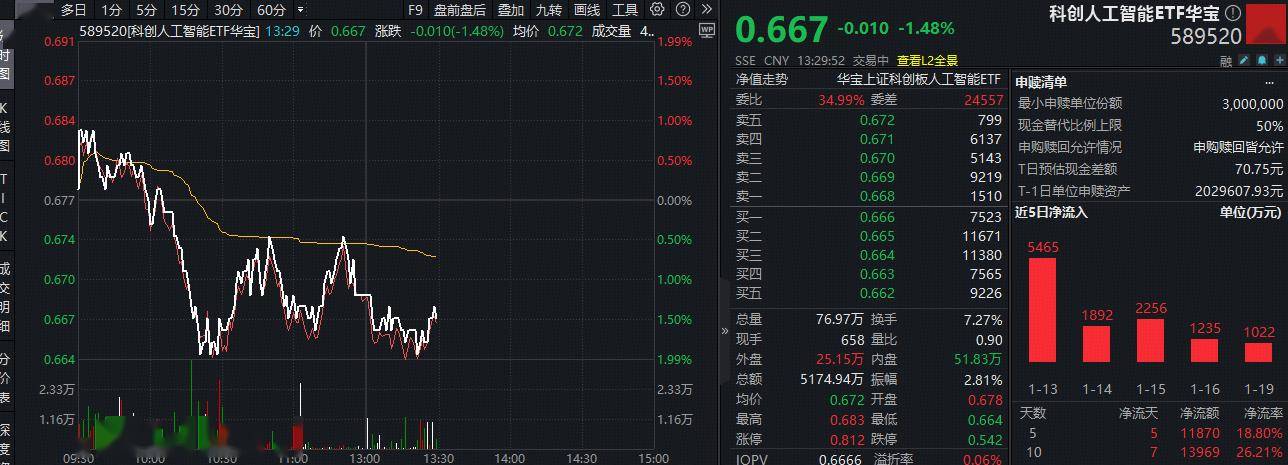
Group 1 - The core viewpoint is that despite market fluctuations, investment in the domestic AI industry chain remains strong, as evidenced by the inflow of 119 million yuan into the Huabao Sci-Tech AI ETF (589520) over the past five days [1] - The leading stocks in the ETF include Weisheng Information, which rose over 6%, and other companies like Lanke Technology and Xindian Software, which also saw gains [1] - Conversely, stocks such as Zhongke Star Map and Cambrian experienced declines, negatively impacting the index performance [1] Group 2 - Google has seen a significant increase in its Gemini AI model sales, with API call volume doubling to 85 billion and enterprise subscriptions reaching 8 million, which is expected to boost Google Cloud revenue [3] - The current dynamics in the AI industry are intense, with overseas companies like xAI and Anthropic securing funding, and domestic policies promoting "AI + manufacturing" [3] - The commercialization of AI applications is accelerating, particularly in areas such as search and marketing, coding, and AI for science, with expectations for further acceleration in the commercialization process [3] Group 3 - The Huabao Sci-Tech AI ETF (589520) is strategically diversified across application software, terminal applications, terminal chips, and cloud chips, reflecting a shift in the AI industry from reliance on foreign technology to self-sufficiency [4] - The ETF aligns with the current state of the AI industry chain and is seen as having significant potential for growth [4] Group 4 - The Huabao Sci-Tech AI ETF and its linked funds focus on the domestic AI industry chain, emphasizing strong domestic substitution characteristics, with major holdings in leading domestic GPU and ASIC companies [5] - The top ten holdings account for nearly 70% of the ETF, with semiconductor stocks making up almost half of the portfolio, indicating a high concentration and aggressive investment strategy [5] - The ETF serves as an efficient tool for investing in domestic computing power and is available for margin trading [5]

谷歌Gemini业务销售额飙升,AI应用商业化有望加速!科创人工智能ETF华宝(589520)近5日连续吸金1.19亿元!
Xin Lang Ji Jin· 2026-01-20 06:02
Group 1 - The core viewpoint of the news highlights the strong performance and investor confidence in the domestic AI industry chain, as evidenced by the trading activity of the Huabao Sci-Tech AI ETF (589520) which saw a price drop of 1.48% but maintained a high trading volume of over 51 million yuan, indicating a "buy the dip" mentality among investors [1] - The Huabao Sci-Tech AI ETF has attracted a total of 119 million yuan in inflows over the past five days, reflecting ongoing investor interest in the domestic AI sector [1] - Among the ETF's constituent stocks, Weisheng Information led with a gain of over 6%, while other stocks like Lanke Technology and Xindian Software also saw increases, indicating a positive trend in the sector [1] Group 2 - Google has experienced a significant surge in its Gemini AI model sales, with API call volume increasing over 100% to 85 billion times and enterprise subscriptions reaching 8 million, which is expected to boost revenue for Google Cloud services [3] - The current dynamics in the AI industry are marked by substantial activity, with overseas companies like xAI and Anthropic securing funding, and domestic policies promoting "AI + manufacturing," suggesting a robust growth trajectory for the sector [3] - By 2025, the synergy between self-sufficiency and AI is projected to drive strong performance in related sectors, with trends expected to strengthen further into 2026 [3] Group 3 - The Huabao Sci-Tech AI ETF (589520) is strategically positioned across four key segments of the AI industry chain: application software, terminal applications, terminal chips, and cloud chips, reflecting a shift from reliance on foreign technology to self-sufficiency [4] - The ETF focuses on domestic AI industry chains, emphasizing strong domestic substitution characteristics, with significant holdings in leading domestic GPU and ASIC companies, indicating a high concentration and aggressive investment strategy [5] - The ETF serves as an efficient tool for investors looking to gain exposure to domestic computing power, being a financing and margin trading target [5]
谷歌销售Gemini AI模型业务激增,低费率创业板人工智能ETF华夏(159381)连续5日吸金超4亿元
Mei Ri Jing Ji Xin Wen· 2026-01-20 03:09
Group 1 - The core viewpoint of the articles highlights the ongoing adjustments in the AI sector, with a notable decline in AI-related ETFs and stocks, while also indicating a significant increase in funding for AI investments over the past five days [1][2] - The AI industry is at a pivotal point of capability leap and accelerated commercialization, with leading firms in the US and China dominating the global large model landscape, and a clear trend of differentiation emerging in model architecture and optimization [2] - The demand for computing power is undergoing profound changes due to the comprehensive upgrade of inference paradigms, with high-value scenarios like continuous inference and multi-modal generation becoming core sources of future growth [2] Group 2 - The Huaxia ChiNext AI ETF (159381) is designed to support investments in AI-focused companies on the ChiNext board, with half of its weight in AI hardware computing power and the other half in AI software applications, showcasing high elasticity and representativeness [3] - The Huaxia Cloud Computing ETF (516630) tracks an index focused on domestic AI software and hardware computing power, with a combined weight of 83.7% in computer software, cloud services, and computing devices, indicating a strong alignment with AI applications [3] - The Huaxia Communication ETF (515050) focuses on the 5G communication theme index, emphasizing electronic and communication computing hardware, with major holdings in companies like Zhongji Xuchuang and Liyuan Precision [3]

速递|Gemini API月度请求五个月翻倍至850亿次,谷歌AI的“两条腿”战略
Z Potentials· 2026-01-20 02:57
Core Insights - Google's Gemini AI model improvements are driving significant growth in the company's core revenue, particularly in cloud services as clients increase their investments in AI [1][2] - The upcoming Q4 earnings report on February 4 is expected to reflect the returns on Google's substantial investments in AI, with capital expenditures projected between $91 billion and $93 billion [2] - The Gemini API usage has surged from approximately 35 billion requests in March to around 85 billion in August, indicating a strong demand for AI capabilities [3][7] Group 1: Business Growth and Performance - The Gemini AI model sales have seen explosive growth over the past year, attributed to continuous quality improvements [1] - The Gemini Enterprise version has reached 1,500 companies with 8 million subscribers, showcasing ongoing expansion in this business segment [3] - Despite the growth, customer feedback on Gemini Enterprise is mixed, with slightly over half of the clients reporting positive experiences [4] Group 2: Challenges and Customer Feedback - A significant challenge for Google is convincing enterprises to pay for complex software developed using its AI models, as many clients prefer to build customized solutions [5] - Customer satisfaction varies, with some clients finding Gemini Enterprise useful for specific tasks, while others report difficulties in creating custom applications [10][11] - The Gemini models initially struggled with profitability, but improvements in model quality have allowed for better competition based on quality rather than just price [8][9] Group 3: Market Position and Future Outlook - The success of the Gemini API has not only driven direct sales but also increased consumption of other Google Cloud products [9] - Analysts note that while Gemini Enterprise performs well for general queries, it struggles with highly specific tasks, indicating areas for improvement [11][12] - Overall, there is a cautious optimism among clients regarding the potential of Gemini Enterprise, with many expressing a willingness to continue exploring its capabilities [12][13]


Gemini 3拉动业务显著增长,谷歌AI模型申请量五个月翻倍
Hua Er Jie Jian Wen· 2026-01-20 00:34
Group 1 - The core viewpoint is that Google's Gemini AI model sales have experienced explosive growth over the past year, driven by improved model quality and increased API call requests [1] - The number of API calls for Gemini increased from approximately 35 billion at the launch of Gemini 2.5 in March last year to about 85 billion in August, more than doubling [1] - The release of Gemini 3 in November has sparked renewed interest and received widespread acclaim, contributing to the growth in both quantity and quality of the models [1] Group 2 - Despite positive business data, the market remains concerned about the high capital expenditure, with Google projecting capital expenditures between $91 billion and $93 billion, nearly double the $52.5 billion expected for 2024 [2] - Investors are closely monitoring the upcoming Q4 financial report for signs of returns on these substantial investments [3] Group 3 - Google is attempting to enhance profit margins through Gemini Enterprise, which currently has 8 million subscribers from 1,500 companies and over 1 million online registered users [4] - Market feedback on Gemini Enterprise is polarized, with customer satisfaction split nearly 50/50, indicating mixed reactions to the product [4] - Challenges arise from Google's "developer-first" approach, leading many customers to prefer building custom agents using Gemini models rather than purchasing pre-packaged software [4] - While Gemini Enterprise excels in answering general questions based on enterprise data, it struggles with specific tasks, though customers are willing to continue using it with a "let's give it a try" attitude [4]
早报|OpenAI计划2026年推出首款硬件;人民日报再评西贝事件;特朗普拒答是否会以武力夺取格陵兰
虎嗅APP· 2026-01-20 00:01
Group 1 - OpenAI plans to launch its first hardware device in 2026, with projected revenue exceeding $20 billion in 2025, a significant increase from $6 billion in 2024. The company's computing power is expected to rise from 0.6 GW in 2024 to 1.9 GW in 2025, with active user numbers reaching historical peaks [2] - Google’s Gemini business is experiencing a surge, with API calls increasing over 100% to 85 billion and enterprise subscriptions growing to 8 million. This growth is anticipated to boost Google Cloud's revenue as clients invest more in AI [5] - China Duty Free Group's subsidiary plans to acquire DFS's retail business in Greater China for up to $395 million, including 100% equity of DFS Cotai Limitada and two store assets [6] Group 2 - The Shanghai Futures Exchange is adjusting the trading limits for silver and nickel futures contracts starting January 20, 2026, while hedging and market-making trades will not be subject to these limits [24] - The People's Bank of China is set to announce the one-year and five-year Loan Prime Rates (LPR) on January 20, with expectations of a potential reduction of 5-10 basis points for the five-year LPR [25] - The initial GDP data for the fourth quarter of the United States will be released on January 20, with market attention focused on the economic growth situation [26]


黑天鹅!全线杀跌!金银,再创新高;央视,谈商业航天;大牛股,终止收购
Sou Hu Cai Jing· 2026-01-19 23:57
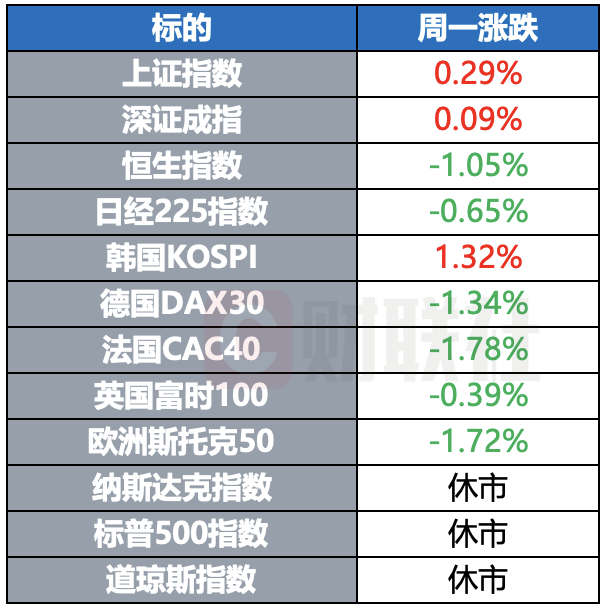
Market Dynamics - European stock markets experienced a significant decline, with the Euro Stoxx 50 index dropping by 1.77% and the French index falling by 1.78% [1] - The U.S. imposed tariffs on eight European countries, leading to discussions within the EU about imposing tariffs on $93 billion worth of U.S. goods [1] - Southbound funds in Hong Kong saw a net purchase of approximately HKD 22.92 billion, with notable purchases in SMIC and Hua Hong Semiconductor [3] - The number of A-shares priced over 100 yuan reached a historical high of 222, with notable stocks like Cambrian exceeding 1400 yuan [3] Economic Indicators - The National Bureau of Statistics reported that China's GDP for 2025 was 1401879 billion yuan, growing by 5.0% year-on-year, with industrial output increasing by 5.9% in December [6] - The IMF raised China's economic growth forecast for 2025 by 0.2 percentage points to 5% [8] Industry Developments - The German government announced subsidies of up to €6,000 for families purchasing new electric vehicles to boost its domestic electric vehicle industry [10] - Chengdu's Star Glory plans to complete its reusable liquid rocket production base by December 2026, with a design capacity of 20 rockets per year [10] - The global order volume for Cainiao's overseas warehouses grew by 32% year-on-year in 2025, with significant investments in automation [10] Company News - Jiangbolong announced a transfer price of 212.09 yuan per share, reflecting a discount of 36.92% from the closing price [13] - Yingfangwei plans to acquire 100% of Shanghai Xiaokeli and Fujide China, which is expected to constitute a major asset restructuring [13] - Huazhong Technology's net profit for 2025 is projected to increase by 120% year-on-year, driven by significant growth in high-speed communication products [14]
特朗普再掀贸易摩擦!黄金白银大涨,全球股市承压
Feng Huang Wang· 2026-01-19 22:54
Market Performance - Major global indices mostly declined on Monday due to renewed trade tensions initiated by US President Trump, with the US stock market closed for Martin Luther King Jr. Day [1] - The WTI crude oil futures rose by 0.19% to $59.43 per barrel, while Brent crude oil futures increased by 0.08% to $64.18 per barrel [2] - COMEX gold futures surged by 1.77% to $4,676.7 per ounce, and COMEX silver futures jumped by 6.49% to $94.28 per ounce [2] Geopolitical Developments - President Trump refused to clarify whether he would use military force to acquire Greenland, stating "no comment" and criticizing European leaders for opposing the acquisition [3] - Denmark's Defense Minister and Greenland's Foreign Minister expressed their desire to maintain dialogue with the US regarding Greenland and NATO's role in the Arctic [4] - NATO Secretary-General emphasized the importance of the Arctic region for collective security and discussed Denmark's investment in key capabilities [5] Trade Relations - France plans to convene a G-7 meeting to address Trump's threats of tariffs against allies opposing the acquisition of Greenland [6] - The EU will hold an emergency summit to discuss Trump's tariff threats and evaluate potential countermeasures, emphasizing the need for communication rather than escalation [7] Corporate Developments - Federal Reserve Chairman Jerome Powell is set to attend a Supreme Court hearing regarding Trump's attempt to dismiss Fed Governor Lisa Cook [8] - Israel's military is prepared for multi-front threats and has heightened readiness to protect civilian lives amid potential large-scale attacks [9] - The North American Aerospace Defense Command (NORAD) will deploy aircraft to the US base in Greenland to support defense cooperation with Denmark and Canada [10] Industry Insights - Israel's Prime Minister Netanyahu opposes the inclusion of Qatar and Turkey in a proposed Gaza "peace committee," asserting that their military presence is unacceptable [11][12] - The UK Foreign Secretary stated that imposing tariffs on Europe lacks justification and could have counterproductive effects, emphasizing the need for cooperation in Arctic security [13] - Moldova has initiated legal procedures to exit the Commonwealth of Independent States (CIS), reflecting its shift towards European integration [14] Economic Policies - The French government is bypassing parliamentary votes to pass the 2026 budget, indicating sufficient support to avoid potential no-confidence motions [15] - Germany has reintroduced electric vehicle purchase subsidies, offering up to €6,000 to promote domestic electric vehicle production [16] Technological Advancements - OpenAI plans to launch its first hardware device in the second half of 2026, with further details expected later this year [17] - BHP expects its annual copper production to be between 1.9 million and 2 million tons, an increase from the previous estimate of 1.8 million to 2 million tons [18][19] - Google's Gemini AI model sales have surged, with API calls increasing over 100% to 85 billion and enterprise subscriptions reaching 8 million, potentially boosting Google Cloud revenue [20]