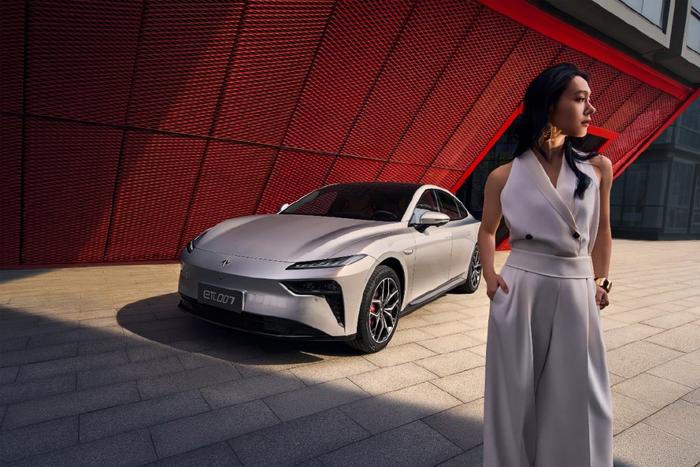
eπ008

Search documents
新能源车竞逐三年,“厂二代”已经开始迭代
Zhong Guo Jing Ji Wang· 2026-01-06 11:12
Core Insights - The penetration rate of new energy vehicles (NEVs) in China's passenger car market reached 53.6% in the first 11 months of 2025, up from 48.9% in 2024 and 35.7% in 2023, indicating a significant growth trajectory for NEVs in the country [1] - The automotive industry is transitioning from a phase of rapid growth to a highly competitive environment, characterized by cost pressures, sales challenges, and innovation demands, leading to a situation where revenue growth does not equate to profit growth [1] - Companies are increasingly adopting brand integration strategies to consolidate resources and enhance operational efficiency in response to intense market competition [3][4] Industry Trends - Many leading automotive companies are shifting from a "multi-brand expansion" strategy to a focus on resource integration and collaboration, which is seen as a crucial strategic choice to address internal competition and inefficiencies [4] - The Chinese government's policy direction supports this trend, emphasizing the need for group management among automotive manufacturers to improve resource allocation efficiency [4] - The integration of brands allows companies to streamline operations, reduce internal conflicts, and enhance decision-making efficiency, particularly for traditional automakers facing challenges in adapting to market changes [6] Company Developments - Dongfeng's brand integration, particularly with Yipai Technology, is a key example of addressing resource fragmentation and enhancing product focus, enabling significant investment in key products and innovations [6] - The newly integrated Yipai Technology aims to launch six new models by 2026, focusing on differentiated competition strategies and rapid iteration of existing models to strengthen product competitiveness [10] - The integration has resulted in a clearer product matrix, with brands like Nanom and Yipai complementing each other, leading to improved sales performance and market positioning [9][14] Marketing Strategies - Post-integration, companies are adopting more cohesive and precise marketing strategies to enhance brand image, which is crucial in a competitive market where brand perception significantly influences consumer purchasing decisions [11] - Yipai Technology has engaged in various marketing activities targeting younger demographics, including partnerships with popular cultural events and platforms, to establish a youthful brand image [13] - The focus on brand integration and marketing coherence is expected to create a broader consumer base and enhance brand recognition in the market [11][14] Performance Metrics - Yipai Technology achieved a total sales volume of 275,752 units in 2025, marking a year-on-year increase of 28.3%, with both Nanom and Yipai series surpassing 100,000 units in cumulative sales within 22 months [14] - The integration strategy has allowed Yipai Technology to operate with the efficiency comparable to new energy vehicle startups, enhancing its market competitiveness and growth potential [14][18]

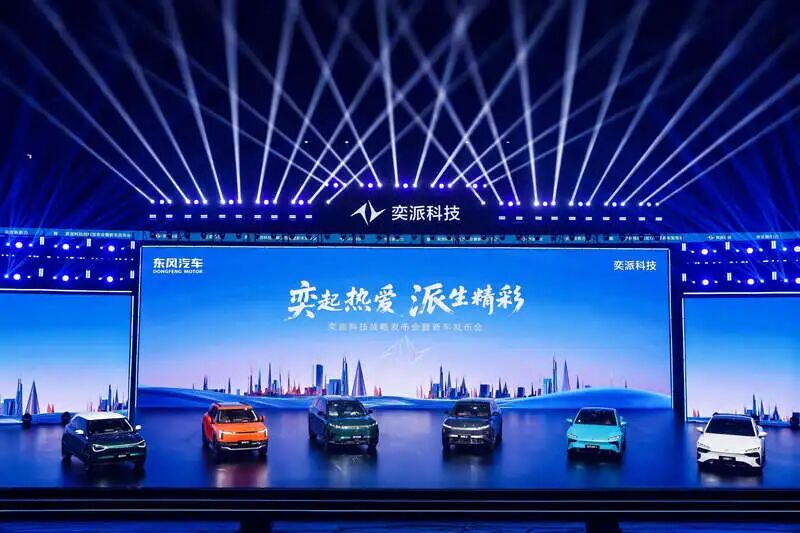
从神龙看武汉新能源汽车出海
Chang Jiang Ri Bao· 2025-12-31 00:37
Core Viewpoint - The automotive industry in Wuhan is undergoing a significant transformation, shifting from a model of "foreign technology + Chinese market" to "Chinese technology + foreign market," highlighting the rise of China's electric and intelligent vehicle technologies on the global stage [6][7]. Industry Overview - In Wuhan, the production of new energy vehicles (NEVs) has seen a remarkable year-on-year growth of 56.7%, with NEVs now accounting for 52.72% of the total vehicle production [1][7]. - The automotive industry is a crucial pillar of Wuhan's economy, with Dongfeng Motor Group being a key player in this transformation [14][15]. Company Developments - Dongfeng Motor aims to achieve a sales target of 1 million NEVs by 2025, reflecting its commitment to expanding its electric vehicle offerings [5]. - The company has diversified its product lineup, with 45 NEV models currently available, and is focusing on both maintaining its traditional fuel vehicle base and advancing its electric and autonomous vehicle technologies [14]. Market Dynamics - The shift in collaboration logic has led to the emergence of a complete brand matrix within Dongfeng, targeting various market segments, including luxury and mainstream [9][10]. - Dongfeng's NEV sales have surpassed 1 million units this year, marking a 22% increase, with self-owned brands accounting for 63% of total sales [10]. Global Expansion - Dongfeng's NEVs, including the Nano 06, have begun to penetrate international markets, with over 2,000 units exported to countries like Uruguay and Russia [10]. - The company is also expanding its presence in Europe and the Middle East, with plans to enter 40 European countries and accelerate its international strategy [12][13]. Technological Advancements - Dongfeng is actively involved in key technological innovations, including solid-state batteries and vehicle-grade chips, to enhance its competitive edge in the NEV sector [14]. - The company has established partnerships for joint innovation in critical areas, such as solid-state battery development and vehicle-grade chip production [14].
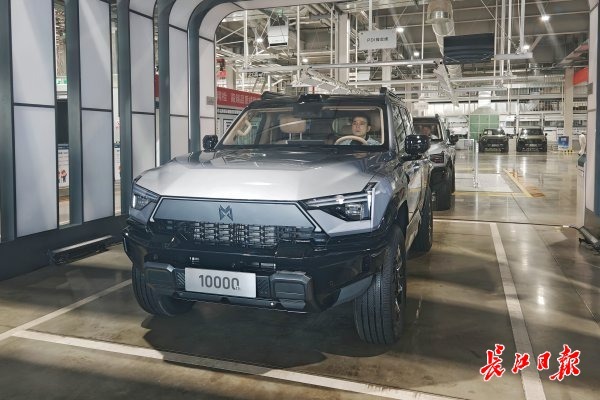
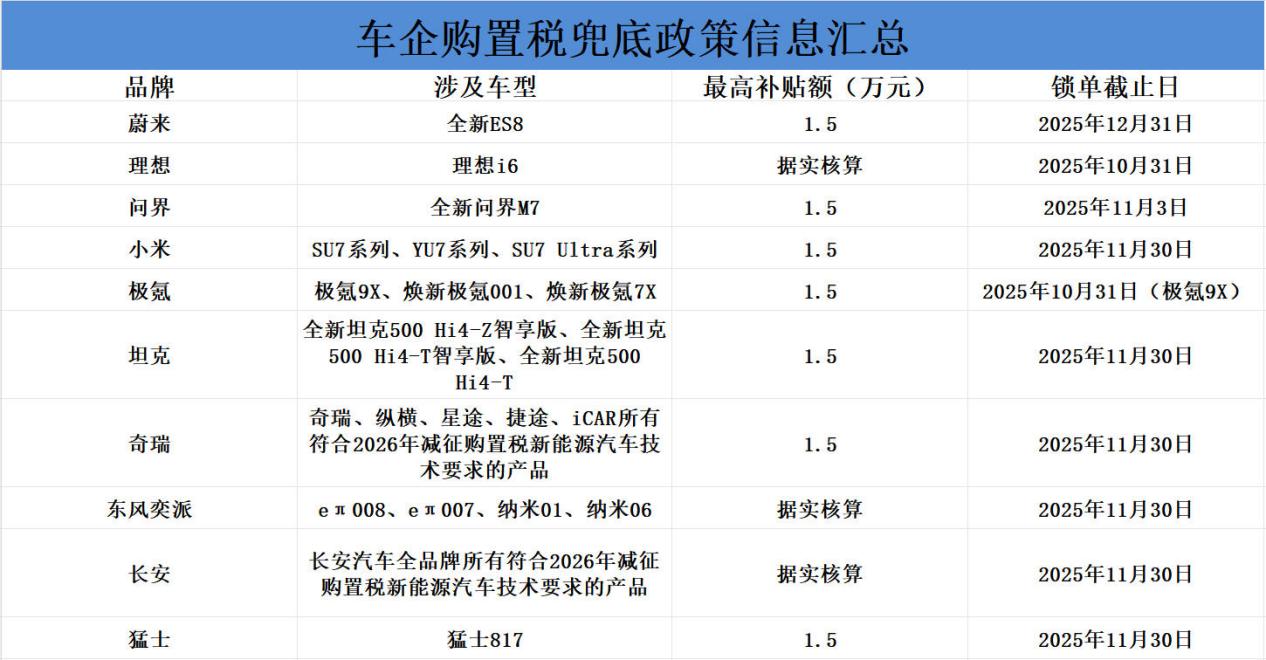
新能源购置税退坡倒计时 车企“自掏腰包”兜底政策汇总
Zhong Guo Zhi Liang Xin Wen Wang· 2025-10-29 05:23
Core Viewpoint - The exemption policy for new energy vehicle purchase tax will end on December 31, 2025, transitioning to a half-tax collection starting January 1, 2026, prompting various automakers to implement "bottom-line" subsidy policies to attract orders before the policy change [1] Summary by Category Automaker Subsidy Policies - NIO offers a subsidy of up to 15,000 yuan for orders of the new ES8 locked by December 31, 2025, ensuring customers are not burdened by tax changes if delivery occurs in 2026 [4] - Li Auto's i6 model provides a tax subsidy based on actual calculations for orders locked by October 31, 2025, with cash reductions on final payments to cover tax differences [6] - Aito's new M7 model offers a similar subsidy structure, with a maximum of 15,000 yuan for orders locked by November 3, 2025 [6] - Xiaomi's SU7 series and others provide a subsidy of up to 15,000 yuan for orders locked by November 30, 2025 [8] - Zeekr offers a tax subsidy for orders of the 9X model locked by October 31, 2025, with a maximum of 15,000 yuan [8] - Tank SUV's new models provide a subsidy for orders locked by November 30, 2025, ensuring customers are covered if delivery is delayed to 2026 [9] - Chery announces a subsidy for all eligible models if orders are locked by November 30, 2025, covering tax differences for delayed deliveries [11] - Dongfeng Yipai offers cash subsidies for orders locked by November 30, 2025, applicable to specific models [13] - Changan announces a subsidy for all eligible models with orders locked by November 30, 2025 [13] - Haval's M817 model provides a subsidy for orders locked by November 30, 2025, with a maximum of 15,000 yuan [15] Market Dynamics and Implications - The impending tax policy change has triggered automakers to adopt subsidy policies to mitigate the risk of losing customers who may delay purchases due to increased costs [16] - The long delivery cycles for popular new energy vehicles exacerbate the issue, leading to potential order losses if customers face tax liabilities due to delayed deliveries [16] - The subsidy policies are not merely promotional tactics but are seen as trust-building contracts between brands and consumers, enhancing brand loyalty and competitive advantage in a rationalizing market [16] - Companies that prioritize customer interests through these policies are likely to gain a competitive edge in the evolving market landscape [16]
三大品牌“握拳”整合 东风奕派科技发布新战略
Zhong Guo Jing Ji Wang· 2025-08-15 06:08
Core Viewpoint - Dongfeng Yipai Automotive Technology Company has launched the "Future Wings" strategy, focusing on four strategic pillars: technology, products, brand, and overseas expansion to drive high-quality development [1] Group 1: Technology and Product Strategy - Technology is considered the foundation of Yipai Technology, emphasizing safety, driving control, intelligence, and quality as key technological advantages [1] - The company aims to measure product value based on user satisfaction, indicating that user approval is paramount [1] - Yipai Technology has developed several technology brands, including Quantum Architecture, Mach Power, and Tianyuan Intelligence, and has launched new electric vehicle models such as eπ007, 008, and others [1][2] Group 2: Sales Performance - In 2024, the combined sales target for the three brands is set at 213,000 units, representing a year-on-year increase of 82.4% [1] - The sales growth for the first half of this year is reported at 43.7%, outperforming the industry average [1] Group 3: Organizational Restructuring - Dongfeng Automotive Group has restructured its passenger vehicle business to enhance operational quality and efficiency, consolidating R&D, production, supply chain, sales, and service under Yipai Technology [1][2] - The new structure allows for closed-loop management across the entire value chain, improving decision-making efficiency and resource allocation [2] Group 4: Brand Strategy - The brand strategy is summarized as "Yipai moving up, Fengshen moving new," focusing on integrating Dongfeng Nano into Yipai and developing high-end smart products in collaboration with Huawei [2] - Fengshen is positioned as a "smart family car brand," targeting a new lifestyle for families [2] Group 5: Global Market Expansion - Yipai Technology aims to expand its global presence, with models already available in over 40 countries and regions [3] - The annual sales target is set at 1.5 million units, with Yipai brand expected to contribute 1 million units and Fengshen brand targeting 500,000 units [3] Group 6: Industry Context - The automotive industry is undergoing significant changes due to electrification and intelligence, reshaping competitive dynamics [4] - The development of Yipai Technology is crucial for Dongfeng Automotive Group's position in the domestic automotive market [4]
东风汽车深化“研产供销服”一体化改革 奕派科技整合资源聚焦自主乘用车发展
Huan Qiu Wang· 2025-08-04 05:48
Core Insights - Dongfeng Motor has launched Dongfeng Yipai Technology, focusing on integrating resources across the entire value chain including business, R&D, production, supply chain, sales, and service [1][3] - The establishment of Dongfeng Yipai Technology represents a strategic upgrade in Dongfeng's "Leap Action" for passenger vehicle electrification, implementing integrated management across three major brands [3] Company Developments - Dongfeng Yipai Technology has quickly formed a core team covering functions such as product planning, R&D, manufacturing, procurement, and sales [3] - The company has established a user demand-driven reverse development process in product planning, consolidating resources from the three major brands to create unified market insight capabilities [3] - In R&D and production collaboration, the company leverages Dongfeng Group's R&D resources and shares core technologies like Quantum Architecture and Mahe E-Power to shorten the R&D-to-production cycle [3] Technological Collaborations - Dongfeng Yipai Technology is collaborating deeply with Huawei in the field of smart technology, applying the next-generation Qian Kun Intelligent Driving ADS 4 and Hongmeng Cockpit 5 technologies to cooperative products [3] - The company is integrating technologies in the three-electric system, including Mahe E-Power and solid-state batteries, and is collaborating with companies like CATL [3] Market Performance - Within one month of its establishment, the company achieved sales of 26,089 vehicles, representing a month-on-month growth of 48.8% [5] - Cumulatively, 110,703 new vehicles were delivered in the first half of 2025, marking a year-on-year increase of 43.7% [5] - The product lineup includes models such as eπ007 and eπ008, with plans to expand to 10 models by 2028, covering A0 to C-class vehicles [5] Strategic Implications - The reform through full value chain integration aims to explore new development paths for Dongfeng Motor during the critical period of its transition to electrification [5] - As integrated management deepens, the experiences gained may provide valuable references for the automotive industry's transformation and upgrade [5]

东风汽车整合出新,奕派科技正式登场
Tai Mei Ti A P P· 2025-08-02 06:46
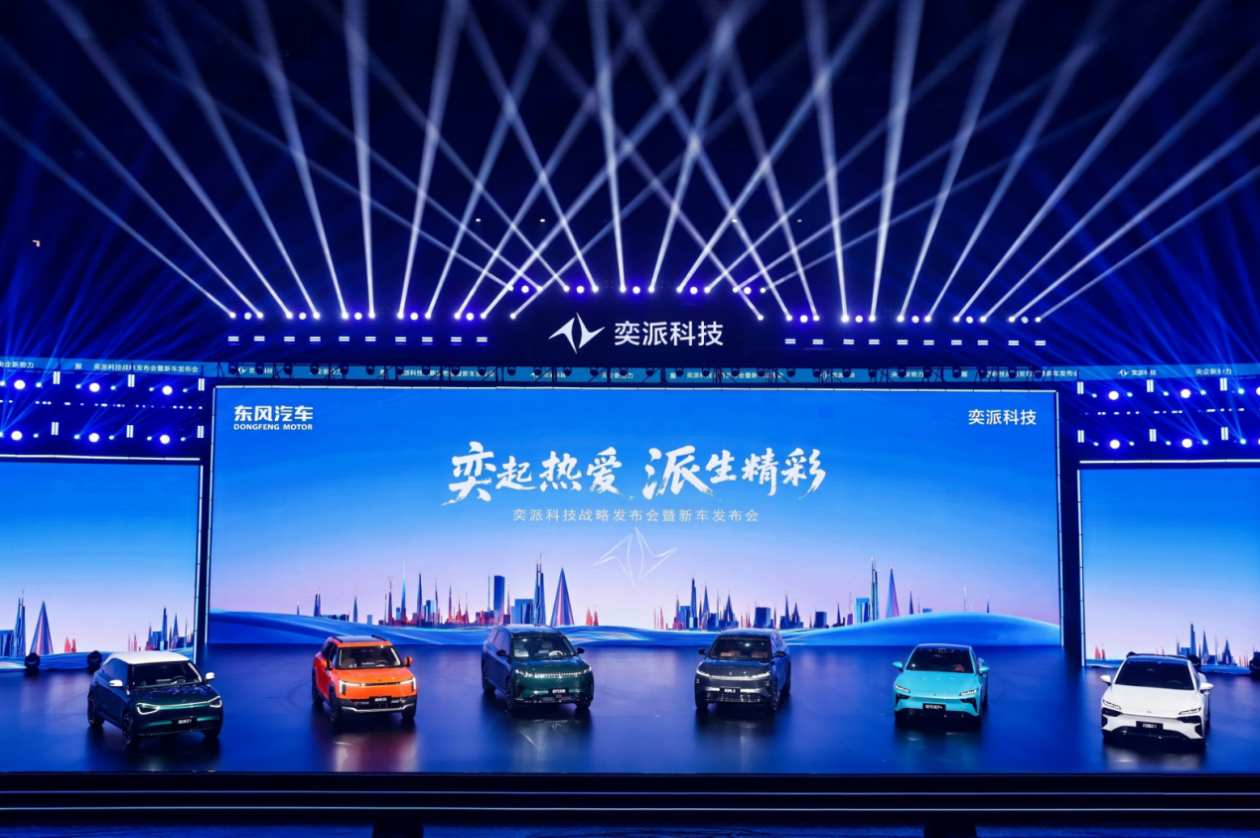
Core Viewpoint - The establishment of Dongfeng Yipai Technology Co., Ltd. marks a significant move towards integration within the automotive industry, aiming to enhance competitiveness and operational efficiency by consolidating three brands under one umbrella [2][5][12]. Group 1: Company Formation and Strategy - Dongfeng Yipai Technology integrates three self-owned passenger car brands: Dongfeng Fengshen, Dongfeng Yipai, and Dongfeng Nami, with two sub-brands: Fengshen and the merged Yipai brand [2][3]. - The new company has rapidly completed internal processes such as personnel appointments and goal setting, indicating high expectations for its performance [2][5]. - The strategic focus includes a deep collaboration with Huawei to develop a series of smart premium vehicles targeting the mid-to-high-end market [2][6]. Group 2: Market Position and Brand Development - Dongfeng Yipai Technology aims to reduce internal competition and resource wastage by consolidating R&D, manufacturing, and sales functions into a unified company [5][12]. - The Yipai brand will focus on mainstream markets with a product range covering A0 to D-class electric vehicles, while the Fengshen brand will explore new markets, including Robotaxi and global markets [5][9]. - The company plans to launch two new models annually for the Yipai brand and two refreshed or new models for the Fengshen brand over the next two years [9][10]. Group 3: Technological Advancements and Product Goals - Key technological focuses include integrated die-casting, solid-state batteries, ultra-fast charging technology, and intelligent driving assistance systems [7][9]. - By 2026, the company aims to implement solid-state batteries with an energy density exceeding 350Wh/kg and introduce a 1700V high-voltage architecture for rapid charging [7][10]. - The product matrix is expected to expand to 20 models by 2028, with a target of achieving annual sales of one million vehicles by 2030 [10][11]. Group 4: Operational Adjustments and Future Outlook - The company has adjusted production schedules, with daily outputs of 560 units from one factory and 350 from another, transitioning to a more efficient operational model [11]. - A new incentive mechanism based on project management is being implemented to enhance employee motivation and performance [11][12]. - The integration of Yipai Technology is seen as a transformative example in the competitive automotive market, reflecting the industry's shift towards survival and adaptation [12].
东风变革、人事先行,周锋上任东风副总经理、余飞离任东风奕派
Zhong Guo Jing Ji Wang· 2025-07-22 11:07
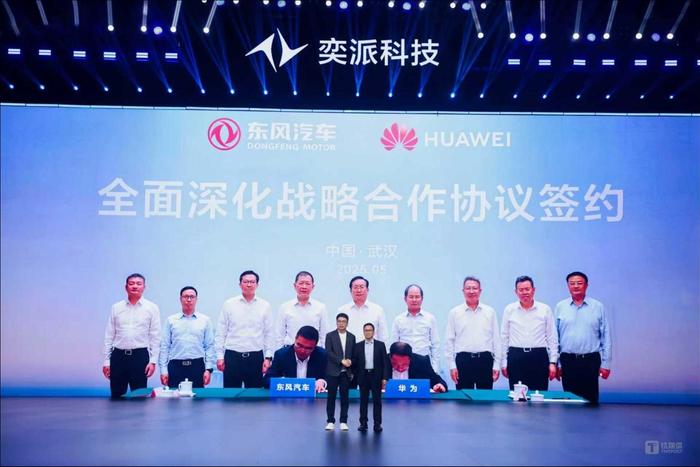
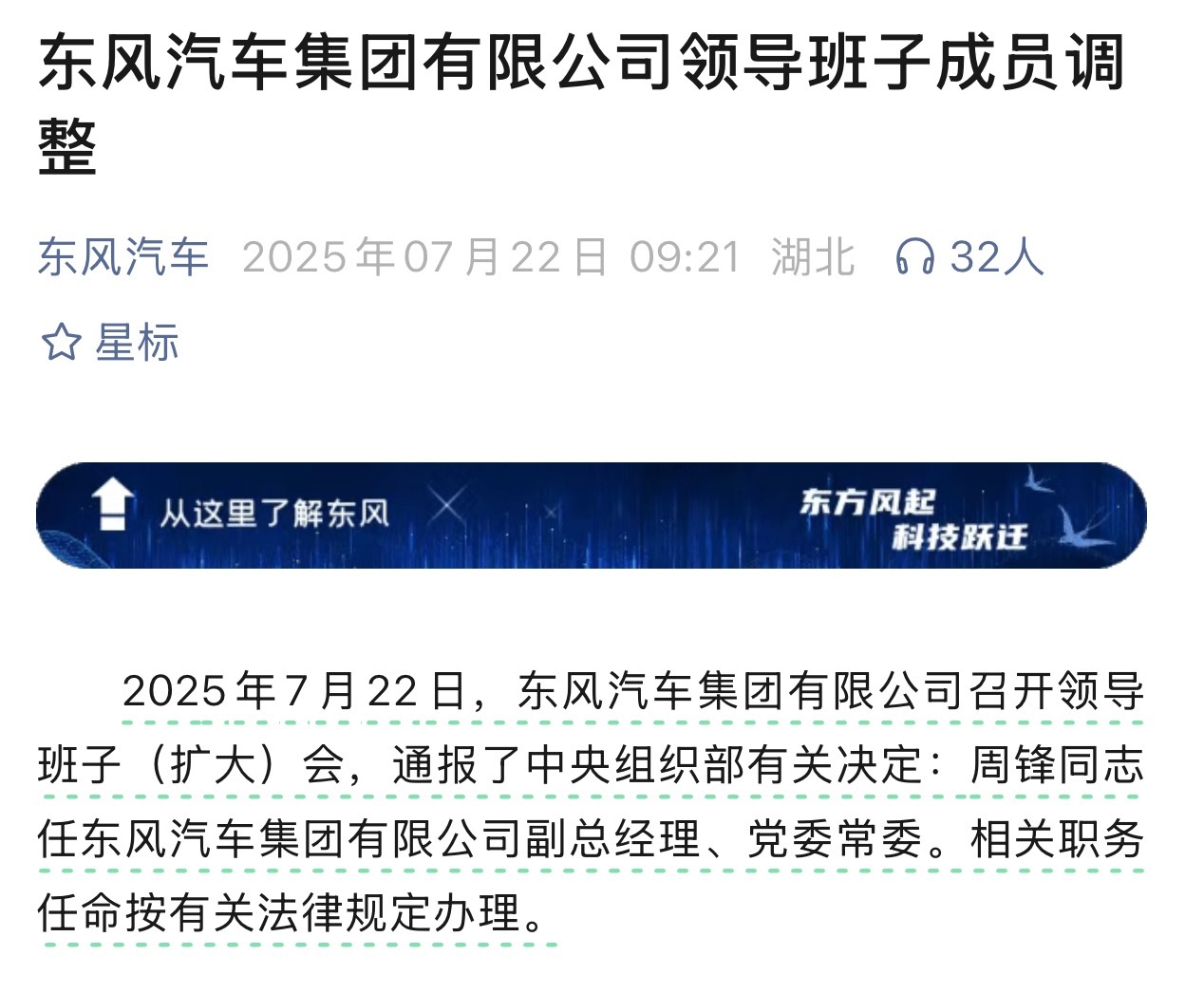
Core Viewpoint - Dongfeng Motor is accelerating its development pace with significant personnel changes being a crucial aspect of this strategy [4][6]. Group 1: Leadership Changes - Dongfeng Motor Group has expanded its leadership team to eight members, including Chairman Yang Qing and several vice presidents [3]. - Recent appointments include Zhou Feng as Vice General Manager and Party Committee Member, while Yu Fei has announced his departure from Dongfeng Yipai [2][3]. - The company has seen a series of high-level personnel changes since 2024, indicating a strategic shift in response to declining sales [4]. Group 2: Sales Performance - In 2023, Dongfeng Motor's total sales reached 2.4212 million units, representing a year-on-year decline of approximately 17% [4]. - The leadership changes are perceived as a move to lead the company through a transformation and to reverse the declining sales trend [4]. Group 3: Strategic Direction - Dongfeng Motor is transitioning its headquarters' focus from strategic control to "operations + coordination," with clear responsibilities assigned to its five vice presidents [4]. - The establishment of Yipai Automotive Technology Company aims to enhance Dongfeng's development in the autonomous new energy vehicle sector, which is critical for achieving its sales targets of 3 million units by 2025, including over 1 million new energy vehicles [6][8]. Group 4: Future Outlook - The position of General Manager remains vacant following Zhou Yeping's transfer, raising questions about future leadership [6]. - The company is expected to continue restructuring internally to adapt to market challenges and enhance its competitive position [6].

AI时代的「出行新物种」:年轻人究竟需要一台什么样的车?
3 6 Ke· 2025-05-21 14:58
Core Insights - The automotive industry is undergoing a transformation driven by AI and smart technology, marking a shift from traditional fuel vehicles to intelligent electric vehicles [2][12] - Young consumers, particularly the Z generation, are becoming the primary drivers of the electric vehicle market in China, emphasizing practicality and innovative technology over luxury [3][5] - The 2025 eπ007 model from Dongfeng Yipai is designed specifically for young consumers, featuring a minimalist aesthetic and advanced smart configurations that enhance user experience [5][8] Group 1: Industry Trends - The first half of the automotive revolution focused on electrification, while the second half will emphasize smart technology, with 90% of Chinese consumers willing to pay extra for advanced driving services [2][3] - The shift in consumer preferences is evident, as young buyers prioritize practical features and personalized experiences in their vehicle choices [3][12] - The automotive industry's value chain is being redefined, with traditional components being replaced by innovations in smart cockpits and autonomous driving [12][14] Group 2: Product Innovation - The 2025 eπ007 is positioned as a "first car" for young people, featuring a striking design and advanced technology that aligns with their lifestyle [5][8] - The vehicle includes a new eπOS 2.0 system that simplifies user interaction by mimicking smartphone interfaces, enhancing the overall user experience [5][7] - Dongfeng Yipai's approach to product development emphasizes practical technology that addresses real user needs rather than merely showcasing advanced features [14][16] Group 3: Strategic Partnerships and Development - Dongfeng Yipai is leveraging partnerships with leading tech companies like Huawei and ByteDance to enhance its smart mobility offerings [16] - The company is committed to a dual innovation strategy of self-research and collaborative development, positioning itself as a leader in the smart automotive sector [15][16] - Dongfeng Yipai's focus on understanding and resonating with young consumers is evident in its marketing strategies and product launches [10][12]