Ren Min Ri Bao Hai Wai Ban

Search documents
好资源“生”出好产业
Ren Min Ri Bao Hai Wai Ban· 2025-10-24 01:32
Core Insights - The article highlights the successful integration of agriculture, culture, and tourism in Xuanhan County, Sichuan Province, through the "East-West Cooperation" project, which has significantly boosted local economic development and tourism [1][4]. Group 1: Agricultural and Tourism Development - The Dacheng Rose Industrial Park in Xuanhan County is a key project that combines planting, picking, processing, sales, and sightseeing, attracting numerous visitors during the rose blooming season [1]. - Since the establishment of the partnership between Zhoushan City and Xuanhan County in 2018, nearly 200 million yuan has been invested in over 50 agricultural and cultural tourism projects [1]. - The "Cloud Corridor" in the Moonlight Forest Health Resort has attracted over 450,000 visitors since its opening in October 2024, showcasing the area's appeal [1]. Group 2: E-commerce and Local Products - The "Revitalization Workshop" in Xiaoba Town utilizes live streaming to promote local specialties, leading to annual sales of over 23,000 pounds and nearly 520,000 yuan in revenue [2]. - The collaboration has enabled the sale of over 60 types of agricultural products to eastern regions, generating cumulative sales exceeding 300 million yuan [2]. Group 3: Cultural Integration and Community Impact - The Ba Mountain Grand Canyon has become a natural stage for cultural tourism, with over ten experiential projects developed, including the immersive epic drama "Dream Back to the Ba State," which has seen full houses during performances [2][4]. - The development of the "Flower Economy" aims to enhance consumption and strengthen the agricultural and cultural tourism industry, creating a comprehensive consumption experience [4]. - The establishment of various tourism parks has significantly increased local incomes, with some villagers reporting annual earnings rising from 3,000 yuan to 30,000 yuan [4].


一户家庭开启智能新生活
Ren Min Ri Bao Hai Wai Ban· 2025-10-24 01:32
Core Insights - The article highlights the increasing adoption of smart home technology among young consumers, emphasizing how it enhances convenience and quality of life [1][2][3] - There is a notable shift in consumer behavior towards higher spending on smart products and services, reflecting a broader trend in the market [2][3] Group 1: Smart Home Adoption - Consumers are increasingly choosing smart home devices such as smart air conditioners, locks, and cooking centers, prioritizing automation and convenience [1] - The experience of a young couple illustrates the trend, as they enjoy a more relaxed lifestyle thanks to smart home technology that reduces household chores [1][2] Group 2: Market Growth and Consumer Behavior - Data from the National Taxation Administration indicates a rapid growth in smart home product sales, with service robots like vacuum cleaners seeing a 75% increase in revenue year-on-year [2] - The sales of new energy vehicles have also risen by 30.1% year-on-year, indicating a shift towards more advanced and eco-friendly consumer products [2] - Consumers are increasingly willing to invest in memberships and services that enhance their lifestyle, reflecting a change in spending habits towards experiential consumption [2][3]
锐财经丨创新“势能”向经济“动能”不断转化
Ren Min Ri Bao Hai Wai Ban· 2025-10-24 01:15
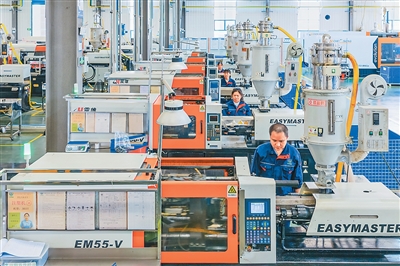
Core Insights - The Chinese economy shows a steady growth in new momentum and high-quality development, with significant increases in high-tech manufacturing and digital product manufacturing value added in the first three quarters of the year [1][2]. Group 1: High-Tech Manufacturing Growth - The value added of high-tech manufacturing increased by 9.6% year-on-year, with specific sectors like integrated circuit manufacturing and electronic materials growing by 22.4% and 20.5% respectively [2]. - The production of industrial robots, 3D printing equipment, and industrial control computers saw remarkable growth rates of 29.8%, 40.5%, and 98% respectively [2]. Group 2: Traditional Industry Transformation - Traditional industries are actively integrating with "Internet+", "AI+", and "Digital+" initiatives, leading to value added growth of 8.1% in chemical raw materials, 7.6% in chemical fibers, and 6.7% in agricultural products [3]. - The production of high-performance chemical fibers and bio-based chemical fibers increased by 34% and 20.2% respectively, indicating a significant transformation in traditional sectors [3]. Group 3: Investment in Emerging Fields - Significant breakthroughs in technology have been achieved, with double-digit growth in investment in automotive manufacturing, rail, shipping, and aerospace sectors [4]. - The value added of digital product manufacturing rose by 9.7%, while the information transmission and software services sector grew by 11.2% [4]. Group 4: Green Development Initiatives - The manufacturing value added in lithium-ion battery production, shipbuilding, and electric motor manufacturing increased by 29.8%, 22.9%, and 17.1% respectively [7]. - The production of new energy products such as electric vehicles and lithium-ion batteries saw substantial growth, with increases of 29.7% and 46.9% respectively [7].
“十四五”以来 全国累计投入找矿资金近4500亿元
Ren Min Ri Bao Hai Wai Ban· 2025-10-24 00:25
Core Insights - The 2025 China International Mining Conference highlighted significant advancements in China's mineral resource policies and investments, with a focus on sustainable development and international cooperation [1][4] Investment and Economic Impact - In 2024, China's geological exploration investment reached 115.994 billion yuan, marking four consecutive years of growth, with a cumulative investment of nearly 450 billion yuan since the 14th Five-Year Plan [1] - Fixed asset investment in the mining industry continued to grow, increasing by 10.5% compared to the previous year, contributing to the stability of global supply chains [2] Mineral Resource Discoveries - The new round of mineral exploration strategies has led to significant breakthroughs in both oil and gas and non-oil and gas minerals, with 150 new mineral sites discovered in 2024 [2] - Major discoveries included 9 new sites for ordinary fluorite, 8 for lithium, gold, and iron, indicating a robust increase in resource availability [2] Green Development Initiatives - China is implementing comprehensive green exploration and promoting the construction of green mines, with the introduction of 125 mineral "three rates" standards to enhance resource utilization [3] - Efforts are underway to restore ecological conditions in mining areas, including the establishment of legal frameworks for ecological restoration and monitoring [3] Technological Innovation - In 2024, China released 10 national standards and 85 industry standards in the mineral resource sector, focusing on deep-earth technology and major scientific initiatives [3] International Cooperation - China is enhancing international cooperation in the mining sector, fostering relationships with energy resource countries and international organizations through platforms like the China International Mining Conference [4] - The country is also easing foreign investment restrictions, increasing the level of openness in the mining sector [4]
政策与市场双轮驱动,科技创新和产业创新亮点颇多——创新“势能”向经济“动能”不断转化
Ren Min Ri Bao Hai Wai Ban· 2025-10-24 00:12
Group 1: Economic Growth and New Momentum - In the first three quarters, the added value of high-tech manufacturing above designated size increased by 9.6% year-on-year, while the added value of digital product manufacturing grew by 9.7% [1][2] - The integration of innovation chains and industrial chains is deepening, with significant growth in new industries and products, leading to a transformation of innovation potential into economic momentum [2][4] - The traditional industries are actively engaging with "Internet+", "AI+", and "Digital+", resulting in a revitalization of sectors such as chemical raw materials and food processing, with respective growth rates of 8.1%, 7.6%, and 6.7% [3] Group 2: Investment and Technological Advancements - There has been a notable increase in investment in emerging fields, with double-digit growth in sectors like automotive manufacturing and aerospace [4] - The added value of digital product manufacturing increased by 9.7%, and the information transmission and software services sector saw an 11.2% growth [4] - The production of high-performance chemical fibers and bio-based fibers grew by 34% and 20.2%, respectively, indicating a strong trend towards innovation in traditional industries [3][7] Group 3: Green Development and Sustainability - The manufacturing sectors related to lithium-ion batteries, shipbuilding, and electric motors experienced significant growth, with increases of 29.8%, 22.9%, and 17.1% respectively [7] - The share of non-fossil energy consumption in total energy consumption rose by approximately 1.7 percentage points, reflecting a commitment to green development [7] - Policies aimed at expanding domestic demand have positively impacted the production of smart manufacturing, green manufacturing, and digital technology sectors [6]
走出误区,正确认识“精神科”
Ren Min Ri Bao Hai Wai Ban· 2025-10-23 23:34
Core Viewpoint - The article addresses common misconceptions about psychiatry and mental health, emphasizing that mental disorders are a broad category encompassing various conditions beyond just schizophrenia, and that seeking help is a normal and necessary step towards recovery [2][3][4][5][6][7][8][9][10][11][12] Misconceptions about Mental Health - Misconception 1: Mental illness is synonymous with schizophrenia, while in reality, it includes a wide range of disorders such as depression, anxiety, and insomnia, with schizophrenia being a rare condition at a lifetime prevalence of only 0.6% in China [3] - Misconception 2: Mental illness is a sign of personal weakness; however, it is caused by a combination of biological, psychological, and social factors, and is linked to brain function abnormalities [4] - Misconception 3: Seeking psychiatric help is shameful; in fact, millions globally seek mental health services, and it is becoming a common health management choice [5][6] - Misconception 4: Only those who have experienced significant trauma develop mental illness; many patients have no history of major stressors, as biological factors often play a more significant role [7] - Misconception 5: Only introverted individuals suffer from depression; in reality, various factors contribute to mental illness, and both introverted and extroverted individuals can be affected [8] - Misconception 6: Depression is merely feeling sad; clinically, it is a serious disorder characterized by persistent low mood and can lead to severe consequences if untreated [9] - Misconception 7: Psychologists and psychiatrists are the same; they have different training and roles, with psychiatrists being medical doctors who can prescribe medication [10][11] - Misconception 8: Psychiatrists only prescribe medication; their role includes comprehensive diagnosis, treatment planning, and the potential for psychological therapy [12]

创新“势能”向经济“动能”不断转化(锐财经)
Ren Min Ri Bao Hai Wai Ban· 2025-10-23 23:05
Core Insights - The article highlights the significant growth and transformation of China's manufacturing sector, driven by digitalization and technological innovation, leading to high-quality economic development [4][5][6]. Group 1: Economic Growth and Innovation - In the first three quarters, the value added of high-tech manufacturing increased by 9.6%, while the digital product manufacturing sector saw a 9.7% growth [4][8]. - The integration of innovation and industry is deepening, with emerging industries and products rapidly developing, contributing to economic growth [5][6]. - Notable growth in specific sectors includes integrated circuit manufacturing (22.4%) and industrial robots (29.8%) [5][6]. Group 2: Traditional Industry Transformation - Traditional industries are actively engaging with "Internet+", "AI+", and "Digital+" initiatives, leading to significant value added growth in chemical manufacturing (8.1%) and food processing (6.7%) [6][9]. - The production of high-performance chemical fibers increased by 34%, indicating a robust transformation within traditional sectors [6]. Group 3: Investment in Emerging Fields - Investment in emerging fields such as automotive and aerospace manufacturing is maintaining double-digit growth, reflecting a strong commitment to innovation [8]. - The report from the World Intellectual Property Organization indicates that by 2025, China is expected to rank among the top ten in global innovation indices [8]. Group 4: Green Development and Sustainability - The manufacturing sectors related to renewable energy, such as lithium-ion batteries and solar energy, have seen substantial growth, with production increases of 29.7% and 14%, respectively [10]. - Policies promoting green and sustainable development are creating favorable conditions for the growth of the circular economy, with a 14.4% increase in the value added of waste resource utilization [10].
音乐为媒,让世界听见中国
Ren Min Ri Bao Hai Wai Ban· 2025-10-23 23:05
Core Points - The China Philharmonic Orchestra celebrates its 25th anniversary, highlighting its role as a cultural ambassador connecting China with the world [3][4] - The orchestra aims to showcase Chinese cultural confidence by performing Western classical music with a unique interpretation rooted in Chinese culture [4][5] - The orchestra has gained international recognition for its ability to perform complex Western compositions beautifully, earning respect from global audiences [5][6] Group 1: Cultural Significance - The China Philharmonic Orchestra serves as a benchmark for Chinese music and plays a vital role in cultural exchange between China and the world [3][4] - The orchestra's development is deeply rooted in Chinese culture, emphasizing harmony and inclusivity while showcasing its unique understanding of Western classics [4][5] - The orchestra has collaborated with numerous international conductors, receiving praise for its interpretations of works by composers like Wagner [4][5] Group 2: International Engagement - The orchestra actively participates in international music festivals and events, enhancing cultural exchange by inviting international artists to perform [5][6] - It has performed at significant diplomatic and cultural events, demonstrating its ability to connect with diverse audiences through music [7][8] - The orchestra's performances at events like the Shanghai Cooperation Organization TV Festival exemplify its role in fostering international relationships through music [7] Group 3: Future Development - The orchestra is exploring the construction of a "digital concert hall" to enhance public cultural services and share performances globally [9] - A new concert hall designed by renowned architect Ma Yansong is set to be built in Beijing, which will serve as a new base for the orchestra's activities [9] - The integration of advanced technologies like 8K will allow audiences to experience performances as if they were present, expanding the reach of symphonic music [9]

你刷的短视频,标注“AI生成”了吗?
Ren Min Ri Bao Hai Wai Ban· 2025-10-23 23:05
Core Viewpoint - The implementation of the "Artificial Intelligence Generated Synthetic Content Identification Measures" in China mandates explicit and implicit labeling for all AI-generated content, aiming to enhance transparency and combat misinformation in the digital landscape [4][9][10]. Regulatory Framework - The new regulations require all AI-generated text, images, and videos to have a clear identification, referred to as a "digital identity card" [4][5]. - The measures include both explicit labeling, which is easily noticeable by users, and implicit labeling, which embeds metadata within the content for traceability [6][7]. Industry Impact - As of June 2025, the user base for generative AI in China is projected to reach 515 million, highlighting the rapid growth and potential challenges in content verification [5]. - Major platforms like Douyin, Kuaishou, and Xiaohongshu are already implementing these identification measures, enhancing user awareness and compliance with the new regulations [8][9]. Technical Specifications - Explicit labels must be clearly visible and placed at the beginning, end, or key positions of the content, while implicit labels involve embedding metadata that includes identifiers and verification information [6][7]. - The regulations aim to create a comprehensive governance model that covers the entire content lifecycle, from creation to distribution [7][10]. Social Responsibility - The measures are designed to mitigate the risks associated with AI-generated misinformation, particularly targeting vulnerable populations who may be misled by unverified content [9][10]. - The initiative encourages companies to integrate ethical considerations into their technology development processes, promoting responsible AI usage [10].
走出误区,正确认识“精神科”(健康驿站·盘点常见健康误区④)
Ren Min Ri Bao Hai Wai Ban· 2025-10-23 23:05
Core Viewpoint - The article aims to clarify common misconceptions about psychiatry and mental health, emphasizing that mental illnesses are complex medical conditions rather than personal weaknesses or character flaws [2][3][4]. Misconceptions about Mental Health - Misconception 1: Mental illness is synonymous with schizophrenia. In reality, schizophrenia is just one of many mental disorders, with more prevalent conditions being depression, anxiety, and insomnia. A 2019 epidemiological survey indicated that the lifetime prevalence of various mental disorders in China (excluding Alzheimer's disease) is 16.6%, with anxiety disorders at 7.6% and depression at 6.8% [3]. - Misconception 2: Mental illness reflects a lack of character strength. Mental disorders arise from a combination of biological, psychological, and social factors, and are closely linked to brain function abnormalities. For instance, depression is associated with serotonin dysfunction, while schizophrenia relates to dopamine imbalance [4]. - Misconception 3: Seeking psychiatric help is shameful. This stigma often stems from misconceptions equating mental illness with insanity. Mental health issues exist on a spectrum, and seeking help is a step towards recovery [5]. - Misconception 4: Only those who have experienced significant trauma develop mental illnesses. The causes of mental disorders are complex, involving both biological and environmental factors. Many patients do not have a history of major trauma before their illness [8]. - Misconception 5: Only introverted or reclusive individuals suffer from depression. Depression results from multiple factors, and personality traits are just one aspect. Extroverted individuals can also experience mental health issues due to emotional exhaustion from maintaining a façade of positivity [9]. - Misconception 6: Depression is merely feeling sad or being overly sensitive. Clinically, depression (or depressive disorder) is characterized by persistent low mood and can lead to severe symptoms, including suicidal thoughts [11]. - Misconception 7: Psychologists and psychiatrists are the same. Psychiatrists are medical professionals who can diagnose and prescribe medication, while psychologists focus on emotional and behavioral issues without prescribing medication [12][13]. - Misconception 8: Psychiatrists only prescribe medication. Their role includes accurate diagnosis, treatment planning, and potentially providing psychotherapy, making them comprehensive mental health care providers [14].