Ren Min Ri Bao Hai Wai Ban

Search documents
城市一刻钟便民生活圈扩围升级
Ren Min Ri Bao Hai Wai Ban· 2025-09-26 22:17
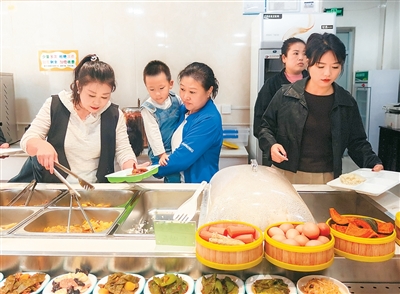
Core Points - The Ministry of Commerce and nine other departments have jointly issued a notice to enhance the construction of urban 15-minute convenience living circles, focusing on community residents and aiming to meet their daily consumption needs [1][2] - As of July 2023, 6,255 convenience living circles have been established in 210 pilot areas, serving 129 million residents through 1.503 million commercial outlets [1][2] Group 1: Key Tasks from the Notice - Expand coverage to include all urban areas and compatible county communities over the next three years, integrating various service circles such as elderly care and shopping [2] - Optimize facility layout through scientific planning and support for community commercial development alongside public services [2] - Promote business upgrades by enhancing essential service sectors and encouraging new business models to meet diverse consumer needs [2] - Upgrade services by fostering brand development and providing personalized services, including community dining options [2] - Enhance management through diversified governance mechanisms and improved digital management for smarter community living [2] Group 2: Focus Areas - The emphasis on innovative planning, particularly for elderly and child services, and the introduction of new business types are highlighted as key areas for the expansion and upgrade of convenience living circles [2][4] - The Ministry of Civil Affairs is focusing on multi-layered elderly care services, with over 86,000 meal assistance points established by June 2023, serving 3.28 million elderly individuals daily [3][4] - The National Health Commission is working on expanding community childcare services, aiming to provide various types of care options for infants and toddlers [4]

就业稳,经济社会发展有支撑(锐财经)
Ren Min Ri Bao Hai Wai Ban· 2025-09-26 22:17
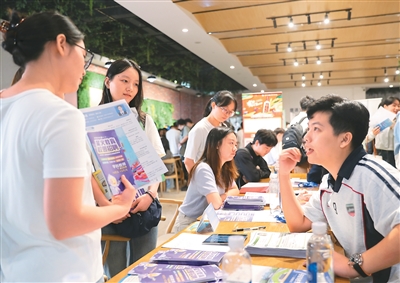
Employment and Social Security Achievements - The cumulative number of new urban jobs reached 59.21 million by the end of August this year, exceeding the target of 55 million set for the "14th Five-Year Plan" [1] - The number of participants in the basic pension insurance system reached 1.072 billion, an increase of over 73 million compared to the end of the "13th Five-Year Plan" [1] - The average urban survey unemployment rate over the first four years was 5.3%, lower than the expected control target of 5.5% [1] Employment Policies and Support - The government implemented a series of employment support policies during the "14th Five-Year Plan," with total employment subsidy expenditures exceeding 470 billion yuan and stable job return funds of 138.9 billion yuan [2] - The focus on stabilizing employment has been integrated into macroeconomic regulation and is considered a priority in public welfare initiatives [2] - The number of college graduates has been increasing annually, exceeding 10 million since 2022, highlighting the importance of this talent resource for employment [2] Social Security System Development - The national basic pension insurance coverage rate increased to over 95%, with unemployment insurance and work injury insurance participants reaching 246 million and 302 million, respectively, an increase of over 29 million and 34 million compared to the end of the "13th Five-Year Plan" [3] - The social security system has seen significant reforms, enhancing its coverage and functionality [5] Skills Development and New Occupations - Over 420 million enterprise employees and over 310 million migrant workers received subsidized vocational skills training during the "14th Five-Year Plan" [7] - The total number of skilled workers exceeded 220 million, with over 72 new occupations created to meet the demands of the evolving economy [7] - The government aims to strengthen policy support and optimize the development environment for skill laborers in the upcoming "15th Five-Year Plan" [8]
全国电气化率保持增长态势
Ren Min Ri Bao Hai Wai Ban· 2025-09-26 22:17
Core Insights - The report indicates that China's electrification rate is projected to reach approximately 28.8% in 2024, an increase of 0.9 percentage points from the previous year, surpassing that of major developed economies in Europe and the United States [1][2] Regional Analysis - The electrification rates by region in China for 2024 are approximately 31.6% in the East, 27.5% in the Central region, 29.3% in the West, and 16.8% in the Northeast [1] - Specific urban areas show varying electrification rates: Beijing-Tianjin-Hebei at about 21.4%, Yangtze River Delta at 34.1%, Guangdong-Hong Kong-Macau Greater Bay Area at 41.7%, and Chengdu-Chongqing area at 29.5% [1] - The Guangdong-Hong Kong-Macau Greater Bay Area's electricity consumption is projected to be on par with Japan, with an electrification rate exceeding Japan's by approximately 10 percentage points [1] Industrial Sector Insights - The electrification rate in the industrial sector is expected to reach about 27.7% in 2024, reflecting a 0.6 percentage point increase from the previous year [1] - The four major high-energy-consuming industries have a combined electrification rate of approximately 18.4%, while high-tech and equipment manufacturing industries have a rate of about 64.7%, and consumer goods manufacturing industries have a rate of around 46.0% [1] - The construction sector is experiencing rapid growth in electrification, with a projected rate of about 55.3% in 2024, an increase of 1.8 percentage points from the previous year [1] Future Projections - During the 14th Five-Year Plan period, the national electrification rate is expected to grow at an average annual rate of about 1 percentage point, with a forecasted rate of around 35% by 2030, exceeding the OECD average by 8 to 10 percentage points [2]
前8月新增发电装机超3.4亿千瓦
Ren Min Ri Bao Hai Wai Ban· 2025-09-26 22:17
(责编:胡永秋、杨光宇) 关注公众号:人民网财经 本报北京9月26日电(记者廖睿灵)国家能源局26日发布1—8月份全国电力工业统计数据显示,截至8月 底,全国累计发电装机容量36.9亿千瓦,同比增长18.0%。其中,太阳能发电装机容量11.2亿千瓦,同 比增长48.5%;风电装机容量5.8亿千瓦,同比增长22.1%。 数据显示,1—8月,全国新增发电装机容量达34516万千瓦,比上年同期多投产13520万千瓦。其中风电 新增装机5784万千瓦,比上年同期多投产2424万千瓦;太阳能发电新增装机23061万千瓦,比上年同期 多投产9062万千瓦。1至8月,太阳能、风电新增装机合计超2.8亿千瓦。 ...
8月外汇市场成交24.08万亿元
Ren Min Ri Bao Hai Wai Ban· 2025-09-26 22:17
Core Viewpoint - In August, China's foreign exchange market recorded a total transaction volume of 24.08 trillion yuan, indicating significant activity in both the customer and interbank markets [1] Group 1: Market Transactions - In August, the bank-to-customer market transactions amounted to 3.71 trillion yuan, while the interbank market transactions reached 20.37 trillion yuan [1] - The spot market saw a cumulative transaction of 9.16 trillion yuan, while the derivatives market accounted for 14.93 trillion yuan in cumulative transactions [1] - From January to August, the cumulative transaction volume in China's foreign exchange market totaled 203.23 trillion yuan [1]
发挥工程咨询行业智力支撑作用
Ren Min Ri Bao Hai Wai Ban· 2025-09-26 22:17
Core Viewpoint - The National Development and Reform Commission has issued an opinion to accelerate the high-quality development of the engineering consulting industry, emphasizing its role in planning, investment decision-making, and project implementation [1] Group 1: Policy Measures - The opinion outlines four policy measures to promote the engineering consulting industry's professionalization, standardization, digitalization, and internationalization [1] - The first measure focuses on defining the industry's development positioning, highlighting its importance in providing specialized consulting and management services throughout the project lifecycle [1] - The second measure aims to drive innovation by accelerating digital transformation and enhancing the use of technologies such as Building Information Modeling and artificial intelligence [1] - The third measure emphasizes strengthening support capabilities, including talent development and improving the system for professional qualifications and continuing education [1] - The fourth measure seeks to regulate industry practices by enforcing compliance among consulting professionals and enhancing self-regulation mechanisms [1]
为“大金砖合作”高质量发展注入新动能(环球热点)
Ren Min Ri Bao Hai Wai Ban· 2025-09-26 22:17
Core Viewpoint - The recent China International Service Trade Fair and the BRICS online summit highlight China's role in promoting international cooperation and addressing global governance challenges, emphasizing the need for multilateralism and collective action among developing countries [1][5][7]. Group 1: Global Governance Initiative - The Global Governance Initiative, introduced by China, aims to address the governance deficit and promote the interests of the Global South, focusing on five core principles: equality of sovereignty, rule of international law, multilateralism, people-centered approaches, and effectiveness [2][4]. - The initiative has received positive responses from Global South countries, indicating its timely relevance in the current international landscape characterized by disorder, imbalance, and inefficiency in global governance [3][4]. Group 2: BRICS Cooperation - The BRICS countries, representing nearly half of the world's population and about 30% of the global economy, are committed to enhancing cooperation in trade, finance, and technology to create more substantial benefits for their populations [9][10]. - The recent BRICS summit focused on countering unilateral trade measures, particularly from the U.S., and emphasized the need for a fairer and more inclusive international order [5][6]. Group 3: Economic Collaboration - China has proposed to deepen practical cooperation among BRICS nations by leveraging their respective advantages, aiming to strengthen economic ties and facilitate trade and investment [9][10]. - The initiative includes measures such as increasing currency swaps, reducing trade barriers, and enhancing mutual investment opportunities among developing countries [10].
“数字信用标签”来了
Ren Min Ri Bao Hai Wai Ban· 2025-09-26 03:50
Core Viewpoint - The National Market Supervision Administration has issued guidelines to accelerate the digitalization of quality certification, leveraging AI and big data to enhance the credibility of agricultural products, smart products, and digital services [1][2]. Group 1: Goals and Timeline - The guidelines set specific goals in two phases: by 2030, to improve the top-level institutional design for quality certification digitalization and establish digital evaluation rules; by 2035, to fully develop a clear and innovative quality certification digital technology system [2]. Group 2: Focus Industries - The digital certification will initially focus on industries such as industrial internet, smart manufacturing, green low-carbon initiatives, and industrial software, promoting the transition from traditional to smart and green manufacturing [3]. - In agriculture, the guidelines encourage integrating quality certification into smart farms and fisheries, enhancing intelligent perception, precise control, and full-chain traceability management [3]. - The service sector will also be targeted, with a focus on creating a systematic service certification support system for education, healthcare, elderly care, smart cities, digital communities, and fintech [3]. Group 3: Consumer Experience - The ultimate goal of digital quality certification is to make trust transmission more efficient and consumer choices simpler, allowing consumers to scan a QR code to access comprehensive information about a product's supply chain [4]. - This system aims to eliminate concerns about product origins and quality, providing transparency through a single code that reveals all relevant information [4].
这边,“丰”景正好
Ren Min Ri Bao Hai Wai Ban· 2025-09-26 00:54
Core Points - The "Chinese Farmers' Harvest Festival" is celebrated nationwide, showcasing the achievements of rural development and the joy of farmers [1][2] - Various activities include performances, product showcases, and interactive programs that engage farmers as both participants and presenters [2][4] - The festival highlights the integration of modern agricultural technology, such as harvesting robots, which are demonstrated at local events [3] Group 1: Celebration Activities - The festival features vibrant celebrations with farmers taking center stage, including performances and interactive programs that allow them to share their stories [2] - In Tianjin, a large cooking demonstration using local agricultural products engages the community and promotes local flavors [2] - Events across the country attract significant public participation, with local products being showcased and sold [4] Group 2: Agricultural Technology - New agricultural technologies, such as strawberry and apple-picking robots, are showcased, emphasizing advancements in farming efficiency [3] - The robots utilize dual-vision recognition systems to identify and harvest fruits, demonstrating the potential for increased productivity in orchards [3] Group 3: Economic Impact - The festival serves as a platform for farmers to promote their products directly to consumers, enhancing their economic returns [4] - Local markets and online promotions during the festival encourage consumer engagement and support for regional agricultural products [4] - The event fosters a connection between urban consumers and rural producers, driving interest in local specialties [4]
打好新时代新“侨牌”(侨界关注)
Ren Min Ri Bao Hai Wai Ban· 2025-09-25 22:59
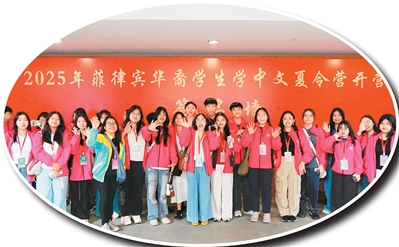
Core Viewpoint - The article emphasizes the importance of leveraging the overseas Chinese community to drive high-quality development in Fujian, highlighting the historical and cultural ties that bind overseas Chinese to their homeland [6][10]. Group 1: Overseas Chinese Community and Development - Fujian has approximately 20 million overseas Chinese distributed across more than 190 countries, representing a significant resource for the province's development [6][16]. - The "Great Overseas Chinese" concept, established by Xi Jinping, aims to strengthen connections with overseas Chinese through cultural and familial ties, enhancing their contributions to local development [6][8]. - Recent initiatives include the 64th Fujian Overseas Chinese Association meeting, which focused on integrating global Chinese communities to maximize their unique advantages for the development of Fujian [8]. Group 2: Cultural Heritage and Emotional Ties - Fujian is actively preserving the historical heritage of overseas Chinese while promoting local culture, thereby strengthening emotional connections with the younger generation of overseas Chinese [13][14]. - The preservation of traditional buildings, such as the "Yibailou," showcases the blend of local and overseas Chinese cultures, reinforcing the sense of belonging among overseas Chinese [13][14]. Group 3: Economic Contributions and Investments - Fujian has attracted over 38,000 overseas investment projects since the reform and opening up, utilizing more than $120 billion in overseas capital, which accounts for about 80% of the province's actual foreign investment [16]. - Companies like Kerry Group have invested approximately 12.2 billion RMB in various sectors in Fujian, demonstrating the economic impact of overseas Chinese investments [10]. - The province is also facilitating the expansion of local enterprises into international markets, creating a win-win situation for both local and overseas Chinese businesses [11]. Group 4: Educational and Cultural Exchange - The Chinese language summer camp for overseas Chinese students has seen participation from 16,000 individuals over 21 sessions, fostering cultural exchange and understanding [15]. - Initiatives aimed at enhancing mutual understanding and friendship between Chinese and foreign communities are crucial for building a shared future [15].