Ren Min Ri Bao Hai Wai Ban

Search documents
以创新为翼,勇飞新赛道(新职·新知㉙)
Ren Min Ri Bao Hai Wai Ban· 2025-09-28 22:42
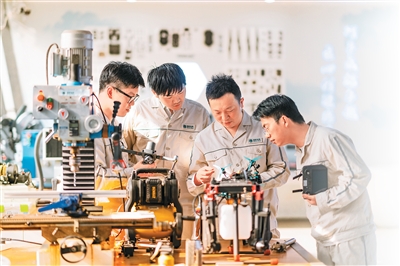
何涛团队在研讨调试无人机性能。 赖小龙摄 何涛在工作室操作铣床加工无人机零部件。 周正摄 何涛在调试无人机。 周正摄 金秋时节,晨雾刚刚勾勒出巴岳山的轮廓,国网重庆市电力公司永川供电分公司无人机智能巡检中 心的数字大屏上,已跃动着28个无人机机巢绿色光点。 何涛指尖在触控屏上轻划,巡检指令顺着电力专网穿透云层——只见机巢"开仓"、旋翼搅动、机器 升空,如银色蜂鸟般沿着输电线路的轨迹振翅而去。"看,这架无人机正绕行500千伏永泸线转角塔检 测",何涛指着屏幕上实时传回的高清画面,塔材上的螺栓纹路清晰可辨。"这些'空中精灵'如今已经能 自主规划航线、自动生成缺陷报告,在适航范围内能覆盖2786平方公里的供区面积,颠覆了传统的人工 巡检方式,大大提升了巡检效率!" 2020年,"无人机装调检修工"作为新职业纳入了国家职业分类大典目录。作为一名无人机装调检修 工,永川供电分公司输变电运检中心智能巡检班首席工程师何涛今年获得了全国劳动模范荣誉称 号:"十年前出于热爱和责任选择的职业'新赛道',走对了!" 从机关到山巅,用无人机"拓荒"山城的"褶皱" 2015年,何涛的工作调动,可谓"一石激起千层浪"。 "放着机关的安稳 ...

文化+科技,打开传承发展新视野(文化中国行·深观察)
Ren Min Ri Bao Hai Wai Ban· 2025-09-28 22:42
Group 1: Cultural and Technological Integration - The 2025 Beijing Cultural Forum focuses on the theme of "Cultural and Technological Integration," featuring over 800 guests from various sectors to discuss advancements in cultural heritage protection through digital technology [5][6]. - Digital technologies are increasingly applied in cultural heritage preservation, with examples including the successful digitalization of over 1 million artifacts at the Palace Museum and 500TB of data from the Dunhuang Academy [7][8]. - The integration of technology in cultural heritage is setting new standards globally, with China leading in innovative practices that combine technological advancements with cultural preservation [7][8]. Group 2: Cultural Industry Innovation - The forum introduced a creative cultural display area featuring over 600 cultural products, highlighting the growing popularity of traditional culture among younger demographics [9][10]. - The success of cultural products like the "Fengguan" refrigerator magnet, which sold over 1 million units, indicates a significant market trend towards innovative cultural merchandise [9][10]. - The rise of animated films in China, with box office hits exceeding 154 billion yuan, showcases the potential for cultural narratives to resonate globally [10]. Group 3: AI and Content Creation - AI is transforming content production in the cultural sector, moving from manual customization to intelligent mass production, enhancing storytelling and audiovisual expression [11][12]. - The rapid development of AI is enabling a new era where everyone can engage in directing and producing content, addressing the shortage of skilled talent in the film industry [12]. - The use of VR technology is enhancing audience engagement and facilitating the global dissemination of Chinese culture through immersive experiences [12]. Group 4: Cultural Exchange and Dialogue - The forum emphasizes the importance of cultural exchange, with activities designed to foster dialogue between Chinese and French filmmakers, celebrating the 120th anniversary of Chinese cinema [14][15]. - The concept of "mutual learning" is highlighted as essential for understanding and cooperation between different civilizations, with discussions on the balance between technology and humanities [15][16]. - The implementation of global civilization initiatives aims to promote a more harmonious world, reflecting China's commitment to respecting diversity and fostering dialogue [16].

“东”风正劲 “侨”见新机(侨界关注)
Ren Min Ri Bao Hai Wai Ban· 2025-09-28 22:42
Group 1: Event Overview - The 22nd China-ASEAN Expo (CAEXPO) was held in Nanning, Guangxi, attracting numerous entrepreneurs from ASEAN countries seeking new business opportunities and partnerships [4] - The event serves as a significant platform for trade and cooperation between China and ASEAN nations, facilitating the expansion of economic ties [4] Group 2: Malaysian Durian Industry - The "Durian Brother" brand from Malaysia showcased a durian-flavored ice cream that became a highlight at the expo, with increased booth size and customer interest compared to the previous year [4] - Malaysia is the largest supplier of durians to China, with an expected import volume of approximately 1.56 million tons valued at $6.99 billion in 2024 [5] - The establishment of a cold chain shipping route between Malaysia and China's Guangxi region has significantly improved logistics, allowing for rapid delivery of durians to China within three days [5] Group 3: Lao PDR's Trade and Cooperation - Lao companies, such as SK Agarwood Biotechnology, participated in the expo, showcasing products made from local resources, including agarwood-based soaps and essential oils [6][7] - The opening of the China-Laos Railway has enhanced logistics, enabling faster transportation of goods and reducing costs, thus benefiting local businesses [7] - The expo serves as a vital channel for Lao products to enter the Chinese market, capitalizing on China's vast consumer potential [6] Group 4: Artificial Intelligence Collaboration - The expo featured an AI and cultural tourism innovation competition, highlighting the growing interest in AI collaboration between China and ASEAN countries [8] - Companies like Huixi International from Laos are leveraging the expo to expand their network and explore AI applications in various sectors, including agriculture [9][10] - Collaborative projects are being established, such as AI laboratories involving universities from Laos and China, aimed at enhancing technological exchange and talent development [10]

中国新研究刷新人类演化时间线
Ren Min Ri Bao Hai Wai Ban· 2025-09-28 22:42
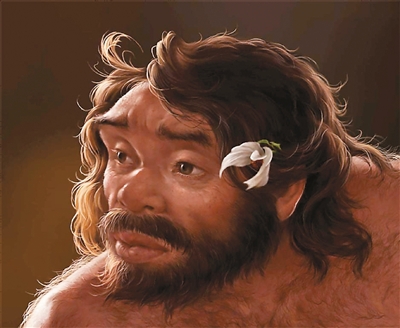
Core Viewpoint - A newly analyzed ancient human skull fossil, approximately 1 million years old, challenges traditional human evolution theories, revealing a new evolutionary branch closely related to the Denisovans, named "Longren" (Homo longi) [2][5]. Group 1: Research Findings - The research led by Ni Xijun from the Chinese Academy of Sciences indicates that the divergence time of modern humans, Neanderthals, and the Longren branch has been significantly pushed forward, surpassing previous academic consensus [2][5]. - The skull fossil, known as "Yunxian Man 2," was discovered in Hubei Province in 1990 and was initially classified as Homo erectus due to its damaged state at the time of discovery [3][4]. - The reconstructed skull exhibits a blend of primitive and advanced features, with a brain capacity exceeding 1100 milliliters, indicating a complex evolutionary history [4][5]. Group 2: Methodology - The research team utilized high-precision CT scanning and surface scanning technologies to identify features of the fossil, followed by innovative digital reconstruction methods to piece together the skull [4]. - A new statistical framework was developed to validate the reconstruction results, addressing a long-standing challenge in paleobiology [4]. Group 3: Implications - The findings suggest that the Yunxian Man is an early representative of the Longren branch, indicating that human ancestors had already diverged into multiple independent evolutionary groups as early as 1 million years ago [5]. - The research provides clarity on the evolutionary timeline between 1 million and 300,000 years ago, highlighting the complexity of human origins [5].
破解大脑奥秘 科幻照进现实
Ren Min Ri Bao Hai Wai Ban· 2025-09-28 22:42
Core Insights - The world's first multi-center clinical trial for a neural interface targeting hydrocephalus has been launched, marking a significant advancement in brain-machine interface technology beyond traditional applications [3][4][5] - The project involves leading medical institutions in China and aims to establish Chinese standards and solutions for precision treatment in neurological disorders [3][4] - Recent breakthroughs in cognitive science and brain-machine interfaces are opening new avenues for understanding brain functions and enhancing patient care [3][4] Group 1: Neural Interface Technology - The "North Brain No. 1" intelligent brain-machine system allows patients with conditions like ALS and spinal cord injuries to control devices using their thoughts, demonstrating promising clinical outcomes [5][6] - This system is a semi-invasive product that does not penetrate brain tissue, ensuring high safety and simplicity in surgical procedures [5][6] - The initial clinical trials have shown a high success rate, with over 98% of effective channels maintained after 7 months in the first patient [6] Group 2: Neuromorphic Computing - The "Wukong" neuromorphic computing system developed by Zhejiang University aims to simulate brain functions and enhance intelligent computing capabilities [7][8] - This system features advanced hardware with over 20 billion pulse neurons and a power consumption of approximately 2000 watts, making it one of the most efficient neuromorphic computers [7][8] - It has the potential to accelerate brain science research and reduce reliance on animal testing by simulating various animal brains [8][9] Group 3: Brain Imaging Technology - The development of a wearable atomic magnetometer for brain magnetometry allows for more precise and mobile brain activity monitoring, which can aid in diagnosing brain diseases [10][11] - This technology significantly reduces the cost and complexity of brain scans, making it accessible for large-scale screening of conditions like autism and Alzheimer's disease [10][11] - The system's portability and ease of use are expected to enhance early diagnosis and intervention for various neurological disorders [11] Group 4: Olfactory Function Assessment - A localized olfactory function assessment and training system has been developed to detect early signs of neurodegenerative diseases through changes in smell [12][13] - This system can provide early warnings for conditions like Parkinson's and Alzheimer's, potentially allowing for earlier intervention [12][13] - The training program is designed to be user-friendly and can be conducted via a mobile application, creating a feedback loop for monitoring and intervention [12][13]

锐财经|就业稳,经济社会发展有支撑
Ren Min Ri Bao Hai Wai Ban· 2025-09-28 12:05
Employment and Social Security Achievements - As of the end of August this year, the cumulative number of new urban jobs created since the beginning of the "14th Five-Year Plan" reached 59.21 million, exceeding the target of 55 million [1] - The number of people covered by basic pension insurance reached 1.072 billion, an increase of over 73 million compared to the end of the "13th Five-Year Plan" [1] Employment Stability and Quality - The overall employment situation during the "14th Five-Year Plan" period has been stable, with an average urban survey unemployment rate of 5.3%, below the expected control target of 5.5% [2] - The government has implemented a series of employment support policies, with total employment subsidy expenditures exceeding 470 billion yuan and 138.9 billion yuan allocated for job retention [2] Targeted Support for Key Groups - The number of college graduates has been increasing annually, exceeding 10 million since 2022, highlighting the importance of this talent resource for employment efforts [3] - The scale of migrant workers remains above 30 million, providing strong support for economic and social stability [3] Social Security System Improvements - The national basic pension insurance coverage rate has increased to over 95%, with unemployment and work injury insurance coverage reaching 246 million and 302 million, respectively [4] - The social security system has seen significant reforms, with national coordination of basic pension insurance and provincial coordination for unemployment and work injury insurance [4] Financial Stability of Social Insurance Funds - As of the end of August, the cumulative balance of basic pension, unemployment, and work injury insurance funds reached 9.81 trillion yuan, with a positive cash flow [5] - The central government's financial subsidies for basic pension insurance are projected to exceed 730 billion yuan in 2024, with a gradual establishment of a long-term funding mechanism [5] Skills Development and New Occupations - Over 420 million people have received subsidized vocational skills training during the "14th Five-Year Plan" period, with a total of over 220 million skilled workers [8] - The introduction of 72 new occupations reflects the structural optimization of China's economy, driven by the development of new industries and services [8] Future Plans for Skills Workforce - The government plans to enhance policy support and optimize the development environment for skills workforce construction in the upcoming "15th Five-Year Plan" [9]
为“大金砖合作”高质量发展注入新动能
Ren Min Ri Bao Hai Wai Ban· 2025-09-28 09:13
Group 1 - The core viewpoint emphasizes China's role in international cooperation, particularly through the BRICS mechanism, which serves as a platform for emerging markets and developing countries to unite and collaborate [2][3] - The 2025 China International Service Trade Fair attracted over 60 countries and 20 international organizations, showcasing products from developing countries, indicating a strong platform for global trade [2] - The BRICS summit discussed the current international economic environment and the importance of multilateralism, aiming to enhance cooperation among member countries [2][3] Group 2 - The Global Governance Initiative proposed by China outlines five core principles that resonate with the interests of the Global South, including sovereignty equality and multilateralism [3][4] - The initiative aims to address the ongoing global governance deficit characterized by disorder, imbalance, and inefficiency in current international systems [4][5] - The BRICS countries are focusing on enhancing cooperation in trade, finance, and technology to create more substantial outcomes that benefit all member nations [9][10] Group 3 - The summit highlighted the need to counter unilateral trade measures, particularly from the U.S., which have adversely affected international trade rules and BRICS nations [6][8] - There is a consensus among BRICS nations to maintain a multilateral trade system centered around the World Trade Organization, emphasizing collective action against protectionism [7][8] - The BRICS countries are encouraged to strengthen their economic ties, reduce trade barriers, and enhance mutual investments to foster a more integrated market [11]
两岸高校青年街舞大赛在南京举办
Ren Min Ri Bao Hai Wai Ban· 2025-09-28 01:29
Core Points - The event "Youth Exchange Activity Across the Taiwan Strait" was held in Nanjing, attracting nearly 300 participants from both sides, emphasizing cultural exchange through dance [2] - The highlight of the event was the street dance competition, showcasing the creativity of Taiwanese dancers and the enthusiasm of mainland dancers, fostering friendship between youth from both sides [2] - Taiwanese dancer representative Zhong Jinda expressed that street dance serves as a bridge for communication and cultural expression, integrating Chinese elements into their performances [2] - Participants from Nanjing noted the opportunity to connect with Taiwanese street dance enthusiasts, enhancing mutual understanding and appreciation [2] - The event aimed to inspire more youth engagement in street dance, promoting creativity and shared passion for life and beauty [2] Additional Activities - Taiwanese youth dancers participated in a master salon and visited historical sites in Nanjing, such as Zhongshan Ling and Qinhuai Scenic Area, to deepen their understanding and friendship [3]

创新单元规划、突出“一老一小”、丰富新型业态——城市一刻钟便民生活圈扩围升级
Ren Min Ri Bao Hai Wai Ban· 2025-09-27 06:01
Core Viewpoint - The Ministry of Commerce and nine other departments have jointly issued a notice to enhance the construction of urban 15-minute convenient living circles, aiming to improve residents' daily life services and overall satisfaction [1][2]. Group 1: Key Tasks Outlined in the Notice - Expand coverage to include all urban areas and eligible county communities over the next three years, integrating various service circles such as elderly care and shopping [2]. - Optimize facility layout through scientific planning and development of community economies, ensuring commercial facilities are well-distributed [2]. - Promote business upgrades by enhancing essential service sectors, particularly for the elderly and childcare, to meet diverse consumer needs [2]. - Upgrade services by encouraging brand development and personalized service offerings, including community dining options [2]. - Enhance management through diversified governance mechanisms and improved digital management for smarter community living [2]. Group 2: Focus Areas for Future Development - The emphasis will be on innovative planning, particularly for elderly and childcare services, and the introduction of new business models [2][3]. - The Ministry of Civil Affairs is focusing on multi-layered elderly care services, with over 86,000 meal assistance points established to support daily needs [3]. - The National Health Commission is working on expanding community childcare services, providing various options for parents [3].
带你“逛”中国,我们是行家(我在中外交流第一线)
Ren Min Ri Bao Hai Wai Ban· 2025-09-26 22:47
Core Insights - The article highlights the increasing demand for bilingual tour guides in China's tourism industry, particularly in the context of the "China Travel" trend, which emphasizes the importance of cultural exchange and storytelling [3][4][7]. Group 1: Industry Trends - The tourism market is experiencing a surge in the need for bilingual guides, who serve as both tour leaders and cultural ambassadors, connecting foreign tourists with Chinese culture [3][4]. - The implementation of a visa-free policy for Spanish passport holders has significantly boosted the number of Spanish tourists visiting Chengdu, with these tourists making up about half of the Spanish-speaking visitors [4]. Group 2: Tour Guide Experiences - Tour guides like Li Mingxiang and Wang Haiyan share their experiences of engaging with foreign tourists, emphasizing the importance of cultural understanding and personalized service in enhancing the travel experience [4][8]. - The guides often face challenges in communication, particularly with complex cultural concepts, but they adapt by preparing in advance and learning from each interaction [6][9]. Group 3: Cultural Exchange - The guides aim to provide immersive cultural experiences, such as teaching tourists about local cuisine and customs, which helps bridge cultural gaps and fosters a deeper appreciation for Chinese culture [5][12]. - Personal anecdotes from guides illustrate the emotional connections formed with tourists, highlighting the role of tour guides as cultural ambassadors who facilitate meaningful exchanges [10][14].