Ren Min Ri Bao Hai Wai Ban

Search documents
AI训练师:让人工智能更“懂”人
Ren Min Ri Bao Hai Wai Ban· 2025-09-25 22:52
Core Insights - A new profession, AI trainers, is emerging, focusing on integrating human language, thought patterns, and emotional tendencies into AI algorithms, enhancing machine understanding of human intent [2] - AI trainers are becoming crucial in various sectors, including customer service, autonomous driving, medical imaging, and personalized education, bridging the gap between technology and humanity [2] Group 1: AI Trainers' Role and Impact - AI trainers help machines move beyond mechanical execution to genuinely understand human intentions, thus making AI more relatable and effective [2] - The profession is rapidly growing alongside the explosion of the AI industry, serving as a vital link between technology and humanistic values [2] Group 2: Case Studies of AI Trainers - Guo Mei, a former miner, transitioned to a data annotator at Baidu's data labeling base, significantly improving her productivity from annotating 300 images daily to over 1300 [4][6] - Guo Mei participated in a facial recognition project that contributed to Baidu's "AI Seeking People" initiative, highlighting the social significance of her work [4][5] - Wang Meimei, a former farmer, became an AI trainer at a local tech company, emphasizing the importance of providing opportunities for rural women to engage in new professions [9][10] - Wang Meimei's company has completed over 607,000 data labeling tasks, generating over 35 million yuan in revenue, with more than 70% of employees being rural women [10] - Hu Pingping, a former gastroenterologist, transitioned to an AI medical researcher role, aiming to create an AI "medical brain" to assist healthcare professionals [12][14] - Hu Pingping's work involves preparing high-quality medical data and ensuring AI outputs are accurate and reliable, ultimately enhancing medical safety [14][15]


从“流量狂奔”走向“价值深耕”
Ren Min Ri Bao Hai Wai Ban· 2025-09-25 22:52
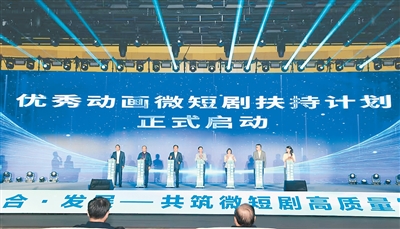
Core Insights - The "Excellent Animation Micro-Short Drama Support Program" has been officially launched, aiming to transition micro-short dramas from a focus on traffic to a deeper value cultivation [2] - Zhengzhou is emerging as a hub for the micro-short drama industry, leveraging its unique advantages and comprehensive support [3] Industry Growth - Zhengzhou's micro-short drama market reached a scale of 3.85 billion yuan in the first eight months of 2025, marking a year-on-year growth of 35.7% [3] - The city hosts over 800 micro-short drama companies and nearly 40,000 employees, with an average of over 80 drama crews received daily [3] Policy and Infrastructure Support - Zhengzhou plans to establish a 100 million yuan industry development fund and upgrade 15 filming spaces, enhancing the overall ecosystem for micro-short dramas [3] - Filming costs in Zhengzhou are 30%-40% lower than in first-tier cities, with investment return periods shortened to 3-6 months, attracting major companies like Qimai Culture and Huace Film [3] Creative Development - The industry is shifting towards quality content, with a focus on unique storytelling and cultural depth, as emphasized by industry experts [5] - A script collection initiative has successfully identified eight outstanding scripts that incorporate local cultural elements, showcasing the potential for rich storytelling [5] Platform Innovations - Platforms are adapting to market demands, with initiatives like the "Guo Ran Plan" offering up to 30% promotional funding for high-rated projects [6] - The production costs for quality micro-short dramas have increased, reflecting a commitment to higher standards in storytelling and production quality [6] Cultural Integration - Micro-short dramas are being integrated with cultural tourism and intangible cultural heritage, enhancing local economies and cultural outreach [8] - Over 100 micro-short dramas have been distributed overseas since 2025, with a total download volume of nearly 55 million, indicating strong international interest [8] Conclusion - Zhengzhou is positioned to become a significant source for high-quality micro-short drama creation and production, supported by its cultural resources, policy backing, and evolving industry ecosystem [9]
从黄金水道到文明桥梁
Ren Min Ri Bao Hai Wai Ban· 2025-09-25 22:52
Core Points - The article discusses the significance of rivers, particularly the Yangtze River and the Nile, in shaping ancient civilizations and their cultural heritage [8][12][19] - It highlights the importance of water management tools like the White Crane Beam in China and the Nile Gauge in Egypt, showcasing their roles in agricultural planning and disaster prevention [11][17] - The article emphasizes the ongoing dialogue and collaboration between China and Egypt regarding cultural heritage preservation and ecological sustainability [16][18] Group 1: Historical Significance of Rivers - The Yangtze River and other major rivers have been crucial in the development of ancient civilizations, providing resources and facilitating trade [8][12] - Historical examples include the agricultural innovations and urban planning in ancient Mesopotamia, Egypt, and the Indus Valley, all of which were influenced by river systems [7][9][13] Group 2: Water Management Tools - The White Crane Beam in Chongqing has been used for over 1200 years to monitor water levels and predict agricultural outcomes, demonstrating ancient Chinese wisdom in water management [9][10] - The Nile Gauge, built in 861 AD, served a similar purpose in Egypt, measuring water levels to predict harvests and adjust taxes accordingly [11][12] Group 3: Cultural Exchange and Collaboration - The article discusses the potential joint application for UNESCO World Heritage status for the White Crane Beam and the Nile Gauge, symbolizing a shared cultural heritage [16] - It highlights the importance of cross-cultural dialogue and cooperation in addressing contemporary challenges such as climate change and water resource management [17][18] Group 4: Ecological and Cultural Sustainability - The Yangtze River is positioned as a vital ecological and cultural resource for China, with ongoing efforts to restore its environment and promote sustainable development [17][19] - The article suggests that the shared experiences of river civilizations can inform global strategies for ecological preservation and cultural heritage protection [18][19]

新玩法“拉满”体验感
Ren Min Ri Bao Hai Wai Ban· 2025-09-25 22:31
Core Insights - The upcoming National Day and Mid-Autumn Festival have prompted various regions in China to launch diverse new consumption scenarios and activities, particularly in cultural tourism, sports events, and creative consumption, attracting significant public interest [4][10][15] Group 1: Cultural Tourism and Events - Huangshan's Xidi Ancient Village in Anhui is hosting a creative autumn sun-drying event to enhance cultural tourism integration [2] - In Beijing, over 2,400 unique cultural tourism activities will be launched under the theme "Jingcai Qiu Yun Double Festival Celebration," including a lantern festival and performances at the Great Wall [6] - Fujian's Wuyishan is introducing a series of cultural tourism products and policies to enhance the autumn travel experience, including a food carnival and tea-related events [6] Group 2: Innovative Consumption Models - Chongqing has introduced a "Hot Pot Special Train" to celebrate the holidays, showcasing local culture and enhancing the festive atmosphere [5] - The "Ru Super" football league in Shandong integrates sports with local culture and tourism, offering unique travel routes and local product exhibitions [10][11] - Zhejiang's Zhuji is hosting a "Common Prosperity Market" that combines sports, tourism, and local products, promoting consumption growth across various sectors [12] Group 3: Creative Consumption - The National Library's first commercial store in Beijing has successfully blended traditional culture with modern consumer products, attracting significant interest [15] - The city of Pinghu in Zhejiang is gaining attention for its unique watermelon lanterns, which symbolize local culture and community spirit [16] - The integration of AR technology in cultural events in Pinghu showcases the fusion of historical culture with modern technology, enhancing visitor engagement [16]
地理标志让“土特产”变致富“金名片”
Ren Min Ri Bao Hai Wai Ban· 2025-09-25 01:46
Core Insights - The article highlights the significant economic impact of geographical indication (GI) products in China, with a direct annual output value exceeding 960 billion yuan [2] - It emphasizes the transformation of local specialties into profitable brands, contributing to rural income and regional development [2][3] Group 1: Economic Impact - China has recognized over 4,000 geographical indication products, with more than 7,000 registered as collective or certification trademarks, and over 46,000 approved entities using GI special marks [2] - The annual output value of GI products in China has surpassed 960 billion yuan [2] - Zhejiang province has cultivated 350 GI industrial clusters, achieving an annual output value exceeding 100 billion yuan and benefiting 130,000 farmers [2] Group 2: Brand Development - The development of GI brands can drive the extension of industrial chains, transforming single products into integrated business models [3] - The "Juyuan Strawberry" in Jiangsu province has been registered as a GI certification trademark, leading to the establishment of a specialized sales corridor and benefiting over 300 local farmers [3] Group 3: International Recognition - "Baoshan Small Coffee" has been exported to over 10 countries and regions, with a total of 2,400 tons exported, generating revenue of 57.44 million yuan [4] - The Chinese government has facilitated the international recognition of 110 GI products, enhancing their integration into global supply chains [4]
留学开学季,打开社交圈(留学服务站)
Ren Min Ri Bao Hai Wai Ban· 2025-09-25 01:31
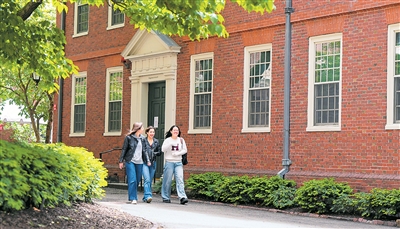
开学季到来,学子们将在海外开启全新生活。远离父母亲人、独自在异国他乡学习,这对每名留学生来 讲都是不小的挑战。如何尽快融入新环境、建立自己的社交网络? 文化尊重与理解 在海外生活和学习中,理解和尊重文化差异是顺利融入社交圈的重要前提。不同国家和地区在语言表 达、礼仪习惯、时间观念与公共秩序等方面各有特点。初到陌生环境,留学生可以通过观察、倾听和适 度提问,逐步适应当地文化。例如在日常交流中注意称呼方式,了解用餐礼仪,通过细节表现出真诚的 尊重,不仅能够减少日常误会,也更容易赢得认可与信任。 "刚到这边的时候,我其实挺不适应的。比如课堂讨论里,大家会积极发言,但我担心自己的英语不够 好,也怕打断别人。"在美国留学的王岩分享自己的体会,"后来我发现,这种讨论式的课堂很常见,甚 至有时是学生主讲,老师点评。如果能提前准备观点,抓住机会表达,会受到很大鼓励。" 校外资源同样值得关注。社区中心、公益组织和志愿服务活动,都是建立联系的重要平台。在澳大利亚 墨尔本,当地社区中心每年组织义工活动,为老人送餐。参与其中,不仅能感受当地社会的运作节奏, 也能够获得真实的生活体验,为理解社会、融入环境积累宝贵经验。 高校通常还会为 ...
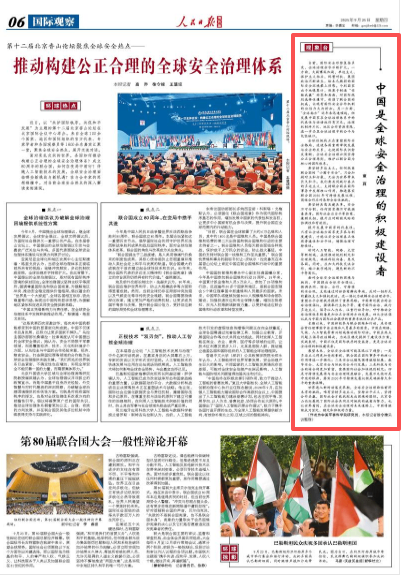
中国是全球安全治理的积极建设者(观象台)
Ren Min Ri Bao Hai Wai Ban· 2025-09-25 00:28
Group 1 - The article emphasizes the complexity and variability of the current international security situation, highlighting the rise of unilateralism and protectionism, which exacerbate the fragile international security environment [1] - It points out the insufficient representation and voice of developing countries in the global governance system, despite the rapid rise of the "Global South" [1][2] - The article advocates for multilateralism and the central role of the United Nations in international affairs, stressing that any security arrangements outside the UN will only increase division and conflict [1][2] Group 2 - The need to enhance the representation of developing countries in institutional building is highlighted, as this is essential for achieving universal and equitable security governance [2] - The article discusses the urgency of establishing rules and ethical norms in new fields such as artificial intelligence, cyberspace, and outer space to ensure technology benefits all nations [2] - China's global security initiative is presented as a significant approach to address security governance deficits and reshape a fair and reasonable order, emphasizing dialogue and cooperation [2][3] Group 3 - Future trends in global security governance are anticipated to include a greater emphasis on multilateralism and the strengthening of the UN's core role in international affairs [3] - The scope of security issues is expected to expand, with digital security and space security developing alongside traditional security concerns [3] - The integration of sustainable development with security governance is highlighted as crucial, with the implementation of the 2030 Sustainable Development Agenda seen as vital for lasting peace [3]
天山飞鸿(人民家书)
Ren Min Ri Bao Hai Wai Ban· 2025-09-25 00:15
Group 1 - The article highlights the significant changes in Xinjiang over the past 70 years, marking the establishment of the Xinjiang Uyghur Autonomous Region and its contributions to the national development and modernization efforts [9] - It features four letters from different individuals, showcasing their personal experiences and emotional connections to their families and the region [9][10] - The letters reflect themes of dedication, resilience, and the importance of education, as seen in the experiences of individuals like Meng Erdong, who dedicated his life to teaching in Xinjiang despite health challenges [14][15] Group 2 - Meng Erdong's commitment to education in Xinjiang is emphasized, detailing his efforts to teach and inspire students while facing personal health issues [11][14] - The letter from military spouse Gong Shulan illustrates the emotional strength and support within military families, highlighting the sacrifices made during times of separation [16][18] - Liang Digang's letter expresses a lifelong commitment to communism and national service, reflecting the values instilled in him from a young age [19][24] Group 3 - The letter from Guli Mihe Erken showcases the importance of family support in pursuing education, emphasizing the sacrifices made by her parents for their children's future [25][27] - The letters collectively convey a sense of hope, perseverance, and the deep emotional ties that bind families, especially in the context of the changing landscape of Xinjiang [10][18][27]
这些00后,以技能奔前程
Ren Min Ri Bao Hai Wai Ban· 2025-09-25 00:08
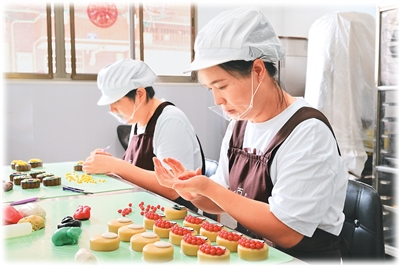
Core Viewpoint - The third National Skills Competition showcased the talents of 3,420 skilled contestants, predominantly from the post-2000 generation, highlighting the importance of skill development in the modern workforce [8][12]. Group 1: Competition Overview - The competition took place over five days in Zhengzhou, Henan, featuring 3,420 skilled participants with an average age of 24, and 70% being under 25 years old [8]. - A total of 106 competition projects were set up, including 66 for the World Skills Competition and 40 selected national projects, covering various fields from service industries to emerging technologies [12]. Group 2: Individual Stories - Contestant Cui Xinyu, at 22, emphasized the importance of maintaining composure during the competition, which tested both basic skills and innovative capabilities in traditional Chinese pastry making [10]. - Yang Huiru, an 18-year-old contestant in health and social care, overcame her initial struggles with English to excel in a competition requiring full English communication, demonstrating personal growth through challenges [13][14]. Group 3: Educational and Training Initiatives - The province of Henan has implemented extensive vocational training programs, collaborating with over 2,000 enterprises to enhance skill education and achieve a high employment rate of around 98% for graduates [14]. - The skills training system in Henan aims to align with industry needs, fostering a new generation of skilled workers through optimized educational frameworks [14]. Group 4: Future Prospects - The rapid development of the economy and the upgrading of industries are creating vast opportunities for skilled individuals, as highlighted by the experiences of young contestants who have transitioned from basic jobs to skilled professions [15][16]. - The demand for skilled workers in fields such as CAD mechanical design is increasing, with competitions adapting to market needs, ensuring that participants are well-prepared for future challenges [16].

京西稻,香飘三百年
Ren Min Ri Bao Hai Wai Ban· 2025-09-25 00:08
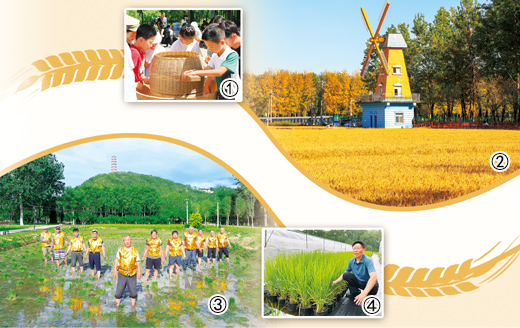
Core Viewpoint - The article highlights the cultural and agricultural significance of Jingxi rice, emphasizing its historical roots, unique cultivation methods, and the integration of modern technology in its production [2][5][10]. Group 1: Historical Background - Jingxi rice, known for its excellent taste, has a history of over 300 years, originating from seeds brought back by Emperor Kangxi during his southern tour [3][5]. - The rice was initially cultivated in the royal fields near Yuquan Mountain and gained popularity due to its unique flavor and quality [3][4]. Group 2: Cultivation Techniques - The cultivation of Jingxi rice relies on traditional methods combined with modern agricultural technology, including soil testing and customized fertilization [4][6]. - The use of a symbiotic farming system involving ducks helps maintain soil health and enhances the rice's flavor [4][5]. Group 3: Technological Advancements - Recent advancements in agricultural technology have led to the development of new rice varieties, such as "Jingjingxiang No. 3" and "Jingjingxiang No. 5," which are being promoted for their resilience and quality [4][6]. - The integration of data-driven farming practices has improved crop management and pest control, ensuring higher yields and better quality [4][6]. Group 4: Cultural and Economic Impact - Jingxi rice has become a cultural symbol and a popular agricultural product, recognized as a geographical indication and an important agricultural heritage [10][11]. - The rice fields have transformed into tourist attractions, offering educational experiences and promoting local culture through various activities [10][11]. Group 5: Community Engagement - The cultivation area has become a natural classroom for children, allowing them to learn about agriculture through hands-on experiences [9][11]. - Community events, such as music festivals and cultural exhibitions, have further enhanced the visibility and appreciation of Jingxi rice [10][11].