Shang Hai Zheng Quan Bao

Search documents
电信服务增值税税目适用范围调整 三大运营商聚焦算力等新兴业务布局
Shang Hai Zheng Quan Bao· 2026-02-01 18:15
Core Viewpoint - The three major telecom operators in China are adjusting their business strategies in response to changes in tax regulations, focusing on innovation and the development of computing power services to drive high-quality growth [1][2]. Group 1: Tax Regulation Impact - The Ministry of Finance and the State Taxation Administration announced that starting January 1, 2026, the tax category for certain telecom services will change from value-added telecom services to basic telecom services, with the VAT rate increasing from 6% to 9% [2]. Group 2: Strategic Focus and Performance - China Telecom is implementing a comprehensive strategy to enhance its cloud and AI services, aiming to create an integrated intelligent cloud service platform [3]. - China Mobile is focusing on strengthening its communication services and expanding its capabilities in computing and intelligent services [3]. - China Unicom is concentrating on core areas such as connectivity, computing, services, and security to build differentiated advantages [3]. - The three operators are transitioning to a strategic "gear-shifting" phase, placing artificial intelligence at the core of their strategies, with significant achievements already noted [3]. Group 3: Financial Performance - China Unicom reported a revenue of 293 billion yuan for the first three quarters of 2025, a year-on-year increase of 1.0%, with a net profit of 8.8 billion yuan, up 5.2% [4]. - China Telecom's IDC revenue reached 27.5 billion yuan, a 9.1% increase year-on-year, contributing to a total revenue of 394.3 billion yuan, up 0.6% [4]. - China Mobile achieved a revenue of 794.7 billion yuan, a 0.4% increase, with a net profit of 115.4 billion yuan, up 4.0% [4].




125份北交所公司业绩预告出炉 高增长阵营凸显产业新动能
Shang Hai Zheng Quan Bao· 2026-02-01 18:15
业绩的增长伴随着明确的结构分化。一方面,高端制造、数字经济、健康消费等领域的公司业绩增长显 著;另一方面,部分行业如光伏设备等,仍处于调整阶段,面临阶段性压力。业绩的分化与各公司所属 行业的景气度、自身经营策略的执行效果密切相关,反映了北交所上市公司在不同赛道上的差异化发展 现状。 从具体案例来看,一批公司凭借出色的业绩增幅成为市场焦点。宏裕包材预计2025年实现归母净利润 1700万元至2200万元,同比增长357.91%至492.59%,增幅暂居前列。对于业绩变动原因,公司表示: 报告期内紧密围绕以利润为导向的总体思路,优化客户与产品结构,高毛利客户订单占比增加;同时加 强采购成本分析和价格谈判,降本成果显著。 海能技术业绩同样增幅居前。公司预计实现归母净利润4100万元至4400万元,同比增长213.65%至 236.61%。公司称,业绩大幅预增主要得益于行业市场需求整体回暖,高端仪器国产制造趋势显著,公 司在新材料、新能源、制药等领域增长较快,且新推出的高端仪器产品获得市场认可。 截至2月1日,北交所上市公司中已有125家披露2025年度业绩预告或业绩快报,市场年度"成绩单"初现 轮廓。 Wind数据 ...
海格通信余青松:瞄准战略性新兴产业 向通导信息融合创新提供商转型
Shang Hai Zheng Quan Bao· 2026-02-01 18:15
当前,我国正加快培育战略性新兴产业,商业航天、低空经济作为新质生产力的重要增长极,正迎来前 所未有的发展机遇。自2010年上市以来,海格通信坚持守正创新,寻求转型升级,逐步形成了覆盖无线 通信、北斗导航、航空航天、数智生态四大板块的业务格局。 "在'十五五'期间,公司一定会上一个新的台阶。"近日,海格通信董事长余青松在接受上海证券报记者 采访时表示,公司将聚焦高科技制造业与高端信息服务业两个方向,推进通导信息融合创新赋能商业航 天与低空经济等战略性新兴产业发展,努力成为通导信息融合创新产业的最优秀现代企业之一。 如何理解"最优秀"?余青松说,"最优秀"实际上是一个相对概念,表达公司不断寻求创新突破的愿景, 希望在波峰时不要夜郎自大,在波谷遇到困难时也不要妄自菲薄,永远荣辱不惊,勇往直前,追求永续 经营,这也是海格一直强调的"基业长青"。 从产品芯片化到芯片产业化 步入海格通信展厅,从智能手表、智能物联网关到北斗短报文手持终端,各类终端产品应接不暇,这些 终端背后都有一个共同的元素——芯片。经过多年发展,海格通信拥有适配多个行业的芯片产品。 北斗应用领域,海格通信实现了全产业链布局,其中自研的北斗芯片国内市占率 ...

多家新能源汽车公司1月销量“开门红”
Shang Hai Zheng Quan Bao· 2026-02-01 18:15
同日,蔚来公告,公司1月交付新车27182辆,同比增长96.08%,环比下降43.53%。蔚来董事长李斌日 前表示,公司2026年销量目标是保持40%至50%的速度稳步增长,并提升增长质量。2025年,蔚来累计 销量约为32.6万辆。"蔚来2026年的经营目标是整年盈利。"李斌说。 理想汽车2月1日公告,公司1月交付新车27668辆,同比增长7.55%,环比下降37.47%。理想汽车近日公 布2026年公司战略目标为全年销量55万辆,同比增长约40%。 小鹏汽车公告,公司1月交付新车20011辆,同比下降34.07%,环比下降46.65%。据接近小鹏汽车的人 士介绍,公司2026年全年销量目标为55万辆至60万辆,较2025年实际交付的42.94万辆增长约28%至 40%。 2月1日,比亚迪公告,公司1月实现新能源汽车销量210051辆,同比下降30.11%。 同日,华为鸿蒙智行宣布,鸿蒙智行2026年1月累计交付新能源汽车57915辆,同比增长65.6%。其中, 与赛力斯合作的问界品牌为鸿蒙智行的销量主力,赛力斯2月1日公告,公司1月新能源汽车销量达4.3万 辆,同比增长140.33%。 2月1日,中国主流 ...




易思维:专注汽车制造领域 引领机器视觉创新、加速智能工业变革
Shang Hai Zheng Quan Bao· 2026-02-01 18:14
Core Viewpoint - The company, Easy Vision (Hangzhou) Technology Co., Ltd., is focused on the research, production, and sales of machine vision equipment for automotive manufacturing, aiming to lead the domestic market and expand globally [8][9][10]. Company Overview - Easy Vision was established in June 2016 and is recognized as a national key "little giant" enterprise specializing in machine vision technology for automotive manufacturing [8]. - The company has developed a comprehensive system of industrial vision equipment, covering various processes in automotive manufacturing, and has successfully broken the long-standing foreign monopoly in this field [8][9]. Market Position - Easy Vision holds the leading position in the domestic automotive manufacturing machine vision market, with a projected market share of 13.7% in the automotive manufacturing sector and 22.5% in the complete vehicle manufacturing sector by 2024 [9][22]. - The company has established partnerships with 66 major domestic automotive manufacturers, including both traditional and new energy vehicle brands [12][22]. Financial Performance - The company's main business revenue has shown a compound annual growth rate of 32.60% from 2022 to 2024, with revenues of 223.06 million yuan, 354.73 million yuan, 392.20 million yuan, and 125.22 million yuan for the respective years [18]. - The net profit figures for the same period were 5.10 million yuan, 57.76 million yuan, 84.52 million yuan, and a loss of 6.54 million yuan [19]. Research and Development - Easy Vision places a strong emphasis on R&D, with R&D expenses accounting for 38.85%, 32.14%, 30.06%, and 48.53% of revenue in the respective years [20]. - The company has received numerous awards and holds 387 domestic and international patents, including 200 invention patents [17]. Industry Context - The automotive manufacturing machine vision market in China is projected to grow from 930 million yuan in 2020 to 3.11 billion yuan by 2024, with a compound annual growth rate of 35.2% [29]. - The industry is experiencing rapid development driven by the electrification and digitalization of vehicles, with increasing demand for machine vision products from automotive manufacturers [28][31]. Future Outlook - Easy Vision aims to enhance its global presence and expand its product offerings, focusing on the integration of machine vision technology across various industrial applications [21][23]. - The company plans to invest in a machine vision product industrialization base and a research and development center, with total investments of approximately 70.51 million yuan and 40.92 million yuan, respectively [36][38].
盈利连续改善 近八成投资者看涨2026年行情——上海证券报·个人投资者2026年第一季度调查报告
Shang Hai Zheng Quan Bao· 2026-02-01 18:14
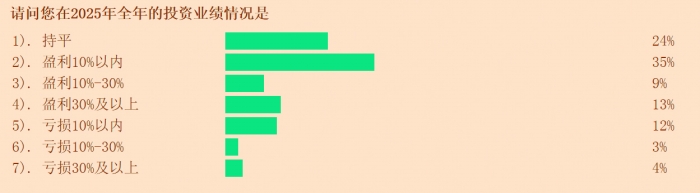
| 4). 4300点附近 | 16% | | --- | --- | | 5). 4400点附近 | 22% | | 6). 4500点及以上 | 10% | (感谢申万宏源证券、东北证券相关营业部对本调查的支持。上图为部分调查结果) □ 伴随着A股主要指数在2025年全线收红,近六成受访投资者实现盈利。其中,以人工智能为代表的核 心热点板块在2025年持续上涨,成为贡献投资收益的主要来源 □ 在无风险利率持续下行的背景下,随着股市赚钱效应不断增强,居民存款向权益资产"搬家"的现象在 2025年初现端倪 □ 近八成投资者看涨2026年股市,并且对春季行情充满期待。值得一提的是,投资者对今年上证综指波 动范围的预期"乐观但不激进",倾向于在指数稳健运行的背景下,把握结构性机会而非博弈指数大幅突 破 ◎记者 汪友若 投资收益连续两年上升 纵观2025年全年,主要宽基股指均在当年4月初触底后一路高歌猛进。上证综指从年内低位的3040.69点 起步,一度冲破4000点大关,全年涨幅接近20%,创下近六年来最佳年度表现;科技含量更高的创业板 指和科创综指全年涨幅更是接近50%。 市场行情的向好直接惠及广大投资者,近六 ...
从规模竞赛到投向绩效——解读《政府投资基金投向评价管理办法(试行)》的制度逻辑与政策含义
Shang Hai Zheng Quan Bao· 2026-02-01 18:14
刘少轩 □ 刘少轩 陈钰什 □ 过去政府投资基金领域的主要矛盾,并不在于"缺资金",而在于"资金如何形成有效供给"。在规模扩 张、地方招商、短期回报与合规问责交织之下,不少基金出现了目标错配、区域分割、资金沉淀和同质 化投资等结构性问题 □ 《办法》表面看是一套"投向评价"规则,实质上是一项基金治理制度:它用一套可核查、可比较的年 度评价体系,把政府投资基金的政策定位重新拉回"服务国家战略"的轨道,并把地方竞争中的一些惯性 做法转化为可计量的制度成本 □ 评价机制能否发挥预期作用的关键在于执行细节能否跟上,能否在数据、核验和动态调整上形成稳定 机制 2026年1月,国家发展改革委印发《政府投资基金投向评价管理办法(试行)》(下称《办法》)。该 文件表面看是一套"投向评价"规则,实质上是一项基金治理制度:它用一套可核查、可比较的年度评价 体系,把政府投资基金的政策定位重新拉回"服务国家战略"的轨道,并把地方竞争中的一些惯性做法转 化为可计量的制度成本。 如果仅把《办法》理解为"新增一张评分表",容易忽略它的核心意图:过去政府投资基金领域的主要矛 盾,并不在于"缺资金",而在于"资金如何形成有效供给"。在规模扩张 ...
1月权益类ETF净流出近8000亿元
Shang Hai Zheng Quan Bao· 2026-02-01 18:14
Core Viewpoint - The A-share market has experienced significant outflows from equity ETFs, with nearly 800 billion yuan withdrawn in January, primarily attributed to Central Huijin's reduction in holdings [1][3]. Group 1: ETF Outflows - In January, equity ETFs saw a total net outflow of approximately 800 billion yuan, with 12 broad-based ETFs experiencing outflows exceeding 110 billion yuan, totaling 939.74 billion yuan [1][2]. - The largest outflows were observed in the Huatai-PineBridge CSI 300 ETF, which saw a net outflow of 190.84 billion yuan, followed by the E Fund CSI 300 ETF with 152.66 billion yuan, and the Huaxia CSI 300 ETF with 137.59 billion yuan [2]. Group 2: Fund Size Changes - The affected ETFs have significantly decreased in size compared to the end of 2025, with the Huatai-PineBridge CSI 300 ETF shrinking from over 400 billion yuan to 229.5 billion yuan by the end of January [2]. - The E Fund CSI 300 ETF's size dropped from over 300 billion yuan to 148 billion yuan, while the Huaxia CSI 300 ETF fell from nearly 230 billion yuan to 95.3 billion yuan [2]. Group 3: Central Huijin's Role - Central Huijin is identified as the primary holder in 11 of the 12 ETFs that faced large redemptions, indicating a potential significant reduction in their holdings [3][5]. - For instance, Central Huijin held 735.13 billion shares of the Huatai-PineBridge CSI 300 ETF at the end of 2025, which decreased to 486.88 billion shares by January 30 [4]. Group 4: Market Trends and Inflows - Despite the outflows from broad-based ETFs, sectors such as non-ferrous metals, chemicals, and satellites have attracted substantial inflows, with new funds entering the market [1][6]. - In January, specific thematic ETFs like the Penghua Non-Ferrous Metals ETF and the Huaxia Non-Ferrous Metals ETF saw net inflows of 18.26 billion yuan and 14.84 billion yuan, respectively [6].
2026年银行业经营工作“划重点”
Shang Hai Zheng Quan Bao· 2026-02-01 18:14
(上接1版) 此外,数智化转型成为多家国有大行2026年工作的关键词。建设银行表示,要加快推动集团数智化转 型,持续提升企业级运营能力;交通银行则将深入推进"人工智能+"行动,通过AI技术重构业务流程、 创新服务模式。 股份行提质增效 发掘新的增长动能 股份行在2026年工作部署中,更多体现出结构调整和提质增效的紧迫感。 城农商行做深本土 打造差异化竞争优势 头部城商行和主流农商行的2026年经营管理工作会议,则呈现出更鲜明的区域特色和差异化竞争发展趋 势。 一方面,城商行和农商行普遍提出要深度融入地方发展大局,围绕区域产业链、县域经济等做深做细金 融服务,突出"贴近客户、贴近市场"的比较优势。"要因地制宜找准抓实农商着力点,服务全省经济社 会关键领域实现重大突破。"浙江农商联合银行董事长林仁方说。 另一方面,稳健经营和风险底线意识进一步强化。不少城商行和农商行在会议中明确,要提升资产质 量,通过强化内控和合规管理。 比如,厦门银行尤为重视深入业务前端把握风险。该行2026年将强化资产质量管控,前置风险预警,加 强全流程信贷管理,多措并举推动资产质量稳健向好;增强内控合规管理,筑牢制度流程化基础等。 同时,部 ...
资金“踩踏式”出逃 国际金银价格暴跌
Shang Hai Zheng Quan Bao· 2026-02-01 18:14
Core Viewpoint - The recent sharp decline in gold and silver prices is attributed to panic selling triggered by the nomination of Kevin Warsh as the next Federal Reserve Chairman, leading to a significant liquidation of leveraged positions in the market [2][3]. Group 1: Market Reaction - On January 31, gold prices fell over 12%, marking the largest single-day drop in 40 years, while silver experienced a historic drop of over 36% [2]. - By the end of trading, gold was down 9.25% at $4,880.034 per ounce, and silver was down 26.42% at $85.259 per ounce [2]. - The panic selling was exacerbated by a "snowball" effect from forced liquidations of leveraged positions as prices plummeted [2]. Group 2: Influencing Factors - Kevin Warsh is known for his hawkish stance on inflation, which contributed to a stabilization of the dollar index following his nomination [3]. - Market analysts noted that the speculation around the next Federal Reserve Chairman had been affecting precious metal prices for some time [3]. - The market had already shown signs of being overcrowded, with warnings about overbought conditions prior to the price drop [4]. Group 3: Leverage and Market Dynamics - The surge in gold and silver prices led to increased implied volatility, indicating that traders were using options to leverage their positions, which is contrary to sound trading principles [3]. - The high leverage and thin liquidity made the market vulnerable to sharp corrections, with even minor triggers capable of causing significant price swings [3][5]. - Major exchanges have raised margin requirements for precious metal futures, increasing pressure on high-leverage traders [5]. Group 4: Long-term Outlook - Despite the recent volatility, analysts believe that the long-term fundamentals for precious metals remain intact, with macroeconomic risks continuing to accumulate [6]. - The ongoing deleveraging process is expected to attract physical buying after price corrections [6]. - Factors such as geopolitical risks, demand for safe-haven assets, and concerns over global economic stability are expected to support gold prices in the long run [7].